Skip to content

CaMP Anthropology

  • Home
  • Author Interviews
    • Author Interviews Posts
    • Books Sorted by Press
    • Books Sorted by Regions
    • Alphabetical List of Interviews
  • Celebrations
    • Page 99 of CaMP Dissertations
    • Retirement Reflections
  • Virtual Reading Group
  • Possible Research Topics
    • Animals
    • Circulation
    • Education
    • Language and Media Forms
    • Law and Language (and Media)
    • Lexicalization
    • Media Etiquette
    • New Participant Roles
    • Old Media
    • Old Participant Roles, New Media
    • Orthography
    • Rituals
  • Publishing Advice
  • Anthropologists on Fiction
  • About

Communication, Media and Performance

  • William Leap’s Reflections upon Retirement

    December 15th, 2019

    What article or book that you wrote are you most pleased with?  Could you talk about the story behind writing it?

    Easier than citing a single book or article, I’d prefer to talk about how I am most pleased to find how I have maintained certain consistencies of argument over several years of inquiry, despite my changes in research topics and theoretical paradigms and despite academic and broader politics.

    For example, my current studies of language and sexuality have moved far from the ideas outlined in Word’s Out , but one issue addressed there still haunts my research and writing:  how do people learn to talk about same-sex desires, practices, and sexual sameness when such talk is so often assigned negative values by peers, parents, news media, political officials, officer co-workers, department chairs, and other regulatory sources.

    I addressed similar regulatory questions in my earlier studies of American Indian English (AIE), when I suggested that AIE fluencies helped maintain ancestral language receptive competence in settings where ancestral language fluency (and fluent speakers) were widely despised. The parallels between AIE and the discussion in Word’s Out were not exact, but the processes of overhearing, and the ensuing accumulations and conditions of hyperdiversity were similar.

    I did not pursue those parallels in Word’s Out, but I began to do that in subsequent writing, beginning with “Language socialization and silence in gay adolescence,” a revision of a (truly dreadful) article that first appeared in a special issue of The High School Journal. Thinking about gay language learning as language socialization prompted further thoughts about processes of linguistic accumulation, textual refusal, audience reception as well as the global circulations of North Atlantic gay language(s)  and their impacts on localized sexual discourse(s).

    So how did your research in Cape Town fit into these continuities?

    I revised the “language socialization paper” while in residence at the Centre for Rhetoric Studies at University of Cape Town. I heard many stories about language/sexuality socialization from people living in Cape Town’s City Center and in the nearby Coloured and Black townships, thanks to the support of the Triangle Project, a Cape Town area AIDS advocacy group. This was my introduction to the uneven inflections of language, sexuality, gender, race, and class that were reshaping sexualities as apartheid transitioned to representative democracy in the western Cape. I was tracing how those inflections impacted sexual language learning in the late apartheid period and this disclosed details of Cape Town area sexual geography. I could locate moments that language shift exposed competing loyalties between sexuality and place. The book project I am now finishing explores the not-so-secret “secret codes” linked to homosexuality before the Stonewall moment in the US, and was inspired in part by the Cape Town research, especially its demand that linguistic history engages with racial and class diversities and the material conditions that sustain them, instead of ignoring these diversities.

    What article or book was hardest for you to write, and why?

    Every article and book has been difficult for me to write. I grew up in a small town in North Florida in the early 1950s, so Standard English was not my first language, either for speaking or for writing. Many of the conventions of standard speech still elude me. Plus, what might fashionably be termed late-onset dyslexia ensures that revising, editing and proof-reading become time-consuming tasks. But even if writing takes much longer to complete than the assigned deadline allows, writing is still an exciting activity. Writing gives me a chance to experiment with ideas and it always leads to unexpected outcomes. I learned long ago to stop trying to create a detailed outline in advance of the first draft: I sketch out three or four intended themes, assemble some data, and see where it leads—hopefully to successful, if at times unexpected, outcomes.

     You started the Lavender Languages Conference in 1993 and are the founding co-editor of the Journal of Language & Sexuality. What motivated you to do this important organizational labor?

    The Lavender Languages Conference has been creating space for conversations about language and sexuality since 1993, and it still does as, I explained elsewhere. We named this event “Lavender Languages” to avoid taking sides with people doing “lesbian/gay studies” or “queer theory,” a hot-button issue in the 1990s that probably doesn’t matter so much anymore. The phrase remains because of name recognition, but that too might change as time passes. The point is to maintain a space where people can discuss language and sexuality without fear of risk or retaliation. People already face enough of that in everyday settings, inside and outside of the classroom.

    The Journal of Language & Sexuality is “indebted to queer linguistics” as an orienting theme, as my co-editor (Heiko Motschenbacher) and I explain in the journal’s mission statement. And queerness is always about messiness and irregularity. The Journal is a site where discussions of language and sexuality need not be contained within traditional disciplinary (or similar) boundaries. Our reviewers draw heavily on those criteria as they read and evaluate manuscripts, and so do the editors as we make final decisions regarding the contents for each issue.

    What moment of fieldwork interaction do you still think about, amazed that you got to witness it and/or record it?

    Doing linguistic fieldwork in sex clubs in the 1980 and 1990s. There were those (in anthropology and in the federal government) who said such work could not be done; and even if it were attempted, the results could not have any claim to scientific validity, and thus no impact on AIDS-related (or other) policy-making. Following ethnographic work of Ralph Bolton and Michael Clatz, I insisted that there had to be ways to conduct linguistic research in the erotic moment, a point which a group of us confirmed in the publication of Public Sex, Gay Space. For me, this meant conducting linguistic fieldwork at cruising sites, although as always, linguistic inquiry soon moved far beyond the scope of the linguistic moment.

    In one instance, the cruising site data provided a basis for expert witness court testimony on behalf of a bath house which local government had designated as a health hazard and was seeking to close. My field data demonstrated that activities at this site were no more a “threat” to public health than were activities in the saunas and steam rooms in the area’s upscale health clubs and gyms, sites which local government had never attempted to raid or regulate. Why, I asked, was the category “health hazard” being applied so selectively to the health club I was defending? And whose long-term real estate investments were being secured as the uneven inflections were applied?

    What piece of furniture do you most often talk to or about?

    My swimming pool. This was my retirement gift to my partner and me. There are no Esther Williams-type water features or Olympics-like illuminations. This is a simple 25’x16’, cobalt blue-tiled, heated structure, providing room to float on a buoyant raft while enjoying the south Florida sun and listening to thematically appropriate CDs.

    August 13, 2018

    Cite as: Leap, William. 2018. “William Leap’s Reflections upon Retirement.” Anthropology News website, August 13, 2018. DOI: 10.1111/AN.943

  • Bonnie Urciuoli’s Reflections on Retirement

    December 15th, 2019

    SLA INTERVIEW WITH BONNIE URICIUOLI

    August 15, 2017

    Bonnie Urciuoli. Nancy L. Ford

    What article or book that you wrote are you most pleased with?  Could you talk about the story behind writing it?   Or: What article or book was hardest for you to write, and why?

    These two questions have the same answer, “Skills and Selves in the New Workplace,” published in AE in 2008. It took years and I sweated blood writing and rewriting and rewriting it, probably because I tried to pack way too much into each draft. I had long been thinking about how the word skill got thrown around as a count noun denoting some kind of plug-in. I was also having an extension on my house built by a very skilled contractor working pretty much by himself. By ‘skilled’ I mean he had been doing this work for decades and knew exactly what he was doing. I wanted to contrast this with the idea of workers and students as future workers imagined as bundles of skills like Lego pieces or Tinkertoys. What kind of corporate ethos comes up with the notion that ‘skills’ as the (supposed) outcome of workshops on ‘leadership’ or ‘communication’ could discursively parallel ‘skill’ as the (concrete) result of years of experience? Who was making money off this? Nor was I thrilled at how students were getting inculcated with this, especially students of color. (Diversity skills? Really?) After starting a draft in 2002, I played with it until 2004 when I figured I might as well send it in and get some useful feedback which I did (including “you’re going where with this now?”). It took a few more revisions over a few more years, not to mention a lot of help (big shout-out to Chaise LaDousa, Ilana Gershon, Virginia Dominguez, and the AE reviewers), to get it over the final hump. But the article was one of the most productive things I ever did, pulling together many many threads for me and apparently for quite a few other people as well.

    What is one of your favorite fieldwork stories to tell?

    During my first fieldwork on the Lower East Side in Manhattan in 1978–79, I spent a lot of time being a sort of fictive aunt to kids on the block where I did most of my research. I tutored and taught arts and crafts and took kids on various outings. Taking a bunch of 8-10 year old boys to and from Yankee Stadium by subway was some experience—amazing how five or six boys can seem like a dozen. Still, bleacher seats cost $1.50 and you could bring your own food and maybe see a Reggie Jackson home run.

    Which class did you most enjoy teaching, and why?

    I’ve enjoyed them all but my favorites were Phonetics/phonology, Semiotics, and US Discourses: Gender and Technology. All of them, in different ways, allowed students to see the familiar or taken-for-granted in different and creative ways plus Semiotics gave many students excuses to write about college branding and analyze the hell out of their experience as tour guides. And Gender and Technology gave me all kinds of excuses to talk about Barbie, Disney, the Mercury program, tail fins on cars, two-tone refrigerators, and being a middle-class American kid in the 1950s.

    How has teaching changed for you over the years?

    I’ve always enjoyed teaching but I think I’ve especially enjoyed it over the past decade, when my research and teaching came together, even in my introductory courses, in all kinds of surprising and productive ways. The longer I’ve taught the more I’ve seen my students as co-participants in some kind of enterprise I’m not sure I can define. OK, not all of them and not in every class and maybe more in my 200-level and up classes that get a lot of repeaters. But I think I’ve become more aware of what I can learn from the process of teaching—talking with students, reading their stuff.  Can I take this opportunity for a big shout-out to my students? They have just been so much fun.

    Over the years, who has been your favorite politician to teach with (or against)?

    I got a lot of use out of John Boehner when he chaired the House Committee on Education and the Workforce in the 2000s. I could always count on him to issue statements clearly illustrating a model of education that had zip to do with liberal arts values.

    What book do you think people would be surprised to know is on your bookshelf?

    There are a couple of authors I dearly love that probably qualify as guilty pleasures (“you read them?”): Angela Thirkell and Georgette Heyer. I suppose they are considered lightweight romance authors with iffy politics. But they also create detailed worlds that are interesting and amusing. Adjacent on my bookshelves are the complete (and often re-read) works of Douglas Adams and Terry Pratchett (the latter thanks to Ilana) which actually wouldn’t surprise anyone who really knows me.

    Do you speak for your pets, and if so, when or how?

    I don’t have a lot of luck speaking for my (currently three) cats, though I try. Mostly I voice for them things like “of course we can put that vet bill on my VISA card” or “I’m so sorry I threw up on your shoe.” It so doesn’t work. For starters they expect me to pay their credit card bills.

    What is your favorite curse word?

    The f-word. It may be unoriginal and overused but it certainly works for me, especially when I’m screaming at the political news.

    What is the worst piece of advice you have ever gotten?

    The worst advice (received in the mid 1980s) was to change my research area to a topic that would serve me better on the job market by fitting established categories of anthropological research. I thanked the people who offered the advice and completely ignored it.

    Bonnie Urciuoli is a professor of anthropology at Hamilton College.

    Ilana Gershon curated this article.

    Cite as: Gershon, Ilana. 2017. “Bonnie Urciuoli’s Reflections upon Retirement.” Anthropology News website, August 15, 2017. doi: 10.1111/AN.533

  • Carrie Clanton takes the page 99 test

    December 9th, 2019

    My PhD thesis, Uncanny Others: Hauntology, Ethnography, Media, started out as an ethnographic study of people who pursue ghosts as a hobby in the U.K. As a visual anthropologist, I was interested that the methodologies of ghosthunters mirror the work of some anthropologists who have taken up media; both aspire to use audio-visual recording media in an almost scientific fashion to “capture” their respective, and at times elusive, Other.

    Page 99 of my thesis falls in the middle of a fieldwork narrative in which I am establishing ghosthunters as a metaphor to critique how anthropologists have tended to incorporate media into their work. In the excerpt below I am detailing a commercial ghosthunting weekend (GhostCon), organized by a group called Ghost Research Foundation International (GRFI), that I attended in Nottingham; I had encountered events such as water-divining and séances, each accompanied by rigourous pseudo-scientific methodology and audio-visual recording equipment, as well as by more esoteric tools such spirit mediums:

    I am surprised at this most unscientific way to gain knowledge—is this what GRFI means by its research “evolving”? To what degree have ghost hunters really taken up science, and where does this merging of science with so-called New Age practices fit in? I had recently been told by a ghosthunter, who also happened to be a physicist, that sometimes a good medium is needed to get results. He was referring to his use of quality recording equipment to capture supposed voices of the dead; but at GhostCon, and at quite a few other ghost hunts I attend, a living, psychic medium seems to be an accepted and indeed sought-after piece of “equipment” to have around, and somehow not at all contrary to the scientifically based methods also being employed.

    A break from my PhD to have two babies (and subsequently too many middle-of-the night readings of Derrida) saw me return to academia in the field of cultural studies and focus in on the concept of hauntology. I ultimately argued that media is hauntological in nature—it is able to freeze and manipulate time–to evoke and conjure other people, times, and places–offering a potentially critical approach to representation that differs from traditional ethnography.

    Few anthropologists today would aspire to the sort of wholesale salvage and archival tasks originally touted as the great promise of media recording devices in the field. But few have embraced media and its uncanny temporality as a way of producing cultural representations that are more on par with James Clifford’s notion of surreal anthropology than the outputs suggested by the early manuals on visual anthropology–and their very similar counterparts, the how-to guides for ghosthunting that I encountered in my fieldwork.

    Carrie Clanton completed her PhD at the Centre for Cultural Studies at Goldsmiths College, University of London in 2017. She lives in Melbourne, Australia, and is currently writing a monograph about soundtracks. 

    Carrie Clanton. 2017. Uncanny Others: Hauntology, Ethnography, Media. Goldsmiths College, University of London. Phd dissertation.


  • Beata Jungselius takes the Page 99 test

    December 2nd, 2019

    My page 99 is found within the chapter ”Summary of findings and contribution of thesis”
    of my thesis ”Using social media” in which I explore social media use (especially social
    photography) in a permanently online, permanently connected world (Vorderer et al.,
    2017). The aim of my thesis is to describe what constitutes social media use in a world of
    smartphones with cameras, why and how social media use is meaningful as a category of
    activity, and to contribute with new insights on how social media skills and perceptions
    change as practices and platforms develop. Conveniently, the very first sentence leads us
    right into one of my main findings:

    ”activities ranging from active involvement with producing content as well as managing relationships and time, to more passive ways of planning and monitoring social media activities.”

    This sentence concerns different levels of engagement in social media use and the need to acknowledge a broader variety of activities when aiming to conceptualize social media use.   People engage in social media use with different levels of engagement. When using social media, people negotiate between multiple kinds of use and activities. Social media users both passively consume content in social media, but they engage in
    production and management of their content as well. Apart from editing pictures, writing tweets and posting stories, they plan their activities, they monitor the activities of others and they orient towards social media, even when not actively involved with their phones.

    This kind of negotiating and interplay between the many elements and socially regulated practices sheds light on the complexity of social media use. Page 99 in my thesis mainly refers to one of the papers included in my thesis, ”Same same but different. Changes in social media practices over time” (2019). In this paper, my colleague and I present examples of social media use on different levels of engagement and describe how
    numerous aspects, such as lifestyle, disposable time and technical capabilities shape social media use. By comparing data from interviews conducted with the same informants in 2012 as in 2017, we were able to show how social media use has changed over time.

    Users are involved in a number of practices when using social media. However, the levels of involvement vary and therefor, there is no consensus on what constitutes social media use. Because of this, I argue that it is problematic to measure social media use in terms of time spent online, simply because it is difficult, both for users as well as researchers, to describe what social media use is. However, as pointed out in the final sentence of the page, I am neither arguing for equating using social media with simply being online:

    ”Although arguing for a widening of the definition of social media use, we suggest that care be taken not to widen the definition too much, as in equating social media use with “being online.”  Social media use still relies upon specific practices, and we argue that both those practices that are more active and those that are more passive, need more attention within the social media studies field.”

    Rather, based on my findings, I suggest that social media use is: ”to engage in social practices such as planning, monitoring, producing, consuming, sharing and interacting around content. It is to make use of affordances to produce, share and interact in social media, to engage in a community of practice, to be familiar with idioms of practice, and to act according to the social rules that regulate those practices. Social media consists of users, shaping the platform vernacular and the idioms of practice within their communities of practice. These evolve over time; they are not static. Social media use is shaped both by design and technical capabilities as well as by the social practices
    that users engage in. Habits, aesthetic preferences and social concerns are as involved in shaping the use of a social technology as technical capabilities are.” (Jungselius, 2019)

    References:
    Jungselius, B. (2019). Using social media. Doctoral dissertation. Department of Applied IT.
    University of Gothenburg. Thesis defended October 25th, 2019. Opponent: Professor
    Richard Seyler Ling.

    Jungselius, B., Weilenmann, A. (2019). Same Same But Different. Changes in Social Media
    Practices Over Time. Proceedings of 10th International Conference on Social Media and
    Society (SMSociety ’19) Toronto, Canada: ACM Press.

    Vorderer, P., Krömer, N., & Schneider, F. M. (2016). Permanently online, permanently
    connected: Explorations into university students’ use of social media and mobile smart
    devices. Computers in Human Behavior, 63(October), 694–703. https://doi.org/10.1016/
    j.chb.2016.05.085

  • Rahul Advani on page 99 of his dissertation

    December 2nd, 2019

    Page 99 of my dissertation is the first time in the dissertation that I provide an ethnographic example of how marginalized educated young men native to Pune assert their masculinity. My dissertation is an anthropological study of lower-middle class, college-going men in Pune, India, and the means by which they use Facebook to construct and rehearse their aspirational selves.

    Though the passage does not mention Facebook in detail, the example that appears here of how young men comport themselves and display a masculine aggression in the city points to the continuities between their lives on and off-screen. Specifically, it alerts the reader to the kinds of techniques these men develop on Facebook to craft their masculine selves in order to accumulate and display social capital.

    The passage appears towards the end of the dissertation’s first substantive ethnographic chapter, titled ‘Checking-in’ at another city, in which I examine how young men creatively subvert Facebook’s ‘check-in’ feature. Rather than using the feature as a recommendation service or pretending to ‘check-in’ at the city’s new spaces of urban leisure, they instead make visible the cartography of their lives. In doing so, they insist that the city they know on an intimate level is not erased from the Pune that appears on Facebook’s list of popular ‘check-in’ locations, one that is populated by trendy coffee shops, exclusive nightclubs and gleaming shopping malls:

    I contend that the lines young men map on Facebook represent their desire to experience the city as a site of both pleasure and danger, as a place to be rebellious and be recognised, and ultimately belong, but on their own terms. On one occasion, as we were driving through the city, Rakesh revved up the engine of his Royal Enfield to produce a loud sound:

    “Do you hear that? That is the sound of attraction! Everyone watches us. Even though making this sound is now banned in Pune, we do not care. We do not follow the rules.”

    For Virat, his identity as a Punekar was articulated in relation to his knowledge of the urban terrain, for he knew exactly which chai tapri would be open at a particular time as well as the exact route to get there. This was a skill he described as lacking amongst other youth whose migration to the city had caused living in Pune to “become very expensive” in recent years:

    “Most people who go to reputable colleges like BMCC, Symbiosis, Fergusson…are from outside Maharashtra. They are usually from places like Delhi, Bangalore. They have only been in Pune for two or three years. They do not know the roads like we do. We have been here all our lives.”

    The processes of movement across the city through which young men assert their visibility and invite danger are tied not only to discourses of belonging but also masculinity. As mentioned earlier, this kind of propulsion of the body across the city was almost exclusively performed by men. According to Whitehead (2002), dominant notions of embodied masculinity emphasise “the ability to exercise control over space” (189).

    The ways in which lower-middle class young men move through the city and the routes of their journeys – though not made explicitly visible on their Facebook pages – I suggest, are not disentangled from the map of Pune they inscribe onto the platform through their ‘check-in’ locations. Whilst ‘checking-in’ and moving from one place to another, they simultaneously draw out a specific way of being young characterized by pleasure and carefreeness; this stands in opposition to the lifestyles, new forms of consumption and academic ambition that upper-middle class and elite youth can afford.

    My two interlocuters who feature in this passage, like many of the men who form the protagonists of my dissertation, are undergraduates enrolled in government colleges with dreams of obtaining IT jobs but limited means of achieving their aspirations. Their assertion for visibility takes a number of forms, including the selfies they post in which they make themselves singular, their strategies for acquiring Facebook Friends and ‘Likes’ through which they lay claim to large social networks, and as I discuss here, the city they make legible online.

    Furthermore, this passage gives a sense of how the desire for recognition and respect among my interlocuters are tied to the physical environments they inhabit. Instead of seeking to escape reality or reach global networks through Facebook, I argue that they use the platform to enhance their local authority and make sense of their class positions in the city. This points to how their practices on Facebook are not formed in a vacuum. Rather, they are constituted by an interplay between the digital and the physical, with the intention that young mens’ performances of status-raising on Facebook ultimately leak back into their place-bound lives.

    Cited References:

    Whitehead, Stephen M. 2002. Men and Masculinities: Key Themes and New Directions. Cambridge: Polity Press.


    Rahul Advani. 2019. Online and ‘real’ lives: The anthropology of Facebook and friendship among middle class young men in an Indian city.  King’s College London, Phd.

  • Joshua Bluteau on his dissertation

    November 25th, 2019

    My temptation is to hedge my bets and confidently claim that I have two page ninety-nines. This is true in the sense that there is a literal ninety-ninth page, and a different page that is paginated as 99 – the former being a colour plate and the latter the first page of chapter 3, entitled:

    “Other Elizabethans: the digital trope of the individual”

    This disparity serves to highlight the juxtaposed nature of appearance and actuality, and how such concepts may not be a clean cut as they initially appeal; a theme that runs through the thesis.

    This thesis spans the offline world of high-end bespoke tailors, shops and fashion shows in London, and the online world of Instagram, the images these tailors post online and a network of followers that surrounds them. The colour plate in question is a press photograph from a Joshua Kane fashion show I attended in 2016 as part of my fieldwork.

    Page 99

    At this event the boundary between online and offline was at its thinnest, and a wave of glowing smartphones rose and fell in the hands of onlookers seeking to capture the latest designs – images of which would appear online moments later.

    There is an intentional mirroring, or perhaps reframing of Foucault’s (1990, 4) ‘other Victorians’ in the title of Chapter 3, as I develop a concept for how to conceptualise a group of men who shop at the kind of tailors who are known for outlandish and flamboyant design. My other Elizabethans are men who do not fit into established normative notions of how men in the UK dress – they are individuals.

    “I will use the definition postulated by Dumont (1986) where the individual is an autonomous actor beyond the restrictions of society, though crucially my informants are at odds with Rapport’s (1993) notion that despite how we present ourselves, we are always inescapably ourselves. There is an important echoing of Dumont’s work in the way that my informants conceive of their own individuality as not “innate but learned”, or perhaps a better term would be ‘crafted’ (Morris, 1991, 263). In addition to this native category of the individual, I will also use an analytical category in line with the work of Berger (1970), who suggests that individuals are moulded by the society in which they live, becoming “collective constructs…reflecting social position” (Berger, 1970, 375 in Rapport & Overing, 2000, 193). This in addition to the work of Goffman (1980, 245), who conceptualises the individual as a performance, and one which can be altered for differing situations will form the basis of my analysis of my informants as individuals who are able to present different individual selves in the digital and terrestrial worlds; selves which are able to adapt to changing digital and terrestrial landscapes in which they exist.”

    Fundamentally, this PhD asks two simple questions: why do certain men spend so much on particular clothing; and what is the nature of the digital world in which many of them display these clothes? In the same way that there are two page ninety nines, there are multiple selves that exist simultaneously online and offline, crafted through performance and dress. It is this contention that this thesis engages with, partially through a reflexive engagement of researcher as digital participant. Chapter 3 is preceded with a quote from The Three Musketeers where impetuous young D’Artagan knocks over Porthos and displays part of a garment he was trying to keep hidden.

    “If Porthos had been on Instagram, this unfortunate incident need not have occurred. Dumas’ Musketeer could have displayed his partially embellished shoulder belt using artfully angled photographs which showed off the glittering gold front whilst keeping the buff behind invisible. As it was, his cloak attempted to craft his appearance through concealment but was undone by the unfortunate collision and subsequent entanglement with D’Artagnan. Whilst it is possible to affect such a manipulation of appearances, attempts to craft one’s self misleadingly in the terrestrial world are easily exposed; in the digital world however, such exposure is much harder to engender. This, Sartre (1993) would tell us, is the essence of acting in ‘bad faith’, attempting to deceive others around you as to your station in life.”

    The nature of the digital landscape is complex, ever changing and ripe for crafting deceit, but it is a fieldsite like any other full of  ‘digital tribes’ lacking anthropological investigation.

    Reference List

    Berger, P. 1970. Identity as a Problem in the Sociology of Knowledge. In The Sociology of Knowledge (eds.) J. Curtis., & J. Petras, 373-384. London: Duckworth.

    Dumont, L. 1986. Essays on Individualism. Chicago: University Press.

    Foucault, M. 1990 [1978]. The History of Sexuality: Volume 1 An Introduction (trans. R. Hurley). London: Penguin.

    Goffman, E. 1980 [1956]. The Presentation of Self in Everyday Life. London: Pelican.

    Morris, B. 1991. Western Conceptions of the Individual. New York: Berg.

    Rapport, N. 1993. Diverse World-Views in an English Village. Edinburgh: University Press.

    Rapport, N., & Overing, J. 2000. Social and Cultural Anthropology: The Key Concepts. London: Routledge.

    Sartre, J.P. 1993 [1988]. Essays in Existentialism (ed.) W. Baskin. New York: Citadel.


    Joshua Bluteau completed his PhD at the University of St Andrews in 2018, and has ongoing research interests in digital anthropology, dress and adornment, the anthropology of fashion, menswear, gender and performance. He is currently a Lecturer at the University of Manchester, and can be reached at joshua.bluteau@manchester.ac.uk or followed on Instagram @anthrodandy

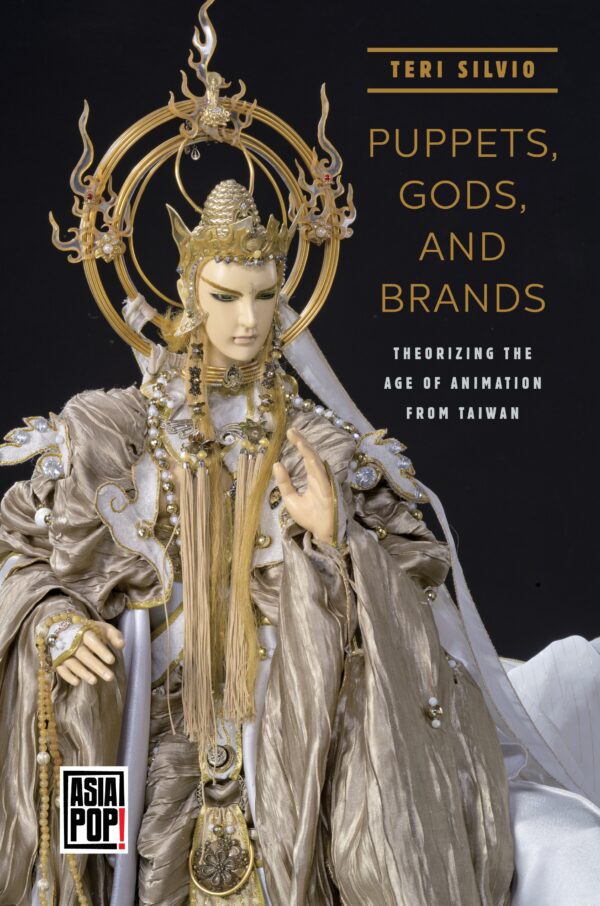
  • Teri Silvio on her new book, Puppets, Gods, and Brands

    November 18th, 2019

    Puppets

    https://uhpress.hawaii.edu/product/puppets-gods-and-brands-theorizing-the-age-of-animation-from-taiwan/

    Interview by Ilana Gershon

    Ilana Gershon: What first led you to start thinking about animation?

    Teri Silvio:  Well, I started off by studying drama, and I wrote my dissertation on Taiwanese Opera.  Taiwanese Opera is a genre in which women play all of the leading roles, both male and female, and the vast majority of fans are also women.  I chose it because I was interested in how cross-gender performance works in contexts where it’s a long-standing historical tradition, rather than consciously feminist experimentation.  I was writing up my project proposal around the time Judith Butler’s Gender Trouble and Bodies That Matter were published, and basically, I was curious whether drag could still be considered “subversive” when it was what your mother and grandmother watched.  (The answer, in case you’re wondering, is yes and no — Taiwanese women who grew up watching this genre tended to already think of gender primarily as a kind of habitus, but they didn’t think that had anything to do with why men had more power in Taiwanese society.)  Anyway, when I started working at a research institute in Taiwan, I had to come up with a new project.  At temple festivals I had noticed that there were often two stages, one showing the opera, and another showing puppetry, which was a genre that was performed and watched primarily by older men.  Also, I had seen some of the Pili puppetry series on television, and was amazed by it.  It looked like someone had decided to remake Tsui Hark’s swordsman fantasy films using puppets — there were all kinds of wild special effects, and theme songs, along with the romanticization of brotherhood you get in the swordsman genre, I just loved it at first sight.  So I decided to do a project on puppetry and its relationship to masculinity.  I was curious why drama and puppetry were so gendered in Taiwan.  I found out pretty quickly that after puppetry was adapted to television, and then to digital video, women had started to become fans.  In fact, the most active fans of the Pili series were women.  One of the activities that women fans of Pili enjoyed was cosplay, and I started going to cons and interviewing the (mostly) women I found who were cosplaying puppet characters.  I started asking them the questions I’d asked opera actresses and fans — Do you identify with the character you’re dressed as?  How do you get into character?   And I would get these puzzled looks, or long descriptions of buying bolts of cloth and sewing costumes, but nothing about embodiment or psychological identification.  When I asked people how they felt in costume, they’d say things like, “It’s like the character is with me,” but never “I feel like I am the character.” So that’s when I started to realize that there was an important, if elusive, difference between puppet characters and characters embodied by actors, and I started to think about puppetry as something more than just a variation on theatrical performance, that puppetry did something other than construct identities.  And from there I started thinking about animation in the broader sense, what it means to bring objects to life.

    Ilana Gershon: In your book, animation functions in the way that media or language functions for some analysts.  Not every group understands what media or language does in the same way – Japanese approaches to cell phones are different than American approaches because of their media ideologies.  What is a Taiwanese take on animation?

    Teri Silvio:  Different cultures have what I call different modes of animation — ideas about what kind of objects can be animated, what aspects of personhood can be projected into them, and how that can be done.  These ideas are grounded in specific cosmologies, ideas about the nature of humanity and the nature of the non-human world, how they came into being, and the differences between them.  Almost all anthropological studies of puppetry discuss its ritual functions.  But I think the book that was most helpful for me was Scott Cutler Shershow’s book, Puppets and “Popular” Culture.  Shershow looks at the theological grounding of puppetry in Western culture from Plato’s allegory of the cave to Jim Henson’s Muppets.  He looks not just at puppetry practices, but at how puppetry has been used as a trope, and finds that despite changes in the moral values of puppetry in Western discourse, it is almost always seen as a version of “playing God,” as a re-enactment of Genesis.    In contrast, many scholars working on Japanese manga and anime, especially those writing about the works of Miyazaki Hayao and Oshii Mamoru, have noted how Japanese animation reflects Shinto animist ideas about all kinds of objects having spirits or souls.

    What I found in Taiwan was that practices of investing things with agency tended to focus on a specific type of object, the ang-a, which is an anthropomorphic figurine, usually small.  Puppets are the paradigmatic form of ang-a, but statues of gods which are made for worship are also called “just ang-a” before they are ritually animated.  Chinese folk religion is very human-centric, and investing material objects with human qualities has to start with the object being given physical human qualities — faces and bodies.  Animated animal characters in Taiwan, whether they are deities or logo characters, are almost always anthropomorphized.

    Another important aspect of the religious grounding of animation in Taiwan comes from the way that religious icons have genealogies.  New icons of a particular deity usually contain incense ash from the burner of an older icon, so there is a kind of contagious magic at work, with substance being passed down from “original” to “divided” icons.  The proliferation of icons is seen as evidence of that god’s efficacy, and also as how that god comes to have more presence and power in people’s lives.  One of my arguments is that, while people do not think that puppet or manga characters are ontologically similar to gods, they do see the relationship between popular culture characters and their many tie-in products as being similar to the relationship between gods and their icons, and there’s a lot of overlap between the vocabulary and practices of Chinese folk religion and those of Taiwanese puppetry and manga/anime fandoms.

    Ilana Gershon: With Hong Kong protests happening in the background, along with such a complex legacy of various colonialisms in East Asia, I was wondering if you could speak to how easily some forms and aesthetics seem to travel in this region, despite or maybe because of the regional politics.

    Teri Silvio:  The markets in cultural products throughout East Asia are heavily influenced by two major producers, Japan and the United States, and domestic content producers are constantly struggling to break through their hegemony (the PRC is a special case here, where import of foreign cultural products are strictly limited by the state, but even there American and Japanese influence is felt).  This has more directly to do with American control over distribution networks that was set up after World War II, and a concerted push by Japan to establish similar distribution networks throughout Asia starting in the late 1980s (which has been documented in detail by Koichi Iwabuchi and others).  The degree to which different countries’ products dominate local markets varies, not only by country, but also by generation and by industry (for instance, in Taiwan, American, Japanese, Korean, Chinese, and local bands are all competitive in the popular music market, but over 90% of the comic books on sale in Taiwan are translations of Japanese manga). So what popular culture is available, and what is mainstream, is largely determined by government policy and corporate strategy. The historical experience of colonialism is more a factor in terms of how cultural products are received in different countries.  So for instance, Japanese cultural products are less controversial in Taiwan than in Korea or China, where there are frequent boycotts of Japanese products, and this has to do not only with the differences in how the Japanese administered different territories under their control in the early twentieth century, but also in how the colonial era took on different meanings in light of what came after.

    In this context, Iwabuchi and others have argued that one reason Japan has succeeded in exporting so much of their popular culture throughout East Asia is the way that they create the sense of “cultural proximity,” the idea that contemporary Japan represents a kind of modernity different from that represented by Hollywood and other American products, a modernity that is less alien and more easily imagined as achievable.  But the idea of cultural proximity can be a double-edged sword, especially if it is too explicit, since it can recall imperial Japan’s “Greater East Asian Co-Prosperity Sphere” ideology.

    In the book, I am more interested in what globalization looks like if we focus on animation genres, rather than performed, or live action ones.  On the one hand, I look at how the Pili International Multimedia Company has tried to market their video puppetry overseas, trying out different models, with their most successful attempt at globalization happening when they cooperate with a Japanese animation creator.  I argue that Pili crosses borders best when it presents a vision of what globalization might look like if it were motivated by traditional Chinese structures and concerns, and that the use of “traditional” genres and media creates a different kind of trans-East Asian cultural proximity from that created by idol dramas.  So I note that, while the Pili company’s attempts to be “the Disney of Taiwan” largely failed, the fandom spread quite rapidly, through shared practices that might be thought of as “folk culture,” such as the collective re-creation of a wide variety of versions of the characters in different media, and the proliferation of ang-a.  While the cultural proximity of idol dramas tries to make an end run around historical trauma by focusing on shared modernity, Taiwanese video puppetry makes an end run around the traumas of colonial and post-colonial modernity by focusing on aesthetics, practices, and ideologies that unite the pre-modern past and the post-modern present.

    Ilana Gershon: You argue that men and women have different relationships to various forms of animation.  In what ways and how is this shaped by overarching labor issues?

    Teri Silvio: I look at this mainly in the chapter on cosplay, which is primarily an activity for women fans of puppetry, manga, and anime.  I ask why cosplay is so appealing to young women, and not to men.  I work from the basic premise that cosplay is one of many forms of play that function as a sort of safe, enjoyable place to practice skills and forms of sociality that are necessary in the less safe and enjoyable spaces, especially at work.  Cosplay is, at the surface level, a kind of performance.  And most cosplayers are working in the pink collar sector (as secretaries, kindergarten teachers, salespeople, and so on).   In the 1980s, Arlie Hochschild worked with flight attendants, and found that they think of their work in pretty classic Goffmanian terms – they saw their main work skills as performances of self, impression management, controlling the moods of passengers by controlling their own mood and embodiment.  So one could see cosplay as a play form of the emotional labor that these women have to do in their jobs.  But cosplay only started in the 1990s, and to find out why it became popular when it did, we need to look more closely at what has changed in pink collar labor.  The Italian Autonomists are probably the theorists who have tried to outline what’s going on with post-industrial labor most thoroughly.  While their idea of “immaterial labor” can be useful, and they do note gendered divisions of labor within that category (basically, men do programming, women do caretaking), the way they think about digital technology tends to help us understand what’s changing in men’s work, but cover up what’s happening in pink collar work.  One of the big differences between the women cosplayers I interviewed and their mothers is how much of the work of emotional labor they do online, as opposed to in person.  Taiwan has one of the world’s highest cellphone ownership and internet penetration rates, and young people here spend huge amounts of time on social networking platforms, online chat groups, cellphone messaging, and so on. Emotional work that their mothers did through embodiment, they have to do via online avatars or personae created through text and image, that is, through animation.  But at the same time, of course, there are still lots of situations where they do have to do embodied performances of gender.  So I think that one of the reasons why cosplay has replaced other forms of embodied play at this point in time is because it lets women play with how to negotiate performance and animation – how to communicate through the body without having to enter into a role, how to use their bodies as puppets instead of as outward manifestations of some inner essence.

    Ilana Gershon: You suggest that animation can be the basis for a new form of political activism.  How would this work?

    Teri Silvio: If only I knew – I’d go out and do it!  You should probably ask John Bell, because he’s been doing amazing political puppetry and thinking about how to use puppets for activism for so long.  But I do see a lot of potential for getting out of the traps of identity politics if we start thinking of identity as something that’s created through animation, through the collective projection of aspects of our selves outward, rather than as the interiorization of roles. It might help us let go of the idea that our identities are something we possess, and other people’s identities are something we have no stake in or responsibility for. Since I finished the book, I have seen some intriguing examples of people using what I would call animation practices in political activism.  I was on a fabulous  conference panel recently (thanks to Laurel Kendall for organizing it), and one of the papers was by Moumita Sen, who talked about a group of leftist activists in West Bengal who have been trying to create Adivasi (indigenous) solidarity by remaking a demon into a god.  They made statues of this new god with dark skin and muscular bodies, combining traditional Hindu iconography with the iconography of the working-class hero.    And I’ve seen the image of a cute cartoon pig in lots of graffiti from the Hong Kong anti-extradition bill protests.  At first I thought it was McDull, the protagonist of a series of anime who is a little boy pig being raised by his overworked mother in the city, and who is affectionately seen as a symbol of Hong Kong identity.  But it isn’t; apparently it’s a sort of emoji character from a messaging service that the young protesters are using.  Which is in some ways more interesting, because emoji characters are more open than anime characters (although the categories overlap, as some anime characters have their own emoji series), they primarily represent states of mind, what they say about identity is there, but secondary.  Anyway, I’m really hoping I can do some more work on the use of emoji characters soon, because I’m really intrigued by how they circulate and can give people a sense of a collective mood, or set of moods, emerging from the chaos of online discourse.

  • Mary-Caitlyn Valentinsson on her dissertation

    October 28th, 2019

    My dissertation, titled “Language Use and Global Media Circulation Among Argentine Fans of English-Language Mass Media”, explores the links between globalization, media/pop culture, and language through a study of Argentine fans of massive English language media and pop cultural franchises. I look at how Argentine fans of franchises like Harry Potter, Doctor Who, Star Trek, Supernatural orient to English as a semiotic resource made available through these texts—and how engagement with globally-circulating media fandoms offers a venue for working out local ideas of class status and Argentina’s position within global cultural flows (Appadurai 1996).

    Page 99 (which is the PDF page 99 and the “real” page 99—I purposefully arranged my pagination in this way to avoid potential mis-matches like that) bridges two data excerpts that I use to give ethnographic detail about how orientations to subtitling vs. dubbing relate to Argentine notions of socioeconomic status. (For clarity’s sake, I’ll include the data that appears on page 98; for length’s sake I’ll leave out Excerpt 17, which essentially makes the same point as Excerpt 16).

    Excerpt 15. “Las voces originales”

    1 me gusta el sonido original (.) las voces originales (.) I like the original sound (.) the original voices (.)
    2 el tratamiento de sonidos (.) como te dije yo había the way the sounds are (.) like I said before I’ve
    3 estudiado antes (.) sé que se pierde algo pasando al studied [English] before (.) I know you lose things
    4 castellano y no (.) prefiero ir no sé ir a otro cine pero translating to Spanish and no (.) I’d rather I
    5 (.) ver los subtítulos (.) sí dunno go to another theatre but (.) to see the
    6   subtitles (.) yeah


    This comment frames a preference for subtitled English-language media as a result of advanced instruction in English (lines 2-3). And indeed, as I have mentioned before, most of my participants have exceptional proficiency in English, largely due to self- teaching efforts rather than a particularly strong English-language education program in Argentina’s public schools. Pointing also to discourses of “maturity” that were mentioned earlier, these statements frame preference for subtitles as a stance held by people who “know better”.

    Of course, what these comments elide are the fact that access to high-quality English language education in Argentina is class-stratified. As discussed throughout this section, English language classrooms in public schools leave much to be desired, so unless one’s family has enough disposable income to pay for attendance at an instituto, there are limited resources for developing the kind of linguistic proficiency that is presumed necessary to “prefer” subtitling to dubbing. Still, commentary that explicitly invokes the role of class in preferences for linguistic mode of media consumption did come up. See, for instance, these two comments from online surveys in Excerpts 16 and 17.

    Excerpt 16. “Una disposición estatal”


    1 Hace un par de años las producciones originalmente A few years ago productions originally in English
    2 en inglés solían subtitularse, ahora suelen consumirse tended to be subtitled, now they tend more to be
    3 más dobladas en la televisión por cable o abierta, consumed dubbed on cable or public broadcast tv,
    4 dado a una disposición estatal que buscaba el because of a government program to develop the
    5 desarrollo de la industria del doblaje y favorecer dubbing industry and favor Spanish-language
    6 contenido en español. Por lo general, los doblajes son content. In general, the dubs are good and faithful
    7 buenos y fieles al material original, prefiero las to the original material, I prefer the subtitled
    8 versiones subtituladas dado que considero que a versions because I think that sometimes certain
     9 veces ciertos significados originales pueden perderse meanings can get lost in translation. Subtitles tend
    10 en la traducción. La subtitulación suele preferirse en to be preferred in higher socio-economic classes
    11 estratos socio-económicos más altos (los que llegado (even among those who can understand without
    12 al caso incluso pueden entender sin la necesidad de subtitles, depending on their competency in
    13 requerir subtítulos, dependiendo de su competencia English), in contrast to dubbing.
    14 con el inglés) al contrario del doblaje.  

    Because the chapter this page appears in is focused on tracing the major ideological frameworks through which Argentineans think about the role of “English” in their country, it doesn’t capture how this plays out in the way Argentine fans of these media franchises construct their identities as fans (that’s Chapter 4), or how fans will creatively reinterpret/recontextualize/remix globally-circulating media texts in a way that feels iconically “Argentine” (that’s Chapter 5). But by and large I do feel that this section nicely represents some of the major themes of my dissertation.

    One such theme is the balancing of binaristic tensions—educated vs. uneducated, monolingual vs. bilingual, local vs. global—and how these get worked out through the perception and use of language. Another key theme of my dissertation highlighted here is how media and pop culture are used to make sense of people’s everyday life experiences. The speakers in Excerpts 15 and 16 have constructed cultural narratives that legitimize or justify certain modes of media consumption as indicative of particular class or educational backgrounds—and in the case of Excerpt 16, how such narratives are perpetuated by the state! At least in a superficial way, page 99 shows a glimmer of how English-language pop culture is made (linguistically) relevant to Argentineans’ every day lives.

     Valentinsson, Mary-Caitlyn. 2019. “Language Use and Global Media Circulation Among Argentine Fans of English-Language Mass Media”. University of Arizona, Ph.D. Dissertation.

    References

    Appadurai, Arjun. 1996. Modernity at Large: Cultural Dimensions of Globalization. Minneapolis, MN: University of Minnesota Press.


    Mary-Caitlyn Valentinsson, Ph.D is a Visiting Assistant Professor in the Department of Anthropology at Appalachian State University. Her work focuses on the social circulation of language, pop culture, fandom, and social media. Find her work at mcvalentinsson.com or on Twitter @DrMCV.


  • David Flood takes the page 99 test

    October 21st, 2019

    My dissertation examines everyday interactions between two groups of white people in the US who to all appearances should get along but don’t, despite their sustained efforts towards solidarity and a shared musical practice. They are divided by class. One group consists of rural working-class musicians who play in an informal amateur musical circuit in western North Carolina. The other group consists of transplanted musicians from coastal cities—mostly leftist activists—who have relocated to the area to pursue what they call ‘traditional music’ (more or less, the music that the working-class white people play: bluegrass, old-time, classic country). I show that their constant disagreements and misunderstandings emerge from classed differences at the rather profound level of ethics of sociality: what they think it means to be a good relational subject, or person.

    I describe in and through musical sociality the ways that divergent and even antagonistic white racial identities (or ‘whitenesses’) were co-constituted with class difference, and came to powerfully shape people’s understanding of themselves and others in everyday life and politics. This differentiation is vital to understand in order to contextualize and respond to populism and ethnonationalism. In fact, for the rural working-class white people I describe, the primary cultural ‘other’ against whom they agonistically defined their own sense of good personhood was in fact urban middle-class white people. For the middle-class white people in question, working-class lifeworlds were a space where they projected many of the desires and anxieties of life in late capitalism.

    This dynamic, needless to say, has historical antecedents. As such, page 99 of my dissertation is smack in the middle of a very long history chapter that ranges from Herder and the German counter-enlightenment to the particular ways that the long history of European folklore arrived in Appalachia proper. The page concludes with a quote from Cecil Sharp, a British folklorist and revivalist who exemplified a kind of fin-de-siècle leftism, combining his anti-modernist sentiments—derived in part from the British Fabian Socialism of the day—with a racial-cultural essentialism familiar in the lineage of Herderian thought.

    Sharp writes about white Appalachian settlers of northern European descent, from whom he spent several years of World War I collecting putatively British folk songs:

    “That the illiterate may nevertheless reach a high level of culture will surprise only those who imagine that education and cultivation are convertible terms.  The reason, I take it, why these mountain people, albeit unlettered, have acquired so many of the essentials of culture is partly to be attributed to the large amount of leisure they enjoy, without which, of course, no cultural development is possible, but chiefly to the fact that they have one and all entered at birth into the full enjoyment of their racial heritage.  Their language, wisdom, manners, and the many graces of life that are theirs, are merely racial attributes which have been gradually acquired and accumulated in past centuries and handed down… It must be remembered, also, that in their daily lives they are immune from that continuous grinding, mental pressure, due to the attempt to ‘make a living,’ from which nearly all of us in the modern world suffer.  In this respect, at any rate, they have the advantage over those who habitually spend the greater part of every day in preparing to live, in acquiring the technique of life, rather than in its enjoyment” (Sharp, 1917: 24).

    As I show in the rest of the work, this danger—the re-inscription of white racial virtue—remains a stubborn peril of a white middle-class leftism that is unreflexive about and uninterested in class difference. Whether it’s contemporary white middle-class leftists purifying their own whiteness by ascribing the evils of racism or white supremacy solely to working-class voters, or folkloric paeans to the virtuous agrarian whites of the heartland: class is the spectre that haunts white liberalism.


    Flood, David. 2017. Classed Cultural Ethics: Understanding Class Difference in the Contemporary US through Traditional Musical Performance and Radical Leftism. University of Virginia, PhD Dissertation.

    Citations:

    Sharp, Cecil J. 1917. English Folk Songs From the Southern Appalachians, Comprising 122 Songs and Ballads, and 323 Tunes. New York and London: G. P. Putnam’s sons.


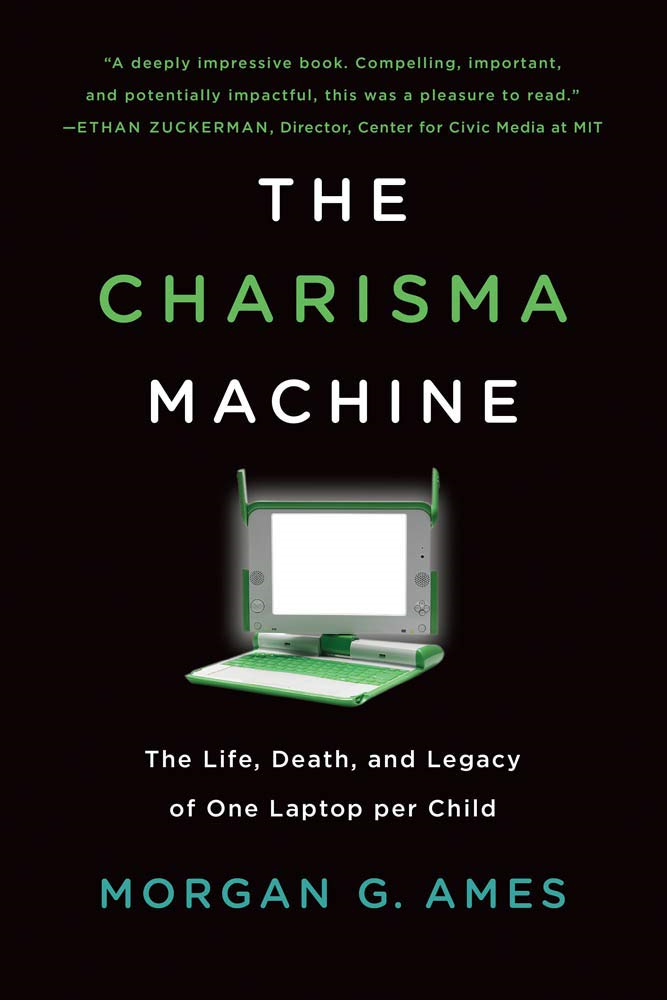
  • Morgan Ames on The Charisma Machine

    October 14th, 2019
    charisma_ames.png


    On Henry Jenkins’ blog, he interview Morgan Ames about the One Laptop Per Child project.   With Jenkins’ permission, I am re-posting the interview here (but see the original here: http://henryjenkins.org/blog/2019/10/3/interview-with-morgan-j-ames-on-the-charisma-machine-the-life-death-and-legacy-of-one-laptop-per-child-part-i

    Henry Jenkins: You root the OLPC project in a particular conception of the relationship between technology and childhood in the thinking of Seymour Papert. What do you see as some of the core assumptions shaping this vision of ‘the technically precocious boy”?

    Morgan Ames: Nicholas Negroponte was certainly the public face of One Laptop per Child, but he readily admitted in his marathon of talks in the early days of OLPC that the very idea for the project was actually Papert’s, even though Papert was already retired when OLPC was announced. He often said that the whole project was “the life’s work of Seymour Papert.”

    And when you read through all of Papert’s public writing, from the late 1960s through the early 2000s, you can clearly see that connection. Papert started writing about the liberatory potential of giving kids free access to computers not long after after he joined MIT in the 1960s. Throughout the 1970s, he was a central figure in developing the LOGO programming environment. The branch he worked on, which ended up being the dominant branch, was built around the ideals of what he called “constructionism,” as a tool for kids to use to explore mathematical and technical concepts in a grounded, playful way. He kept advocating these same views throughout the 1980s and 1990s, even as LOGO lost steam after many of the really grand utopian promises attached to it failed to materialize.

    I argue that one of the reasons for this failure is that LOGO and many constructionist projects are built around a number of assumptions about childhood and technology that just aren’t true for all children — and in fact are only true for a particular set of children, mostly boys, who have a lot of support to explore technical systems.  


    Some of this support comes from their immediate environment: they have parents who bought them a computer, who helped them figure it out, who were there to troubleshoot, who supported their technical interests. If it wasn’t a parent, it was someone else they could turn to with questions. The programmers I’ve interviewed who proudly say they are self-taught had a whole constellation of resources like this to help them along.

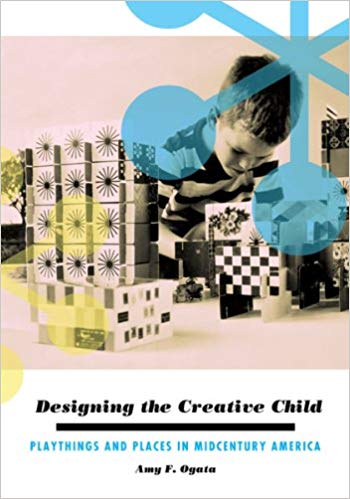
    But some of this support also comes from the cultural messages that we hear, and often propagate, about children. Messages about boys’ supposedly “natural” interest in tinkering with machines goes back at least 100 years — there’s this great volume called The Boy Mechanic: 700 Things for Boys to Do that was published in 1913! Then there’s transistor radio culture, engineering competitions, and a whole host of technical toys specifically marketed to boys in the decades following. Amy Ogata, Susan Douglas, Ruth Oldenziel, and many other fantastic historical scholars have traced these histories in depth. With the rise of computing, this same boy-centered engineering culture gets connected to programming, displacing all of the women who had been doing that work as low-paid clerical workers around and after World War II, as Nathan Ensmenger and Mar Hicks have shown. The same boy-centered culture also defined the video game industry in the 1980s.

    51bIpFHtpmL._SX348_BO1,204,203,200_.jpg

    From all of this, at every turn boys — and particularly white middle-class boys — are told that they belong in this culture, that they are (or can be) naturals at programming. Everyone else has to account for themselves in these worlds, and everyone else faces ostracism, harassment, and worse if they dare to stick around. It’s something I became pretty familiar with myself throughout my computer science major.

    When I talk about the “technically precocious boy,” it’s both of these pieces — the specific material and social support certain kids get, but also the larger cultural messages they live with and have to make sense of in their own lives. This is what social scientists call a “social imaginary,” or a coherent and shared vision that helps define a group.

    Unless projects very actively reject and counter these social imaginaries, they ride the wave of them. One Laptop per Child is one of these, just as Papert’s other projects were. Even though these projects tended to speak inclusively about “girls and boys” and “many ways of knowing,” they then turned around and extolled the virtues of video games and talked about technical tinkering in ways that wholly relied on this century of cultural messaging, which had long been incredibly exclusionary.

    Henry Jenkins: Did this conception constitute a blind spot when applied, unproblematically, to childhoods lived in other parts of the world? How might we characterize the childhoods of the people who were encountering these devices in Latin America?

    Morgan Ames: The biggest issue with relying on the social imaginary of the technically precocious boy is that the kids who identified with it have always made up a very small part of the population. If you think back to the youths of many of those who contributed to OLPC, who were discussing its similarities with the Commodores or Apple IIs of their childhoods — most of their peers couldn’t care less about computers. So to assume that somehow all or most kids across the Global South, or anywhere in the world, would care when this kind of passion is idiosyncratic even in places that have long had decent access to computers is a bit baffling to me.

    When I’ve said as much to friends who worked on OLPC, I often heard something along the lines of, “well, those past machines maybe only appealed to some kids, but this one will have much more universal appeal!” And Papert wrote about the universal potential of computers too — he called them the “Proteus of machines,” with something to appeal to everyone. I see similar stories in movements to teach all kids to code.

    But the majority of the kids I got to know in Paraguay — as well as those I met in Uruguay and Peru — just weren’t very interested in these under-powered laptops. I found that over half of kids in Paraguay would rather play with friends or spend time with their families, and didn’t find anything all that compelling about the device. The one third of students who did use their laptops much at all liked to connect to the Internet, play little games, watch videos, listen to music — pretty similar to what many kids I know in the U.S. like to do with computers. This is not to erase the cultural differences that were there, much less the legacy of imperialism still very much present across the region. But it really drives home just how wrong the assumption was that kids in the Global South would be drawn to these machines in a way that differed fundamentally from most kids in the Global North, that they’d really want to learn to program.

    olpc.png


    Henry Jenkins: You correctly note that the metaphor of the school as a factory often results in a dismissal of teacher’s role in the educational process. Yet, the OLPC and other Media Lab projects have depended heavily upon teachers and other educators to help motivate adaption and use of these new platforms and practices. How have these two ideas been reconciled in practice?

    Morgan Ames: The social imaginary of school-as-factory is a perfect foil for the social imaginary of the naturally creative child (and the technically-precocious boy as an offshoot of it). We certainly see messages all the time that portray schools with derision and contempt — in spite of a long and well-documented history of school reform, schools are often talked about as hopelessly outdated, mechanistic, and antithetical to children’s creativity. (This is not to say that I think schools are perfect as they are — I certainly dislike drill-and-test practices, for one — but they are complicated and culturally-embedded institutions, often asked to create impossibly large cultural changes with impossibly scant resources.) When One Laptop per Child, or other Media Lab projects, echo some of these sentiments, they hardly need explain themselves — the school-as-factory social imaginary readily comes to hand.

    But you’re right that how schools relate to teachers, and how teachers relate to these projects, is much more complicated. In his writing Papert very clearly condemns schools, but is much more equivocal about teachers, often casting them as “co-learners” even as they are charged with steering children’s learning toward mathematical ends. Other OLPC leaders said some terrible things about teachers early on — more than one said that most teachers were drunk or absentee, for instance — but local projects, including Paraguay Educa (the local NGO in charge the OLPC project in Paraguay), conducted teacher training sessions and expected teachers to use the laptops in classrooms. At the same time, OLPC and many local OLPC projects, including Paraguay Educa’s, talked about how the most interesting things kids would do with their laptops would probably happen outside of classrooms, and that they would soon leapfrog past their teachers in ability.

    I can’t fully resolve this paradox, but I can say that keeping the social imaginary of the school-as-factory alive is pretty valuable to many ed-tech projects that promise to overhaul an educational system that seems to be both in urgent need of fixing and receptive to quick technological fixes. However, it’s one thing to paint a rosy picture of the possibilities for technologically-driven educational reform without the need for teacher buy-in — but then when it comes down to actually implementing a reform effort, teachers become a necessary part of the project, because ultimately they are a necessary part of learning.

    Henry Jenkins: What are some of the important differences between the schools described in the rhetoric around OLPC and the actual schools you encountered on the ground?

    Morgan Ames: Negroponte exhibited some very wishful thinking in justifying the costs of the program. He’d tell governments that they should think of this as equivalent to a textbook, and put their textbook budget into this program. Amortized over five years, he said, a hundred-dollar laptop would be equivalent to the twenty dollars per year per student that Brazil, China, and other places budgeted for textbooks. But I found only one school in Paraguay that consistently used textbooks, and it was because they were sponsored by an evangelical church in Texas. If schools had any, they had some very old textbooks that were kept in the front office for teachers’ reference only. Most teachers wrote lessons on a blackboard, and students copied them into notebooks that they were responsible for buying.

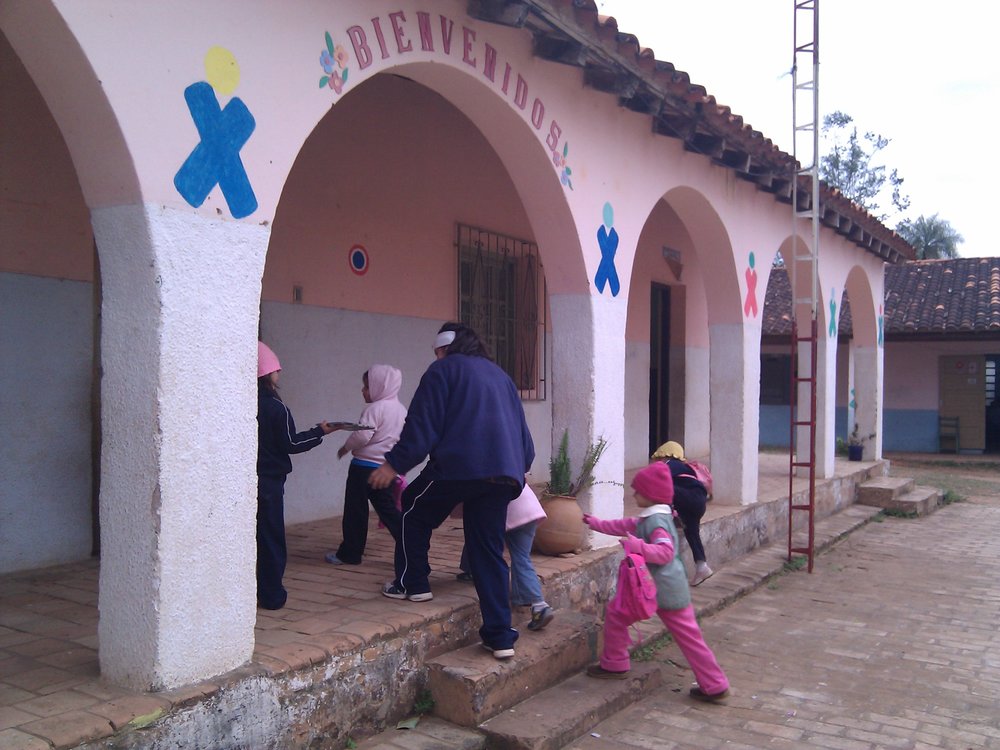
    Papert had a version of this analogy as well — but instead of textbooks, he equated computers with pencils. You wouldn’t give a classroom one pencil to share, he would say derisively — but even if OLPC’s XO laptop had actually been $100 rather than close to $200, that’s a far cry from a ten-cent pencil. Moreover, even ten-cent pencils were items that not all Paraguayan students could consistently afford. A good portion of Paraguay’s population are subsistence farmers and the Paraguayan school system has been underfunded for many decades now; some schools don’t have working toilets, and none provide photocopiers, paper, or even toilet paper or soap. Most classrooms did not have plugs for charging laptops or WiFi routers — the schools, with the help of local project leaders and parent volunteers, had to install those. And in some cases, the wiring that they used was mislabeled, so the plugs failed.

    olpc2.jpg

    Despite these rough conditions, many teachers really did care about teaching — they were not “drunk or absent entirely,” as Negroponte once claimed. But much like teachers in the U.S., they were beset from all sides by demands for their time, they were very underpaid, and many exhibited signs of burnout. Even so, some were really excited about the project, but most really didn’t have the time they would have needed to integrate a difficult-to-use laptop into their curriculum. In the book I include several vignettes from my fieldwork that describe in detail how these teachers would struggle to use laptops for lessons in spite of broken machines, uninstalled software, slow networks, and quickly-draining batteries. It’s no wonder that nearly all gave up in time.

    Henry Jenkins: The Constructionist paradigm leads us to see the web and media use as “distractions” from the core OLPC mission at the same time as the MacArthur Foundation’s Digital Media and Learning initiative was emphasizing the kinds of learning which could take place around games, social media, and participatory culture more generally. How would your results look if read through this different frame?

    Morgan Ames: Aside from some fairly abstract discussions of the virtues of videogames, constructionism generally doesn’t really discuss media use — it seems to exist in a cultural vacuum where students encounter a Platonic (or perhaps Papertian?) ideal of a computer with nothing but LOGO, and maybe Wikipedia, on it. But the connected learning framework — which, in the spirit of cultural studies, takes children’s interests and media worlds seriously as ideal starting-points for learning — was very much on my own mind throughout my fieldwork and analysis. And I was deeply impressed by the ways some kids found innovative ways around the XO’s hardware and software limitations, and the ways that a new video or music file would spread, student to student, through schools.

    The piece that was largely missing, though, was a way to bridge those interests with learning outcomes like literacy, numeracy, and critical thinking that are important for effectively navigating the world. A handful of parents and teachers had ideas about how to shape their children’s interests toward more learning-oriented ends, and I have a chapter devoted to their stories. But they were the exception, not the norm.

    Moreover, I would bring a critical media studies lens to this as well, and ask just what kind of influence advertisers including Nestle, Nickelodeon, and more should have in children’s educations. These companies developed content specifically for the XO laptop that was widely popular during my fieldwork, and thus had preferential access to children via an avenue that most considered “educational.” While I love the connected learning approach of really centering children’s cultures in the learning process, I am very critical of companies’ efforts to make money off of that.

    __________

    Morgan G. Ames researches the ideological origins of inequality in the technology world, with a focus on utopianism, childhood, and learning. Her book The Charisma Machine: The Life, Death, and Legacy of One Laptop per Child (MIT Press, 2019) draws on archival research and a seven-month ethnography in Paraguay to explore the cultural history, results, and legacy of the OLPC project — and what it tells us about the many other technology projects that draw on similar utopian ideals. Morgan is an assistant adjunct professor in the School of Information and interim associate director of research for the Center for Science, Technology, Medicine and Society at the University of California, Berkeley, where she teaches in Data Science and administers the Designated Emphasis in Science and Technology Studies.”

←Previous Page
1 … 38 39 40 41 42 … 56
Next Page→

Blog at WordPress.com.

Loading Comments...
  • Subscribe Subscribed
    • CaMP Anthropology
    • Join 259 other subscribers
    • Already have a WordPress.com account? Log in now.
    • CaMP Anthropology
    • Subscribe Subscribed
    • Sign up
    • Log in
    • Report this content
    • View site in Reader
    • Manage subscriptions
    • Collapse this bar