Page 99 of my dissertation, titled “Hearing Voices as Social Agents,” involves the observation that sparked my interest in auditory verbal hallucinations in the first place: those who hear voices routinely assign social identities to these voices. “I hear the voice of an old German guy,” someone might say. “Another voice is a young boy.” While these identifications seemed unremarkable to many of my interviewees, linguistic anthropological work demonstrates that such classifications are far from natural observations of self-evident characteristics. So, if identity is fundamentally intersubjective and emergent – as argued by Bucholtz and Hall (2005) – then how are these voices, heard only by a single person, assigned gender identities, racial backgrounds, and other socially meaningful positions?
My dissertation overall approaches the question of voices’ identities not as a cognitive reflex or a psychiatric symptom, but as embedded in socially driven semiotic processes. That is, voice-hearing is responsive to local ideologies about language and identity. Page 99 concludes a section on gender in particular as a salient site where these ideologies play out. The vast majority of descriptions of voices include reference to gender, including in the use of third person pronouns. That opened up the space for me to ask a deceptively simple question: “How can you tell that voice is a man/woman?”
My interviewees, who were all English-speaking voice-hearers from the United States or United Kingdom, drew from a range of different gender ideologies in their explanation. Many made reference to vocal pitch as the most salient feature. No other linguistic sign was discussed nearly as much. Several participants drew from trans activism in casting gender identity as an interior feeling that must be self-identified to be authentic; for these participants, voices seen as lacking interiority only seemed to have genders. One participant described a voice coming out to them as having a certain gender identity and sexual orientation. As highlighted throughout my dissertation, auditory hallucinations can do some pretty complex social work!
References
Bucholtz, Mary and Kira Hall. 2005. “Identity and interaction: A sociocultural linguistic approach.” Discourse Studies, 7(4-5), 585–614.
Ilana: Reading about audit culture as a professor feels so much like a fish being told “notice this water.” What inspired you to compare audit cultures and what would you like academics to take away from the comparison?
Cris Shore and Susan Wright: We have often used this ‘fish in water’ metaphor, or more precisely, the difficulty of trying to perceive the contours of the goldfish bowl in which we are swimming. That is precisely the aim of our book: to render visible something that is often unseeable and invisible because it is so taken for granted. We are not trying to compare audit cultures as multiple and distinct entities. Rather, our aim is to trace the genealogy of a particular form of neoliberal governance and power, one that works through similar technologies of measurement, performance indicators, and competitive rankings that are adapted to different political and organizational contexts. Audit is a good example of how regimes of power work through the normalization and naturalization of their own arbitrariness. The spread of audit culture has become so pervasive and entrenched that it is now the water in which we swim, and it barely registers as abnormal or something that can be challenged.
What inspired us to interrogate this phenomenon was a recognition that these technologies were affecting our own lives, reshaping our sense of academic professionalism, and changing our work practices, particularly in the universities where we were employed. In the UK, this started in the 1980s with Mrs Thatcher’s reforms of the public sector and continued into the 1990s through the spread of New Public Management (NPM) and marketisation. As a result, we were being constantly impelled to focus on things that were being measured and audited (such as efficiency savings and productivity), and that was pulling us away from devoting our time and energy to the teaching, research and pastoral care that we thought were important according to our sense of professionalism. The idea of auditing, which originally entailed practices aimed at verifying the reliability of a company’s financial accounts, was now being applied to organizations throughout the public sector. Now every school, university, charity and professional body in the UK was having to prepare itself for scrutiny and inspection by external auditors by creating the paper trails, records, and minutes that would make them supposedly auditable. What struck us about this process was the transformative effect it had on those organizations, including changing the behaviour and subjectivities of those who worked in them. Auditing had morphed from a simple set of techniques designed to promote trust in the veracity of a company’s financial accounts into a powerful instrument of management and a platform for extending neoliberal governance.
Ilana: You describe the spread of indicators and ratings as a form of populist numeracy that conceals its own context, and I was hoping you could expand on why you view this as a form of populism.
Cris Shore and Susan Wright: This is not about populist politics in the sense of a project that actively seeks to foment disruption, divisiveness and polarization to capture votes by offering easy solutions to complex societal problems. Rather, the spread of indicators and rankings and metrics is the latest iteration of a much longer process where statistics have been central to state building and the art of government. In the book, we link the wide acceptance of this form of governing-through-numbers to the role that indicators and rankings now play in mass society and popular culture. For example, the raft of TV programs and game shows that invite audiences to rank or vote for contestants such as Bake Off, the X Factor, Love Island, America’s Got Talent; or websites that ask users to rate services such as Trip Advisor, Yelp, and Booking.com. We’ve also witnessed the spread of online platforms and apps that invite consumers to rank individuals for their performance such as Amazon, Uber, and Rate My Professors, and even wearable technologies to measure one’s own performance, health and fitness. It is this penetration of the logic of measuring and ranking into popular culture that has enabled the growth of auditing to be taken for granted. Social media platforms and marketing campaigns regularly use gamification techniques to create implicit or explicit rankings among users that further popularize their rating systems; as Gramsci highlighted, hegemony is most powerful when it incites pleasure as well as becoming common sense.
Ilana: In reading your book, I was struck by an inversion of Austin’s insight that for performative utterances to be effective, the conditions have to be felicitous. One cannot be sworn in on a copy of Das Capital, it has to be the Bible. You point out so many ways in which various forms of corporate failures – both failed techniques and failed organizations – never seem to be efficaciously recognized as failure, while all too often public organizations that most of the participants experienced as good enough or even flourishing are framed as failures by audit techniques. This leaves me wondering – what does it take to make failure visible?
Cris Shore and Susan Wright: From a managerial perspective, the political conditions for audit are extremely felicitous, as audit technologies have become the central tool in a logically sealed system of management and governance. It works like this: First, central government devolves responsibility for service delivery to lower-level agencies and uses performance indicators and rankings to regulate and hold these agencies to account. That requires the agencies to develop a top management that is incentivized to focus on the metrics and performance required by government rather than what is happening in the day-to-day, front-line work of delivering services. A separation between management and workforce allows management to ignore failures, of which the workforce is only too aware. When marketisation and managerialism fail, the usual response is to say that the fault lies with the workers, or that an organization is not sufficiently competitive or efficient, and to demand further management reforms and marketisation. This enables New Public Management to be impervious to its own failures.
What does it take to make failure visible? There are several steps needed here. The first is to change the way to measure what counts as success. We are asking the wrong questions. There is need for a revolution in how we understand the value and purpose of professional work, even within the audit and accounting industry, and how we evaluate and incentivize organizations and individuals. The second, which we elaborate in our conclusion, is that we need to keep reminding people of the costs of audit culture and the damage it inflicts. This means de-naturalizing it and showing how it could be otherwise. The problem, as we highlight, is that policymakers and politicians have repeatedly ignored the systemic failures of the audit industry because powerful vested interests benefit from the status quo and stand to lose from changing it.
Ilana: You compare audit cultures in so many different countries in this book – Denmark, the UK, China, Australia, the United States, and so on. How is audit culture affected by the kind of government one has – democratic, competitive authoritarianism, and so on – or is the type of national government irrelevant, and if so, what is it about audit culture that it can standardize across so many different systems and governments?
Cris Shore and Susan Wright: Audit culture is not a system of standardization. It is a rationale of governing and set of techniques that can be adapted to different systems of governance, national as well as international. A good example of this is the European Union’s Open Method of Coordination, particularly as it was used in the so-called ‘Bologna Process’ for harmonizing higher education across the EU member states and beyond. The idea of harmonization was to create a common language for describing – and accrediting – different higher education systems to promote student mobility and mutual recognition of their qualifications. However, the result is that there are now 49 different national higher education systems all of which use the same language to describe themselves. This veneer of what we, with Don Brenneis, have elsewhere termed ‘commensurability’, enables the European Higher Education Area to market itself globally as a region based on apparently coherent, compatible educational standards.
Although audit culture was initiated by neoliberal Western states, it is easily adapted to authoritarian regimes and non-Western countries. Its appeal to rulers lies in the fact that it is a coercive and punitive form of accountability that relies on control at a distance and external inspection and through the use of constant surveillance and measuring, works to instill habits of self-management and self-discipline.
Ilana: I know that this wasn’t the focus of your book, but while reading, I couldn’t help wondering if the spread of audit culture can be connected to the growth of conspiracy theories and disillusionment with the classic liberal order. What do you think?
Cris Shore and Susan Wright: The spread of audit culture is linked to neoliberalization and therefore to the ideological repudiation and dismantling of the post-war liberal order and the welfare state consensus in the UK and elsewhere. Our book does not explore any link between disillusionment with the liberal order and proliferation of conspiracy theories. However, audit culture has helped create the conditions for loss of confidence in the institutions of democracy and for fueling loss of trust in professions. Given that audit culture is supposed to be about evidence-based decision making and reliable and robust metrics, when people see that the management of organizations or governments relies on spurious and arbitrary numbers, one could speculate that this may also fuel mistrust in science and facts: but this is speculation and not a causal explanation for the rise of conspiracy theories.
Ilana: I am so glad that you end the book by offering readers hope and useful strategies, and was wondering what you most wish academics would begin implementing these days.
Cris Shore and Susan Wright: Having spent most of our book analyzing and critiquing audit culture we wanted our final chapter to look forward by considering more positive alternatives and how to achieve them. Hope has to be allied to a strategy for change, and we identified four different strategic scales where actions should be taken.
The first is to use the spaces and opportunities that are available to us, as academics and members of organizations, to reshape our teaching, research and service in ways that accord with what we think we should focus on as professionals. For some of us, that room for maneuver may just be our own classrooms or lecture halls; for others a congenial department or project may provide opportunities to act collectively. Some research projects offer chances to resist the competitive, individualized and hierarchical ethos that neoliberalisation engenders, and promote collegial relations based on critical encouragement and kindness on an inter-institutional and even international scale.
The second scale involves using critical reflexivity to analyze the workings of the whole system in which we are situated and understand how to overcome the constraints and focus on what matters instead of what counts. There are not many good examples of higher education achieving this but, as we illustrate in the book, some other sectors have experience from which we can learn. The key lesson here is to establish working environments and relations in which academics are trusted to exercise their own professional judgement to take initiatives and set the standards by which they should be held to account. That requires a change in local management so that it becomes facilitative and supportive rather than concerned with adherence to managerialist requirements and to decontextualized performance measures. To change local management, government needs to change the ways in which it calls managers to account. That means more deliberative and narrative-based accounting and less reliance on abstracted metrics.
The third scale entails reforming the audit industry. In our conclusion we recount the raft of reports that have clearly identified the systemic failures and fraud that is rife in the audit and accounting industry and the reforms that are needed. The problem is that governments lack the political will and resources to put these reforms into effect. Governments typically depend on the Big Four accountancy firms for their expertise in drafting policies and legislation with the result that there is a revolving door for auditors between the public and private sectors that undermines any serious attempt to address conflicts of interest or prevent institutional capture. Those conflicts of interest have been exacerbated by the Big Four’s expansion into advisory services, which now count for most of their revenue (and include aggressive tax avoidance strategies). Despite repeated fines for botched or fraudulent audits, calls to separate their auditing from their advisory arms continue to be ignored. After the collapse of Enron, with only four major international accountancy firms controlling the market, they have become too-big-to-fail.
The fourth scale concerns the societal need to restore democracy. Audit culture has seriously eroded the foundations of trust and accountability in liberal democratic society and will continue to do so unless checked. Ironically, the need for reliable financial accounting has never been more urgent. We are not against auditing or accountability as there clearly needs to be greater transparency and probity in the world of financial accounting. But the instruments of financial accounting should not be used as principles of organizational management and governance. We also need a system that more clearly connects to – and reflects – the work of public professionals rather than externally-imposed calculative systems based on numerical assessment. The ideas for this are already well developed in the fields of critical and deliberative accounting. The key point here is that we need a system that restores trust by involving all the people engaged in a field of activity (the deliberative dimension) and by generating narrative accounts rather than numbers. Acting on these four scales, we believe, is the way to reverse the damage caused by audit culture and restore democratic accountability in our organizations and society.
Elaine Lu: If you were to describe in one sentence the core argument of the book, what would that sentence be, and why?
Timothy Gitzen: Despite the security panics that seek to govern and control queerness, queer youth have become creative experts in laterally maneuvering through diverse experiences that cultivate their queer sexualities at a time when queerness is more contested than ever.
My book, as you have noted in a below question, oscillates between critical legal and policy analysis and discourse analysis of queer media texts. I do this because the discourse analysis must be contextualized within critical legal and policy analysis, that the sex panics that weave through the United States seek to control and govern how we interpret and treat queerness and queer youth. But that is only half the story. The other half—the more liberating and perhaps hopeful half—is the plethora of contemporary queer popular culture media artifacts that do not ignore the precarity of being a queer youth in the U.S. but offer glimpses into how to cultivate durable and even hopeful lives amidst such precarity.
Elaine Lu: How does framing sex panics as security panics shift our understanding of queer youth and of current legislative battles around queer youth?
Timothy Gitzen: Security panics are panics about the future that get actualized and acted upon in the present, and in so doing, they displace violence that takes place in the present for the sake of a future that may or may not happen. Part of what I noticed in my research is that while sex panics are hardly new in the U.S. or Europe, the securitization of sex manifests concerns over sex and children as a concern over the future of the child, of sex, and of queerness. Actions that then take place in the present—say, book bans or Don’t Say Gay laws—are rooted in a security logic that imagines children’s exposure to queer materials and the seemingly negative effects this will have on children, namely the child will become queer as a result of this exposure.
To frame sex panics as security panics is to attend to both the long history of sex panics in the U.S. while demonstrating what’s new with this current batch of sex panics. Doing so also requires a new analytic for interrogating these renewed sex panics, one that examines the entanglements of sex and security. As I define in the Introduction to my book, securitization denotes “(1) individuals’ and populations’ search for safety from and inside an insecure, injurious, and discriminatory state and general population; (2) the active targeting of marginalized populations as threats to the security and coherence of the state and general population; and (3) the state and general populations’ mobilization of fear to enthrall participation in securitization practices and to target those marginalized populations” (pg. 13). Crucial in this three-part definition is how states and populations not only target marginalized populations, but how the state and population are inherently injurious, insecure, and discriminatory. To refract sex through this definition is to notice how new security logics that orient us towards future catastrophes are enacted in the present moment, categorizing nonnormative sex as threats to our security and facilitators of that imagined catastrophe.
Recognizing the securitization of sex is to also acknowledge the globalization of security, especially in a post-9/11 world, and how sex is never just sex; it intersects with concerns over race, gender, ethnicity, immigration, refugees, terrorism, ability, and nationality. Others have certainly drawn much needed attention to this, but what my book offers is, again, that reprieve of thinking about how queer youth, in particular, navigate such contexts. If queerness is a threat, then queer youth are framed in this paradigm as threat-makers, as the locus of queerness and its threatness. Acknowledging this framing is necessary if we are to reckon with not only the securitization of sex, but the ways queer youth are treated, discursively, legislatively, politically, economically, and socioculturally.
Elaine Lu: While reading the book, something that always lingers in my mind is how people’s past experiences and presuppositions about the future get delivered and enacted in the present, yet dynamically evoke, highlight, or even constitute social-cultural context in the future. As mentioned in the book, though banning books is happening in the present, the logic behind such action is based on people’s collaborative presuppositions about the future, as if “learning about gay makes their children gay.” I wonder how you would describe the temporality of the present sex/security panics in relation to the past and the scripting of the future? How does the circulation of queer TV shows/media content contribute to “unscript” the present?
Timothy Gitzen: My book discusses two kinds of temporalities: the first one is predicated on security logics that, as you’ve noted in the question, sees the future, informed by the past, enacted in the present. We see this kind of temporality throughout the sprawling security apparatuses and assemblages globally: past information feeds the security machine that will forever crave more information, and what the machine spits out is its best guess as to what will happen in the future. This is happening with AI as well; what is important to remember is that “past” need not be a distant past but could be as seemingly contemporaneous as the present moment—minutes, seconds in the past still constitute a past that can be mobilized to inform future predictions. Crucial for this security logic is preemption: security governance seeks to prepare for the future, not necessarily prevent it. This could be because they know that there is no preventing the future catastrophe, as with a future pandemic. But this could also be that by allowing the future to happen, as Foucault argues, the state can mobilize the uncertainty and insecurity of that future and govern through it. If we fear the future, then that fear is a powerful governing tool for states.
Such future orientation is, as you note, a scripting of the future as much as it is a scripting of the present. The anticipation of the future—of the child becoming queer—is potent enough for sex panic proponents that they take actions in the present in preparation of that future. That act scripts both the present and the future, for the technology of scripting seeks to sieve the threat from the nonthreat through its enactment and practices. But, as I note in the Introduction, queer youth find ways to get stuck in that sieve.
This leads to the second mode of temporality, what I call radical presentism. This works on two fronts. Firstly, if future catastrophe is being actualized and used to govern in the present, then the present is where attention is required. We need to detail and excavate the present violences that are carried out in the name of that future catastrophe. Book banning is happening now, and as a result, queer materials are targeted as a threat in need of control and even eradication. That’s a present problem that we must address. Secondly, and more to the spirit of radical presentism, queer youth have to creatively navigate this precarious present in which they find themselves. Some are told to hope for a better future—that things get better, later—but not only is it unfair to tell queer youth that they must defer a hopeful and dignified life for the future, but the future is uncertain, and things may, in fact, get worse. In some of the queer popular culture texts I survey, I noticed a push against future deferment and an embracement of the here and now, a sort of minute by minute durational attention to time. To live and experience each minute—to recognize the uncertainty of the future and thus focus energies on here and now—is to be radically present, to have hope now instead of later.
These popular culture texts work to unscript the present concern over the future by attending to moments when plans go awry, when the future is not actualized in the present and instead, the present enables the lateral maneuvering of queer youth. This happens, as you note, in their circulation—that exposure to these kinds of popular queer texts provides an alternative narrative that work to unscript both in their materiality and their discursive formation.
Elaine Lu: TV shows, films, or comics in general are such unattainable texts, as Bellour argues. How should we comprehend and interpret the interaction between texts contained by the screens and the people, the viewers, the spectators’ reactions to these texts?
Timothy Gitzen: Samuel Chambers (2009) writes that reading queer texts can tell us something about the world we live in, that even though these are texts written, directed, and produced by adults, there is still something of value in what they say about queer youth. Skam, however, is an interesting text to discuss, as I explore in Chapter Two, because social scientific research was carried out prior to and during the filming of the show to try and capture the teen experience in Norway. That the show was so popular as to be adapted in half a dozen different countries, all following similar but somewhat unique storylines from the original, says something about the resonance of this show with its decidedly teenage audience.
That said, this book is not rooted in Communications Studies or even an Anthropology that is concerned with audience reactions. That is outside the purview of this book. Skam alludes to that interaction between text and audience, but the points I make are oriented more towards queer readings of queer texts to cultivate a theory of queer youth sexuality at a time when queerness is being framed through security logics. But as I noted in the previous question, the circulation of these texts, I argue, do unscript the security panic scripts of the present moment in both their material circulation and presence and in their discursive formation of narratives that challenge future-oriented narratives of queer sexuality.
Elaine Lu: The issue of current sex education or avoiding queer relevant content sex education described in the book reminded me of the problem of selective discipline, scrutiny, and opportunity hoarding in educational institutions, influenced by both educators’ cultivation and parents’ active cultural transmission. Hence the question: how does securitization in schools reproduce educational and social inequalities, national anxieties about sexuality, and the future? How can such a form of sex education potentially influence students’ subject formation and neoliberal agency?
Timothy Gitzen: Chapter Five is perhaps most relevant to this question, for in that chapter I detail specifically the place of the school and education in subject cultivation. I recognize in that chapter how liberal and even progressive schools that try and create safe spaces for diverse student populations miss the mark as they neglect, or refuse, to acknowledge and grapple with the causes of inequity and discrimination. Both CJ Pascoe and Savannah Shange are key voices in this discussion, and so I would direct readers to their pathbreaking work on schools, liberalism, and progressivism.
What my chapter offers is a textual reading of school situations where things get messy and even icky for queer youth. In the example from Shameless, where the gay Ian is having sex with his fellow JROTC member behind the bleachers at school, we see how Ralph’s utterance of “pound me like an Iraqi soldier” elicits disgust and confusion in both Ian and, most likely, the viewer. Complicating this narrative further is that Ralph is Asian American, and so the interplay of race, ethnicity, sex, and war interlace Ralph’s own identity and the gay sex the two boys are having at school. In this moment, queerness becomes icky, not because of the queer sex, but because of Ralph’s mid-sex utterance. A critique of Liberalism can account for this, for even though Ralph is queer and Asian American, his utterance tied to his JROTC status demarcates good and bad queerness: to be a good queer is to support war and the military, while a bad queer bucks against that.
This is on top of these restrictive forms of sex education that seek to control queerness even more, whereby all queerness is bad. As such, and as others have demonstrated, this adversely affects how queer sexualities are cultivated in youth. Again, this is somewhat outside the scope of my book as I am concerned with discursive formations of queer youth sexuality. What I can theorize or, rather, hypothesize is that the restrictions of sex education usually means that queer youth are looking elsewhere for answers to questions they may have. This could be friends, parents, but, most likely, the Internet, and as we all know, the Internet does not lie.
Elaine Lu: Returning to the theme of futurelessness in the end, I’m curious about how the notion of “world ending” reframes queer youth not as hopeless but as present-oriented subjects? What does it mean for queer youth to “maneuver laterally” instead of progressing toward a normative future?
Timothy Gitzen: Lateral maneuvers are not beholden to a future-oriented telos of growing up, thus it is important to give queer youth some breathing room, some space and time to make mistakes, to figure things out, or to just do and act in the present without worrying about how this contributes to their growth. Now, one might say that all experiences contribute to one’s growth, especially during a person’s teenage years. But I think there is a difference between growth and subject cultivation: all experiences may contribute to one’s cultivation of a queer subjectivity, but that’s not necessarily beholding to a neoliberal sense of growing up whereby growing up is oriented towards future productivity and contribution to capitalist growth. That’s the type of growth radical presentism and lateral maneuvers—and the methodology of unscripting—all attend to, for even if, as explored in Chapter Three, queer youth in the US are presented as neoliberal subjects oriented towards individuality, in practice that’s not how sexuality operates.
I think world ending as a concept may present as a problem in need of addressing, as explored in my book, but that may also be the point of queerness: it ends worlds. And is that necessarily a bad thing? I am currently working on a book manuscript about queer theory at the end of the world where I ponder on this very question and issue, the ability of queerness to end the world. Of course, what world are we talking about? Who stakes claims to this world; a world for whom? The end of the world is a generative space and time to think with, especially within queer theory, because it again taps into the ickiness or murkiness of queerness—that queers fuck up and, in fact, may cause the world to end—but why is that necessarily a bad thing? I think positing different ends to the world can generate interesting discussion in queer theory that does not assume that queer ends to the world are something to be avoided; rather, perhaps they are to be encouraged: let’s end the world, but on our own terms. And then, in true abolitionist fashion, let’s remake the world into a just and equitable place. Some may call this utopic, but I think that’s the point.
Dodom Kim: Passport Entanglements offers a vivid portrayal of the plights of the Indonesian caregivers and domestic workers in Hong Kong, whose conditions of labor and mobility are facilitated by entanglements of various objects, people, institutions, and discourses. Out of these complicated and messy entanglements, could you tell us why you decided to focus on the passport?
Nicole Constable: I placed the passport at the center of my analysis, for several reasons. I was intrigued by Indonesian passports during my earlier research because when I had asked Indonesian migrant workers their names or ages, some responded “do you want my real name/age or the one in my passport?” Only, after 2015, did I begin to think of how an ethnography might center passports and the socio-economic, political, and historical threads that connect them to migrant labor and workers’ lives. The event that ultimately kick-started my focus on passports was an invitation I received to meet an Indonesian consular official, whom I refer to as Mr. P in the book. He proposed that I write a book about the Indonesian government’s biometric passport renewal and verification project. This got me thinking about the multiple ways in which passports are connected to people, and the many opportunities for situational analyses of, for example, migrant worker activist led events aimed to inform domestic workers about the risks they faced renewing their passports in Hong Kong, and the experiences of workers in courtrooms where they were charged with immigration fraud. I also thought about how passports (although not commodities in a narrow sense) nonetheless raised fascinating questions about the “social life of things” (as per Arjun Appadurai’s edited volume of the same name). The idea that passports have histories and pathways that shift through time and in relation to socioeconomic processes struck me. I decided to follow the passports, which also allowed me to contribute to scholarly criticisms of dualities and binaries. In the case of Indonesian passports, the binary of real (asli) and fake (palsu) were combined as aspal meaning real but fake (asli tapi palsu). Thus, these contradictory passports invited critical inquiry into seemingly contradictory and fixed binaries. The entanglements of passports across temporalities and scales (from biometric to global) in relation to labor migration revealed entanglements of power – of governments, brokers and agents, workers, and employers, to name a few – that are reflected in, contained, and produced by passports.
Dodom Kim: When I read your book, I was particularly struck by how care critically underpins the current migratory infrastructure—not to mention the policy and activism efforts to transform it. Given how the infrastructure encapsulates and exploits the workers for their largely feminized work of care, I find this entanglement between care and exploitation quite poignant. Could you tell us about the divergent notions of care that your inquiry into the Indonesian workers’ passports has led to?
Nicole Constable: Care and control are one of the several binaries that I found ripe for critical reexamination and close analysis within migrant worker contexts. Care work is associated with many forms of feminized reproductive labor (cooking, cleaning, childcare and elderly care) performed by growing numbers of mostly Southeast Asian migrant domestic workers in Hong Kong since the 1980s. Employers seek the inexpensive labor or domestic workers to fill the care gap created by more Hong Kong women in the public labor force, and the shortage of other viable care options. These workers also care for their families back home, often in the form of remittances that cover basic needs. Activist domestic workers have long asked, “who cares for the caregivers?” Before 2020 activist workers could often be seen protesting outside their consulate or marching in the city to demand their rights. Those in need of assistance often complained that their own governments (or consulates) did not provide the care and protection they needed, nor did the employment agencies that were deputized by the Indonesian government to help them. Care is entangled with surveillance and control as Foucault observed. Many forms of care may require a degree of control (for example, the caregiver controls the child crossing a road, or the passport controls mobility), yet what one person experiences as care another might experience as control, surveillance, and as exploitation, as in the case of the employer who illegally confiscates or who kindly takes the worker’s passport for safekeeping. As protests have declined in Hong Kong since 2020, the concept of self-care has gained popularity. This self-care serves a multiplicity of purposes for migrant workers. Such complexities and contradictions of care and the lack of care are intimately demonstrated by the passports of migrant workers.
Dodom Kim: Passport Entanglements effectively unsettles various kinds of binaries reproduced by the current migratory regime, such as care-control, real-fake, state-society, and migrant-citizen. What do you think these binaries are doing, and why do you think it is important to problematize them?
Nicole Constable: I think that these binaries, along with many others that we encounter in our everyday lives and in the popular media, serve to naturalize and simplify far more complex ideas and relationships imbued with power. They represent a seemingly black and white world, which anthropologists (and others) know to be, in fact, far more complicated and power ridden. If we accept the idea of reality as black and white we fail to question the meanings associated with black and with white, ignoring everything in between, creating seemingly fixed categories and relationships. Every binary analogy has its limits, especially the category of citizens who seemingly have rights and belong and the category migrants who often don’t.
Each chapter of the book is organized around different sets of binaries, all of which invite us to ask how the two parts of any binary might be better understood as entangled rather than in seeming opposition (for example, migrant workers are often also citizens). The migrant-citizen binary produces and reinforces opposition, whereas a focus on their entanglements can reveal potential relationships and shared interests. This can reveal richer, sometimes messier, but more convincing and nuanced pictures of potentially powerful coalitions.
Criticisms of such binaries draw from earlier feminist and post-structural scholarship and are especially valuable at a time when we, in the United States, see a reassertion of government policies shaped by gender binaries, and racially informed notions of citizens who belong and im/migrant others who do not. Such binaries empower claims to white supremacy, while others reinforce a sense of fundamentally opposed interests of employers and workers. Re-examination of such simplified binaries reveal their relations to power, and their role in strengthening anti-migrant regimes’ claims to power and their promotion of oppression.
Dodom Kim: I think most readers would find your research circumstance quite unusual, as it “was essentially handed to [you] on a platter in 2015 by a friendly Indonesian consular official in Hong Kong” (p.xi). At the same time, the book’s depth and breadth clearly indicate that the book was able to come together because of your multiple decades of relationship with the migrant workers’ communities in Hong Kong. Throughout the book, you write with striking honesty and even vulnerability about the moral and ethical quandaries in navigating this challenging setting. Could you tell us how this less conventional beginning of the research may have defined the book’s argument and also your authorial voice?
Nicole Constable: This is a great question and observation. As I mentioned, the first time I met Mr. P., he proposed that I study the consulate’s new biometric passport renewal project. He also proposed that I coauthor a book on the subject with him! In the moment this threw me into a loop, yet I managed to say that as an anthropologist I could not co-author with a government official. Moreover, were I to carry out such a project, I would have to explore multiple angles, including the views of advocates, activists, and workers who had renewed their passports (and went to jail). He agreed, and after I consulted with migrant worker friends and leaders, I decided to pursue the topic. But the power dynamics unsettled me and led me to grapple with many questions concerning myself and my relationship with my various interlocutors including my roles as friend, ally, researcher, and our positions of power. Previously, I had always felt unambiguously responsible to my interlocutors, but in this case their interests differed significantly from their positionality. My close domestic worker interlocutors had a clearer understanding of my role in relation to power and positionality, and helped me to follow the passports, the many different angles involving those who (re)issued them and who used them. They taught me that rather than creating an us-versus-them opposition between migrant workers and government officials, they needed to build bridges and work with them, all while voicing criticisms and improvements.
Dodom Kim: In the year 2025, we have been witnessing global concerns and fascinations about migration policies and documents. We also seem to be in the midst of a fast-changing technology landscape. As you reflect on Passport Entanglement, which touches upon both the issue of migration and technology, what insights would you like to underline for the readers picking up the book in 2025?
Nicole Constable: This question, posed in late 2025, evokes the power and the danger of U.S. passports today in relation to surveillance and control of immigrants and various sorts of minorities. For example, the U.S. government has recently decreed that all new and renewed passports must reflect a person’s sex at birth. As a result, some transgender citizens are delaying the renewal of their passports or are avoiding international travel. Those who do renew them and who travel internationally are carrying what might be understood as aspal (real but fake) passports. Theirs are framed as real passports in the sense of being authentic US government issued documents, yet they can be seen as fake in the sense that they do not represent the passport holder’s true identity as it is understood by the passport holder or the previous government regime, and it creates potential problems when individuals cross international borders if their data does not appear to match their bodies. Passport technologies can render such passport changes more obvious and their holders more vulnerable. At the same time the foreign passports of US permanent residents, visa holders, and asylum seekers may look the same as they did a year earlier (as do their visas and immigration or asylum papers), but today they carry different meanings, and their holders are far more vulnerable than they were a year ago. New and shifting passport and visa stories tell us a lot about individual, gendered, local, global, and historical entanglements of power and privilege and about the lack thereof.
Yajie Chen: Even though I am familiar with the context and with some of the activist groups, you gave such vivid accounts of their stories and histories. You mentioned you started fieldwork in March 2016. What is significant about this time, and what was the process like for you to start doing fieldwork?
Siyuan Yin: I knew the Migrant Women’s Club before I started my dissertation because I was studying in Beijing back in college and traced some of their work through a friend’s network. The Migrant Women’s Club was a very well-established NGO founded in the mid-90s, and it is the first NGO in midland China working on migrant women’s issues, founded by a well-established staff member, Xie Lihua, who had connection with the government and concerns for women’s rights, rural women’s rights in particular. In the early years of my Ph.D., I contacted the NGO staff members and had some interviews with them on another project. That is how I started these connections with them.
I also searched online and found the NGO, Migrant Workers’ Home, because they were very visible back then with all their cultural activities, music, and all kind of events. When I entered a field back in March 2016, I went to the NGOs physically to talk to people there. There are two other organizations that I included in my book: Jiuye, the feminist music band, and Jianjiao Buluo, the online community and feminist media, which was introduced by a migrant worker who was writing for the alternative media. That is how I ended up working with these four cases.
I think I was lucky that I entered the field before COVID. Although after 2012, the political environment has been increasingly depressive, and also suppressive, there was still space and opportunities. Because large-scale protests are not really possible in China, my initial interest in writing this book springs from the fact that workers protest in China face rather brutal suppression and often receive very little mainstream attention and coverage. So I was very interested to know how, on a daily basis, there could be a more sustainable, feasible mode of everyday labor activism. That really drew me to pay attention to these communicative, mediated practices, for instance, performance, music, digital media production, community media, or writing groups. Back then, I was very optimistic before COVID, I would say. In the post-COVID period, after I have seen the collapse of all these softer ways of activism, I think the whole ecology of activism in China is really going bad. I do not see a sign in the near future to revive this ecology. But there is something else, right? There is something else that has burgeoned in, or emerged in contemporary China, as you probably have followed on all kinds of social media on this gender antagonist discussions. I think people are always finding ways to do, if not large-scale resistance, at least some kind of rebellious actions.
Yajie Chen: I was really intrigued by how you described in the post-COVID moment the kind of mediated labor activism you documented is even less possible and less visible. You said a lot of the groups basically disbanded after COVID, or even before it. Looking back to all the groups, the NGOs, and activist strategies you wrote about now, what would you envision this book to be, or become? Your writings felt like a documentary of this historical period to me, now that young people interested in labor issues might not even be able to see it in person. What would you envision this book to be in this sense for an intended audience?
Siyuan Yin: I would say, empirically, as you beautifully summarized of my book, it is an attempt to document what has been done by people on the ground, at grassroots level, bottom-up, their imaginations, aspirations, learning, grievances, hopes, desires, and courage to engage these collective, different forms of collective resistance. That is the empirical contribution of the book.
I think theoretically, I try to develop a conceptual framework to talk about the very contingent formation of counter-hegemonic power in contexts like China, where there is little political tolerance for large-scale resistance. I focus on three elements, although there could be many more. The first one is to search for a new political subject. In the book, I locate rural migrant workers as a new historical political subject in a Marxist sense, as an agent of change. However, I did not regard these people as already formed subject as an agent of change. It does require efforts of mobilizing, organizing, education, and engagement. For instance, the case of the advocacy performance program is a perfect example to show that there are ways to mobilize workers who did not occupy this subjective position of seeing themselves as an agent of change. They later transform their subjectivities, start to see themselves as being able to speak up for themselves, and call for more systemic structural changes.
The second element focuses on critical and transformative epistemology and counter-discourse. How can we develop counter discourses to this hegemonic power, for instance, urban supremacy or patriarchal culture, heteronormativity, structural inequalities that a lot of people do believe or take for granted, no matter what class or gender positions they occupy. It is very important to develop this counter-hegemonic discourses to challenge and destabilize those dominant discourses and dominant ideologies in China.
The third is to form informal networks. Again, it is difficult to formally organize large-scale resistance in China. However, as we have seen from those workers’ resistance, which my book documents, through different small-scale informal networks, there could be some possible actions. What this book has demonstrated is just one of those examples, and there are numerous examples, as we can see for instance, in the realm of LGBTQ activism in China, gender antagonism and feminist struggles. There are still a lot of online or offline, small groups, small networks among social groups who have strived to form their alliances. I think those are all the contributions, or what I hope the audience or the readers could receive from the book.
Yajie Chen: You started the book by framing Chinese migrant workers’ struggles as part of the larger global working-class struggles. Could you speak more about the claim and its significance? How would it allow us to see emerging migrant worker subjectivity differently?
Siyuan Yin: I think one of the key principles that really shaped my scholarship is to really get rid of methodological nationalism. That is also the trend of a lot of scholarship, especially critical scholarship. China scholars have this tendency, which I do not agree, to treat China as something special, with a special civilization, history, and circumstances to some extent. It is true, because every country has its unique trajectory of historical development. But this overemphasis on the uniqueness of context, history, or contemporary politics may overlook some common problems.
I see Chinese rural migrant workers as part of this global working class not only in a contemporary sense, but also in a historical sense. If we think about the enclosure movement in industrializing the United Kingdom 300 or 400 years ago, there was a large number of peasants moving from rural areas to the industrializing centers. Now, we have also seen large scale rural to urban labor migration domestically in newly industrializing countries like China and India, and not to mention, the ongoing transnational labor migration, especially from non-Western, less advanced countries moving to more advanced economies and areas. This is a global, transnational phenomenon. Although the national context people live in are quite different, the political, economic, and even structural, historical conditions people are facing share a lot of similarities: how local states’ policy are friendly towards capital investment and suppressive against local labor protests, for example in Singapore, Bangladesh, not to mention China. Political deprivation, labor exploitation, social exclusion, and cultural discrimination are the common issues those transnational and domestic migrant workers are facing in different contexts. They are not that different considering these structural and historical forces. I think that is what has really prompted me to draw this comparative lens to understand the similarities, or the similar circumstances that rural migrant workers in China and other migrant workers, or workers in general are facing in unequal power structures.
Yajie Chen: You coined “mediated labor activism” which is also the title of the book. What do you mean by mediated and what are some commonalities across the different cases that make them comparable?
Siyuan Yin: Let me clarify what I mean by “mediated labor activism.” I use this concept borrowing from media scholar, Bart Cammaerts, from his work on “mediated activism.” Mediated activism is a concept in communication scholarship referring to how media, communication practices, and technologies have been incorporated into activism or resistance. The emphasis is on the use of all kinds of media, and also the relationship with media or communicative practices.
I look at these forms of mediated practices among workers as essential parts of their labor activism because of their sustainability. The performance program survived for about 10 years, and the music group lasted even longer, almost two decades. It is this durability and sustainability of activism that really triggered my interest. I wanted to see if there was something that could be embedded in people’s everyday life, especially migrant workers’ everyday life. A lot of workers who were reluctant to join short-term, militarized labor strikes or protests may find mediated, communicative, resistant practices interesting and empowering. I also believed that these forms of activism might even be more effective to mobilize and engage a larger group of people, although it turned out to be different from what I expected. I have explained why mediated labor activism fails to become social movements in the conclusion chapter.
Yajie Chen: Your discussion in the book also points out the role of mainstream media in upholding cultural hegemony that oppresses migrant workers. Meanwhile, some mainstream outlets also take a more sympathetic stance and even highlight the advocacy work of activist groups. What are the roles mainstream media, or perhaps citizen media, can play in shaping public discourse in China?
Siyuan Yin: My approach to media, or any type of technology is always to de-center media and recenter people. The reason why I started this project and focused on mediated activism was not because I come from media scholarship tradition. I emphasis on media because this is what people do on the ground. If they have chosen other types of activism, maybe something completely irrelevant to media or communicative practices, I would do a whole new project. What I am saying is that what we need to follow is people’s actions. The reason why media is important is because people use media, not because media is important by itself.
In terms of mainstream media, I think it is very interesting that some journalists from the official media that I met were individuals, who were genuinely very concerned about and cared for migrant workers and their well-beings. They were trying to write a frank, accurate account, to document those people’s grievances. However, there are always institutional barriers. They could not publish their report. They were required by the editors to change the tone and content because of the media politics in China. I think that is also why the internet gives people some opportunities to document something especially for those individuals who either do not have access to mainstream media, or have been underrepresented or misrepresented by mainstream media.
However, it would be over-optimistic to emphasize on the role of the internet, considering this heavy censorship and surveillance on the internet. There are some very genuine concerns about social inequalities and injustices shared by a lot of people, regardless of their class positions or gender identities. There are structural forces that people are subject to that set certain parameters for people when they consider which actions are feasible and which actions could be dangerous to their own safety or well-being.
Yajie Chen: Is there anything else you would like to highlight about your first book?
Siyuan Yin: I think the book will be of interest to people who are concerned about the possibilities of change. Although I’ve heard that a lot of those activism, or activist activities have been cracked down afterwards while I was writing up the book, which is very sad, I still want to give people some hope based on what has happened before, and what would probably continue to flourish in the future.
Page 99 of my dissertation appears in a section exploring how immunity is communicated and understood across different domains of the Korean ginseng industry. The page opens with two revealing excerpts: one from a ginseng farmer and another from an agri-tech expert. Each excerpt offers distinct perspectives on what immunity means and why it matters for both cultivating and consuming this prized root.
In South Korea, immunity operates simultaneously as a folk concept and a scientific technology. For scientists, it serves as shorthand for the clinically validated health benefits attributed to Korean ginseng, backed by peer-reviewed research and laboratory data. For farmers, immunity represents not only the plant’s medicinal efficacy but also the embodied agricultural knowledge necessary to raise robust crops through careful attention to plants, seasonal timing, and cultivation techniques. For branding managers and marketing professionals, immunity becomes a culturally resonant concept that bridges traditional Korean medicine and modern wellness trends, making ginseng legible and desirable to diverse consumer audiences.
Drawing on ethnographic fieldwork conducted in South Korea between 2021 and 2023, my dissertation traces how various actors in the Korean ginseng industry, including government officials, scientists, farmers, and branding/marketing managers, translate scientific evidence of ginseng’s efficacy across different linguistic registers, professional contexts, and communicative modalities. These acts of translation, I argue, reveal shifting language ideologies that fundamentally shape how health, agriculture, and what is understood as Korean tradition are conceptualized and, crucially, made meaningful and communicable to both domestic and global publics.
Page 99 captures one essential piece of this larger analytical puzzle: the complex pathways through which immunity travels between scientific discourse, agricultural practice, and commercial branding. While this single page cannot represent the dissertation’s full scope, it exemplifies the productive tensions and unexpected overlaps that animate my broader analysis of ideologies of communicability, both expressed and implicit, in the Korean ginseng industry.
Lee, Hyemin. 2025. Evidence Doesn’t Speak For Itself: Translation, Communicability, and Scientization in the South Korean Ginseng Industry. New York University, Ph.D.
Robyn Taylor-Neu:So, my first question is pretty standard: how would you explain the overarching argument of the book?
John Durham Peters: The overall argument of the book is probably inseparable from the process of how it came to be, but I’ll bracket that for now. The argument is that knowledge has always been leaky, has always exceeded its bounds, and that the history of knowledge—at least since the 17th century, which is the range that we’re looking at, with the closest focus on the 19th and 20th century—is a history of containers of various kinds such as peer review, images, encyclopedias, universities, institutional fields, Title IX rules. There are so many different ways of corralling this thing called knowledge. The obvious impetus for writing a book about promiscuous knowledge was the internet. I think it started when Ken Cmiel, my co-author, discovered that his mom had been looking online trying to diagnose her own heart condition. This was fairly early on in internet history, but he was kind of freaked out. What did it mean that she was getting mixed advice from certified experts and freelancers online? This concern has obviously ballooned in the age of authoritarian populism and internet “truthiness,” as Stephen Colbert would call it.
I don’t think we’re shrugging and saying, oh, knowledge has always been leaky, let a thousand flowers bloom. Rather, I think we’re trying to say: knowledge really matters, but you have to figure out its containers in each particular time or context. In fact, you want containers to leak or at least open up. This is a point made in a brilliant essay on container technologies by the Australian feminist Zoe Sofia from 25 years ago. We’re not throwing up our hands in a kind of postmodernist glee about promiscuous knowledge. It’s more ambivalent—an appreciation for new openings and a worry about expertise, gatekeeping, discerning true and false.
Robyn Taylor-Neu:I am curious about the form of the book—about what the form of the book does. You mention that Kenneth Cmiel’s vision was that “nothing but the cat’s grin” would remain, a kind of extreme reduction of facts. But you also mention that the book’s final form was much more than “just the grin.” So, the question: how to strike that balance between a proliferation of facts, many of them unruly or cacophonous, and the through-line (for me, the book has a very clear through-line). In other words: how does the book enact the kind of promiscuous knowledge that is also its subject? How to perform promiscuous knowledge without losing the plot?
John Durham Peters: Such great questions. I’ll give a variety of responses. Ken’s vision of the kind of Cheshire catlike quality of his writing was kind of an absurdist, utopian horizon. Never trust artistic manifestos! This was a manifesto of the sheer minimalism that he dreamed for the book—one he knew was impossible and would never happen. And you’re totally right that the book enacts this tension, perhaps most clearly in Chapters Two and Three. Chapter Two argues that the 19th century was an era of copious culture, of the thick overflow of fact. And it was a period in which otherwise very diverse spirits—Karl Marx, Frederick Douglass, Elizabeth Cady Stanton, William Graham Sumner—all reveled in the encyclopedic overflow of detail. Ken gives the example of Horace Greeley going to the London Crystal Palace exposition and coming back with pages and pages describing plows at a level of detail that for us seems utterly tedious. Chapter Three argues that modernism is less a question of fragmentation than of streamlining. This is one of Ken’s most interesting arguments. Often when you think about modernist music, literature, and painting, you think of fragmentation. But there’s also Wittgenstein’s supremely austere early philosophy that famously ends in silence. Ken assembled all kinds of really interesting examples in the twenties and thirties—from taxidermy to Reader’s Digest to Georgia O’Keefe—where the interest is in synthesis, integration, cutting out all the overabundance. As a matter of cultural history, there is a big shift from 19th century abundance to early 20th century streamlining, but that’s also the tension of the book itself.
Any act of history writing has to make really agonizing decisions about how much evidence is necessary versus what kind of storyline needs to come out. I often tell my students that a scholarly project is like going on a hot air balloon ride. You need enough hot air to take off, but you need enough ballast to make sure you don’t go into the ozone layer. This book was a constant struggle with how to keep the hot air balloon from crashing to the ground with the weight of the facts and to keep it from floating off with the hot air.
Robyn Taylor-Neu:It reminded me somewhat of DeLillo’s Underworld. It’s also about interweaving without simplifying, suggesting a connecting pattern without reducing it to one thing. That novel is often described as maximalist. I wouldn’t say that Promiscuous Knowledge is fully maximalist, but the sidebars definitely feel like an offer of more, one more container to caress or exceed . . .
John Durham Peters: Very good. The historical period is perhaps the ultimate container for historians, but Ken wanted the coverage to be spotty, jumping from the 1870s to the 1880s, the 1920s to the 1930s, and then 1975 to 2000. He left readers to infer what was missed.
Robyn Taylor-Neu: Here’s a predictable anthropologist question. I was especially intrigued by the discussion of Bateson and Mead and role that the National Cultures Project played in relation to what you describe as a broader embrace of “happy summary.” As you point out, the synecdochic understanding of “national culture” underwent many assaults and was heavily critiqued in the later 20th century, both from within anthropology and more broadly. But it also feels like, at the same time that the culture concept was critiqued, it migrated into all sorts of other domains. Would be fair to say that, in some sense, the culture concept (and maybe many other concepts) underwent a simultaneous denigration and overvaluation or proliferation, as was the case with the image? I’m thinking about how culture and cultural difference are now being mobilized in very different ways—ways that feel like a bizarro resurrection of the national culture concept.
John Durham Peters: I defer to you as an anthropologist to comment on culture, but in Promiscuous Knowledge we blithely declare that the idea of national culture is as dead as a doornail. We were mostly right within the academy, but totally wrong elsewhere if you think of culture wars or resurgent nationalisms of various kinds. Back to Benedict and Bateson (first time as theory, second time as farce).
Robyn Taylor-Neu:I certainly don’t want to speak for all anthropologists, but my sense is that other analytics have come to the fore. (Although Marshall Sahlins, for one, argues for the continued significance of culture.) As anthropologists have moved to other analytics, I wonder if there’s been a relinquishing of ground that’s left space for much cruder understandings of culture, or where “cultural difference” becomes a proxy for race or ethnicity. I’m thinking of what’s happening in the UK right now, but also in Germany, in the US…
John Durham Peters: Hungary, Israel, China, India, everywhere.
Robyn Taylor-Neu: So, I don’t know whether some of the important critiques of monolithic, homogenous national culture have left a space for other kinds of resurgent nationalisms or simplifications—a return of synecdoche with a vengeance?
John Durham Peters: Beautifully put. Do we like synecdoche or not? That’s the real question. Ken did have a kind of fondness for mid-century synecdoche such as classical Hollywood cinema. He worried about the collapse of the national center, about people not being willing to pay taxes for the welfare of their fellow citizens. He thought we needed the synecdoche of national belonging to have an operative welfare state. You don’t want to break apart the abstraction of the nation state so thoroughly that people are just happy to say “I’m gonna keep mine,” which is very much what you see with Trumpism.
Robyn Taylor-Neu:Yeah. I found this argument around the welfare state and around the erosion of solidarity compelling. And this is also where it becomes a kind of tragedy, right? While recognizing that these contestations were really important, there’s a melancholy… But when I say, “a return of synecdoche,” maybe it just looks like synecdoche and is some other kind of rhetorical figure…
John Durham Peters: Bad synecdoche, your name is social media! You can sense a quorum with two or three people. One post (on Charlie Kirk or Palestine) can get you fired or deported. Classic cases of parts substituting for wholes! Social media platforms discourage statistical thinking (even while their code rests on it). Readiness to take the part for the whole is really dangerous. And that’s exactly what Mark Zuckerberg and his ilk encourage with filter bubbles.
Robyn Taylor-Neu:Definitely. I recently read an essay called “Fascistic Dream Machines” in the LRB and the author’s discussion of attitudes towards AI-generated images and videos struck me as a kind of a return to a different kind of happy summary… or unhappy summary, maybe. I was fascinated by your discussions of images across different moments. There’s the large move from the synecdochic image towards proliferation and fragmentation—what we could call a diremption of the emblematic image (following Hayden White). But there are earlier moments where you show many other ways to think about images. Could you say more about how the book recasts the relation between images and truth or putative reality? How is the book shifting or pushing against a simplified understanding of images as either having a kind of simple indexical relation to the real or no connection at all?
John Durham Peters: Gina Giotta’s sidebar on airbrushing in chapter 2 shows that intervention in the photographic process is itself coeval with photography itself. The very first photograph has no people—it is an image of erasure, not of inscription. Daguerre’s process erased the sky and everything moving, except for one guy standing there on a sunny Paris morning getting his shoes shined. In the history of so-called realistic image making, we need to think inscription and fabrication side by side. You can’t say that the image is the real thing. For one thing, it’s much smaller than the streets of Paris. There’s much interest in a kind of consubstantiality, an indexical kind of tracing of the real, but photography has always involved craft and forgery. And even though Promiscuous Knowledge takes pains in chapter 4 to show a wide variety of photographic practices, we claim that you can still see a kind of family resemblance that allows you to contrast historical moments. Today, for instance, it’s next to impossible to produce an iconic photograph. Images just don’t resonate as they once did and it’s not just because of AI and Photoshop. It is just much harder to have a synecdochic picture that sums up everything. Unless you’re an authoritarian declaring what it all (supposedly) adds up to—and even then, the pronouncements only hold as long as the next tweet or post.
Robyn Taylor-Neu:One of the sidebars that felt like a view onto a different understanding of images was the one about the Dutch still-life paintings. You describe the coexistence of different times in those works as a kind of montage—it’s almost cinematic, right, how the seasonally different flowers all appear in one painting? I found that really fascinating as a departure from the usual discussions of photographic realism and indexicality. The Dutch still-life example felt to me like a really nice kind of counterpoint to that (somewhat exhausted) discourse.
John Durham Peters: Sergei Eisenstein had the great idea of vertical montage: superimposing different images within rather than between frames.
Robyn Taylor-Neu:Right! And vertical montage also relates to the interleaving of sound, movement, image—all the modalities at once! Okay, last question. The project struck me as untimely in many ways, both in the sense of cutting across multiple times and seeking to “grasp the times by thinking against them” (to paraphrase Wendy Brown). There’s also the haunt of untimeliness: one cannot write fast enough to keep up with the times (and probably one shouldn’t). But as I was reading, I kept being struck by elements that resonate now, regardless their provenance—the 17th century or the early 20th century or the late 20th century. There’s so much that feels super resonant with things I’ve been thinking about that are happening now. How do you think about this book’s untimeliness or timeliness and where it pushes us, where it leaves us?
John Durham Peters: It’s always an exercise in constellation. Or a political and ethical question about how to build a relationship between past and present. You’re always taking positions on grounds that are constantly shifting. Walter Benjamin’s great last essay on the philosophy of history famously contrasts two modes of history writing. One is a kind of chronicler of serial events, one thing after the other. The other he calls the historical materialist who intervenes in history and can produce simultaneities across time. That’s really my secret goal, to produce simultaneity across time. Simultaneity across space, of course, is one of the classic definitions of modernity: you can be in Berlin and New York and Shanghai at the same time thanks to a planetary telegraphic grid. Benjamin calls this discovery of past relevance “Messianic time” or Jetztzeit.
Robyn Taylor-Neu: That’s where he talks about the Katzensprung (cat’s leap)—no, the Tigersprung (tiger’s leap) through time?
John Durham Peters: Yes! Part of the strategy to end the book in 2000, rather than try to take it up to the present, was to reach for a somewhat stable moment. Although, you know the old joke of Zhou Enlai? Someone asked him what he thought of the French Revolution and he said, “too early to tell.” History’s never done. We never know what’s coming. A packrat copious mentality banks up material against future relevance—there’s the temptation to stockpile an overflow of factual ballast again. But the idea that we can discover history “wie es eigentlich gewesen” is clearly something that this book renounces. This book is explicitly creative and open about taking positions and looking for wormholes, looking for connections between past and present, creating them.
Robyn Taylor-Neu:Maybe this was implicit in my question about form—this constant dialectical impulse in the form of the book, mirrored in the tension in photography between artifice and realism (if one can even keep those things as two poles). I do feel that so many aspects of the book felt dangerously resonant…
John Durham Peters: Yes please!
Robyn Taylor-Neu:Well, maybe all resonance is potentially dangerous! Specifically, I see a kind of return of summary, but not a happy summary. You can’t find a thing on Google that doesn’t give you the AI summary first.
John Durham Peters: I guess the perverse return of summary can be banal and annoying as well as dangerous.
Robyn Taylor-Neu:Well, thank you. I think we’re at the pumpkin mark.
John Durham Peters: I’m curious if you have any questions about the process the untimeliness of writing with someone who died a long time ago.
Robyn Taylor-Neu:That was definitely part of the question. But I didn’t want to ask directly because I didn’t want that aspect to overshadow what the book does in itself. Your conclusion is very moving and from what you say, it felt to me like Ken was someone that anybody would be incredibly lucky to know and learn from and be in conversation with.
John Durham Peters: Yeah, very true.
Robyn Taylor-Neu:And your discussion of inheriting his library! I really enjoyed the whole book.
John Durham Peters: Thank you. It’s such a joy to talk to you, just in general, but to have a good reader of the book, because you can imagine how a book appearing in March of 2020 fell with such a thud. People had other things on their mind. Talk about an untimely birth! So, it just basically vanished as far as I can tell.
Robyn Taylor-Neu:I think many things that came out in that one or two year period just sort of disappeared. But reading it now, it feels especially resonant. So many of the threads opened up in different chapters feel like they come together in different knottings here and now. You say somewhere towards the end that if this had been just your book, it probably would’ve had more about the technological systems working behind our backs. That feels like something that is clearer now than in 2000 or even in 2020.
John Durham Peters: Totally! Thank you for the conversation.
Interview by Erving Goffman’s ghost, on the assumption that he would have had opinions about this research
Erving Goffman: Why, when I stated multiple times during my life that the goal was to study sociology and not sociologists, did you even write this book?
Wendy Leeds-Hurwitz: I should clarify at the start that I did not set out to write this book. In fact, my goal was not to study your life so much as your ideas. Lots of others have written about your ideas (and your life), but there has been surprisingly little concern about the context within which those ideas were developed. I have previously published on several aspects of disciplinary history, including on “The role of theory groups in the lives of ideas.” So, it made sense to me to sort out more than had been written previously about the invisible college you built. And, of course, once I started, the project just grew.
Originally, I was asked to present a paper in honor of the 100th anniversary of your birth; once that was published in Portuguese, I wanted an English version to publish as well. The original presentation was short, including only a few projects, and focusing on a few colleagues, all based at the University of Pennsylvania. But once I got started, I kept learning more, both about other projects at Penn, involving a much larger number of colleagues across many disciplines, and also about projects in which you had been involved before or concurrent with your time at Penn.
Erving Goffman: How, given that I did not deposit my papers anywhere, did you even do this research?
Wendy Leeds-Hurwitz: First, I was a graduate student at Penn across the years you were based there and so knew some things that were not generally discussed or written about by others. That was enough to get me started. Second, even though you did not donate your papers to any archive, many of your colleagues did. Just to list a few examples: Dell Hymes, Virginia Hymes, Sol Worth, Ward Goodenough, Anthony Wallace, and Henry Glassie, all of whom overlapped with you at Penn; Allen Grimshaw, Thomas Sebeok, and Richard Bauman at Indiana; Alan Dundes at Berkeley; Everett Hughes and David Schneider at Chicago. And these days, it is quite easy to use digital guides posted online to discover what archive has what materials. In addition, several people have published details about what was happening in projects that involved you, such as John Szwed in writing about the Center for Urban Ethnography, when he described the way in which you helped him write up the original grant proposal. And, in a few cases, I conducted interviews to clarify details that were not described elsewhere.
Erving Goffman: Given that you did all this research, what did you actually learn?
Wendy Leeds-Hurwitz: Well, I learned some things about you, as well as some things about Penn, invisible colleges, multi- vs. interdisciplinarity, and disciplinary history generally.
About you: I had not known the role you played in early sociolinguistics, even though I thought I knew something about that topic. I never would have named you as a sociolinguist before this research, but you were “in the room” for multiple critical early steps in the development of that research strand. I learned about the surprisingly large group of people with whom you collaborated in various ways over decades, and the ways in which people who are not generally recognized as a theory group (or even overlapping theory groups) worked together, not once, but on a series of projects, some more and some less successful. While the fact that theory groups need both intellectual and organizational leadership had been pointed out previously by others, your frequent role as what you labeled a “carper” (what others more typically call a respondent), had not been documented. Your ability to synthesize what had been learned as the result of a conference, and to outline the next steps, was impressive, and shows up a surprising number of times. Again, this was not something previously noted by prior authors. It did, however, show a way to help move ideas along significantly without being the organizer of an event (although you also played that role far more often than previously acknowledged.) You looked beyond disciplinary boundaries for the best and the brightest stars – and they were all happy to work with you.
More generally: I learned not only something about invisible colleges (especially the ways in which they can be built up gradually, with overlapping sets of members engaging in multiple projects) but also about the differences between multi- and interdisciplinary projects. I was surprised by the fact that more of the latter were successful than the former (something meriting further study in other contexts).
About Penn: I knew that Penn was a wonderful graduate school for me, but through this project I discovered just how much the administration explicitly encouraged interdisciplinarity, both for faculty members and students. And just how successful some of the projects they supported turned out to be. The scholars who participated in the projects described in the book were willing to ask questions beyond the obvious topics for the disciplines in which they had been trained, and/or into which they had been hired.
About failure: As one of the projects described in detail (the Multiple Analysis Project, or MAP, sponsored by Grimshaw at Indiana, not someone at Penn) failed in most ways – eventually completed, it took decades and by the time it was published, no one cared – that serves as a fascinating example of just how much we can learn from failure. The implication is that we ought to study failure more often – if nothing else, it might be a way to ensure more successes.
About disciplinary history: I had used archives previously, but this project reiterated how important it is to look at contemporary documentation rather than making assumptions or accepting received wisdom. It is only when all the pieces are put together—publications and unpublished reports, agendas and meeting minutes, interviews and correspondence—that the full story is most likely to be understood.
Finally, the project reiterated for me that ideas do not stand on their own. They cannot be generated, discussed, or transmitted except through the agency of not one but multiple people. Even brilliant ideas, even yours.
Erving Goffman: Granted you have learned some things. But who will care? Who will make the time to read it, and why should they bother?
Wendy Leeds-Hurwitz: It is absolutely true that an astonishing number of books about you and your work already have been published at this point, so perhaps it is unlikely anyone will want to read yet another. Yet perhaps the fact that your story so clearly demonstrates how invisible colleges work, and how interdisciplinarity works, and how ideas are shared and expanded through a network of scholars, will be what convinces people to make time for it. For me, better understanding why we study the things we do, in the ways we take for granted, explains much of why I make time to study disciplinary history.
“This exhibition was not aimed at inviting people into the Ballroom space as that’s not my responsibility, but to share some of the aesthetic tools from the culture and teach folks how to ethically engage with Ballroom from the community understandings of interaction I had come to learn through my own engagement.”
This quote is from a longer vignette that spills onto page 99 of the dissertation, right in the middle of an outlined genealogy of artistic experimentation and training that led me develop a method for my dissertation I call the ethnographic kiki — an emergent performance-based ethnographic method that became crucial to my dissertation’s focus on genre, the semiotic meaning-capacity of the dancing body, and anti-colonial discourses in Puerto Rico’s queer/trans Ballroom scene. In Ballroom, kikis or kiki balls are smaller, intimate performance and competition spaces, made to have a low-pressure environment for people to explore their artistic skills and cultural socialization.
As someone who became a performer-participant in Puerto Rico’s Ballroom scene as I began to explore the category Face after encouragement from friends and members of the scene, this quote reflects the type of ethnographic refusal (Simpson 2009) that I tried to curate through the writing of the larger project. How could one write about a space they were invited into without subjecting it to the violent colonial optics of capture and recording that are so often part of the ethnographic method – especially in discourse-oriented sociocultural linguistic traditions? I was inspired by Vidali (2020)’s work on ethnographic theater, where I could adapt a performance-based approach to the kiki format of Ballroom culture, where knowledge production lied in the outcomes of dancing and interacting with the audience that could not be easily replicated on the page. What results is a method of data collection in my writing where I patchworked together vignettes and journal notes of my reflections on proprioception in dance, interactions during battle rounds of Ballroom categories, discussions on Puerto Rican diaspora in Ballroom, and just a few pictures and curated moments that my interlocutors allowed me to share.
Despite the profound theorization the kiki allowed me to exercise, the ball and Puerto Rican Ballroom themselves remain relatively opaque (Glissant 1997) in the dissertation, honoring a type of commitment to Ballroom’s call to not continue the widespread appropriation of its semiotic repertoire without ethical engagement with its artistic and political traditions on its own terms. I can tell you a lot about my own experience learning to perform cuntiness, but to truly be cunty you will have to find a Ballroom scene, build those relationships, and do the historical and kinesthetic homework to let it transform your understanding of gender, the body, and trans diasporic cultural production.
Édouard Glissant. 1997. Poetics of Relation. Translated by Betsy Wing. Ann Arbor: University of Michigan Press.
Audra Simpson. 2007. “On ethnographic refusal: Indigeneity, ‘voice’ and colonial citizenship.” Junctures: the journal for thematic dialogue.
Debra Vidali. 2020. “Ethnographic theater making: Multimodal alchemy, knowledge, and invention.” American Anthropologist, 122, no. 2: 394-409.
Dozandri Mendoza. 2025. Dando Cunt and Walking with the Transcestrxs: The Semiotics of Puerto Rican Ballroom Performance. University of California, Santa Barbara, PhD.
Ifigeneia Gianne: What is the central focus and argument of your book on Tantsi, and why did you select this album as an ethnographic lens for Ukraine’s late Soviet cultural history?
Maria Sonevytsky: In 2019, I was approached by the editor of the 33 1/3 Europe series, Fabian Holt, and asked whether I would pitch an idea for the series based on a Ukrainian album. That’s the conceit of the 33 1/3 series – each short book is dedicated to one album. I was excited by the invitation but then confronted a small crisis: what album should be (at least for the foreseeable future), the representativeUkrainian album represented in the series?
Honestly, my first thought, which I thought was too idiosyncratic to take seriously, was VV’s Tantsi, if only because of my longstanding fascination with the title song and accompanying music video: I simply wanted to know more about this strange artifact and to understand the late Soviet social world from which it emerged a little better. But then I listed all the amazing Ukrainian albums I love. I crowdsourced on social media and among friends. I debated with myself and some of them about the downsides of picking something as obscure as Tantsi, when I could have picked something much more mainstream and/or contemporary, like the Ukrainian rapper Alyona Alyona’s debut album Pushka (2019), or the “ethno-chaos” band DakhaBrakha’s Light (2010), or even the important Ukrainian rock band Okean Elzy’s Model (2001) or Gloria (2005). And then I considered Soviet Ukrainian albums I love, like The Marenych Trio’s 1979 record (the Peter, Paul, and Mary of Ukrainian state-sanctioned folklore), or the cosmic folk trio Golden Keys (Золоті Ключі) and their Soviet-era recordings, or the amazing from-the-vault reissues put out by labels like the Kyiv-based Shukai. In short, it felt weighty to settle on one.
At the same time, I had already put out feelers to VV’s original band members and started to see that this research might be possible—while not everyone associated with the band at that time was willing to speak to me, many people, including the lead singer and original bass player, were. I was on sabbatical in Kyiv with my family that year, and was falling freshly in love with that amazing city. The Tantsi idea also became a way to focus on Kyiv as a dynamic urban space in late Soviet society. And then I had a moment of researcher’s serendipity in which a late Soviet map of the Kyiv Underground fell practically into my lap out of a random encounter on the street (I write about this in the book). That map, made by Ukraine’s foremost rock journalist at the time, superimposes the network of late Soviet rock, jazz, punk, and indie bands onto a map of the literal Kyiv Metro. I realized I needed a lot of help to decode it, just to orient myself. So that sent me down the first deep rabbit hole, but also helped me justify my choice. VV was depicted as the central node in the network of lines of musical-aesthetic influence on the map. If they were so central to this Kyiv Underground, maybe the choice wasn’t so idiosyncratic after all.
It’s funny because the individual who demystified that map for me more than anyone else, Oleksandr Rudiachenko—who had been an influential newspaper editor in the 1980s and instrumental in the Tantsi cassette’s circulation through the Kyiv Underground—told me in an early conversation that I was making the wrong choice by choosing Tantsi. He worried that I had failed to select an album that would do Ukrainian music justice. But now, having written the book, I see how Tantsi also allowed me—as a Cold War kid—to revisit the 1980s, and to make sense of a part of Ukrainian cultural history not yet explored deeply in scholarship. Tantsi is more than just the story of an odd and hastily recorded semi-illicit cassette album that traveled through networks of late Soviet nonconformists; it is a monument to a time and place that is so often misrepresented along stark or reductive Cold War imaginaries. It was a moment inhabited by people who faced historically specific constraints, and acted in novel ways within and against them.
Ultimately Tantsi pulled me more strongly than anything on my list because I wanted to attempt to humanize that late Soviet period by exploring what I saw as weird and cool people and their weird and cool Kyivan scene. So the choice was also subjective: I liked the music and band’s affect. I also wanted to evaluate how those last years of the Soviet experiment in Ukraine are remembered today. Tantsi became the focal point for triangulating among the rather scattered Soviet historical accounts of this scene (the fragments that exist in official archives and the more robust informal archives created by fans), against the first-hand recollections of people who were there at the time; and to interpret how volatile memory politics complicate the picture. Of course, the Russian full-scale invasion of 2022, which occurred while I was about 75% of the way through the first full draft, surfaced difficult questions about which leg of that methodological stool to lean on: how to evaluate the scattered archives against the current testimonies, especially now that the question of Russian revanchist imperialism was on the forefront of everyone’s mind.
Ifigeneia Gianne: In paraphrasing the band’s declaration, “Ok fine, we will dance, but we will do it in our ungovernable way,” (p. 5) you foreground a tension between embodied joy and political resistance. How do you understand this unruliness, not only as a musical aesthetic, but as a cultural stance, emerging within the specific post-Soviet moment? To what extent might Tantsi be read as enacting a form of sonic sovereignty through its genre-bending performance?
Maria Sonevytsky: I often think of the line that Sashko Pipa, VV’s bass player and (in my view) chief philosopher in the 1980s, repeated to me: “We simply made the music we wanted to hear.” The Soviet 1980s were characterized by so many governmental reforms and not-always-durable constraints—rules that seemed to change weekly and often arbitrarily, as I was told by a VV superfan at the time—that these young creative punks brilliantly played against them, to great and often hilarious effect. The Soviet Party-State in the mid 1980s was a gerontocracy. It maintained a sclerotic censorship regime and had declared a War on Rock that identified neofascist themes and images in Western bands like AC/DC, 10cc, and Sparks. It had its Leninist Youth League, the Komsomol, sponsor ideologically correct dance parties at government-controlled Houses of Culture, and it expected dutiful Soviet youth to attend these discotheques where they would dance, I suppose, in an ideologically correct way.
The song “Tantsi” ludicrously skewers these expectations placed upon young people by the state – the song is an over-the-top fantasy of dancing at the House of Culture after a long hard week of work. In the music video, the band members dance in their raucous way, juxtaposing their manic movement against scenes of the band standing stock still, shoulder-to-shoulder in a line. In the video, and in live performances at the time, they would bring out familiar signage in the form of the agitprop parade banner, but instead of a Soviet political slogan, the banner read “dances” (tantsi). The effect is classic stiob, a form of late Soviet satire written about perhaps most influentially by Alexei Yurchak in Everything Was Forever, Until It Was No More, his study of the last (mostly Russian) Soviet generation. Stiob, a form of extreme satire that works by overidentifying with its target, is meant to blur the lines between complicity and protest. “Tantsi” the song, and many of the songs on Tantsi the album—“There Were Days,” “Politrok,” “Polonyna,” etc.—do this expertly, perfecting the art of total stiob.
VV and their allies did not think, at the time, that they were enacting any deliberate kind of politics. Even in interviews done in 2020, and 2022, people laughed if I asked this too pointedly: “was this the music of resistance?” It is of course a romantic idea—rock as resistance is a Cold War trope—but I was struck by how everyone I interviewed sought to nuance that idea, or rejected it out of hand. Some people reflected that their awareness of the political effect of the music came later, as new frames emerged in the post-Soviet 1990s that allowed them to reinterpret what they had been doing back then—whether within what we could call decolonizing frameworks (for many, this was the rather personal confrontation with internalized inferiority instilled through Soviet Russo-supremacy), within emergent civic nationalist frameworks, or in the new political economic frames afforded through the explosion of wild capitalism and commercial music industries. In the conclusion, I refer to their politics across these temporal frames as “accidental anti-imperialism.”
The band members of VV, and the allies and fans that surrounded them, were not particularly fearful of the state. This was not the Stalinist 1940s. Yes, one of Ukraine’s brightest poetic lights, Vasyl Stus, died in a labor camp in 1985 at the age of 47, but most Ukrainians at the time did not know that because the state suppressed such information. Yes, the Chernobyl nuclear reactor had irradiated much of Ukraine and Belarus and displaced some of its population in April 1986, but to the punks, this confirmed the state officials’ incompetence and hypocrisy; these were not the people leading contemporary so-called eco-nationalist movements in Ukraine. The members of VV and the Kyiv Underground tusovska went to the Balka black market to trade in illicit records expecting, almost ritualistically,that it would be broken up by the police every week. They went anyway and spotted their young hip professors there; they saw their friends from the shows and the cafes; they found the music they wanted to hear there. Yes, they thought the state was irredeemably corrupt, but they also thought it was feckless.
If we read Tantsi as enacting some kind of incipient “sonic sovereignty” in the 1980s, we can appreciate the range of ways in which this music was received in its time and place: while many cultural elites dismissed or decried it as punk grotesque, or as demeaning to Ukrainian culture, others recognized it as exorcising the demons of a colonized subjectivity, of the inferiority complex instilled by centuries of Russocentric messaging that overtly or obliquely demeaned the Ukrainian language and questioned the legitimacy of Ukrainian identity and culture —as the future culture minister of post-Soviet Ukraine, Ivan Dzyuba, reportedly did. Dzyuba perceived the punk satire of the Tantsi music video to be a valuable step in Ukrainian culture’s emergence from centuries of structurally unfavorable comparison to culture produced in the Russian imperial metropoles. It is easy now to assume that this was a dominant position at the time, but I try in the book to take seriously what people who were there then told me: this was about revealing hypocrisy and reveling in the creative possibilities that the contradictoriness of daily life afforded much more than it was about attempting to bring about a change in political conditions. This was something more elemental for many young punks. As Eugene Hütz—then a teenaged VV superfan, now the frontman of Gogol Bordello, poignantly explained to me over a series of conversations—VV allowed for a kind of shared recognition: this irreverent punk display, with its hybrid language and its murky Ukrainian themes and its obscure messaging and its sense of humor, is ours.
Ifigeneia Gianne: You reflect on growing up in the Ukrainian diaspora and describe the affective dissonance between a romanticized Ukraine and the country you came to know through fieldwork. How did that personal and diasporic vantage point shape your approach to the album and your interpretation of its cultural significance?
Maria Sonevytsky: In graduate school, I first read Sherry Ortner’s famous essay that asserts that ethnography attempts to apprehend social worlds “using the self—as much of it as possible—as the instrument of knowing.” That formulation remains an anchor point for me, it confronts a core instability in our scholarly accounts that simultaneously contributes to the truthfulness of what we do as anthropologists. So yes, my position vis-à-vis the object of study is always something I want to foreground, so that the reader has some sense of who the self is that mediates the knowing in any given project.
In this book, I write in the opening pages about how astonished I was when I first heard the song “Tantsi,” and later again when I saw the video, because it fundamentally shook up the gray-scale imaginary I had of late Soviet Kyiv—it infused the scene with vivid color (even though the music video is in black and white!). I was born in 1981 into a family of political refugees from Soviet power, who appreciated Reagan’s tough stance against the “evil empire.” From early childhood, I was inculcated with a strong sense of my Ukrainian heritage, of my duty to this imaginary elsewhere. I possessed a dual sense of this Ukrainian elsewhere: on one hand, it was a place of radiant beauty, endless sunflower fields, folk songs, a halcyon and mythical homeland, round dances, freedom-loving anti-imperial fighters, potato dumplings that we called varenyki instead of pierogies, a place proud of its 19th century poet-hero who rose from serfdom to articulate an ideal of democratic statehood. Second, it was a place sucked bone-dry through cycles of repression, Russian domination, mass violence, and Soviet hypocrisy. This vision of Soviet Ukraine was of a captive society; it was thuggish, corrupted, gray.
When I started to travel to Ukraine—first, as a child with my family; then independently, as a teenager; and eventually as a researcher—I was always negotiating between these two incommensurate visions. How to square my beloved aunt’s warm recollections of being a competitive cyclist in the Soviet 1960s if everything was always so sad and hopeless? How to make sense of the conviviality of people I encountered in all regions of the country if social life had really been so stunted, so shot through with fear? The “Tantsi” song and video was a kind of evidence that, even as I was growing up on the other side of the Cold War superpower line, there were people familiar to me who had been making noise in Soviet Ukraine. I wanted to know more.
Ifigeneia Gianne: Given the current context of Russia’s full-scale invasion of Ukraine, and the fact that Tantsi was reissued in 2023, how did the experience of writing and publishing this book during wartime affect how you understood the stakes of the project? Did your interpretations, methods, or sense of what was at stake shift in light of these events?
Maria Sonevytsky: As I mentioned earlier, this presented a real methodological challenge. I did not want current events and the understandable emotion associated with them to overtake my analysis. I began the research in 2019, and by late February of 2022, I had completed practically all of the research. But I did reopen conversations to take stock of whether, how, and to what degree, the full-scale invasion might prompt new interpretations of the moment in history that Tantsi represents. Personally speaking, the full-scale invasion knocked all the wind out of the project for me initially. It felt pointless to write a book like this when Ukraine’s survival as an entity distinct from Russia was in question. I turned my attention elsewhere for a while. But after a few months, some of my interviewees—one of whom, I remember, was by then living as a refugee in Germany—started checking in on the project, wanting to know when it would be done. This motivated me to pick it back up; if it mattered to them, it should matter to me.
The plan to reissue—or really issue, for the first time, formally—the Tantsi album had been in the works since 2020, when Sashko Pipa alerted me to the existence of the master tape from the 1989 session, and I located a label (the wonderful Org Music, based in the US) interested in putting it out. Oleg Skrypka, the lead singer of the band back then and now, gave permission for the remastering to happen, even though he had doubts about the value of the record, since it was made before the band had access to a proper recording studio or high-quality equipment.
It was in the winter and spring of 2022 that we were actively translating the lyrics. I worked on that most intensively with Sashko Pipa as I was in the Hudson Valley, he was in Kyiv. After late February, Pipa generously gave his time (in between air raid alerts, electricity outages, and his volunteer work in territorial defense and drone-building operations) to debate how to best capture the nuances of 1980s jargon—I remember we cracked up trying to render some of the playful obscenities—in translation. I worried that I was asking too much, but Pipa reassured me that this collaboration was giving him a sense of normalcy during a time of intense violence in the city and acute uncertainty for Ukrainians facing Russian aggression.
For me, it has been gratifying to see the instances where Tantsi has been accepted as a small but significant contribution to fleshing out the late Soviet Ukrainian social world. Because the album is so emblematic of its time, I think it resists being easily co-opted into present-day wartime narratives that dehumanize both victims and perpetrators, even as I sympathize especially with Ukrainian rage at the present circumstances. Tantsi is proudly, almost freakishly, Ukrainian, but it is also enmeshed in global popular music histories that traverse the West-East divide, Soviet imperial relationships, changes in the political economic order, and the apparently perennial will of young people to make culture anew.

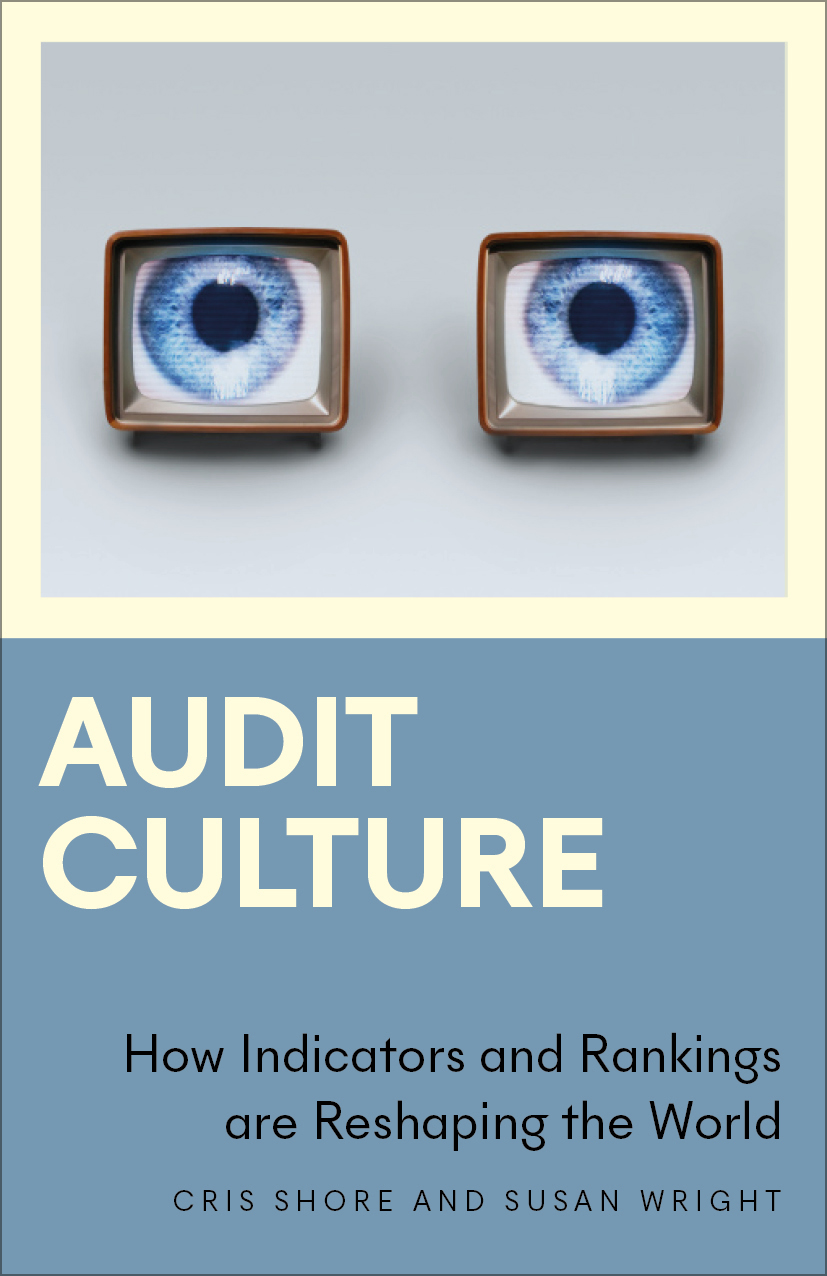
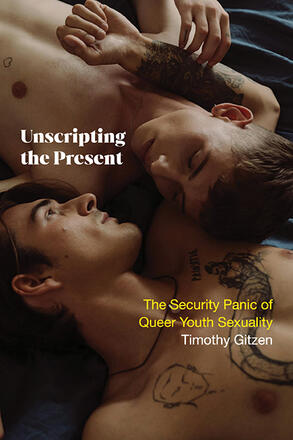
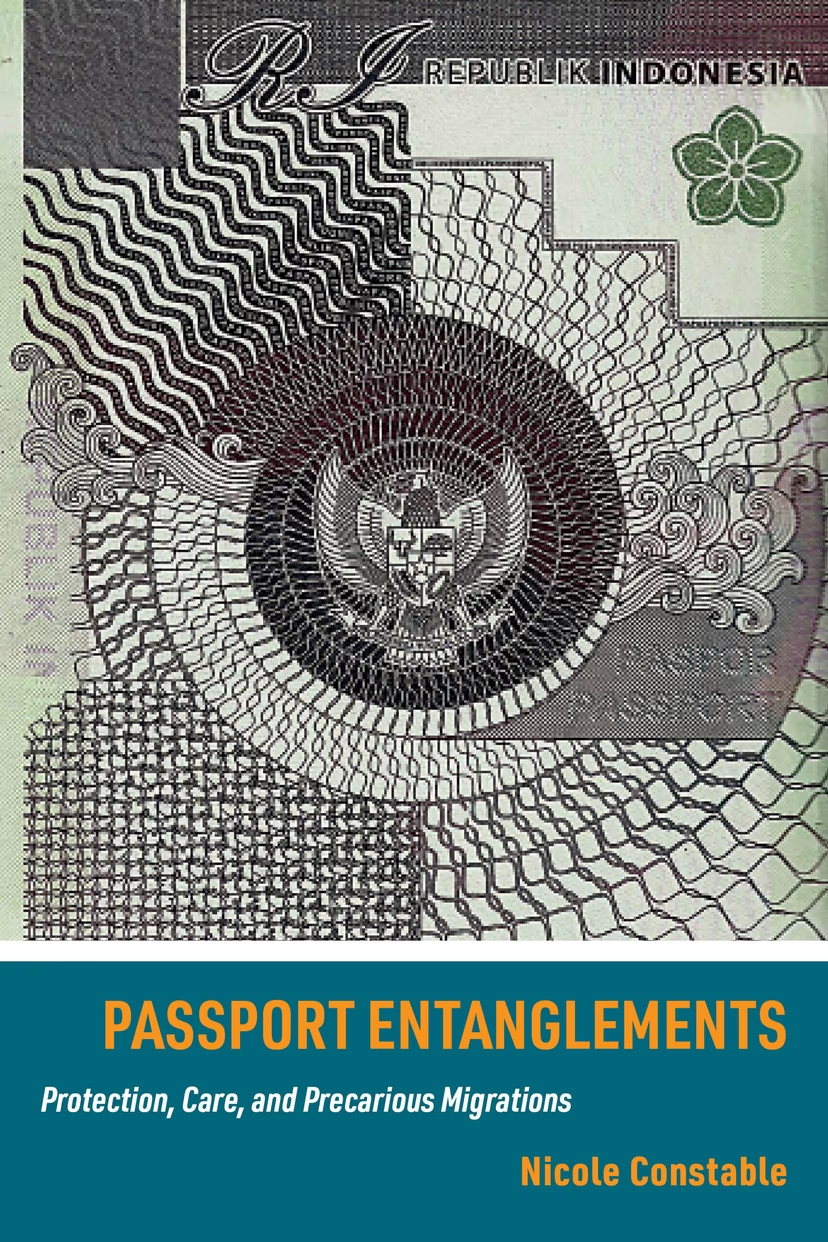


 CaMP Anthropology