https://www.dukeupress.edu/visualizing-latinx
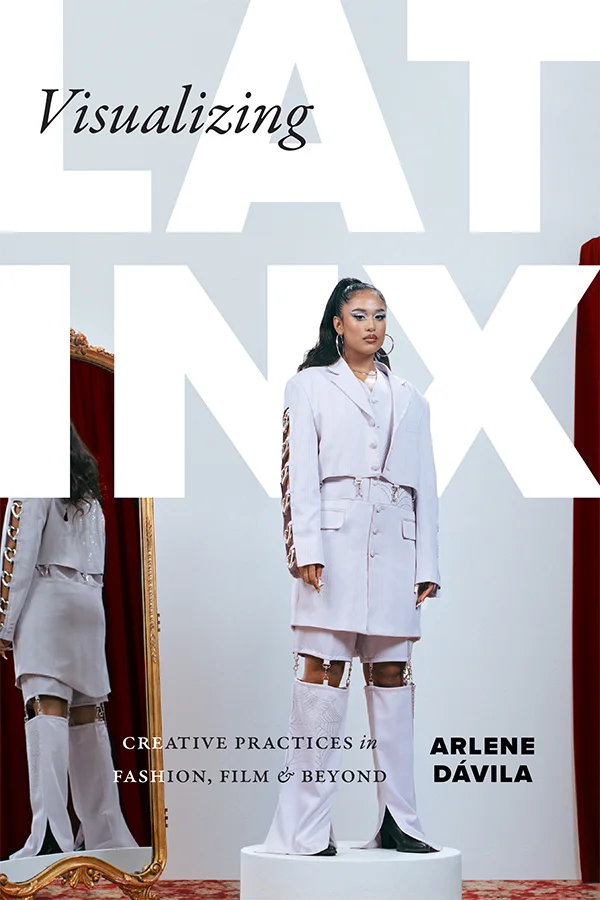
Karen Mary Davalos: Visualizing Latinx could not be more timely, although I can imagine some readers thinking about the creative arts as esoteric in this current moment. As the federal government and some states are devastating Latinx families, communities, and institutions, why does this book matter?
Arlene Dávila: All this hatred we are seeing comes from the historic dehumanization of Latinx communities. So many anthropologists—from Leo Chavez and Otto Santa Ana to so many others—have documented how, for decades, this country has been unable to imagine and visualize Latinx people outside of very limited tropes: the criminal or the undocumented migrant, or the consumer or else as a homogenous political bloc. These tropes have historically pathologized our community, making it impossible for us to see or imagine Latinx agency, to think about Latinx artists, and to view Latinx people with the multidimensionality that is needed.
So, for sure, a book like this is vital in expanding the conversation, providing nuance, and humanizing Latinx people as fashion designers, filmmakers, artists, and creative human beings who are actively imagining better worlds. This is necessary not only to challenge these old tired dominant narratives but also to achieve a fuller understanding of these creative fields!
Additionally, we are seeing an incredible attack on archives and all kinds of research, and we’re witnessing how vulnerable the digital realm has become. This is something you have also written about in your generative Dialogues on digital humanities for Latin American and Latinx Visual Culture. As digital programs, projects, and initiatives can be so easily dismissed with the touch of a button, erasing decades of research, we need more documentation, more research, more writing! This is yet another reason why a physical book that creates lasting documentation of the creative work of the Latinx community is so important.
Karen Mary Davalos: One of the values of Visualizing Latinx is your methodological insistence. You document and elevate the filmmakers’, the designers’, the public artists’ and the South Texas artists’ “own terms” for creativity and success. Can you discuss the implications of “their own terms” for filmmakers and fashion designers and other artists?
Arlene Dávila: We have been making this shift for decades, as those who have come of age in the U.S. have had the unique opportunity to observe. Having witnessed changing racial ideologies, evolving social movements, and shifting attitudes toward race and Latino identity, we can truly appreciate this moment—and it is exactly what I most wanted to highlight in the book.
The racism we grew up with structuralized a pressure to mainstream, to fit into dominant canons, and to shape our image to please the dominant eye. We see this play out in the art world through tendencies that historically embraced whitewashed definitions and downplayed vernacular, rasquache aesthetics. In fashion, it often meant ignoring the everyday, popular culture that contemporary designers like Luar and Willy Chavarria now boldly center.
Ultimately, I wanted to write this book to highlight how exciting it is that new generations of artists and creators working in visual culture industries–from fashion to independent filmmaking and public art–are no longer creating in reference to a dominant culture. Instead, they are drawing from vernacular culture, popular traditions, and their own family histories—and doing so with incredible pride, ingenuity, and enthusiasm. We have always had examples of artists making these kinds of bold statements in their work. However, seeing this approach cross over into the mainstream—and witnessing artists achieve greater recognition of work that is deeply informed by personal and vernacular references—is a new development that is worth highlighting as proof to younger generations that it is entirely possible to gain wide visibility while producing work that remains true to our communities, our histories, our creativity. To me, this represents a deeply exciting, empowering development that signals how art can be so powerful in embodying new anti-racist projects within our communities.
Karen Mary Davalos: Visualizing Latinx is an important argument for paying attention, seeing, and valuing Latinx filmmakers, designers, public artists and creatives in South Texas, a region largely overlooked in Chicana/o/x art history. I see this book as building a discourse for visibility and your work at The Latinx Project at New York University as the infrastructure for that visibility. Can you talk about why you wanted to include TLP in this book?
Arlene Dávila: I decided to write a chapter about The Latinx Project at NYU to highlight the importance of creating institutions and structures for validating, archiving, and documenting Latinx culture, history and art in all its generous forms and expressions. The lack of infrastructure to learn about independent film, the scarcity of university courses teaching about our artists, and the near-total absence of archives and collections focusing on Latinx design were all findings that made one thing clear: we need dedicated, specialized archives, databases, and research collections to address this profound void. There is still so much work to be done. We cannot simply ask, ‘How is it possible that we don’t know about Latinx art?’ when it is completely missing from the canon of most traditional disciplines, our curricula, and our syllabi. This underscores how vital it is to have dedicated spaces to nurture this research, especially in the political and cultural climate we are living in today.
In particular, the book was inspired by the work of so many individuals and groups who are actively building these archives, support networks, and collections to combat this lack of documentation. In South Texas, in particular, I found so many exciting projects dedicated to recovering history and changing the dominant script—a script that seeks to marginalize this community and present it as devoid of value and history. Ultimately, we are at a moment where we must all pay close attention to the alternative ways our communities are fighting back. By documenting these histories, we are ensuring that future generations can recognize there is a rich history that can advance the conversation. Ultimately that’s what so many Latinx scholars have historically done – your own work on Chicana artists and Mexican American art included- and why Latinx Studies and ethnic studies is so vital more than ever. At a moment when we see so many attacks on these fields, I hope readers will learn what a massive difference an initiative like The Latinx Project can make—and how little it takes to make an impact when there are so many voids left to fill in the field. In particular, this chapter highlights the importance of collaborative and interdisciplinary work. I know these are issues your own research and practice evoke so beautifully, which is why I was so happy to be in conversation with you, and why I am so excited about the brilliant work being produced by contemporary scholars working at the intersection of Latinx studies and anthropology.

