
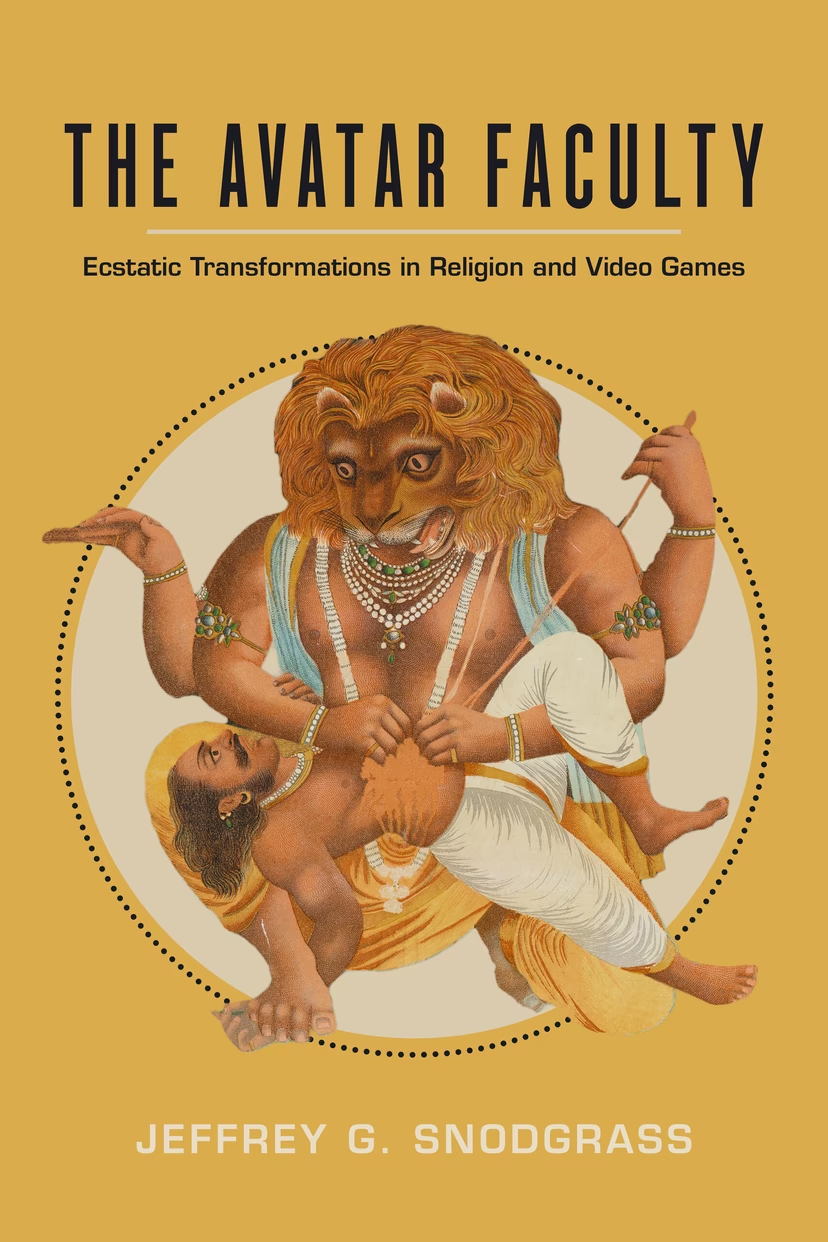
https://www.ucpress.edu/books/the-avatar-faculty/paper
Jie Wu: Your framework draws on anthropology, psychology, psychiatry, epidemiology, communication, and game studies. How do you navigate the tensions between these disciplines, especially given their different assumptions about mind, agency, and causality? Do you see your work as integrating these fields, or more as translating between them?
Jeffrey Snodgrass: Psychologists focus on individual mental structures and processes such as attention, cognition, emotion, motivation, and personality. Anthropologists highlight the importance of culture, in the sense of socially shared and learned knowledge and practice. As a psychological anthropologist, I integrate perspectives from each of these fields to emphasize how individual minds can be more fully understood by considering their social and cultural context. So, for example, I focus in the book on the underlying cognitive capacity to temporarily visualize and embody an alternative possible self (Markus & Nurius, 1986) such as a spirit or deity (in a religious setting) or a character (in gaming contexts). However, I show how specific local cultural traditions sanction and thus shape how spirit mediums and role-players alike enact and experience these alternate and even ideal secondary selves. In these terms, I highlight the human capacity to cultivate and identify with alternative vehicles or vessels for the self that come to feel real—what I term an avatar faculty—while also showing the quite variable forms those secondary selves can take. This approach has been referred to as universalism without uniformitarianism (Cassaniti & Menon, 2017). I aim to integrate these disciplinary approaches to reveal mental and behavioral processes that are at once individual and sociocultural rather than simply translating between or across the perspectives of psychology and anthropology.
Further, I show in the book how by uniting with an avatar—that imagined vehicle that gives form to one’s secondary self—one can inhabit alternate realities and accomplish new kinds of things in ways that can be psychosocially beneficial. Thus, coming to experience oneself as a deity, and having others accept that identity as valid, can provide the possessed with new sources of social belonging and status. In the central case I describe in the book, that of Bedami of the Bhat community, this helps her to mend fractures she experienced with other members in her group, helping to re-integrate her and her husband with her natal family. That in turn helped Bedami personally, alleviating sources of stress and conflict in her life, which contributed to her overall health and well-being. For gamers, skillfully enacting an avatar identity—as a warrior, a healer, a hero—can also provide players with an elevated secondary identity and status, which, as with Bedami Bhat, could spill out into the actual world. I learned that players could come to understand themselves differently in their offline lives, for example, as more able to enact and complete projects that were important to them. In theoretical terms, their sense of self-efficacy or agency had been enhanced, which in turn could strengthen their overall sense of identity and well-being.
These additional examples demonstrate the implications this research has for health fields such as clinical psychology, psychiatry, and epidemiology and for religious and games studies. My ability to make potentially novel contributions to these fields again emerges from my integrative psychological anthropological approach. I would add that a psychologist might use a term like self-efficacy to discuss the way that internal and somewhat enduring self-representations can shape one’s capacity to make choices and act independently, while an anthropologist would more likely frame such issues with the term agency or even moral agency to emphasize how social contexts propel individuals to pursue actions that are personally meaningful and culturally valued. So, there is undoubtedly a degree of translation between these fields’ terminologies in the book, and that might help readers from different disciplines avoid talking past each other. Nonetheless, even here, my primary aim remains integrative, in the sense that I want to illuminate how individual choices, actions, and well-being are constrained both by inner self-concepts and external sociocultural contexts. Avatars illustrate such hybrid psychosocial processes in the way they allow us to project an oftentimes more idealized internal vision or concept of ourselves into external forms—spirits, characters—that are shaped and constrained by culture-specific expectations and behavioral scripts. Overall, I develop in the book a psychological anthropological framework that is ideally better able to address these and other behavioral and health questions as compared to any single disciplinary approach.
Jie Wu: You propose an avatar faculty, a general human capacity to identify with or project consciousness into alternative self-objects, expressed across culturally diverse practices such as spirit possession, shamanic trance, and immersive digital gaming. While these phenomena differ significantly in context and interpretation, you argue they share a common underlying structure involving absorption, dissociation, and identity transfer. What is gained analytically or epistemically by framing these as expressions of a universal capacity, rather than treating them as culturally specific but only loosely comparable practices?
Jeffrey Snodgrass: The book’s central comparison is between what we might call sacred role-play of Rajasthani spirit mediums and secular role-play as we might find in digital or tabletop role-playing games. Both allow for the temporary transformation of players into culturally sanctioned identities—spirits or characters—who confront and resolve challenges, thus providing rehearsal spaces for meaning making, identity formation, and the transmission of culturally scripted responses to adversity into everyday life. However, as I show extensively in the book, the specific transformations that occur are constrained and shaped by cultural expectations and scripts that in the end, yes, mean that a spirit medium’s compared to a gamer’s avatar transformation can look quite different (for my team’s latest on this line of thinking, see Snodgrass et al., 2026).
As alluded to above in my response to your first question, and as echoed here, universal does not mean uniform or completely the same. Rather, developing the idea of an avatar faculty implies there are features that are shared across contexts that can be productively compared to each other. The pragmatist in me asks: Is this abstraction useful or productive in some way?
So, yes, the notion that there is an avatar faculty is an abstraction, which identifies a parallel between spirit possession and gaming. But that’s the role of theory and analysis, as I understand it. In this case, I hope the abstraction is a useful one, which might help readers see these and other phenomena in new and even parallel ways.
In fact, one aim of the book is to develop avatar as an analytical categorythat highlights how a general human capacity to cultivate alternative representations of the self (avatars) can help religiously minded persons and gamers alike to enact the good life. This highlights how non-western categories of thought can usefully ground analysis outside of their original ethnographic and historical contexts.
This is to say that one response to your question would be to turn it back on you and ask: Why resist using avatar in this abstract analytical manner, when we (as psychologists or anthropologists) might commonly employ other abstract terms such as consciousness, identity, mind, self-efficacy, agency, community, culture, power, religion, ritual, trance, play, or games?
Yes, we can—and many have—similarly critiqued each of these terms as well. Yet, these ideas still can prove themselves to be analytically useful, and I would hope this might also be the case with my use of avatar. That is, my analysis might encourage readers to think in new ways about their relationships to secondary selves or identities in their own lives, along with the benefits they might enjoy from enacting those alternate identities.
Jie Wu: You describe a shift from your earlier ethnographic work in Rajasthan, conducted largely as a solo researcher, to later work on World of Warcraft carried out collaboratively with students and co-researchers. How did this transition shape your research design, particularly in terms of data collection, participant observation, and interpretation?
You also mention the Ethnographic Teaching and Research Laboratory (ERTL), where students were trained to conduct repeated fieldwork in gaming environments over multiple semesters. How did this structured training model affect the consistency and comparability of data across different student cohorts, and how did you maintain coherence in multi-researcher ethnography?
Jeffrey Snodgrass: Let me address these questions by telling you how the book’s research came about.
I have a longstanding interest in the power of stories, for example, beginning most fully with my dissertation research on the Rajasthani Bhat community, who were professional poets, puppeteers, and storytellers (Snodgrass, 2006). The seed for this book was planted when as a new professor I was brainstorming creative ways to teach anthropological research methods to my students. I came up with the idea of leading a research team inside World of Warcraft, an online game that some in my tabletop roleplaying group were playing at the time. The idea was that we would conduct field observations and interviews, interacting with other players’ characters or avatars, inside this game-world.
I thought of games like World of Warcraft as dynamic, living stories, where players actively take on character roles rather than just reading about or viewing them as one might in a novel or film. In fact, that’s in part how I thought about spirit possession, something I had earlier studied (and continue to study) in India. In part because of my relation to the Bhat community, I thought of spirit possession as performances of a kind, and stories, where the possessed would strongly identify with gods and spirits and then act out those identifications in ritual contexts.
The deeper I delved, the more I became interested in the relationships and exchanges a person might have with such secondary (performative) selves. In spirit possession, the possessed person comes to think of themselves as the avatar or vehicle-vessel of some spiritual entity. But still the god or spirit is a second self of a kind. In games like World of Warcraft, the character or avatar is the vehicle or vessel of the player’s consciousness. The player projects themselves into the character.
So, to answer your questions more directly, bringing student collaborators into the research process and developing my lab changed how I thought about research. The heart of my research remains ethnographic, relying on participant-observation and interviews. That’s where I continue to make big discoveries and have my “aha” moments, like seeing health and wellbeing parallels between spirit possession and gaming.
Those discoveries follow what the American pragmatist philosopher CS Peirce referred to as a logic of abductive inference: When encountering perplexing new observations, what concept might we posit to explain those phenomena or data? In my case, I thought that enhanced social status or prestige helped explain the health and wellbeing benefits of identifying with avatars in both ritual and gaming contexts (for more on abductive logic, see Snodgrass, Dengah II, et al., 2024; Snodgrass, Lacy, Dengah II, et al., 2024).
To my mind, there is no better mode than ethnography to discover new things about the world. But I am now more committed to the idea that we anthropologists, who are so keen to discover things about the world via our largely qualitative methods, should and can also put our ideas at risk and attempt to further confirm or even falsify them (in the language of philosopher of science Karl Popper (2005)) with alternate modes of inquiry. Quantifiable field survey results, which are presented in greater detail in the book’s appendices, can prove helpful here. Ethnographically sensitive counting helps one clarify the wider distribution within a group of a certain pattern like a relationship between gaming immersion and stress relief. One can also check for whom, and with what qualifications those patterns hold, again using quantitative analyses that include covariates like gender, socioeconomic status, and age. These larger patterns and distributions can be very difficult to detect via qualitative methods alone.
This is why I follow a mixed qualitative and quantitative approach to ethnographic analysis (Snodgrass, Lacy, Wutich, et al., 2024). Approaching a phenomenon through various analytical avenues increases my confidence in a particular finding. Yes, there is the risk of loss of coherence, as you allude to. However, careful documentation of the relevant cultural contexts associated with each dataset helps my various teams avoid that. So, it is ultimately the ethnographer’s sensitivity to context that helps preserve the integrity of the analysis, in a mode of inquiry we might call ethnographic science (Aunger, 2003).
References
Aunger, R. (2003). Reflexive ethnographic science. Walnut Creek. CA: AltaMira Press.
Cassaniti, J. L., & Menon, U. (2017). Universalism without Uniformity: Explorations in Mind and Culture. University of Chicago Press.
Markus, H., & Nurius, P. (1986). Possible selves. American Psychologist, 41(9), 954.
Popper, K. (2005). The logic of scientific discovery. Routledge.
Snodgrass, J. G. (2006). Casting kings: Bards and Indian modernity. Oxford University Press.
Snodgrass, J. G., Dengah II, H. J. F., Sagstetter, S. I., & Zhao, K. X. (2024). Causal inference in ethnographic research: Refining explanations with abductive logic, strength of evidence assessments, and graphical models. PLOS ONE, 19(5), e0302857.
Snodgrass, J. G., Lacy, M. G., Dengah II, H. J. F., Zhao, K. X., & Sagstetter, S. I. (2024). Sharpening causal reasoning in applied ethnographic research. Human Organization, 83(4), 389–400. https://doi.org/10.1080/00187259.2024.2412986
Snodgrass, J. G., Lacy, M. G., Wutich, A., Bernard, H. R., Oths, K. S., Beresford, M., Bendeck, S., Branstrator, J. R., Dengah II, H. J. F., Nelson, R. G., Ruth, A., Sagstetter, S. I., SturtzSreetharan, C., & Zhao, K. X. (2024). Deep hanging out, mixed methods toolkit, or something else? Current ethnographic practices in US anthropology. Annals of Anthropological Practice, 48(1), 20–35. https://doi.org/10.1111/napa.12213
Snodgrass, J. G., Sagstetter, S. I., Chakrabarti, C., Branstrator, J. R., Zhao, K. X., Lacy, M. G., DengahII, H. J. F., Wagner, A., Giardina, A., & Billieux, J. (2026). Tabletop Role-Playing Games as Drama Therapy in the Wild: Developing Personal Bonds with Characters Improves Players’ Self-Concepts. Transcultural Psychiatry, 13634615261418363. https://doi.org/10.1177/13634615261418363

