

https://bookshop.org/a/100347/9798988684404
Sherine Hamdy: Roxanne, I can’t believe the sequel to Death in a Nutshell is already here! As you know, I was a huge fan, but I think I loved this one even more.
Roxanne Varzi: Thanks, Sherine!!
Sherine Hamdy: This time our intrepid anthropology graduate student Alex is starting a new field project in Oslo, Norway, with a lot of funny nods – winks? – to Nordic noir. So my first question – why Norway?
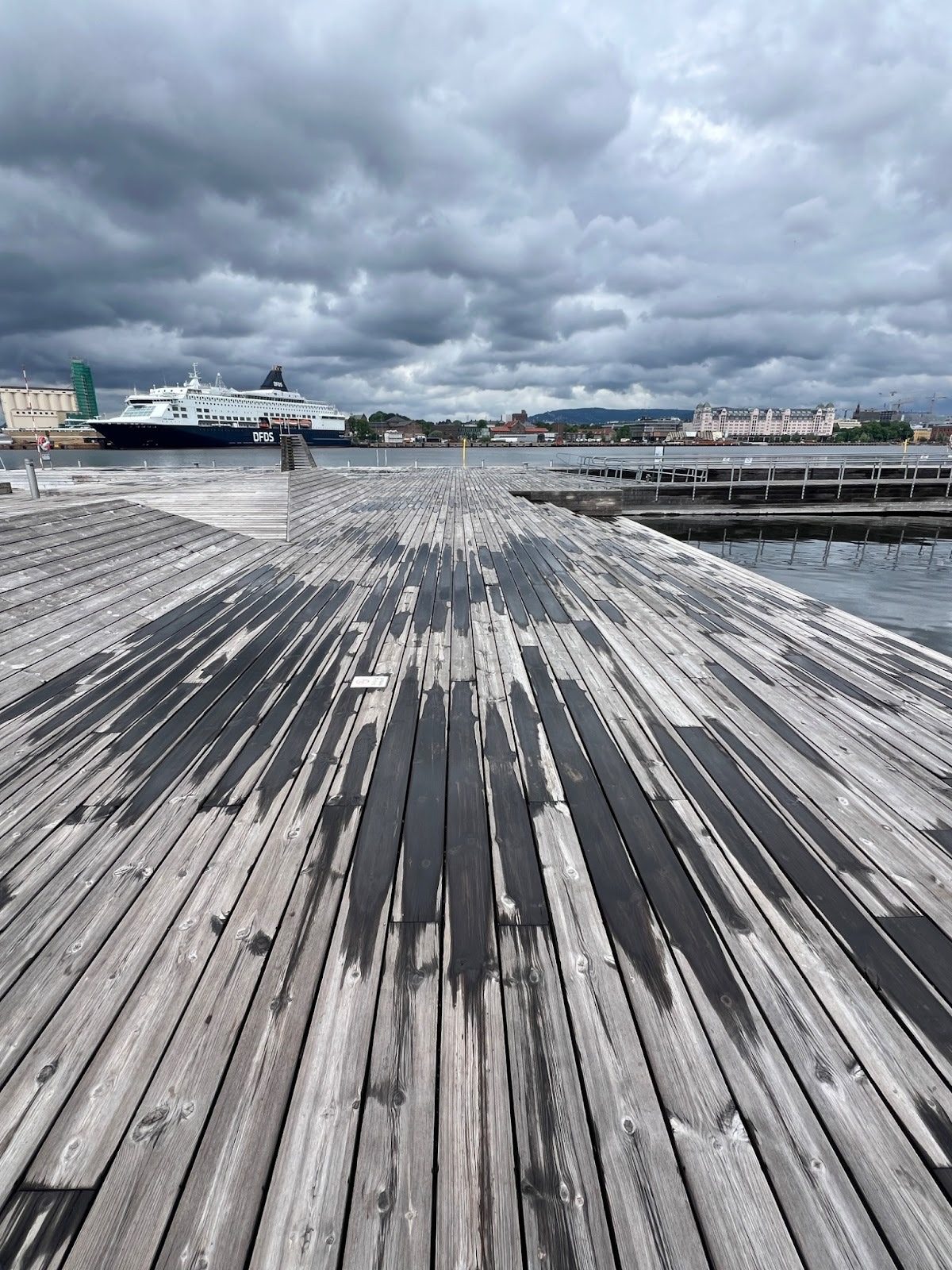
Oslo, Bjørvika, Photo: Roxanne Varzi
Roxanne: The beauty, the light! (It’s a photographer’s dreamscape) The serenity and Scandi culture – I taught in Sweden almost twenty years ago in the UC Education Abroad program in Lund and traveled to Copenhagen. I loved Scandinavia and wanted to return. I was going to England to meet with folks researching dyslexia and found a flight through Oslo. So I asked my friend Paige West who had spent some time in Norway to introduce me to cool anthropologists there and she introduced me to Thorgeir Kolshus, one of the coolest anthropologists in Norway and Head of the Department of Anthropology at the University of Oslo.
He invited me to stop by and do a multimodal workshop at the University of Oslo. I loved it and decided to go back for my sabbatical. I was both scouting a new fieldsite and doing a sound project on climate change. Soon my real project became my protagonist’s fictional project and Alex, my protagonist, took over my project in Oslo! I was actually in the middle of writing Armchair Anthropology Book Two which takes place in California (and will now be Book Three).
Sherine: Thorgeir? Any chance he inspired your character of Thorvald, the anthropologist who knows about burial practices in Melanesia?
Roxanne: Thorvald is a fictional character! Your first guess was an American retiree from our department! Which goes to show he’s a composite character! Every reader will have their guess!
Sherine: Okay, that’s fair! The first scene begins with your characters bobbing up and down to silence …at a church in Oslo. How did you come up with the idea of a silent disco night?
Roxanne: I was at dinner with friends in Oslo and their son was headed out to a silent disco. I’d never heard of it before and he was kind enough to fill me in. A month later there was a silent disco at a large sauna near where I was staying. It was past my bedtime, but, you know: “anything for research!” I literally got back out of bed, dressed and trudged along the Fjord to the disco spot to “research” it.
Sherine: Edward Munch, famous for his painting The Scream; the playwright Henrik Ibsen, and children’s book author Roald Dahl all make appearances in your book, as important Norwegian creators (I’d never known Roald Dahl was originally Norwegian!). Why is it important for your character Alex to reflect on the lives and works of Munch, Dahl, and Ibsen?
Roxanne: I’m a big believer in using theories and philosophies from the field. I don’t like importing theorists to explain another culture. With Iran I used Hegel, because he’s considered the Rumi of the West by Iranians, but I also used Ibn Arabi, Attar. Theory and philosophy is part of doing fieldwork. I lived across the street from the Munch Museum in Oslo so Munch was omnipresent for me, part of my Oslo landscape. And Dahl was my Dyslexia example from the field so it worked out really well! There’s an element of serendipity to writing these mysteries that I love–like Jack Horner [in the first book] was a character, and also as a person with dyslexia. Aside from that I’ve always loved Munch. He was a writer as much as a painter and when I saw his notebooks at the Munch museum in Oslo I knew he was someone whose life I wanted to delve into deeper.
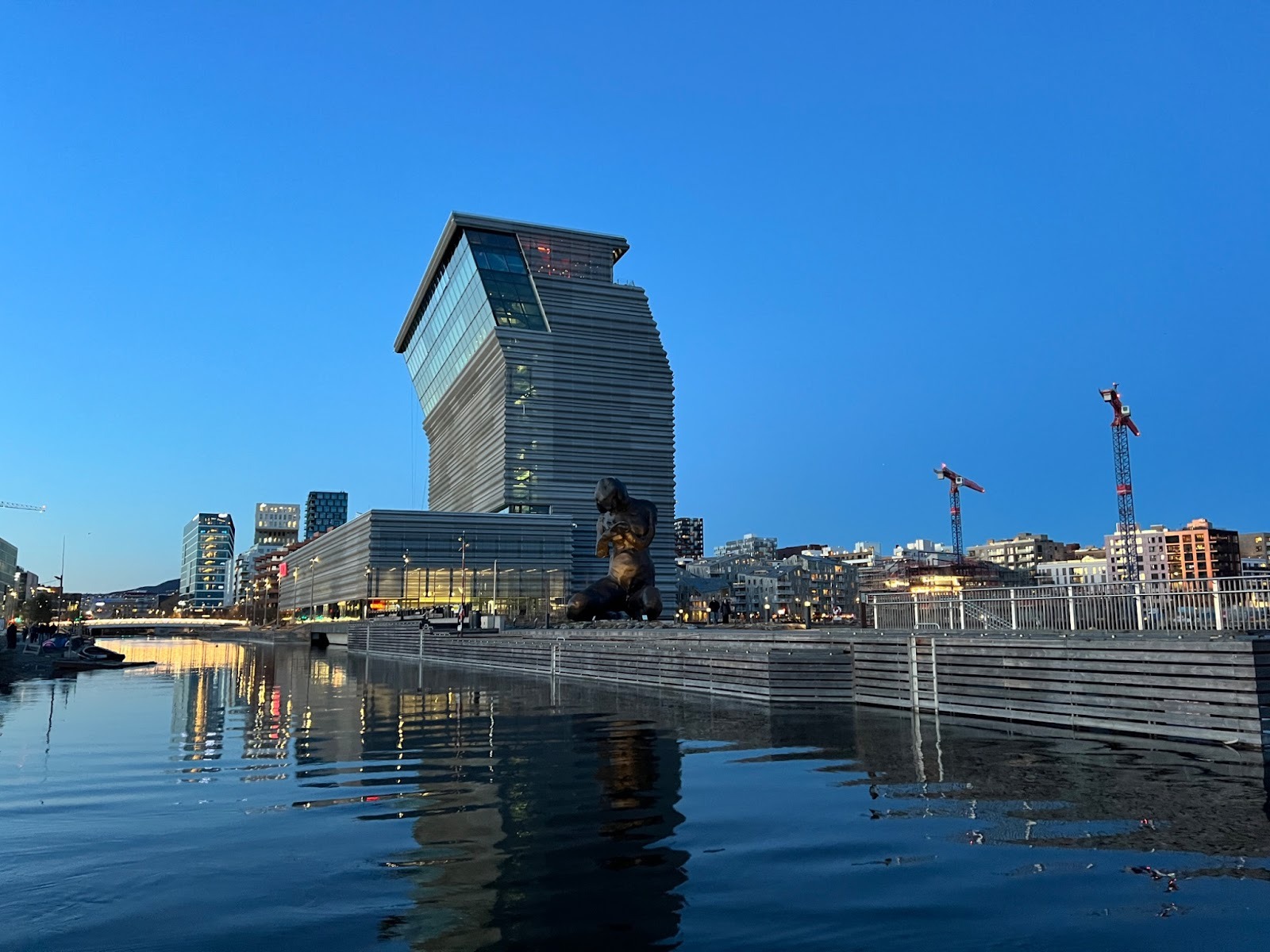
Munch Museum, Oslo, photo: Roxanne Varzi

Munch’s tea kettle, photo Roxanne Varzi
Sherine: Themes of neurodiversity continue in this book – one of the most heart wrenching parts of the book for me to read wasn’t about the slain victim, but when Alex overhears other graduate students in her cohort talking about her learning disability, and questioning her right to even be in a PhD program if she has dyslexia. While Alex was drawn to creating miniature sites as a form of visual ethnography in the first book, in this one she takes up sound ethnography. What do you think is the relationship between experimentation in the academy, multi-modality, and neurodiversity?
Roxanne: Great question!!! First, there is the fact of non-linear thinking and finding alternative ways of doing things. And Dyslexia comes with enormous gifts and strengths, what Brock and Fernette Eide call MIND strengths: M for material reasoning or 3d and spatial reasoning, I for interconnected reasoning or big picture thinking, N for narrative reasoning (my favourite, and what makes Alex a great detective. She has the ability to construct a connected series of mental scenes from past personal experiences, to recall the past, understand the present, or create imaginary scenes. And the D is for dynamic reasoning – connecting elements of the past to predict the future, which, again, fits perfectly with detective work. That’s also where paleontologists [like Jack Horner, Book 1] with dyslexia have a major advantage! Multimodality allows practitioners to work in their areas of strength. So, if someone is better at 3d spatial reasoning, then a diorama makes sense. If someone excels in narrative reasoning – why not write a murder mystery? Not only does this allow us to make data and research more accessible for people with learning disabilities, but these works are also more accessible to the general public, who didn’t go through the training that we did to read theory and research – or in other words, academese. This is why I loved coming across Robert Frost’s words about professorial writing.
Sherine: I know you are referring to a quote in the book, but I think it is worth citing in full here. Can you tell us the whole quote you are talking about?
Roxanne: Sure, I was going down a proverbial rabbit hole on the sound of language. I had read Frost’s correspondences before, and when I went back to them, there he was promoting poetic writing.
Frost says:
Just so many sentence sounds belong to man as just so many vocal runs belong to one kind of bird. We come into the world with them and create none of them. What we feel as creation is only selection and grouping. We summon them from Heaven knows where under excitement with the audile [audial] imagination. And unless we are in an imaginative mood it is no use trying to make them, they will not rise. We can only write the dreary kind of grammatical prose known as professorial.
And Alex replies, “God save us from professorial…”
Since graduate school I have been trying to avoid academese. It’s a form of gate-keeping and my mission was not to preach to the choir from the Ivory/Ivy tower. My mission has always been education and advocacy.
Sherine: You’ve definitely accomplished that here! You also continue with the format you established in the series’ first book, of including Alex’s fieldnotes as a way to communicate anthropological ideas and theory. How did you approach the fieldnotes sections differently this time around?
Roxanne: This time, I experimented more with form. In addition to the field notes, I used conversations on text messaging, Facetime, and good old-fashioned letter writing. Part of the difference was driven by the fact that two of the characters from the first book were not with Alex in Norway and I wanted them to be there.
Sherine: You mean Will and Kit?
Roxanne: Yes, and as so much of the lives of students with disabilities, including Alex’s life, revolve around assistive technology, I wanted to expose the struggle of writing, (she has dysgraphia which is common for folks with dyslexia) and the extensive use of notes, dictations and texts. I wanted Kit to continue to advise her and be there as a bestie. Their relationship is a wonderful melding of neurotypical and neurodiverse people complementing each other.
Also, with Jack Horner, in the first book, I began writing him in as a paleontologist before I learned that he has dyslexia. This book also had a fun moment with another public figure whom I met by accident and later found out has Dyslexia. I showed a random portrait of a man to someone in the anthropology department who misidentified the person as Terje Nicolaisen. I looked Terje up hoping to share my portrait and found myself fascinated by his work. I asked if I could visit his studio and our meeting there pretty much is exactly what Alex experienced when she went to meet him – which involved a long discussion about handwriting, dysgraphia and dyslexia. I told him about Alex and my Oslo mystery and he brought out all of his notebooks!!
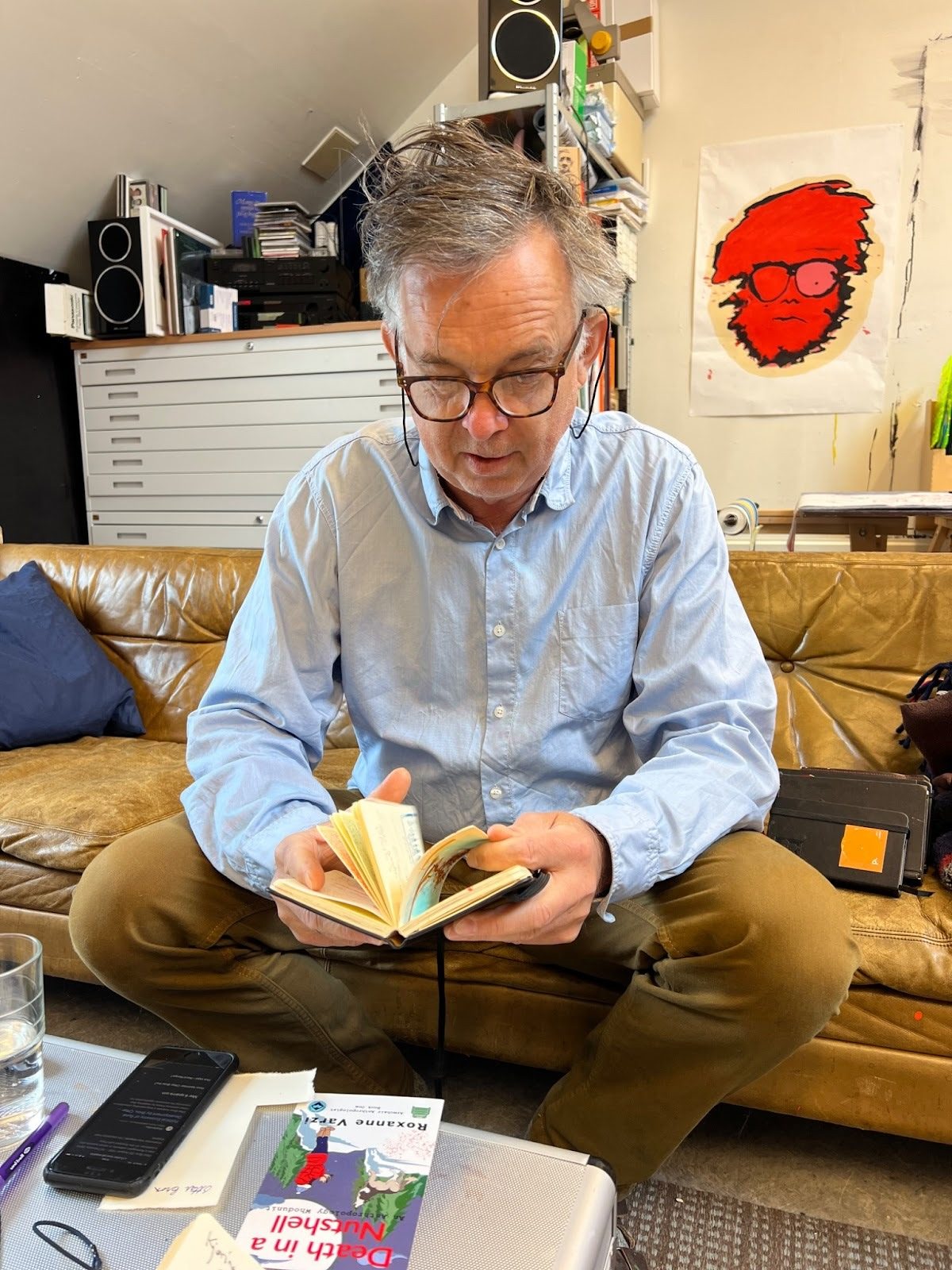
Terje Nicolaisen Photo: Roxanne Varzi
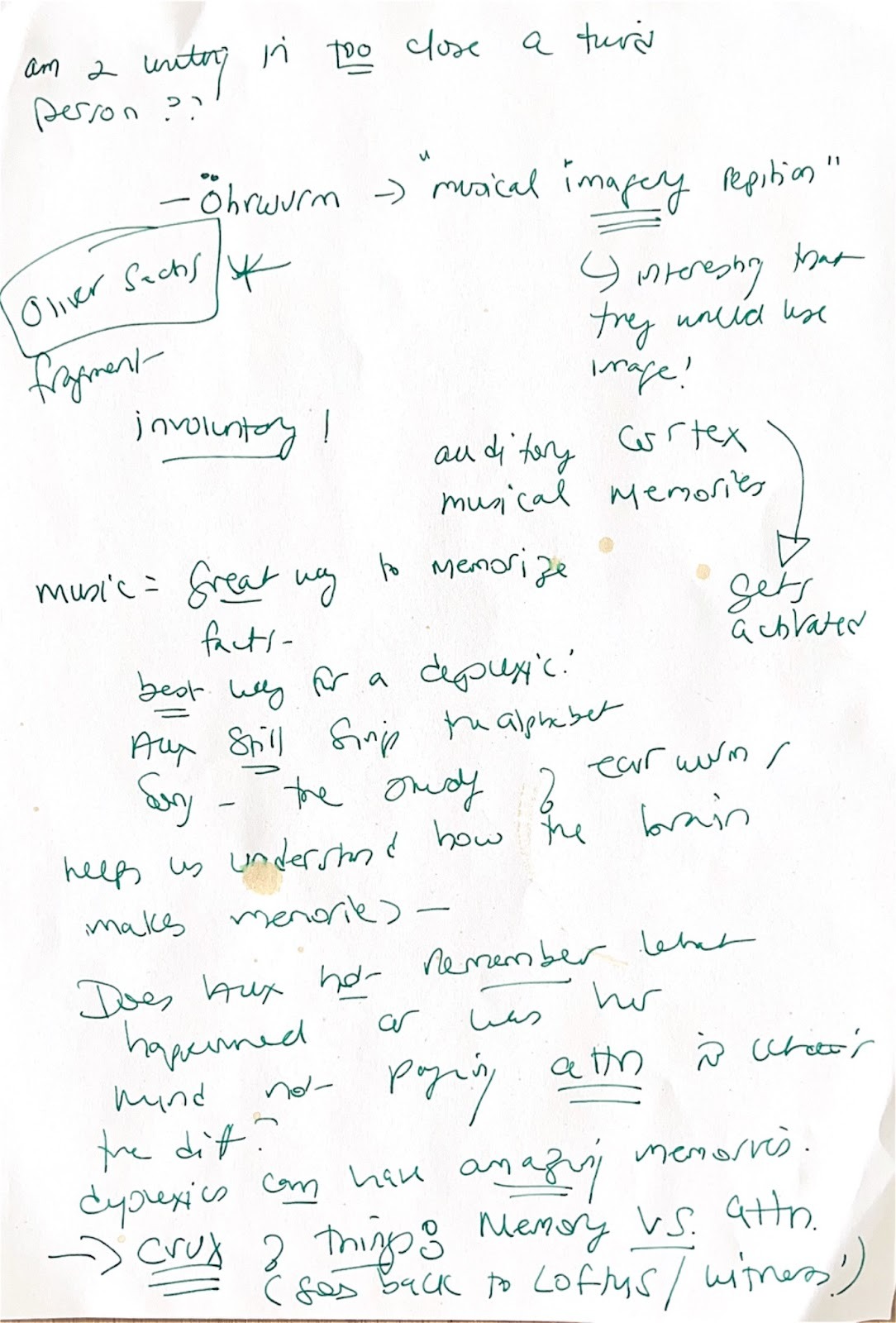
Sherine: Well, if Terje showed his notes – I wonder if you could show us yours? What do fieldnotes for a sound ethnography within a murder mystery look like?
Roxanne: Here’s a note from my own research –you can see my own dysgraphia on full display along with coffee stains (Norway has amazing coffee!) These are what my field notes look like!!!
Sherine: To go back to the multimodality theme – your first book was like a (fun!) primer on visual anthropology, and this time we are learning about sound ethnography, and the concept of time. Why did you choose to do sound for this book?
Roxanne: I was standing in this amazing cultural space, Kulturkirken Jacob with its longtime director, Erik Hillestad and I was telling him about my adaptation of the Shakespeare play Twelfth Night. I was thinking it would be the perfect place to put on the play. I always have 1 million projects going on at the same time and somehow the idea of sound and music in that space got lodged into my head – the next thing I knew, I was placing Alex at a silent disco there.

Kulturkirken Jacob Photo: Roxanne Varzi
Sherine: What do you most want readers to take away in this introduction to sound anthropology?
Roxanne: With each book, I want to show the many sensory ways of knowing. The lack of noise during the pandemic was a profound reminder of the degrees to which sound affects us –and I wanted to look at how that plays out in different ways…without revealing a spoiler, I’ll simply say, sound or the lack thereof can be dangerous.

From roof of Oslo Opera House Photo: Roxanne Varzi
Sherine: While the first book had more of an emphasis, on dyslexia, this one has a greater focus on ADHD and attention. The theme of attention is related to time – how it is spent, who controls whose time, how perceptions of time change from one context to another. Can you tell us a little more on how you came to focus more on issues of attention in this book?
Roxanne: I knew I wanted the next book to emphasize Alex’s ADHD and I also happened upon an interesting researcher, Drew Johnson, who was at a working research group at the university called Good Attention. He and I had some conversations around ADHD, and he introduced me to the RITMO working group – things just serendipitously came together.
Oslo became an interesting intellectual space to think about sound and attention. I continued to tinker with my own sound project on climate change and was reading a piece in “The Conversation” about a sound project by an artist/geologist recording the last breath of a melting glacier. I looked him up, and it turned out that he was at the University of Oslo.
I immediately emailed him, and the next thing I knew he was emailing me back to tell me that he was doing a lunch talk in literally half an hour in the building next door to where I was. I don’t know if it’s luck when these things happen or if it’s just really about being in the right mindset with the right preparation and the right intentions. Or maybe it’s just that these were the things I happened to follow and so it all came together. In that way, Alex’s adventures in Oslo mirrored my own adventures, as I followed my research interests, she found clues. We were often on the same trajectory and path as I explored new subjects and people. And this made the book very different from the first book, or what is shaping up to be the third book in that I was writing as I researched. The other books came years later, after the research.
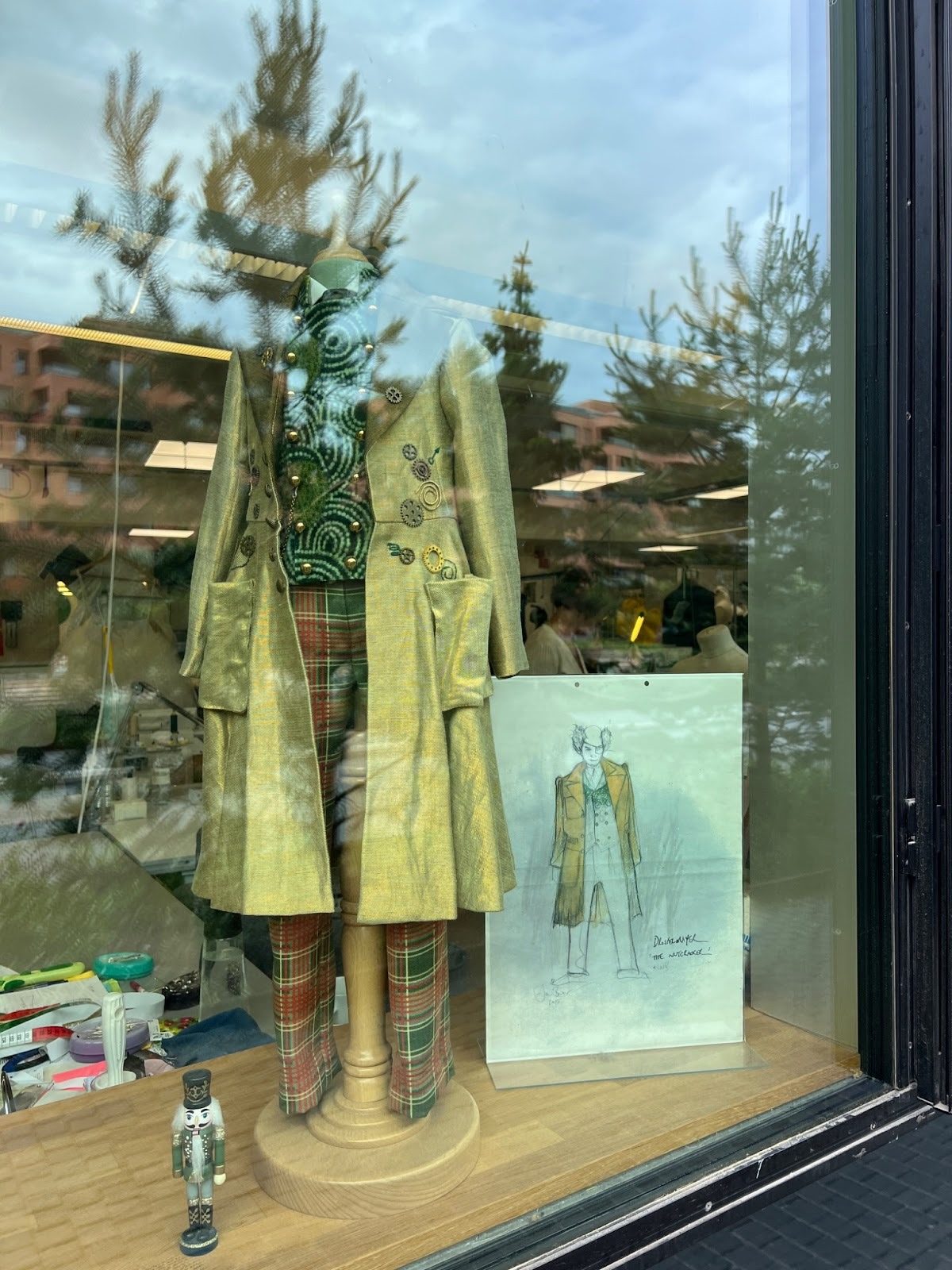
Window into Costume design studio, Oslo Opera House Photo: Roxanne Varzi
Sherine: I like what you say about being in the right mindset and open to the opportunities that present themselves. That must be how you wrote this one so fast!
Roxanne: Yes, this is the fastest book I’ve ever written, because it’s the first time I’ve put down all of my other projects and concentrated on just this It will be interesting to hear what people think in relation to my other books that took years to write (usually about a decade each!).
Sherine: It’s also shorter than the first one. Was this a conscious decision?
Roxanne: Yes. For one thing I didn’t feel the pressure to have to introduce readers to anthropology and research methods.
Sherine: You mean because you already covered that ground in the first one?
Roxanne. Yes, exactly. Also, I promised my students that it would be shorter. We have shorter attention spans than we once did, and I think also I’ve relaxed into the idea that writing a series means I can leave some for later! And I needed more suitcase space – it’s much more manageable to travel with! But really, it comes with the confidence to not have to put everything I know about sound and attention or Norway in a single book. In any book, there is so much that gets left out – so much more research and so many other points I could have made, but I also have to pace theory and philosophy with story. I can’t throw in more than the plot can handle.

Oslo Opera House, Sauna in foreground, photo: Roxanne Varzi
Sherine: One of my favorite things in this book is your ability to render Norwegian speech in English, with its sing-songy tones, joyful inflections,and other idiosyncrasies. How did your Norwegian colleagues react to finding their speech portrayed in your book?
Roxanne: Thank you, I love Norwegian, it’s a beautiful language. Everyone who read their chapter gave me their blessing – no one commented on the language. One person remembered our conversation well and was excited to see so much of it in the book, which was cool as I did not record our meeting. At the book-reading that you attended, you heard me read aloud part of the book where I slip into the cadences of the language.
Sherine: Yes, I thought it was hilarious!
Roxanne: But I don’t do that in the audio book because I don’t want to offend anyone, and it’s a fine line.
Sherine: You mean a fine line between portrayal and parody?
Roxanne: Yes. So I read it as an American narrator, though I tried hard not to butcher the Norwegian words. A friend was kind enough to send me voice memos of words I needed to hear spoken, and then I just tried to mimic him! At one point. I really regretted having rendered in Norwegian the warning not to shoot polar bears. It was a mouthful to record for the audiobook! Listeners can enjoy hearing me muddle my way through that!
Sherine: Will there be an audio version soon?
Roxanne: Yes, it was important to me as a dyslexia advocate to have the audio book come out at the same time as the print versions. I don’t want to privilege eye reading over ear reading.
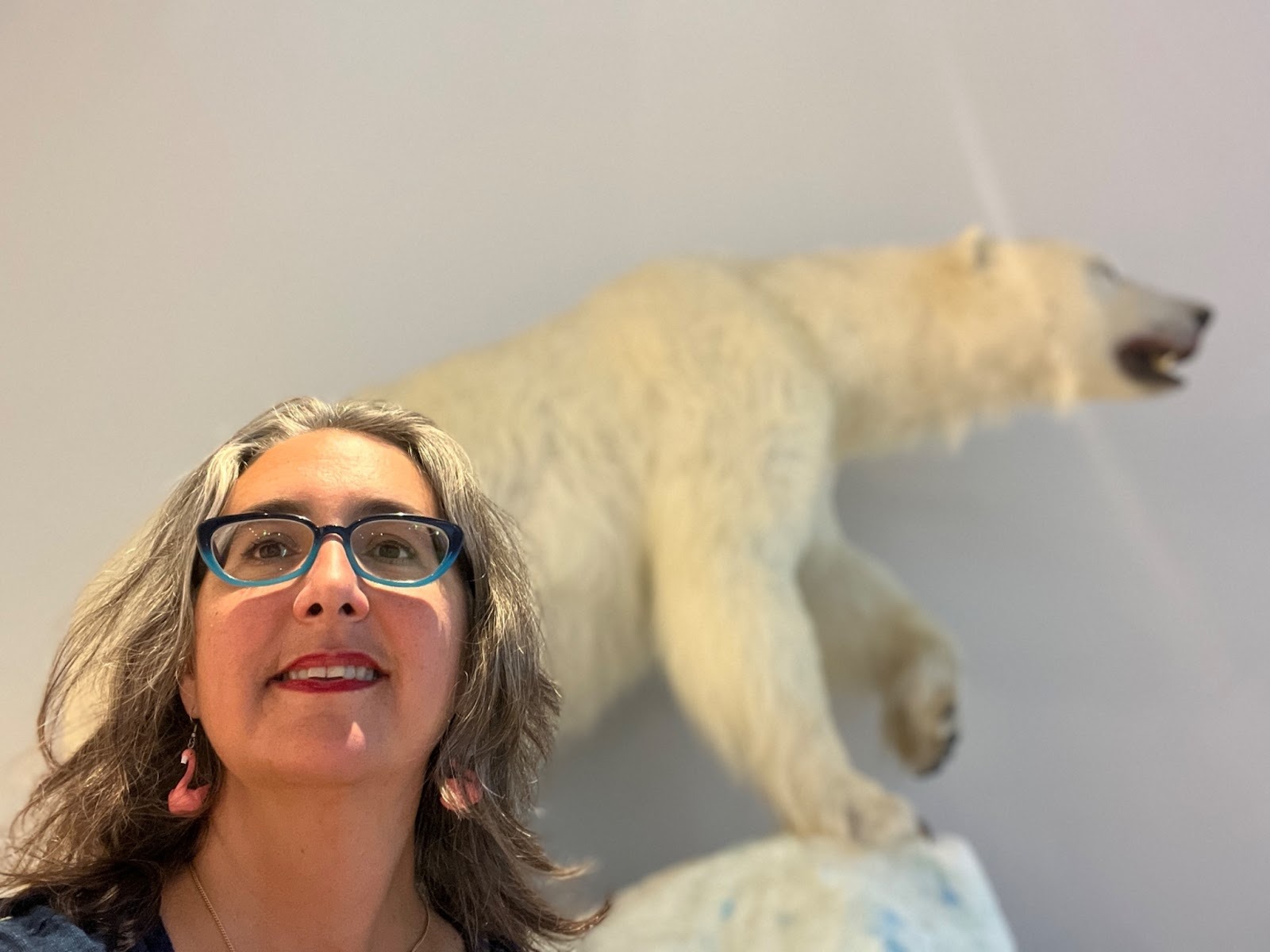
Museum of Natural History and Botanical Gardens, University of Oslo, Photo: Roxanne Varzi
Sherine: Well, congratulations, Roxanne, on another great work! I really love the idea of a murder mystery series exploring contemporary pursuits in anthropology and pushing the bounds of what counts as academic research and writing. I can’t wait for your next one!
Roxanne: Thank you Sherine, I always enjoy talking experimentation with you! The third one is set close to home, so who knows what role you may play next!
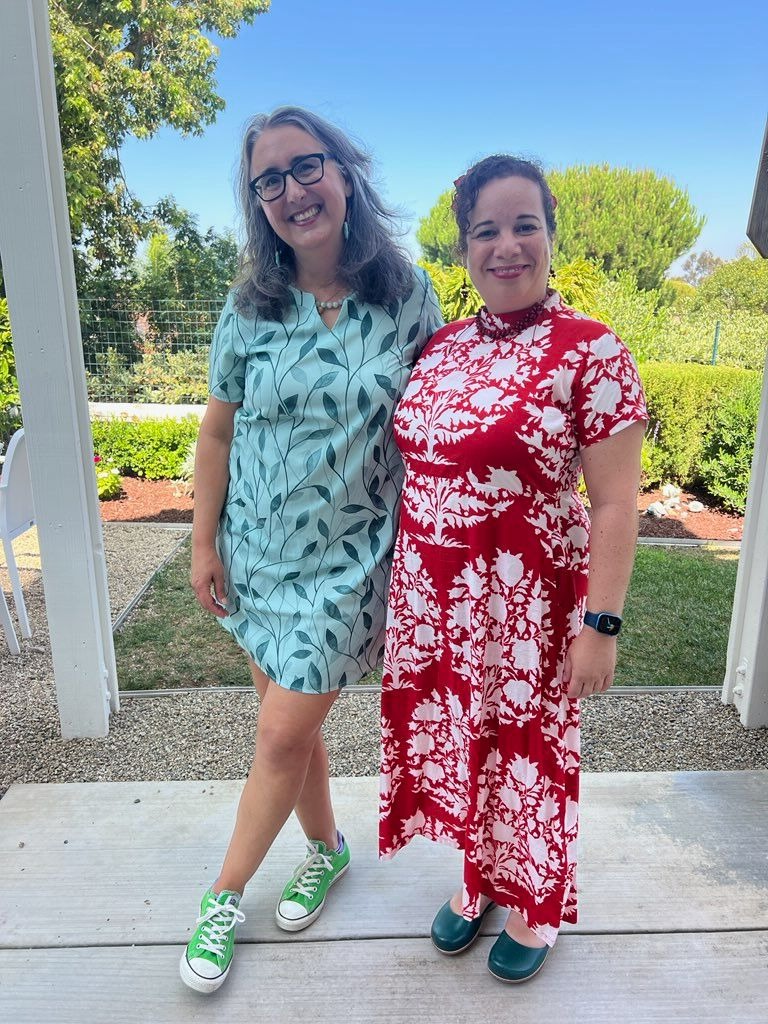
Image: Roxanne Varzi (left) and Sherine Hamdy, photograph by Erica Sutton
 CaMP Anthropology