
https://www.sup.org/books/asian-studies/millennial-north-korea
Haeeun Shin: Could you share about your intellectual trajectory of Millennial North Korea? What triggered you to have an interest in North Koreans’ digital culture? How does this brand-new book relate to your previous works?
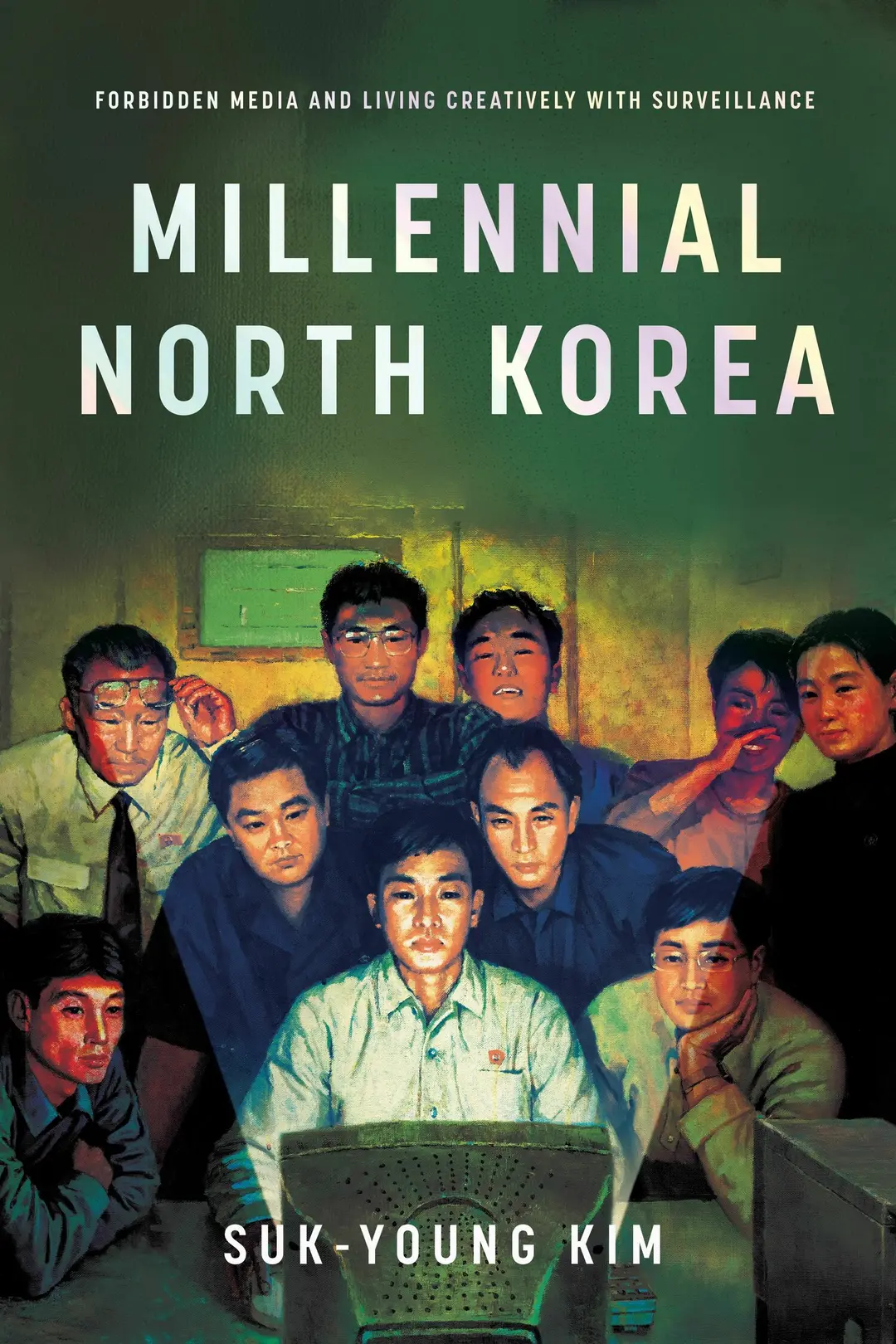
Suk-Young Kim: Millennial North Korea is a sequel to my first book, Illusive Utopia, which is a half a century history of North Korean state-produced propaganda performances. Encompassing a wide range of media such as live theater films or recorded live performances, and visual culture is so crucial for understanding theatrical strategy as operating principles of North Korean society. I accomplished an important historical overview of the cultural history of North Korea for half a century, from the post-war period, or 1948, to 2000 towards the end of the Kim Jong Il era.
There have been so much seismic transformations taking place in Korea in the past two decades. So I wanted to write a sequel that updates the current state of the society, the widening gap between the state and the people, and various economic classes emerging, especially in regards to accessibility to new media technology. Millennial North Korea is a sequel to Illusive Utopia.
Additionally, between 2010, when Illusive Utopia was published, and 2018 when I started writing this new book, I was heavily immersed in researching K-pop and youth digital culture. I thought Hallyu does not stop at DMZ. While I was writing very directly about South Korean pop culture, I had a parallel thought that this is also impacting North Korea.
In particular, I focused on the youth culture, which is deeply embedded in the sense of mobility and breaking away from legacy media. The cell phone is a key player in this and is the main star of the book among all other electronic devices. While other forms of media such as films and TV require a sense of community, cell phones allow you to consume mobile digital culture in a very private setting. Also, people take their media anywhere they want through cell phones. I latched onto this idea when I wrote K-pop Live, which came out in 2018, and I’m somewhat influenced by that vision when I think of North Koreans as well. As cell phone comes in, North Korean youth have an easier time accessing forbidden media and consuming it. The act of consuming forbidden media with mobile devices confirms the individual assertion of a subject that declares resistance against state directives.
Haeeun Shin: Could you say a little about the North Korean Millennials whom your book addresses?
Suk-Young Kim: I clearly say that North Korean millennials are defined by their performative identity. It’s a multifaceted identitarian construct. It is not something that is just defined by your gender or your age. It is not the biological construct by any means, millennials, but it’s that performative identity.
One big part of it is curiosity – intellectual, cultural, or economic curiosity about reality outside of this failed state system – and daringness to explore. That is a very key word for me. In North Korea, it requires tremendous courage and rebellion to watch something from South Korea. It does come from your intention of wanting to know and wanting to take the risk outside of this draconian surveillance state system. So, curiosity and daringness are very important identitarian layers of who North Korean millennials are, at least the ones that I addressed in my book.
The second layer is tech savviness. If you want to have a glimpse of the outside world, you have to have some platform or some media to have a glimpse and explore. A lot of it is their exposure, and accessibility to technology, especially cell phones.
The last one I consider together is their economic status because having smartphones costs you money. Of course, cell phones are widespread in North Korea but I mean it’s not for everyone. According to the latest data before COVID, roughly one out of four had cell phones nowadays, which means not everyone has cell phones like in South Korea or elsewhere. It does claim a certain economic status.
To recap, it is the kind of performative identitarian construct that prioritizes the subjects, courage, willingness, and daringness to take risks and explore. Secondarily, to enable that, you need to have access to technology and you have to have certain economic means. They are North Korean millennials that I addressed in my book.
Haeeun Shin: The idea of reactive creativity is essential in your book. What messages do you want to convey to readers about the relationship between North Korean millennials and the state using this concept?
Suk-Young Kim: I made a claim that North Koreans are not just passive victims of a repressive regime, but they are very smart, creative, and resourceful. How does that manifest in their lives? That’s when the concepts of reactive creativity and the hidden script come in.
First, I point out that creativity is not just a domain of liberal Western society. In academia, especially, in anthropology and sociology, there’s a lot of resurging discourse around creativity and creative economy, which is in large part related to the rising tech industry in Silicon Valley and major cities. In those studies, an alternate kind of political system is never their consideration. I think that is wrong because people even living under unimaginable circumstances, human rights infringement, and economic hardship, also exercise creativity. That’s why I put reactive creativity as a modifier to specify the specific conditions of North Korea.
By reactive, I don’t necessarily mean passivity or negativity. Reactive means that they can react in response to this constant oppression, but they can act upon it by walking on a very tricky terrain while dodging the surveillance system. They can still communicate and express the degree of their self-expression, their place in the world, and their ways of living and realizing their dreams without being detected to the point of self-annihilation. Hidden scripts and all kinds of coded language that I described in the book are crucial ways of living this dual life of being a compliant political subject or performing it in daily life, while also realizing to a very limited and reactive degree, their sense of desire to know more, beyond what is fed by the regime. It’s a very dualistic, ambivalent way of living.
Haeeun Shin: I enjoyed reading how you highlight the uniqueness of North Korean millennials’ digital culture with the concept of blockchain and platforms. Could you elaborate further on your choice to use these two concepts to comprehend millennial North Korea?
Suk-Young Kim: In today’s world, everyone uses platforms and blockchain as an important concept. I strategically use those buzzwords to show the reversal of how we normally understand it and what that word could mean in a case like North Korea.
Platforms, in a way, create new digital tribes who fall deeply into their rabbit hole. People who get to stick to one platform, go deep with it and stick with that community, are likely to have narrow-mindedness, which I think is a huge irony in today’s technologized world. In North Korea, platforms don’t emerge online, which is the number one difference. Also, while Western platform society tends to make your vision very narrow, in North Korea, it’s somewhat similar, but the platforms are to expand your vision rather than narrow it, which is the second difference.
When we think of blockchain, transparency is a key idea. There is a transparent ledger so we know how funding, like Bitcoin, was transmitted without revealing the identity of the participant. In North Korea, when hidden media circulates, they also have to go through that transmission. But again, in North Korea, it’s all offline, person-to-person transmission, not a transparently recorded ledger that people can trace online. In this circumstance, transparency in blockchain, in the North Korean sense, is not something similar to what you normally see in how blockchain works in our society. Transparency in North Korean blockchain transactions means credibility and trust. You have to trust the person to whom you’re giving this forbidden media and the person who is giving it to you. When that transaction chain somehow is revealed, then all of the participants can face grave consequences. I cite some of those instances in my book. So it’s a very different idea of blockchain, but some principles are retained in North Korean case.
Haeeun Shin: In anthropology conducting research on North Korea has been challenging due to restricted access for visits. Can you provide any advice or suggestions for people conducting research on North Korea without visiting?
Suk-Young Kim: We can research North Korea far from it. I think my discipline of performance studies is the right place as it specializes in the performance of memory and trauma and the strategy of narrating the story. What people tell you for a reason, whether that is subconscious or a construction of yourself through your narration that comes into play, and how they present themselves is a valid subject of research.
In this context, it’s very valuable to speak to resettlers who have more freedom to narrate and construct their stories. They still deal with a lot of degrees of limitations as to what they want to say and what they can say, but they have a much higher degree of freedom compared to the degree that they dealt with draconian surveillance in North Korea.
Number one advice: We have to be honest about our limitations that the stories we’re going to hear come from a certain perspective. It doesn’t represent the entirety of the possibilities in North Korea.
Number two, when people narrate their past, as much as they want to be factual and reality- based stories that they want to share, we should understand that memory is largely made of imagination. It’s never a pure recalling of the past but made of some virtual dimension. Through imagination of what the past was, sometimes what they narrate is filtered in. Also, you have to be fully aware that many resettlers are traumatized by leaving the country, which we seldom experienced. So when you want to cite something, you have to double-check to decide whether to quote or not. If you were interviewing one subject over a sustainable time and there’s a very sensitive subject you want to verify again, ask the person, but in a slightly different format. Also, cross-check across two different subjects. Ask another interviewee and if they confirm the same fact, then you feel confident quoting it.
Lastly, as an ending remark, I want to say that I am very humbled to be the person who is a channel through which my interviewees can speak and voice themselves. I hope I did some justice to their lives and stories. I think that’s the role I play as an author of this book.
 CaMP Anthropology