Page 99 of my dissertation drops the reader into what I call a “technological (dis)connective happening.” It captures a moment during the pandemic, when offline events moved online. In this scene—part of an Airbnb Online experience on Zoom—my internet connection cut out for two minutes:
We could not see the others’ responses to our absence, if they stopped the experience or simply continued on, and apparently on their side of things, our video frame was completely static. When we were able to rejoin, the host said, ‘You’re back! We thought for a while you were statues because you were frozen!’
We laugh, and I shrug—just another reminder of how unpredictable connectivity could be.
These moments were everywhere in my fieldwork. They weren’t mistakes; they were the material. Participants and hosts navigated them through mute and video buttons, sudden exits, and uncertain returns. These weren’t actions on or by technology, but co-constituted entanglements—emergent expressions of human-technology relations always in flux. Page 99 names “the glitch”—what Betti Marenko calls “glitch-events,” which bring forth the “uncertainty, contingency, and indeterminacy” of digital processes (2015: 111). Or as one interlocutor on this page put it: “You don’t lag in real life.” But of course, we do. The digital simply renders that latency legible. It’s the infrastructural version of “shit happens.”
Zooming out, my dissertation explores how connectivity isn’t a binary (connected/disconnected), but a process of emergence—what Karen Barad might call an “ongoing reconfiguration of the world,” or what Tim Ingold frames as agencing, a becoming-with rather than a doing-to (Barad 2003: 818; 2007; Ingold 2017, 2020). “Control”—by humans or machines—was never absolute. Uncertainty wasn’t a defect; it was the condition for relation.
While this material now feels contextually dated, revisiting this page made me reflect on today’s technological shifts. As AI systems strive for perfect coherence and uninterrupted flow, I find myself returning to the glitch—not because it’s nostalgic, but because it’s revealing. The fantasy of seamless AI rests on a premise my research disassembled: that connectivity is binary, expected, and ultimately controllable. Perhaps, like my work on connectivity, intelligence, too, may be reframed from something measured by output to something defined by relation.
Just as (dis)connection isn’t a switch, intelligence isn’t merely a smooth response or rational reply. It’s not necessarily about getting things “right,” but about the conditions of emergence–about being entangled in a world that is unpredictable and shared. As AI becomes part of our social worlds, we need a conceptual vocabulary beyond prediction and polish. Glitches aren’t just breakdowns to be fixed; they’re reminders. Page 99 doesn’t just describe relational uncertainty; it invites it.
References
Barad, Karen. 2003. “Posthumanist performativity: Toward an understanding of how matter comes to matter.” Signs: Journal of Women in Culture and Society 28 (3): 801–831.
———. 2007. Meeting the universe halfway: Quantum physics and the entanglement of matter and meaning. Durham, NC: Duke University Press.
Ingold, Tim. 2017. “On human correspondence.” Journal of the Royal Anthropological Institute 23 (1): 9–27.
———. 2020. “In the gathering shadows of material things.” In Exploring materiality and connectivity in anthropology and beyond, edited by Philipp Schorch, Martin Saxer, and Marlen Elders, 17–35. London: UCL Press.
Marenko, Betti. 2015. “When making becomes divination: Uncertainty and contingency in computational glitch-events.“ Design Studies 41: 110–125.
The 2007 video game BioShock explores what might happen when individuals have the option to keep all the fruits of their labour, free from taxes or restrictions on their work. The game builds on the ideas of Ayn Rand, but also the practices of current US president Donald Trump. The game interrogates Rand’s ideas, revealing their failure. Ultimately, the most radical action in the game (and the only way out) is to help another.
BioShock is set in an underwater megapolis, Rapture, in the year 1960. Rapture was intended to be a libertarian utopia, founded on the principle that every person should be free to do as they please without having to worry about being pushed around by those in higher positions of authority: “No Gods, No Kings. Only Man.” (Bioshock, 2007) The tantalizing promise at Rapture’s founding was the freedom to do whatever its inhabitants wanted, without restrictions, where science flourishes. Ethics are sacrificed in the name of advancement, not unlike Nazi experimentation during the Holocaust, and, in some cases, appear to continue that very same Nazi research. The horrifying reality is that when people can do whatever they want, anyone can do whatever they want, and society quickly collapses as people look out only for themselves, at any cost. How does this game make this clear? Scientific advancement in Rapture has allowed for editing of a person’s genetic code through the use of a substance found on the ocean floor called “Adam.” Adam has allowed for various mutations, cosmetic and otherwise, purchased at a market level. Only characters called Little Sisters gather Adam. To make a Little Sister, a young girl is genetically lobotomized to become an Adam-harvesting Drone. Built on Adam, Rapture is far from its intended Utopia, the city is one of destruction- most of the residents are dead and the city is in ruins in the aftermath of a class war enacted by two greedy libertarian bigwigs.
The games’ links to Ayn Rand are not subtle. The two antagonists are named for characters in Ayn Rand: Andrew Ryan (named after the author herself), and Frank Fontaine (named after the character in The Fountainhead). Even Frank Fontaine’s alias, “Atlas”, refers to the novel Atlas Shrugged. Both of these antagonists have bought into the libertarian ideology hook, line, and sinker, and find themselves at odds as they fight for the same thing: power.
Andrew Ryan’s trajectory parallels Donald Trump’s; Ryan is successful in business. but is likened to a god, with golden statues of him around Rapture and voice memos that praise his intellect and business practices. Similarly, Trump fans circulate multiple images of Donald Trump, depicting him as a messiah-figure, even planning to make a 9-foot-tall statue of him (Trump-Statue, n.d.). Andrew Ryan preaches against a central form of government, yet enforces an authoritarian government with the goal of enforcing the status quo; Trump deploys ICE agents to terrorize citizens and military personnel against protestors (Hurley, 2025). Ryan founds Rapture with the promise encapsulated in his iconic quote: “Is a man not entitled to the sweat of his brow?” (BioShock, 2007). Trump portrays an image that he is on the side of the worker, running for president in 2024 with promises of multiple tax cuts (Luhby, 2024) — literally promising to ensure that every man was entitled to the sweat on his brow. The reality, however, is that the wealthy benefit more from tax cuts, increasing the gap between the wealthy and the poor. In Rapture, this gap directly leads to the power grab made by Fontaine, who says in a voice memo:
These sad saps. They come to Rapture thinking they’re gonna be captains of industry, but they all forget that somebody’s gotta scrub the toilets. What an angle they gave me… I hand these mugs a cot and a bowl of soup, and they give me their lives. Who needs an army when I got Fontaine’s Home for the Poor? (BioShock, 2007)
Within this quote, we see the manipulative nature of Fontaine as he refers to the disenfranchised as an army, and ultimately, his desire to be the one in control leaves him alone; instead of working with the poor towards common goals, he deploys them as an army in a battle that ultimately ends in stalemate.
While BioShock is not subtle as it warns of the dangers of libertarianism, the message of the game is ultimately one of hope. Throughout the game, we see the dangers of seeing other humans as a means to an end: Suchong, a scientist who experimented on the Little Sisters, is killed as a direct result of striking a Little Sister. Fontaine dies at the hands of his tool- you, the player character. Throughout the game, the player learns that they follow instructions because they have been genetically conditioned to do so; Fontaine is quite literally using the player character. However, while they are not able to make choices for any other part of the game, they are allowed agency in one respect: they choose whether the Little Sisters live or die. Fontaine encourages players to kill the Little Sisters as this allows the player to harvest their power, and to let them live means playing the game with limits on how much power can be attained. This seemingly inconsequential choice, the only choice the player can make, ultimately decides the end of the game. Choosing to kill the Little Sisters grants the player more power, yes, but ultimately, the remaining Little Sisters turn on the player, killing them- the result of seeing Little Sisters as a means to an end. Letting them live, however, ends the game with the ‘good’ ending- escaping Rapture and bringing the Little Sisters with the player towards a brighter future. Ultimately, BioShock claims that even the smallest of choices to help one another bring about a better world; all changes that happen throughout the game happen as the result of working together.
Works Cited
2K Boston, 2k Australia (2007). Bioshock [Xbox 360], 2k.
Jennifer Chacon: You note in the book that when immigrant residents want to avail themselves of various forms of relief from the threat of deportation (or, to be more legally precise, removal), they often have to establish their own exceptionality, demonstrating why they are deserving of legal relief that is not more widely available. Could you explain how people document their eligibility for exceptional relief, and also about how they resist the narratives of exceptionality, even as they leverage them for legal relief?
Susan Coutin: Depending on the form of relief they are seeking, immigrant residents may need to show that they are qualifying relatives of U.S. citizens or lawful permanent residents, their deportation would cause an exceptional hardship, they were victims of crime and collaborated in the investigation, they have a well-founded fear of persecution in their country of origin, they immigrated to the US as children and were educated here, or the number of years that they have been in the United States. To do so, they gather records such as marriage and birth certificates, family photos and correspondence, medical records, letters, police reports, country conditions information, school transcripts, immigration-related documents, check stubs, bank statements, rental contracts, receipts, and more. Ironically, as they demonstrate their exceptionality, they are also making themselves socially visible in ways that convey ordinariness: they have relatives, work, study, make purchases, rent homes, go to the doctor. Demonstrating ordinariness resists narratives of exceptionality, claiming that their lives have intrinsic value.
Jennifer Chacon: You spent a lot of time observing lawyers engaging in legal craft – the processes by which lawyers try to mediate between the immigrant and the state. You describe situations where documentation is simultaneously a necessary element of claims for relief and a potential detriment to those claims. What did you learn about how lawyers navigate this mediating role? Are there any notable differences between the ways that attorneys describe their role and what you observed in the course of your study?
Susan Coutin: Lawyers’ and other service providers’ mediating role was complex! I learned that they sometimes discovered forms of eligibility of which their clients were unaware. A striking example was an appointment at which a paralegal reviewed an undocumented Salvadoran client’s expired work permit, asked if they had applied for asylum during the 1990s, and announced that the client was potentially eligible to apply for residency. From a code on the expired permit, the service provider knew that the client had applied for Temporary Protected Status (TPS) in the early 1990s, a requirement for the Nicaraguan Adjustment and Central American Relief Act. This client left with the hope of becoming a lawful permanent resident! More often, attorneys had to deliver the devastating news that clients were ineligible to apply for anything or were even barred from future admission. And most commonly, attorneys and service providers’ mediating role consisted of assessing documents’ evidentiary value and identifying discrepancies in their records that had to be corrected or explained as their cases moved forward. Service providers typically referred to their roles by the type of case or the specific task performed, such as a screening appointment or a TPS renewal. I termed providers’ work legal craft because of the expertise involved in reviewing records, completing forms, taking declarations, and assembling applications.
Jennifer Chacon:This book captures some of the ways that undocumented immigrant residents think about justice, and about what an ethical and humane system of law would look like. What are these alternative visions of justice? And what did you learn about how lawyers navigate the legal world that is while being mindful of the legal world their clients envision?
Susan Coutin: Those who were seeking status in the United States, whether for themselves or their family members, longed for a world in which laws and policies would enable families to be together, opportunities to regularize one’s status would be plentiful and affordable, people would not be subjected to illegalization or criminalization, those with temporary protection would be awarded permanent status, and immigrant residents would be treated with dignity and respect. The lawyers, paralegals, clerks, and volunteers who I shadowed at the nonprofit delivered services in ways that prefigured this vision of what law could be. They expressed empathy for their clients, listening to their concerns. When service providers had to ask questions that might be perceived as invasive or accusatory, such as about clients’ criminal histories, providers often apologized, stressing that they were merely translating questions on the forms. Service providers were deeply committed to empowering their clients with legal knowledge, so they took the time to explain the laws and processes that they were implementing. Providers also sought to reduce the administrative burden of applying for legal status. To that end, they charged low fees, assisted clients in obtaining documentation, and put in long hours doing much of the paperwork themselves. My research and volunteer work in the nonprofit gave me a glimpse of what the U.S. immigration system could be like if such practices were adopted by US officials: law could be a form of support for people who were compelled to move for family or because of harm or risk.
Jennifer Chacon:What would you want anthropologists who study documents to take away from your book?
Susan Coutin: There are so many things! Perhaps most fundamentally, my book demonstrates that documents are active rather than inert. They take on new meanings depending on how they are used. For example, a school transcript that originally served as a record of academic work or a bank statement that focuses on financial transactions can become a “presence document” that is included in an immigration case to demonstrate that a particular person was in the United States over a specified period. When documents are redeployed in this fashion, their other possible meanings do not simply disappear, rather, documents potentially exceed the use to which they are put. Thus, a transcript or bank statement submitted as a presence document also conveys the ordinariness of the applicant’s life, potentially reinforcing the notion that they are de facto members of the US polity. Documents also have an archival quality: a collection of documents may have layers in that records of past events bring these forward in time, and assembling documents in a particular order conveys implicit narratives.
The book also suggests that the relationship between documents and that to which they refer is complex. A birth certificate provides evidence of a birth, but of course is not actually the birth itself. The birth as an event lies outside of the documentary record, even as the birth certificate makes a birth legally cognizable. David Dery refers to such legal representations as “papereality,” noting that in bureaucracies, papereality can take priority over the events, people, and objects to which papers refer. This power to construct social realities makes papers especially useful for immigrant residents who may hope that the papers – receipts, check stubs, correspondence – generated by their lives in the United States establish that they belong here and are deserving of status.
Further, in the book, I highlight ways that immigrant residents who face a high administrative burden exhibit agency by documenting back to the state through the papers that they accumulate and the claims that they file. Instead of waiting to see how they will be “inscribed” within government bureaucracies, as Sarah Horton and Josiah Heyman put it in their volume, Paper Trails, immigrant residents take on what I called an anticipatory administrative burden, gathering the documentation that they hope to someday be eligible to submit. Immigrant residents gain documentary expertise by virtue of living in the United States and being asked for their papers, therefore they, like attorneys and paralegals, practice legal craft in preparing immigration cases.
The image on the book’s cover conveys the creativity involved in making something of one’s papers. The cover art is a reproduction of Fidencio Fifield-Perez’s piece, “Dacament #7.” The artist used a USCIS envelope as a canvas for painting a plant. To me, this beautiful artwork conveys the notion that papers can be brought to life, and that those to whom papers refer can transform their meanings.
Lastly, the book suggests that it is important for anthropologists to pay attention to the technical and material side of documents. It matters whether forms are completed online or by hand, if they generate a bar code (which means that answers that are corrected by hand, using white out, won’t change the bar code), what makes documents look official or unofficial, how stamps, seals, and signatures are used and interpreted, and what sort of paper they appear on. Documents also have aesthetic features. One attorney told me that the many creases in a love letter that her client was submitting added to its authenticity: the client had seemingly repeatedly folded and refolded this letter, suggesting that it was important. Silences within documents also matter. What is not stated? How large are blanks on forms? What is off rather than on the record? These are all questions for anthropologists who study documents to consider.
Jennifer Chacon: Finally, the book offers some important lessons for those who study immigration law and policy. You describe your own work not as a passive recounting, but as its own form of “documenting back” to the state. Can you elaborate on what you mean by this, and say a bit about how you understand the obligations of scholars doing this work?
Susan Coutin: Ethnography can be a form of accompaniment and a means of witnessing. Accompaniment refers to working alongside people who face precarity, exclusion, marginalization, persecution and other forms of injustice. Witnessing, then, consists of documenting these experiences. Volunteering in the legal services department of a nonprofit and shadowing service providers positioned me among legal advocates who were practicing legal craft with and on behalf of immigrant residents seeking legal status. I documented these experiences by writing fieldnotes, doing interviews, and producing ethnographic accounts. I describe my approach to research as not only an ethnography of law but also a paralegal ethnography in that my own role during research was akin to a paralegal who performs legal tasks under an attorneys’ supervision. My book documents the ways that immigrant residents are impacted by US immigration law, the legal craft practiced by service providers, and the visions of a more just future articulated by those seeking legal status and their allies. By producing accounts that deepen understandings and are grounded in respectful and empathetic relationships with interlocutors, scholars who engage in accompaniment and witnessing can contribute to the sorts of transformational imaginings that promote social justice.
Page ninety-nine of my dissertation offers an end-of-section summary, in which I distill the analytic work undertaken over the preceding ninety-eight pages. In these pages, I draw on Immanuel Kant’s theory of the sublime to illuminate how, beginning in the early 1960s, representations of the Holocaust were experienced within North American Jewish communities and mobilized toward a range of political, cultural, and affective ends.
The core argument is that many people—from survivors to more acculturated Jews—encountered the Holocaust as an object that exceeded human comprehension. The Holocaust emerged as such through television broadcasts, such as the 1961 Eichmann trials and 1978 miniseries Holocaust, in popularized survivor memoirs, and through news reports of wars in the Middle East. Through these and other media events, the Holocaust appeared as an impossibly huge or powerful object that strained human faculties, triggering a kind of psycho-affective short-circuit—a sublime glimpse of infinity. This glimpse was not unmarked. What, after Zachary Braiterman (2000), I call “the Holocaust sublime,” was filtered through different cultural schemas, depending on the person and community.
So is it that on page ninety-nine I identify the Judeo-Christian sublime of acculturated North American Jews. To summarize a ninety-eight-page story: In the 1960s, acculturated North American Jews found themselves in a socially ambiguous and uncomfortable position. They were neither subjected to the racial exclusions imposed on Black Americans nor granted undifferentiated white (Christian) status. The Holocaust sublime allowed them to psychically transform Jewish ambiguity into strength and coherence; the movement from absolute horror to infinity mirrored their aspirations for Jewish-American empowerment. Overcoming the Impossible emerged as a synecdoche of Jewish-American achievement and integration.
Holocaust survivors’ cultural schemas bestowed somewhat different meanings upon the Holocaust sublime, as it emerged in memory and through media. Nobel laureate Elie Wiesel, for example, understood the Holocaust sublime in conjunction with the Kabbalistic philosophies of his youth. The infinite he glimpsed in the experience of the sublime was not primarily social and North American in nature, but rather evoked the Jewish God—a God at once immanent and transcendent, accessed through the collective study of Talmud in the shtetl where he grew up.
Naomi Seidman’s (2006) seminal work shows how Night, Wiesel’s famous memoir-cum-novel, was de-Judaized by his French Catholic publisher. My dissertation extends this analysis through close readings of the U.S. Holocaust Memorial Museum’s institutional archives. As Chair of the Memorial Council between 1978 to 1986, Wiesel presided over a process whereby acculturated North American Jews—eager to mitigate antisemitism and claim a place in the emerging neoliberal order—reinterpreted the Holocaust sublime. In this translation, infinite horror no longer indexed divine mystery or the promise of European Jewish spiritual renewal. Instead, it signified the triumph over Jewish ambiguity, and achievement in the (Christian) capitalist order.
On page ninety-nine, I recall the Wiesel example before turning to the creation of the Montreal Holocaust Memorial Centre (later renamed the Montreal Holocaust Museum), which vies for the title of first Holocaust museum in North America. Emil Fackenheim—a survivor, writer, and Reform rabbi—spoke at the 1976 grand opening. His understanding of the Holocaust sublime (discussed in previous pages of the dissertation) diverged significantly from Wiesel’s. Fackenheim saw the horror revealed at Auschwitz as a Call for Jews to militantly defend their existence as a people. He interpreted Zionism as a divine imperative—a rebirth of Jewish chosenness through socio-political sovereignty. The young founders of the Montreal museum, on the other hand—foremost among them my interlocutor Stephen Cummings—understood Zionism in tandem with their version of the Holocaust sublime, as an overcoming of North American ambiguity.
The chapter’s final thrust is a discovery I made through an archival field recording: “At the 1976 opening of the Montreal Holocaust Memorial Centre, survivors on the memorial committee handed over an urn containing ashes from Auschwitz to Cummings and the other young founders of the museum.”
This symbolic gesture encapsulates the central thesis of Holocaust Sublime: The Making of Neoliberal Affect. In North America, variegated understandings of the Holocaust sublime were conflated and homogenized from the 1970s onward to produce the version we find concretized in museums, and educational and memorial initiatives, today: one in which confronting “the Holocaust” functions as a synecdoche of triumphing over “all ambiguities of social existence” (Arendt 2017: 85), so as to assimilate into—and foster the creation of—the neoliberal order that took over the world during these same years.
Works Cited
Arendt, Hannah. 2017 (1951). The Origins of Totalitarianism. Penguin Classics.
Braiterman, Zachary. 2000. “Against Holocaust-Sublime: Naive Reference and the Generation of Memory.” History and Memory 12(1): 7–28.
Lucas, Yasmine E. 2024. “Holocaust Sublime: The Making of Neoliberal Affect.” Ph.D. diss., Toronto, ON: University of Toronto.
Seidman, Naomi. 2006. “The Holocaust in Every Tongue.” In Faithful Renderings, 199-242. Chicago: University of Chicago Press.
The 99th page of my dissertation is nestled within Chapter 3: When Words Fail: Therapeutic Aspects of Visual Arts—my favorite chapter. Conveniently, by explaining this chapter, I also show what my dissertation is about overall. It is about the visual arts community in the Southern Tier of New York state, and the role of community spaces to do their thing, and the DIY (do-it-yourself) ethos of a particular subculture within the broader art scene of a now rustbelt town. It is about how these folks, through their artistic practices and the process of creating, are coping with, among other things, life in a de-industrialized town with limited economic opportunities.
Chapter 3 is where I present my data about the act of creating art in the “narrating moment” when the performance of visual storytelling occurs. How does the act of making self-portraits, and crafting a visual story in that way facilitate the embodiment and enactment of an identity, of a persona that is broadly therapeutic and cathartic? I love this chapter because it highlights their creativity and thoughtfulness and presents very real ways that art make life better.
However…. the 99th page is the 5th page of this chapter, void of the beautiful words shared with me during interviews. Rather it contains hedging and caveats, explaining that while Western psychological terminology appears, it does makes up part of the broader frameworks my participants operate within, along with therapy speak and wellness discourses. “This “therapy culture” and the broader discourses of mental health are similar to what Marsilli-Vargas (2016) noticed in Buenos Aires. She examined the unique way that discourses found in psychotherapy had permeated the broader culture to the point where discussions of projection and the psycho-somatic came up in everyday conversations.” I also draw inspiration from Grinker (2021), and wanted to make it clear that the diagnoses that came up in my work are in fact culturally and temporally mediated “idioms of distress” (Nichter 1981).
What is funny to me about the content of page 99, is that it is where I most explicitly did what ended up being a subject of critique in my defense. In my revisions, I went through the document to ensure that I took care to not accidentally naturalize these diagnoses and to be clear that these are “idioms of distress” (Nichter 1981) based in a Western psychological framework.
Grinker, Roy Richard. 2021. Nobody’s Normal: How Culture Created the Stigma of Mental Illness. New York, USA: W.W. Norton and Company.
Marsilli-Vargas, Xochitl. 2016. “The Offline and Online Mediatization of Psychoanalysis in Buenos Aires.” Signs and Society 4 (1): 135–53.
Nichter, Mark. 1981. “Idioms of distress: Alternatives in the expression of psychosocial distress: A case study from South India.” Culture, medicine and psychiatry 5(4): 379-408.
Kristina Jacobsen: Your book takes up two longstanding interests of anthropology: Indigeneity and modernity. Did you originally set out to study these topics or did they emerge through your research process? How is your book pushing beyond current thinking in anthropology on these two age-old topics?
Catherine Rhodes I did not set out to study Indigeneity and modernity specifically; these emerged as topics in my research. I originally set out to study whether there was a linguistic relativity effect from teaching linguistics about the Maya (Yucatec) language in the Maya language. Linguistic relativity refers to the idea that language, culture, and thought are in a mutually informing relationship; loosely, it is the study of how language and its use influences behavior, including thought. This led me to discover that there were more than the two widely known registers of Maya—the so-called purified version (jach maaya) and the so-called mixed version (xe’ek’ maaya)—and that Maya linguistics is not just an academic project but also a political project.
I was also beginning to see how this academic-political project depended upon modern ideas about who and what count as Maya. Depending upon the scale or interlocutor, Maya-ness was sometimes construed as Indigenous; at other times it was not. Maya-as-Indigenous is a useful frame when people want to engage in projects that have a broad-scale of recognizability, particularly within the Mexican neoliberal nation-state. I was finding that, the widely circulating stereotypes about who and what count as Maya typically associate “real,” “true,” or “authentic” ‘Maya’ (language, culture, or practices) with the past and critique present people and their practices as supposedly mixed or inauthentic versions of some past ideal. This often leads people to tap into and mobilize those widely circulating stereotypes to achieve recognition, particularly in institutionalized spaces, like government grant programs or state universities. Yet, I was observing how some students and faculty in the undergraduate program at the university where I conducted the bulk of my fieldwork were doing something different. They were rejecting the dichotomies that modern thinking presented: past=authentic; present=corrupted. Instead, they were affirming their own and others’ contemporary practices as Maya; how they speak today, how they dress, and the activities they engage in (for example, doing linguistics) were being affirmed as Maya. The logics they were using refused to engage modern thinking, which assumed a rupture with the past and choosing between being Maya and being modern.
It was through these alternative logics—what I call ‘demodern’ logics—that I saw how modernity was part of how Maya was made and how Maya as this recognizable category of Indigeneity within Mexico (and beyond) was part of the neoliberal logics of the nation-state: Inclusion without representation (following Deloria). Understanding the logics of Maya-ness as modern also required me to engage with colonial theory for, as many critical Latin Americanist thinkers (such as Dussel, Kusch, Fals Borda, Gonzales Casanova, Ribeiro, Escobar, Mignolo, Quijano, and Walsh) argue, modernity’s onset lies in the colonization of what is now the Americas, not in the Enlightenment as is popularly thought. Thus, modernity and coloniality are intertwined and co-constitutive. If this is true, as I believe it is, then decolonial projects that proceed under modern logics are destined to fail. Thus, I propose demodernity as the counterpart to decoloniality. Taking language politics projects—like creating dictionaries or writing or interpreting standards—as an example, these are premised upon modern ideas about the Maya language. But this modern version of the language is not what people use in their daily activities; thus, it contributes to the idea that they do not really speak or know the language. When, instead, vernacular language and other practices are taken seriously as Maya without their authenticity coming into question, then it changes who can engage in a range of activities. It is this shift—away from institutional lip service (or worse, purist language policies and practices that actively drive language disuse) and toward affirming and institutionalizing vernacular practices—in which my interlocutors are engaged and which I show is part of what is essential to a future for Maya people, language, and their practices.
Kristina Jacobsen: You are an interdisciplinary scholar, and your book engages interdisciplinary scholarship. Tell me about why you chose to engage the literatures you draw from in the book and what you hope to contribute by drawing them into conversation with one another.
Catherine Rhodes: Yes, I am a semiotic and linguistic anthropologist and an anthropologist of education; I consider myself firmly rooted in both anthropology and education, hence my decision to study an educational context ethnographically. In order to conceptualize much less to conduct my field research, I needed to have a firm foundation in sociocultural and linguistic anthropologies and the anthropology of education, knowledge of the history of the Yucatan Peninsula and also how the Peninsula relates to Maya peoples and their histories in other parts of Mesoamerica, historical and contemporary scholarship on the Maya language and its speakers and their practices, as well as an understanding of learning theories and pedagogical approaches in the context of higher education, which is where I was primarily conducting participant observations. I also needed to speak Spanish (Yucatecan) and Maya (Yucatec) and to understand linguistics, given that my study was sited in an undergraduate program in linguistics. This was all very well, but as I was reanalyzing my data in the writing of this book, I found the need to also engage modernity theory, which as I mention above, led me to (de)colonial theory and the relationship of both to the idea of Indigeneity in the Americas.
Much of the scholarship in Native American and Critical Indigenous Studies carefully details how coloniality and modernity are intertwined and how both make the category Indigenous. This also necessitated engagement with literature on neoliberalism and nation-states as well as with how Folklore Studies engages ideas about authenticity. I used linguistic anthropology as a guiding lens through this diverse literature because it provides me with a framework for understanding language use as a form of social action in the world; as something we do, not something we have. It also provides me with the concept of language ideologies, which refers to the relationship between people’s ideas about language, its practice, and its users and observable examples of these in the world; language ideologies link these and through interpretive and evaluative judgments. Language ideologies helped me to show how linguistics specifically and academia more broadly are necessarily political projects and what the stakes are for my interlocutors who are engaged in doing academics in Maya. I believe that it was precisely engaging this interdisciplinary scholarship that allowed me to theorize demodernity as the counterpart to decoloniality and to understand how the work in which my interlocutors are engaged is producing this new theoretical perspective in praxis (that is, the wedding of theory and practice). It also allowed me to see how some Maya scholars in Guatemala have been using demodern logics for decades, but they had never been framed as such.
By bringing these diverse literatures and ethnographic/geographic contexts into conversation, I hope to show the value in thinking across geopolitical regions and languages in our scholarly engagement as well as in interdisciplinary ways, for this opens the door to pushing our thinking past the logics in which we were trained and typically operate and toward new logics that create room for conceptualizing the world differently. This is so important, I believe, because what is at stake under modernity/coloniality for Indigenous people (not all of whom would use this word) is precisely the present and possible future.
Kristina Jacobsen: Your book takes up the concepts of time, space, and scale, key analytics in linguistic anthropology. You argue that the project your interlocutors are engaged in—centering their Maya-ness in the present—is not a utopian project. You also argue that it is one that hinges upon its ability to be “scaled up.” Tells us more about how you think this scaling-up might happen, why it is not a utopian project, and what consequences both have for your interlocutors.
Catherine Rhodes: The demodern project in which my interlocutors are engaged is taking place primarily in one undergraduate program in one university on the Yucatan Peninsula in Mexico. Of course, some of my interlocutors are trying to spread their demodern thinking beyond this undergraduate program, such as in their binational collaboration with Guatemalan scholars or in the language workshops they offer for schoolteachers in the Yucatan State’s capital, Mérida. For example, the proposal that people be called máasewáal (‘Indian, peasant’, from Nahuatl) instead of Maya circulates beyond the campus already. The question is, can the demodern logics that students and faculty are employing—affirming vernacular practices in the present—begin to circulate more widely as well? So far, we do not have good evidence of such projects being institutionalized beyond this one undergraduate program. I am part of a binational, multidisciplinary project team that is trying to create a dictionary that is developed using demodern logics. It would document the breadth of variation—not prescribe a norm—and provide examples from use in daily life. Once funded, we hope this project will be part of scaling up these new logics of understanding the Maya language, which, of course, we hope will also have effects on how people understand Maya language speakers. We hope the project will influence widespread ideologies about what counts as the Maya language and who count as Maya speakers and foster increased use, in all its variation. By scaling up, I am following Carr and Lempert (2016) in the idea that scaling is something that one does and that scales do not exist a priori (Wortham 2012); instead, resources are construed as of a scale through a process of scaling. I understand scaling to be a shift in indexical order (Rhodes and Leiter n.d.). This refers to the process whereby a sign can become (re)contextualized, thus shifting the social-organizational context within which the sign points to its object. Scaling up considers whether resources used to construe some social phenomenon as meaningful can circulate more widely and hold that same kind of meaning for a greater number of people across different contextualizations.
My colleagues and I do not describe the slow scaling up of demodern logics about the Maya language, Maya people or their practices as a utopian project precisely because demodern logics attempt to obviate the kinds of modern ruptures that utopianism engages. For example, scholars like Joanne Rappaport, in her discussion of the intercultural project in which her Nasa collaborators are engaged, or Arturo Escobar (2007), in his discussion of the “political desire” reflected in his Afro-Columbian intellectual-activist interlocutors’ alternative modernities, express a “utopian imagination” not, as Escobar points out, “a statement about the real, present or future” (206). Instead, my interlocutors are trying to center the here-and-now; to make a statement about the real present, and the kind of future that could make possible. Here, I am thinking with Jessica Hurley’s (2020) work. She describes how apocalypse, as a narrative device, “negates both the future and the present’s claim upon the future” (29). Apocalypse creates a rupture between the present (and any claims on the future) and the past; in this way, it is modern. The counterpoint to utopia—dystopia—“see[s] the future evolving unavoidably from the worst conditions of the present” (Hurley 2020, 30). “Instead, apocalyptic present‑ing ‘imagine[s] a present that neither abandons the past nor is determined by it’” (Hurley 2020, 30 in Rhodes 2025, 50). This creates the possibility for stepping outside of a path in which “…pasts are defined by destruction and…futures promise to perpetuate that destruction” (Hurley 2020, 30; see also Kolopenuk 2020; Povinelli 2011; Sam Colop 1996).
Kristina Jacobsen: You have a decades-long relationship learning and speaking Spanish as a second language and have also studied Maya for many years. Can you talk about your felt experience of speaking Spanish, and then of speaking Maya? Do they feel different in your body and in your mouth? How does speaking English, Spanish, and Maya feed into your affective approaches to the research we read about in your book?
Catherine Rhodes: It is in fact my relationship with speaking Spanish that led me to graduate school in linguistic anthropology. Since becoming a Spanish speaker—at age 16—I had a persistent feeling that I was someone else when I spoke English or Spanish. My experience of the world was different and led me to want to understand why. My novice search on this topic eventually led me to the theory of linguistic relativity and to John Lucy’s work and to the field of linguistic anthropology. When I found linguistic anthropology, I felt that I had found something that I had been looking for for a long time. I applied to graduate programs and was fortunate enough to work with John in developing a project that addressed some issues raised under the paradigm of linguistic relativity. John and Suzanne Gaskins were also my first Maya language teachers, and they helped me explore the possibilities of conducting research on the Yucatan Peninsula.
When I arrived in Yucatan, I not only had the opportunity to use Maya in daily life, but I was also immersed in Yucatecan Spanish, so my Spanish-language learning continued. Today, my experience with Spanish is full bilingualism with English; it is difficult for me to disentangle these languages in my lived and academic practice—and in fact I am actively working to further entangle them in my teaching in two new bilingual binational linguistic anthropology courses I am developing (more on that below). There were times when I was conducting active fieldwork that I could do all my daily activities in Maya. Once I was on a bus and some French speakers were on the bus. They got off in a small town where I was making a bus transfer. I approached them to say hi and they stared, befuddled. In my head, I had been speaking to them in French (my third language before Maya), but, apparently, I had been speaking to them in Maya. Maya had boxed French out of the way as my third strongest language, and any time I actually produced French, it was riddled with Maya discourse markers. Unfortunately, I am not able to speak Maya on a daily basis now, so my speaking skills are rusty. What is interesting when I speak Maya or Spanish, however, is how my speaking body is read in the world. In Spanish I am so often heard with my interlocutor’s “eyes”—despite speaking Spanish like a Yucateca, I don’t always look the part, so me and my Spanish are often located elsewhere. (For example, as a tall, blonde woman, I’m often asked if I am Spanish or Argentine even though my accent sounds nothing like an accent from these places.) In Maya, my interlocutors so often forgive or ignore my intermediate skills, given that so few foreigners speak Maya. This has led my language use to be read as more expert than that of speakers who have grown up speaking the language, with the consequences of devaluing their everyday speech and, by extension, this can contribute to devaluing those speakers. So much work is done in these different ideological positionings of the speaking body, which is something I attend to in my work and life.
Kristina Jacobsen: How does this project contribute to taking you where you plan to go next?
Catherine Rhodes: This project takes me to two new projects, both of which I have alluded to above.
The first is a dictionary of the Maya language. Currently there are no dictionaries of Maya. There are many books called “dictionaries,” but they are just glossaries that provide word-for-word equivalents in other languages (for example., Spanish, English, French, and so on). My colleagues and I are applying for funding to create a dictionary in Maya that provides definitions in Maya of the Maya-language terms it contains, and which has a Maya-language meta-structure (that is, terms for organizing the dictionary, for classifying parts of speech, and so on). The dictionary will be freely available on the Internet, and it will include sociodemographic and linguistic ideological data about users and use. It will also include audio recordings of examples of use. We plan to collect data in all three Mexican states on the Yucatan Peninsula—Campeche, Yucatan, and Quintana Roo—and in previously un- or under-documented micro-regions of these three states. Further, we will develop software for collecting the data for the dictionary and then turning those data into the public-facing dictionary. We will then create a public-facing presentation of our data collection, analysis, and dictionary production process and the open-source software we developed for the project and make these freely available on the web. We will also present on this work in a range of contexts throughout the Americas to share the work and make it available to other language communities to support their own work in creating dictionaries in their languages.
The second project is the creation of linguistic anthropology courses and an introductory book in Spanish. Under a Fulbright U.S. Scholar fellowship during the 2024-2025 academic year, I produced the Spanish-language first-edition of Laura Ahearn’s Living Language, which we are now co-authoring,and pilot tested it in the classroom at a university in Yucatan State. Laura and I are co-authoring the forthcoming fourth edition of Living Language in English as well. We will then have the book and my undergraduate course design in both English and Spanish, which I will use to teach the undergraduate course Language and Culture, on an ongoing basis as a Collaborative Online International Learning (COIL) course between my home university, the University of New Mexico, and collaborative partner in Mexico, the Universidad Autónoma de Yucatán (UADY), on an ongoing basis. Students will be able to engage the course in English or Spanish or to translanguage between these languages. They will work together on binational projects that employ core concepts in linguistic anthropology. This is a mission-driven project for me as a UNM faculty member, given that New Mexico has the highest percentage per capita of Spanish-speakers of any U.S. state, that UNM is a Hispanic serving institution, and that Spanish-speaking and Hispanic enrollments are growing in academia in the U.S. For students at the UADY, the course provides then with the opportunity to engage their English-language skills on anthropological theory and projects, and it provides access to training in linguistic anthropology in Spanish. Linguistic anthropology is a U.S. phenomenon that has been increasingly growing beyond the U.S.—as we discussed in 2025 at the Society for Linguistic Anthropology Conference in Chicago and at the American Association of Applied Linguistics meeting in Denver. There is great interest in linguistic anthropology in Latin America and Mexico specifically, but faculty are trained in cultural anthropology or linguistics, given that no programs exist in Spanish for training linguistic anthropologists. This course and the new graduate seminar I am developing under the same format, will provide entry points into the literature and practice of linguistic anthropology for Spanish speakers and contribute to training the next generation of scholars who can build programs in linguistic anthropology and develop this field beyond the United States.
Sofía Cifuentes Contador: The Trauma Mantras is a non-conventional ethnography that draws on different writing styles, such as autoethnography, poetry, essay-like pieces. What pushed you to write this book and how would you describe its main argument?
Adrie Kusserow: I wanted to write this book because I have always felt creative poetic prose and poetry were the best tools to use for describing human experience and there was so much, I wanted to share about my life and my work with refugees. Writing for me has always been both exploratory and cathartic, leading me to new insights and also a sense of sharing my perceptions and experiences with other readers, which I deeply crave. I don’t think it has a main argument. It intentionally goes back and forth in space and time. If there is any main argument it is that the American way of viewing body/self/mind are only one among many possible ways of conceptualizing and this was taught to me through my work with refugees, especially in the field of mental health and refugee resettlement.
Sofía Cifuentes Contador: Why did you choose to write the book in short passages and what effect did you expect that this writing style could have on the reader? The passages could also be read as poems or photographs of different moments of your life where you share your personal and professional journey/tribulations as a medical anthropologist, Western woman, mother, activist, caregiver and academic, among other roles that you have as a person.
Adrie Kusserow: I don’t think I chose to write the book in short passages as much as this is what came out of me. I didn’t feel the need for or was drawn to some long overarching novel like narrative, but more poetic meditations that still allowed me to bring in a sense of my ethnographic experience. I had already written an ethnography (American Individualisms) and really didn’t resonate with academic writing. I had also already written two books of poetry REFUGE and Hunting Down the Monk, with BOA Editions, Ltd, but didn’t feel like I wanted to write poetry anymore. I wanted more poetic prose that allowed me to speak ethnographically and set the context when I needed to. For some reason poems didn’t seem to be able to accommodate that.
Sofía Cifuentes Contador: Even though, through the pages of your book, there is a continuous unsettling feeling with what trauma means, conveys, and how it operates on the mind and bodies of people all over the world in seemingly very different ways, the book also signals the potential of language and writing for healing trauma. In a way, The Trauma Mantras signals the way in which writing can be therapeutic, as it seems this book was a way for you to work with your personal and collective trauma. This strategy for healing-writing about trauma is also described in “Trauma, Inc”, where African refugees are encouraged to share and write about their traumatic experiences, in a writing workshop led by your students in Burlington, Vermont. What role can language play, and specially written language, when dealing with trauma?
Adrie Kusserow: I think written language can play a huge role in healing trauma because the tools of poetic language help the writer explore the most subtle, nuanced aspects of their experience in a way that other kinds of writing don’t. The tools of poetry allow the writer to get beneath convention, stereotypes and explore the vast subtle landscapes of affect, emotion, feeling, culture, geography. Written language is also most often written to an audience and in this way can help alleviate some of the isolation and alienation those with trauma are experience. It is a way of sharing.
Sofía Cifuentes Contador: In the passage “Between Waking and Sleeping, I Look Outside as It Snows, Think about the Blunt Tool of the English Language” you reflect about how the English language tends to focus on the “I”, reinforcing self-centeredness. You write “The way our language reinforces this [solidification of the fluid], with its subjects and predicates, supposedly solid nouns and active verbs, masculine and feminine objects. Then the sentences, further molded fictions that stick together, misrepresent. Then whole concepts, hastily padded, packed, shaped, and thrown, before the other side can pelt them down” (p.105). From your experience as an anthro-poet, how central do you think the role of grammar is in shaping the traits of a culture (for example, English and individualism in the U.S.)? Do you have other examples from fieldwork of other languages that you are fluent in, where you can see how the grammar of the language shapes the culture?
Adrie Kusserow: I think grammar has a tremendous role in solidifying a sense of a singular I in our culture. The prevalence of first-person pronouns (“I”, “me”, “my”) and second-person pronouns (“you”, “your”) in American English language reinforces the individualistic focus. These pronouns separate the actor from the audience and emphasize personal agency. When I started studying language socialization among Japanese preschool children I was also struck by how individualized our grammar is! I would highly recommend you read the book Don’t Sleep, There Are Snakes by Daniel Everett, a former missionary turned linguistic anthropologist who studies the Piraha in the Amazon. I was also quite struck by the influence of grammar in reading Robin Wall Kimmerer’s chapter on language in the book Braiding Sweetgrass.
Sofía Cifuentes Contador: In “Fontanelegy” you draw a parallelism between the fontanel, a soft spot on a baby’s head where the skull bones meet and eventually close through the development process, and the privileged spaces for the anthropologist that can delve into cultural fontanels. While you praise the liminality of fontanel-like spaces, through your experience there is a guilt or maybe a sense that as an anthropologist there is a particular responsibility regarding cultural sensitivity and capacity to navigate different contexts, for example, being flexible and open as the fontanel is. When as an anthropologist you do not achieve that capacity you write “I should have known better.” At the same time, the specific training of an anthropologist of navigating cultural liminality also can creates a sense of “uperiority when comparing the anthropologist´s experience with that of other Westerner´s in a non-Western county. For example, as an anthropologist involved in non-Western contexts that attract Westerners seeking enlightenment (such as young Westerners going to India to learn and practice Buddhism). How do you think anthropologists can navigate this delicate space of cultural fontanels while not succumbing to self-congratulation?
Adrie Kusserow: I think to always remain humble and consistently aware that your way of seeing the world is just one of many of millions of ways is absolutely essential to have at the core of your being. Cultural relativism tends to negate self-congratulation. I think by its very nature, anthropology is a humbling discipline, always expanding the world to a wider place than the little fiefdoms we like to think of as permanent truths. I think field work for an extended period of time is immensely important in achieving this balance, and fluency in the language of those you are studying, otherwise the true subtleties of their vastly different ways of conceptualizing suffering, emotions, nature cannot be fully absorbed. Perhaps the key is to question everything you hold as real, and that includes the assumptions beyond any sense of superiority that might arise. Once you see your feelings of superiority as just another affect created by a certain set of cultural and subcultural influences, it tends to make a solid sense of superiority very had to hold on to for that long.
Max Conrad: You argue that Catholicism as a religion facilitates heteroglossia and is ultimately shaped – formed and reformed – by dialogue, particularly the words and actions of laypeople. The divide in how Mainstream and Charismatic Catholics view religious authority seems to mirror other differences you outline in the book, such as hymns: catechistic, narrative, and expository versus felt, expressive, and affective. When did you first realize heteroglossia would be an important concept?
Eric Hoenes del Pinal: There are two answers to that. The first time I realized it was important was in a linguistic anthropology graduate seminar with Kit Woolard (my dissertation chair), who showed us how linguistic anthropologists had taken up Mikail Bakhtin’s ideas about heteroglossia as a way to think through the social dimensions of linguistic variation. Bakhtin, for the uninitiated, was writing about how Russian novels work. He proposed that in a good novel each character’s voice is distinct, reflecting their unique personal biographies; and the novel as a whole comes from the dialogues that emerge between them. The concept of heteroglossia thus allows us to think with both unity and diversity of language at the same time.
That idea stuck with me, but it wasn’t necessarily something I had thought to extend past my analysis of strictly linguistic phenomena like codeswitching; and it didn’t really occur to me that I could extend the model to all the communicative behaviors that index social differentiation until much later. That happened when I was wandering the labyrinthine halls of the Washington DC Marriott at a AAA meeting (and feeling kind of bad about my various scholarly failures). It suddenly struck me that heteroglossia could serve as the lynchpin for explaining the complex social relations that I had observed in the Catholic parish I call San Felipe in the book. I had been struggling for several years to figure out how to write a book that was, if not exactly groundbreaking, at least different enough from my dissertation to be worth the effort. So, I went back to Bakhtin and set myself the task of seeing if I could adapt his ideas about novels to thinking about Catholicism in Guatemala. Once I figured out how to do that, I felt it left me with a good way to talk about Catholicism in a non-reductionistic, non-normative way that highlighted the creative potential that the parishioners I got to know in Guatemala feel their religion offers them.
Max Conrad: At first glance, the dichotomy appears to be that Q’eqchi’ indexes Maya identity, Mainstream Catholicism and the local, while Spanish is associated with Charismatic Catholicism and a global sense of universality. Yet, you describe this fascinating moment of juxtaposition in Chapter 4 where the Charismatics enthusiastically request the Mass in Q’eqchi’. Trends in the anthropology of Christianity seem to oscillate between localized and globalized conceptions of Christianity. Bakhtin is a major theoretical influence via the concept of heteroglossia, though you also talk about how chronotopes inform your writing. I’m curious how you see chronotopes organizing the spatiotemporal conditions for Q’eqchi’- Maya Catholics in San Felipe or Guatemala as a whole – what kind of stories are made possible under these conditions? How do Q’eqchi’ and Spanish complicate or expand the local and the global?
Eric Hoenes del Pinal: That episode you mention obviously made a great impression on me because it seemed so unexpected at first. But really, who hasn’t changed their behavior to try to meet someone else’s expectations? And who hasn’t had that sort of thing go awry at least once? Father Augustine had his expectations of what the Charismatics wanted, and the Charismatics had their expectations of what Father Augustine wanted, and both their expectations were tied to various discourses about how linguistic codes index certain kinds of identities. But things went sideways because their expectations didn’t quite line up like they thought they would. Nevertheless, the mass happened and served its immediate purpose, and I think people were generally satisfied with it even if it also led to some grumbling after the fact. It wanted to include that episode in the book, because as the situation unfolds you start to realize that the meanings attached to the codes are much more flexible than you might at first expect and subject to multiple interpretation. I think of the Bakhtinian terms I used in my analysis — voicing is the most useful one here, because the conflict in the parish seemed to largely come from how members of each camp use language and music to give voice to their identities as Catholics and how members of the other camp perceived and interpreted those voicings. You could say that what went awry here, though, was that each party adopted a voice other than the one that their dialogic partner expected to hear. What meanings the various parties brought to that encounter (and the fact it happened at all) were contingent on the specific time and place that all of us were inhabiting at the time, which is really what the idea of the chronotope alerts us to.
An African Catholic priest and Guatemalan-born, US-based anthropologist walk into a chapel in the highlands where a couple of hundred Q’eqchi’-Mayas are singing … It’s a heck of set-up and there are myriad stories that could have come from it, each of them informed by the multiple overlapping histories that somehow got us all there. Those histories are both global and local, and I think everyone present there that day understood that, even if they might have also taken different stances toward the meaning of those terms.
Christianity, but maybe Catholicism especially, contributed to that whole story by the various ways that it posits its simultaneous imaginaries of the global and local that people could tap into.
Max Conrad: In your conclusion you mention that, upon returning a decade later, glossolalia – exceedingly rare in your initial fieldwork – had become more manifest among the Charismatics of Sa’xreb’e. Similarly, you mention that the parish as a whole had undergone a kind of pentecostalization. How do you interpret what appears to be a drift towards one side of the divide?
Eric Hoenes del Pinal: We ethnographers typically experience their field sites for just a year or two, and what we observe thus necessarily bound to a specific time and place. So, all ethnographies are chronotopic by definition, even if that is sometimes elided in our writing. I think it’s important that we acknowledge that our observations are neither timeless nor universal, but rather contingent and contextual. We should also always be cognizant that life goes on after we’ve left the field. Things change and what we observe is neither how things have always been, nor how they shall henceforth always be.
There was like a seven-year gap there where I didn’t go to Cobán and wasn’t really in touch with anyone from San Felipe. Back in the mid-2000s the people I knew didn’t have email addresses (most still don’t) and social media wasn’t really a thing yet (and people have certainly taken that up much more readily). So, I really had no sense of what was going on in the parish. When I finally went back, which was to attend my cousins’ quinceañera and not for research purposes, I expected Cobán to be at once familiar and different, because that’s how like life works, but I wasn’t sure exactly how it would be so.
When I left after my main period of fieldwork, it looked like the Charismatics were on the verge of separating themselves from the parish, but, as it turned out, they didn’t. That was in part because of a Diocesan project that was built on certain aesthetic choices and practical commitments that were appealing to the Charismatics allowed for a rapprochement between them and the majority (but by no means all) of the Mainstream Catholics. But again, it also led to some new division and debates, just as every new turn in Catholicism seems to have. My conclusion then wasn’t necessarily that a kind of pentecostalization was happening, but rather that whatever was happening was a further opportunity for people to create and express new senses of self in relation to it. I think that had I not seen that change over time, I might not have gone back to see if I could use the Bakhtinian ideas could be used to theorize Catholicism.
Max Conrad: You also mention in the conclusion that the vigorous internal debates around communicative practices and markers of difference had been supplanted by questions of how to be an “engaged” Catholic within a broader non-Catholic public. How did these debates lay the groundwork for these new concerns about engagement and interaction with non-Catholics? Is the language debate still relevant with these new emphases?
Eric Hoenes del Pinal: Those new pentecostalized aesthetics that the Diocese introduced as part of its campaign to be more publicly engaged shifted what the terms of debate were in the parish. By adopting that program (Las santas misiónes populares) the Diocese was trying to address the wider issue of the Catholic Church’s diminishing foothold in the Guatemalan public sphere. I’m not sure how cognizant the people in the Diocesan office were of what was happening at the parish level between the Mainstream and Charismatic Catholics, but they did know that if Las santas misiones was going to work, it was going to need Q’eqchi’-Mayas to be a big part of it. Several people from the parish’s lay leadership threw themselves into the project wholeheartedly, and they found real purpose in it and a strong motivation to work towards its goals. Those lay leaders did a great job of promoting Las santas misiones in the parish, and a lot more people found they really liked the idea that they were lay missionaries for the Church. Others, though, didn’t, and resisted the projecton the grounds that they felt it didn’t adequately reflect the values of their distinctly Q’eqchi’-Maya spirituality. Part of the problem for them was linguistic, but because much of Las santas misiones was done in Q’eqchi’ as a practical matter, other communicative practices like norms of bodily comportment, expected dress codes, and the forms that public rituals took became the discursive focus of what people liked and disliked about this turn within the Church.
Last year when I was in Cobán, the Diocese was celebrating the tenth anniversary of Las santas msisiones, and I saw that it has faded into the background of the day-to-day practice of Catholicism. There was certainly a lot less fervor about its activities and a lot less discourse about it than what I had seen when I first reconnected with people in San Felipe parish. Of course, that just means that other questions and concerns have become prominent in how people negotiate the meaning of being Catholic and Q’eqchi’.
Max Conrad: Guarded by Two Jaguars combines much-needed inquiries into language, Christianity, and indigeneity with important takeaways for each. How has this research shaped you as a scholar, and what is the next direction for you?
Eric Hoenes del Pinal: By the time I went to grad school, I knew that I wanted to do my research in Cobán, which is where my father’s side of the family was from and a place that I had visited often. I knew that my grandfather had spoken Q’eqchi’, and thought it was a shame that none of his children or grandchildren had learned the language. In grad school I developed a greater interest in the politics of language (which was also no doubt shaped by my own experiences as a native Spanish speaking migrant to the USA), and I more or less ended up picking a church as a field site because it was a space where some of the issues those issues were happening but hadn’t really been written about in the Guatemalan context. I was very fortunate to be at a university with some very smart people who were thinking about Christianity from an anthropological perspective, so it made sense to bring all these strands together. But ultimately, if my scholarship in this book is focused on how discourses about language, Christianity and indigeneity intersect it’s because those interconnections were and continue to be important to the people I got to know in Cobán.
In terms of what’s next, I just wrapped up some fieldwork last year for my current book project about how Q’eqchi’-Maya people are thinking about and experiencing climate change. This new project is a lot less about language, but in a lot of ways it is still focused on communication. The main thing I’m looking at is how Q’eqchi’-Maya people relate to what we Occidentals call the natural environment, and much of that happens through the medium of ritual, so to some extent the project is about how human and other-than-human beings communicate with each other. Writing about that material is giving me a chance to think about some new things in what I think are novel ways. Hopefully, it’ll turn into something cool.
Rachel Apone:Thank you for this creative, rich, and thought-provoking book! The book offers a fascinating argument about the history of Tok Pisin in Papua New Guinea (PNG) and speaks to foundational issues in linguistic anthropology such as language ideologies and their relationship to power. But it also weaves together so many other themes and issues, making the book of interest to anyone studying infrastructure, bureaucracies, decolonization, temporality, or imagination. Can you first tell us a little bit about how this project developed? What were your motivating questions? How did those questions develop or shift as you did the archival research? What did the archival research process look like?
Courtney Handman: Thank you for these questions! Yes, a couple of times I hint at the fact that the final form of this book ended up being a bit of a surprise based on where I started with it. Initially, I was thinking this was going to be a book about why Tok Pisin has become the dominant language in Papua New Guinea over the 20th and early 21st centuries while being so intensely disliked by speakers and non-speakers alike. At the same time, I was working on questions of religious infrastructure among the colonial Lutheran missions, and how their intense focus on creating so many supposedly secular transportation networks was related to their more self-consciously religious goals. Initially, I was thinking of these as somewhat disconnected projects, but at a certain point it became clear that the way that people in colonial Papua New Guinea were talking about “the language problem” (the fact that there are many hundreds of languages spoken) overlapped with the way that they were talking about problems of moving around an incredibly mountainous place and unifying people into some larger social form (a synod, a colony, eventually a nation).
As you were hinting at in your question, the archives organized the final shape of the research too. When I went to the Australian national archives to look at the way that the colonial administration handled Tok Pisin, I started to see how many of those files were in response to the demands of the United Nations Trusteeship Council, which had oversight powers of Australia’s administration of the Territory of New Guinea, including their 1953 demand that Australia eradicate Tok Pisin. I had been hearing about this demand since the moment I first became interested in Tok Pisin’s history back when I was in college, and I was excited to finally dig into this part of Papua New Guinea’s history. The Trusteeship Council is not well-known now, but in the years after World War II it played an important role in decolonization. As I talk about in the second half of the book, its more anti-colonial delegates helped to create a kind of top-down project of bureaucratic decolonization that contrasts sharply with the more common imagination of decolonization as a bottom-up process of national struggle by colonized peoples. As I was working through these files, I started to see that even the most vocally anti-colonial delegations on the Trusteeship Council who wanted to hurry the Territory of New Guinea towards independence were thinking about Papua New Guinea in ways that mirrored the colonial and missionary discourses I had already seen: there were too many mountains and too many languages for Papua New Guinea to really be modern, and something needed to be done — to Tok Pisin, to English, to the aviation networks, to the road networks, and so on — to fix this circulatory problem.
So the book eventually took shape around the issue of what was allowing for all of these repetitions of the same problems: under what conditions do languages seem to be just like roads? Under what conditions do both colonizers and those demanding decolonization see this equivalence? In that sense, this became a book that wasn’t about languages on their own or infrastructures on their own, but about the imaginaries and material forms of circulation that organized these different channels.
Rachel Apone:As I already hinted at, one exciting aspect of this book was that it brings together a range of phenomena into the same frame. In addition to Tok Pisin, the book considers Lutheran radio and aviation networks, plantation labor and ‘telepathy tales’ and bureaucratic information flows during decolonization, just to name a few issues. In the introduction, you tell readers you are focusing on “channels,” which you define as “the institutionally and culturally codified means of enabling communication” (3). Can you tell us a little bit about how channels relate to or depart from other concepts such as “infrastructure” or “media” or “code”? If more (linguistic) anthropologists attend to the cultural formation of channels, do you have a sense of what other questions, insights, and conversations this might open up?
Courtney Handman: I borrow “channels” from Jakobson’s discussion of speech events as involving speaker, addressee, context, code, message, and channel/contact. In that sense I am in conversation with folks like Chip Zuckerman and Shunsuke Nozawa, who have written about phatic (channel-based) functions of language. One of the things that I like about the term is that talking about channels can be somewhat agnostic about the nature of the channel. To talk about “codes” usually means talking about languages as grammatical systems. To talk about “infrastructures” usually means focusing more on technological or socio-technical systems. To talk about “media” usually means talking about mass media. But “channel” doesn’t necessarily have those specific connotations, and I try to use it in a way that can encompass all of them. In doing so, I also try to see the ways that different channels can get conflated or talked about together in various sorts of historical or ethnographic contexts.
Paying attention to channels in this agnostic kind of way will hopefully open up conversations about otherwise less-emphasized aspects of communicative encounters. In linguistic anthropology, we tend to start our analyses of different communicative events after the process of creating a channel is done. We can analyze an interaction because that channel has been mobilized or formed, and people have started talking, or texting, or signing. But by not looking at channel formation, it leaves a lot of the work of how communicative events happen, or how people try to create the contexts for communicative events to happen, by the wayside. Even when issues of channel formation come up, we tend to downplay them. For example, one of the most consequential concepts for linguistic anthropology for the past 20 years or so has come out of Asif Agha’s work on enregisterment. In his analysis of the creation and spread of British Received Pronunciation, he uses Saul Kripke’s concept of the speech chain to talk about the spread of knowledge of RP. Linguistic anthropologists clearly have depended a lot on Agha’s discussions of enregisterment to talk about what people are doing in different speech events. But outside of some work on publics, like Andrew Graan’s idea of ‘discursive engineering,’ there has been less attention paid to the speech chain itself — its formation, its textures, its transformations. In a certain sense, then, I am thinking about channels as a way to look comparatively at how people cultivate and envision the sorts of speech chains they are in.
As I talk about in the introduction, I think of channels as elements of what Lee and LiPuma called cultures of circulation. For them, the primary regimes of circulation are publics and nations, and they focus mostly on the mass media forms that support them. By keeping the concept of regimes of circulation so linked to mass media, though, they end up ignoring other forms of circulation, for example bureaucracy. The kinds of channels I look at in the book are often not broadcast media, but rather the narrowcast (point-to-point) media used to try to link one mission to another or one office to another. And in focusing on channel formation itself I am emphasizing the places and times in which participants feel like channels are unstable, something that has been especially but not exclusively true for colonial contexts.
In terms of broader connections across anthropology, I have always wanted to see more interaction between linguistic anthropology and science and technology studies. Bruno Latour’s early ideas in Science in Action about the recruitment and translation of scientific allies in different controversies have always seemed like one place where that could happen, although elements of Latour’s actor network theory made his idea of translation at times frustratingly minimalist. Paying attention to the semiotic forms of channels and channel construction could be one way to complicate the story of network formation that he tells.
To go back to the book more specifically, when I was first looking at some of the historical materials that I was working with, I kept thinking in terms of the classifications used in the archives: some documents were about language, some were about radios, some were about airplanes, and so on. But it became clear that people who were on the ground in Papua New Guinea during the colonial and decolonizing eras were not keeping these categories very separate. A two-paragraph item in a colonial newspaper would jump between radios, communist infiltration from Indonesia, Tok Pisin, and telepathy; or a line of questioning about a report to the UN Trusteeship Council in New York would move from aviation networks, to the language problems, to English, to the presence or absence of Papua New Guinean demands for self-government. And at some point I realized I needed to pay more attention to how those links were being made. There is always the risk of making a category so general that it loses any analytic purchase, but the openness of ”channels” has been productive for me in thinking about the kinds of overlaps and connections I saw people making in Papua New Guinea.
Rachel Apone:The book is divided into two parts. The first focuses on Lutheran missionaries and other colonial actors and the second part focuses on the UN Trusteeship Council and its role in the decolonization of PNG. This concept of “circulatory primitivity” anchors both sections—you show how both colonial and decolonial actors constructed PNG as a fragmented place where ideas/information, people, and goods do not easily circulate. At a few different points you draw our attention to what might be called erasure–constructing PNG as a place of circulatory primitivity required erasing or ignoring vast exchange networks, the movement of people through kin networks, and so on. Can you thematize or reflect a bit on the relationship between erasure and “circulatory primitivity”? I’m curious why these forms of circulation are erased? Why aren’t colonizers discussing kin and exchange networks as illicit forms of circulation?
Courtney Handman: This is a great question. The historian Tracey Banivanua Mar talks about this dynamic of the visibility and invisibility of movement for the colonial Pacific broadly, and I think it is especially true for Papua New Guinea. On the one hand, there are all these (very incorrect) colonial discourses about the immobility of Papua New Guineans: that they stay within their small worlds, that they are scared to move around because of the threat of violence from other groups, that they are hemmed in by mountains and the lack of any larger lingua franca that could allow for a larger polity to form. On the other hand, there are all these colonial regulations that restricted Papua New Guineans’ movements, which would suggest that there was some recognition that people were highly mobile and needed to be constrained.
So it is not simply that colonizers did or did not recognize the mobility and circulation of Papua New Guineans. They were thinking about circulation in terms of the modernist imaginaries that they were bringing with them, which emphasized the modernizing effects of movement itself. And that meant that, as with any kind of modernist historical imaginary, there had to be a supposedly pre-modern moment against which colonial progress could be tracked. For missionaries, they used the figure of the immobile Papua New Guinean as the before side of a before/after comparison about the effects of Christianization. They used that immobility to distinguish themselves from those they ministered to: mobile missionaries armed with sacred texts travel long distances to give them to immobile people, some of whom themselves come to take up those texts and bring them to yet more distant others.
Given the connection of circulation and modernity, Papua New Guinean modes of circulation became visible mostly when they seemed to interfere with colonial projects. In the contexts that I talk about in this book, that often meant labor contexts. Where people were moving around to avoid getting blackbirded (kidnapped for indentured labor), or were telepathically connecting to others to warn them of the approach of colonizers, then forms of mobility were recognized but seen as illicit. Another moment when Papua New Guinean mobility became visible to colonizers happened when patrol officers complained that people were not present at their registered home village to participate in being counted for a census or for tax collection. At that village level, colonizers and missionaries were clearly aware of kin-based travel and long-distance exchange networks. But this typically was read as simply an annoyance that was ultimately not important and thus erasable, or as more specifically illicit attempts to evade governance that would get registered but registered pejoratively.
Another reason that local forms of mobility were ignored or erased was because these modernist concepts of circulation were so connected to ideas of large-scale polities and forms of mass media, too. To the extent that Papua New Guinean forms of circulation did not produce larger-scale polities like nations or markets or publics, then they could be ignored as irrelevant or castigated as illegitimate.
But your question more broadly points to the ways that as much as circulation was seen as somehow able to produce modernity or modernist forms, each part of colonial and decolonial society had to tell a story about why movement wasn’t doing the kind of work it was imagined to do. If people weren’t becoming modern in the right way, that was because some other kind of circulation would be better. And these conflicts among colonial projects produced all kinds of illegitimate forms of circulation that had to be constrained or regulated. Everyone agreed that the colony needed a lingua franca, for example, but when that turned out to be Tok Pisin rather than English, they argued that Tok Pisin wasn’t producing the right kind of circulation. This constant ability to affirm the importance of circulation while also being critical about any particular form of it is a point that I can say more about.
Rachel Apone: A couple of times in the book, you reference contemporary concerns about misinformation. But, given the historical scope of the book, we never really get a good sense of your take on that issue. Do you think contemporary concerns about misinformation could challenge the modernist imaginary that more flow and mobility is always better? Or do you think that concerns about misinformation are ultimately a recapitulation of modernist concerns about illicit forms of circulation? Do you have a sense of how concerns and discourses about misinformation are playing out in Papua New Guinea?
Courtney Handman: One of the things that I argue throughout the book is that while there was a broad consensus in the modernity of circulation, every colonial or decolonizing actor had a different idea about what the right kind of circulation would be. And these different views of particular circulatory connections and networks were often quite contradictory. Those channels always had to be reworked, remolded, or sometimes removed, always with the assumption that getting the channels right could create the desired social forms. And this dynamic seems to be at work in the way people worry about misinformation now as well.
To answer your question I would first want to emphasize that there is a panic about misinformation because of the still-present sense that more information should produce better outcomes. Even if the liberal sense of wanting to decide the issues within a marketplace of ideas feels antiquated and inadequate to the contemporary moment, fundamental ideas about choice and freedom are organized around circulation-based principles, for example that you need to be made aware of your options in order to choose (something that is enshrined in all of our IRB practices of informed consent). As with concepts of freedom of speech more generally, the assumption is that information should not be withheld.
Then, as with the cases that I was looking at in the book, there is the sense that the problem that needs to be solved has to do with the way information is circulating. In other words, insofar as people have recently attempted to fix the problems of information by trying to fix the way that information circulates — by trying to get us out of our communicative bubbles and silos — they are still participating in a project of circulatory modernity. Clearly there is more that is happening in terms of a shift away from liberal models of speech in places like the US, so even though circulation is not the only perspective for understanding the rise of illiberalism, I think it is a necessary one.
I’m not sure I have enough of a sense of the current dynamics in Papua New Guinea to make substantive claims about the way people are thinking about or handling questions of misinformation there. Fringe theories from the US circulate widely there. On one of my recent trips, I was surprised to realize that a pastor who I had known for a long time was telling me that he had recently been convinced by websites advocating the flat earth theory. In contrast to the many sources of information that are available now and that get debated as being legitimate or not, the colonial era sources of suspicion were relatively few: the fears of encroaching communism or so-called native telepathy, for example. But even if the distinction between the sanctioned as opposed to illicit sources of circulation is less clear, nevertheless my sense is that people are still trying to make that distinction. That is, they are still hoping to solve questions of social forms by reforming circulation.
I actually want to hear your answer to the question of how the problem of misinformation is playing out in contemporary Papua New Guinea, since some of your own work deals so creatively and thoughtfully with these issues. In lieu of being able to do that in this forum, I just want to end by thanking you for all of your fantastic questions and engagement with the book.
Bernard Perley: You mention how radio as a medium introduced new domains for language use, but also as an affirmation of traditional forms of language use. The value of radio is in its ability to broadcast across the region so that time (generational) and space (multi-sited) are chronotopically laminated during the course of the broadcast as an unfolding event. The linguistic forms do double-duty, highlighting difference (language variety) while anchoring solidarity (cultural practices). You close with a discussion of reweaving and remembering as aspects of reanimation and reclamation. Can you discuss how the “re” words (meaning ‘back’ or ‘again’) index “recovery” while pointing toward Kichwa language futures?
Georgia Ennis: One of my goals in the book was to use terms that were locally meaningful to describe processes of language oppression and reclamation for Kichwa speakers in Napo. For instance, language activists in Napo often discussed their work as a form of revalorization, which resonates with how Wesley Leonard has describe reclamation (2012) as a community-directed and oriented praxis.
Many of the many concepts of the book hinge around this process of turning ‘again’ to previous sites of animation, memory, thought, mediation, and value. These are also future-oriented projects. Although their indexicality is often towards the past, and the return of prior systems of knowledge, practices, and ways of interacting, they simultaneously point towards the future. For Peirce (1955, 100), sign relationships included not just the ground between sign-vehicle and object, but also the interpretant. Gal and Irvine (2019, 88) recast these as “conjectures” about the meanings of signs, which depend upon pre-existing knowledge and extend knowledge as we interact with signs. It is in the emergence of conjectures that these re-oriented projects—re-weaving, re-membering, re-animating, re-claiming, re-valorizing—have the potential to generate future meaning and action for language and culture. By bringing signs back into circulation again, they point to possibilities for future engagement with them.
Bernard Perley: You describe in detail the social relations that go into the radio programming and broadcasting of Napo Runa social relationships and cultural practices as a complex ecology of community supported media. You frame the process as remediation; remediation having two aspects (at least). You state that “people are also mediums of transmission” (14). Can you elaborate on how that framing contributes to rethinking the “technologies of remediation” model?
Georgia Ennis: My thinking around remediation brings together linguistic anthropology and media studies. From linguistic anthropology, I combine ideas of linguistic relatively and Peircean semiotics to understand how we apprehend the world. For media scholars Bolter and Grusin, a medium “it is that which appropriates the techniques, forms, and social significance of other media and attempts to rival or refashion them in the name of the real” (1999, 66). The concept of remediation hinges on the embedding of one medium in another medium (McLuhan 1964), which has some overlaps with the focus in linguistic anthropology on decontextualization and recontextualization (Kuipers 1990; Bauman and Briggs 1990; Briggs and Bauman 1992) .
A common language ideology among English speakers is that face-to-face communication is unmediated in contrast to channels like the radio, which introduce an obvious medium between speakers. However, language and other sign systems do not just label the world but are integral to our interpretations of the content of the world (Sapir 1949 [1933]; Hill and Mannheim 1992). Language and other forms of semiosis are a further site of mediation.
In my framework, people are channels of remediation, who internalize what I think of as the content of other media—be that experience, other people, or their own thoughts. At the most basic level the content people remediate is their qualitative experiences of reality mediated through semiotic systems, which are themselves built from experience. Such qualitative experiences may also be remediated into speech or other sign systems. In our daily lives, we remediate experience through conjectures that build up interpretations of the world. We further remediate experience through multimodal and embodied citations. Like processes of decontextualization and recontextualization, remediation can also generate intertextual gaps or transformations across sites of production. This is one way that I conceive of the semiotics of intergenerational transmission and socialization. Social actors are mediums of transmission across space and time, which allow for further remediations and transformations of the social order.
Bernard Perley: In your introduction, you talk about being a good daughter. One thing you shared was, “I had even tried to learn to weave shigra. I remained clumsy, though, while Serafina and her daughters deftly wove knots they described as “daughters” upon “mother” threads to produce shigra…”. You observe the daily wayusa upina, “was a time when children learned to be Napo Runa and when Napo Runa adults and elders reaffirmed their connections with each other and to the communicative world” (23). Jumping to your chapter on affect, you discuss spicey speech or joking behavior as cultural intimacy and a form of play that often included you. Your analysis of one joking account prompted Serafina’s musings on earthquakes. I am wondering, it seems you acquired deep enough “cultural knowledge and intimacy to be ‘in on’ the joke” (191). Can you describe how you became a reciprocal thread in the Kichwa lifeways—how did the intimacy you achieved contribute to Serafina’s interpretation and musings?
Georgia Ennis: For Serafina—my elder host in the village of Chaupishungo—I was a wakcha, which shaped my research with her. This is like the concept of orphan in English but also includes those who have lost just one parent, as well as spouses who have lost their partners. Serafina and I had both lost our mothers at relatively young ages. This is one of the reasons we became so close, and she came to see me as a daughter—and I also came to see her as a mother. The mornings that I spent by the fire talking with Serafina and listening to the radio with her family were times in which I was socialized into Serafina’s knowledge about how to live a good life through the life stories she chose to share with me.
This was also intimacy that grew through time. Following my first year of fieldwork, Serafina became more intent about sharing her life history and experiences, particularly the privileged traditional and historical knowledge shared among family. Where she had once told me she did remember her elder’s narratives, she began to share them more openly. I am now analyzing some of our conversations about this transition in terms of “narrative refusal”—moments when knowledge is hidden or silenced for inappropriate audiences (see also Simpson 2007). This is also why I write less explicitly about many Kichwa narratives—I was entrusted with them because of specific relationships, relationships that my readers may not have.
My presence, and my emphasis on speaking with Serafina to learn from her, included other family members, who shaped our discussions. Her daughters often joined us and contributed to our conversations. This approach also unintentionally excluded others, who felt that Serafina was not interested in counseling them like this, and who did not awaken early with us. As a graduate student, my job was to engage with Serafina and other elders; I received financial and social support for it, in ways that were almost completely foreclosed to young people in Napo. These were significant ethnographic moments that invited me to recognize how privileged my position was. I sometimes still wonder, did Serafina give me such intimate access because I paid rent to live in her household? Was our relationship as meaningful to her as it was to me? These are questions surrounding anthropological engagement, intimacy, and the ways our positionality informs our research, which are significant to me as a feminist anthropologist (Behar and Gordon 1995). Our ethnographic intimacy emerged from the relationship we forged and the habitus I developed through our time together. Other members of her family have remained important and close interlocuters, even after her death.
Bernard Perley: In chapter 3, you delve into language ideologies and ontologies. On ontologies, you state “an ontological approach emphasizes the subjective assumptions of the nature of language for the people with whom we work and decenters the taken-for-granted assumptions about language of linguists and anthropologists trained within our own epistemic traditions” (126). You describe A New Path program that revalorizes and is responsive to “many of the ontologies and ideological assemblages of language found elsewhere in Napo” (131). Specifically speaking, what are the decentered language ontologies of Kichwa you once took for granted as an anthropologist trained in your epistemic tradition?
Georgia Ennis: I write about several in the book. One I have continued thinking with regards circulation and accessibility of language. Although my training considered ethical issues in language documentation, as well as the limitations of Boasian salvage ethnography (Boas 1889; Rice 2011; Perley 2012), I was also shaped by ontologies of language as a system available to all. Linguistic documentation is often premised on accessible archiving, making language and knowledge available to wider audiences. There is greater acceptance of community protocols in archival projects (Christen 2012), but the creation of open archives remains a goal for many linguists and funders (Ennis and Debenport 2025).
Yet, for my Kichwa interlocuters, language and narrative were significant sources of knowledge and personal power, which they closely guard. When I started my research, I was eager to record traditional stories that I had read in collections of Amazonian narratives. I was often told that people ‘did not know’ or ‘did not remember’ such stories. I also found that my interlocuters like Serafina shared more about these stories as our relationship deepened. Understanding these ontologies drew me into new relationships of responsibility relative to my data, which is actually the significant cultural knowledge of my interlocuters (Ennis et al. 2024).
Just as some activists have adopted models for revitalization based in language standardization conflicting with local ontologies, others, including ANew Path, have turned to broadcast technologies that make knowledge more accessible. This is a site of ontological transformation and debate in Napo. In my recent work, I have developed a greater attitude of refusal (Simpson 2007) out of respect for the knowledge protocols of many of my interlocuters.
Bernard Perley: Your framing of the social entanglements of the Kichwa language as shifting ecologies is a good way to describe the environmental conditions that potentiate mutually influential transformation in diverse ecologies. You also describe the porousness of those ecologies of new media, new generations, and new ideas as a lived reality of contemporary Napo communities. You state in your epilogue, “The introduction of new digital technologies involving such media suggest a more hopeful future, in which language and culture are remembered, rather than forgotten, albeit in new modalities and regimes of value.” (238). This comment struck me for the tension between an implied uncertainty about Kichwa futures and a deus ex machina hope for remediated futures. Can you discuss the tension and how it relates to language reclamation projects in general?
Georgia Ennis: Reclaiming languages is an uncertain prospect, because it often involves not only reconstituting a code but countering the forms of oppression that have reconfigured how and when language is used (Meek 2010). Uncertainty and hope shape the experience of language reclamation. But what is technology’s role in this hopeful future?
Communication technologies can provide a source of emergent vitalities in language reclamation projects. However, I am no techno-optimist, who imagines that technology will “save” a language. As you (2012) have pointed out, archives can create “zombie languages,” disembodied from their speakers and inaccessible to communities. Perhaps we will soon interact with disembodied AI “zombie speakers” of Indigenous languages. Such a future may not be far off, when marketing firms are already using AI to generate “Indigenous” influencers. Gerald Roche has also written that enthusiasm for AI should be tempered, as “underlying economic, social, and political, relationships” shape the possibilities of many communities to interact with such tools (Roche 2024). Simply creating an AI model that can translate between one code and another does not guarantee that tool will be useful to a language community, and it raises larger questions about the transparent commensurability of translation (Mannheim 2015) or community protocols for data sovereignty (Carroll, Duarte, and Max Liboiron 2024). I am skeptical in many ways about remediated futures.
What is significant about media technologies is that they mediate between people (Askew 2002). Media can become focal points for interaction in and around a language, both in production and reception. Such technologies generate new questions and concerns in language reclamation, which should be clarified on a case-by-case basis. Rather than a deus ex machina hope that remediation into new contexts and communicative modalities will “save” languages, media technologies can provide hopeful, potential avenues for further mediation between people.
References:
Askew, Kelly. 2002. “Introduction.” In The Anthropology of Media: A Reader, edited by Kelly Askew and Richard R. Wilk, 1–13. Malden: Blackwell Publishers.
Bauman, R, and Charles L. Briggs. 1990. “Poetics And Performance As Critical Perspectives On Language And Social Life.” Annual Review of Anthropology 19 (1): 59–88.
Behar, Ruth, and Deborah A. Gordon. 1995. Women Writing Culture. xiii, 457 p. Berkeley: University of California Press.
Bolter, J. David, and Richard. Grusin. 1999. Remediation: Understanding New Media. Cambridge, Mass.: MIT Press.
Briggs, Charles L., and Richard Bauman. 1992. “Genre, Intertextuality, and Social Power.” Journal of Linguistic Anthropology 2 (2): 131–72.
Carroll, Stephanie Russo, Marisa Elena Duarte, and Max Liboiron. 2024. “Indigenous Data Sovereignty.” In Keywords of the Datafied State, edited by Jenna Burrell, Ranjit Singh, and Patrick Davison, 207–23. Data & Society Research Institute. http://dx.doi.org/10.2139/ssrn.4734250.
Christen, Kimberly. 2012. “Does Information Really Want to Be Free? Indigenous Knowledge Systems and the Question of Openness.” International Journal of Communication (19328036) 6 (January):2870–93.
Ennis, Georgia, and Erin Debenport. 2025. “Introduction: Language Lives in Unexpected Places.” American Indian Culture and Research Journal 48 (1). https://doi.org/10.17953/A3.4831.
Ennis, Georgia, Gissela Yumbo, María Antonia Shiguango, Ofelia Salazar, and Olga Chongo. 2024. “Relating to the Forest: Possibilities and Limitations of Collaborative Community Media.” In Countering Modernity, edited by Carolyn Smith-Morris and César Abadía, 59–84. New York: Routledge.
Hill, Jane H., and Bruce Mannheim. 1992. “Language and World View.” Annual Review of Anthropology 21 (January):381–406.
Kuipers, Joel. 1990. Power in Performance: The Creation of Textual Authority in Weyewa Ritual Speech. Philadelphia: University of Pennsylvania Press.
Leonard, Wesley. 2012. “Framing Language Reclamation Programmes for Everybody’s Empowerment.” Gender and Language 6 (2): 339–67. https://doi.org/doi: 10.1558/genl.v6i2.339.
Mannheim, Bruce. 2015. “All Translation Is Radical Translation.” In Translating Worlds: The Epistemological Space of Translation, edited by Carlo Severi and William F. Hanks, 199–219. Chicago, IL: HAU.
McLuhan, Marshall. 1964. Understanding Media: The Extensions of Man. New York: Signet.
Meek, Barbra. 2010. We Are Our Language. Tucson: University of Arizona Press.
Peirce, Charles S. 1955. “Logic as Semiotic.” In Philosophical Writings of Peirce, edited by Justus Buchler, 98–115. Philosophy of Peirce. New York: Dover Publications.
Perley, Bernard. 2012. “Zombie Linguistics: Experts, Endangered Languages and the Curse of Undead Voices.” Anthropological Forum 22:133–49.
Rice, Keren. 2011. “Documentary Linguistics and Community Relations.” Language Documentation & Conservation 5:187–207.
Sapir, Edward. 1949 [1933]. “Language.” In Selected Writings of Edward Sapir in Language, Culture and Personality, edited by David Goodman Mandelbaum, 7–32. Berkeley: University of California Press.
Simpson, Audra. 2007. “On Ethnographic Refusal: Indigeneity, ‘voice’ and Colonial Citizenship.” Junctures: The Journal for Thematic Dialogue, no. 9 (January), 67.



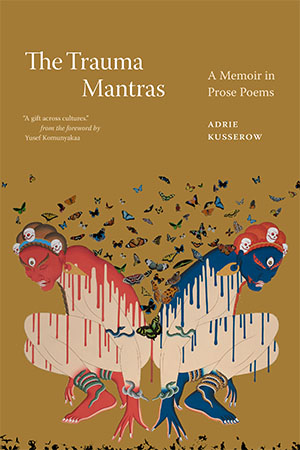


 CaMP Anthropology