CaMP Anthropology

  • Home
  • Author Interviews
    • Author Interviews Posts
    • Books Sorted by Press
    • Books Sorted by Regions
    • Alphabetical List of Interviews
  • Celebrations
    • Page 99 of CaMP Dissertations
    • Retirement Reflections
  • Virtual Reading Group
  • Possible Research Topics
    • Animals
    • Circulation
    • Education
    • Language and Media Forms
    • Law and Language (and Media)
    • Lexicalization
    • Media Etiquette
    • New Participant Roles
    • Old Media
    • Old Participant Roles, New Media
    • Orthography
    • Rituals
  • Publishing Advice
  • Anthropologists on Fiction
  • About

Communication, Media and Performance

  • Lindsey Pullam takes the page 99 test

    August 31st, 2020

    The 99th page of my dissertation goes into substantial detail about why military cemeteries exist for Israeli Druze IDF soldiers (when no such cemeteries exist for Druze civilians). Reincarnation is a fundamental tenet of the Druze religion, thus making graves superfluous as the body is unimportant in comparison to the soul. Conversely, Yad Labanim is a nationally sanctioned organization for fallen IDF (Israeli Defense Forces) soldiers, where graves have significance for the state and for individual families. With specific branches and museums in Druze villages, photographs and language (Hebrew and Arabic) are used to remediate Druze life and sacrifice to mostly Jewish audiences in ways that bridge two discourses of martyrdom.

    I particularly enjoy my point:

    In this way, the conservation and safeguarding of the Druze military cemetery serves as a reminder of the ultimate sacrifice Druze soldiers make to the country. One way to justify deviations from death practices set by the Druze religion is to signal religious cooperation and approval. This signal of religious compliance with soldier death practices (and Druze soldierhood more broadly) comes by way of photographs throughout the main sanctuary.

    While I actually find the page quite boring in comparison to the ethnographic material presented in other chapters on food and sound, this page highlights the larger point of my dissertation. That is, Druze of Israel, a bilingual ethnoreligious minority, find themselves discursively bound by two national projects (Israeli and Palestinian). However, they constantly play (and perform) between the two using violence in its various sensorial forms as a resource. In the end, Druze performances of belonging showcase their attempts (successful or not) to claim a place in the Israeli nation for themselves.

    This page also speaks to my direct participation in local tourism efforts by Druze. Tourism has long been seen in anthropology as a lesser form and site of analysis and yet it proved to be the best way to obtain innovative and substantial forms of data on an otherwise “secret society” within Israel. That being said, this page does well to advocate for the analysis of tourism’s production and consumption as it relates to national projects and the assimilation of marginalized groups to hegemonic discourse of the state.

    Pullum, Lindsey. 2020. “Faithful/Traitor: Violence, Nationalism, and Performances of Druze Belonging.” PhD dissertation, Indiana University.

    lindsey.pullum


  • Denis Provencher on his book, Queer Maghrebi French

    August 24th, 2020

    Queer Maghrebi French

    https://www.liverpooluniversitypress.co.uk/books/isbn/9781781382790/

    Interview by Adeli Block

    Adeli Block: Your monograph Queer Maghrebi French (2017) frequently references your first book, Queer French (2007). In what ways do you see your second book as an extension of your first book?

    Denis Provencher: I definitely see them as companion volumes, where Queer French (QF) informs Queer Maghrebi French (QMF).  As I point out in the introduction to QMF, the map of “self-erasure in the Marais” drawn by Samir, which I analyze in the conclusion to QF, points me on a path to discover and analyze many untold and invisible stories of queer Maghrebi and queer Maghrebi French men. Moreover, in QF, I question the largely Judeo-Christian narrative in Anglo-American contexts of death and resurrection that undergirds the process widely known as “coming out of out the closet.”  I argue in QF, that French speakers rely more heavily on the post-World-War-II existential narrative of being authentic (living in good faith) and inauthentic (living in bad faith) and the French verb “s’assumer” (assuming one’s role in society) than the French expression “sortir du placard” (come out of the closet).  The queer French Maghrebi speakers in my second book build on this existentialist narrative, along with some transnational reliance on the coming-out narrative, to tell their own authentic stories that include but are not limited to images of “coming out of the harem,” “coming out of haram,” and “dropping the veil.” These are examples of flexible accumulation of language, which I address a bit more below.

    Adeli Block: This book transcends nation-state borders (Algeria, France, Morocco, Tunisia), ethnic and geographical categories (Arab, Amazigh, French, North African, Middle Eastern), identity categories (gender, sexuality, race, class) and disciplines (anthropology, linguistics, queer studies, French and francophone studies, literary studies). You also integrate a mixed methods approach (or a queer methodology) of semiotics, visual/film analysis, conversation analysis, and critical discourse analysis. How were you able to achieve a project so multi-faceted and what were the challenges and rewards? (more…)

  • Justine Buck Quijada on her book, Buddhists, Shamans, and Soviets

    August 17th, 2020

    https://global.oup.com/academic/product/buddhists-shamans-and-soviets-9780190916794

    Interview by Claudia Lahr

    Claudia Lahr: What makes the subject of time – be it linear or recursive – so important in the context of Buryatia as opposed to other places?

    Justine Buck Quijada: I think people in Buryatia are very concerned with time because time has had such political importance. On the one hand, they are post-Soviet subjects, and as people in Russia more broadly joke, when the Soviet Union ended, the past became more unstable than the future. Soviet political rhetoric relied on a Marxist linear progression of time. The Soviet state, in many ways, rested its legitimacy on the ability to produce progress, to make people feel like they were working towards a utopian future, and most urban Buryats actually succeeded on this measure. When the goal of a Soviet utopian future dissolved, it threw people’s understanding of the past into disarray. It’s like, when you’re working towards a goal, like a PhD, or tenure, and then, for whatever reason, you change course, it throws all your previous decisions into a new light. The end of the Soviet Union was like that. While this affected everyone in the Soviet Union, Buryats, like other Siberian groups, experienced this disorientation more acutely because they are an indigenous population, and indigenous people are so often put in the role of primitive in order to prove other people’s modernity. When outsiders, be they Soviet cadres or IMF reformers, are trying to make you putatively more modern, and replace your histories with theirs, you become much more self-conscious about the valences of time.

    Claudia Lahr: Why did you choose to use Bakhtin’s concept of the chronotope in particular as a way of looking at history building in Buryatia? (more…)

  • Shannon Ward takes the page 99 test

    August 11th, 2020

    My dissertation, Learning Language, Transforming Knowledge: Language Socialization in Amdo, Tibet, examines young children’s social and linguistic development in China’s western borderlands. Based on fifteen months of language socialization research with infants and children aged three months to seven years old, Learning Language, Transforming Knowledge demonstrates the persistence of place-based linguistic diversity amidst rapid urbanization and the associated rise of standard language ideologies.

    My dissertation “passes” Ford Madox Ford’s test because the ethnographic examples described on page 99 situate my research within broader anthropological discussions about cultural reproduction amidst linguistic change. In Amdo, kinship relationships and spiritual connections to the homeland constitute diverse mother tongues as indexes of place-based belonging. Despite an overt ideological emphasis on language standardization in greater Tibet and western China, Amdo children continue to acquire their family’s mother tongue (Tib. yul skad) as their first language.

    Page ninety-nine summarizes place-making practices in young children’s play. These play routines emplace the yul skad in the village homeland and, at the same time, allow children to innovate in the yul skad. From the time they are mobile, children spend their days in groups of related peers, moving throughout the expanded space of the village. Children use movement alongside verbal interaction to embody a form of place-based belonging that is simultaneously social and spiritual. For example, in the peer group, “children invoke skora, or circular movement, in multiple spatial frameworks. Daily play at the mani khang [local temple]…unfolds alongside adults’ circumambulation…While adults perform skora, children mirror their movements through games, including hide and seek (Amdo: bi-ʱtsʰe, [a code-mixed word whose first syllable is borrowed] from the Chinese verb 蔽 [bi, ‘to conceal’])” (Ward 2019: 99). Through games such as bi-ʱtsʰe, children solidify their peer relationships by iconically reproducing spiritual practices linked to the village homeland. At the same time, they use their multilingual verbal repertoires to develop unique ways of speaking among the village peer group. Through this play routine, children therefore reconstitute affective ties between the mother tongue, the kin-based peer group, and the spiritual center of the village homeland.

    Shannon Mary Ward. 2019. Learning Language, Transforming Knowledge: Language Socialization in Amdo, Tibet. New York University, Phd.

  • Roberto J. González on his book, Connected

    August 10th, 2020

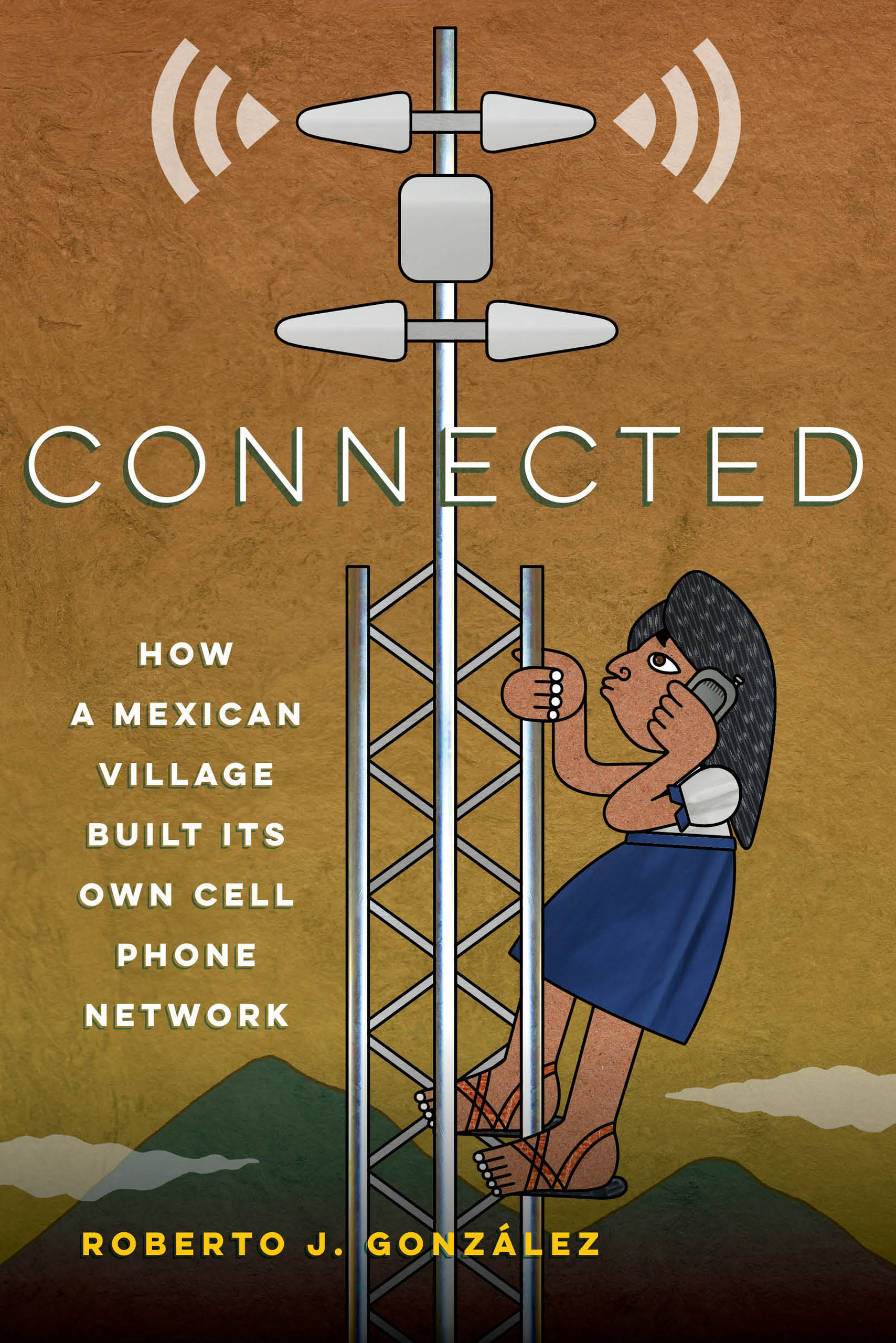
    connected-cover

    Interview by Patricia G. Lange

    https://www.ucpress.edu/book/9780520344211/connected

    Patricia G. Lange: According to your book, the people of the remote community of Talea in Oaxaca, Mexico have a saying that “a bad compromise is better than a good fight.” How does this maxim emblematically illuminate what it took to secure their right to be connected to mobile networks and the internet?

    Roberto J. González: For almost a decade, villagers dreamed of being the first in northern Oaxaca to have cellular service. They repeatedly petitioned the big telecom firms Telcel and Movistar, and when these companies turned them down, they petitioned state and federal regulators, who weren’t any help either. Eventually, in 2012, villagers decided to work with Rhizomatica, an NGO dedicated to helping indigenous communities get connected, and together they were able to create their own non-commercial DIY cellular network. Like most fledgling technologies, it had glitches and limitations—but it worked.

    Now, I suppose when Big Telecom denied them service and government regulators ignored them, Taleans could have occupied the state capital, or kidnapped government officials, or had a protest march or hunger strike. But instead of a fight, they decided to find a compromise, a nonconfrontational kind of direct action—building the community cellular network—which worked well for several years.

    By 2014, some people began accusing those operating the network of mismanagement. In this case, in order to avoid a “good fight” that might have politically divided the pueblo, village authorities came up with a bad compromise: to give Movistar another chance to provide cellular service. The company accepted.

    Patricia G. Lange: A key cultural characteristic that you focus on is Talean openness to outside ideas. The Taleans’ willingness to experiment with innovation seems to have ironically both spurred support for their community-based, autonomous network—and hastened its “downfall.” Given that Taleans ultimately abandoned their community cell network in favor of a major telecom company, what does it mean to say that they are “ecumenical when it comes to technology”? How was your perspective and analysis influenced by teaching in Silicon Valley?

    (more…)

  • Guilherme Fians takes the Page 99 test

    August 3rd, 2020

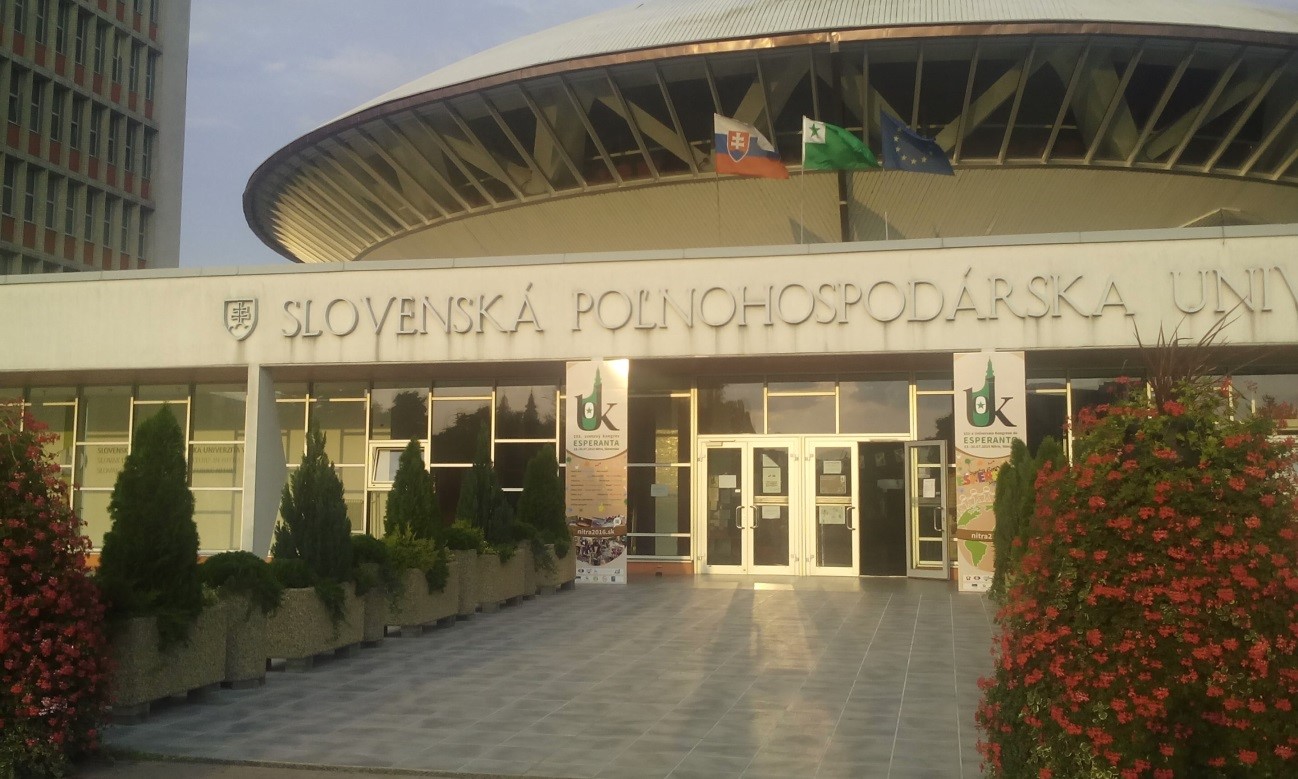
    On page 99 of my dissertation, the reader finds themself in the middle of an ethnographic description of a heated political debate held during the 101st Universal Congress of Esperanto, in Nitra (Slovakia) in 2016. In this debate, members of the World Non-National Esperanto Association were reflecting on the aims of their activism: should this association use Esperanto to create inclusive, internationalist conversation spaces where people from different national and linguistic backgrounds could gather and meet halfway by speaking a non-national, non-ethnic language? Or should they adopt a more combative stance and use Esperanto as an anti-nationalist tool to fight the exclusionary and xenophobic aspects of nationalism?

    fian.photo

    Entrance of the congress venue, the Slovak University of Agriculture, where the 101st Universal Congress of Esperanto took place. The Esperanto flag between the Slovakian and EU flags helps to convey the internationalist atmosphere at stake in the Esperanto gathering [Photo: Guilherme Fians].

    While page 99 brings us to a brief diversion to Slovakia, my doctoral fieldwork – which placed my dissertation as the first extensive ethnographic study of Esperanto speakers and activists – was carried out mostly in France.

    Constructed in the late nineteenth century as an attempt to promote mutual understanding between peoples through language comprehension, Esperanto has been historically associated with internationalism, gathering a community of speakers and activists that strategically connect this language with diverse global political platforms. If, in France, Esperanto used to be particularly prominent among anarchists, communists and pacifists, what is this language’s current political relevance? What impacts have new communication technologies such as social media had on the organization of this community and language movement? Through participant observation – in French and Esperanto – and archival research concentrated in Paris, I mapped out how Esperanto activists use this language in online and face-to-face debates to question the post-political consensus about the use of national languages (such as English and French) for international communication.

    Approaching a moment of significant changes in the way people communicate and mobilize politically, I found that Esperanto frequently works as a gateway for people to engage with other political causes, such as movements for open-source software and against neoliberal globalization (like the Gilets jaunes in France). Within these frameworks, Esperanto activists depart from the fight against linguistic discrimination and a preference for participatory over mass communication to re-politicize acts of communication and contribute to radical politics.

    Reaching back to Nitra, where both this blog post and my fieldwork began, the outcome of that debate was that any form of internationalist or anti-nationalist stance can prove productive, as long as it fosters more egalitarian and inclusive communicative exchanges through the international circulation and co-production of information, ideas and knowledge.


    Fians, Guilherme. 2019. Of revolutionaries and geeks: Mediation, space and time among Esperanto speakers. University of Manchester, PhD dissertation.

  • Gretchen Bakke on The Likeness

    July 27th, 2020

    The Likeness by Gretchen Bakke

    Interview by Krisztina Fehérváry

    https://www.ucpress.edu/book/9780520320048/the-likeness

    Krisztina Fehérváry: Something I love about great ethnography is the classic move of introducing the reader to what seems a completely strange way of being in the world and making sense of it. You do this with the Slovene notion of the copy, the likeness, the double— not as a faded, devalued copy or reproduction, but as something unique and subversive in its own right, taking up its own space. You write that it took a long time before you began to figure this out. Can you say more about the thesis of your book, and how you came to “see” it?

    Gretchen Bakke: There was something perfectly obvious about repetition as comforting and expressive from the very start, because of the way that surfaces and samenesses carried such unabashed symbolic ooomf. But then, when I would take that out of context, and try to talk about how doing something perfectly the same as something already recognizable was both a sort of accomplishment (to be proud of) and also irritant, because things aren’t supposed to be that perfect all I got was a bunch of people looking at me like I was nuts. I was going to school in America, raised in America (though a weird corner of it) (there are so many weird corners) and there was no place at that time in that place for a lack of differentiation to have symbolic and social power.

    You ask below about how much the book is actually about America, and it didn’t start that way, but as I wrote I let myself relax a little bit and tried to critique the social-symbolic system that couldn’t recognize the power and effort of non-differentiation. Since The Likeness really is about imperatives that come with socio-cultural transition, I felt it was important to also write about failures of recognition, about how at important moments of communication nuanced practices of subjectivity just didn’t make it through a mesh tuned differently. I thought a lot about ‘On Alternating Sounds’ where Boas (1889) argues for misperception on the part of researchers – grounded in the ‘naturalized’ sounds of their own childhood – as constitutive of an entire theory of mind attributed to those being researched. This seems so straightforward or obvious today, yet precisely this misperception caused a lot of suffering as Slovenia was integrating into Europe because this one simple thing – that sameness can be powerful, protective, comforting; that likeness can wielded as a weapon or used as a cushion; that subjectivity can be spread elegantly across surfaces rather than found in plumbed depths – this  way of being just slipped ever into misrecognition and misattribution.

    Most of the book, is concerned with how this played out in Europe, but I also have a bone to pick with the intense attachment to the depth model of subjectivity in the US, and this material seemed a way to show readers, especially students, how much any set of practices that produce something like a sense of self, is not natural or true, but just as learned-via-repetition as anything else.

    Krisztina Fehérváry: This is fascinating.  It will also help me in a project I’ve been working on intermittently about smiling and teeth in Hungary, where the U.S. serves as a basis for comparison but is also an important model for Hungarian dental practice and norms for appearance.  The “American” smile is so clearly performative,  but people here hate it when I point that out.  Hungarians are also getting their teeth done, perfect and white, but not for smiling, especially not that kind of smile.  (As elsewhere, such commodified teeth have become a potent marker of middle-class distinction, respectability, and proper hygiene.)

    Gretchen Bakke: A sweep toward sameness, as teeth transition into recognizable as having been done. Here too, there needn’t be an emphasis on difference or distinction or even meaning and intention in order for subjectivity or identity to emerge. You see this right away. Other Anthropologists too have made this point, though less so recently. When, thanks to one of the book’s reviewers, I discovered Catherine Lutz’s work (1998) and Michelle Rosaldo’s (1980, 1982) I felt such gratitude for their easy proclamations related to a broad cultural disregard for the inner or for anything like the Delphic imperative. I breathe easier today because more than anyone their work makes the point that there is nothing special about distinction as a delicate mode of individuation. There is no true I. There are lots of ways to be a someone even now today, but all the ways that don’t look like a careful cultivation of minor tweaks of a presumed to be knowable inner self (see esp. Dunn 2003, 2004, 2005), come up as jarring. Non-differentiation, a lack of originality, can be just as expressive as can the endless deployment and cultivation of tiny unique differences.

    Krisztina Fehérváry: This also reminds me in some respects of what Daniel Miller (2010) called “Depth Ontology,” referring to the ideological origins of the protestant obsession with plainness, of seeing adornment as artifice.  He was talking about make-up and clothes, and how in many places like Trinidad a bare, unmade-up face is just a blank, a mask, that reveals nothing about a person, while dress and make up is how a person reveals who they are. This seems related to what you are saying about kinds of performative subjectivities, although in those examples uniqueness and distinction are still important. (more…)

  • Stuart Dunmore on his book, Language Revitalisation in Gaelic Scotland

    July 20th, 2020

    Interview by Christian Puma-Ninacuri

    https://edinburghuniversitypress.com/book-language-revitalisation-in-gaelic-scotland.html

    Christian Puma-Ninacuri: Gaelic-medium education (GME) has been developed as an initiative to maintain the Gaelic language through education. The role of formal education as a tool for revitalizing a language has been widely studied and theorized; however, empirical research on the long-term outcomes of minority-medium education has been relatively scarce. What was your motivation to evaluate the revitalization of Gaelic from an empirical point of view? How does your study contribute to our knowledge of language revitalization processes?

     Stuart Dunmore: I think my main motivation was, as you rightly say, the paucity of research evidence that has been brought to bear on long-term outcomes of minority-medium immersion education historically. In Scotland, GME receives a great deal of attention as the main means we currently have of increasing the numbers of speakers that exist in the world, since vernacular community use of the language continues to decline apace. Generally, Gaelic has not been passed onto a majority of the youngest generations in heartland areas, so school has tended to be used to plug that gap elsewhere in Scotland. The trouble was, we just had no real idea as to whether or not former students who have received an immersion education in Gaelic continue to speak it after completing their studies. So, my research set out to answer that question among a sample of adults who went through GME after it started in the 1980s.

    I hope what the book contributes to the wider literature on language revitalization is its stress on the importance of critical, empirical approaches to evaluating language policy outcomes; when it comes to linguistic and cultural endangerment it’s not enough for policymakers to simply invest in new initiatives and hope for the best. Interventions have to be evaluated critically to ensure they are effective and to identify where and how they can be improved, as the stakes are so high for minoritized communities throughout the world.

     Christian Puma-Ninacuri: The revitalization of Gaelic has faced different challenges over the years. On the one hand, policymakers made the language official, especially in the educational system, but on the other hand, it was initiative from parents who wanted to continue using the language that led to GME’s development. Taking this into consideration, how do you understand the participation of both policymakers and members of the community in revitalization processes? How does community engagement contribute to minority language education?

    Stuart Dunmore: That’s an absolutely crucial point, that bottom-up, grassroots initiatives from within the minority linguistic community are vital for the long-term success of revitalization policy objectives. GME was developed in the 1980s as a consequence of Gaelic-speaking parents’ relentless campaigning for the establishment of immersion education in Gaelic at the pre-school and elementary level. They wanted their kids to be fluent and confident Gaelic speakers but worried that within an English-only system, their Gaelic acquisition and abilities would be significantly undermined. Subsequently, GME classes were augmented by children of parents who couldn’t speak Gaelic themselves, but who wished for their kids to become bilingual. But it was only due to the hard work of grassroots Gaelic organizations that policymakers were persuaded to establish the system in the first place. Similarly, I suspect that internationally, it is only bottom-up support from parents and community that will encourage and enable minority-medium immersion pupils to maintain their linguistic abilities in minoritized varieties after schooling is completed.

     Christian Puma-Ninacuri: Mixed methodological approaches are increasingly being used in the field. Your book uses semi-structured interviews (qualitative data) and online surveys (quantitative data). What were the challenges that you experienced while analyzing the data? How can your methods guide other research on language revitalization?

    Stuart Dunmore: I think the principle of data triangulation – that is, testing the reliability of conclusions made using one method against one or more other methods – lends a great deal to the validity and generalizability of social research generally, and this is certainly true of linguistic ethnography in my view. That can mean testing a researcher’s own ethnographic, participant-observations against more detailed interview accounts, focus group or survey data, or in my own case, employing statistical techniques alongside qualitative sociolinguistic methods such as ethnography of communication. As you say, it often is genuinely challenging for researchers to feel confident employing multiple methodological techniques simultaneously, but I would recommend this approach as one that we can adopt and learn to improve the reliability of our findings in the field of language revitalization.

     Christian Puma-Ninacuri: In your book, you mention Fishman’s claim that language revitalization efforts in schools will fail unless the minority language can be more broadly used outside school. Similarly, scholarship has demonstrated the importance of intergenerational transmission to language maintenance. How do your findings contribute to this debate? 

     Stuart Dunmore: Fishman’s point that communities and parents passing on endangered languages to children in the domains of home, neighborhood and community – intergenerational transmission – is the key to securing language revitalization (in the sense of re-vernacularisation, or normalizing the use of the minority language in the community once again); however, it is very difficult to take issue with on an empirical basis. My book demonstrates that for the majority of students who acquire a minority language in an immersion classroom, the language will remain a thing used for school purposes only if parents, community and grassroots organizations are unavailable or unable to encourage minority language use in the home. Gaelic language socialization – which I measured as having been raised with at least one Gaelic-speaking parent at home, correlated consistently with higher rates of Gaelic retention and use among former-immersion students in my quantitative statistical analyses, and in interviewees’ own accounts. Without this normalizing influence for minority language use outside the classroom, it’s hard to avoid Fishman’s conclusion that school-based interventions will not be successful in the long term.

     Christian Puma-Ninacuri: Your book shows that the majority of participants’ social use of Gaelic is reported to be limited among peers such as friends, siblings and partners. However, there are other language practices of Gaelic that seem to be relevant to speakers (‘secret code’ and ‘informal’ use of Gaelic characterized by a code-mixing with English). What does this tell us about the relationship between Gaelic and practices related to language identity and ideologies? 

    Stuart Dunmore: Quite simply, I think my data show that the relationship between linguistic practices, ideologies and identities is absolutely key to understanding language decline and revitalization processes. Limited use of Gaelic by my informants across the domains you mention above appeared to be underpinned by their language ideologies concerning the appropriate use of Gaelic and relative lack of social identity in Gaelic. Those individuals who tended to use the highest levels of Gaelic in the present day had frequently grown up with Gaelic at home, and subsequently have a stronger cultural identification with the language.

    The school system alone didn’t appear to encourage pupils without this background to develop a clear sense of social identity in the language, and as a result, they didn’t use it a great deal or wish to pass it on to their own children in future. My sense is that these processes are universal in contexts of language shift and revival, and that language ideologies and social identities are crucial considerations for policymakers to bear in mind. Revitalization initiatives, whether focused within the education system or not, should clearly address issues of ideology and identity, which often have a strong and negative influence on linguistic practice.

     Christian Puma-Ninacuri: Finally, taking into consideration the results of your investigation, how does your book establish a conversation with policymakers, educators and community members to improve processes of language revitalization of Gaelic, especially to improve the GME system?

    Stuart Dunmore: I hope the dialogue my research provokes will lead policymakers and community members to consider critically the effectiveness of top-down interventions, and how this can be improved through being joined and supported by bottom-up efforts from within the language community. A book on its own can’t do this job for educators and policymakers, but hopefully some of the knowledge exchange activities I have undertaken since completing the research can help to inspire discussion between communities and policymakers. As the book demonstrates, it’s absolutely crucial that bottom-up efforts from within communities complement policymakers’ interventions to support them if minority languages are to be successfully maintained into future decades.

  • Lionel Wee and Robbie Goh on their book, Language, Space, and Cultural Play

    July 13th, 2020


    Language, Space and Cultural Play

    Interview by Ida Hoequist

    https://www.cambridge.org/core/books/language-space-and-cultural-play/327DE07D95DC80767188DE0AA9139EDD

    Ida Hoequist:  In this book, you combine affect theory with an attention to the human built environment and a philosophy of meaning-making borrowed from linguistics, and the end result is the impressively seamless framework that you call “affect regimes”: ways that particular places structure the dispositions of people in them. Given that your framework is so eclectically sourced, which disciplines do you see this book speaking to and what do you hope it brings to those conversations?

    Lionel Wee and Robbie Goh: This book hopes to speak to disciplines such as linguistics, sociology, and anthropology. For linguistics, the study of affect remains relatively new in spite of growing recognition of its importance, not least because language still tends to be conceptualized as a medium for cognition. Affect and cognition are often treated as separate phenomena, with the former working against the supposed proper functioning of the latter. At the same time, while disciplines such as sociology and anthropology have long given much emphasis to affect, the attention to how affect is materialized in the built environment remains a relatively new focus. In its study of semiotic landscapes, we try in the book to both accord greater recognition to the role of affect and to also show how that role can be theorized.

    Ida Hoequist:   Affect theory is by no means a cohesive body of scholarship, so there is a wide and varied field of potential ways to understand what affect might be. Can you share with us how you came to the particular understanding of affect that you use for your book?

    Lionel Wee and Robbie Goh: It is hard and sometimes misleading to try to go back and trace one’s scholarly influences, especially since one’s exposure to ideas and discussions with colleagues hardly ever follows a neat linear trajectory. However, works by Patricia Clough and Arlie Hochschild were important in initially shaping our ideas. These were further refined through further readings and discussions, and perhaps most importantly, our own experiences doing fieldwork as we collected data from actual landscapes.

    Ida Hoequist:  Your title refers to cultural play; can you share with us how that ties into the landscapes in the book and the semiotic processes you describe?

    Lionel Wee and Robbie Goh: This is an elaboration of some of the concepts commonly deployed in cultural studies, urban/cultural sociology and cultural geography.  One of the key ideas running through these fields is that space is never a blank slate, but rather the site of contestations, negotiations and influences.  These can take a myriad of forms, including spatial size, spatial design, signage, historical overtones, media representations, and so on.  Often, too, different groups will have different investments in the same site: for very young children a playground is for swinging or see-sawing, for teenagers it may be for practicing parkour moves, for pet owners it is for their pets to play, for foreign domestic workers it is a refuge from the regimentation of the households in which they work.  The play of these different structural/semiotic elements in combination with the interventions of different groups, is what creates affective regimes, and also what makes them so complex.

    The bottom line is that affective regimes are not static and monologic, but rather the product of dialogical tensions and texts.

    Ida Hoequist:  The concepts in this book are so eerily applicable to the currently ongoing coronavirus pandemic that they almost seem prescient. Many parts of the world right now could serve as stellar case studies for your framework — for example, the use of signs, floor markings, and barriers in grocery stores could be part of an attempt to construct an affective regime of caution. You also write about the effects of people increasingly leading their social lives in digital spaces, which people are doing now more than ever in places where social distancing is mandated. If you were to add a pandemic-focused section, what might be in it and would it prompt any changes in or expansions of your framework?

    Lionel Wee and Robbie Goh: Yes, the restructuring of spaces (‘social distancing’), the introduction of fines and other penalties for non-compliance, the use of tracing apps (with concomitant privacy concerns), the gradual re-opening up of different sectors of the economy (since some spaces are more easily restructured to minimize the transmission of Covid-19 than others) – these are situations that call out for analyses along the lines we have discussed in our book. We would in any such discussion want to add a section of how to conceptualize a semiotic landscape that has been temporarily shut down or closed off. For example, a shop sign that says ‘Entrance’ is no longer operational if the entire site that the shop is part of has been shut down due to a citywide lockdown. But the sign cannot be said to have been discarded or abandoned (which would be the case if the site is slated for demolition). The communicative function of the ‘Entrance’ sign is in abeyance for the duration of the lockdown. Exactly how to theorize this is an interesting matter, and it is one that Lionel is pursuing in his latest book.

    The digital mediations accelerated by Covid-19 certainly bear on many of the practices we discuss in the book, including travel, friendliness and public space, romance, and others.  One aspect that we would probably have expanded on in a pandemic-focused additional chapter, would probably be fear – how this is circulated and channeled in the absence of physical movement and a greater reliance on media.

    Ida Hoequist:  It’s clear throughout the book that both of your ways of thinking, as scholars from different disciplines, are threaded through the material. Were there points that you see as being particularly enriched by your cross-disciplinary co-authorship, or points that were more complicated or challenging to work through together?

    Lionel Wee and Robbie Goh: We work well together because of a mutual respect for our different disciplinary backgrounds (Lionel is a linguist and Robbie a scholar of literary/cultural studies). There was only one complication to really speak of, and that was in our different approaches to writing up the book. As a linguist, Lionel is more in the habit to constantly referring back to specific linguistic examples when discussing ideas. In contrast, Robbie is quite comfortable expounding without always making such references. This was never a major issue because drafts were being circulated back and forth between the two of us. This was a deliberate writing strategy to minimize having two otherwise distinct voices in a single book.  By the same token, it was enriching to benefit from a combination of the solid grounding in linguistic debates, with the wide range of examples and perspectives from popular culture, tourism studies and literary history (among others).

  • Jane Setter on her book, Your Voice Speaks Volumes

    July 6th, 2020

    Cover for 

Your Voice Speaks Volumes

    Interview by Paola Medina González

    https://global.oup.com/academic/product/your-voice-speaks-volumes-9780198813842

    Paola Medina González: In your book, you address a variety of topics including speech, English history, gender differences, professions which rely on the voice, forensic speaker analysis, and transgender language. What are the sociocultural and ideological links you found between these topics? Specifically, speaking about minority communities of practice, what can we learn from your research?

    Jane Setter: The main thrust of the book is to help readers understand that accent and/or voice prejudice is real, and to task them to re-examine their conscious or unconscious bias about this aspect of a person’s identity. Listeners make all kinds of assumptions about people based on the way they speak; these assumptions can be just as biased as those made based on how people look, what they wear, how they wear their hair, whether they have a job and what it is, what music they listen to, and so on.

    Paola Medina González: One of the things I was most surprised about in your book was the incorporation of QR codes. Why did you make this innovative decision and how was this connected to your ideas about who might read the book?

    Jane Setter: I wanted people to be able to access media other than print so they could really hear (and see) examples of some of the things I have written about.  As an educator, I find visual cues to be invaluable to the learning process.  Phonetics is often thought to be a dry subject and just about sound; I wanted it to come alive so readers could really get a sense of how this technical subject relates to the real world and to them. I always use video examples in my teaching and students have commented on how this helps them understand the content, so I wanted to give my readers that experience, too.

    I suppose the book is targeted at anyone who is interested in speech as a social and communicative phenomenon, so that is who I imagine will be reading the book.

    Paola Medina González: In your book, you talk about teachers and famous people who change their accents consciously in order to integrate into society. Are there situations in which we change our accent unconsciously? Are these changes imposed by something else, perhaps social factors?

    Jane Setter: While several studies and the interviewees in the book show that some people are very much aware of the way they speak and have chosen to modify it, I think most people change the way they speak unconsciously when they move between different social settings.  In general, humans are social beings, and showing you identify with a particular speech community at any one time is a way of being accepted by that community, and getting your social needs met. This could be conscious or unconscious.  An example which is often given is how teenagers speak differently with their friends, their parents and their friends’ parents. I would certainly switch in and out of (slightly) different accents at school or home because of the expectations in those settings, and it becomes second nature if they are settings you are used to.  If you find yourself moving into a new social setting where the speech features are different, you will either chose to try to change, or you may decide not to, depending on how you want to express your identity.  Changing the way you speak to be more accepted by a certain speech community, and to show you accept that community, is called accommodation.

    The fact that it is often unconscious is reflected in the accounts I have had from many people over the years who have moved around the UK – or the world – to study and, when they have gone back home, people have told them that they don’t sound like themselves any more.  This kind of comment can make the speaker feel like they have lost part of their identity (rather than gaining a new one), but it is also a reflection of how their social group might feel rejected by the speaker.

    Paola Medina González: According to your book, some professions pay more attention to voice and speech inflection. Relating this idea to my own experience, when I studied how to teach my native language, one of my professors used to evaluate us in terms of performance, besides teaching techniques and designing didactic materials. She used to tell the male students that they had a really good teacher’s voice. Female students were not so lucky. What could be the reason for this? Is it true that there are better voices for teaching? Are there better voices according to professions?

    Jane Setter: It sounds like your professor was biased against female speech, which is very common indeed, and something I look at in the book. But she may also have been biased against other women in general or felt threatened by them; the negative comments about your voices sound like something called competitor derogation, which people use to make themselves feel more superior.  This is a very complex issue and I’m not a psychologist, so I don’t feel qualified to make further comments.

    Concerning whether there are better voices according to professions, I can’t think of any research that looks specifically at this, but I would suggest that stereotyping would play a role in people’s opinions of which voice and/or accent fits which profession best.

    Paola Medina González: In many chapters of your book, you say that when people speak, the way they sound plays a role in social relationships. In this sense, there could be cases in which an accent can be linked with social stereotypes and people try to avoid it. What do you consider is the best practice to avoid creating and reproducing negative social stereotypes related to accents? What dialogue do you want your book to establish with people working in education? What can teachers and professors do in order to eliminate the stereotypes associated with some accents or particular phonetic phenomena? 

    Jane Setter: Education, education, education!

    Again, education is key here. We need to be discussing these issues and helping people understand what their (un)conscious biases are and how they acquire them, so that they can question these biases when they realize they are in the process of making them.  I would recommend this starts as early as possible in educational settings. And it will require those teachers and professors to undergo unconscious bias training where speech is concerned.

    We, as people, need to be able to take a step back, appreciate that cultures are different, and try to move towards mutual understanding, rather than making assumptions which can lead to a breakdown in communication.

←Previous Page
1 … 31 32 33 34 35 … 53
Next Page→

Blog at WordPress.com.


Loading Comments...
 

    • Subscribe Subscribed
      • CaMP Anthropology
      • Join 259 other subscribers
      • Already have a WordPress.com account? Log in now.
      • CaMP Anthropology
      • Subscribe Subscribed
      • Sign up
      • Log in
      • Report this content
      • View site in Reader
      • Manage subscriptions
      • Collapse this bar