Media is fundamentally about connection. Around the world, life is being lived through mediated artifacts and technologies. Its pervasiveness invites numerous questions for understanding human experience today. For example, how might we disentangle perceptions of our lives’ events from the media through which we experience them? Is it even possible or desirable to hope for such disentanglement? How are the politics of the current moment reified or challenged by currently available media? What should we expect from the emerging technologies of tomorrow, and what should we demand from their design and implementation? As media anthropologists we recognize that understanding contemporary interaction involves analyzing what media is and does for our encounters and societies, and how it impacts what some argue should be a shared reality in an environment under threat.
The new edited volume, The Routledge Companion to Media Anthropology (Routledge, September 29, 2022), collectively tackles provocative questions that revolve around the relationship between media as exchange and issues of inequality, social change, identity, migration, mobility, relationships, and politics. We define media as that which connects people to each other, and to systems and technologies. Early in the volume’s initial conceptualization, we as editors agreed to invoke an intentionally broad definition to invite inclusive reflection on connections between individual interactions and larger socio-cultural systems. Our cover playfully depicts a robot and a television hardly able to process each other, an image which reflects the ongoing confrontation between different forms of media and their changing relationships to each other. We are delighted that the image connotes the wide range of media we set out to explore, including TV, radio, newspapers, gaming, social media, artificial intelligence, and virtual reality.
When initiating the project, we were confronted with a daunting task. How do we organize a staggering amount of research and scholars in a single volume? Part of our inspiration to create the volume was that over the last two decades, numerous significant and dramatic changes deeply impacted the landscape of the field. Although it is possible to organize such a volume in many ways, we elected to divide the terrain into three major parts, “Histories,” “Approaches,” and “Thematic Considerations.” In the “Histories” section, we invited long-term scholars in the field to reflect on the origins of media anthropology as a discipline and how their own work helped establish its terrain. Through these chapters, our volume provides a rich grounding in major themes that helped launch and subsequently coalesce the field. These chapters trace how media anthropology developed as technologies and communication systems changed, and how anthropological studies of indigenous media greatly helped to consolidate the field in the 1990s.
In the “Approaches” section, we invoke the literal definition of the word “approach,” to mean “to come nearer to something.” We intended the material in this section to come nearer to understanding what media actually means and does in specific cultural contexts. We elected to focus on how media may be seen as a type of “Infrastructure,” or may be analyzed in terms of its “Materialities,” its commensurate “Practices,” or in terms of “Interpretations.” Although particular media cannot be contained within single categories, this framework nevertheless proved useful for understanding media’s complex dimensions, as well as the opportunities and complications that ensue from its use in supporting social life. The third part, “Thematic Considerations,” focuses on themes that are pertinent in our current moment in the 21st century, including, “Relationships,” “Social Inequality and Marginalization,” “Identities and Social Change,” “Political Conservatism,” “Surveillance,” and “Emerging Technologies.” Together, these chapters collectively draw attention to how anthropological theories and methods identify inequities and their sources, including old and new forms of marginalization, their causes, and potential inspirations for their resolution.
As we worked through the volume, we realized that a work such as this may be organized in numerous ways. We therefore chose to supplement the volume with an Appendix that identifies crucial themes that cut across sections. Such themes include: “Diversity, Equity and Inclusion,” “Failures,” “Games and Gaming,” “Global South,” “Labor and Entrepreneurship,” “LGBTQ+,” “Methods,” “Media Types,” and the specific “Countries” that are represented in the volume. We wanted the volume to serve as a useful teaching tool, and the Appendix is intended to support courses that engage with particular subjects. The volume ambitiously draws from over 40 contributors researching media in 25 countries, namely: Australia, Bolivia, Brazil, Canada, Chile, China, Colombia, Denmark, Estonia, Germany, India, Italy, Japan, Malaysia, Namibia, Nepal, The Netherlands, Peru, Romania, South Korea, Sweden, Trinidad, Turkey, Uganda, the United Kingdom, and the United States.
Given the breadth of media scholarship, a key goal for our volume was to consider diversity from a number of perspectives. Evocative of media’s connective connotations, the volume itself mediates between different research projects across time and space, and between disciplinary fields, ethnicities of contributors, and research generations. We are deeply grateful to our forebears who carved out a space for dialogue and research in this field, and we wished to continue the conversation. Since the earliest volumes of media anthropology emerged at the turn of the millennium, much has changed in the types of communication technologies available, and the research questions they inspire. Whereas earlier volumes focused on mass media and issues of representation and interpretation, today’s widespread availability of media invites exploration about the materiality, technologies, and emergent practices that are not only widely accessible in terms of media production, but also influence myriad interactions and perceptions about the world.
We as editors did not want to see the volume become a mere repository for prior scholarly work. In addition, given that many fields involve analyzing media, we specifically wished to emphasize the contribution of anthropological theories and ethnographic methods. Therefore, in order to participate in our project, each contributor was asked to explicitly engage with new findings on their media research, thus bringing a new intervention into the field in our volume. Contributors were also asked to directly trace how anthropological theories and methods contributed to their insights. The volume thus contains intriguing ideas and reflections on new anthropological methods and approaches. Given the fine methods handbooks already available, we elected not to focus on methods for our volume. Nevertheless, the invitation to incorporate anthropological approaches produced new insights in method, in areas such as updates on longitudinal research, the idea of money as media, photomedia as anthropology, and content as practice, to cite a few examples.
To offer a plurality of voices and perspectives, the volume connects past scholarship to future research. We invited chapters from up-and-coming scholars with exciting new projects and research questions. We also incorporated chapters covering new technologies on the horizon. A section on “Emerging Technologies” deals with media that have not yet been integrated into daily life, but are quickly gaining traction. These chapters take a critical eye on how technologies such as augmented reality, virtual realities, and algorithms might be reimagined to serve varied populations. The volume engages in new debates in thorny areas such as surveillance, algorithmic justice, and the ongoing battle for mediated truth.
Today’s research questions in media anthropology frequently revolve around the disruptions of media within larger media ecologies. Rather than produce definitive findings that can be generalized across fieldwork projects, scholarly areas, and genres, the volume instead makes connections between perspectives—some of them opposing—thus enlivening debates in the field. Not all contributors—or we suspect, readers—will necessarily agree on interpretations, meanings, or impacts of specific mediated acts. For example, media anthropologists are often reluctant to engage in “effects” claims, given the many factors that inevitably contribute to social change and worldviews. Our volume tackles this debate head-on with chapters that provide not only discussions of effects within particular field sites, but also invite collective reflection on making claims about media’s impact in the current era of widespread media production and availability. While media is one factor in a constellation of cultural and social factors that shape our experiences and perspectives, at the same time, close readings of many studies—past and present—reveal that exploring the effects of media continues to form a central and defining element of many of our research projects.
We as editors envisioned a volume that was balanced and circumspect with regard to media’s efficacy. Thus, the subject of media failure is also discussed in several chapters that sensitively explore the instances in which attempts at inclusiveness and connection through media do not serve the very populations that are meant to benefit. Criticality is central to our volume, including analyzing how media is deployed, and who benefits from it. The volume opens a space for sharing differing perspectives on complex and nuanced phenomena. For example, a topic as provocative as surveillance is tackled from several perspectives, including an analysis of the harm of algorithmic, top-down surveillance and its roots in bureaucracy, a motivator that is not always taken into consideration in analyses of algorithms, especially outside of anthropology. The volume also offers forthright exploration of culturally accepted forms of lateral surveillance in religious communities interacting on social media, as well as research on how certain forms of surveillance may serve as plausible pathways to being seen and counted in marginalized communities such as LGBTQ+ groups.
The volume provides informative and timely analysis of the mediated politics of the current moment, including studies of political conservatism. While the field in the 1990s focused on how media served revolutionary agendas, our volume brings together several scholars who study groups that aim to promote so-called traditional values and ideas. Several contributors in the volume discuss dynamics such as strategic ignorance, or our current crisis of facts, specifically analyzing how ignorance is no accident or result of educational lack, but is rather strategically produced for political ends. Processes of supposed spreadibility and symbolic bricolage assist certain political agendas that ultimately yield racist and exclusionary discourses that demand to be addressed.
We are grateful to all the contributors for providing depth through detailed ethnographic case studies, as well as breath across numerous media, topics, geographical areas, and disciplines. Media is messy and complicated, and the process of analyzing it benefits from the sharing of multiple perspectives, including the many related disciplines—such as media studies, cultural studies, communication, and science and technology studies—that have both informed media anthropology and been influenced by its perspectives and findings.
Our volume mediates connections between the past and the future, between long-term scholarship and new research in this area, between disciplines, and between readers. We recognize that some readers have been researching and teaching media anthropology for quite some time, while others may be just coming to the field. We welcome readers who may be approaching this subject for the first time, as media not only becomes widely available but is increasingly central and frankly unavoidable to address if we as anthropologists wish to understand interaction in contemporary contexts worldwide. We see this volume as an active and ongoing nexus of connection, and we invite commentary and further dialogue on this most fascinating field.
Sharonee Dasgupta: The book starts from the question trying to understand why some news is permanently carved in people’s minds, whereas most of it is forgotten. What are your thoughts on this?
Ratan Kumar Roy: Since its inception, the media has communicated ideologies and ideas. For example, immunization in the South Asian context, for which the broadcasting media was used widely. Some slogans became so popular that people still remember them even though it has not been in circulation for decades. Such as, for Tuberculosis treatment awareness building TVC, a catchy Bengali slogan was used: “Jokkha Hole Rokkha Nai, Ei Kothar Bhitti Nai” means “It is baseless that you won’t survive if affected by Tuberculosis”. This is one way of looking at it that some news continues to remain in viewers’ memory.
But a more in-depth engagement with viewers helps us to understand that there is a collective effort to make a particular news story popular. For instance, the story about a teenage girl Oishee Rahman who killed her parents became sensational. Still people bring this reference while talking about the adverse effects of modernization among the new generation. Viewers who remember and discuss Oishee do not necessarily keep up with the case and related news stories, but they continue to remember the story itself. This made me interested to explore what people do with news rather than focusing on what news does to people. This may allow us to understand media culture beyond a power-impact formula. A power-hegemony framework of studying audiences necessarily leads one to see the viewers as duped and helpless. But we must remember that the impact is seldom one way. And more importantly we should pay attention to the meaning making process where the true construction of meaning is a comprehensive process and consequence of the collective actions by the media professionals.
In addressing the question of remembering some news and forgetting the rest, I bring a media practices approach, instead of going into memory and psychology. What people remember and what they forget depends a lot on their socio-cultural context, including their taste and preferences. The influence of consuming news content, reflecting upon, remembering and forgetting depends on the socioeconomic backgrounds of the viewers. A media practices approach enables us to fathom the complex set of practices within the TV news culture where we move beyond the linear progression of production-circulation-reception and discover the hermeneutics of viewers’ engagement with news content.
Sharonee Dasgupta: In that case, why are some politically crucial events or socially significant issues not remembered by the audiences who remember seemingly minor incidents for long? Also, how are socio-cultural context and audiences’ viewing practices co-related?
Ratan Kumar Roy: Indeed, both the questions that you asked are co-related! For instance, viewers remember a news story of a four-year-old child named Jihad trapped in an abandoned pipeline or students protesting in Dhaka’s Street. Both the cases have social significance to the viewers. Mothers in the small town became cautious about their school-going kids since they remember the death of Jihad telecasted on news bulletins. Similarly in the small towns, students have emulated the performative aspects of protest that they saw on the television news. Television has a curatorial and exhibition function related to pedagogy, through which the viewers often learn and remember. But it was evident in the ethnographic location that the process does not follow a linear scheme. Schoolgirls protesting in a small-town referred the earlier television news broadcasts of protests from different cities and demands. These are some clues of how the audiences not only remember certain news but also, how they implement in their everyday life.
The popularity of English wrestling show WWE in rural Bengali communities can be brought here to make better sense of the socio-historical context. In the time of global cultural flow, the viewers may have gained the quality of multiple dwelling. By multiple dwelling I mean in the time of globalized media content flow, viewers often move along with the shows/content they watch of tv. Maybe they are sitting in Dhaka but while watching a travel show they get a feeling of walking in a different city but there is always a cultural logic and legacy behind their current social (media) practices. There must be a historical trajectory of the current practice. The wrestling television game shows are not alien to the viewers of Nilphamari, a Northern district-town of Bangladesh adjacent to Indian border, where I have conducted the ethnography among the television viewers. For the viewers of television in Nilphamari, boxing shows on a fuzzy-screened TV monitor were central point of attraction during the early days. They can recall the shows of Muhammad Ali, a heavyweight champion of the 1960s and 1970s. Current avidity towards wrestling shows among audiences should not be considered abrupt and ahistorical media event when we consider the evidence of viewing familiarity with boxing in the 1980s.
It might be misleading to say that audiences do not remember politically or socially significant events if they are telecasted with care. In the context of South Asia, the way political news has been covered and broadcasted is simply pathetic. In some cases, it is evidently biased and partisan, while in other cases the viewers can see through the fact of controlled regulatory mechanism for political news. The depthless and hyperbolic nature of political news coverage often made the viewers unsatisfied, disenchanted, and irritated. News bulletins lack intensity, news reports lack the quality of investigative journalism. Also, the dependance on soundbites from politicians or policymakers do not help the viewers to gain proper information. That’s why based on the empirical evidence, I argued that the interlinked phenomena of depthless news, disenchanted viewers and a desire for fantasy constitute the nature of contemporary TV news culture in South Asia.
Sharonee Dasgupta: You have also suggested the category of hujug or hype as a key characteristic of TV news culture of Bangladesh. How do you utilize the idea of hujug in understanding the spread of Fake News in our media landscape?
Ratan Kumar Roy:Hujug is a key category to explain and understand TV news practices in South Asia. It is an emic term that means hype or mania. TV news channels tend to put viewers into a hujug by creating rage and urgency. The tendency of adding extra significance to some selected events or issues and creating a vibe around that news item plays a big role in such crazes. Collectively, the media participants create a condition where a particular story overwhelmingly controls news circulation. Bengali poet and modern Indian thinker Rabindranath Tagore’s explanation of hujug fits well to make sense of the TV news culture. To him, hujug is something that might not be deep but extremely flashy, it has to be associated with dancing and making one dance, it requires collective tumult, and it is all about spreading sensation rather than significance in its true sense. The operating of hujug helps create a climate of significance even when there is none. Satellite television news succeeds through a combination of liveliness, present-ness, sensation and significance. Again, the audience plays a key role in this process. In a sense, they are the real agent with the special capacity of giving rebirth to dead events. The reincarnation of events take place in the viewing process, where viewers give social meaning to the event screened on the TV.
Though the media participants get hyper and carried away by hujug, it is not something that can fully capture the spread of fake news. We need to apply another emic term gujob (rumors) to understand this dynamic. Taking the control away from TV channels and authorized news broadcasting agencies, social networking sites make the mediascapes of Bangladesh ambiguous and precarious. The digital domain enables a platform for spreading gujob where provocative, purposive, and fabricated news imageries get cultivated that are a mixture of real and fake, factual and fictious. Therefore, in the context of Bangladesh it is important to consider digital media as a prime platform for fake news circulation producing gujob, while the mainstream TV news channels often take a position against fake news but constantly producing hujug. However, in a broader sense, characterizations of hujug and gujob help to reveal how sensationalized television materials come closer to what we might call fake news.
Sharonee Dasgupta: The key theoretical concept for your study is media ritual.There has been a long debate in classic anthropology to define ritual. In regard to media or to say television news, that is your area of study, how do you situate ritual and how that helps one to contribute theoretically?
Ratan Kumar Roy : There have been considerable scholarly engagements that associated ritual with media and suggested new innovative categories like ‘media ritual’, ‘ritualised media’, ‘ritual view of media’ etc. We need more empirical explorations for elaborating these conceptual categories better. Borrowing from Nick Couldry, I have considered media ritual as a key mechanism in reproducing the legitimacy of media at the centre of social life. Couldry defines media ritual as the formalized actions organized around key media-related categories or patterns. Media rituals enable the framing process, constitute the structural pattern of media where we live, and what we accept and/or reject in our everyday mediated lives.
We can understand the concept media rituals better by paying attention to the social significance and power of media, in Couldry’s term “the myth of mediated center”. It is a prominent center of our social system. Myth of mediated center means the mystery behind the situation that made media take a central role in our everyday social lives. Media-related factors bolster and validate the centralization process. In my empirical engagement in the context of Bangladesh television news culture, I came to understand that appearance on television news helps individuals, or any social acts become promoted into the center of social discourses. TV news validates some social events and issues as central or pivotal. Occurrence in the real world is not sufficient to be noticed unless it is projected on television. Taking the context of the round-the-clock news channels in Bangladesh, I argued that there is a myth that persists in the media ritual: the myth of happenings. This myth makes us believe that an event is real since TV depicts it. Here again you can see the relevance of hujug. People get hyped up in relation to news broadcasted on TV, meaning they are living with sensation almost all the time. On the other hand, news professionals are involved in a routinized action of collecting, formatting, representing every bit of socio-economic-political issues in news bulletins, creating a persistent truth to be lived and believed, which is “happenings”. Media participants in Bangladesh have internalized a pattern of living with the quasi-metaphysical charm of happenings in society. It has become so integral to their existence that they develop a feeling of belonging within the plethora of nicely packaged presentations of events as seemingly more than events – “happenings”. I see a theoretical potential in this concept of “myth of happenings” where the larger practice of hujug sustains a somewhat mythicized version of newsworthy incidents called “happenings”. Media-based social collectivities are shaped and transformed around the myth of happenings.
Sharonee Dasgupta: The final question to you is about the experiences of doing television ethnography. How does one conduct television ethnography?
Ratan Kumar Roy: Since I had to focus on the interface between television news and audiences, a multisited ethnography was vital to gain a holistic view about the actions and practices of the participants and the sounds and sights of the locations where they are situated. The everydayness of viewing television, engaging with news content and constituting discourses need to be placed before the everydayness of the newsroom, journalistic practices and diverse actions related to news-making. The subjects and cases of multisited ethnography are situated and distributed variedly, and thus the need to follow the aspects and move on to multiple locations is vital. It was imperative to follow the process and practices of news-making in multiple locations and move with the people engaged in the TV news culture. While multisited ethnography has been influential in bringing depth and local perspectives, auto-ethnography, on the other hand, aided in reflecting on the cultural and social practices from the vantage point of personal experiences. Auto-ethnographic accounts don’t just highlight experiences and personal relationships to television media culture but, as Adams et al. (2017) stated ‘humanize the research by focusing on life as “lived through” in its complexities.’ My professional network as a television journalist helped provide access to the newsroom and interactions with the respondents from an insider’s perspective. A careful and critical outlook has been used to maintain the balance between experiential and experimental, viewpoints of the self and the other, and personal orientation and perspectives of the respondents to mitigate the overwhelming nature of auto-ethnography.
Entry into the field, getting access and ethical dilemma at various levels of data collection were crucial. Long-term conversation, regular chitchat over tea, and a routine visit to the mundane afternoon gatherings of people help me build trust. Media ethnographers should hone their ability to be multitasking researchers at work. We need to be ready to capture ‘on the ground perspectives’, and take multiple challenges to ‘follow the people’, ‘follow the metaphor’ and ‘follow the life’ at once.
There can be many questions posed to the researcher. But for me, above all , the question posed by the respondents remains more vital: ‘What is the point of knowing about our television viewing practice?’ This should not be taken as their resistance but rather curiosity about the practicality and effectiveness of such research. That encounter led me to bring out creative strategies for participating in social conversation and observing everyday life in general. We need to approach audiences in everyday life through long-term familiarization and intensive observation. To deal with the challenges of doing media ethnography, the most effective method is to take a break and be reflexive in every encounter with the media participants and their practices in a mediated social setting while continuing to correspond with the ethnographic sensibilities.
Finally, I reiterate the need for and importance of media ethnography in the context of South Asian media and communication research. We must acknowledge that media ethnography enables us to know and offers a unique way of knowing, qualifies us to participate and observe, simultaneously appears to be ontological and epistemological, theoretical, and methodological, and a way of researching and writing in the field of communication research in South Asia.
Areeg Faisal: Screen Shots is an ethnography of photography, cameras as colonial barometers, in the hands of a broad range of actors and institutions, including both Palestinians and Israelis. To get started, how would you describe the main argument of the Book?
Rebecca Stein: Screen Shots is the second in a two book project that studies the relationship between the Israeli military occupation and the changing media landscape in Israel and Palestine. The first book in this series was Digital Militarism, co-authored with Adi Kuntsman, which examined the Israeli occupation in the social media age. We started writing this book in 2010 at the time of Arab uprisings, amid considerable investment among activists, both in the region and beyond, in the capacity of new digital technologies to serve as tools of grassroots activism and mobilization. Then, there was a shared hope that the networked camera phones held aloft by activists would be decisive in their liberation from authoritarian regimes. There was a dream of liberation technology, as some scholars have dubbed this phenomena.
Digital Militarism began as an attempt to temper some of this period’s techno-utopianism through a study of how digital technologies also function as perpetrator tools in the Israel/Palestine contexts. For example, we studied the phenomena of Israeli soldiers carrying their mobile technologies on patrol into the West Bank, and considered how these consumer technologies could function as repressive instruments. We also investigated everyday acts of digital complicity, such as the ways that ordinary social media platforms and practices, like the selfie, could be pulled into the apparatus of military rule.
Screen Shots pivots to the question how this political playing field has changed in the era of proliferating camera technologies. This is an ethnographic study which focuses on camera usage among many different political constituencies, from Israeli soldiers and settlers to Palestinian activists and human rights workers. Screen Shots is interested in how all were pulling these new camera technologies into their political toolboxes, all taking aim at the scene of state violence.
Across these radical political divides, I argue, all were invested in a version of the same digital dream: namely, that greater visual exposure of the scene of state violence – resulting in an ever more perfect image — would advance their respective political agendas. Screen Shots is an ethnographic chronicle of the ways that these digital dreams break down, albeit in very different ways, for these varied communities and institutions.
Areeg Faisal: Thank you so much for such an insightful overview of the book. In this regard, how would you describe the scholarly contributions of Screen Shots to the existing body of literature that focuses on the entanglement between state violence and digital technologies, especially in the Occupied Palestinian Territories (OPT) and Israel? I am particularly interested in learning more about the methodological shift Screen Shots demonstrates by focusing on what precedes image-making rather than what comes after.
Rebecca Stein: In the last 15 years, we’ve seen a growth in anti-colonial visual studies, including a wave of important Israel and Palestine studies scholarship. While most of these works have focused on the politics of representations, Screen Shots is interested in the politics of image production, curation, and brokerage. I am particularly interested in what precedes and enables the image-making practices of Israelis and Palestinians – the infrastructure, the labor, and the multiple constraints generated by a repressive and often violent military occupation. Rather than merely attending to what comes after images arrive into the world – which tends to be the propensity of scholarship on the politics of representation — this book considers what precedes and sometimes frustrates them.
In the process, I pay a lot of attention to images that fail at their point of origin. For example, I chronicle the story of Palestinian videographers working with the Israeli human rights organization B’Tselem in a period well before the onset of social media and smartphone proliferation in the West Bank. They were documenting, with video cameras, instances of military and settler violence against Palestinian communities living under occupation, using the rather rudimentary technologies of their day. I focus on instances in which they failed to move their VHS cassettes or memory-cards, and associated footage of state violence, out of the West Bank. For example, I tell the story of footage filmed during a military closure of the West Bank. By the time the closure was lifted, and videographers were able to travel, the footage was no longer considered relevant to the Israeli media – one of the outlets of choice, employed by the Israeli NGO. I conclude this chapter with an image of a pile of VHS tapes, filmed by a veteran Palestinian human rights videographer, gathering dust in his Ramallah home office. This is a chronicle of state violence on camera. But it’s equally a chronicle of how Israeli state violence has, historically, also made that footage impossible as a circulatory form.
Areeg Faisal: The term state violence is central to Screen Shots and has been utilized widely by scholars to different ends. That said, I’m interested in learning more about your definition of the term and what does count as state violence in Screen Shots?
Rebecca Stein: Here, the history of terminology is interesting, and particularly where Israeli discourses are concerned. When I started this project, settler assaults were not officially categorized as state violence within the Israeli human rights community – at least, not within much official human rights discourse. While these organizations were very concerned with modes of state-abetted violence by settlers – with an emphasis on soldiers “standing idly by” in the midst of settler assaults — the language of state violence was not yet employed. It was only a decade later that the state violence framing would be adopted, as we can see in recent reports from the Israeli NGO B’Tselem. This shift is very interesting, as it suggests a substantial realignment in human rights paradigms.
Digital Militarism, my previous book, focused on an allied issue: namely, the ways that Israeli civilians support and abet state violence through their ordinary social media practices. As we propose, even as something as a banal as a selfie can be its vehicle. And when one shifts one’s lens to ordinary cultural practices, the very notion of state violence is redefined.
Areeg Faisal: As I read your book, I can’t help but think of some methodological, political, and/or ethical challenges that might have arisen throughout the fieldwork. Would you mind speaking about that?
Rebecca Stein: The most challenging work happened with the official branches of the military – in particular, in the military spokespersons’ unit, where I conducted research. I was given very limited access to their offices, but always on the basis of an ethnonational presumption that I — as an American Jew who spoke Hebrew – would be an ally, bent on supporting the state story. After one interview that I conducted with a senior military spokesperson about the 2008-9 war on Gaza, and the military’s emerging social media work, I was asked: “you’re going to blog about this, right?” It wasn’t a question, but an invitation. At that time, the military’s social media unit was actively courting bloggers. That was part of the bargain that enabled me to enter their offices. As I published more, my ability to get into those offices broke down. But the terms of my original access were very clear. I presume that Palestinian ethnographers wouldn’t have been granted the same access.
Areeg Faisal: Thanks for sharing all of this honestly. Finally, last year witnessed a surge of the Israeli state violence against Palestinians in Jerusalem and Gaza, greatly captured by Palestinian activists on various social media platforms. This digital uprising and activism provoked a unified flow of solidarity and support for Palestinian liberation and influenced some of the Israeli supreme court decisions regarding the forced removal of Sheikh Jarrah families. Given that Screen Shots is concerned with moments of breakdown and failure, how would you situate those recent moments within this analytical framework of failure? Is the camera letting Palestinian activists down again?
Rebecca Stein: It’s a great question. Many activists and pundits have positioned the May 2021 war on Gaza as a landmark shift in global media ecosystems and positions regarding Palestine. Israeli state violence was viral as never before. There was sudden flooding of social media and mainstream media spaces with Palestinian imagery from Gaza and Jerusalem, with Palestinian voices.
I’m proposing a degree of skepticism about this formulation, based on a longer historical view. Here, we hear a familiar dream rearticulated: if only the pictures of injustice and atrocity are crisper, clearer, and more abundant, then justice will follow. Alas, there is nothing new about this dream. We saw it rearticulated in the midst of the Syrian revolution, once dubbed the YouTube revolution. And we saw it tragically fall short. This drive for the perfect visual archive, or the total archive, is particularly pronounced in times of war and conflict, especially when there’s a concurrent shift in media regimes. I’m proposing that our political investment can’t be in visibility or media alone. That’s not adequate for the job.
Brands are omnipresent in our lives and they help us make choices as consumers. Historically, they began life as a mark of ownership (for example on livestock) as well as a form of primitive guarantee – attesting to quality in provenance – and over the years brands have evolved to become a complex mix of the tangible and intangible. They have arisen in the context of fierce competition that exists globally which has resulted in the need to differentiate ourselves, and our businesses from each other.
How are brands relevant to sociocultural linguistics, though? More specifically, what is the role of language in branding, and how does branding shape our language? These questions can be answered empirically, among other ways, if we look into the relationship between language and country branding.
Like human beings, countries form their own identities that distinguish them from each other. The equivalent process of human identity construction is country branding, namely the process whereby a distinctive physiognomy and, eventually, a value is attached to a country, with the hope of rendering it attractive for tourism, investment, studying, working, and strategic and military coalitions.
At the same time, the process of language-based country branding is also relevant to harmonious intercultural communication, inasmuch as the key to a good country brand is to be distinctive without, nonetheless, being offensive to other (usually neighboring) countries. In that respect, language-based country branding can be seen as a highly interdisciplinary field, which draws together ways of thinking, ways of acting, and ways of designing strategies and implementing policies from diverse fields, including (but not limited to) politics, geography, anthropology, marketing, sociology but also political science, and diplomacy.
Language is dealt with as a set of social practices. It is seen as a wider communicative code, including written, oral and digital realizations of single linguistic items, phrases, and sentences, or even whole dialects associated with countries functioning as brands but also branding and branded discourses, which are indexed through specific uses of language.
Language is also descriptive, associative, and abstract. In its descriptive role, what is highlighted is its informative character relevant to what it is that the country brand actually does, means, or offers. Its associative aspect is identified with an attempt to create a clear association with the desired benefit of feeling that the place under discussion offers. In addition, branding-related language can be abstract, in the sense that it can include made-up or creative linguistic items associated with a specific country. Such creativity is usually very evident in country branding logos and advertisements.
The role and impact of language as a signifier of a country brand is considerable. The range of linguistic tones or registers which belong to an individual language offer a rich and diverse range of communicative resources whereby the overall process of country branding can draw upon. At the same time, sociolinguistic variation paves the way for branding the richness of the sociodemographic and physical landscape-based mosaic that is usually found in various countries. Such diversity, more often than not collides with a general attempt to reproduce a nationalist discourse of homogeneity through the process of country branding, and it is exactly at that level that the analysis of language becomes pertinent, useful, and essential.
In order to understand these dynamics in a more deep way, you are invited to read the Routledge volume we recently co-edited with Johanna Tovar titled “Research Companion to Language and Country Branding”, where the focus is on the ways whereby countries, as places and nations, employ language to imagine and portray themselves today, tomorrow, and in the past. The volume explores nation and place branding in relation to many subjects, including nationalism and populism (with chapters on Modi, Bolsonaro, Brexit, Putin, and Trump), cosmopolitanism, authenticity, time, tourism, and mega events such as the Olympic Games, FIFA World Cup and Expo, among others. The countries explored in the volume include (in alphabetical order): Australia, Brazil, Cameroon, Chile, China, France, Germany, Greece, Iceland, India, Italy, Japan, Kazakhstan, Peru, Qatar, Russia, Singapore, South Korea, the United Kingdom, and United States.
In the current context of the COVID-19 pandemic, one of the reasons we are all suffering so much all over the world is because we cannot travel to (or within) our own native countries, or to other countries we have always wanted to visit. Such lack of mobility points at exactly how important it is for countries, especially in the highly anticipated post-pandemic era, to brand themselves as safe destinations offering high quality life and memorable experiences, but, above all, a robust public health care system. Inevitably, the role of language will be important in that process, especially in persuading travelers to choose a particular country as their most desired destination. Given the financial recession that will follow in the post COVID-19 era, coupled with the general insecurity regarding traveling but, at the same time, the intense psychological need to make trips and to “be somewhere else”, travelers will have to make limited choices regarding their traveling, so countries will have to act strategically in terms of how they will brand themselves.
We hope that readers will find in the aforementioned volume ideas on how to research and how to design and implement language-based country branding strategies and policies in the challenging but, at the same time, exciting, era that lies ahead of us, once the pandemic is over…
Owen Kohl: Let’s start with the powerful title. Can you briefly describe the gig economy in question?
And if I could add a couple of related follow-ups: How does entrepreneurial and precarious project-based work exact costs on contemporary Brazilian artists and musicians? Are there insights that you gained in this distinct context that illuminated what you’ve seen elsewhere in related neoliberal gig economies, e.g., among adjunct professors?
Falina Enriquez: Thank you for these questions and for inviting me. It’s a pleasure to have my book included on the CaMP blog. The title is a great place to start. The gig economy is, in some ways, particular to Recife and Brazil but in other ways, it’s relatable to those of us who are increasingly part of—or familiar with—the informal and/or temporary employment, lack of benefits, and emphasis on entrepreneurship that gig economy labor entails.
What’s particular about the gig economy in my case study is how strongly it was influenced by multiculturalism in the 2000s both in Pernambuco and in Brazil, more generally. Multiculturalism became part of federal and state-level efforts to democratize political participation, bureaucracy, cultural production, education, and other domains while also becoming part of how Brazil was branding itself domestically and to global audiences.
In Pernambuco, Recife’s municipal government began to brand the city as a multicultural place in the early 2000s and the state government strengthened these efforts, especially after 2007. The comparison of musical practices and sponsorship that I undertake in the book, however, reveals that this push for multiculturalism didn’t really democratize as much as it was supposed to. Instead, it intensified neoliberal economic policies and ideologies. The state government created a new grant-based system of sponsorship [called an edital] for artists and musicians to apply for funding. In the past, if you wanted to perform at Carnival, for example, you had to appeal to a bureaucrat or politician who had clout at a state institution in order for them to appoint or recommend you. But with multiculturalism and the bureaucratization that followed, the system ostensibly became more democratic because anyone could apply regardless of their connections to powerful people. This was more inclusive than before, and it brought more people into the scope of state sponsorship.
At the same time, musicians now had to comply with more demanding standards. They had to be more professional and entrepreneurial in order to stand out among hundreds of other applicants and to show that they could contribute to what was becoming a multicultural economy in Recife and Pernambuco. This economy boosted opportunities for musicians because there were more events where they could perform and more sponsorship [funds] to go around. But in order to take advantage of these opportunities, they had to change their modus operandi.
Musicians accustomed to getting gigs based on word of mouth and peer connections now also had to consider things like: “How am I going to write an application that describes my band in a way that will appeal to state sponsorship committees?” This alone is a demanding task. Most of the musicians I know in Recife don’t generally train to write grants while they also learn to master their instruments. Grants are also a very specialized genre that can be challenging even for people who are highly educated on formal university pathways. Many of my middle-class interlocutors don’t have university degrees and that’s even rarer among my working-class interlocutors, especially those who are elderly.
In summary, then, for musicians in Recife the emergence of the gig economy encompassed a combination of new opportunities and limitations. I think that this is also comprehensible on a broader scale. Neoliberal policies and ideologies related to entrepreneurship present some affordances and flexibility, but as other anthropologists like Ilana Gershon have also discussed, these conditions create tensions and paradoxes that affect ideas of selfhood and other more practical conditions. For example, flexibility in the sense that you aren’t permanently beholden to one company can mean more autonomy, but it also requires laborers to acquire more skills and broaden their networks in order to attract clients and make more money. Not everyone has uniform access to the kinds of resources—both financial and social—to accomplish this.
Similarly, and this is likely something fellow academics can relate to, the popularization and intensification of the gig economy and its related ideologies means that it’s harder to separate leisure time and work time. We have technologies like Zoom that enable us to work from various locations and at various times, but this also means that we are expected to be constantly productive. Among my interlocutors, this has surfaced in the increasing importance of establishing a social media presence across platforms in order to maintain and expand one’s audience. This also requires learning new skills and often, relying on other kinds of professionals like promoters to help. The book sheds light on how being a musical entrepreneur in Recife—as for other entrepreneurs around the world—means having to constantly maintain one’s productivity and expand one’s sphere of influence, so to speak.
This comes with costs like a lack of work/life balance, the production and reproduction of overlapping social inequalities, and a sense of anxiety that comes with financial insecurity, professional instability, precarity, and the need to be in survival mode. These conditions were already present in Recife in 2010 but they have become even more relevant for local musicians since 2015 due to Brazil’s recent and political crises, which have expanded neoliberal policies and ideologies.
Owen Kohl: Musical cosmopolitanism is another valuable theme that you develop. How did you see cosmopolitanism at play in the symbolic connections that artists were making across styles, continents, and eras of Brazilian history?
Falina Enriquez: Cosmopolitanism has been addressed by many scholars, but what I liked about the concept is that it fit how my interlocutors were talking about their music. They understood themselves as bridging gaps between places and people via their music.
So, for example, one of the bands that I worked with, A Roda, thought of themselves and explicitly marketed themselves as “genuinely Pernambucan.” And in many cases, they weren’t just focusing on their connection to Pernambuco, but to the historic neighborhood of Olinda, which is a city within Recife’s metropolitan area. And they pointed out how their music was informed by—and spoke to—that locality. So, they situated themselves in an extremely specific, local way. At the same time, they would describe themselves as being “the same” as Afrobeat band-influenced bands in Brooklyn like Antibalas and the Menahan Street Band that they were aware of, but none of them had ever been to Brooklyn, none of them knew these bands personally. When I would ask them to compare what bands they were most like, they wouldn’t mention their peers in Recife, in Pernambuco, or even in Brazil, which had similar sounds. Instead, they were citing these Brooklyn bands. I see the kinds of stances [that A Roda’s members took] as important aspects of their rooted cosmopolitanism. Just because they saw themselves or heard themselves as being similar to Afrobeat bands in Brooklyn, by no means did they abandon their localness. In fact, these two localities–and their aesthetic dimensions–were in perfect synchrony for them.
As a metaphor, rooted cosmopolitanism reflects how these musicians feel connected or rooted to a specific place and sensibility while also creating material and symbolic branches that link disparate and distant places and sounds. None of this means that they’re also surpassing or transcending the kinds of power dynamics that influence their lives, however. And contrary to other scholars that sometimes celebrate cosmopolitanism as a set of practices that let people transcend boundaries and identities, in this case, I’m using rooted cosmopolitanism and cosmopolitanism, more generally, to try to pinpoint the power relations that enable my interlocutors’ practices.
These power relations—and how they relate to the costs of the gig economy–are audible when you compare bands across genres and demographics. In drawing on Afrobeat music and adopting entrepreneurial practices, middle-class bands like A Roda don’t lose prestige, they gain it.
But working-class groups that play traditional music can’t do that, they can’t experiment to the same degree. They also often lack the resources to uphold the increasingly high standards of professionalism that entrepreneurial ideologies are making normative. They’re held responsible by state agencies who often are the only source of funding they have, by middle class listeners, and by other kinds of people in power to uphold tradition, and to therefore limit their experimentation while nonetheless being pushed to become more entrepreneurial. Yet, traditional groups like Maracatu Nação Cambinda Estrela, are nevertheless creating their own rooted cosmopolitanism. They perform maracatu, which has been part of Recife’s sonic landscape since at least the 19th century and are therefore part of a very localized phenomenon. At the same time, this group poetically and politically invokes pan-Africanist ideologies and Latin American forms of leftist activism, thereby recontextualizing maracatu to claim a sense of belonging to much broader regional and global movements.
Owen Kohl: Turning to a subdisciplinary interest: How does attention to issues of scale illuminate contemporary music practices and politics in Brazil?
Falina Enriquez: I drew from linguistic anthropological approaches to scale, scale-making, or scaling as they also call it, because they helped me interpret what my interlocutors are, in part, achieving through their rooted cosmopolitan practices. Scaling is a way to describe how my interlocutors are creating senses of belonging and socio-aesthetic hierarchies through their musical and metamusical practices. They make sonic connections to places, people, and time periods, and in the process imagine their world and their place(s) within it. Scale, in this sense, is both quantitative and qualitative, it is not solely spatial.
Like rooted cosmopolitanism, in the book, scale serves as both a theory and a metaphor that I use to compare different actors across the music scenes that I examine. My interlocutors, for example, musically–and otherwise–express their relationships to other kinds of past and present music from Brazil and elsewhere. And sometimes that scaling happens in qualitative terms. Musicians compare themselves—and others compare them—to other musicians and musical movements. When band members make comments that their music is better, worse, or similar to other bands, they are creating evaluative scales. This is also what’s happening when they’re claiming that their music is more or less locally rooted than other genres or styles. Such processes influence—and are influenced by–the structures of power in which they’re embedded and their access to material things like state sponsorship. So, for example, in an application for state funding if a band can show via their music, their written narratives, and other textual materials that they are as good or better than existing high-prestige bands, then they’re more likely to get sponsorship. Their ability to show this, however, is often dependent on their level of education and familiarity with the genre of grant applications, or their social and financial ability to acquire help from promoters and managers that can help them with these applications.
I employ scale and scaling in other ways throughout the book too. I draw from Arlene Dávila’s idea of upscaling [from Culture Works (2012)] to analyze how governmental and commercial actors were trying to use multiculturalism to make Recife more upscale. They wanted to make the city seem more prestigious, more cosmopolitan, and more appealing to outsiders, especially tourists from southeastern Brazil and the Global North. This kind of upscaling describes neoliberal development projects, but I also combine it with a linguistic anthropological sensibility to show how these economic developments are semiotically communicated and constructed. Governmental discourses about multiculturalism and the staging of specific kinds of musical genres at multicultural, spectacular events like Carnival make Recife into a more upscale place because they reveal its actual and potential value as a commodity. This upscaling relates to my argument that musical entrepreneurship and its intensification in Recife and Pernambuco are evidence of the kinds of encroachments, as some scholars call it, or economizations, as Wendy Brown calls it, which exacerbate the influence of market logics on all parts of our lives.
Owen Kohl: One powerful aspect of the book is your treatment of race and class as entangled aspects of musical performance. Obviously your focus is on neoliberalizing Brazil, but I think your semiotic analysis is applicable far beyond. This comes through in rich ethnographic descriptions, for example, of when government sponsors are reviewing musicians for Carnival.
Could you explain to your audience how you think about how best to capture the unfolding interconnections of race, class, and music in contemporary Brazil?
Falina Enriquez: Yeah, that’s a really complex question because it touches on all of Brazil’s history, essentially. But in terms of the book, what I wanted to reflect was the instability and mobility of race, class, and music in the kinds of unfolding events that I was experiencing. Yes, race, class, and music are definitely entangled. But that entanglement and the kinds of mobility to which I’m referring doesn’t mean that it’s a free-for-all because there are moments when the regimentation of race, class, and music becomes really clear. This issue, I believe, is relevant to many of us who are interested in teasing out the tense and contingent relations between structures of power and how they are artistically and otherwise expressed.
So, for example, the band, A Roda, draws on Afrobeat. They also cite R&B from the US and gesture towards classic Brazilian genres like bossa nova and samba, for example. They incorporate other sounds too, including drumming styles that are associated with the religious practice of Xangô [a.k.a. Candomblé]. In other words, the band plays with–and indexes–Blackness in many ways. And yet, as a whole, and mostly as individuals, the members of A Roda do not identify as Black. Nevertheless, they’re still able to play with racially marked musical elements and gain sponsorship and some prestige because they do it in a way that satisfies middle class norms and expectations. When a middle-class band like A Roda applies for a grant from the state, they are going to be judged [by the committee evaluating them] very differently than a band that’s taking on a much more explicitly politicized Black sound like reggae, for example.
Meanwhile other bands who applied for state sponsorship and were usually ranked very low or were even disqualified by the evaluating committee often had a much more racialized, working-class kind of self-presentation. For example, some of these bands adopted visible stylistic features of U.S. hip hop, like sunglasses and baseball caps, and sounds drawing from racialized Caribbean styles, like merengue, which prompted [state sponsorship] committee members to hear that band’s music as unfit for state sponsorship. The racialization of such bands was implicitly compounded if most of their members were relatively dark-skinned. In theory, therefore, one can play with musical elements endlessly, but these elements get stabilized and standardized in relation to race and class by powerful actors. The specific interests and sensibilities of middle-class bureaucrats lead them to evaluate musicians in explicit racial and/or class-based terms. These are revealed in judgments they made during discussions about who and what sounds will be best to feature at Carnival and why.
Clara Miller-Broomfield: What led you to choose Cittadina, Umbria as the setting for your fieldwork on discourses of student success in Italian secondary schools?
Andrea Leone-Pizzighella: I chose Cittadina for a few different reasons. First and foremost, I had already established contacts there through a teacher network I was part of several years prior, and I had also done a very brief exploratory study in the schools of Cittadina (focused on the use of dialect in the classroom). Those two elements made my entry much easier than if I had needed to cold-call schools and drum up interested participants. In my experience, no matter where in the world you go as a researcher, it takes an immense amount of time, finesse, and—maybe more than anything else—luck to gain access to a school community (not to mention to three schools, as was the case with my research). I wanted to enter the schools as a researcher and not “sneak in” under the guise of English teacher, which would have undoubtedly eased my entry into the schools, but I would have also then taken on a role that isn’t conducive to the type of research I wanted to do.
Another reason for choosing Cittadina was for its manageable size and affordable cost of living. I left my husband, dog, house, and car in the U.S. while I was doing this research, and was still paying for life in the U.S. while I was doing fieldwork, so I couldn’t afford to spend tons of extra money or excessive time gathering data. I needed to be able to reach the research sites on foot, not be at the mercy of public transportation, and I needed to manage my time well in order to stay on track with my timeline, which was a single academic year. Organizationally, the small (but not too small) size of the city meant that it offered all school options (lyceum, technical, and vocational), but in a contained format, which was perfect. All of the technical subjects were housed in one building, all of the classical subjects in another, and all vocational subjects in another. A smaller city would not have offered all types of secondary school, and a larger city might have had five schools just for the technical subjects, another five for the classical subjects, and so on, which would have made it a nightmare to organize fieldwork. The size of Cittadina and the relatively central location of all the schools made it so that I wasn’t spending half of my day commuting to and from the sites, that I could track people down for interviews with relative ease, and that I had time, energy, and space for working through my data in the evenings.
The third reason I chose Cittadina was because the regional variety spoken there belongs to the family of varieties that is, for me, easiest to understand. I by no means consider myself a speaker of Cittadinese but I was able to understand much of it in a passive sense after a few weeks of exposure to it; Central Italian varieties often resemble Standard Italian enough that it’s not too complicated to identify patterns quickly. (I once heard Guadalupe Valdes refer to this phenomenon of mutual intelligibility as “a one- or two-day language,” which she herself experienced – if I remember correctly— as a Spanish speaker in Venice, where she noticed that there was quite a bit of lexical overlap between Venetian and Spanish.) I also had contacts in a few other cities, but some of these cities were either too big or too expensive to manage for a lone researcher on a PhD stipend, and some cities have a regional variety is not as mutually intelligible (for me, at least) with the variety of Italian that I speak. Cittadina ended up working out really well!
Clara Miller-Broomfield: You mention that the tripartite division of secondary education in Italy creates an inherently unequal system, despite the government’s best intentions to the contrary. How do you think your findings might have differed if you had carried out this research in the United States, where such a rigid division of secondary education does not exist?
Andrea Leone-Pizzighella: As an American student/teacher/researcher in Italy, I have been pondering the pros and cons of the U.S. system and the Italian system for about a decade and I still don’t have a clear-cut statement to provide about my point of view on their differences. Honestly, even though there isn’t often a rigid or physical division (such as a wall) between high school interest groups and student types in the United States, we’re fooling ourselves if we think that students aren’t divided at all – of course they are. We know that the (pseudo)gerrymandering of school districts and their associated very unequal funding sources (especially property taxes) mean that schools in neighboring districts may have vastly different resources and vastly different student bodies. This leads to the same outcome as we see in Italy of some schools being labeled good and others bad. Even looking at a single school in a given neighborhood in the U.S., there are school-internal divisions amongst the students because of streamed or tracked education. This division of students by ability level is the norm in the U.S., and I think some of the effects of this system are very similar to the effects of the Italian system (for example, labeling students as gifted or remedial). What I think is potentially positive however, about the U.S. system of having all of the students from a given area in the same school, is that they can be in the math class labelled gifted but in the writing class labelled remedial, and they can also experiment with lots of different elective subjects as well (IT, art, music, woodshop, psychology, ceramic, Latin, and so on). They don’t need to decide that they are a certain type in terms of their disciplinary interests until their final year of high school, and even then, there is still some wiggle room. There are exceptions, though, especially in large cities, which sometimes follow a model that resembles Italy a bit more (for example, the performing arts high school, the science high school, the Latin school, and so on). I am of course biased, but I tend to think that the focus on general education and the ability to take lots of electives is a very positive aspect of the U.S. school system.
However, to answer your question, I think that I might have found many similarities, but some important differences. One of those differences would have likely been the timeline of student identity formation. Few U.S. students need to decide in middle school what type of career they would like to pursue, unless they are headed toward a trade school. The types of divisions in Italian schools that are already apparent in the first year of upper secondary school might not appear until much later in U.S. high schools (for those following the general education model). Whether this is positive, negative, or neutral, I’m not sure, but I have the feeling that that aspect would have been much different in a U.S.-based study. The other difference I would have expected to see is in regard to the student-student and the student-teacher dynamic. Students in the U.S. often go to many different classrooms a day, and they sometimes have different classmates from one lesson to the next. This means that there is no class unit, as there is in Italian secondary schools where 20-25 students are in a classroom together all day, every day, for every subject, for five years. On the one hand, milling around to all of these different classrooms every day gives a U.S. student perhaps more options and flexibility in terms of self-presentation and identity work, whereas Italian students’ identities might solidify more quickly and stay that way for years. On the other hand, the U.S. model might leave more room for isolation and competition than the Italian model which appeared to favor cooperation and groupness, but there are positive and negative aspects to both sides of the coin here as well.
Clara Miller-Broomfield: I was struck by the fact that many of the specializations offered by vocational schools and technical institutes are associated by outsiders with a positive, even prestigious image of Italy (for example, fashion systems; tourism; food, wine and hospitality; the ‘Made in Italy’ label). During your fieldwork, with the 3Moda class in particular, did you notice an awareness from students and/or teachers of this fact despite the generally negative perception of these schools in popular discourse?
Andrea Leone-Pizzighella: The teachers are definitely aware of what it means to be in the world of fashion, since all of the discipline-specific subject teachers had spent at least a few years trying to make it in that world themselves. I think that nearly all of them (in the specific case of the 3Moda’s fashion teachers) turned to teaching when they had children because the world of fashion was either too competitive or too unstable for raising a family. In their role as teachers, they did whatever they could to leverage their professional networks for educational purposes (finding internship placements for the students, inviting guests who led workshops for the students at school, and sharing anecdotes from what they considered real life fashion work). The 3Moda students were probably less aware of what it meant to choose a career in this industry, but I noticed that some of the students came back transformed and humbled after their two-week internships where they were actually put to work on the floor of a shop (measuring, cutting, sewing), and seeing that it’s really important to get right all of the supposed minutia from class. I think that for a potentially myopic 16-year old, this has a big impact on their approach to their studies and their ability to imagine themselves as part of the fashion system, but reality inevitably hit them after graduation when the time came to market their skills and look for jobs. Not all of them graduated and not all of them have managed to break into the fashion industry.
Just as a side note, I think that the worlds of wine, tourism, and fashion are often romanticized by outsiders because their finished products are usually luxury goods, especially when marketed to non-Italians. What I think is important to highlight, though, is that the vocational school graduates are often on the shop floor in these industries and are not often customer-facing or in a managerial role. They can of course be in these roles, but this requires extra skill development on their part; I wouldn’t say that the vocational school equips them with these skills necessarily. Anthony Bourdain’s famous New Yorker article about Les Halles in New York City comes to mind: behind the elegance and glamour of one of the top-rated restaurants in one of the world’s major culinary cities lies a whole world of blue collar specializations like fry cook, butcher, porter, dishwasher. The reward for doing these jobs flawlessly is often simply… not getting fired. A lot of that type of work is thankless and disconnected from the finished product. The worlds of fashion, wine, and tourism are the same: the people who are doing the dirty and dangerous jobs like operating heavy machinery (for example, fabric presses, tractors, buses) are not the first who come to mind when we think of these industries, but they are an integral part of them despite not being able to afford to indulge in the finished products that they, themselves, are helping to create. For instance, one former student from the 3Moda works for a fashion house whose least expensive scarf is listed at 530 euros: what she earns in about half a month of work.
Clara Miller-Broomfield: You point out that the questione della lingua or “language issue” looms large in everyday discourse in Italy, and that the country’s many regional varieties or dialects are associated with technical and vocational schooling while Standard Italian is associated with the more prestigious lyceum. Do you believe that this perception could be altered by teaching these regional varieties in schools, as is done to some extent in other European countries (such as France and Spain)?
Andrea Leone-Pizzighella: This is a great question, and one that is very hard to answer. While I do indeed say this in the book (about dialect being more associated with vocational/technical students than with lyceum students), I think I should clarify here that this observation is based on my own experiences. I am sure that there are many parts of Italy where this is not the case at all, but in the three parts of Italy where I have spent the most time (Rome, Cittadina, and Verona), I have both observed this phenomenon firsthand and heard about it from contacts and friends in those areas. Every province, region, city, and neighborhood have their own very specific histories, politics, and associated language ideologies, so I can’t make sweeping claims about any realities outside of the ones I have experienced myself. Of course, many countries have undertaken very intensive language revitalization and revalorization efforts and have been, by many measures, extremely successful. However, the reasons why Galician or Catalan are taught in Spain, or why Occitan or Alsatian are taught in France, are rooted in different histories and are motivated by different causes. A few years ago, Sabina Perrino and I put together a special issue for Multilingua that lays out some of the issues with language revitalization efforts in Italy and in Europe more broadly; a lot of the work in that publication speaks directly to this issue and will paint a clearer picture of European language politics for anyone interested in this topic.
However, I’ll go out on a limb and say that teaching regional varieties in schools in Italy would probably not alter their overall standing because it would require them to be so standardized and sterilized that the end product deemed teachable enough for school would probably resemble only somewhat the way that people actually speak. A standardized orthography would need to be decided, as well as a shared pan-regional lexicon and a pan-regional pronunciation. In some regions this might be more straightforward than others, but this presents major problems for many regional varieties because so many city-specific lexical or phonological particularities would need to be erased in order to standardize the dialect on a broad enough scale that it would gain recognition as a supposedly real language. This is all a gross oversimplication, but let’s just say that I am very skeptical as to whether this would help to legitimize the ways that people actually use dialect in schools! It would essentially require inventing a new version of the regional language which, if adopted by institutions like schools, would simply risk alienating speakers of dialect considered untrained and erasing hyperlocal varieties in favor of the invented school-approved one. That said, I think teachers should nonetheless encourage students to leverage any and all of the languages they know in order to facilitate their learning, and that all languages should be treated as resources rather than as hurdles to overcome. This can, of course, be done by a single teacher without the accompaniment of a major language revalorization effort.
Clara Miller-Broomfield: As a linguistic ethnography of education, this book does an excellent job of bridging the gaps between linguistics, education studies and anthropology. If you had to explain the importance of this work to a linguist or discourse analyst without much background in anthropology, what would you say?
Andrea Leone-Pizzighella: Thank you! I think that the linguistic elements and the anthropological elements in this book really lean on and rely on each other for meaning making, but that’s not to say that you need to be an anthropologist in order to understand its significance. In fact, I think the book’s interdisciplinary framework makes it accessible to many students and scholars who work within and across any of the many fields related to education studies, education policy, cultural/linguistic anthropology, (socio)linguistics, and language policy—at least I hope it does! Applied linguists who study what I call “big L” languages in the book might be interested in the discourse that surrounds the teaching and use of these big-L languages in schools, as well as what draws people to pursue particular educational paths. Discourse analysts will likewise hopefully appreciate the book’s look at the many styles and layers of talk in the three different classrooms, whether they are interested in class stratification, didactics, youth language, or how broad societal values filter into conversations between students. There is plenty of small-D discourse and plenty of big-D Discourses (in James Gee’s sense) to analyze in this book, many of which I only hint at. In sum, I would tell anyone generally interested in linguistics, sociolinguistics, or other related fields that this book uses language as its lens in that it looks at ideologies about personhood through the lens of broadly circulating discourses, focusing on the role that words and speech play in constructing, maintaining, and undoing our social worlds.
Meg Morley: How do/would you explain the central arguments of your book to the film industry personnel with whom you worked?
Chihab El Khachab: There are some arguments about which I already talked with film personnel during and after fieldwork because they were well aware of their dynamics. In particular, we talked a lot about interpersonal relations and labour hierarchies, and how both could negatively affect one’s trajectory within the industry. I’ve had this conversation with directors as well as lighting technicians, clappers, video-assist workers, and so on. I don’t recall discussing the arguments about technology or the distinction between uncertainty and imponderability. What I would tell my interlocutors, however, is that I’m not just interested in documenting the objective constraints on their work – how much money they make, how many hours they work, what kind of tasks they execute – but also in analysing how they take charge of a process as taxing and unpredictable as filmmaking despite these constraints.
What I noticed during fieldwork is that, while filmmakers were always worried about what would happen to their film next, and whether they had the right people and tools to deal with it, they ultimately managed to get through the muddle by using certain working conventions, certain hierarchies, and certain digital technologies in a way which is rarely articulated verbally. This is important because, if this core argument were to become explicit, it would highlight the extent to which the film cannot just be made by a few workers recognized in the first few credits on screen, but in a real sense, it is the outcome of collective labour to overcome everyday failures and uncertainties in the course of production.
Meg Morley: As with any ethnography, there are a number of apparent theoretical roads not taken; to me the most apparent were the neoliberal labor practices of the film industry (for example, workers are expected to always be available and sometimes own/use their own equipment) and the classism of labor hierarchies, imagined audiences, etc. Why did you decide to focus on process, technology, and future rather than other potential options?
Chihab El Khachab: On privileging process and technology, I would say two things. First, it is a matter of narrative structure: I think that the story of the book is better told as a series of anticipations which mirror, in a way, the daily anticipations of filmmakers themselves. The overarching process of the book echoes the process of filmmaking as I have experienced it. Second, the theoretical neglect of everyday technologies and everyday orientations to the future is, I think, an important reason to centre them in the book, precisely because they are so vital to the lived experience of filmmaking. Film production cannot exist without these technological uses and future-orientations, and yet, many ethnographies of film production neglect these dimensions. To put it crudely, I wasn’t interested in writing an ethnography of neoliberalism or class disguised as an ethnography of film production, but rather, I wanted to centre the actual workers that I’ve met and the experiences that I’ve had within the book’s architecture.
Now, why avoid talking about neoliberalism and class? As you rightly point out, the book has a whole subtext precisely about capitalist exploitation – in a sense, the whole analysis of the distinction between artistic and executive workers is about how value creation ultimately relies on the exploitation of manual labour to the benefit of some labelled as artists and a handful of oligopolistic producers/distributors. However, what is happening in today’s industry is not peculiar to the neoliberal period in my view, because similar precarious working arrangements existed in the early 20th-century Egyptian film industry. What I am describing today could be read through the lens of neoliberalism, of course, but this reading would occult the longer historical pattern through which precarity, value-extraction, and exploitation go hand in hand with Egyptian capitalism.
About class, I discuss the issue very briefly in chapter 2, but the basic reason I didn’t centre it is because I don’t have a good analytical language to discuss class in an everyday working context in Egypt – neither does, in my view, the anthropological literature on Egypt. The basic problem is that the existing analytical language – whether it is broadly Marxist, Weberian, Bourdieuian – is historically unattuned to emic class distinctions in Egypt. So what is called “popular” (sha‘bi) or “middle-class” (taba’a wusta) in Cairo cannot be squared easily with a Marxist distinction between people who own the means of production and people who sell their labour-power, or even a Bourdieuian distinction between people with different degrees of economic and symbolic capital. The film industry is interesting precisely because it is a cross-class space in an emic sense, where people hailing from aristocratic or upper middle-class families coexist with people from working-class or lower middle-class backgrounds. I explain in the book that these class positions correlate with – but do not directly correspond to – rank within the industry’s labour hierarchies. In limited cases, in fact, the industry can serve as a vector of social ascension in emic terms. This is a significant observation because it could lead to a more accurate accounting, in common with reflections on other sectors, of the historical process through which class mobility happens in Egypt. This is an important project to undertake beyond the bounds of the film industry proper.
Meg Morley: Can you talk a little bit more about technology and commodity-objects as reserves? In what other ways would you like to see people apply this concept?
Chihab El Khachab: There are two basic ideas I wanted to get across in the chapter on reserves. First, I wanted to say that the actual devices used by filmmakers in their daily activity go well beyond film technologies such as state-of-the-art cameras and editing suites, because smartphones, laptops, and even paper are just as widely and effectively used by filmmakers in practice. These everyday commodities are important filmmaking technologies in their own right. Second, these commodities are not just matter for consumption in the sense in which they are understood in material culture studies, but they are active elements in a production process. This is an important nuance because approaches like object biography or consumption studies tend to detail the commodity’s past and present, whereas their use in film production implies a different orientation to a somewhat expected yet unpredictable future.
The concept of reserve, as I understand it, is an attempt to explain what happens to the everyday technologies used by filmmakers when they are not just inert objects or consumption goods, but active agents in the filmmaking process. I argue that these technologies oscillate between this passive and active role at different moments in the filmmakers’ lives, which I have tried to render by the terms commodity-object and reserve. The reserve is a moment in the life of a technological device in which it is summoned to anticipate what will happen next in film production while summoning their human user to think through the future. This technological-cum-human anticipation could well apply to many socio-technical processes – architecture, art, craftsmanship, manufacture – and I would like to see scholars apply it in contexts where everyday technologies have a strong future-orientation. It’s not enough to say that people use or consume technologies in a certain way, because these technologies are often central in shaping the projects that these people have – and I believe that the idea of technology as a reserve is one step in taking this into account.
Meg Morley: Your fieldwork was on two films conceived of by the producers as art house/film festival films. How do you think your book might have been different if one or both films you worked on were of the popular “Sobky” type?
Chihab El Khachab: The surprising answer to this question is: not very much. Before doing fieldwork, I would’ve guessed – like most people who watch films without knowing how the industry works – that the production patterns in art-house cinema would be a bit different than in commercial cinema. While there are some differences, of course, especially when it comes to how the creative crew think about the film and what marketing strategy the production company uses, the core issues in which I’ve been interested – interpersonal relations, labour hierarchies, technological use, imponderability – apply just as well and look very similar in both cases. In other words, the end product might look very different, but the process itself is quite similar.
I did spend most of my time on productions which were labelled “festival films” by their companies, but I’ve also followed some productions which were much closer to the commercial mainstream. This is because the same company that was making Décor – New Century Film Production – was also making Al-Nabatshi, Qot w-Far (Cat and Mouse), and Qodrat Gheir ‘Adeyya (Out of the Ordinary). I attended some preparations and shooting in all these films, but I didn’t write about them to avoid interrupting the book’s narrative flow. The production crew with which I worked in Décor had a long history of working with Good News, a mega-budget company from the 2000s, and all the technicians in Décor also worked on commercial films to make a living. The main difference, really, was the marketing team and the creative crew – the director, the cinematographer, the art director – who would want the film to look and be branded in a certain way. Everyone else, it seems to me, worked according to very similar patterns, which is a significant observation on its own.
Meg Morley: As someone doing research on Egyptian cultural production (in my case, raqs sharqi/belly dance), I can imagine how you moved from studying the process of filmmaking in Egypt to doing a historical ethnography of the Ministry of Culture. But for those less familiar with the arts and entertainment in Egypt, can you explain how your book project led to your current project?
Chihab El Khachab: I would say that there are two main connections. The first connection is very practical: many of the filmmakers with whom I worked have one link or another with the Ministry of Culture. Many went to the High Cinema Institute (which is part of the Academy of Arts at the Ministry of Culture), some received funding from the National Film Institute, some would go watch the regular screenings at the Opera House (where the Cairo International Film Festival is usually held). In addition to the writers and artists connected with the Ministry of Culture that I knew already, I made a sizeable network within and around the Ministry through fieldwork.
The second connection is a historical one. While the film industry was only regulated by a censorship bureau at the Ministry of Interior until 1952, President Nasser was keen on promoting the film industry as an organ of national development after independence. From 1957 onwards, especially, there were several national bodies and institutions dedicated to promoting film production, distribution, and exhibition. These bodies became nearly omnipotent after extensive nationalization policies in the 1960s, but they lost much of their power once the industry was re-privatised in the 1970s. Yet, these institutions continue to play a vital role in today’s industry – including the High Cinema Institute and the National Film Institute – which means that it is important to understand the intersections of filmmaking with the cultural state apparatus and its historical development in order to understand Egyptian film production. This is why there is a kindred spirit between my first and second projects.
Meg Morley: How did you decide on AUC Press for your book?
Chihab El Khachab: This was serendipitous in a way. Prior to finishing the manuscript, I had sent my book proposal to many university presses and, ultimately, committed the manuscript with a US-based publisher. While the book was under review, Anne Routon (who had just become the new acquisitions editor at AUC press in New York) contacted me about publishing the book and told me about AUC’s ambition to expand its research monographs list – which they since did. I told her that I was already committed to another press, but when things didn’t work out there, I decided to move back to AUC press because (a) I knew that the editor was genuinely interested in my book’s topic (which, in hindsight, seemed to have been an issue with the first publisher) and (b) the AUC press has been, with few exceptions, the major English-language publisher on anything Egyptian cinema. My book found a natural home in this list, and I’ve been very happy with the whole publishing experience at AUC press.
Xiao Ke: It was a great pleasure to read about such a fun topic, executed in a rigorous way, in your book! I was wondering if you could say more about the responsibilities and risks associated with bringing the discussion of race, gender/sex, and class intersectionality into the discussion of video game industry? Given your critique of DWYL (do-what-you-love), how did you balance serious politics and fun business while writing this book and presenting your research?
Ergin Bulut: Thank you for reading my book and asking more about it. At the beginning of this project, I was more concerned with gender as it shaped the game developers’ domestic relationships. Although I had discussed the criticism regarding sexism and racism in video games with the game developers, I had not planned to theorize the findings as I do in the book. Bringing a more intersectional perspective – even though I don’t call it as such in my book – became an option as I had to push myself thinking about love with the questions raised by the scholars that peer reviewed my manuscript. I am not sure if there are risks in this since studies of labor in media studies scholarship largely foreground the notion of love and passion without that intersectional perspective. The love for their work and the good life imagined by the game developers I researched is possible mainly because their socially celebrated glamorous work rests on various inequalities at different levels and those inequalities involve race and gender/sex. Class is obviously central to my book.
The question about serious politics and fun business is interesting because games are really intriguing and dynamic sites to explore how capitalism is changing in the information age. Theories of capitalism mostly construct work as serious business and outside the realm of emotions. The videogame industry and increasingly many other sites of work are proving this wrong. Obviously, feminist scholarship was well ahead of our time with respect to demonstrating these points. When it comes to the practicality of writing the book – not sure if this is something you are asking – I mostly tried to be serious in terms of going to library and sitting at a desk, putting a headphone on without any music, and writing from 8 a.m. to noon. Finally, I have written this book about the videogame industry but I would not call myself an avid gamer. I do enjoy playing games here and there (I like Head Ball these days) but some games require so much time and I unfortunately do not have it. My fun time is spent more on music, friends, and my two-year-old son these days!
Xiao Ke: Something I was hoping you could say more about was the following description of the gaming industry: “a global political economy of fun where there is an international division of not only digital labor but also pleasure” (52)? In the research and writing of the book, how did you situate your position, politics, and perspective(s) in this global political economy?
Ergin Bulut: Although I am by no means an expert on his enigmatic work, Walter Benjamin, especially “Theses on the Philosophy of History” has been informative on my thinking in certain ways. He writes: “There is no document of civilization which is not at the same time a document of barbarism.” (Thesis X) This is really mind-opening because when I look at glamorous technological devices or ludic workplaces in the Silicon Valley, I cannot but help think about the infrastructures and inequalities that sustain these spectacular worlds of production and consumption. In researching the book, I was somebody from Turkey doing field work in a high-tech workplace in the US. People were extremely nice to me, but I also find it a lot easier to conduct field work in my native language, Turkish. As far as politics is concerned, in my conversations, I politely raised the criticisms towards the video game industry but I also have to say that that “techlash” back when I was doing research wasn’t where it is today. It’s also interesting that you raise this question because I initially had signed with another publisher and things didn’t work out for me despite three positive reviews. I am very happy to have published with Cornell University Press but if I were a western academic based in a US or European institution with a different name, the editor I was in communication with would probably act differently in our email exchanges. So, when it comes to the pleasures of research, writing, and publishing, that international division of intellectual labor is also a relevant topic to think about because non-western scholars’ supposed job is mostly to research their own countries, while I was doing a different thing and critiquing the very work ethic to which intellectual workers also subscribe to. So, race, gender, and sexuality as they shape the pleasures of intellectual work unfortunately still matter a lot.
Xiao Ke: When reading about ludopolitics and precarity within the video game industry, I couldn’t help thinking about the trope of ‘love what we do’, the ‘creativity’ impulse, and the relatable immanent precarities of academia for PhD students and junior scholar. When you were doing your fieldwork, writing up your dissertation, and turning it into a book, did you think much about the resonance between two fields (video game industry and academia)? Regarding this process, is there anything you’d like to share with the (precarious) readers?
Ergin Bulut: I did! How can you not, right? Especially with the pandemic, the world is swiftly changing and the academia is no exception. I currently have a job and am happy that I do. I also see brilliant colleagues who are finishing their degrees and are applying for jobs with tons of accomplishments in a world that is tumultuous. What I will say will really sound cliché but I may just suggest that in addition to collective solutions that may be out there, other solutions such as self-care or care collectives might be helpful. Academia can be a really intimidating place where privileges are reproduced most of the time, especially with this masculine discourse of “do what you love.” Tenured professors will demand that you dedicate a lot of time to research, whereas graduate students as precarious workers have families to take care of, debts to pay, and state repression in countries like mine. So, preaching love from one’s comfortable space can be easy. About the practicalities of turning the dissertation into a book: dropping that “graduate student” tone in my writing took some time and I probably still have it. As far as practical advice goes, I would recommend that the precarious readers of my book and this blog may think about the practice and craft of writing. I never thought about it until after I published the book, probably because time was of essence for me as a more precarious academic back then. I will not repeat about the usefulness of writing regularly but Niko Besnier and Pablo Morales’s article “Tell the story” is really good.
Xiao Ke: Earlier in the book you wrote: “…impromptu conversations proved harder than I thought since wearing headphones while working…indicated that the developers had completely focused on work and did not want any interruption” (12) This scenario might ring true for many ethnographers in corporate settings. Do you have any advice for them? Also, what did you hope to write about but which did not end up in the book?
Ergin Bulut: I am not an anthropologist. So, you should probably tell me some advice! But my advice is really to tell yourself inside your head and “go and talk” to that person. While they may be busy at that time, they may be gracious enough to talk to you at another time. Imagine that you are writing in the library and somebody comes and wants to talk to you. It can be distracting. I never did that but now thinking about it, you may perhaps write a note and put it in front of the person and ask for an interview. Finally, I don’t think there is anything that I didn’t write but a friend once told me that there was no reference to Marx in my book. It just didn’t occur to me. Maybe he was in earlier drafts but excluding him was not intentional. His framework really shapes the entire manuscript.
Xiao Ke: You mentioned the global game industry and outsourced labor. (For instance, environmental art content produced in China; e-waste dumped and recycled in Nigeria, Ghana, and so on; Coltan from DRC…) You yourself are now based in a university in Turkey. Do you plan to continue exploring this global chain of video games? What would you like to see beyond the US context?
Ergin Bulut: I do plan to research Turkey’s emerging videogame industry and electronic sports scene. I once applied for a national grant but the government body giving the grant rejected my application claiming that it was “not scientific enough.” Just two lines, no reviews. Maybe it really wasn’t scientific, who knows! My point is that this application was also at a time when I had signed the notorious peace petition that made me a traitor in the eyes of the government. See, precarity also needs to be de-westernized and thought in relation to the state in non-western contexts! If I were to do such research, I would imagine seeing some developmental thinking that shapes the game developers’ perspective on work, technology, as well as skill development. But I have to do the research . . .
Interviewer’s Note: I thank my classmates and professor from ANTH642 at University of Pennsylvania for reading this book with me. Many questions are drawn from their thoughts. They are Aliyah Bixby-Driesen, Andrew Carruthers, Chuan Hao (Alex) Chen, Hilah Kohen, Kristina Nielsen, and Nooshin Sadeghsamimi.
Karen Strassler: You are writing about a moment of profound destabilization and disorientation: a religious war that has torn apart the city, and in the national context, the end of a thirty-two year dictatorship. Perhaps we could start with some of that context by way of an explanation of the title of the book. Why Orphaned Landscapes?
Patricia Spyer: The title Orphaned Landscapes operates across different registers in the book, both ethnographically and theoretically. At the same time, it is meant to highlight the general predicament of uncertainty, crisis, and rupture that animates all of them, if differently. Nationally, it designates the ‘orphaned landscapes’ and sense of “looseness at the center” left in the wake of the Suharto regime’s collapse and the withdrawal of the longstanding authoritarian leader who styled himself the father of the nation and Indonesia, by extension, as one big family (Kusno 2010: 36). As the regime unraveled, the figure of the lone child, standing apart from violence, witnessing brutality and national destruction yet safeguarding the nation’s integrity and future, proliferated. Crucial here was the oscillating position of this figure–at times literally orphaned–between belonging to the nation, on the one hand, and a detachment from authority and position beyond it, on the other.
To be sure, the broader circumstances of the regime’s end provided a significant if distant backdrop to the events I describe in Ambon. But the book also homes in closely on the Christian men and women who identified with the city’s old Dutch colonial-derived Calvinist church and their sense of waning privilege and abandonment by authority within the violence that inflected the national situation at this eastern end of the archipelago and the country’s islamicization since the 1990s or another sense of orphaned landscape. A central focus of the book is how these Protestant Ambonese responded to and attempted to shape these circumstances discursively, performatively, and especially through the street pictures. In yet another register of the book title, I argue that the Christian pictures may themselves be understood as a kind of orphaned landscape since, in many respects, they were at odds with—indeed a form of graphic protest within—the environment in which they emerged.
Karen Strassler: Can you talk about how this moment of abandonment and collapse gave rise to an intense “turn to the visual” and, in particular, to the emergence of monumental images of Christ around the city?
Patricia Spyer: While the situation in Ambon and the “turn to the visual” within the Muslim-Christian conflict of the early 2000s had its own dynamics, the uptake locally of the prevalent political discourse of transparency and the demand to bring hidden things into public view associated with the Reformasi movement that brought Suharto down was certainly an important dimension. But there were others as well, including some that were probably more salient in the context of the war carried out in Ambon in religion’s name. These include the longue durée history of the unequal recognition and visibility of Christians versus Muslims in the region. A more immediate factor was what I characterize as the “extreme perception” that emerged during the conflict as the fog of war—a formulation indebted to the nineteenth-century Prussian military general, Carl von Clausewitz—cloaked the city, presenting new challenges to seeing, knowing, and understanding what was seen, the erosion of trust in what could be apprehended, and the emergence of “anticipatory practices” that aimed at piercing wartime’s lack of clarity and heading off its myriad dangers. The sense of a pervasive blindness accompanying war’s uncertainty and murk stood out in conversations I had with Ambonese about the war, whether Christians or Muslims. Among Protestants, specifically—not the least the young male motorbike taxi-drivers who threw up the huge painted images of Jesus Christ and Christian scenes around the city—there was an overwhelming sense of not being seen and of having been abandoned to their plight, including imagined genocide at Muslim hands, by the authorities, from the national government in Jakarta to the United Nations, European Union, former Dutch colonizer, and IMF. Some even speculated—or, more often, claimed that other Christians speculated—that even God appeared oblivious and unaware of their dire predicament.
At the same time, some of the motor bikers also told me that they were driven to paint Christianity in Ambon’s streets because they knew he was here, insisting on God’s presence among them in wartime. This, I argue, was a case of protesting too much. Moreover, by bringing the Christian god into vision through monumental images at major urban crossroads, along highways, and at the entrance to Christian neighborhoods, they visualized and materialized his presence in their midst while simultaneously bringing themselves into view as Christian subjects. Given the identification of the young men with the aniconic tradition of the city’s Calvinist church, bringing the Christian god into vision was daring and experimental. And it had numerous ramifications that I describe in the book.
Equally relevant in considering Ambon’s “turn to” and valorization of the visual was the impetus given by the conflict to the spread of visual and audio-visual technologies from the national center to the beleaguered Malukan province. These enabled the production of incendiary Video Compact Disks (VCDs) and Public Service Announcements (Patricia SpyerAs) against violence aired on radio and television but also, crucially, new experiences like seeing one’s own street broadcast on national or even international television.
Karen Strassler: I’m wondering if you can comment on your book’s intervention into how we theorize images and violence. So often, the focus has been on photographs that expose violence and the conversation is about the political efficacy or failure of such images, their uncertain status as evidence, their affective potency, and whether they have the desired effect of moving people to action, desensitize the viewer, or turn violence into entertainment and spectacle. It seems to me you are working towards a very different way of approaching the relationship between violence and images. Some of the images are clearly poetic, that is, world-making responses to violence—efforts to repair and restore a Christian presence in the city, efforts to reclaim a sense of place. But the images are also very much part of the violence itself, rather than belated reflections on or reactions to it. Can you say more about how your book might help us think about violence and images in new ways?
Patricia Spyer: Indeed, part of my argument is that the immense public images put in place by the city’s Protestants were recuperative, a form of “representational redress” aimed at reinstalling the former Christian ‘look’ of the city and the hitherto taken for granted hegemony of Christians in Ambon and the neighboring islands of Central Maluku (Makhubu and Simbao 2013). When Christians described the street paintings as ‘comforting’ it is this particular efficacy that they singled out. But in many respects, beginning with the sheer monumentality and adamant presence of the images in urban space, they were violent. Towering over passers-by and traffic moving below, they forced themselves into public view making it, at least initially, impossible not to see them. So, one key dimension of the violence of these images was their scale and strident presence in the city. The large majority of the images also stood on public land, along highways and on sidewalks, that, in principle, is accessible to all. Rising up in these locations, the street art laid exclusive claim to these places for Christians while Christianizing the space around them through the Christian scenes and monumental Christ faces they portrayed. Standing, in many cases, at the gateways to Christian neighborhoods, the pictures branded and territorialized community in a city that became a zoned patchwork of Christian ‘red’ versus Muslim ‘white’ areas in wartime. These gateways, moreover, were commonly the location of neighborhood guardhouses where men gathered and rallied themselves during the conflict before heading into battle in city streets. Not surprisingly, given the defensive function of such sites, young men occasionally had themselves photographed brandishing weapons with the Christ images as backdrop.
Emergent in violence, the street art participated in and helped to produce the heightened energies and affective intensities of wartime as exemplified by the assertiveness and speed with which they rose up and spread across the city. Representationally, they installed a wholly Christian world either because they faithfully reproduced the images of the canonical Protestant calendar on which the majority of the street art was based or through their depictions of Christ overlooking an embattled city in unabashed portrayals that publicized a highly partisan view of the conflict. In short, the Christian pictures and violence were entangled and mutually constitutive in myriad ways—politically, affectively, socio-spatially, historically, and temporally since their role and how they were apprehended also evolved as the conflict went on and after the city’s official peace.
Karen Strassler: You use the language of atmospherics and ambiance quite a bit in the book, and although you give rich analytic attention to particular material images, you are also thinking in broader terms about visuality or what we might call the visual dimensions of the sensed and imagined world. What is the relationship between concrete images and a broader visual terrain of seeing and unseeing?
Patricia Spyer: My thinking about atmospherics and ambiance and the impact such elusive yet potentially powerful forces have on social life, on setting the scene in which events unfold, on inflecting and patterning action over time, emerged at the very early stages of this project. It came out of the realization that in descriptions of Ambon’s conflict, scholars, journalists, and other commentators would often resort to words like climate, atmospherics, or milieu to designate a key dimension of the violence or deploy such terms as explanatory backdrops without further specifying what was meant by them, or how what they allegedly conjured impacted events in the war-torn city. In my first writing about the violence in Ambon I tried to determine analytically what these atmospherics might be, how they came about, of what they were made, and what effects they had in the conflict and emerging violence in the city. Analytically, I specified what I called an infrastructure of the imagination comprising truths, half-truths, rumors, and hearsay, but also graffiti and slanderous language sprayed on city walls, as well as popular circulatory media forms rampant during the war like incendiary pamphlets and Video Compact Disks (VCDs) that portrayed atrocities committed by the enemy other and the victimization of the self, produced by both parties to the conflict.
In the mid-2000s when I encountered the monumental Christian street art I was not only taken by their striking demonstrative presence in a city where such public displays of piety had previously been largely absent but also by the figuring impulse behind them within the larger disfiguring momentum of the war. Over time, I came to understand Ambon’s striking street pictures as potent stakes in a world that was not only spiraling into chaos and violence but for many Protestants losing the very image that they had hitherto taken for granted. In a somewhat perverse take on poetic world-making, Christian Ambonese aimed to seize hold of a disappearing world, one that upheld their historically accumulated privileges, not the least the Christian domination of the city and provincial civil bureaucracy including prize positions like that of Maluku’s governor. Via the pictures, they recalled a world that reflected back to them its reassuring Christian contours in socio-spatial and political terms and, through these, the image the Protestants had long held of themselves. This is an embattled vision, one that looks to the past and relies on and recasts old iconographies, albeit necessarily in experimental and innovative ways.
As such, the paintings were at the very center of a concerted `’work on appearances” through which the Protestants, wittingly or unwittingly, intervened in what the French political philosopher, Jacques Rancière calls “the distribution of the sensible,” or the systematic arrangement of the self-evident facts of sense perception, comprising a delimitation of spaces and times, speech and noise, and thereby, too, of the particular place and stakes within which politics unfold (Rancière 2004). In the book, however, I am especially interested in the visual dimension of the sensible’s distribution as well as how the inherently political determination of the experiential conditions that enable and privilege particular forms of sensory perception, thought, and action while foreclosing others, can become undone and transformed.
Karen Strassler: You are looking at a variety of media in this book: paintings, posters, calendar images, video cassette discs, children’s drawings. How do you think about the relationship between these different media forms—with their material, historical, and ideological specificities—and what you call the “work of appearances”? Maybe this would also be a moment to ask you to talk a bit about your methodology.
Patricia Spyer: My work on this project began as part of a Dutch-Indonesian research program, “Indonesia in Transition,” launched in the immediate aftermath of Suharto’s fall. My own research was part of a subproject in the program, “Indonesian Mediations,” in which I planned to explore broader questions of the mediation of violence and, subsequently, postviolence through close examination of a range of media and circulatory forms over time in Ambon City. My startled serendipitous encounter with the Christian pictures caused me to recenter the project, at least to some extent, around these novel productions. At the same time, the original focus of the project remained insofar as I analyze the street art within a larger evolving ecosystem of mediations of violence and postviolence centered on Ambon.
My methodology consisted primarily of fieldwork carried out among predominantly Christian refugees in Manado and Bitung on North Sulawesi Island in 2000 and 2001, and subsequently Ambon City and the neighboring islands for periods of up to three months between 2003 and 2011. Besides motorbike taxi drivers, I worked with ordinary women and men, Christian as well as Muslim, media practitioners, representatives of religious institutions, humanitarian organizations, NGOs, government officials, and others in the city and beyond, including Jakarta and Yogyakarta. The book also draws on my extensive experience in the region, beginning with doctoral research in Aru, Southeast Maluku in the mid-1980s, and on an ethnographic archive of ephemera that I have built up since the late 1990s comprising photographed graffiti, posters, street banners, poetry, pro-peace Christian music CDs, my own documentation of the street art, and children’s drawings, among others.
Within the larger ecosystem of violence and postviolence related to Ambon’s conflict there are a host of media forms of diverse scale, duration, affordance, materiality, mode of address and circulatory form, ideological and historical genealogies. Some of these were closely connected or even in dialogue, most obviously, the wartime call and response of Christian and Muslim graffiti, but also less explicitly, the belligerent Christian graffiti and the street art as different modalities of articulating conquest and territorial claims. Others like the incendiary Video CDs, produced by Christians and Muslims alike, were almost identical in style and content, even if they reversed the respective identities of victim and enemy. But they circulated in very different ways—the Muslim VCDs echoing those from, say, Bosnia and Palestine, were sold openly under traffic lights on Java and on boats heading from there to Ambon. By contrast, those of the Christians bore labels with warnings to not circulate them beyond “one’s own group.” As a result, the latter spread covertly in Ambon and to Christian villages on the island as well as among Dutch Malukans if and when the VCDs made it to the Netherlands.
As for the book’s main example, the monumental Christian street art, this was directly inspired by, and often literally copied from, the globalized Christian print media of calendars, posters, and embroidered Last Supper scenes long available in Ambon. I argue that, with important implications for their efficacy and uptake, the street art remained affectively tethered to the interiors of Christian homes and stores where such print artifacts were conventional props. This is how I understand the supposedly comforting presence that Ambon’s Protestants often attributed to the huge public pictures that, to some extent, remained beholden to the their print models and their longstanding association with the intimacy and interiority of Christian homes and stores.
Another example are the children’s drawings with their paired smiling mosques and churches and peace handshakes conjoining Muslim and Christian leaders prevalent in reconciliation programs in refugee camps and countless post-peace initiatives. These drew affective and ideological potency from diverse sources of inspiration and histories ranging from the longstanding popular genre of children’s Letters to the President and the lone child-in-violence figure dating to the fraught period of Reformasi to an infamous PSA featuring a Muslim Ambonese boy, Acang, and his bosom Christian friend, Obet, that went both viral and awry in Ambon, and ended up providing the most popular names for the mutual enemies in the conflict. Equally importantly, the efficacy of the children’s drawings relied on their embodied connection to the hands and eyes of their young creators.
These are only a few examples that foreground the relevance and efficacy of medium specificity with respect to different circulatory forms characteristic of Ambon’s war and peace but also that of intermediality, of different media operating and circulating not only in tandem but often in interconnected, iterative ways. All of these material, ephemeral mediations of Ambon’s violence and postviolence, although some clearly more than others, formed part of the diffuse “work of appearances” that fed into and inflected the larger ambiance, unfolding, and shape of the violence and its longstanding repercussions in the city.
Karen Strassler: There has been a great deal of anthropological writing in recent decades on the ways religion always depends on mediation and on how particular media forms shape and transform religious practice and imagination. Can you talk about how this book draws on those conversations and what it contributes to conversations about religion and media?
Patricia Spyer: In the early 2000s I was involved in a series of provocative conferences focused on questions of religion and media, and religion and violence, organized by Hent de Vries and Samuel Weber. Subsequently, I spent a good deal of time, over the course of five years, first as fellow and then as Global Distinguished Professor, at NYU’s Center for Religion and Media, co-directed by Faye Ginsburg and Angela Zito, and Department of Anthropology, then chaired by Fred Myers. These different venues put me at the very center of discussions and evolving work on questions of religion and media, broadly conceived, and have been fundamental to my thinking about these issues and to the book’s conceptualization.
If Orphaned Landscapes is centrally about what I call the work on appearances (as well as the work of appearances), then it is also about how appearances do not work. Exemplary of the latter were the constant adjustments made by Ambon’s street artists to the Christian print canon that most claimed to be faithfully copying in the street. The first adjustment was their own pictorial turn involving not only an embrace of pictures but, with it, a significant departure from the aniconic tradition of the Calvinist Protestant church. To be sure, as noted above, elements of décor like calendars, along with Sunday school manuals, are a familiar component of the global Christian print repertoire found already for decades in Ambon. And despite the long history of Dutch-derived Calvinism in the area, Ambon’s Protestantism was never as adamantly aniconic as that of the former colonizers. Yet if the Christian sacred was never invisible or faceless in the city, prior to the war it was—visually at least—not a privileged focus of attention, public or otherwise.
Of course, notwithstanding Calvinism’s anti-materialist ideology, in Ambon as elsewhere, transcendence unavoidably relies on mediation which has an intrinsic, enabling role. Indeed, as Hent de Vries puts it, “without and outside of [it] . . . no religion would be able to manifest itself in the first place (de Vries 2001:28). Seen in this light, the white ‘empty’ interiors of Ambon’s Calvinist churches mediated the ideal of an allegedly transparent, direct connection to the divine. By bringing the Christian god into vision through the new medium of painting—a move driven by the desire to ensure his presence here in Ambon and to draw him close via his image–the Protestant motorbike taxi drivers helped to materialize and bring about a new relation to the Christian god.
One reason I became aware of how efficacious this move had been was because the appearance of the street pictures coincided with—and may even have prefigured—momentous shifts in religiosity and religious affiliation occurring in the city during the war and in the immediate years thereafter. At the same time that pictures of Jesus and Christian scenes began to be thrown up around the city, increasing numbers of Protestants were abandoning Ambon’s old Calvinist church in favor of newer charismatic ones, places where, as many put it, they found a closer, less hierarchical relation to God, a liturgy deemed “less stiff,’ and where emotional expression was allowed. Remarkably, as the majority of the Christian street pictures faded on city walls, a hitherto unseen image began to appear in and around Ambon. Depicting Christ as King or Christ of the Second Coming, the image publicized and emblematized the significant move on the part of many Protestants away from the distant, formalistic relation to God characteristic of Calvinism toward a more intimate, close bond that became realized in new forms of religiosity, numerous baptisms, and novel affiliations to Pentecostal churches. I argue that, at least in part, this shift and the Christ as King image exemplifying it was enabled by the diffuse urban gallery of Christian street art that laid the material ground for these profound transformations in urban religion. In sum, through a close consideration of the street art and its wartime and postwar trajectory, and the manner and specificities of the art’s mediation of the Christian divine, the book demonstrates the unavoidable, mutual constitution and codependency of religion and media.
Karen Strassler: I would love to hear you reflect a little bit about your trajectory as a scholar and the kinds of questions that have animated your work over the long term?
Patricia Spyer: I have always been interested in uncertainty, mobility, and questions of emergence and transformation where the grounds for asserting agency and authority are in question, where complicated issues of entanglement and positionality, vulnerability and exposure to circumstances prevail. Another related, longstanding focus has been on questions of mediation and circulatory media forms. This cluster of evolving interests is evident already in my first edited book, Border Fetishisms: Material Objects in Unstable Spaces (Routledge 1998), in the focus on trade in luxury artifacts like bird of paradise plumes and pearlshells and the transactional, transformative space of the undersea in The Memory of Trade: Entanglements on an Eastern Indonesian Island (Duke 2000), and in Images That Move (SAR Press 2013), co-edited with the late Mary Margaret Steedly, where the title comprises both the intransitive sense of images in motion and the transitive, affective meaning of images that move us, highlighting, in either case, issues of efficacy, affective power, and the capacity for disruption and change.
References cited
Kusno, Abidin (2010). The Appearances of Memory: Mnemonic Practices of Ahitecture and Urban Form in Indonesia. Durham: Duke University Press.
Rancière, Jacques (2004). The Politics of Aesthetics. Translated by G. Rockhill. London: Bloomsbury Academic.
Spyer, Patricia (2000). The Memory of Trade: Entanglements of Modernity on an Eastern Indonesian Island. Durham: Duke University Press.
___________. (1998). Border Fetishisms: Material Objects in Unstable Spaces. London and New York: Routledge.
Spyer, Patricia and Mary Margaret Steedly, eds. (2013). Images That Move. Santa Fe: School of Advanced Research Press.
Vries, Hent de. (2001). “In Media Res: Global Religions, Public Spheres and the Task of Contemporary Religious Studies.” In Hent de Vries and Samuel Weber, eds. Religion and Media. Stanford: Stanford University Press, pp. 3-42.
Emily Bianchi: I was wondering what brought you to write Joking Asides: The Theory, Analysis, and Aesthetics of Humor, your fifth book on jokes? I thought you might talk about your affiliations with humor studies and where it all began.
Elliott Oring: Where it all began was with my dissertation in folklore. This gets to be a long story, but I’ll try and make it short. I was crossing campus one day and encountered Richard Dorson, and Richard Dorson said, “The deadline for a Woodrow Wilson is coming up very shortly. Why don’t you put in a proposal?” I hadn’t thought about this. I wrote this lengthy proposal over the weekend to go study folklore in Israel, the kind that arose there as opposed to the kind that people brought from the various countries that they came from. It would be on something like native as opposed to imported immigrant traditions. Anyway, I wrote the grant. I got the grant.
When I got there, I found my project was wildly elaborate and undoable, and I encountered a professor there who taught in the summers here at Indiana University. He was Israeli and taught literature. He said, “You know, there’s this tradition among these old timers who were in the Palmah (which was the name of a military underground that operated in the forties) and they have this tradition called the Chizbat. You might want to look into that.” So, I looked into that. I wound up writing my dissertation on it, and that’s my first book: Israeli Humor: The Content and Structure of the Chizbat of the Palmah. I didn’t go there looking for humor, particularly.
That’s how academic careers go. You have no idea what you’re going to get caught by, but, once I was in it, I was in it.
I developed a course that I occasionally taught called “The Ethnography of Humor.” I taught it once here [at IU] in the summer in 1977. During the class, I said, “Somebody should really look at the jokes of Sigmund Freud” because we read Freud’s book on jokes. Somebody should really look at the relationship between the jokes he uses and his own personality, his own character. Well, I wound up doing that, so that was the second book: The Jokes of Sigmund Freud: A Study in Humor and Jewish Identity. Those were the two monographs. All the other books have been collections of essays.
Emily Bianchi:The essay format worked well for this one. It allowed you ask about and examine many different aspects of jokes.
Elliot Oring: I like the essay form: you get in, you have a specific point, you try and illuminate something, and you’re not padding. You don’t have room to pad it with all sorts of stuff, you know? Then you can go on to another question. So, for me, it’s all about questions, and I still have questions. I still have a lot of questions about humor.
Emily Bianchi: Throughout Joking Asides you caution against applying a priori theory to jokes and instead promote generalizations that emerge from the studies of the materials themselves. Of the many potential ways forward you explore in these different essays, you suggest that attention to “appropriate incongruities” may be one of the most comprehensive as a broadly applicable structure of meaning that underlies humor—one step towards discovering what it is that needs to be explained in a theory of humor. What do you find compelling about appropriate incongruity theory?
Elliott Oring: To me, it’s one of the most persuasive theories for a couple of reasons. And it is persuasive. If you show me a joke, I’ll find you the incongruity, but that, in itself, is not proof. You know, one can find in anything what one is looking for.
The first thing to note is that appropriate incongruity is simply my conceptualization and terminology for an old theory of humor which is incongruity theory and sometimes called incongruity resolution theory. I can point to antecedents going back to the 17th century. John Locke, in passing, makes a comment about the difference between wit and judgment which is very much in keeping with this. The Scottish Enlightenment figures of Francis Hutcheson at the beginning of the 18th century and James Beattie at the end of the 18th century elaborated it a little more. They state, pretty much, what an incongruity theory of humor looks like. It’s gone on since then. It didn’t stop in the 18th century. It’s been revived in the 20th century and even somewhat in the 19th century. That’s the first thing: appropriate incongruity has antecedents.
Second of all, incongruity theory tells you what a joke is. It doesn’t tell you what a joke does. Many other theories explain what a joke does but not what a joke is. Take Freud’s theory (at least as Freud is often interpreted) that joking is a way to get rid of, relieve, suppressed impulses. If you want to talk that way, there are many things that could relieve those impulses, so there’s nothing particularly strange about a joke when you come to it. Many of the other theories (take superiority theory that really stems from a comment by Thomas Hobbs in the 17th century that laughter emerges from a sense of a superiority in ourselves as opposed to someone else or as opposed to our sense of ourselves in the past) describe a function, but don’t describe what humor is. Incongruity, for me, is the theory that really explains what humor is.
You know, you want to describe a hammer: it’s got a shaft, it’s got a heavy weight at the end. Whether you kill someone or build a house with it, those are its functions. But it’s not what it is, you know? So I think you need to start with what you think the phenomenon is that you’re actually dealing with. That’s the attraction to me of incongruity theory.
Emily Bianchi: You offer appropriate incongruities up as one way forward that is still in need of testing and revision. How do you think promoting and applying appropriate incongruity works towards an understanding of what jokes are and how they work, or a theory of humor?
Elliott Oring: One of the things you’ll see is that I’m constantly analyzing jokes. You can read a lot of books where they’ll give you a joke example, but they don’t really take it apart. I think if you want to move towards a theory of humor, you better be looking at the things that you’re talking about. Whether it’s jokes or other forms of humor, you have to take them apart to see how they work. Ultimately, that’s where I start. Whether my analyses of the jokes are convincing… and that’s an important part of what I’m doing. If they’re not convincing, then I’ve got a problem.
Appropriate incongruity, as I said, is not really a conceptually new idea. And in fact, rooted in it is a problem which I think I identify at the very end of this book: what constitutes appropriateness and what constitutes incongruity? So, the questions are how much different does something have to be before it’s incongruous, and what kind of connection between two things is sufficient to establish that it’s appropriate? I can’t answer that question. In other words, if appropriate incongruity is useful, it’s useful to take apart jokes. As a theoretical formulation it’s somewhat problematic because I can’t operationalize its basic terms.
In an essay that’s not in this book, I criticize the general theory of verbal humor. People are looking to get computers to be able to recognize jokes. The way they operationalize incongruity (although they don’t say it this way) is to see it as “opposition.” Opposition is a very big term in linguistics. You know, the difference between this phoneme and that phoneme. There’s voicing or absence of voicing, or this is aspirated, or this is not aspirated, so they can make charts of pluses and minuses. Linguists are very easily drawn to plus and minus formulations. But to talk about an opposition in a joke is very difficult, because everything is opposed to everything else. A subject is opposed to a predicate, a verb is opposed to a noun, an adjective is opposed to an adverb, an adult is opposed to a child. What kind of opposition becomes significant enough and salient enough to be considered the basis for a joke?
Now the fact that I can’t answer this, by the way, is, well, it’s a failing, but it’s a failing of the larger field. That’s why we’ve been talking about this stuff for 2,500 years. We don’t know the answer to it! Humor is a mystery to a great extent. All I’m trying to do is poke at it and see when it moves or if it’s dead. And you can’t always be sure. Possums, you know, look very dead, and you can poke them and they continue to lie there. So, who knows?
Scholarship is a matter of putting your two cents in. That’s really what it’s all about. And maybe sometimes you’ll put in your two cents, and you will get change because that two cents really pushed something over the top and saw something new. I’m not sure it’s going to lead to a new theory of humor unless we figure out how to operationalize it. And I’m all for getting computers to recognize what is a joke text and what is not a joke text, but, as I’ve written in another article, I’m very suspicious that they’re going be able to do it with the concepts that they’re working with at the present time.
Emily Bianchi: You are critical of some established theories of humor, using the material to point out their benefits and flaws. You also charge people to create new hypotheses and then test them. I think that this does probably come out of the format of the book as essays, but you’re trying to, like you just said, to poke the jokes and see how and when they respond. You are advocating for an approach to the scholarship by suggesting appropriate incongruity as one hypothesis that needs to be tested further, but you’ve created a few other testable hypotheses within the book as well.
Elliott Oring: First, I set out to try and answer a question, and whatever helps me answer that question in a convincing, persuasive, and hopefully testable way is what I’ll use. I use what’s available, which we should. I’m also very leery of those people who when a new theory pops up in some other field immediately apply it to their material. I understand it for a number of reasons, but really what we should be doing is seeing how well or poorly it helps to explain. You can always find something that some general statement applies to. The question is how well, how far does it extend, and where does it fail? Folklorists generally don’t take a critical point of view, especially to stuff coming from elsewhere. They’re very happy to evangelize for the latest thing coming out of linguistics or literature or philosophy, or what have you, never stopping to acknowledge that folklore provides the data to test these kinds of conceptions that are coming from every which way. Let’s see how good they are in really helping to understand what’s going on. I think that lack of criticism is a problem.
Offering up the notion of hypotheses is old, not new. It’s gotten new because everybody seems to have forgotten that there was a time when people did talk about hypotheses, even in folklore. In the sixties and seventies, there’s a group of essays in the Journal of American Folklore, particularly, where people actually do talk about hypotheses and testing them.
Then people got into the interpretation of humor and of folklore in general which was motivated largely by a 1965 article by Alan Dundes, “The Study of Folklore in Literature and Culture: Identification and Interpretation.” Since then, people have been interpreting this stuff. But how do you know your interpretations are on point? How do you tell? How do you test whether this is what people are actually communicating when they tell a joke or tell a fairy tale or sing a song? How do you know? It might make sense. Your interpretation might put certain things together. It might be interesting. But is this what’s actually being communicated?
If folklore is to make any progress, I think, if you’ve want an interpretive approach, you have to be able to subject it to some kind of critical apparatus. Without that, we’re reading poems and interpreting them, which is fine, but that’s not what we claim to be doing in the field of folklore.
Emily Bianchi: In your chapter, “Demythologizing the Jewish Joke,” you discuss some of the potential pitfalls of a purely contextual, performance-based ethnography of speaking jokes. I am sure that linguistic anthropologists and folklorists will be interested to hear more about what you perceive to be the limitations of the ethnography of speaking for scholars of humor.
Elliott Oring: I do have a big question about the contextual, and I’ve been critical of the overly contextual because where does that lead us? All I can do is study one particular encounter between a performer and an audience and analyze its dynamics to say this is why the speaker used this phrase or introduced this story or had this aside. If it doesn’t go beyond the context that I’m reporting, where are we, and what have we learned in a more general way? What does folklore have to contribute? Are we going to simply be a field that describes the trillions and trillions of individual encounters between performers and audiences? I hope not.
We have to move to a more generalized conception of what’s going on that’s applicable beyond the particular context. That’s why I’ve often made comments about the microscopic analyses that come out of performance approaches. They remain microscopic. It’s kind of like early natural history. We’ll describe this beetle. We’ll describe that beetle. We’ll describe this beetle. We’ll have three descriptions of beetles, none of which particularly pertain to one another until somebody like Darwin comes along (and I don’t think we’re going to have a Darwin… though it would be nice) to tell us what else is going on. I think we always need to move to more general statements.
Somebody reviewed this book. It was a positive review, but finally they got to the last chapter and said, “At last, fieldwork,” because it was based on recording people. My feeling is, what is so special about field work? Yeah, we have to do it. What we study is interactions and performances, but if that’s where it stays, we don’t have a field at all. We have to use that field work to say other things. And if we’re not saying the other things but simply resting on the idea that we did field work, then that’s a fetishization of fieldwork. If we’re going to make a contribution to knowledge, what is the knowledge that we’re producing other than these little, microscopic analyses of individual performance events? So that’s my problem with context.
I want to know what’s going on when people are joking and not just joking in a specific situation but, in general, joking. And not maybe only in this culture but in a number of cultures. Is something similar happening or are they all so different that they are not comparable?
I think people have steeped themselves in the performance approach and lost sight of the larger questions that folklorists should be concerning themselves with. It’s nice to say this text was decontextualized from here and recontextualized over here, but that’s merely descriptive. It’s not explanatory and, even if it is explanatory, you say the person was trying to accomplish a certain thing within the event or within the communication, so he employed that particular text. But then where do you go? You’re stuck in that context.
I’m not against context, obviously. Communications take place in context and much humor can’t be understood without context because you’re making jokes about the context. So, I’m not against context, but ultimately it doesn’t lead to more general principles. Or, I haven’t seen it lead to more general principles which bothers me.
Emily Bianchi: This is your fifth book on humor, and you’ve characterized your interest in humor as a career long preoccupation. What about jokes do you find most compelling? You invoke many other scholars who have looked at jokes but not cracked their codes, and you say that something that you still find so compelling about jokes is that despite centuries of scholarships…
Elliott Oring: … we don’t know what the hell is going to help! Yes, it’s amazing that jokes, something so essentially despised from an academic point of view… we don’t know how they work. We don’t know. We can’t precisely define what it is that makes something humorous. We don’t understand why that if you accept the idea that it is humorous, we laugh at it. And we’re sitting here for 2,500 years and we haven’t the foggiest.
The last thing is, and this would be true of all folklorists probably who study whatever they study, they find them compelling and beautiful. I find many jokes beautiful. They are brilliant. That’s a word I could use for any number of jokes–not all jokes. You know, the conception and how they twist your mind to move from X to Y; they’re just brilliant. For the person who loves quilts, for the person who loves folk songs, for the person who loves Shaker furniture and gardening. Folklorists are compelled by the materials, first and foremost. Then they get into the people or they get into the questions surrounding the material, but the material is, I think, what draws them first. In that sense, they’re materialists, even though they would claim not to be. But if folklore is to be a serious intellectual endeavor, it cannot simply rest on folklorists’ admiration and celebration of their materials. Folklorists must ask penetrating questions and make serious attempts to answer them.

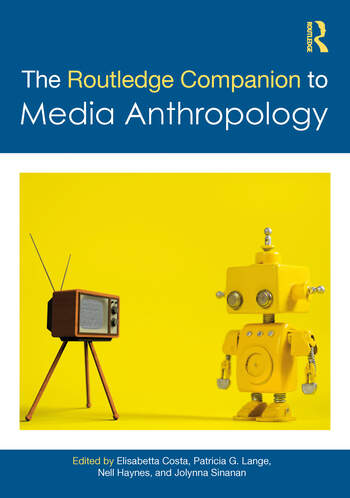




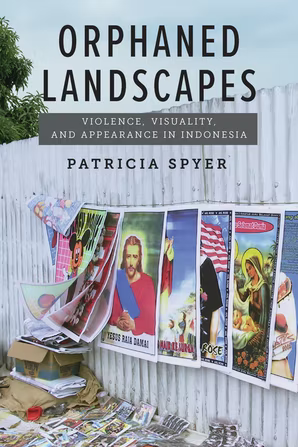

 CaMP Anthropology