Hyemin Lee: Readers might be curious about your intellectual trajectory as well as the motivation behind the years-long research and writing this book. What were the starting points that led you to explore this issue? How are your previous books and research in dialogue with Scripting Death?
Mara Buchbinder: I came to my research on assisted death via a study that I did in 2012 investigating how abortion providers in North Carolina were adapting to a new restrictive abortion law that introduced a 24-hour waiting period and counseling with state-mandated content. That study made me curious about other sites in which law and medicine collide. The end of life piqued my interest because it is one of the areas of medicine that is most heavily regulated by law. A palliative care physician suggested that assisted dying would be ripe for the sort of inquiry that I was interested in. When I learned that Vermont was the U.S. state that had most recently legalized medical aid in dying, I was hooked—I had spent a lot of time in Vermont and knew I could successfully carry out a long-term project there, despite the distance. Studying the implementation of assisted dying in Vermont, similar to studying the implementation of a new abortion law, also picked up a thread from my previous work on newborn screening, through which I became interested in how new health policies are implemented, navigated, and contested by patients, families, and clinicians. Each of these projects are also animated by concerns about sociality and care in matters of health and illness.
The concept of scripting came into play relatively late in my work on the project. After completing my fieldwork, I became fascinated with the ways in which the concept of scripting could serve as a useful frame for thinking about human agency over death. My use of scripting built on my previous work on abortion counseling scripts (Buchbinder 2016), in which I considered the multiple meanings of scripts and scripting. My use of “scripting” in Scripting Death highlights the theatrical dimensions of planning for and controlling one’s death, yet it offers the added value of several additional analytic dimensions, including the bureaucratic and regulatory aspects of the process, and the provision of a prescription (i.e., a “script” for death-hastening medication). Because it invites consideration of the performative dimensions of clinical speech, scripting is also a useful analytic for bridging medical and linguistic anthropology, which is a cross-cutting theme in my work. In sum, Scripting Death brought together several different strands of my previous projects in a way that I found intellectually exciting.
Hyemin Lee: One of the central arguments of this book is how the legalization of aid in dying represents the cultural imaginaries surrounding “aspirational death,” where the expectations for “choice” and “control” impact how people imagine the experience of dying. Could you tell us more about how the cases of aid in dying described in the book offer broader and more instructive pictures of assisted death in America more generally?
Mara Buchbinder: Doing this research in Vermont was an amazing opportunity to return to a state that I loved, where I had spent large chunks of my childhood. But it was also challenging because it’s so small. The absolute numbers of medical aid in dying utilization in Vermont, while reflecting national rates, are rather small—just 52 patients filed paperwork to use it in the first four years after the law passed. So, while it is a fascinating case study, I understand why it may be tempting to ask why this case matters on a bigger scale. However, the themes that I elucidated regarding agency and choice at the end of life are relevant beyond the context of assisted death. In the Conclusion, I discuss how we are seeing these desires reflected in a variety of other end-of-life practices in the US, though typically they focus on burial and funerary practices. Shannon Lee Dawdy’s excellent book American Afterlives: Reinventing Death in the 21st Century (Princeton University Press, 2021) shows similarly. Medical aid in dying makes it possible to realize a particular aspect of aspirational death—namely, control over the time of death. This enables one to eliminate certain types of suffering that often accompany dying from a prolonged terminal illness. But even if controlling the time of death is not possible, there are other ways in which middle-class people strive for aspirational deaths, within and outside the US. This is also demonstrated beautifully in Anne Allison’s recent book, Lonely Death (Duke University Press, 2023).
Hyemin Lee: Upon seeing the title of the book, Scripting Death, and reading your beautifully written Chapter 6, Choreographing Death, readers might be interested in the concepts of “script” and “choreography.” Both refer to certain modes of action but also entail significant social phenomenology of aid-in-dying deaths. How did you come up with posing these as key concepts for understanding human control over death and, ultimately, for portraying a bigger picture of aid in dying in the American cultural context?
Mara Buchbinder: The concept of scripting speaks to broader concerns about managing, ordering, and controlling death, as well as theoretical questions about human agency over death. Choreographing serves a similar function in Chapter 6, yet I see its analytic scope as more narrowly focused on the scene of death, as opposed to scripting, which encompasses all aspects of the process, including following the bureaucratical protocol to ensure compliance with the legal requirements, obtaining a lethal prescription, and regulating clinical communication. These were not emic terms; they emerged in my interpretive analysis. As I mentioned above, I came to scripting because I had previously engaged this concept in my work on abortion counseling. I was struck by its relevance to the case of assisted dying and I thought I could build on, and deepen, my earlier use of this terminology. The concept of choreography came to me, in part, because I noticed the ways that caregivers performed crucial social, emotional, and material labor to help their loved ones realize aspirational deaths. It occurred to me early on that they were essentially “stage-managing” these deaths, particularly because their loved ones eventually grew too sick and weak to carry out the necessary tasks on their own. The choreography I am concerned with in that chapter is very much a relational practice, which highlights the intersubjective nature of assisted death. It’s not a radically autonomous act, as people often presume.
Hyemin Lee: It is striking to find out the structural constraints that lead to critical access inequalities embedded in the legalization of aid in dying. Could you elaborate more on what your finding tells us about the larger patterns in US health care and the best path forward for improving the access issue?
Mara Buchbinder: It should not have surprised me to find that patients encountered significant barriers to accessing assisted death in legal jurisdictions. As you note, this pattern mirrors largescale, deeply entrenched access barriers that patients find across many sectors of US healthcare. On the other hand, these access barriers contradict the dominant messaging from advocacy groups promoting legalized assisted dying, which suggests that the primary barriers are legal ones. The access difficulties repeatedly surprised, troubled, and enraged patients and families in Vermont. This pattern is reflected in media reports supporting my findings from other permissive jurisdictions in the US. One of my major goals in writing Scripting Death was to expose the illusion of end-of-life choice. I wanted to highlight the gaps between advocacy narratives regarding patients’ rights to self-determination and autonomy at the end of life—which tend to make the option of assisted dying seem to be a simple matter of legalizing the practice—and the realities of access barriers, bureaucratic obstacles, and multiple forms of assistance from caregivers and clinicians that must be navigated to accomplish an assisted death.
My findings tell us, perhaps not surprisingly, that relatively affluent people who are better connected to physician networks will have more options at the end of life, including medical aid in dying. Constrained access to medical aid in dying presents a conundrum for both scholars and practitioners, however, because it is a medical service that is death-producing rather than health-producing. For many physicians, access to assisted dying should be hard; they see access hurdles as a safeguard against abuse or coercion. We don’t want to improve access to a swift death for people who cannot access good care. For this reason, I think that improving access to palliative care is much more of a priority than improving access to medical aid in dying, particularly for socioeconomically marginalized groups.
Hyemin Lee: As a concluding question, I would like to ask about your method–doing ethnographic research that documents, broadly, death. Could you speak more about your research design for ethnographically investigating death and dying? Did you encounter any challenges and questions when you first designed your research on this research? How did you manage your positioning as a researcher and a person with your own stance, values, and views?
Mara Buchbinder: One challenge I encountered was that it was very hard to identify patients to follow prospectively who were willing to speak with me about their desire to use medical aid in dying. I understood and deeply respected the fact that few people close to the end of life would be willing to share some of their limited time with a stranger. I decided to lean heavily on retrospective accounts from family members and friends when it proved difficult to recruit many terminally ill patients. An unexpected advantage of this approach was that I was able, in several cases, to interview multiple people about a specific individual’s death. This enabled me to triangulate accounts across multiple sources and identify areas of converging and diverging understandings, a strategy that proved analytically fruitful.
With regard to my own positioning, this really evolved over time. When I started, I told everyone I met that I was approaching this project from a position of neutrality. I found my views repeatedly challenged as I sympathized with perspectives that I had not anticipated sympathizing with—such as a pro-life advocate who explained to me that she was not afraid of death because she had been exposed to it from an early age. Over time, I began to reframe my “neutral” perspective through the lens of ambivalence. (I write about this in the Introduction.)
I am frequently asked how I experienced this fieldwork on a personal level, often by people who assume that it was difficult to hear stories about death and bear witness to survivors’ suffering. This research was certainly sad. For the most part, however, I did not find it personally challenging. My overwhelming feeling was one of gratitude for the connections I formed with my interlocutors and the stories they shared with me. I deeply appreciated the intimate encounters with research participants and all that they taught me about living well while dying. I felt like this project—more than any of my previous projects—had taught me something that would be valuable on a deeply personal level, rather than just an intellectual or scholarly one.
References
Buchbinder, Mara. 2016. Scripting Dissent: US Abortion Laws, State Power, and the Politics of Scripted Speech. American Anthropologist 118(4):772-783.
Eléonore Rimbault: Much of the energy of The Globally Familiar derives from your candid and involved focus on the young b-boys and rappers you worked with in Delhi. Their everyday experience is a point of departure that leads you and the reader to engage with many longstanding lines of anthropological research. It also informs the concept of the globally familiar that is the central analytic of this book. In a few words, could you explain why the globally familiar emerged as a central idea for this book, and how it reflects the practices and experiences of the youths and artists you spent time with?
E. Gabriel Dattatreyan: Thank so much for engaging with the book and for your thoughtful questions! I first started to think about what familiarity and the familiar might mean for my project in early 2013, when I spent time with a couple of branding consultants who were hired by global multinationals interested in cultivating India’s enormous youth market segment. Drawing from 21st century marketing discourse that has increasingly moved away from marketing products towards inculcating lifestyles, these self-styled experts were charged with fostering the nascent and globally wired youth scenes in the country by curating a series of events in major cities across India (Bangalore, Mumbai, and Delhi) that featured local b-boys, skateboarders, BMXers, graff artists and so on. In our conversations, the consultants repeatedly used the term familiar to describe the desires and aspirations of young people across the world in relation to consumption, urban space, and practice, specifically youth cultural practices like b-boying or skateboarding.
For these branding consultants, producing the familiar through the events they curated and the digital traces of them that circulated in social media was a way to signal the kind of always already global connectedness between metropolitan centers across nation-state boundaries that has only intensified through digital connection. They did so by mobilizing youth cultural practices and amplifying their aesthetics in the events they curated as well as introducing new ones, hoping they would stick. Something clicked for me in these conversations. I realized the hip hop practitioners in Delhi I spent time with, albeit in a different register and towards different ends, were also producing the familiar through their online and offline practices in ways that put them, their city, and their neighborhoods on the map, so to speak, as global subjects.
Once I got hooked on the concept, I couldn’t stop thinking with it! It did, however, take me a while to write about it as I couldn’t wrap my head, at the time, around how the different spatial and temporal scales these young people traversed – the local, national, the transnational, the past, and the present – coincided and informed one another. I also felt uncomfortable, early on, with utilizing a synthetic term as an explanatory analytic when it wasn’t a term that my hip hop interlocutors were using or a concept within the broader global hip hop lexicon. I finally came to terms with theorizing the familiar, partially because I couldn’t unthink its explanatory power but also and importantly because I felt that it resonated with my experiences in Delhi in ways that were respectful of my youthful participants self-making projects.
Eléonore Rimbault: I was struck by the way your writing about hip hop in Delhi conjures up a portrait of the city that includes so many of the intimate, idiosyncratic, and perhaps, globally not-so-familiar features of this city. Whether it is the transformation and gentrification processes in the Khirki neighborhood, or the routine ways in which people of different class backgrounds have made Delhi’s malls or the metro their own, or the kin networks of hip hop artists and their anchoring in specific neighborhoods of the city, your work is an invitation to think about urban space through people’s engagement with the city. Do you think that the book’s attunement to Delhi can be explained by the street-focused character of hip-hop, or does it have more to do with your approach and your commitments as an anthropologist?
E. Gabriel Dattatreyan: I knew, early on, that I wasn’t interested in writing a book that focused on hip hop cultural production in Delhi in ways that, for instance, narrowly focused on one of its elements (b-boyin’ or MCing, or DJing) or that thought through the media histories between Indian popular cultural forms and the emergent practices of the young men I was getting to know. More to the point, I didn’t want to write a book that either obscured hip hop or over-invested in the micro-specificities of its practice in Delhi and India. I was more interested in how my participants’ mobilization of hip hop’s artistic practices and their media making endeavors for online circulation offered a lens to carefully think about their lives within the changing contours of the city.
Hip hop, of course, lends itself to an engagement with the urban. As a musical, poetic, visual, and kinesthetic genre and discourse of practice that was born in the tumult of structurally produced economic inequality that engulfed the South Bronx in the 1970s, it has been long engaged with the politics and poetics of street life with depictions—both realistic and fantastic—of classed, racialized, and spatialized struggle and projects of emancipation. My participants’ hip hop experimentations—as rappers, graf writers, and dancers—took me metaphorically and physically into Delhi’s intimate and idiosyncratic topographies. Our meanderings through the city offered me an opportunity to think about and, ultimately, write about their vision of and for the city that at once celebrated its particularities even as it strove to make these very same features familiar.
Eléonore Rimbault: The Globally Familiar pays great attention to the technological mediation that conditions the aesthetic of hip-hop in India. Your portrayal of groups of young people hanging out and gathered around their phone screen, for instance, is striking, but your attention to fieldwork-like interactions occurring through social media long after your fieldwork was over is another reminder of how the anthropological method is evolving. As you point out in the book, these moments and modes of sociality are familiar much beyond ethnographic work. Do you think some of your findings on the mediation of a hip-hop aesthetic in South Asia are applicable to other domains of our lives and to professional cultures, such as our own as anthropology professionals?
E. Gabriel Dattatreyan: Absolutely, although application can be a tricky thing. I hope the familiar, as I have theorized it in the book, invites engagements within other social domains in ways that recognize and attempt to broadly and specifically think through the profound ways that communications technologies are shifting how we interact with each other and how we imagine the world. To specifically engage with processes of inventive mediation, however, requires a careful appraisal of the particular material, social and political stakes of online/offline participation within designated communities of practice.
For the working-class young men that I worked with in Delhi, producing the familiar was and continues to be a way to stake a claim to the city they grew up in and, crucially, a means to create local and transnational relationships through these claims. An integral part of the individual and collective claims they make through hip hop’s practices is that Delhi is part of a global network of capital that locates racialized, classed, and gendered bodies in ways that are at once recognizable, legible, or familiar, even as they are particular. This process of claiming through creative mediation is generative and, as I show in the book, creates economic, political, and social possibilities for these young men. It might be the case that the familiar, as I have developed the term, doesn’t quite offer the conceptual framing that is required in other worlds of practice and exchange. In that case, new conceptual language needs to be developed. Regardless of the conceptual language we use to theorize processes of digital mediation within specific communities, what I think is important is that we—as ethnographers—attend to the material, political, and social underpinnings and consequences of online communicative and creative practices.
Eléonore Rimbault: From a regionalist standpoint, your attention to the digital mediation of hip-hop sociality and your development of the idea of the globally familiar resonates with previous works conducted in India on mediation and on the global as a scale, including the works of some of the scholars that you cite, such as Arjun Appadurai, Arvind Rajagopal, William Mazzarella, and several others. It seems like the conceptual work on the global in India closely tracks the transformation of the media through which ideas, politics, and aesthetics are produced and reproduced. How do you position your book in relation to these other ways of articulating the immanence of a global scale, and do you think there is something about Indian cities as locales that prompts this form of theorization?
E. Gabriel Dattatreyan: I would caution against approaching a particular socio-historic context, in this case India, as more conducive to theorizations of global mediation than other places in the world. This sort of approach reminds me of a bit of apocrypha that I first encountered in graduate school many years ago and again, in the British social anthropology worlds I traversed when I was based in London. In this 20th century anthropological formulation young, enthusiastic anthropologists from across Europe and North America were encouraged to study certain themes or topics in certain parts of the world – hierarchy in South Asia, exchange and gift economies in the Pacific, political systems in Africa, and so on. One’s theoretical interests, in short, determined where one went to do fieldwork.
Perhaps another way of framing this discussion – rather than thinking about how particular places are more amenable to certain theoretical potentials— is to think carefully about the relationship between fieldwork and citation. Undoubtedly, before and during fieldwork I was influenced by reading all the tremendous thinkers you named who, together, have developed a rich media anthropology of global India. In addition, there were many other media/visual anthropologists working in India that also shaped (and continue to influence) my thinking. For instance, Chris Pinney’s work on visual cultures in India, Frank Cody and Sahana Udupa’s work on the news, AmandaWeidman’s work on practices of distinction amongst Carnatic musicians, and Teja Ganti’s careful and sustained work on Hindi cinema worlds have all pushed me to broaden and specify my thinking around my encounters in Delhi. However, I couldn’t solely engage and carefully think with these scholars who have worked in India or the region around questions of mediation and cultural production.
My unique challenge and responsibility, given that I was trying to understand why young racialized men in Delhi were somewhat suddenly picking up digital hip hop to create new self-descriptions, social worlds, and economic opportunities, was to carefully engage with hip hop scholarship, specifically, and Black Atlantic scholarship more broadly, particularly the work that has focused on the African diasporic arts and its spread across the globe. For me what was at stake in my book project centered on bringing these distinct bodies of scholarship into conversation in a carefully calibrated relationship to what I was witnessing and participating in on the ground in ways that animated the otherwise obscured colonial underpinnings of the global in India. So, while all of the scholars you mentioned were incredibly important, particularly in the years before fieldwork where I was voraciously reading everything I could to prepare myself, my fieldwork demanded a different engagement with immanence that put race, gender, and place across colonial geographies at the forefront of my thinking.
Eléonore Rimbault: Finally, I am wondering if you had some thoughts you’d like to share on the way hip hop has developed more recently in Delhi and/or India. Do you see the affirmation of caste, class and ethnic identities in South Indian hip hop (for instance) as re-articulation of the Hip-Hop ideologies you identified circa 2012? More broadly, what are your thoughts on the current circulation of desi hip hop outside of Delhi, for instance, in South India, or on Punjabi hip-hop produced in Canada?
E. Gabriel Dattatreyan: Thanks for this question. There is a lot to say on this but try I’ll keep my response concise. There have been enormous shifts and changes in what can now be described as an Indian hip hop scene since I finished fieldwork in 2014. First and foremost, mainstream hip hop music production has exploded in the last several years as Indian diasporic entrepreneurs, transnational media conglomerates, and more recently, big players in Indian popular cultural worlds, have invested in its potential. As a result, several of the MCs I met in Delhi who were just getting started when I met them and whom I helped produce their first YouTube videos have been catapulted to fame. Their rise to stardom, of course, has had a direct impact on their younger peers who see and want to emulate their success.
With the release of Gully Boy in 2019, a blockbuster production from Zoya Akhtar, the aspiration for hip hop fame across the country has increased ten-fold. Set in Dharavi, Mumbai, commonly referred to as the largest slum in Asia, Gully Boy narrates the coming-of-age story of Murad, a young Muslim man who rapidly transforms from hip hop enthusiast to local hip hop sensation. Gully Boy, with its constant referencing and aestheticization of music and video production for social-media circulation as key aspects of hip-hop potentiality in the contemporary moment, captures, albeit in clichéd ways, some of the affective sensibility of the globally familiar. The film’s success in India and globally also offers an example of the ways in which marginalized masculinities and the spatialities they index in India are currently being imagined and mobilized by mainstream media interests to produce capital and cultivate desire.
With the commercial success and increasing visibility of Indian rap, there has been an explosion of MCs across the country who hone and practice their skills in local ciphas while producing content for social media circulation. What I have been most excited about is how these emergent rappers have embraced the poetics of hip hop as a modality to be explored in their local languages. When I first arrived to Delhi in 2011 to check out the scene, the rappers I met were trying to rap in English and, at best, were switching between Hindi and English in their raps. Since 2013 there has been a decided move towards rappin’ exclusively in Hindi, Punjabi, Bhojpuri, Tamil, Telugu and so on. The move towards rappin’ in regional languages has opened up new and exciting opportunities to bring together localized musical and poetic traditions with hip hop which, of course, opens up new intellectual and ethnographic projects. I’m really excited for the work of Pranathi Diwakar, for instance, who has explored how young people have combined Gaana musical traditions preserved by Dalit communities in Tamil Nadu with hip hop to produce a new sound that elucidates the politics of caste in a contemporary frame. For Dr. Diwakar, that has offered opportunities to theorize caste, race, and the politics of space in Chennai in ways that are productive and grounded. It’s worth mentioning there was a precedent for hip hop’s linguistic localization in the Punjabi hip hop/bhangra scene, which has a longer relationship – through its diaspora – with Atlantic world cultural formations. But that story, like the work by Dr. Diwakar, is for another time and for another scholar!
The point that I suppose I’m trying to make is that even as hip hop has become a commodity form in the subcontinent, it has also continued to be a viable vehicle for political and social expression that is cognizant of and takes up older cultural forms. As such, hip hop continues its fifty plus year career of unashamedly taking up a capitalist hustle while offering opportunities for its practitioners to explore and critique the normative order while voraciously reanimating and remixing locally available sounds and images. Of course, political expression, critiques of power, and inventive cultural bricolage are not always something to be celebrated. Over the last several years I’ve been tracking the shift in tenor and tone of several of my participants, who have turned towards the so-called decolonial promise of Hindutva. I’m currently writing a piece with my long-term collaborator and friend, Jaspal Naveel Singh, about how the elections in 2014 that brought the BJP into power at the national level have impacted in the nascent Indian hip hop scene. Over the years, some of the key figures in the scene have begun to celebrate a Hindu centric right-wing aesthetic and political sensibility in their creative endeavors and public engagements. This has, unsurprisingly, created rifts amongst practitioners. We are grappling with how to tell this story in a way that elucidates something about how ideology inculcates itself in peoples’ world views in real time and the multiple effects of these shifts in perspective and stance. All this to say, what I gestured to in the book as hip hop ideologies – specifically focusing on the ways external and often diasporic actors shaped, in the early days of the scene, the ways in which social difference should be approached and represented through hip hop – has become multiple and localized in ways that are complex and require further attention and study.
Carolina Rodriguez Alzza: Could you tell how was your first approach to the Eskaya language, and how did Eskayan villages in Bohol become a field site for you?
Piers Kelly: Way back in January of 1980, the Eskaya people were ‘discovered’ by agricultural advisers in the highlands of Bohol in the southern Philippines. These isolated people were wearing clothes made of plant fiber, speaking in an unknown language and writing in a strange script. The story of this encounter spread quickly, prompting a series of informal visits from tourists, adventurers and tabloid journalists. Some of the subsequent reports they made about the putatively lost tribe became infused with local folklore traditions of lost worlds and lost treasures. Eventually a hard-nosed journalist from Manila came and wrote an exposé in which she argued that the Eskaya were in fact a rural cult speaking an invented language. In the years that followed Eskaya people started to defend their interests in terms of access to land and resources. They would eventually make use of the Indigenous Peoples Rights Act to do this and from the 1990s onwards they began identifying themselves as Indigenous people. It was through this process that I first came into contact with the community.
In 2005 I had been working for the travel publisher Lonely Planet in Melbourne when a job opportunity came up in an Australian government aid program to document an undescribed language of the Philippines. I reached the Philippines at the end of that year and worked out of the service center of the National Commission on Indigenous Peoples in Tagbilaran, the main township of the island province of Bohol. My role was to produce linguistic reports to help evaluate an Eskaya claim for legal recognition.
When I got to the Eskaya villages I began working very intensely, making recordings, photographing traditional Eskaya manuscripts and trying to learn the language. I was already aware that the status of the Eskayan language was controversial. Some were saying that it had been fabricated to attract government funding to an underdeveloped corner of the highlands. Others were making even stranger claims, for example, that the Eskayan language was really Hebrew or Etruscan.
At the end of ten months I wrote up a report in which I concluded that Eskayan was likely to have been created within a single generation, and that this theory was consistent with the speakers’ own origin stories that attributed the creation to a heroic ancestor. I also suggested that this creative event likely occurred some time after Spanish colonization in the 16th century. This was on the basis of the fact the Eskayan appeared to share the same morphosyntax as Visayan (the dominant language of Bohol), but with a radically different lexicon, and that this lexicon exhibited a strong influence from Spanish even in core vocabulary. In other words, there were Spanish loanwords turning up in parts of the lexicon that don’t usually attract loans, for example, in body part terms. It looked very much like the creative ancestor had taken Visayan morphosyntax as a basis but systematically replaced all the lexemes with newly devised terms. In doing so, the ancestor was influenced by Spanish as a model of linguistic foreignness.
I was worried that these findings would reinforce a narrative that the Eskaya people were inauthentic since their language was recent. But in fact the Indigenous Peoples Rights Act is less about establishing indigeneity and more about finding evidence for ongoing occupation and cultural continuity.
I was still very interested in this topic but my lack of qualifications ended up weighing on me and when I returned to Australia I started studying linguistics for the first time. I eventually enrolled in a PhD so that I would have the opportunity to go back to Bohol and keep researching.
Carolina Rodriguez Alzza: The book starts with a question you heard repeatedly from local people: “Is Eskayan real?” How did this question motivate your research on the Eskaya language and how has your work challenged previous approaches to study this language?
Piers Kelly: In some ways this question is the crux of the entire book. From the 1990s onwards Eskaya people began identifying themselves as Indigenous. This was not a category that they had used before so it involved a certain amount of adaptation to meet the administrative requirements of government. For example, each village had to appoint a chieftain and make official lists of tribal customs and laws. At the same time, Eskaya people have always maintained that their special language and script were both invented by the ancestor Pinay, whom they recognize as the first pope in the Philippines. In effect, Eskaya people had a traditional set of beliefs about themselves and their language that didn’t neatly match up with the lowlander image of an exotic lost tribe, nor with the tick-the-box requirements of a government department. All of this is to say that the answer to the question “Is Eskayan real?” depends on what you take linguistic authenticity to be.
Adding further complexity, Eskayan has never been used as a language of everyday communication but is used only in the context of schooling, speechmaking, prayer, song, and the written is used in the reproduction of traditional stories. What I wanted to do was ask the Eskaya people themselves what they thought about their language, where it came from and what their own criteria were for defining a language. Equally, I wanted to do a better job at analyzing the language itself since I was confident that its grammar, lexicon and writing system would reveal something important about the context of creation, mythic or otherwise. This was a departure from previous media commentaries that neither examined the language, nor paid any serious attention to Eskaya perspectives.
Eskaya people narrate that their created language was suppressed under early Spanish rule, but that records of it were discovered carved on tablets by their leader Mariano Datahan (ca. 1875–1949). In the wake of the devastating Philippine–American War (1899-1902), Datahan spearheaded a radical sect within the Philippine Independent Church and gained many followers in the mountains. Today such a movement would indeed be characterized as a cult but in the early 20th century, such movements were commonplace throughout the Philippines and they were highly political organizations. They asserted a desire for independence from US rule and expressed a great deal of cultural self-confidence and patriotism. My analysis—based on linguistic, archival, oral historical and genealogical evidence—places the creation of the language (or its ‘revelation’) in the 1920s and 1930s during a period of relative peace and optimism. In other words, it happened at a time when Filipinos living in remote or isolated areas were invited into the national conversation. It was also a time when both elites and non-elites were imaginatively reaching back to a time before colonization and trying to restore a more authentic and uncorrupted Filipino culture to embody aspirations for independence. Throughout traditional Eskaya literature, written in both Eskayan and Visayan, there is a real struggle to articulate a language ideology that reconciles the supposedly natural and the artificial. The Eskayan language, after all, is understood to have been intentionally created and then recuperated, but the act of creation is regarded as organic. It comes directly from the human body and it can’t be falsified or misrecognized. In this way, the language itself is a political statement that embodies a claim to cultural sovereignty.
Carolina Rodriguez Alzza: Your book offers a brief history of language ecology in Bohol. How is language diversity and linguistic contact traceable in Eskaya manuscripts? What do you mean with “sources of inspiration”?
Piers Kelly: The language of Bohol is called Boholano-Visayan and it’s one of several varieties that make up the Visayan language. The Eskayan language has the same morphosyntax as Visayan but a radically different lexicon. I was interested in taking the traditional account of a creative ancestor seriously and then asking, how did he go about making this language? What was his theory of language? What resources did he draw on? It’s clear that he drew on Visayan primarily including regional varieties like Hiligaynon, but when it came to innovating a lexicon he took inspiration from Spanish, especially in the syllable structure. There is also an influence from English. What’s fascinating is that the influence from outside languages doesn’t conform to typical patterns of borrowing. Filipino languages certainly draw on Spanish or English models when it comes to lexifying products, species or technologies introduced during the colonial encounter. But languages in the Philippines and elsewhere do not generally borrow terms for really basic concepts, like ‘air’, ‘water’, ‘head’ or ‘hand’. Eskayan bucks the trend. It relies on Spanish and English words for core vocabulary like body parts (the Eskayan word for skin is piyil from Spanish piel), while creating native terms for new technologies like ‘airplane’ (the Eskayan word is kanis) or introduced animals like ‘horse’ (the Eskayan word is bril). So innovation goes right through the language. The creative ancestor, and his prophet Mariano Datahan, were not concerned with replicating naturalistic patterns of borrowing but rebuilding the lexicon from the ground up.
Carolina Rodriguez Alzza: Could you explain more how the Eskaya writing system is unique among world’s scripts and how it has enabled the Eskaya people and their knowledge to be protected in the Philippines?
Piers Kelly: Unlike languages, all writing systems of the world are artificial. At the same time there are only a limited number of ways that a writing system can encode language, so the typology of writing systems is relatively narrow. What’s interesting about the Eskaya writing system is that it combines so many different typologically distinct methods of representing language. It has alphabetic, alphasyllabic, syllabic and even morphographic characteristics, and there are more than one thousand individual signs. The outward form of the script is said to be inspired by human body parts and in some cases you can recognize this iconicity. There is a symbol that represents an ear, and another that represents a brain and another that represents an esophagus. Interestingly too, the script is visually complex to an almost excessive degree and there’s no evidence that it has been simplifying as other scripts tend to do over time. What I argue is that this complexity if a feature not a bug. It is designed to be cryptic and hard to learn. It acts as a natural barrier to acquisition, so if you learn to read and write in Eskayan it proves that you have passed through a challenging intellectual process. At the same time, the complexity of the script is presented as tangible evidence of cultural sophistication. I see this dynamic at work throughout the Eskayan language and literature, and I use the term ‘mimicry and rejection’ to describe it. It’s all about replicating a colonial model but then ratcheting it up to a more complex formation to then stand in opposition to the original model.
Carolina Rodriguez Alzza: How does the Eskaya language encourage us to rethink “what is a language”?
Piers Kelly: The creation of Eskayan might represent an extreme situation but it’s one that I think brings the politics and aesthetics of language into sharp relief. Learned from infancy, language is understood a natural and even instinctual aspect of human development. At the same time we’re always forming analogies between linguistic phenomena and social phenomena, and we love manipulating language to do things other than straightforward communication. In a very stark way, the Eskayan lays bare the kinds of language ideologies that underpin language use around the world.
Hazal Corak: Waste Siege focuses on multiple forms of waste which accumulate and assume political status in Palestine. It introduces us to waste professionals who design landfills, ethical anxieties about unwanted bread, and Palestine’s flea (rabish) markets where objects that are discarded by their previous users in Israel are given second lives. Still, I am wondering what happens to the valuables that Palestinians discard. Take, for instance, the construction waste and objects such as metal scrap which retain economic value despite their discarded status. Given the sanctions and limitations towards the Palestinian Authority, are these re-introduced into global markets by Israeli companies and authorities? Who profits? What sort of economics and politics of waste-ownership are at stake in Palestine when it comes to such discarded valuables?
Sophia Stamatopoulou-Robbins: Shuqba village offers us a telling case. Palestinian hospitals from the Ramallah area send x-ray films to Shuqba to be burned down for their silver. We can assume that the x-ray films’ pathway goes something like this: Ramallah hospital, truck to Shuqba, arrangement with a Shuqba landowner who allows dumping on his land, burning to extract silver, silver sale to someone presumably outside Shuqba, possibly in Israel, melting of that silver (again) to turn it into something else, sale of that object, and so on. Data on how much cash is exchanged and where it ends up would offer a fuller sense of the political economy of waste in this settler colonial context. I heard stories of Israeli mafia connections to certain Palestinian discards like bottles. Other Palestinian discards may “leak” through into Israel or go farther afield. But other questions offer other, equally useful, insights. For example, some people, processes, or systems benefit indirectly from the revaluation of wastes. Understanding them is a way to understand how accumulations produce conditions of possibility for world-making. For example, Ramallah-area medical wastes supposedly disappearing into Shuqba allows the Palestinian Authority not to have to worry about increasing the management needs of those landfills, which means increased costs and scrutiny from Israeli actors, international donors, and local communities. It allows people in the villages around Jenin’s Zahrat al-Finjan landfill, whose land was taken by it, to feel slightly more secure that groundwater is not contaminated by hospital wastes and perhaps to tolerate the landfill despite its odors. It likely extends the landfill’s lifespan, and perhaps the lifespans of landfills in Palestine more broadly, which has its own implications. Smoke puffing out of a Palestinian village allows Israeli government officials to confirm that Israeli interventions on Palestinians’ waste management is necessary for the common good. A Palestinian truck driver who makes $40 to haul wastes from al-Hilal hospital near al-‘Amari refugee camp, like the Shuqba landowner who receives a similar sum to allow the dumping, does not exactly profit from that act even if a few paper bills make their way into his pocket. Settler colonialism and racism do profit, on the other hand, even if the flows of money to their primary supporting institutions (such as the military) are not so easily apparent. Comparing the “profiteers” and the processes and affects that gain their conditions of possibility makes visible that it is equally or even more important to follow paths less direct than the financial outcomes of circulations. Sometimes the interests of the people who profit are not served by that profiting in the long-term.
Hazal Corak: Rabish goods, namely the secondhand items that travel from Israel to Palestine, evoke contradictory emotions and senses of the self among buyers and sellers alike. As you report, they open up imaginaries about the contemporary life in the ancestral lands that are now out of reach to many. They create intimacy with and humanize the colonizer. Yet, using them also elicits senses of humility, lack, and embarrassment. The notion of shame has historically held a central place in the ethnographies of the Middle East and the Mediterranean. As Andrew Shryock remarks (2019), this notion is making a fresh return after almost three decades of abandonment. What sort of intersubjective relations of not only shame but also shaming are at work in your interlocutors’ engagement with rabish and waste? In what ways does the Waste Siege participate in such regional debates in the anthropology of the Middle East and the Mediterranean?
Sophia Stamatopoulou-Robbins: I understand shame in the honor-shame dyad in structuralist framings of the Middle East and Mediterranean to describe a sense applying simultaneously to a group and an individual. In this it resonates with the kind of shame that some people felt in Jenin, for example, when they worried about it being known that they shopped in the rabish. The shame was my friend Dana’s when I mistakenly asked her too loudly on the street whether we were going the rabish that day. Her face went hot with fear that we had been overheard. It was also a classed shame, forging a connection to her working class status that her family was trying to escape. It was a national shame stemming from humiliation she and others experienced at the thought that Israel as a society was dumping its discards on Palestinians as a society. One difference is the fact that rabish shame was understood as a failing, yes, but less as a moral failing (which is pronounced in the honor-shame dyad) and more as a failing to have prevented the harm in which one lives. It is helpful to understand it as political shame, implying knowledge of an otherwise not accessed—whether that otherwise is found in histories of collective rebellion like that which occurred in the two intifadas or in a decision to resist wanting the goods Israelis discard across the Green Line. Even if other paths not taken (rebellion, nondesire) are implicitly superior to the one taken (buying colonial discards), honor is not the term that best characterizes their superiority. The honor-shame dyad has been used to offer what were understood to be cultural explanations for why people made some decisions and not others, why fathers killed their daughters and families feuded. The shame I witnessed, mixed as it was with desire, playfulness, ambivalence, historicity, and pragmatism, was neither pure as a structure of feeling nor cultural in the sense that it somehow existed before or outside of politics, for example in the form of occupation or history. It was an interpretation of one’s gendered, classed, and political location in the world and in relation to past and future.
Hazal Corak: I would like to go back to the very beginning of the book in order to touch upon some theoretical implications of how waste siege works and what it does. In the introduction, you distinguish between experiential and structural forms of violence. Can you tell us some more about how you see the distinction between the two and in what ways the waste siege is specifically facilitating an experiential form of violence rather than a structural one?
Sophia Stamatopoulou-Robbins: Living in Palestine made me curious about the discrepancy between what people sensed about waste and how they understood accountability and politics in relation to waste. I was puzzled that, on the one hand, waste was so pervasive in the spaces that Palestinians traversed daily that it seemed impossible not to sense it through one’s body. People did sense it in that they closed taxi windows as they passed sewage-saturated valleys. Shopkeepers swept incessantly in front of shops. People cursed the cheaply made objects like toasters that broke during use and made connections between their miscarriages and the dumps smoldering around their villages. Yet somehow this inundation by waste often obscured what I would describe as the structural violence that was its condition of possibility. Waste was irritating, confounding, worrying, generating of endless attempts to manage it. But something about it created a kind of noise in the signal that makes clear to Palestinians that settler colonialism, for example, is to blame for other experiences like a house demolition. Each time I traced the origins and flows of waste I found connections to the Palestinian Authority’s vision of a capitalist Palestinian future state, or to Israeli efforts to settle the West Bank, for example. But these connections were not as visible to the person whose lungs were clenching from trash fire smoke or to the person smelling sewage and who was stuck—and this is the crucial point—in Palestine. Accountability was shrugged off as opaque, if often still related to the general situation, meaning occupation (al-wadi’). Or it was attributed to poor management (on the part of the PA) or irresponsibility (on the part of a neighbor). Political analysis brought into so many other conversations about life in Palestine did not often extend to what I call waste siege. One of the goals of the book was to try to name this thing that was not named as a siege, to gather many disparate experiences together and give them a name. Another goal was to suggest that there are sieges that can be felt and cause suffering while differing in significant ways from the sieges that provoke mass mobilization, which this siege has thus far not done.
Hazal CorakIn the book you mention your stay at an Israeli-owned AirBnB in Palestine. Your next project is on AirBnB rentals in Palestine and Greece. Can you tell us a little bit about how your research on waste infrastructures in Palestine led to this second project? What sort of similar themes attract your attention and in what ways is this one a completely novel endeavor for you?
Sophia Stamatopoulou-Robbins: My next book explores the effects on property, family, and forms of attachment that have resulted from the saturation of Athens (Greece) with Airbnbs under austerity. My work overall seeks to answer two main questions: 1) How do destructive conditions—be they ecological, political, or economic—remake socialities and relations? 2) And how do people harness the material and semiotic properties of infrastructures to make their everyday lives livable under conditions of duress? In each of my projects I locate large-scale phenomena such as settler colonialism and austerity in the intimate details that emerge from slow ethnographic listening. Paying attention to quotidian details allows us to see how destructive conditions become braided into people’s senses of ethics, self, and possibilities for alternative futures. Palestine and post-2009 Greece have more in common than meets the eye. Both are places of foreign occupation. The forms of violence vary. But foreign states and agencies are the main determinants of the destructive conditions in which the people in both places live.
An empirical question that had come up during my work on Waste Siege was about less visible strategies people in the broader geographies of Israel/Palestine were using to mitigate besieging circumstances. One answer I found was that many Israelis and Palestinians are investing in Athens real estate. This led me to spend time in Greece with Israelis who traveled back and forth between Athens and Israel facilitating investments in Athens properties and it sent me back to Israel/Palestine for a new bout of fieldwork starting in 2020.
Middle class Israelis and Palestinians will look to secure their futures against potential war and economic crisis, and to boost chances of upward mobility through expensive European educations for their children, and so are investing outside their political borders. There is a sense that there is less and less land available to build upon, which is a condition of waste siege, and this has been an important driver of investment abroad. Palestinians’ experiences of discriminatory landownership further contribute to overcrowding in Palestinian towns like Reineh in northern Israel, where I spent time with a family of Palestinian investors in 2020. One of the attractions of Athenian apartments for foreign investors is that they can easily be turned into Airbnbs with high annual returns. Between 2010, when Airbnb had first arrived in Greece, and 2019, the number of listings jumped from a few dozen to over 91,000.
For Greek as well as foreign owners, Airbnb is an improvisation for mitigating destructive conditions. I call the relationship calibration to which Airbnb has contributed “controlled alienation.” That is the process of, on the one hand, letting go of aspects of existing relationships, ways of being and thinking that are made in relation to homes. And, on the other hand, maintaining some ability to determine the fate or workings of things. These two processes are conditions of one another. For example: a family of property owners I call the Petridous were able to maintain legal ownership of the apartment by giving up use of it (to Airbnb managers) for themselves. I think of controlled alienation as a way of managing the violence of austerity as siege. By offering stays as short as one night and flexible booking and cancelation, Airbnb allows owners to feel that they can return to their space at will. But this preserving does not achieve continuity. Nor does it cleanly replace one body (the now deregulated state) with another (a multibillion dollar company). In the process of engaging with the platform, people lose some things and gain others. My book tries to capture the sensibility that emerges in that dual loss and gain.
Side note: I have only stayed in Airbnbs within Palestinian cities run by Palestinians or jointly run by Palestinians and their expat spouses.
Hazal Corak: Finally, I want to ask about the issue of multi-sitedness in relation to the Waste Siege and your research on the AirBnB rentals. In the book we see you present at the Palestinian households, flea markets, bureaucrats’ offices, and landfills as well as the meetings with NGOs and environmentalists in Israel. Do you see the Waste Siege as a multi-sited ethnography? How do you compare the structures of multi-sitedness in your two different projects? Multi-sited research is seen crucial due to the polycentric workings of the global economy and the planetary proceedings of the ecological crisis. At times, it is also criticized for being too ambitious as an ethnographic endeavor. What would you like to share with other ethnographers regarding methods, techniques, and terms of getting related to multiple settings which constitute the different ends of one single phenomenon?
Sophia Stamatopoulou-Robbins: A project on almost anything must be mobile. The idea of the single-sited project implies a site that is somehow ontologically bounded. As anthropologists we create the sites we claim to study by naming and reifying them in our work. The relative boundedness of any site is contested both by those in it and by those who (also) produce knowledge about it. Major elisions result from imagining a site as supposedly purely itself. Take Psari, the village in which my grandfather was born. Home to about 385 registered people (not including myself, my parents, or my nuclear family, though we have a family house there), the village of Psari is located two hours west of Athens. I would miss a lot if I were to assume that I could physically stay within the boundaries of Psari, nestled in the mountains, to understand how people experience life there. I would miss that most of the women marry in from regions as far away as Epirus. I would miss the uncounted Roma communities who pass through, the Bengali workers who sleep outside on the hills but who work the land as cheap labor, I would miss the hundreds of children, elders, and deceased self-identified members of Psari’s community disbursed in Australia and Chicago. I would miss the global swirl of private housing and anti-Communism campaigns that historian Nancy Kwak has documented and that sent American funds for homes to be rebuilt after German soldiers burned Psari down during World War II. I might miss the fact that Konstantinos Tsamados, a fourteen-year-old from a modest family, is a Youtube sensation for his incredible voice. I might miss the fact that the waters in Psari’s rocky underground—waters Psari needs to support its one economic engine, agriculture—are being pumped by private companies, with government permission, bottled and shipped to Saudi Arabia. Whether you want to study gender, class, environmental politics, or media in Psari, you would have to use some sort of multi-sitedness to do it. We have been multi-sited all along.
In studying Airbnbs, I did something similar to what I did in studying waste in Palestine. I paid attention to flows of materials, ideas, and people. Those of us who followed the network have learned that the network is endless and rhizomatic. There are only so many threads one can follow in a finite amount of time, with one body and a desire to do more than prove that things exist in networks. I think they do, and I think that many people have made the case compellingly. Within the finitude of our lives we can dig deeper into particular relations. In studying Airbnb in Athens, I learned about investors buying Airbnbs who were based in several countries including China, Russia, Egypt, Turkey, and Israel/Palestine. I followed the thread that led me back to Israel/Palestine because I knew that I was better able to say something about the worlds out of which those investors were coming, about the conditions of possibility and structures of feeling that supported the investments, and about what the investments did for investors from Israel/Palestine in return. My choice does not suggest that there is something more interesting about this investment pathway than about the pathway that leads Russians or Turks to invest in Athens; rather, it suggests that I can be more interesting in relation to this pathway than I can in relation to others. My advice would be to pursue the relations that are most obscured from public view.
Page 99 is found in my second chapter where I discuss how English becomes iconized (Irvine and Gal 2000) as an elite index through practices of learning English at private educational centers in Astana, Kazakhstan. Page 99 includes an ethnographic example of what I characterize as an ostentatious display of English—the head of a small company, a woman I call Raushan, contacted the educational center that served as my primary field site to ask about private English lessons. Raushan’s request was considered ostentatious because she wanted private (and therefore more expensive) English tutoring that would take place at her office during her lunch break. To demonstrate its ostentatiousness, I recount the educational center director, Zhibek’s, response which was to laugh at how ridiculous it was that “even the heads of tiny companies think they’re so important that everyone should accommodate their schedule and needs.” This page describes one experience of learning English at private educational centers that I try to capture in my dissertation—that of the elite, upper middle class. The remaining content chapters explore other experiences connected to English such as entrepreneurial self-development and aspirations for class mobility.
My dissertation proposes that learning English in private educational centers offers students an opportunity to take up different subjectivities, not just opportunities for finding employment or accessing higher education. I show ethnographically how learning English is one practice among many that enables students to take up elite or entrepreneurial ways of being in the world. I also argue that students’ experiences in the English language classroom reflect broader cultural and ideological shifts that are reshaping contemporary Kazakhstan. Though my interlocutors’ experiences are not unfamiliar to English students living in other areas of the globe, what makes learning English in Astana (and its many frustrations) unique are the private educational centers in which most students encounter English. My dissertation focuses on these centers and the students who frequent them in order to present an ethnographic portrait of those in the middle class in Astana. Page 99 is then one piece of that portrait and reflects a partial but relevant portion of that overall goal.
References:
Irvine, Judith T. and Susan Gal. 2000. “Language Ideology and Linguistic Differentiation.” In Regimes of Language: Ideologies, Polities, and Identities, edited by Paul V. Kroskrity, 35–83. Santa Fe, New Mexico: School of American Research Press.
Erika Hoffmann-Dilloway: Your fascinating book argues that script serves as a “critical semiotic modality through which Santali speakers assert temporal and spatial autonomy from hegemonic historical narratives, administrative territories, and dominant class and caste based social orders” (26). The concept of autonomy is very central to the book. Can you speak about how a graphic politics of autonomy is distinct from identity or state-based politics of recognition that have, perhaps, been more frequently been addressed in linguistic anthropological work?
Nishaant Choksi: First of all, thank you so much for the interview, and giving me a chance to discuss my work with you and the CAMP audience. Yes, you are right, I have deliberately tried to avoid using the words ‘identity’ and ‘recognition’ in the book and instead tried to outline the concept of autonomy. It is not like the struggle that the proponents of Santali language and Ol-Chiki undertook was not about identity or recognition, it certainly was. However, these notions in terms of political vocabulary are relatively recent in India, and they also, as many anthropologists have discussed, come with analytical limitations. Instead, I draw on a longer discourse of autonomy among the communities I worked with which was tied to the struggle for Jharkhand, which was a long-running struggle among indigenous communities in eastern India to have a federal region with an indigenous majority that would have a specifically indigenous political and cultural character. The struggle was both spatial in that it focused on territory, and temporal, in that it sought to emancipate the Adivasi (original inhabitants) from a temporal discourse of backwardness and primitiveness. The area of West Bengal state in eastern India where I did my fieldwork was left out of the eventual Jharkhand state but the assertion for script in this area, I found, had many continuities with the struggle for Jharkhand. While interfacing with the state for resources and institutions for Santali language and script, the discourse might revolve around identity or recognition, the everyday graphic politics practiced in the rural areas where I did fieldwork revolved more around the conceptual fulcrum of autonomy.
Erika Hoffmann-Dilloway: While many scholars treat writing as a secondary reflection of speech, your book focuses specifically on the graphic politics afforded by the invention and circulation of the Ol-Chiki script. What does your attention to script and multiscriptality reveal beyond what a study attending primarily to language and multilingualism might find?
Too often the study of writing systems has been conflated with that of language, drawing from, as you rightly point out, the idea that writing is a secondary reflection of speech. In this book, I try to intervene by analytically separating script from language (by language I mean ‘code’ or ‘oral variety’). In doing so, I see how script carries different semiotic significations from a linguistic variety, which is important when analyzing languages written in multiple scripts. Starting from this vantage point also allows us to see under what conditions a script becomes ideologically tied to code, and what the significance of the script is for readers and speakers of a language beyond the fact that it represents a particular language. For instance, the Eastern Brahmi script is ideologically tied to the Bengali language in West Bengal, although it is also used to write Santali, which places Santali written in the Eastern Brahmi script in an inferior position to Bengali. This is one of the arguments used for the argument that an independent script such as Ol-Chiki is needed for the Santali language. Yet, Eastern Brahmi is also the most accessible script for Santali speakers and readers, and therefore it is highly visible in the linguistic landscape and in certain types of Santali-language media, where it carries different significations, such as that of local territorial affiliations and literary culture for Santali-speaking communities residing in West Bengal. Understanding the layered and complex signification of script and its multiple relationships with a particular linguistic code was not possible within prevailing analytical frameworks that focused on multilingualism alone.
Erika Hoffmann-Dilloway: In Chapter 2, you describe a moment in which, noticing a diagram chalked at the entrance of a Santali household, you were told that the marks were writing (ol) but not symbol (chiki). This moment is suggestive of Santali semiotic ideologies about the potential properties, functions, and social indexicalities of writing that differ significantly from understandings of the nature and purposes of writing held by missionaries, state administrators, and other institutional figures Santali speakers encounter. Can you speak a bit about how variously positioned Santali writers understood and deployed Ol-Chiki?
Yes, as I argued in Chapter 2, the originator of Ol-Chiki script, Pandit Raghunath Murmu, had incorporated ritual elements into the graphic construction and rationale for the script that drew a much older practice of writing/drawing or what in Santali is called ol. The same went for other Santali intellectuals and writers who created their own distinct scripts, for instance the famous Santali poet Sadhu Ramchand Murmu also based his script, Monj Dander Ank, on ritual writing and “divine sound” (ishrong). These scripts were both modern in that they represented spoken language, but also departed from the notion that writing was an arbitrary representation of speech that informs modern regimes of literacy. Scriptmaking, I suggest, emerged in the Santali-speaking area at a time when many of the leading intellectuals of the community were experimenting with ways of how to usher the community into modern regimes of literacy and education while also preserving community values and histories. Ol-Chiki was the most successful of these new scripts to emerge during this period but despite its success, was not immediately accepted by all. Many writers still value the Roman script, while other senior writers preferred writing in regional scripts like Eastern Brahmi so their writing could be made more accessible to the widest possible audience. However, as technology changed and the politics of autonomy became more identified with the graphic domain, most writers under 50 in my field area have more fully embraced Ol-Chiki as the most appropriate script for writing Santali literature.
Erika Hoffmann-Dilloway: In Chapter 5, while focusing on the role of print media, you introduce what you call the “Jharkhand imagination,” which challenges both Benedict Anderson’s notion of imagined communities and theories of Indian nationalism. Could you elaborate on the concept and how it intervenes in these frameworks?
Nishaant Choksi: Anderson’s concept of imagined communities is useful in that it provides a way that we can incorporate “imagination” into our social scientific analysis, seeing how collectives can exist beyond the present status-quo, both temporally and spatially, and allows us a way to examine how media, specifically, facilitates that imagination. It is limiting in that, as many linguistic anthropologists have argued, its notion of imagination is flat and homogenous, based on a presumption of a monolingual reality. In the study of South Asia, the concept has come under criticism, famously by Partha Chatterjee, who argued that the Indian elite had a simultaneously spiritual domain of what constituted the nation, based on writings in Bengali, and material domain oriented toward the British imperial power, based on the English language. This division between English and what is viewed as the vernacular has been constant in the linguistic understanding of South Asian nationalisms and sub-nationalisms.
Such formulations do not adequately explain the multiscriptal, multilingual milieu of eastern India where I did my fieldwork. Print media was very important for Santali-language activists and writers, but the articulations of community were highly varied depending on what genre of media, and what combinations of script and language they used. Magazines and newspapers had different aims, for example, and they used different linguistic and graphic resources to fulfill these aims. “Jharkhand” as it was imagined in the regional media, especially the multilingual and multriscriptal newspapers which I discuss in the chapter, as a space not identified with any language or script, but with the idea of a convivial and co-eval multilingualism and multiscriptality. Hence the project challenged the idea of linguistic uniformity as a basis of shared community as well as the concept of a hierarchically ordered bilingualism that informs studies of Indian nationalism.
Erika Hoffmann-Dilloway: You note in the book that digital media use has proliferated among Santali speakers since your research began in 2010. You offer an analysis of the role Ol-Chiki had begun to play on digital media during the period covered in the book, but I wonder if you can speak to any changes following this period in how digital media has been drawn into the scalar work through which Santali and other Adivasi groups create autonomous spaces that extend beyond state lines?
Exactly, so much has changed since 2010-2011 which is when I conducted my long-term fieldwork on which this book is based. At that time hardly anyone (including myself) had a smart phone. Carrying my laptop and a USB dongle, I was one of the few people who even had an internet connection. My research assistant had never even heard of email, much less social media. In the years I have been back, mobile smart phones have revolutionized the communicative situation, and now so many people, both young and old, have access to the internet and are communicating with each other through messages and social media. Filming which used to take place with cameras and VCDs has now become extended to anyone with a phone. Choices of script, which before had to be written by hand, or if typed, given to a specialist who knew typing, can now be accessed and changed at one’s fingertips. Ol-Chiki is even available as a Google font. YouTube channels also abound with Ol-Chiki script displayed prominently in the videos. I suggest the digital transformation hasn’t reduced the importance of script, and print media is still important though it is supplemented and complemented with digital media now. Moreover, digital media provides new platforms where the script can be used to different ends. I have written a little about this in the book, and more substantially in a separate journal article and a book chapter, but there is so much more to explore on the subject. I think for the study of indigenous languages in South Asia and elsewhere, this will be the most important area of research in the coming years.
Erika Hoffmann-Dilloway: Who are you most hoping to address in this book and what do you most want readers to take away from it?
Nishaant Choksi: Originally when I wrote the book, I had in mind primarily the research and student community in anthropology, linguistics, South Asian Studies, and indigenous studies. I wanted to place the study of script and writing front and center in the study of South Asian languages, an area still underexplored given the vast diversity of writing systems. In addition, I had hoped to contribute to the development of the study of the graphic from a linguistic anthropological standpoint, a field that has really picked up in recent years, much more than when I started my graduate studies. Thirdly, India’s Adivasi (indigenous) communities are primarily identified with oral culture and oral tradition, and this is one of the few scholarly books discussing the Adivasi communities in terms of their writing practices and encounter with literacy. For both Adivasi scholars and those working on Adivasi communities, I am happy to see that it has had some impact.
Finally, it is nice to see sometimes when you write a book it goes beyond your intended audience. For instance, I had no idea that the graphic design community would find this book useful, but recently a font designer who has worked on developing culturally sensitive Indian language fonts read my book and interviewed me for a documentary, for which he also conducted ethnographic fieldwork in Jharkhand in Santali villages. I have also received an invitation to speak about the book to a design group focusing on indigenous design. It is a positive development that our work as anthropologists can also have influence in other kinds of fields, and because of the book and the conversations I have had around it, I was also able to expand my own intellectual and creative horizons.
Rahul Advani: In your book Fada, you attend to the ways in which young men in urban Niger facing economic uncertainty sign up as members of fadas where they experiment with social norms and rehearse aspirational modes of adulthood. Could you tell us more about this dynamic and the tensions it produces?
Adeline Masquelier: Waiting has become something of an endemic condition for young male urbanites unable to secure stable jobs in Niger. The fada or “tea-circle” is where they wait. Together. In the book I describe the fada as a socio-spatial formation that is symptomatic of the destitution experienced by many Nigerien young men facing limited prospects of employment. Modelled after the chief’s court, the fada is essentially a masculine space where young men fulfill their need for sociality and self-affirmation. Male youths speak of their fadas as places where they can escape the crushing weight of social expectations and just be themselves while they engage in a variety of pastimes and projects aimed at making life livable not just in the present but also in the future. What interests me is precisely how the fada constitutes a staging ground affording both sanctuary and prospect. Centered as it is on on male activities and aspirations, the fada is well suited to nurture the dreams of the good life young men may harbor. I propose that we see the fada as a social laboratory where fadantchés (fada members) experiment with who they want to be without fearing criticism. At a time when traditional avenues of self-realization are blocked, young men imagine a future for themselves, whether that means becoming a rapper or a prime minister, or simply a self-sufficient household head. Paradoxically, some fadantchés defer adulthood rather than embrace it, using dress to fashion themselves as youth, for instance. The fada, I have argued, provides a forum for playing with the boundaries of youth and testing how life might be lived.
Rahul Advani: The young men in your book – much like the young men in north India who engage in “timepass” that Craig Jeffrey has written about – make life purposeful through killing time in the face of diminishing returns on their schooling and college degrees. What is it about time and waiting that offers a useful framework for understanding contemporary experiences of liberalization?
Adeline Masquelier: Temporality is a central concern of the book. On the one hand, young men confronted with the lack of job prospects are worried about their futures. Trapped in the imposed presentism of daily survival, they feel robbed of the futurity previous generations took for granted, as is the case in India as well. On the other hand, they often have too much time on their hands. I show how the fada attends to both these temporalities. It is a place where young men marginalized by the workings of capital seek solace and wait and hope. They share their anguish at being unable to follow expected life courses. They also learn skills and how to prepare for the responsibilities of adulthood. Now, waiting may be experienced as a suspension of time but it is not, I argue, a suspension of activity. At the fada, idleness is transformed into a rewarding experience thanks to the way that the practice of tea-drinking–a central dimension of fada life which I call teatime–shapes the texture of waiting and resituates young men in the tempo of daily life. Young men are often accused by elders of doing nothing but sip tea, but we must see the fada (and teatime) as a by-product of structural inequality. Part routine, part ritual, teatime creates ideal conditions for actualizing aspirations and cobbling together new practices of self-making. The condition of jobless youth in the global south has been described as waithood–a wait for adulthood. I find the concept inadequate to capture the micropolitics of waiting. I was interested in exploring how time is lived at the fada through its simultaneities, its tensions, its trajectories. Anthropologists have long dismissed waiting as a form of inactivity, but I am, in fact, claiming the opposite. We must attend to the work that waiting requires and to the complex ways in which people customize time when they wait, whether they wait for jobs, for the end of the month, or for the tea to brew.
Rahul Advani: The book makes an important insight into how people come together to create what you term an “infrastructure of solidarity.” Could you describe the role of conversation – from the forms of speech adopted to the activities such as tea-drinking that punctuate and facilitate conversation – in how young men at the fada navigate precarity together and make sense of the world?
Adeline Masquelier: The term “infrastructure of solidarity” was inspired by AbdouMaliq Simone’s concept of human infrastructure, by which he means the use of people’s bodies in combination with objects, spaces, and practices to create nodal points between individuals and make cities work more effectively. In urban Niger, one cannot but notice groups of young men, huddled together, that take over the street at night. They fill the space with their tea-making, their conversation, actualizing their togetherness through the clusters their assembled bodies make; once they return home, however, there is no trace of their presence, save for the name of the fada written on the wall against which they sit. The fada then has no permanent structure. As a place of and for conversation, it offers the kind of support needed after a romantic setback, a failed job search, a quarrel with one’s parents, or simply to unburden oneself of the daily humiliations inflicted by a life of precarity. Such conversation is best accomplished while waiting for the tea to brew. Tea is said to untie tongues: it enmeshes people in comforting intimacy while energizing them. Significantly, there are rules regulating fada life, including teatime. I have tried to highlight that, far from constituting “anti-societies,” most fadas have a moral code–an ethos centered on solidarity and loyalty, that, in the absence of conventional modes of generating value, lays an alternative path to masculine dignity.
Rahul Advani: In your chapter on the naming of fadas, you discuss the overseas locations and global popular culture that fada names draw inspiration from. As you note, these inscriptions reflect how young men in urban Niger project their imagined fantasies and at the same time, in spite of their social immobility, engage in their own politics of exclusion.In what ways do names materialize young men’s claims for inclusion in the city and the world beyond while also excluding other men?
Adeline Masquelier: Once a fada is founded, fadantchés typically give it a name that reveals something of their ideals, ambitions, or pastimes. Finding a name that fits the fada is critical. Names have intrinsic potency. They fix the identity of thing they are attributed to, endowing it with substance while also “activating” it. In documenting how marginalized young men affirm their presence in the city, I came to see the fada as a locus of self-narration. Fadantchés often draw inspiration from figures of heroic masculinity or they select names that conjure distant elsewheres. Names like Delta Boys, Cowboys, Dragon Show, Young Money, Texas, or Territoire des Milliardaires (Territory of Billionaires). I was particularly interested in the connection between image, topography, and language. By branding the neighborhood with the name of their fada and decorating the walls with symbols (hearts, dollar signs, and so on) and images (a rapper, a cobra, and so on) fadantchés strive for visibility: they want members of other fadas to notice them. It’s about inserting themselves in a famescape. The practice also provides a vehicle of self-realization, by putting the accent on young men’s accomplishments or future projects–chimeric as they may be. In this regard, the martial art hero and the black US rapper embody audacity and virility, signaling that fadas are microcosms of social aspirations. While they procure stability in the face of the volatility of everyday life, they also serve as experimental grounds where samari can test out a range of possibilities while nurturing aspirations of the good life. Let me stress that not all fadas are forward-looking projects. Some I’ve visited bear names like L’Internationale des Chômeurs, that put the accent on the marginalization of youth, but they are in the minority.
Rahul Advani: Anthropology has, until fairly recently, only occasionally examined men as men – that is, as engendered and engendering subjects. While your initial research intended to focus on women’s lives, upon visiting fadas, you “switched course and embarked fully on a study of the lifeworlds of young men on the streets of Dogondoutchi.” How did the fada as a fieldsite inform your method and approach, and how did your decision to focus on men and masculinities determine the kinds of research questions you asked?
Adeline Masquelier: When I started this project, I saw the fada as the mere setting for young men’s conversations around a pot of tea. Eventually, I realized that far from being a container of activities, the fada was at the very heart of young men’s preoccupations and projects. It was a world unto itself that needed to be problematized from a variety of angles. Given all that goes on at the fada, the fada turned out to be the right forum for exploring dimensions of urban life in Africa — in particular, ethical, aesthetic, and existential dimensions — that are frequently eclipsed by concerns with crisis. From the beginning, young men stressed the sense of homeliness the fada provided. I therefore tried to orient my questions towards the practices of solidarity and belonging young men fashioned. That meant focusing on the experience of teatime (which I had previously ignored as unimportant) and exploring the (spoken and unspoken) moral codes regulating fada life, something fadantchés were keen to impress upon me in the face of elders’ constant criticisms. In observing fadantchés’ diverse forms of engagements, I also came to rethink the experience of waiting. Now, questions about temporality are rarely straightforward. I turned my attention to the emergent and the unresolved, which meant considering less obvious “empirical” findings. There were lots of small but revealing moments. Often, it was the fadantchés themselves who oriented the conversation and shaped it with their concerns and questions. In the end, I did a lot of waiting and listening! In the process, I became interested in the intersecting and overlapping modalities of engagement that waiting entails, that ranged from longings for ever-receding horizons of possibilities to efforts to keep life projects alive to more ordinary struggles to navigate uncertainties, all the while stitching together discordant temporal regimes.
Toni Nieminen: First of all, thank you! Unraveling: Remaking Personhood in a Neurodiverse Age is a brilliant and a profound piece of work. For all of those who haven’t read it yet, I strongly advise you to do so. To hit things off, I want to ask you two questions about the form of and method behind this book. First, you largely use memoirs – written or ghostwritten by either persons living with neurological conditions or their relatives and caretakers – as your ethnographic data. This choice is an interesting and productive one. You do discuss this in the introductory chapter, however, for the readers of the blog, could you elaborate more on this choice and the implications it has had for this project? How does a memoir as a literary format work as an ethnographic data set? And how did you decide which memoirs to include?
Matthew Wolf-Meyer: Thanks Toni—I’m glad that you found Unraveling generative to work with. It was a challenging book to write, so learning that it’s helpful to people is always gratifying.
Unraveling really started as an exploration of why the capacity for “normal” modes of communication had become so foundational for the conceptualization of disability in the US in the twentieth century and its implications for clinical practice, the lives of disabled people, and social scientific theorizations of subjectivity. I had been doing fieldwork related to the project for several years, which included participant-observation in a neuroscience laboratory, a neurology clinic, a psychoanalytic training seminar, a special education school, and parent support networks. In many ways, it was very traditional fieldwork. As I started to write up that work, I found myself recurrently dissatisfied: the clinicians or neuroscientists or psychoanalysts kept appearing as a problem and the experiences of disabled people and their families served as some kind of correction. It felt very predictable in the “weapons of the weak” tradition that ethnography is sometimes drawn to, and I was very sensitive to how it reproduced ideas about power and resistance that satisfy some readers and really bother other ones (like me!). I was also increasingly troubled by my positioning myself as speaking for disabled people who were atypical communicators; it reproduced the problem I was seeking to solve. I wanted to find a way to attend to how disabled people were communicating on their own terms. So, I scrapped that version of the project.
In working through how to build the project differently, I started to read memoirs written by disabled people who were diagnosed with “neurological” disabilities or the memoirs of family members of people with “neurological” disabilities. I was especially interested in texts written by people who were atypical speakers, which ended up creating a corpus of books that were mainly focused on experiences of autism, deafness, and stroke-based aphasia. It’s an unlikely set of disabilities to put together, but as a way to get at the relationship between communication, the “neuro,” and disability, it created a big canvas. My interest in the “neuro” is why I put “neurological” in quotes above: central to what Unraveling tries to do is work against the reductionism that insists that we are our brains. It’s a weird feature of contemporary science and disability activism, where neurological reductionism serves as the basis for both a medical model of disability and the basis of neurodiversity, that is, some brains are just different and lead to behaviors that are intrinsic to an individual. Unraveling tries to tackle that biological reductionism and reconceptualize how we can imagine disability without reliance on the neurological as a source of intractable difference. In making that argument in the book, I wanted to focus on how disabilities framed as neurological have been mobilized in the US over the twentieth century and tell a story about the brain and its role in American conceptions of personhood and subjectivity.
That commitment to telling an American story led me to methodologically limiting myself to memoirs by Americans and in the twentieth and early twenty-first centuries, since I wanted to locate the project in the U.S. and focus my attention on modern neuroscience and psychiatry. In the end, there were several dozen memoirs to choose from, and they ran the gauntlet from self-published pamphlets to mass marketed literary memoirs. They covered experiences from the 1930s through the early 2000s, were pretty evenly distributed between men and women, and were overwhelmingly white and middle class. Those last elements were a problem in terms of sampling, but were useful in working through the relationship between whiteness and normalcy, particularly as they work together to uphold ideas about legitimate forms of communication. In the end, I selected a set of memoirs that mobilized a way of conceptualizing an interactive practice—and they usually had language to describe that practice. That led to pairing memoirs as parallel cases in each of the chapters and the development of the chapters into discussions of “connection,” “modularity,” “facilitation,” and “animation.”
For some anthropologists and ethnographers, Unraveling might seem like more of a literary analysis since it’s so focused on memoirs. For me, it’s much more in line with person-centered ethnography, and I treated the memoirs as if they were long-form interview transcripts. They also provided descriptions of atypical forms of communication that grew out of intense forms of family intimacy that participant-observation would have a very hard time capturing, which addressed my concerns with speaking for atypical communicators. Rather than addressing the literary elements of the text, I was interested in the text as a form of data in itself and worked to elaborate the nested theories in the texts while also situating the experiences of disabled people and their family members alongside modes of practice in American neuroscience and psychiatry. In the end, each of the chapters is organized around one of the above-mentioned ideas that is drawn out of a memoir or two and puts those ideas into dialogue with other ethnographic, archival, or theoretical work. As a whole, Unraveling builds a cybernetic model of disability, subjectivity, and personhood that each of the chapters is integral to developing, and which draws its inspiration from Gregory Bateson’s work on consciousness. It has become very hard for me to conceive of the chapters as discrete entities—they feel inexorably woven together (which may just be the effect of my having read the book so many times during the revision and copyediting process!).
Toni Nieminen:Second, by choosing to work with memoirs as your primary ethnographic data set, what are you adding to, commenting on, or reconfiguring within anthropological writing more broadly? How does this choice of data and the analysis it enables speak to your own positionality as a researcher and writer on the topic of neurological disorders?
Matthew Wolf-Meyer: In terms of positionality and ethnography, I’m not sure that I have any easy answers.
I write in Unraveling about how atypical communication and neurological disability are things that I’ve had to work through, first with my father’s experience of Alzheimer’s and memory loss and later with my son’s apraxia. But I didn’t want the book to be about them as people, nor about my experience as a son and father who would speak for my father and my son. Those kinds of accounts of disability exist and I find them unsatisfying. That might be because they falsely substitute the experience of the writer for the experience of the written about, which is a form of refusal of what Cassandra Hartblay refers to “disability expertise” and Merri Lisa Johnson and Robert McRuer refer to as “cripistemologies.” Or it might have to do with how they substitute a sample size of one for a wide swath of human experience. Or maybe it’s both! But, in any case, my experience is important to the analysis but the analysis is not of my experience, which is a critical distinction and I try and make that clear in the book. Many of the memoirs resonated with me—and that may have done some subtle work on why I selected the books that I did—but assembling them into the evidentiary body of Unraveling was very grounded and organic in that I really wanted to focus on accounts that gave language to otherwise ignored elements of communicative interaction.
In terms of ethnography as a practice and written form, I might have too much to offer in response. My early training was in literary analysis and historiography, and I came to anthropology late and only in my Ph.D. work. As a literature student, I grew increasingly tired of just reading books and treating them as representative of something. Ethnography drew me in as a way to triangulate between texts, everyday experiences, and my role as an analyst, and in the beginning I was really drawn to the ethnographic work that motivated the Birmingham school of cultural studies. When I started my Ph.D. program and had to read E.E. Evans-Pritchard’s The Nuer, I was astonished at what anthropology actually was. These days, I’m troubled by how much ethnography solely focuses on what people say in interviews and what ethnographers observe—as if there are no other forms of data available to them. If anthropology really is the study of humankind, you have to spend a lot more time watching TV, reading books, and scrolling social media—or else you’re ignoring the integral role technology has always played in human experience (which Evans-Pritchard was actually pretty good at!). Some people might object that these are phenomena of different orders and that may be true—but it’s true based on your ontological position about what phenomena are and how they can be categorized. If, in the end, you rely only on human speech, you’ve successfully cut a wide swath of people out of being part of the humankind you’re interested in studying or representing, which is either explicit or implicit ableism. Either way, it reinforces particular kinds of people and forms of expression as “normal” and others as abnormal or pathological.
Which leads me to my grumpy feelings about contemporary written ethnographies: There’s been a generic shift away from the old functionalist models of Evans-Pritchard where “kinship” and “political structure” motivate individual chapters and toward a model of ethnographic writing where each chapter has an idea based on an extant theory and each chapter feels separable from the others in the book because they don’t really build on each other. I express versions of this with some regularity, but a chapter about the Freudian uncanny next to a chapter about Foucaultian technologies of the self is theoretically impoverished—they believed in fundamentally different conceptions of subjectivity, consciousness, and power! Books should be ontologically consistent and change the way readers interact with the world. I don’t know if I accomplish this, but it’s what I strive toward. And it’s what we should all work toward as scholars. If we want to forward knowledge, there needs to be some consistency in the ontological basis of that knowledge. Otherwise, it’s just a mishmash of theoretical concepts and examples. That said, I’ve learned over time to subtly invoke my ontological commitments—which are to a Spinozist materialism—because I find their invocation to be disruptive to generic conventions and they ruffle the feathers of peer reviewers. But they’re there and motivate everything from why I do what I do to how I analyze what I’m analyzing.
Toni Nieminen:You position epiphenomenal communication in opposition to symbolically, historically, and culturally significant communication and language. You suggest that – especially in the context of neurological disorders – epiphenomenal communication can be used as a modular technology to facilitate different kinds of speakers, hearers, and interpreters, thus making space for what you call cybernetic subjects. Would you like to gloss these concepts, how and why do you use them in your book? Further, could you say more about the possibilities for facilitating cybernetic subjects in institutional settings that privilege – and in many ways gain from privileging – certain kinds of (neoliberal, normative) subjects?
Matthew Wolf-Meyer: You’re right to focus on epiphenomenal communication as the heart of the text. It’s my attempt to offer a corrective to the idea that communication is always embedded in a continuous and transparent, individualized subjectivity. In the US (at least), the dominant assumption is that what we communicate is based on a version of the self that is consistent over time and that how we communicate is with language that is straightforwardly interpretable to an audience. So, when I ask my partner what she wants for dinner tonight, what and how she answers is indebted to a version of her self and culinary desires that are continuous and transparent—and that I’m intimate with. If she says “pasta” or “tacos,” I know that there is a subset of both of those categories that is meaningful to her (and to us as a family): serving her pasta con le sarde or carne asada tacos would be upsetting to everyone involved and would be a betrayal of both her history of desire and her present expectations.
For the most part, assumptions about continuity and transparency are just fine in our everyday lives, but when you’re living with someone who doesn’t communicate in those ways—say a toddler who is new to speech or a person with dementia for whom language is not as referential as it once was or a disabled person who communicates atypically—you can’t rely on interpersonal history or the conventions of interpretation to do the heavy lifting of communication. Instead, you need a practice that attends to needs and desires in the present, which communicative interactions provide a window onto. My call for epiphenomenal modes of communication is meant to draw attention to that and to how our interpretive labor is always working through what we know about the past of a person and what they need in the present.
Language is a technology, and like other technologies, it obscures a wide variety of labor through its efficiency. When we obscure all of the labor that is embedded in language, we run the risk of naturalizing language as a necessary feature of communication. But attention to nonhumans shows how diverse communication can be. And attention to varieties of human communication—including gestural forms—demonstrates how unnecessary spoken and written language are to subjectivity. Focusing on disability experiences of communication opens up what communication can be—and is a challenge to anthropology’s reliance on speech as a transparent medium of communication and semiotics as a unproblematically isomorphic mode of referentiality.
Displacing the naturalness of language as the basis of subjectivity and personhood also serves to describe subjectivity and personhood in more complex ways. Anthropologists from Marriott McKim to Marilyn Strathern to E. Valentine Daniels have been invested in the idea of the “dividual,” or the necessary interdependence of personhood on connections between bodies, which American forms of individualism obscures. Similarly, disability studies scholars like Mia Mingus and Alison Kafer have long drawn attention to how interdependence is a better description of how human sociality works—rather than the rugged independence that underlies American ableism. Unraveling tries to describe how dividualism and interdependence work as the foundation for communication, and reliance on ideologies of transparent communication of the self tend to obscure this. Cybernetic subjects—and I’m really indebted to Bateson on this front—are comprised of (at least) processes of connection, modularity, facilitation, and animation as described by the memoir writers who make up the spine of Unraveling. Focusing on those processes provides ways to describe how subjectivity and personhood are made through ongoing interactions between people, between people and institutions, and between people and their environments.
My hope—and this is the kernel at the heart of my critique of value and discourses around “quality of life” in Unraveling—is that drawing attention to the processual aspects of subjectivity and personhood serve to disrupt the dominance of neoliberal models of subjectivity that rely on the individual as a discrete individual. It’s wild to me how many anthropologists want to critique neoliberalism and then fall back on the individual as the base unit of analysis—and as the base unit of interpretation through a reliance on self-representation through speech acts. It’s also wild to me how many people want to critique capitalism and yet rely on “value” in their analysis: we have to find ways out of capitalist imaginaries and their compulsory terminology. That doesn’t mean foregoing critiques of capitalism, but finding means of critique that actively help to build new imaginaries that are inclusive and sensitive to the needs of others.
In the heat of postmodernism, polyvocality was a key interest, but we seem to have lost that. One way to regain it—and use it as a means to unsettle the dominance of neoliberalism in our imaginations—is to adopt methodologies that disrupt the univocity of the subject, both the people who make up our evidentiary cases and our interpretive roles as social scientists. Incorporating disability expertise is one way of doing this, which treats disabled people as theorists. Participatory and community-led models of research do similar work. On some level, resisting the individual as the unit of analysis—and neoliberalism as a cultural dominant—depends on a willingness to be uncomfortable and to make other people uncomfortable, and too few scholars are willing to do this. Unraveling is purposefully disturbing. If a reader gets through it without being disturbed, I’ve done something wrong!
Toni Nieminen:You seem to suggest that facilitation – one of your core concepts – as an interactional and ethical practice builds on epiphenomenal communication on the one hand, and a kind of future oriented collaborative effort on the other hand. I might be wrong here, however, this seems to contain a tension: how is communication to draw both on immediate meaning-making in the present whilst also anticipating a kind of publicly shared modular futurity, without producing dysfunctionally functional webs of communication, as you call them? Put in other terms, how are we to scale up your analysis of epiphenomenal and modular communication beyond the interactional event?
Matthew Wolf-Meyer: This is thorny, but I’m not sure that we should scale up past the interactional event of communication. Or, if we do so, we need to know that that’s what we’re doing and what the dangers are.
One of my influences in the book—and really, in life—is Mony Elkaïm, who was a family systems therapist that was heavily influenced by Bateson. Elkaïm was of the view that most families are dysfunctional, but also that most families find that dysfunction to be functional: dysfunction serves a purpose and part of kinship is finding people whose assumptions about the world complement your own. Dysfunction can be a problem when it leads to actual harm, but for the most part, some dysfunction serves as a motor to human relations. To describe how dysfunction works, Elkaïm makes a distinction between “worldview” and “official program,” which are the difference between desire and need. Sometimes, desire and need are isomorphic; but, sometimes, they directly contradict one another, which is what Bateson described as the basis of schizogenesis, that is, meeting one contradicts meeting the other, and as a result, I’m trapped in either betraying stated desires or working against needs. For Elkaïm, surfacing the latent needs and desires of a dysfunctional family system is the work of family therapy, and is necessarily a historical project: only by knowing the history of needs and desires in a family can that surfacing work be accomplished.
I say all of that because there are times when history and continuity are important to address, but it is often the case that most communication is a response to present conditions and bringing in historical understandings of an interactional partner might just confuse things or obscure possibilities. When my younger son says he wants to watch something, I could put on the latest episode of the last cartoon he watched, but I could also allow him to express his desire by picking something new. When we only fall back on what we think we know about a person, we limit the possibilities of their desire.
The future is a collaborative act. On the micro level, epiphenomenal communication is about building a shared future between participants: we build a future to inhabit through our communication of desires and needs and the ways that those desires and needs are responded to as the basis of a shared animation. And we can scale up from there, to how we build our kinship, to how we build and interact with institutions, and to how we sustain and change our environments. When we moor our desires and needs to history, we limit the possibilities for the future—which is one of the reasons why I’m drawn to speculative fiction, which many anthropologists are. We have to find ways to be open to new desires and needs, which is about how we theorize the subject, how we make research projects, and where we seek to intervene (and how) in dominant theories.
Scaling up beyond the interactional event has a lot at stake, and what’s needed is a commitment to articulating the various needs and desires that are at play. Family systems therapy provides one model to do this kind of deliberative work, which both acknowledges the past while also seeking to articulate a livable future. But it depends on a commitment to participation and building something new, which, again, can be really uncomfortable. And we need to be committed to being uncomfortable if we’re going to build more inclusive futures. I know that’s pretty far from addressing atypical forms of communication, but it’s all part of the same project: if we want to build more inclusive futures, we need to address the forms of ableism that foreclose specific people from participation in society as full persons. We need new ways of collaborating.
Toni Nieminen: Finally, as Unraveling was published in 2020, what have you been working on lately and in what kind of ways does the work build on the thinking behind Unraveling?
Matthew Wolf-Meyer: Unraveling came out six months into the COVID-19 pandemic, and it really felt like it was a book out of time and place—there were just more immediate things to worry about. Maybe Unraveling’s time and place is returning for better and worse, since it feels like we’re returning to an old, exclusionary “normal” rather than having built a more inclusive one in the interim that the pandemic provided us in 2020-2022. As I tried to bend the lessons from Unraveling into more immediate applicability, I put together an edited volume called Proposals for a Caring Economy, which I hope comes out sometime soon. It has chapters from a wide variety of people who are working with ideas of connection, modularity, facilitation, and animation as they apply to the arts, agriculture, immigration, and more—all to demonstrate how the ideas in Unraveling are applicable outside of disability experiences.
And then I started working with Denielle Elliott on a book that comes out next year called Naked Fieldnotes, which is pretty much what it seems like it should be: a huge compendium of ethnographers’ fieldnotes and contextualizing essays, which makes apparent how ethnographers do the work they do.
The big thing is a new book called American Disgust: Racism, Microbial Medicine, and the Colony Within, which comes out in spring 2024. It was a backburner project for several years, which started with a little project on fecal microbial transplants, and then developed into this sprawling project about American dietary recommendations, racism, the use of biologics in medicine, and how settler-colonialism informs American disgust. It ends with the recent rise of fecal microbial transplants in the US and contextualizes the resistance to their use in the US as based in longstanding ideas about bodies and contamination that has motivated people like John Harvey Kellogg and is apparent in things like the inclusion of yogurt into American diets.
A lot of the last three years has been spent supporting my partner and kids—first through the early days of the pandemic and then during a year abroad in Finland as a fellow at Tampere University’s Institute for Advanced Study—and I’m kind of surprised that I’ve gotten anything done. It was really due to working with other people—either in collaborations or peer pressure—that anything got done, which has also been a great way to work against the individualization of academic labor conditions. Someone recently suggested that I should work on a project about historically important collaborations and at the time I dismissed the possibility—but I increasingly think I just might. But before that I need to finish a book called Living Technologies: Designs for the Biology of Everyday Life, which is an attempt to build social theory through bodily processes (like the dormancy of sleep) to disrupt biological deterministic ways of thinking about people and their capacities. It’s been a slowly simmering project and just needs to be put into the world, particularly because it seems like we’re constantly confronting revanchist forms of determinism that skirt—if not outright embrace—racism, sexism, and ableism in the worst ways.
In writing all that out in the context of revisiting Unraveling, you get a pretty good sense of where I’m coming from: I have some real frustration with where we’ve been as anthropologists and socially (especially in the US), but real hope that things can be different. And part of the role of the social sciences isn’t just diagnostic, but utopian. If we want a better world, we need to help build it.
Ilana Gershon: What does focusing on listening and ideologies of listening among people living in Yopno Valley in Papua New Guinea allow you to examine? What assumptions do you have to disrupt?
James Slotta: The study of political speech has a long and venerable history, going back at least to Plato. Rhetoricians, philosophers, anthropologists, communications scholars and others have all probed the role that speech and speaking play in political life: the power of words to influence and affect others, the importance of voice as a tool of politics, the role of public discourse in democratic politics, and much else besides.
I myself went to Papua New Guinea to study political oratory, a topic that has attracted a fair amount of interest among anthropologists. But right from the start of my research, I was struck by how ineffective the oratory I had gone to study was. Community leaders would make public speeches announcing a community meeting or some construction work to be done on the community school, and I would show up at the appointed hour to find only a few people there. We would sit around for a bit, waiting to see if others would come, and then give up and go our separate ways.
Needless to say, this did not seem like a very auspicious context to study political oratory and the power of words. But it helped me to appreciate something that other ethnographers of Melanesia—Bambi Schieffelin, Don Kulick, Joel Robbins, Lise Dobrin, Rupert Stasch—have remarked on: in the region, it is often listeners who are regarded as the powerful and important figures in communicative events. As I was discovering, that’s because they are!
In the literature on political communication, listening doesn’t often figure as an activity of much importance, perhaps because it is typically associated with passivity and submission. But in the Yopno Valley, people are attuned to the power and consequentiality of listening. Every time community members failed to heed an announcement, it was a reminder of the power of listeners—and a reminder of the impotence of speeches and the would-be leaders who made them. As we sat around waiting to see if others would show up for a meeting or a community work project, talk inevitably turned to why others weren’t coming. And that often focused on listening—how people should listen, why they should listen, and especially how they don’t listen.
So, I started to pay attention to norms and practices of listening in Yopno villages—how people think about it, talk about it, and do it. That gradually revealed what a complicated and fraught activity listening was for people. It also became clear that many of the listening practices involved in local village politics were also part of people’s dealings with actors and institutions from outside the valley: missionaries, government officials, environmental conservation NGOs, anthropologists, and so on. Listening became an important lens not only for understanding village politics, but for understanding colonialism, globalization, and missionization in the region.
Ilana Gershon: What is your approach for studying different ways of listening?
James: Listening is difficult to study because, unlike speaking, it doesn’t leave an immediate trace. Perhaps that’s one reason speech and speaking have received so much more attention from scholars of political communication. But people’s listening practices do leave their mark. For one, they can be glimpsed in the way people talk about listening. In the Yopno Valley, people talk a lot about listening and there are characteristic ways of talking about it—a kind of lexicon of listening—that shed light on local ideologies and norms of listening. There is also much effort made to explicitly advise and instruct people on how to listen, which puts this lexicon to use in illuminating ways.
Different practices of listening are also evident in the ways people respond to others’ speech. When few people show up for community meetings, that’s a clue to how people are listening to the speeches of community leaders. In my research, verbal responses proved to be a particularly important resource for looking at how people listen. Community meetings are important political events in Yopno villages, and much of what people do there is talk over other people’s proposals. In this talk about others’ talk, we get a palpable indication of how people are listening and a public performance of a kind of listening that is central to the politics of Yopno villages.
Finally, I focus a lot on the kinds of speech that people want to listen to. Early in my research, I was often asked to speak at public events, which made me pretty uncomfortable. As I saw it, I was there to listen, not to give advice and make speeches. My ethnographic desire to listen, you might say, blinded me to my interlocutors’ desire to listen. Eventually, as it became clear that listening was an activity worth attending to, I started thinking about why people wanted me to speak and what kind of speech they wanted from me. And I could see that often what they wanted me to talk about echoed the kind of speech that people in Yopno villages are often looking for from each other—namely, expert advice. Why is that the sort of thing listeners in Yopno villages seek out? Working out the answer to that question helped me understand why listening is such an important part of Yopno political life.
So, even though this book is about listening, it is filled with speech! Speech about listening, speech about speech, and speech that people listen to.
Ilana Gershon: Why do you call the listening practiced by people in Yopno Valley anarchic?
James: As in many rural parts of Papua New Guinea, political life in Yopno villages is largely anarchic in character. I mean this in the etymological sense: it is a political environment without rulers, without people or institutions with the power to issue commands, adjudicate disputes, or enforce laws. Community leaders do not have the means to coerce people to act, nor is the Papua New Guinean state really able to do so in this out-of-the-way region.
The book focuses on the critical role that listening plays in sustaining this anarchic political environment. For instance, ignoring the public speeches of community leaders is a way listeners subvert the authority of would-be rulers. But other listening practices also play a part. To organize community activities consensually, without a leader calling the shots, requires a different sort of listening.
Of course, listening is important in other domains of Yopno life as well. I concentrate on anarchic listening in the book because listening plays such a visible and vital role in Yopno political life.
Ilana Gershon: Telling others what to do appears to be a highly charged speech act for people living in Yopno Valley. Why do you think it is so highly charged, and what social strategies develop as a result?
James: Telling others what to do cuts right at the heart of the anarchic, egalitarian ethos of Yopno political life. Adults, particularly men, value their self-determination and they guard it closely.
But it is important to specify the limits of this. First off, telling others what to do is not universally disapproved of. People are constantly telling children what to do and have no qualms about doing so. To an extent, husbands boss their wives around without compunction, though they often get pushback if they go too far. As Michelle Rosaldo says of Ilongot households, directives might be the paradigmatic act of speech within Yopno kin groups. Concerns about self-determination and equality really come into force in dealings among adults, especially those without kin ties to one another.
Secondly, the kind of egalitarianism one finds in the Yopno Valley and many other parts of New Guinea is what James Woodburn termed “competitive egalitarianism.” Equality among people is not presumed; it must constantly be proven. So, people must be careful to ensure they are not being pushed around, even as they are often trying to get the better of others. As Anthony Forge noted, in New Guinea “to be equal and stay equal is an extremely onerous task requiring continual vigilance and effort.”
The result is that those men who try to verbally direct other men in the community must be very very careful. Historically, community leaders tended to die young, the targets of occult violence from angry community members pushed too far. Today, with the advent of Christianity, sorcery and witchcraft are less common. Leaders may feel less besieged, but now they too don’t have recourse to threats of sorcery, which were one of the key tools leaders in the past used to get people to listen to them.
At the time of my research, efforts to direct others often involved the communication of expertise, which is a fascinating and seemingly contradictory speech act. Leaders share their purported expertise with listeners as a way to steer their actions. At the same time, listeners seek out this expert knowledge as a way to empower themselves. In other words, the communication of expertise is a way leaders attempt to exert power over listeners while enhancing listeners’ self-determination. Such a seemingly contradictory speech act is a fitting instrument for those who play the seemingly contradictory role of leaders of anarchic communities.
Ilana Gershon: What role does repetition play in Yopno Valley communicative life?
James: Repetition is a ubiquitous part of verbal life. In community meetings, the same issues are discussed and the same points made week after week. Community leaders make announcements and when no one listens they make the same announcements again. As people step out of church on Sunday, church leaders launch into a summary of the sermon everyone just heard. And throughout all of this, speakers comment on how repetitious they are being.
There are a variety of reasons for all this repetition, a primary one being that speakers assume listeners are ignoring them. They repeat themselves in the hopes that eventually their message will get through. People are attuned to how listeners listen and they fashion their speech accordingly. Repetition is one very visible result. The communication of expertise is another. Norms and ideologies of listening are part of an ecology of communication and so they shape the ways people speak. The upshot is that any analysis of speech—from research on speech registers and genres to the analysis of conversations and texts—really needs to attend to the way participants think about and go about listening.
Katja Politt: The book is not about cats alone, but also about science. It introduces many important concepts relevant to studying and describing language empirically and even provides a clawssary of them. In a nutshell: What is the most important takeaway one can gain for engaging with phenomena like purrieties in a scientific way?
Edith Podhovnik: Good question. I think, the most important takeaway is that looking at language is fun and that we can look at whatever phenomenon we want – as long as we know what we doing and how we are doing it in science. If we are interested in a phenomenon, let’s go for it. And if it is a fun subject, there is no reason not to research it. On the contrary, it makes science more relatable and approachable for a wider audience. I had a few eyebrows raised at me when I said I was looking at online cats – as if online cats were not a science-worthy subject. To be honest, that made me even more determined to research cat-related digital spaces.
The fun side of cats aside, it is important to do a proper scientific study with a proper research design and methodology. At the same time, the more theoretical approach to science and scientific thinking is nothing to be afraid of. I have been teaching undergraduate students in research-related classes and have been supervising Bachelor’s and Master’s theses, so I have encountered students’ questions about research first-hand and I always try to take away their fears of doing something wrong.
Another aim for me was to offer a comprehensive linguistic description of the purrietie, in the same way as we would describe a language or a dialect that exists in the offline world. It’s like a linguistic treasure trove: we find examples that show us how language works in general, like phonetics/phonology, semantics, syntax, and pragmatics. We can also go into more specialised fields, like computer-mediated communication. Language in the cat-related digital spaces is a living breathing thing: purrieties are evolving and changing, and that is fascinating.
I also show that online cats are not just a shortlived Internet fad but are part of our online culture. For some people, online cats might just be a silly social endeavour, but I have always thought that there is more behind the online cats than just the memes and funny cat videos. This is also what I wanted to bring across.
One final point I would like to mention is that we can do our research also on our own without, say, institutional support. There are open source tools out there. I have been working on the purrieties as an independent scholar in my free time. Admittedly, this is hard sometimes, but absolutely worth it.
Katja Politt: During the process of writing, how has the book changed from what you had originally planned, e.g. by feedback from colleagues, cats, and your survey respondents? You seem to have made a great effort in including feedback, e.g. by including the constructive additions of Purr Reviewer 2.
Edith Podhovnik: Before I started writing, I had a clear outline of what I wanted to include in which chapter, say dialectology and lexicology should be covered in Chapter “The Feline Territory of Language” and the attitude studies should be in Chapter “Cattitude and Purrception”. There was quite a lot of preparation before I started writing, and it took some time to create a good workable outline.
Additionally, I was doing fieldwork to get the data: I collected data – scraping from social media and communicating with cat account holders. This is a cyclical process: we analyse a phenomenon, get feedback and more input from the people actually producing the data, we go back to our analysis of the data, then back to the respondents, and so on.
I received really good feedback on the first draft I submitted: additional resources to include, then the narrative approach to social media to complement my chapter on computer-mediated communication; I had inconsistencies in style as my draft was too academic in some parts and too informal in others. Well, and there was Purr Reviewer 2, who was only happy when I included him in the chapter. [Purr Reviewer 2 is sitting next to me on the radiator while I am writing this. Apparently he is happy because he does not use the keyboard on his way across my desk],
The reviewers were always very encouraging and made really helpful suggestions. Based on their comments, I restructured the book. For example, it was not clear why I had a whole chapter devoted the real language of cat, and the reviewers felt that it did not quite fit in with the other chapters. That made me think about my reasons why I had included this chapter in the first place. I scrapped that chapter in the final version and kept only the bit on cat phonetics. I used the cat sounds as an introduction to phonetics in the chapter on phonetics/phonology – one reason being that I wanted to include the figure with the cat vowel chart.
Instead of the chapter on the real language of cats, I included the narrative approach that we can use to study social media, which was something I had not really touched upon in the first draft. So all the changes were geared towards filling in bits and pieces to come up with a fuller picture of the cat-related digital spaces.
I also asked authors whose data I included in my book to check if I could use their data for my book. Even though their data is freely available on github, I wanted to let them know that I was looking at their data for my own purposes and to have them give their OK to the context in which I was including their data. They also plotted some data visualisations for me, which I am really grateful for.
Katja Politt: The book features chapters on phonetics/phonology, meowphology, semantics, pragmatics, and sociolinguistics. As a researcher, which CATegory here is your favourite to research and analyse?
Edith Podhovnik: I like all the CATegories, to be honest. They were all fun to research and to write about. And going through the cat-inspired language data was very easy to do because the purrieties and the cat-related digital spaces are lighthearted and fun. Showing the underlying linguistic processes by using the many feline examples I had come across in my research was just entertaining.
My absolute favourite CATegory is – and has always been – dialectology, I had specialised in social dialectology in my PhD, and I wanted to apply the same approach to purrieties. I just love dialects in all their variations, and with the purrieties I could study online language variation. Additionally, I was so happy when I found all the lovely dialect expressions in the English Dialect Dictionary and in the Survey of English Dialects. Well, it is phonetics and lexicology really.
When I went through the literature in the respective fields, I found that cats had already sneaked in. That meant that I could include cat-related linguistic quotes and cat-related material other linguists had used in the respective context. So, in addition to the linguistic content, I was on the lookout for cats. I am still doing that: checking if authors use cats in one way or another in their studies.
I would also like to mention that I love linguistic fieldwork. Going out to people and asking them language-related questions is something that I really like because I am fascinated by their answers.
Katja Politt: Would you say that there is also a way to describe semeowtics from a purrieties point of view?
Edith Podhovnik: Oh yes, definitely. Looking at semiotics with cats makes absolute sense – at least to me – because social media is full of cat pictures and videos. We have the memes, we have the vernacular photos, the cat gifs, cat emoji, cat stickers, cat videos, and the like. In the offline world, when we take into account the linguistic landscapes, we find cats, too: on T-shirts, on mugs, on various other consumer goods. Cats are used in advertising because they convey certain messages for us.
People are using purrieties, which means purrieties are not an isolated phenomenon but quite widespread. And they occur in other languages, too, like in French or German.
Katja Politt: Is there anything you would have loved to add to your book that you have come across since submoewtting [submitting] it?
Edith Podhovnik: Definitely. I keep coming across more examples of meowlogisms, I have found a new meowpheme (‘chonk’ as in ‘to dechonkify”, which means for a big cat to lose weight), I have collected more contributions in the digital spaces of academics and their cats, there are more books (of the fiction kind) featuring cats). As a dialectologist, I want to record all the different cat-related word formations, so I am still doing that.
I also find more meowlogisms in languages other than English, and I enjoy adding cat-inspired varieties in, say, German, French, Italian, and Russian, to my ever expanding cat-related linguistic repertoire. As the book is already submitted, I write posts about meowlogisms and purrieties in my research blog (https://meowfactor.hypotheses.org).


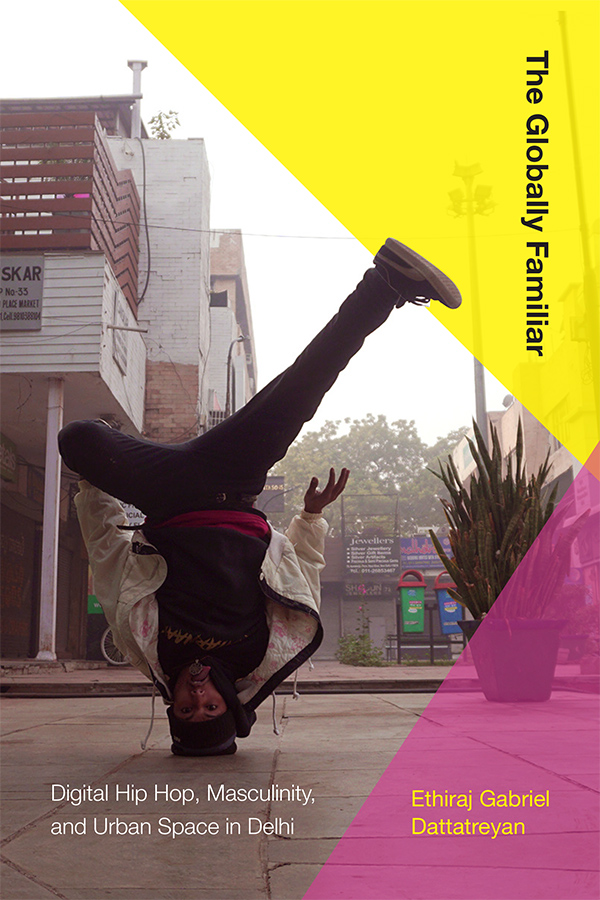





 CaMP Anthropology