A review of the exhibit Dolly Parton: Journey of a Seeker at the Country Music Hall of Fame and Museum, Nashville, TN
By Sarah D. Phillips
The exhibit Dolly Parton: Journey of a Seeker opened in May 2025 at the Country Music Hall of Fame and Museum in Nashville, Tennessee. It advances a straightforward argument: Nothing about the 79-year-old’s brilliant career was preordained. Parton worked for everything she got, in an upstream journey. She forged her own rhinestone-studded path, against the odds, and despite a whole lotta ankle-biters.
“This exhibit focuses on turning points in Parton’s life and career through the decades, where she overcame obstacles and ignored naysayers to become one of the most beloved and widely recognized celebrities across the world.”1
Familiar objects, rare treasures, and interactive features mingle in this special exhibit on Parton’s career and major creative and philanthropic projects. The what-Dolly-overcame narrative is a stretch at times, but overall, it’s an ingenious way to parse Parton’s legacy.
The curatorial team faced a difficult task: to compress Dolly Parton’s incredible career into a small, two-room exhibit space. Their design combines large wall texts interspersed with glass cases, a looping video, and one interactive digital station. A case with six of Dolly’s signature dresses (All Her Colors) anchors the exhibit. At least twelve other original Parton outfits are sprinkled throughout, as are shoes, boots, and a few custom musical instruments.
The exhibit’s roseate color palette lets featured wardrobe pieces pop in Dollylicious yellows, blues, and reds. Dolly’s over-the-top dresses (dripping with fringe, chiffon, and beads, some of them weigh ten pounds at least!), contrast with simpler exhibit items— historic Parton family photographs, hand-pencil-written lyrics for Jolene, and even the portable cassette recorder she used to write her greatest hits. Together, these objects encapsulate what fans love most about Dolly Parton: her bold, unapologetic style; her fierce confidence and sense of adventure; her tremendous generosity; and of course, her unparallelled talent as a songwriter and performer.
On the exhibit’s main wall, live performance clips alternate with Parton’s commentary (or dolly-tary) in a twelve-minute video loop. “I have always been a seeker, in every way. My spiritual life, my professional life, my personal life. And I’m always looking. I’m always trying to find another mountain to climb.” Parton’s words reinforce Journey of a Seeker’s narrative of overcoming, and underscore the star’s incomparable independence as an artist, performer, and businesswoman.
Here Parton highlights career challenges not otherwise explicit in the exhibit—in the late 1960s and 1970s, for example, radios refused to play her songs on taboo topics such as teen pregnancy and women’s sexuality (think The Bridge, and Bargain Store). Understated, Dolly reminds us, “It was kinda tricky for a woman, for a girl [in country music] …”
Around these two anchors (the video loop and the case of Dollytastic dresses), the exhibit unfolds chronologically. It starts with Parton’s first performance at the Grand Ole Opry—she was just thirteen years old—and her very first recording, Puppy Love, in 1959. Next comes Parton’s Dumb Blonde album and her contract with Fred Foster at Monument Records. Dolly’s pivotal Porter Wagoner era gets just one exhibit case, followed by quick attention to her early solo ventures (Jolene, I Will Always Love You, and The Seeker).
The cases devoted to Parton’s Crossing Over era—her forays into film, television, pop music, and other ventures—are the least coherent. A jumble of items competes for symbolic and literal space: Parton’s magazine covers, her 1979 Tonight Show dress, her 1989 Saturday Night Live rhinestone-encrusted cowboy boots, and others. The Screen Gem case includes perfunctory nods to her various film roles, with most attention on Rhinestone and The Best Little Whorehouse in Texas. Parton’s Trio collaboration (with Linda Ronstadt and Emmylou Harris) inhabits the same case as her Eagle When She Flies project, a clever way to reinforce the narrative of purported overcoming. (RCM Records unceremoniously dropped Parton in 1986, but she rose up and soared to new heights.)
The last third of the exhibit centers on Parton’s philanthropic and business ventures: the Dollywood theme park and foundation, Parton’s Pre-K literacy program (The Imagination Library), and Sandollar Productions, the film production company she co-founded with LA producer Sandy Gallin.
In the rear corner, an interactive digital panel invites visitors for deep dives into Parton’s Exclusive Interviews and Live Performances. It’s a terrific idea, but the station’s placement in an already piled-up corner of the exhibit space might discourage visitors from exploring its rich features.
The final, crowded exhibit case does double duty; it highlights Parton’s Blue Mountain Return (her late-1990s/early 2000s reconnection with bluegrass and mountain music), as well as her major lifetime awards (Kennedy Center Honors, Country Music Association Honors, Country Music Hall of Fame induction, and so on). It’s a cramped finale to an otherwise well-conceived, well-paced exhibit.
Journey of a Seeker successfully maintains its narrative thrusts of overcoming and inspiration. Through poignant objects and stories, the exhibit highlights barriers that could have thwarted Parton, but didn’t. She was a poor mountain girl in a rich man’s world. Industry execs pigeon-holed her. Nashville cats doubted her cross-over potential. Prudes questioned her style. Advisers poo-pooed her Dollywood dreams. Record labels let her go. But Dolly stood tall—all sparkly and hair-teased five feet of her—and forged her own path to greatness.
Journey of a Seeker even has Parton turning obstacles into advantages. Her native and rustic backwoods—the Great Smoky Mountains—inspired her songs and signature style: butterflies, birds, flowers, and bright colors coalesced in what Dolly calls a “country girl’s idea of glam.” Critics laughed, but Parton found power in her originality—her iconic makeup, hair, nails, body shape, and clothing style. She avoided pigeonholes to cut dramatic musical marks across musical genres: country, pop, rock, and bluegrass.
The exhibit could have dwelt more on Parton’s duels with rampant sexism in the music industry, and her love-hate relationship with the domineering Porter Wagoner. After all, both challenges crystallize Journey of a Seeker’s thesis that “Dolly has demonstrated consistently that she can transform adversity and setbacks into works of stunning beauty and insight into the human condition.”2 What’s more, sex discrimination in the music business—country music in particular—is an ongoing challenge. With a narrative about what is being overcome, it is quite striking that there are some things that these days one cannot claim to have overcome—male chauvinism, a paternalistic co-worker. Is this silence part of Dolly Parton’s reluctance to engage in politics (her famous Dollitics), for fear of alienating fans or ruffling feathers?3 Is this silence the price of being non-partisan in our contemporary moment? Whatever the source of this silence, it’s a missed opportunity to educate young museum visitors about the sexism and other forms of discrimination that continue to plague the country music business.
Curiously, Parton’s husband of nearly sixty years, Carl Dean, receives no mention in the exhibit. To me, it’s a peculiar oversight, especially since Dean died just two months before the exhibit’s May 2025 opening. My husband says it was likely Carl Dean’s wish to stay out of the exhibit, reserved and publicity shy as he was. Maybe the marriage just couldn’t be wedged into the exhibit’s driving theme of Parton’s triumph over adversity.
Journey of a Seeker runs through September 2026. Road trippers might want to download the museum’s curated playlist of songs marking “turning points” in Dolly’s musical career to enjoy on the drive. Visitors should take home the gorgeous exhibit catalog ($24.95 in the museum store), and those bedazzled by Parton’s wardrobe might also check out her delicious book Behind the Seams: My Life in Rhinestones ($50.00 in the museum store and $22.18 at online retailers).
2 Kyle Young, CEO, Country Music Hall of Fame and Museum. “Letter from the CEO.” Dolly Parton: Journey of a Seeker (exhibition catalog). Country Music Foundation Press (2025), p. 5.
Krakoan national co-founder Magneto explains to diplomats at the new Krakoan Embassy in Jerusalem why mutants have decided to create their own language, from House of X #1 (Hickman et al. 2019a, 32).
In 2025, wars are raging in Ukraine and Israel and too many other places, but they all come down to which peoples and lands are “real countries,” and which are merely conquered or conquerable populations and territories to be managed. As I try to make sense of it all, a person whose Slavic and Ashkenazi Jewish ancestors came together in early 20th century Detroit because they all really hated the Russian empire, I can’t stop thinking about the X-Me
Stay with me.
Since folklorist Johann Herder’s work in the 18th century, language is widely understood to be a fundamental part of what makes nations distinct political and cultural entities. Language is why France is France, Spain is Spain, and Portugal is Portugal. Except, as linguists know, this isn’t how language works. Europe, like much of the world, is covered in dialect continua with neighbors in nearby towns and villages speaking recognizable varieties that form points along a gradient rather than distinct languages with clear boundaries. Provençal, Catalán, Gallego, and other local Romance varieties form exactly such a continuum from Iberia to Belgium (Chambers and Trudgill 1998, 5).
But we believe this to be true: a nation is an expression of the political will of a people with a shared culture, shared lands, and shared language, together with its repertoire of shared stories and songs, customs, habits, and all the things that set one ethnic group apart from another. Not only do we insist on these differences—we plan them and we create them and we police the boundaries between languages as a semiotic means for remaking territorial borders on a different scale (Irvine and Gal 2000).
The European examples are what I give students in introductory linguistics classes, but my own practical experiences with language planning and policy are mainly post-Soviet, from the years I spent working at Nazarbayev University in Kazakhstan. The USSR fell apart when I was ten. One thing I remember from the 1990s is endless jokes about confusing new maps containing a gajillion new countries that no one had ever heard of before—which they hadn’t, and for good reason. Many former Soviet republics were carved out of contiguous territories occupied by related peoples, and didn’t exist as separate countries before the USSR. But for assorted governance reasons, Soviet ethnographers and linguists took Russian imperial lands and drew new boundary lines around peoples, languages, and territories, producing “Kazakh” (or “Qazaq,” as many Qazaqs prefer), “Kyrgyz,” “Uzbek,” and “Turkmen” out of the different Turkic varieties spoken across Central Asia. The goal was to give each language and ethnicity its own mini-nation within the federal framework of the USSR. (Waite 2020 has a good overview of this process).
Kazakhstan, just south of Siberia, has the dubious distinction of being the most ethnically diverse post-Soviet state, because it’s where all the “undesirables” were deported (Lillis 2017). And despite all that linguistic and ethnographic labor, the Soviet government changed its mind about the value of promoting national languages and cultures within its territories, and Russification proceeded apace after the 1930s. In the post-Soviet era, these nations have to contend with this legacy of Russification. At the same time, they also have to elevate and promote their national languages in order to justify their continued existence as separate nations. Far from being abstract or theoretical, Russian premier Vladimir Putin has used the argument that Ukrainians are basically Russians, and the Ukrainian language is also basically Russian, as an argument for invading Ukraine. Demonstrating the linguistic distinctiveness of Ukrainian language and culture is literally a question of life and death (Carter 2022).
I moved to Kazakhstan in August 2014, some months after Putin’s forces first annexed Crimea. “Oh shit, we’re next” was a pretty common sentiment in Kazakhstan at the time, with its Russified north, high percentage of ethnic Russians (around 20% of the population), and lengthy border with Russia. It is unofficially but widely acknowledged that the capital was moved from Almaty, far in the south, to Astana, smack dab in the middle of the country, in order to encourage ethnic Qazaqs to migrate north. Russian is the first language of many Kazakhstanis, regardless of ethnicity, and is an auxiliary official language.
Like Ukraine, the Kazakhstani government has an existential interest in promoting Qazaq language and culture. It helps that Qazaq is Turkic, not Slavic, and therefore considerably more linguistically distinct from Russian. But given its very diverse population (ethnic Qazaqs are now just over 71%), the government also has to disentagle Qazaq language from Qazaq ethnicity and link it instead to Kazakhstani citizenship. This is one of the reasons that Nazarbayev University exists. A certain level of Qazaq language proficiency is a requirement for all graduates, regardless of ethnicity, and the Qazaq language department is busy and large.
So why can’t I stop thinking about the X-Men? Because the X-Men live in an improbable fictional world, populated by people with extraordinary abilities, they get to do weird things like exemplify moral and cultural ideals about what nation-building and language planning could or even should look like in a more fantastic world. As with much speculative fiction, the story of the founding of Krakoa illuminates what real nations do, why they do it, and where we think we fall short in our real-world attempts to convince others that we deserve sovereignty, security, and political recognition. The X-Men get to do what independent post-Soviet republics want to do—what any aspiring ethnic state wants to do—and they get to do it better, faster, and frictionlessly. As Karlander (2025, 85) asserts, “the creation of a micronation implies an intensified commitment to statehood and the semiotics of statism, not least in their manifold nationalist guises. The micronational mimesis of state power thus enacts a specific critical stance, that is: critique without critical distance.” Micronations, real and fictional, engage in language planning, and sometimes language creation, precisely because a new nation is still a nation, and therefore needs all of the trappings of one, even if ad-hoc, satirically, or fictionally.
I’m going to assume that you know who the X-Men are if you’ve had any contact with English-language pop culture in the last 30 years. But unless you’re a really big fan, you probably don’t know about Doug Ramsey, aka Cypher. Doug’s mutant power is basically speed linguistics. He’s not well known or beloved, although the guy at my local comics shop did inform me that he’s going to be at the center of 2025’s big X-men crossover event. (Thanks, writer Jed McKay, I owe you one.) Doug’s a cute blond boy who looks like a normal human, and can’t do anything flashy or combat-oriented. His powers mostly camouflage themselves as seeming really smart. Doug’s mutation doesn’t help him learn languages instantaneously or psychically get past language barriers to communicate. He can just analyze language very quickly compared to real field linguistics. This is made most clear when Professor X, circa 2019, assigns Doug to make friends with a sentient island and learn his language, to see if the living land will itself consent to be transformed into a paradisiacal mutant island nation.
Professor Charles Xavier, telepathic mutant leader, introduces Doug Ramsey to Krakoa, the living island, in Powers of X #4 (Hickman et al. 2019c, 16).
Why might mutants want their own nation? The basic premise of X-Men is that the higher radiation levels of the atomic era created more people with inborn super-powered mutations, as opposed to acquiring superhuman abilities later in life after transformative encounters with cosmic rays, radioactive spiders, or toxic chemical sludge. As the comic develops its premise from the 1960s into the 1980s, these mutations are pinned by writers not just on ambient “radiation” writ broadly but on a specific “X-gene” that gives every mutant a shared genetic heritage.
Superheroes like the Fantastic Four are small teams held together by ties of kinship, friendship, and shared traumatic cosmic ray experiences. However, the hereditary quality of mutant powers and physiology makes mutants a large cohesive group, like an ethnic minority. Politically and biologically speaking, they are seen as born this way. This makes them uniquely appealing targets for eugenic discrimination and exploitation, depending on whether the people around them think mutations are good or bad, and whether they envy mutants or want to eradicate them. Pop-culture commentator, writer, and activist Jay Edidin (along with podcast partner Miles Stokes) has specifically called this “the mutant metaphor,” enabling mutants to stand in for whichever marginalized group an author might want to tell a story about: ethnic minorities, gender and sexual minorities, people living with disabilities (Ackerman 2018). Because of mutants’ textual and allegorical properties as a cohesive group who face unique discrimination, they tend to stick together.
Much like real marginalized populations, some mutants espouse the virtues of nationalism or separatism, which produces enclaves like villain Magneto’s mutant supremacist Acolytes, or microstates like Genosha in the 1990s or Utopia in the 2010s. Doug Ramsey’s assignment to make friends with the island of Krakoa is actually mutankind’s third attempt at nation-building. Krakoa is different in large part because it’s planned. Genosha and Utopia were created opportunistically and haphazardly, governed by authoritarians with minimal political structure. By contrast, Krakoa has a government, and not just a self-appointed leader. It has laws. It has a security apparatus (and the comic dedicated to it is one of the most horrifying things I’ve ever read). But perhaps most importantly, it has a language. The language is not the island’s own native tongue, which Doug does learn. In fact, no one else can speak to Krakoa directly, which gives Doug a special position in the government as the voice of the land itself. But the mutant national language, Krakoan, is Doug’s creation, and it’s psychically taught to every mutant who passes through the living gates that teleport them to and from and around the island.
Information page explaining Doug’s linguistic accomplishments and showing the Krakoan alphabet, from House of X #3 (Hickman et al. 2019b, 30).
A world with language superpowers and instantaneous, telepathic language learning means that mutants don’t need Krakoan to communicate with each other. The X-Men has featured many US American characters, but it also has Latin American, Québécois, Russian, Kenyan, Indigenous American and Australian, Japanese, and Afghani characters—lots of mutants whose first or preferred language might not be English. But mutant telepaths can and do teach everyone else any language they might need. Before Krakoa, being a mutant means being cosmopolitan polyglot. But, as we see so often in antisemitic rhetoric, being a cosmopolitan polyglot is the opposite of being a citizen of a shared nation with a shared cultural heritage (Barenblat 2018). Jews are never really citizens of the countries where they live—and neither, it seems, are mutants.
If mutants want to be taken seriously as a people, with the right to determine their own political destiny, then they need all the recognizable trappings of peoplehood. Magneto’s statement that mutants need a shared language to build a shared culture in order to eventually be a real nation is not true, as a matter of linguistic or anthropological fact, but it’s also an understandable impulse that reflects how nations legitimate themselves in real life.
It’s not an accident that Magneto, long-time mutant defender and separatist, shows up in Jerusalem to formally announce Krakoa’s founding to the diplomats of the world. He is famously a German Jew and Holocaust survivor. Israel is the place where he originally met his best frenemy and ex-boyfriend, Professor Charles Xavier, leader of the X-Men. The X-Men’s politics, and Magneto’s in particular, have often reflected internal Israeli and diaspora Jewish politics (Elbein 2024). It’s not an accident that part of the Zionist project to create Israel involved reviving Hebrew as an everyday language while actively rejecting the hybrid languages that Jews developed in diaspora: Yiddish, Ladino, Judeo-Arabic (Schweid 1984). Likewise, I’m sure it’s not an accident that, in building Krakoa, mutants too reject multilingual, diasporic language practices. And it’s probably not an accident that Krakoa is a nation that can be built without a Nakba, founded on consenting, sentient land that offers itself up as a home for mutants (Goldsmith 2020). Krakoa is nation-building done right, or at least, an attempt at it.
Marvel Comics are not JRR Tolkein, nor HBO, nor Star Trek, and they did not hire anyone to come up with an actual Krakoan language. In the comics, it’s represented with an alternate alphabet that only loosely diverges from English Latin in its character inventory. But although it’s just a cipher, it clearly stands in for an actual different language in the comics, unintelligible to others, as when mutant characters speak in Krakoan to each other to communicate when being surveilled or in hostile circumstances.
Mutant gladiator Shatterstar says “hi” to mutant detective Polaris in Krakoan. X-Factor #3 (Williams et al. 2020).
Language is not mutants’ only cultural endeavor. On Krakoa, mutants work to cultivate mutant fashion, literature, and perhaps most notably, mutant religion. They work towards mutant-specific visions of justice and peace, of accountability, of sexual ethics and relationships. But by their own account, it is a shared mutant language that makes this possible, that makes mutants a people, a nation, and not just a motley collection of freaks. The vision of Krakoa requires a linguist to negotiate with the island, to speak for the island, and finally to design their utopian language and fashion a script for it, not unlike the literary standards and scripts created for the newly distinguished Turkic languages of the USSR. It requires a rejection of the cosmopolitan and embrace of the monolingual, the pastoral, the folkloric, as mutants elaborate their own national mythology, and comics writers deepen the lore, writing and rewriting our own modern myths. Magneto, the villain of X-Men #1, is now one of Krakoa’s greatest heroes.
With all of this said, large comics franchises never really end, and no matter how much their characters go through, they are only gently, ever so slowly, allowed to age and learn and grow. At the same time, what drives stories is conflict, which means that a tropical island paradise that all mutants can safely call home cannot be allowed to last. Internal discord and external attacks destroy the nation. The First Krakoan Age is over. But it seems like memories of Krakoa will live on. Most mutants still know Krakoan, and as they scatter into diaspora once more, I can’t help wondering whether the language will still be allegorically and narratively useful for bringing mutants together. Now we get to find out what comes after nationalism.
Mutant scholar David Alleyne (aka Prodigy) teaches a class on Krakoan diaspora at fictional Empire State University (Lanzing et al. 2024, 10).
Irvine, Judith T, and Susan Gal. 2000. “Language Ideology and Linguistic Differentiation.” In Regimes of Language: Ideologies, Polities, and Identities, edited by Paul V Kroskrity, 35–83. School of American Research.
Schweid, Eliezer. 1984. “The Rejection of the Diaspora in Zionist Thought: Two Approaches.” Studies in Zionism 5 (1): 43–70. https://doi.org/10.1080/13531048408575854.
Last month, American Eagle released an ad campaign with actress Sydney Sweeney, modeled after a 1980s Calvin Klein denim ad. The campaign plays with the homophone jeans/genes. In one version, Sweeney crosses out “genes” on a poster reading “Sydney Sweeney has great genes,” replacing it with “jeans.” Another ad features her saying, “Genes are passed down from parents to offspring, often determining traits like hair color, personality, and even eye color.” The camera pans to her face as she says, “My jeans/genes are blue,” with no jeans in the frame.
This ad set off a fierce debate around its indeterminate meanings. As one commentator asked, “Are we supposed to want pants or Aryan features?” (Cunningham 2025). A vocal minority argued it was a dogwhistle for eugenics and white supremacy, while others insisted it was simply about Sweeney being hot. Beyond the jean/gene pun, there is also indeterminacy about which “genes” are being invoked, ostensibly her conventional attractiveness: her pouty lips, blue eyes, blonde hair, and “buxom” chest (“Hey, eyes up here!” she rebukes the camera in another ad).
The debate is animated partly by the politicized contradictions of Sweeney’s image, which is “semiotically potent and yet ideologically unfixed” (Jones 2025). Alongside acclaimed roles, Sweeney has lent her brand to numerous ad campaigns. Many of her roles hypersexualized her image, which she has alternately lamented and embraced, making her a right-wing darling as conservatives embrace “raunch” and celebrate her as an ideal female form that will end “wokeness.”
“Eugenics vibes”
For many, this ad was “fashy coded.” Some online commentators, like @Dewwwdropzz and @midtwesterngothic, called the ad Nazi propaganda, while others noted its “eugenics” or “master race” “vibes.” Right-wing commentators dismissed these interpretations as hysterical, treating accusations of Nazism as preposterous, characterizing it as “everything is Hitler” (a common right-wing refrain).
But eugenics and white supremacy was not just Hitler’s project. Trump has described immigrants as having “bad genes” and expressed preference for immigrants from blue-eyed countries; his time in office has seen expanded civil commitment for those deemed mentally ill, a massive expansion of ICE, and expanded habitual offender statutes(Cunningham 2025; Norwood 2025; Miller 2025). Trump recently federalized the California National Guard to suppress protests against deportations and took over the capital’s police to respond to “crime,” a racial dogwhistle.
These moves resonate with the rise of Christian nationalism and “great replacement” rhetoric (Ali 2025), both of which promote demographic engineering. Just weeks before the ad aired, the Department of Homeland Security amplified this vision, tweeting paintings that valorize Manifest Destiny. They were captioned: “Remember your Homeland’s Heritage” and “A Heritage to be proud of, a Homeland worth Defending.” Commentators suggested the capitalization itself was a dogwhistle (Ali 2025).
The MAGA-led government has also energized RFK Jr.’s MAHA movement, described as social Darwinist “soft eugenics” for withdrawing care from targeted populations and stigmatizing neurodivergence and mental illness (Beres 2025; Sexauer 2025; Giroux 2025). Coupled with the hard eugenics of the genocide of Palestinians and callous indifference to disposable lives here and elsewhere (Miller 2025; Giroux 2025), these developments mark the normalization of dehumanizing ideologies.
At the same time, other groups are encouraged to reproduce. Pronatalist movements promoted by tech oligarchs like Elon Musk and Peter Thiel, with support from the Heritage Foundation, valorize “good genes” and fuel demand for gene-edited “designer babies” (Stein 2025; Elinson 2025). Within this pronatalist, anti-choice framework, some conservatives even point to pro-choice policies and liberal institutions such as Planned Parenthood as the real eugenics.
“It’s not that deep”
This slide to fascism is perceptible, yet for many “all of this reality is stripped away” (Warzel 2025). To them, it is just an ad, just about Sweeney being hot, or just about jeans.
This dismissal is bipartisan. PragerU pundit Amala Ekpunobi ridiculed “chronically online” Leftists who should “touch grass,” insisting the ad “didn’t mean anything.” Liberal commentators likewise treated it as a distraction unworthy of “incredible complexity” and analysis (Jones 2025; Ali 2025). Some argued that engaging with the controversy benefits the right, since “the right-wing-media apparatus has every incentive to go at the Sweeneystuff, as the MAGA coalition struggles to distract its base from Donald Trump’s Epstein-files debacle” (Warzel 2025).
“Woke is dead”
If liberals were hysterical, conservatives were triumphant. While mocking liberals as snowflakes and crybabies (McIntosh 2020) and insisting “it’s not that deep,” right-wing media reanimated a MAGA battle cry (Mendoza-Denton 2020): “Woke is dead!”
When asked whether Sweeney or Beyonce won the denim war, one pundit called the ad “normal” and declared it the “final nail in the coffin” of “woke.” Fox defines woke as “progressive, politically correct stances on race, gender ideology, and other hot-button topics,” but the political correctness framing is misleading (Beliso-De Jesús 2020). Its indexical range is much broader. While White House communications director Cheung decried “Cancel culture run amok,” Cruz and Vance talked about the attack on “beautiful women.” On the Ruthlesspodcast, Vance quipped, “everybody who thinks Sydney Sweeney is attractive is a Nazi,” adding “she’s a normal all-American beautiful girl doing like a normal jeans ad, right?”
Trump characteristically said the quiet part out loud, praising the ad and contrasting it with ads by Jaguar and Bud Lite. MAGA media was feeling the vibe. A Fox News pundit said, “We’re over this woke agenda. We’re over the Lizzos, we’re over the Dylan Mulvaneys. If this was a 300-pound non-binary person, they would be applauding her.” On one podcast, hosts said they were sick of “DI stuff with big girls,” wanted more “ideal images” of “perfection,” and joked there should be “legislation against plus sized models.”
Other pundits also mirrored Trump’s rhetoric with fidelity. Tomi Lahren contrasted Sweeney with Dylan Mulvaney, saying conservatives want “hot people.” Matt Walsh called the ad “a move back to normalcy” and away from “freakish nonsense.” Other pundits added: “Woke ads are out and beautiful ads are in. Yes, welcome to 2025 where Dylan Mulvaney has been replaced by Sydney Sweeney” and said:
“This seems to be simply a return to normal…they changed and they started to use hideous people…people don’t want to look like Lizzo…they want to look like Sydney Sweeney….they’ve had ugly platformed for so long…we actually aren’t all created equal…we all look different.”
A Fox commentator called the ad “consequential,” representing the demise of “fat pride and gender androgyny and DEI.” Megyn Kelly praised Sweeney as “all woman,” “natural,” and “normal,” saying she hadn’t “Kardashianized herself,” and declaring, “we are fucking done with the Lauren Sanchezes of the world” and with “enormous lips,” and rejoicing at the return to “classic American beauty.”
The blonde bombshell’s others
MAGA commentators had been celebrating Sweeney as a return to classical ideals long before the ad. When she hosted Saturday Night Live in a low-cut dress, she had already “killed woke” (Grady 2025). Commentators lamented that body positivity had brought “the giggling blonde with an amazing rack … to the brink of extinction” (Furlano 2025) and that white people had been “banished from advertising.”
In this discourse, “woke” and “DEI” index what Sweeney is not: black, big, non-binary, non-feminine, non-traditional, working as shibboleths for dispreferred social types. “DEI” itself has become a “strategically deployable shifter” (Urciuoli 2025), “relayed” into a new domain (Gal 2018) and resignified as a slur that “clasps” (Gal 2018) Sydney Sweeney to ideal images of womanhood and clasps all her opposites together as undesirable social types.
The “blonde bombshell” recalls midcentury Americana, when the white feminine figure was unrivaled. Nostalgia for this time situates the campaign within a revival of regressive, white-washed femininity, from pinup girls to tradwives (Furlano 2025). Fascist movements have historically weaponized this ideal.
Sweeney’s image, combined with the ad’s images and language, draws on this charge: the paradox of white femininity as both sexualized and innocent. It enables a right-coded idealization of white, fertile, feminine beauty (Grady 2025; Cunningham 2025), set against the racial and gender diversity that unsettles a pronatalist white supremacist vision of a homogenous America.
Dogwhistles and semiotic containment
American Eagle’s campaign was a success, if only for the attention it generated. Its strategy: “Flirt with the public’s fear (or excitement) about fascism—with the help of Sydney Sweeney” (Cunningham 2025).
This flirtation plays with dual addressivity and multiple layered semiotic indeterminacies to send a dogwhistle. Dogwhistles are messages with an innocent meaning for most addressees and a coded one for some (Haney-López 2014; Slotta 2020). They are political uses of semiotic indeterminacy (Gershon 2025), and such indeterminacy is not always symmetrical (Dénigot and Burnett 2020).
Moreover, the participation framework and production format is complex (Goffman 1981). Dogwhistles are uttered by a “duplicitous speaker” who differentiates among “savvy” and non-savvy listeners (Dénigot and Burnett 2020), and this corporate ad, voiced by an actress speaking as herself but through a script, amplifies this duplicity. Even savvy listeners are multiplied: the target audience aligned with a racialized message and its liberal opponents who identify and repudiate it. Moreover, the indeterminacy here has a binary logic, with competing polarized meanings.
Racialized dogwhistles are central to conservative self-conceptions, exemplified by Lee Atwater, a pro-segregationist who directed campaigns for Reagan and Bush senior and later chaired the RNC (Haney-Lopez 2014). Atwater avoided the semiotic determinacy and rigid performativity of taboo language like the n-word (Fleming 2011; 2018; Miller 2022) by using “abstract” terms like forced busing or tax cuts, explaining that these economic policies would “hurt blacks worse than whites” while avoiding explicit slurs.
Dogwhistle tactics also use indeterminacy to differentiate within a single listener, bifurcating conscious commitments to equality from unconscious racism, so dogwhistles are hidden partly from the target audience itself (Smith 2016; Haney-Lopez 2014; Mendelberg 2001). This complicates the notion of the identity-based dogwhistle (Dénigot and Burnett 2020).
Indeed, identity here is unstable. “Woke” functions as a shifter designating not only an ideology one can adopt but also refers to groups of people who are like Lizzo, Dylan Mulvaney, or Oprah–even those who don’t adopt “woke” beliefs. Many “woke” critics of the ad were feminine white women, and many of its defenders were people of color or liberals. These “woke” identity positions don’t intersect neatly with “woke” listener positions.
In this way, a dogwhistle can hail white supremacist listeners while avowing a colorblind position (Dick and Wirtz 2011). If Sweeney’s “good genes” are about being hot rather than white or feminine, then hotness is universal, equal opportunity even. Listeners who hear racialized meanings are paranoid racebaiters, bearing the liability of racialization. Cultural value accrues to those who cannot hear it, who are figured as rational, and colorblindness enables racist discourses to proliferate under a guise of neutrality (Dick and Wirtz 2011; Williams 2020). As Haney-Lopez predicted, dogwhistle politics has evolved to recruit nonwhite support (2014). Racial identity is therefore a poor predictor of reception.
TikTok user @heyitstwig25 remarked, “So, the Sydney Sweeney jeans ad isn’t racist, but the only people I see supporting it and defending it are openly racist…got it.” This suggests the issue is less about identity than about participation in chains of discourse through which themes and cultural stories become intelligible (Slotta 2020). Names and labels work as condensed abbreviations for these stories (Ibid), and allusions or “vibes” similarly direct attention toward particular contexts–but only if those contexts are already available. Dogwhistles are one form of “strategically restricted communication,” relying on differentiated awareness of context, such as white supremacist discourse in right-wing media, without which the message is inaudible (Mendoza-Denton 2020). Further differentiation also depends on awareness of the cultural history of white supremacy, its motifs, values, and unspoken commitments. Heterogeneous audiences thus bring heterogeneous indexical associations (Agha as cited in Gershon 2025), enhancing and multiplying semiotic indeterminacy. Even defenders of the ad are heterogeneous.
This heterogeneity and indeterminacy is key to the plausible deniability that sustains racializing discourses (Dick and Wirtz 2011). By suppressing or manipulating context, speakers avoid responsibility for racist discourse and strategically differentiate their messages (Hodges 2020). This relies on ideologies of communication that privilege semantics and grammar over interactional context, common in the MAGA base and central to Trump-era tactics (Hodges 2020). Trump’s “dark innovation” has been to extend plausible deniability even further than his predecessors (Smith 2016).
The American Eagle ad exploits this affordance, building on the MAGA movement’s use of entertainment and humor as a “containment strategy,” a way to speak taboos while denying violating norms (Hall et al. 2016). The strategy also works on liberals and leftists who dismiss the ad as trivial, epiphenomenal froth atop a sea of material conditions. One LA Times critic asked why anyone cared about a silly ad when DHS was increasingly militarizing (Ali 2025). This dismissal shows how dangerous rhetoric slips by not only through semiotic indeterminacy but also because some genres render signs unserious and “not that deep.” Even the ad’s brevity functions this way. One critic wrote, “a 15-second denim commercial is not a rich enough text to sustain this level of analysis” (Jones 2025), reinforcing the idea that the micro doesn’t matter (Lempert 2024).
Does the ad even need indeterminacy? When Elon Musk can evade responsibility for a Nazi salute, with the ADL calling it “an awkward gesture in a moment of enthusiasm” (Connolly 2025), plausible deniability is already abundant. Nazi salute-like gestures now circulate widely on social media. Even determinate taboo signs are rendered indeterminate through selective disavowal (Resnick 2024; 2025). A rigid designator like the swastika can be framed as “just about” something else (Resnick 2025). This “determined indeterminacy,” like colorblind discourse, naturalizes white supremacy by denying its existence (Resnick 2024). As with political dogwhistles, it enables speakers to espouse repugnant views while appearing to conform to liberal norms (Resnick 2024).
This is why American Eagle did not need to apologize. One need not be accountable for vibes. It could dismiss criticisms by insisting the ad was just “about the jeans.” Though some videos were removed, Sweeney said nothing, and the company posted only one non-apology:
This message narrowed the contextual aperture. Regardless of uptake—which both critics and supporters saw as extending beyond jeans—they affirmed meaning only in what was explicitly spoken: Sweeney’s personal “jeans” and “story.” The inclusive gesture to “everyone” nodded to the criticism while deflecting it with a universalizing message. Anyone who saw race, it implied, was seeing things that weren’t there.
This affirms a restricted meaning based only on explicit referentiality, instructing readers and viewers to ignore co-textual signs and context (Hodges 2020; Gershon 2025). Only speaker intention counts, and any further inference is cast as illusion (Gershon 2025). This form of gaslighting (Ibid) reflects a semiotic ideology of containment, empowering bad-faith speakers and listeners to dictate what something is “just” about.
Dogwhistles as canaries in coal mines
Liberal outlets such as the New York Times, The Atlantic, New York Magazine, The Cut, and Vulture ran op-eds framing the controversy as misunderstanding or trivial (Andrew, Scottie et al. 2025). In this architecture of false equivalences, the dogwhistle is reduced to a failure to communicate across party lines or “read the room” (Battle 2025). Writers urged readers to “not be weird” and stop making Sweeney a proxy for broader debates, arguing that too much context is problematic and “Sometimes a pun is just a pun” (Jones 2025). Others lamented that “the discourse is broken,” with both sides only discharging outrage (Warzel 2025). Many blamed the Internet or social media for polarization.
The “discourse” is indeed shaped by algorithmic media that mines attention through ragebait and infinite scrolls. But the Internet did not break the discourse. Racist dogwhistles long predate it; there has never been a good faith bipartisan conversation (Slotta 2020). Reasoned dialogue with white supremacists is neither desirable nor possible. The metadiscourse is broken too: if bad-faith speakers mobilize semiotic ideologies of containment, then talking past one another is not a failure but an achievement. And semiotic containment will only increasingly normalize dangerous rhetoric and admit it into respectable discourse.
This dynamic extends beyond the American Eagle ad, which condenses broader cultural movements. A “leftist meltdown” is overstated; most leftists didn’t care. MAGA media amplified faint signals (Warzel 2025) to occasion the celebration of the death of “woke” and rebirth of “normal.” The same pattern followed Dylan Mulvaney (Holmes 2025).
A select few spoke of dogwhistles, others of canaries in coal mines. On Breaking Points, the host read the ad as carrying white supremacist and eugenicist overtones; the guest scoffed, calling it “just an ad, not a canary in the coal mine for the rise of fascism.” Others insisted it was exactly that: for critical savvy listeners,it was an early warning of danger.
A “canary in a coal mine” once referred to bringing canaries underground to warn of toxic gases. As a metaphor, it’s a signal of imminent threat. Yet the canary is not a signal but a sensitive receiver, like a savvy listener who can reconstruct the discursive milieu and anticipate construals.
Listening is political work. The pragmatics of reception, who listens, to whom, how, and why (Slotta 2023), are further complicated by algorithmic mediation which creates micro-publics. As linguistic anthropologists, we cultivate sensitive listening within and beyond field sites and across publics. So when we hear the cry “woke is dead!” as the military-industrial complex ramps up domestically and abroad, we should continue to ask what that cry presupposes and entails. Such listening may provide early warnings or perhaps reminders of dangers long present.
Beliso-De Jesús, Aisha M. 2020. “The Jungle Academy: Molding White Supremacy in American Police Recruits.” American Anthropologist 122 (1): 143–56. https://doi.org/10.1111/aman.13357.
Dénigot, Quentin, and Heather Burnett. 2020. “Dogwhistles as Identity-Based Interpretative Variation.” Proceedings of the Probability and Meaning Conference.
Dick, Hilary Parsons, and Kristina Wirtz. 2011. “Racializing Discourses.” Journal of Linguistic Anthropology 21 (s1): E2–10.
Hall, Kira, Donna M. Goldstein, and Matthew Bruce Ingram. 2016. “The Hands of Donald Trump: Entertainment, Gesture, Spectacle.” HAU: Journal of Ethnographic Theory 6 (2): 71–100.
Haney-López, Ian. 2014. Dog Whistle Politics: How Coded Racial Appeals Have Reinvented Racism and Wrecked the Middle Class. Oxford: Oxford University Press.
Hodges, Adam. 2020. “Plausible Deniability.” In Language in the Trump Era: Scandals and Emergencies, edited by Janet McIntosh and Norma Mendoza-Denton. Cambridge: Cambridge University Press. https://doi.org/10.1017/9781108887410.009.
Lempert, Michael. 2024. From Small Talk to Microaggression: A History of Scale. Chicago: University of Chicago Press.
McIntosh, Janet. 2020. “Crybabies and Snowflakes.” In Language in the Trump Era: Scandals and Emergencies, edited by Janet McIntosh and Norma Mendoza-Denton. Cambridge: Cambridge University Press. https://doi.org/10.1017/9781108887410.005.
Mendelberg, Tali. 2001. The Race Card: Campaign Strategy, Implicit Messages, and the Norm of Equality. Princeton: Princeton University Press.
Mendoza-Denton, Norma. 2020. “Part I Introduction: ‘Ask the Gays’: How to Use Language to Fragment and Redefine the Public Sphere.” In Language in the Trump Era: Scandals and Emergencies, edited by Janet McIntosh and Norma Mendoza-Denton. Cambridge: Cambridge University Press. https://doi.org/10.1017/9781108887410.002.
Resnick, Elana. 2024. “The Determined Indeterminacy of White Supremacy.” American Ethnologist 51 (3): 433–47. https://doi.org/10.1111/amet.13311.
———. 2025. “Absurdities of Indeterminacy: Swastikas and Playing with the Token-Type Relationship.” Signs and Society 13 (1): 60–77. https://doi.org/10.1017/sas.2024.8.
Slotta, James. 2020. “The Significance of Trump’s Incoherence.” In Language in the Trump Era: Scandals and Emergencies, edited by Janet McIntosh and Norma Mendoza-Denton. Cambridge: Cambridge University Press. https://doi.org/10.1017/9781108887410.003.
———. 2023. Anarchy and the Art of Listening: The Politics and Pragmatics of Reception in Papua New Guinea. Ithaca: Cornell University Press. https://doi.org/10.1515/9781501770029.
Urciuoli, Bonnie. 2025. “Revisiting the Strategically Deployable Shifter: Manipulating Indeterminacy for Semiotic Power and Profit.” Signs and Society 13 (1): 9–24. https://doi.org/10.1017/sas.2024.3.
The CaMP anthropology blog has been running for 10 years — our very first post was on September 4th, 2015. During this decade, we have celebrated 122 dissertations, and 302 new books.
The blog started because when Indiana University dissolved the innovative and beloved department of Communication and Culture, five ethnographers moved to IU’s anthropology department. We joined six other people interested in linguistic anthropology, media anthropology, and the anthropology of music and art. Eleven people, all in the same department, and yet it was a concentration that seemed likely to fly under everyone’s radar. We wondered how to let anthropologists know about the department’s new strength, and hit upon the idea of creating a blog devoted to communication, media, and performance. We were making lemonade out of bureaucratic lemons (ah, the institutional melodrama I am omitting here in this bland account of how a blog came to be). Susan Seizer was the editor for the first year, and Sarah Mitchell designed the blog, getting the ball rolling.
But blogs are hungry beasts, and we had to figure out ways to feed it content. So in November 2015, I hit upon interviewing authors of recently published books, honoring the arduous work we pour into these texts. Honestly, it helped that I was on leave that year, and longing for a bit of legitimate distraction from writing The Book. Aneesh Aneesh was the first author we ever featured. And then I began to wonder why we weren’t also celebrating dissertations more – these too have taken years and years of challenging intellectual work. Elizabeth Kickham was the first to turn to page 99 of her dissertation, and discuss how it related to her dissertation as a whole.
Ten years later, and CaMP anthropology is still chugging along, releasing a post every Monday morning. This is thanks to all of you – so many have participated over the years, helping this amorphous intellectual community rejoice in what careful and hard-won analysis can reveal about our social worlds. May the blog celebrate many more books and dissertations in the years to come.
My dissertation, With Other Men: Love, Narrative, and Belonging Among Same-Sex Attracted Men in New Orleans, is an ethnographic study of how love narratives—structured around the phrase “I love you”—are interdiscursively linked to broader histories of racialized exclusion, public health discourse, and queer social life. Drawing on semi-structured interviews with same-sex attracted men in monogamous, polyamorous, and open relationships, the project traces how “I love you” is used at four key relational moments: its first utterance, after an argument, in times of joy, and at the end of a relationship.
Page 99 is in the second chapter, “‘I Love You’ After an Argument,” and begins midway through a paragraph in which I write:
[For the men in this study] repair is not just about resolving a linguistic misunderstanding—it is about re-establishing affective alignment, reaffirming commitment, and negotiating belonging within intimate relationships. This process of attunement is dynamic rather than linear, meaning that repair does not necessarily mean returning to a previous state, but rather constructing a new relational equilibrium. In this sense, misunderstanding is not merely a failure of communication, but a pivotal site where love, trust, and intimacy are tested and reconfigured.
For my interlocutors, especially those navigating intersectional histories of racial and sexual marginalization, repair becomes a moral and affective process through which belonging is reframed and love is sustained.
Page 99, therefore, does not capture the full scope of the dissertation, but it does highlight a central insight: that love and belonging are as fragile as they are enduring, and that it is through practices of repair, intersubjective attunement, and the ongoing efforts of choosing to remain with one’s partner(s) that new forms of intimacy, deeper connections, and new futures are made possible.
—-
Citation:
Sorapuru-Mitchell, Davine A. (2025) With Other Men: Love, Narrative, and Belonging Among Same-Sex Attracted Men in New Orleans. CUNY Academic Works.
Shannon Ward: In the Introduction, you discuss zurza as a uniquely Tibetan genre of humour. Can you say more about how you first discovered zurza as a genre? Do you remember the first Amdo Tibetan satire you heard? And, how did you as a researcher gradually come to understand continuities in how Tibetans identify zurza across artistic practices and media forms?
Tim Thurston So, I’m an inveterate language learner. I love learning languages, and trying to understand the social worlds with which they are intertwined. Being curious about language is about 95% of my research method. It’s in the process of learning language that I start to pay attention to different grammar structures, but also to the terminologies and classification systems that are part of their world. I first heard the term zurza in an interview. I was sitting in a public space on a university campus in Ziling, and talking to a young man who enjoyed the comedies. And he talked about how each one “did zurza.” About one or more “social problem(s).” Prior to this, I had been really focusing my research on the social problems angle. But hearing the word then helped to make sense of something. In the verb-final Tibetan language, it literally meant “to eat” (za) the “sides” (zur). Not so much an individual verbal practice, it was an approach to communication that privileged indirection as a way of articulating critique. I started paying attention, I realized that I was hearing it again and again in interviews. When I listened back to previous interviews, I saw that it also had been used there, but I hadn’t really caught on to it yet. Initially, I thought it was something pretty specific to the comedies I was researching for my dissertation, but then I heard a rapper use it. And another person used it to refer to forms of traditional poetry, and I realized that it was much more significant than I had initially thought.
Shannon Ward: Your book provides a remarkable account of Amdo as a distinct cultural region within Tibet, supporting efforts within Tibetan studies to show the nuances of identity amid changing social, economic, and political conditions on the plateau. Through your diachronic approach to the dynamic practices of satire, you show the adaptability of Tibetan cultural producers. At the same time, many of the satires themselves articulate essentialized views of Tibetan language and culture. Can you say more about how this tension between essentialization and adaptation plays out in identity formation through zurza?
Tim Thurston: Folklorists sometimes refer to folklore as “the stories people tell themselves about themselves.” I think of the texts in this book as the “modern stories Tibetans are telling themselves about their (ideally) modern selves.” These texts are both a funhouse mirror and a prism. They (exaggeratedly) reflect Tibetan society back on itself, but also refract it, separating different points out for audiences to examine and consider. In this way, the comedies and rap songs examined in the book are sort of prescriptive: they simultaneously say “this is who we are” and “this is who we should be.” This always involves both adaptation to emerging policies and priorities, and essentializing statements about “who we are.” There’s a degree of Herzfeld’s “cultural intimacy” in this: the sort of embarrassing and the backward parts of ourselves that unite our identity.
In the context of the People’s Republic of China, this question about the place of Amdo is an important part of it. The state identifies all of these people as Tibetan. Anthropologist Charlene Makley and historian Gray Tuttle have shown that the Tibetan word bod (བོད།) and the Chinese term zangzu (藏族) that we would translate as Tibetan refer to unique projects of identity making. The Tibetan bod traditionally only referred to people from Central Tibet, and not from Amdo or Kham, but is now used for all Tibetan. The Chinese Zangzu, meanwhile, is a state classification that includes a variety of groups, some of them quite different. At the same time, written texts and oral traditions suggest a recognition of shared identity. In versified oral traditions ‘black-haired Tibetans’ mgo nag bod མགོ་ནག་བོད། or ‘red-faced Tibetan’ (གདོhང་དམར་བོད།) were common noun-adjective formulae for performers (including in Amdo and Kham) to use in their songs and speeches. Comedians, rappers, and other artists are naturally navigating this. Many are fervent nationalists. And so, while their life experiences, humor, the stories they compose, and their language practices are very much based in local knowledges and experiences of people in Amdo, but their ultimate goals involve saying something broadly about the Tibetan nationality or ethnic group.
Shannon Ward: Your chapters demonstrate the evolution of zurza in new media forms, which are closely connected not only to the availability of new technologies, but also to political and economic goals such as urbanization and development that emanate from the Chinese state. Can you say more about how you see Amdo Tibetans navigating the availability and evolution of media technologies, amid constantly changing political agendas that may frequently shift between promoting and censoring zurza?
Tim Thurston: So zurza itself was never really promoted or censored, not least because it never really rose to something the State or its representatives really recognized as something worth governing. But I would say that the support for Tibetan language media and the space for social critique expands and contracts at different moments. Across these moments, however, it is generally accurate to say that the bigger one gets, the more important it is to adhere to the Party line. In Amdo in the 1990s and early 2000s, mass media (radio and television) were just about the biggest game in town. Comedians and other performers were keenly aware that they had to set just the right tone. They had to entertain with stories that were realistic but not quite real. They had to promote the State’s policies, but also wanted to embed their performances with important social critiques that might not always align with the State’s priorities. Zurza are the flexible set of practices and approaches to humor through which Tibetans can approach an issue obliquely rather than directly. In this way it provides artists with precisely the skills and the toolset necessary to navigate and accommodate shifts in policy, changes in media preferences, and the evolution of Tibetan concerns in these contexts. It allows comedians in the 1990s and early 2000s to promote a form of Tibetan nationalism, based largely in language purism and cultural preservation, while also fitting State demands. But it also empowers hip hop artists to critique young urban Tibetans who do not know their culture, to playfully rework folksongs into hip-hop beats, and to critique unrealized visions of their predecessors. It continues into the present, when people take to livestreaming and video sharing platforms to share any variety of entertainment.
Shannon Ward: Especially in your discussions of hip hop, you have shown how zurza serves to valorize the Tibetan language, but also how it can articulate linguistic purism. How do you see zurza potentially affecting the ways that Amdo Tibetans conceptualize and use language in their everyday lives?
Tim Thurston: The way I see it, these hip-hop artists and the comedians before them wanted to valorize and center Tibetan language in the nationalist project that has emerged in Amdo across the post-Mao period. Language has a complex place in China. The Chinese state is bound by constitution and the basic principles of Marxism to support officially recognized “minority nationalities” to “develop” and “promote” their own language. Additionally, the government has, over the last 70 years, developed extensive Tibetan language mass media apparatus as well. Cynically, we might say that Tibetan media is primarily for propaganda and spreading the news, but there is also some space for entertainment programming as well. But despite this support, language is also closely monitored. We sometimes hear that Tibetan singers have been arrested for singing or speaking about Tibetan language, or that Grassroots Tibetan literacy classes are sometimes closed by the government. Too direct an approach is not necessarily safe. What zurza does is allow people to promote language (and language purism) through example, through humor, without directly saying it.
Shannon Ward: In recent news media, much is being reported about Tibetan children’s decreasing access to their language and culture, especially given the rise of mandatory boarding schools that run almost exclusively in Mandarin. Being raised apart from family members can take away opportunities for children to experience Tibetan artistic practice in everyday practices like watching tv and streaming videos from smart phones. How do you see young people’s ability to connect with and produce zurza potentially changing in this new political context?
Tim Thurston: This is a great point. Intergenerational transmission of cultural knowledge is under threat from a variety of sources. Some students now go to school in inland urban centers like Beijing or Chengdu. But to my understanding, most of the schools are still in periurban Tibetan communities with almost entirely Tibetan student bodies. Students in these schools often live in dorms during the weeks (or as many as two or three weeks at a time) and then go home on the weekends. In this way, they have at least some opportunities to engage with Tibetan language and culture. Without meaning to downplay the tremendous impact of removing teenagers from their homes, intergenerational support structures, and contexts in which cultural transmission happens, one of the bigger concerns for many young parents I have met is about modern media, and this appears to be independent of the boarding schools. Young people, they say, prefer watching Chinese cartoons, and listening to Chinese music. With all the changes to the fabric of Tibetan life, and to Tibetan language competences in the region, it shouldn’t be surprising that some older comedy performances will not resonate with students who lack the lived experience of herding livestock, of first using a telephone, or of the oral traditions sometimes parodied in comedies. Similarly, there is good reason to believe that the uniquely Tibetan aspects of zurza may indeed begin to fade with the gradual cultural and linguistic shifts. But whether loss of language can wholly supplant some of these characteristics and practices, and the concept of eating the sides entirely remains to be seen. Certainly, the skills of indirection, humor, and entertainment remain as relevant as ever.
“After one candidate, the only one in a suit, described the many virtues of community involvement, a heckler shouted, “Frank, what clubs are you part of in the community?” leading the candidate to admit that he hadn’t gotten the opportunity to join any clubs…yet. The other candidate ended up winning her seat, returning to work with the Board members who had deposed her over the issue of her pickleball involvement” (page 99).
There are the things you study and then there are the things you realize your work is actually about. My dissertation, titled The Ends of the American Dream, studied retirement in the Southwest, but it is also about many other things: it is about families that we originate and that we make; it is about aging and confronting sickness and death; and it is about the way certain landscapes are used for leisure at the expense of future environmental sustainability.
Page 99 of my dissertation is the final section before the conclusion of Chapter 2 and includes the last bit of an ethnographic anecdote about a contentious Homeowner’s Board election cycle. It includes a brief description of the way that two of the candidates fit into (or don’t) the acceptable personae in the neighborhood. That chapter is all about what it is like to age in a housing development that was built especially for older bodies…It is also about aging in the 21st century, in a youth-oriented culture that often reviles the aging. The community where I did my research has worked hard to combat the assumption that it is “just for old people.” It has done this, in part, by creating an ideal-type retiree who fits into its unofficial tagline: “if you’re bored here, you’ll be bored anywhere.”
If my research and dissertation had turned out the way I thought it would when I planned it out, this point in this Chapter would have fulfilled Ford Madox Ford’s proposal. Instead, this moment acts as a jumping off point for some of the other concerns of the dissertation: namely, the historical, political-economic, and ecological backstories that provide some of the foundations—for some people—inhabiting a post-Covid, and (maybe) post-liberal world. Further in the dissertation, I ask who gets to belong in the U.S. and how and why that answer came to be. So I suppose that one thing Page 99 shows is that, without those who are willing to enact the boundaries and erasures of belongingness, even in one relatively small community, that answer could look very different.
Page 99 of my dissertation drops the reader into what I call a “technological (dis)connective happening.” It captures a moment during the pandemic, when offline events moved online. In this scene—part of an Airbnb Online experience on Zoom—my internet connection cut out for two minutes:
We could not see the others’ responses to our absence, if they stopped the experience or simply continued on, and apparently on their side of things, our video frame was completely static. When we were able to rejoin, the host said, ‘You’re back! We thought for a while you were statues because you were frozen!’
We laugh, and I shrug—just another reminder of how unpredictable connectivity could be.
These moments were everywhere in my fieldwork. They weren’t mistakes; they were the material. Participants and hosts navigated them through mute and video buttons, sudden exits, and uncertain returns. These weren’t actions on or by technology, but co-constituted entanglements—emergent expressions of human-technology relations always in flux. Page 99 names “the glitch”—what Betti Marenko calls “glitch-events,” which bring forth the “uncertainty, contingency, and indeterminacy” of digital processes (2015: 111). Or as one interlocutor on this page put it: “You don’t lag in real life.” But of course, we do. The digital simply renders that latency legible. It’s the infrastructural version of “shit happens.”
Zooming out, my dissertation explores how connectivity isn’t a binary (connected/disconnected), but a process of emergence—what Karen Barad might call an “ongoing reconfiguration of the world,” or what Tim Ingold frames as agencing, a becoming-with rather than a doing-to (Barad 2003: 818; 2007; Ingold 2017, 2020). “Control”—by humans or machines—was never absolute. Uncertainty wasn’t a defect; it was the condition for relation.
While this material now feels contextually dated, revisiting this page made me reflect on today’s technological shifts. As AI systems strive for perfect coherence and uninterrupted flow, I find myself returning to the glitch—not because it’s nostalgic, but because it’s revealing. The fantasy of seamless AI rests on a premise my research disassembled: that connectivity is binary, expected, and ultimately controllable. Perhaps, like my work on connectivity, intelligence, too, may be reframed from something measured by output to something defined by relation.
Just as (dis)connection isn’t a switch, intelligence isn’t merely a smooth response or rational reply. It’s not necessarily about getting things “right,” but about the conditions of emergence–about being entangled in a world that is unpredictable and shared. As AI becomes part of our social worlds, we need a conceptual vocabulary beyond prediction and polish. Glitches aren’t just breakdowns to be fixed; they’re reminders. Page 99 doesn’t just describe relational uncertainty; it invites it.
References
Barad, Karen. 2003. “Posthumanist performativity: Toward an understanding of how matter comes to matter.” Signs: Journal of Women in Culture and Society 28 (3): 801–831.
———. 2007. Meeting the universe halfway: Quantum physics and the entanglement of matter and meaning. Durham, NC: Duke University Press.
Ingold, Tim. 2017. “On human correspondence.” Journal of the Royal Anthropological Institute 23 (1): 9–27.
———. 2020. “In the gathering shadows of material things.” In Exploring materiality and connectivity in anthropology and beyond, edited by Philipp Schorch, Martin Saxer, and Marlen Elders, 17–35. London: UCL Press.
Marenko, Betti. 2015. “When making becomes divination: Uncertainty and contingency in computational glitch-events.“ Design Studies 41: 110–125.
The 2007 video game BioShock explores what might happen when individuals have the option to keep all the fruits of their labour, free from taxes or restrictions on their work. The game builds on the ideas of Ayn Rand, but also the practices of current US president Donald Trump. The game interrogates Rand’s ideas, revealing their failure. Ultimately, the most radical action in the game (and the only way out) is to help another.
BioShock is set in an underwater megapolis, Rapture, in the year 1960. Rapture was intended to be a libertarian utopia, founded on the principle that every person should be free to do as they please without having to worry about being pushed around by those in higher positions of authority: “No Gods, No Kings. Only Man.” (Bioshock, 2007) The tantalizing promise at Rapture’s founding was the freedom to do whatever its inhabitants wanted, without restrictions, where science flourishes. Ethics are sacrificed in the name of advancement, not unlike Nazi experimentation during the Holocaust, and, in some cases, appear to continue that very same Nazi research. The horrifying reality is that when people can do whatever they want, anyone can do whatever they want, and society quickly collapses as people look out only for themselves, at any cost. How does this game make this clear? Scientific advancement in Rapture has allowed for editing of a person’s genetic code through the use of a substance found on the ocean floor called “Adam.” Adam has allowed for various mutations, cosmetic and otherwise, purchased at a market level. Only characters called Little Sisters gather Adam. To make a Little Sister, a young girl is genetically lobotomized to become an Adam-harvesting Drone. Built on Adam, Rapture is far from its intended Utopia, the city is one of destruction- most of the residents are dead and the city is in ruins in the aftermath of a class war enacted by two greedy libertarian bigwigs.
The games’ links to Ayn Rand are not subtle. The two antagonists are named for characters in Ayn Rand: Andrew Ryan (named after the author herself), and Frank Fontaine (named after the character in The Fountainhead). Even Frank Fontaine’s alias, “Atlas”, refers to the novel Atlas Shrugged. Both of these antagonists have bought into the libertarian ideology hook, line, and sinker, and find themselves at odds as they fight for the same thing: power.
Andrew Ryan’s trajectory parallels Donald Trump’s; Ryan is successful in business. but is likened to a god, with golden statues of him around Rapture and voice memos that praise his intellect and business practices. Similarly, Trump fans circulate multiple images of Donald Trump, depicting him as a messiah-figure, even planning to make a 9-foot-tall statue of him (Trump-Statue, n.d.). Andrew Ryan preaches against a central form of government, yet enforces an authoritarian government with the goal of enforcing the status quo; Trump deploys ICE agents to terrorize citizens and military personnel against protestors (Hurley, 2025). Ryan founds Rapture with the promise encapsulated in his iconic quote: “Is a man not entitled to the sweat of his brow?” (BioShock, 2007). Trump portrays an image that he is on the side of the worker, running for president in 2024 with promises of multiple tax cuts (Luhby, 2024) — literally promising to ensure that every man was entitled to the sweat on his brow. The reality, however, is that the wealthy benefit more from tax cuts, increasing the gap between the wealthy and the poor. In Rapture, this gap directly leads to the power grab made by Fontaine, who says in a voice memo:
These sad saps. They come to Rapture thinking they’re gonna be captains of industry, but they all forget that somebody’s gotta scrub the toilets. What an angle they gave me… I hand these mugs a cot and a bowl of soup, and they give me their lives. Who needs an army when I got Fontaine’s Home for the Poor? (BioShock, 2007)
Within this quote, we see the manipulative nature of Fontaine as he refers to the disenfranchised as an army, and ultimately, his desire to be the one in control leaves him alone; instead of working with the poor towards common goals, he deploys them as an army in a battle that ultimately ends in stalemate.
While BioShock is not subtle as it warns of the dangers of libertarianism, the message of the game is ultimately one of hope. Throughout the game, we see the dangers of seeing other humans as a means to an end: Suchong, a scientist who experimented on the Little Sisters, is killed as a direct result of striking a Little Sister. Fontaine dies at the hands of his tool- you, the player character. Throughout the game, the player learns that they follow instructions because they have been genetically conditioned to do so; Fontaine is quite literally using the player character. However, while they are not able to make choices for any other part of the game, they are allowed agency in one respect: they choose whether the Little Sisters live or die. Fontaine encourages players to kill the Little Sisters as this allows the player to harvest their power, and to let them live means playing the game with limits on how much power can be attained. This seemingly inconsequential choice, the only choice the player can make, ultimately decides the end of the game. Choosing to kill the Little Sisters grants the player more power, yes, but ultimately, the remaining Little Sisters turn on the player, killing them- the result of seeing Little Sisters as a means to an end. Letting them live, however, ends the game with the ‘good’ ending- escaping Rapture and bringing the Little Sisters with the player towards a brighter future. Ultimately, BioShock claims that even the smallest of choices to help one another bring about a better world; all changes that happen throughout the game happen as the result of working together.
Works Cited
2K Boston, 2k Australia (2007). Bioshock [Xbox 360], 2k.
Jennifer Chacon: You note in the book that when immigrant residents want to avail themselves of various forms of relief from the threat of deportation (or, to be more legally precise, removal), they often have to establish their own exceptionality, demonstrating why they are deserving of legal relief that is not more widely available. Could you explain how people document their eligibility for exceptional relief, and also about how they resist the narratives of exceptionality, even as they leverage them for legal relief?
Susan Coutin: Depending on the form of relief they are seeking, immigrant residents may need to show that they are qualifying relatives of U.S. citizens or lawful permanent residents, their deportation would cause an exceptional hardship, they were victims of crime and collaborated in the investigation, they have a well-founded fear of persecution in their country of origin, they immigrated to the US as children and were educated here, or the number of years that they have been in the United States. To do so, they gather records such as marriage and birth certificates, family photos and correspondence, medical records, letters, police reports, country conditions information, school transcripts, immigration-related documents, check stubs, bank statements, rental contracts, receipts, and more. Ironically, as they demonstrate their exceptionality, they are also making themselves socially visible in ways that convey ordinariness: they have relatives, work, study, make purchases, rent homes, go to the doctor. Demonstrating ordinariness resists narratives of exceptionality, claiming that their lives have intrinsic value.
Jennifer Chacon: You spent a lot of time observing lawyers engaging in legal craft – the processes by which lawyers try to mediate between the immigrant and the state. You describe situations where documentation is simultaneously a necessary element of claims for relief and a potential detriment to those claims. What did you learn about how lawyers navigate this mediating role? Are there any notable differences between the ways that attorneys describe their role and what you observed in the course of your study?
Susan Coutin: Lawyers’ and other service providers’ mediating role was complex! I learned that they sometimes discovered forms of eligibility of which their clients were unaware. A striking example was an appointment at which a paralegal reviewed an undocumented Salvadoran client’s expired work permit, asked if they had applied for asylum during the 1990s, and announced that the client was potentially eligible to apply for residency. From a code on the expired permit, the service provider knew that the client had applied for Temporary Protected Status (TPS) in the early 1990s, a requirement for the Nicaraguan Adjustment and Central American Relief Act. This client left with the hope of becoming a lawful permanent resident! More often, attorneys had to deliver the devastating news that clients were ineligible to apply for anything or were even barred from future admission. And most commonly, attorneys and service providers’ mediating role consisted of assessing documents’ evidentiary value and identifying discrepancies in their records that had to be corrected or explained as their cases moved forward. Service providers typically referred to their roles by the type of case or the specific task performed, such as a screening appointment or a TPS renewal. I termed providers’ work legal craft because of the expertise involved in reviewing records, completing forms, taking declarations, and assembling applications.
Jennifer Chacon:This book captures some of the ways that undocumented immigrant residents think about justice, and about what an ethical and humane system of law would look like. What are these alternative visions of justice? And what did you learn about how lawyers navigate the legal world that is while being mindful of the legal world their clients envision?
Susan Coutin: Those who were seeking status in the United States, whether for themselves or their family members, longed for a world in which laws and policies would enable families to be together, opportunities to regularize one’s status would be plentiful and affordable, people would not be subjected to illegalization or criminalization, those with temporary protection would be awarded permanent status, and immigrant residents would be treated with dignity and respect. The lawyers, paralegals, clerks, and volunteers who I shadowed at the nonprofit delivered services in ways that prefigured this vision of what law could be. They expressed empathy for their clients, listening to their concerns. When service providers had to ask questions that might be perceived as invasive or accusatory, such as about clients’ criminal histories, providers often apologized, stressing that they were merely translating questions on the forms. Service providers were deeply committed to empowering their clients with legal knowledge, so they took the time to explain the laws and processes that they were implementing. Providers also sought to reduce the administrative burden of applying for legal status. To that end, they charged low fees, assisted clients in obtaining documentation, and put in long hours doing much of the paperwork themselves. My research and volunteer work in the nonprofit gave me a glimpse of what the U.S. immigration system could be like if such practices were adopted by US officials: law could be a form of support for people who were compelled to move for family or because of harm or risk.
Jennifer Chacon:What would you want anthropologists who study documents to take away from your book?
Susan Coutin: There are so many things! Perhaps most fundamentally, my book demonstrates that documents are active rather than inert. They take on new meanings depending on how they are used. For example, a school transcript that originally served as a record of academic work or a bank statement that focuses on financial transactions can become a “presence document” that is included in an immigration case to demonstrate that a particular person was in the United States over a specified period. When documents are redeployed in this fashion, their other possible meanings do not simply disappear, rather, documents potentially exceed the use to which they are put. Thus, a transcript or bank statement submitted as a presence document also conveys the ordinariness of the applicant’s life, potentially reinforcing the notion that they are de facto members of the US polity. Documents also have an archival quality: a collection of documents may have layers in that records of past events bring these forward in time, and assembling documents in a particular order conveys implicit narratives.
The book also suggests that the relationship between documents and that to which they refer is complex. A birth certificate provides evidence of a birth, but of course is not actually the birth itself. The birth as an event lies outside of the documentary record, even as the birth certificate makes a birth legally cognizable. David Dery refers to such legal representations as “papereality,” noting that in bureaucracies, papereality can take priority over the events, people, and objects to which papers refer. This power to construct social realities makes papers especially useful for immigrant residents who may hope that the papers – receipts, check stubs, correspondence – generated by their lives in the United States establish that they belong here and are deserving of status.
Further, in the book, I highlight ways that immigrant residents who face a high administrative burden exhibit agency by documenting back to the state through the papers that they accumulate and the claims that they file. Instead of waiting to see how they will be “inscribed” within government bureaucracies, as Sarah Horton and Josiah Heyman put it in their volume, Paper Trails, immigrant residents take on what I called an anticipatory administrative burden, gathering the documentation that they hope to someday be eligible to submit. Immigrant residents gain documentary expertise by virtue of living in the United States and being asked for their papers, therefore they, like attorneys and paralegals, practice legal craft in preparing immigration cases.
The image on the book’s cover conveys the creativity involved in making something of one’s papers. The cover art is a reproduction of Fidencio Fifield-Perez’s piece, “Dacament #7.” The artist used a USCIS envelope as a canvas for painting a plant. To me, this beautiful artwork conveys the notion that papers can be brought to life, and that those to whom papers refer can transform their meanings.
Lastly, the book suggests that it is important for anthropologists to pay attention to the technical and material side of documents. It matters whether forms are completed online or by hand, if they generate a bar code (which means that answers that are corrected by hand, using white out, won’t change the bar code), what makes documents look official or unofficial, how stamps, seals, and signatures are used and interpreted, and what sort of paper they appear on. Documents also have aesthetic features. One attorney told me that the many creases in a love letter that her client was submitting added to its authenticity: the client had seemingly repeatedly folded and refolded this letter, suggesting that it was important. Silences within documents also matter. What is not stated? How large are blanks on forms? What is off rather than on the record? These are all questions for anthropologists who study documents to consider.
Jennifer Chacon: Finally, the book offers some important lessons for those who study immigration law and policy. You describe your own work not as a passive recounting, but as its own form of “documenting back” to the state. Can you elaborate on what you mean by this, and say a bit about how you understand the obligations of scholars doing this work?
Susan Coutin: Ethnography can be a form of accompaniment and a means of witnessing. Accompaniment refers to working alongside people who face precarity, exclusion, marginalization, persecution and other forms of injustice. Witnessing, then, consists of documenting these experiences. Volunteering in the legal services department of a nonprofit and shadowing service providers positioned me among legal advocates who were practicing legal craft with and on behalf of immigrant residents seeking legal status. I documented these experiences by writing fieldnotes, doing interviews, and producing ethnographic accounts. I describe my approach to research as not only an ethnography of law but also a paralegal ethnography in that my own role during research was akin to a paralegal who performs legal tasks under an attorneys’ supervision. My book documents the ways that immigrant residents are impacted by US immigration law, the legal craft practiced by service providers, and the visions of a more just future articulated by those seeking legal status and their allies. By producing accounts that deepen understandings and are grounded in respectful and empathetic relationships with interlocutors, scholars who engage in accompaniment and witnessing can contribute to the sorts of transformational imaginings that promote social justice.


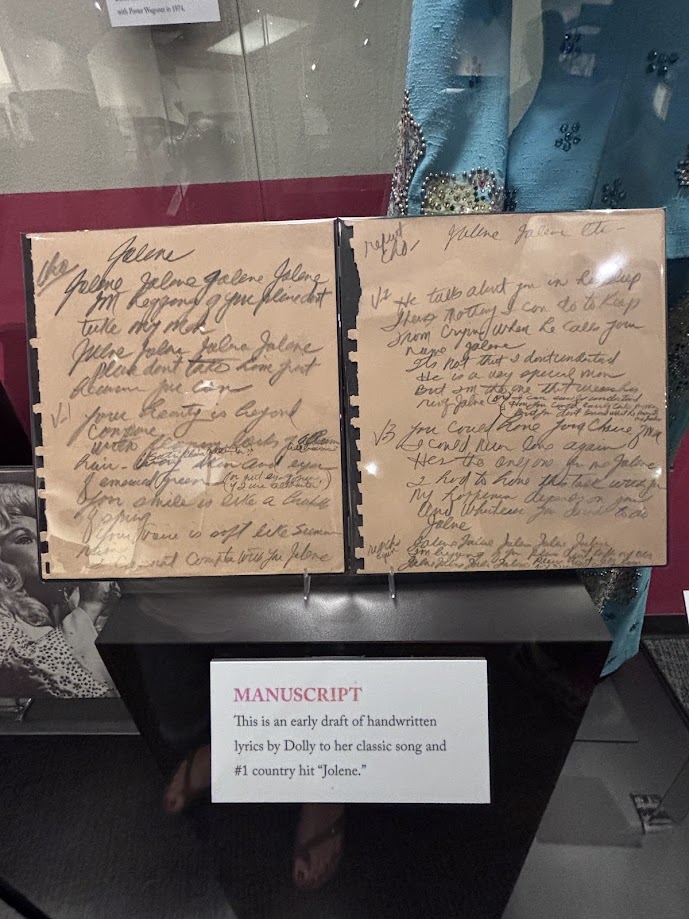


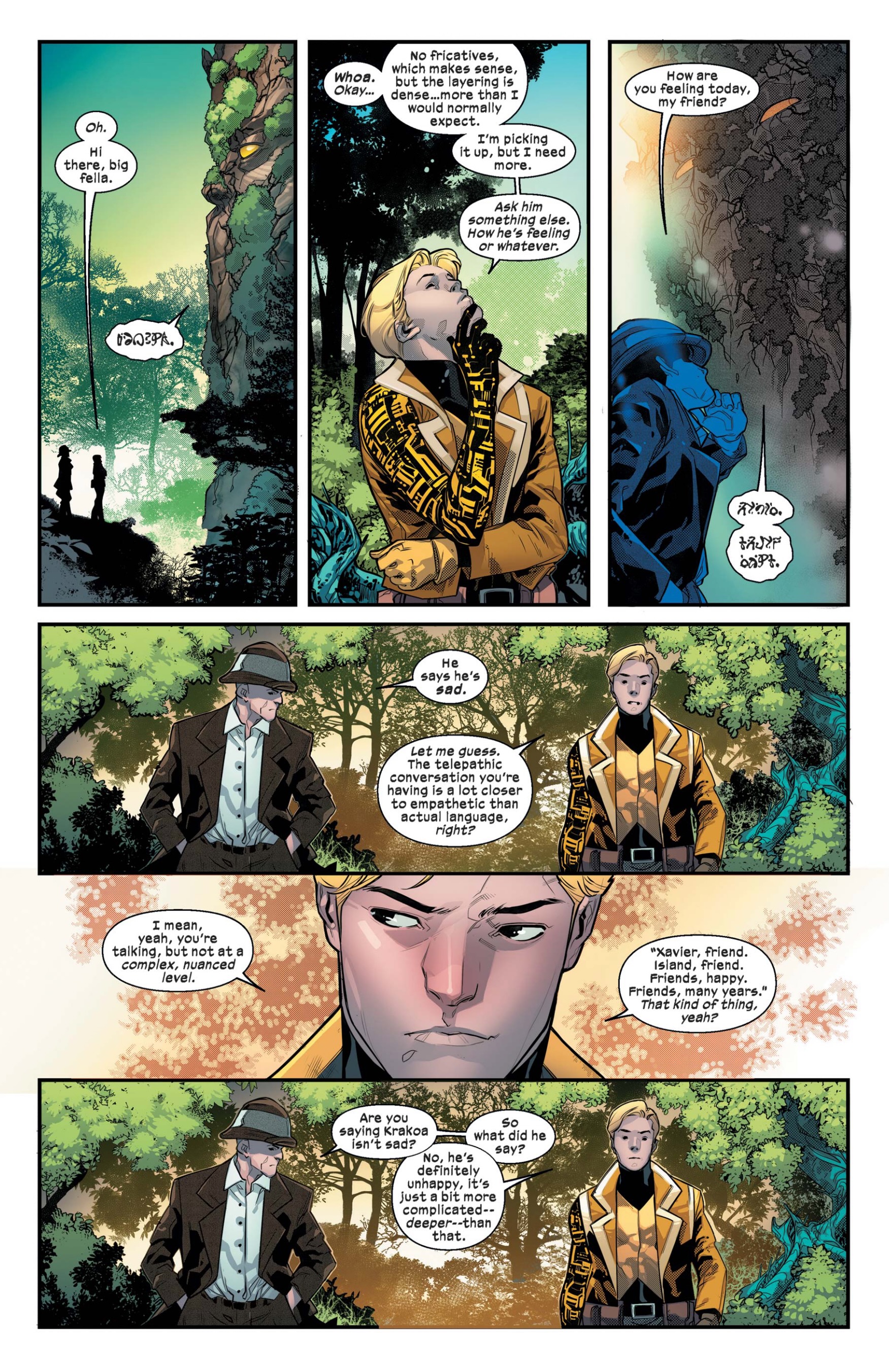
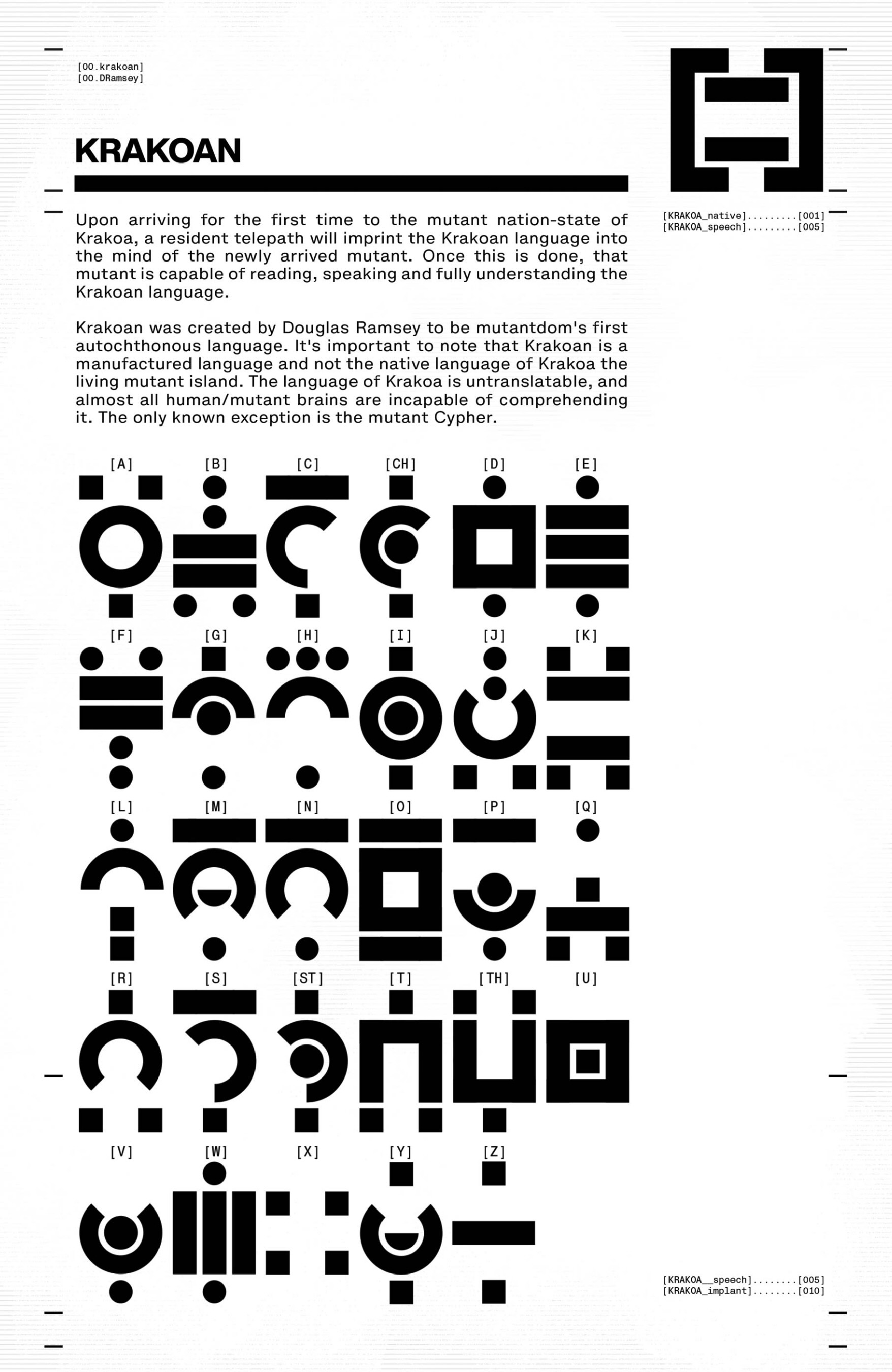



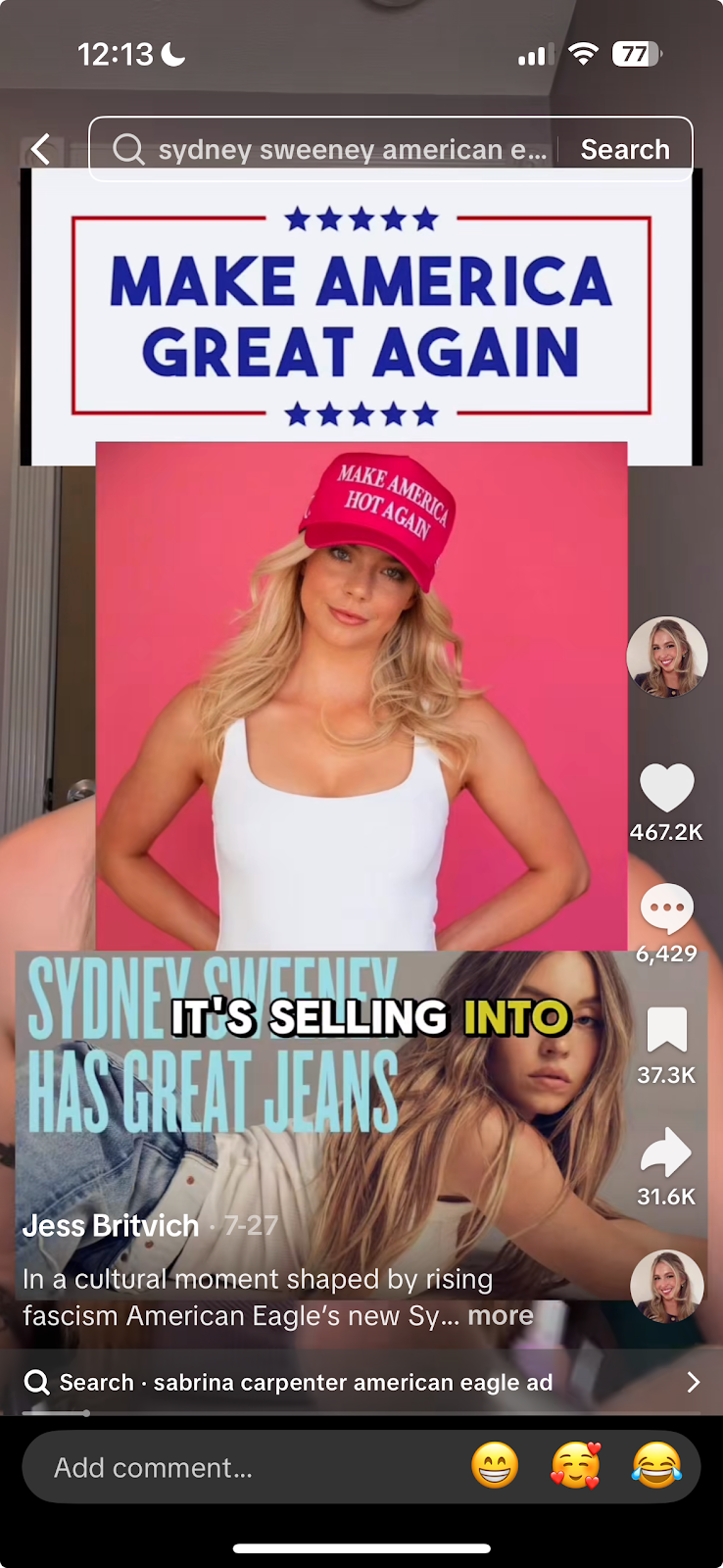
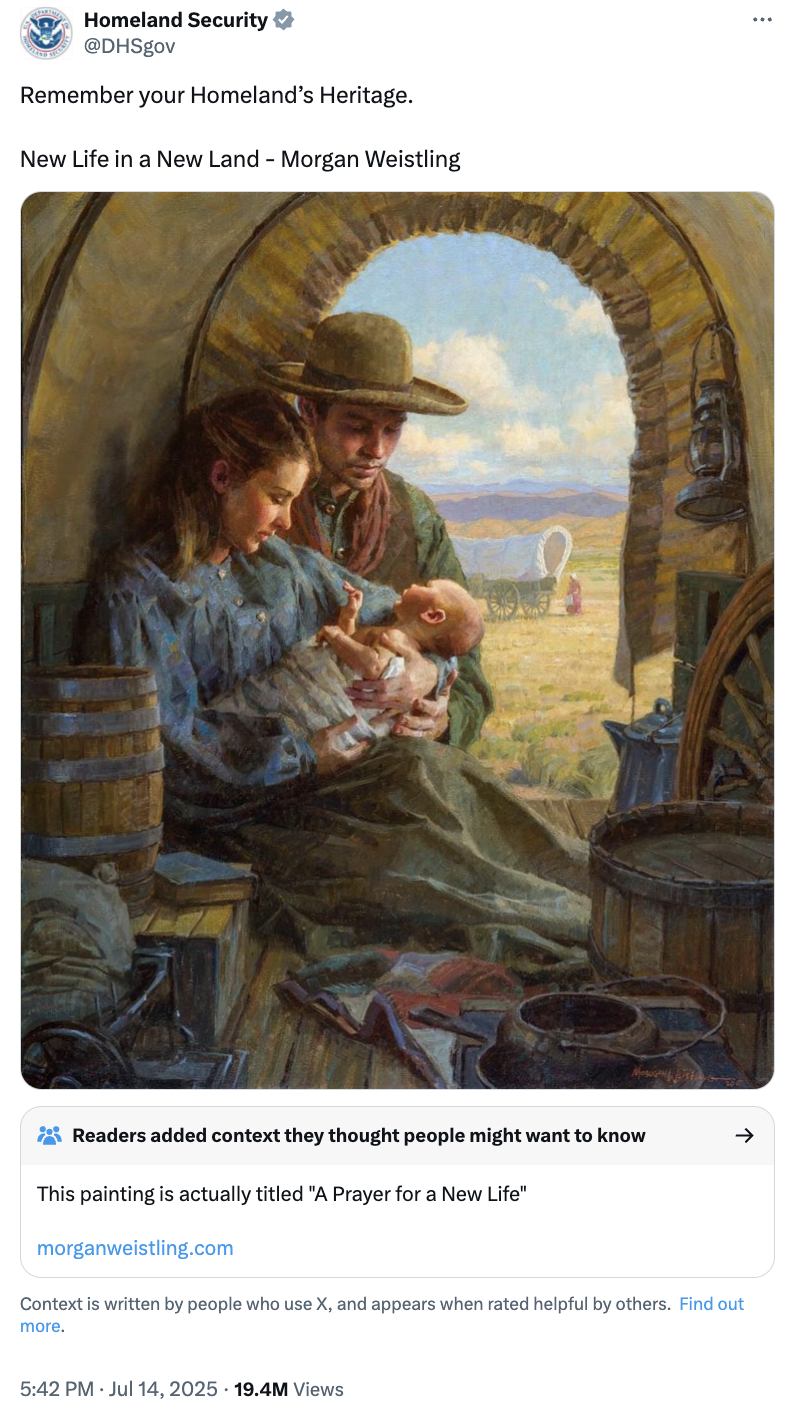
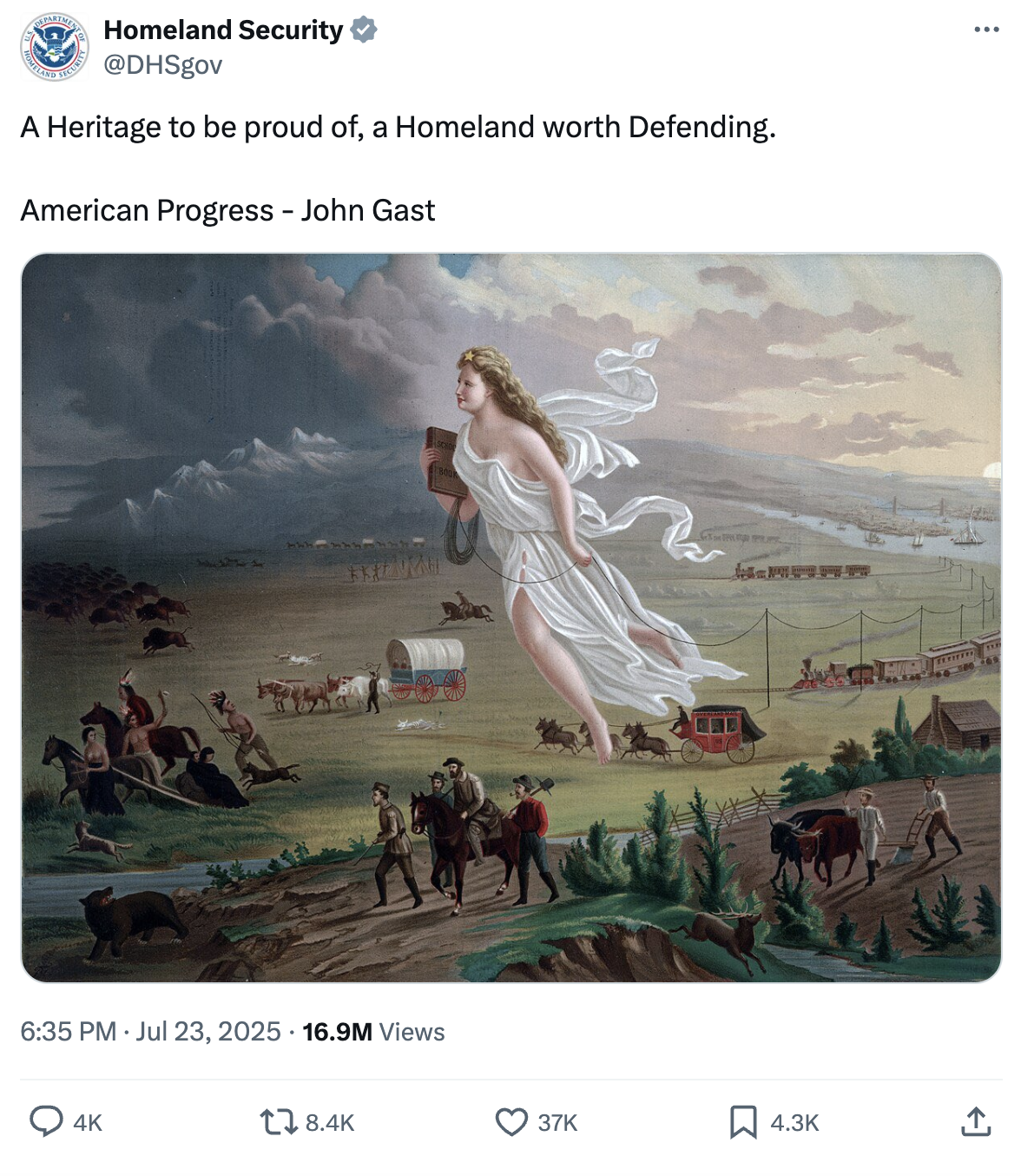
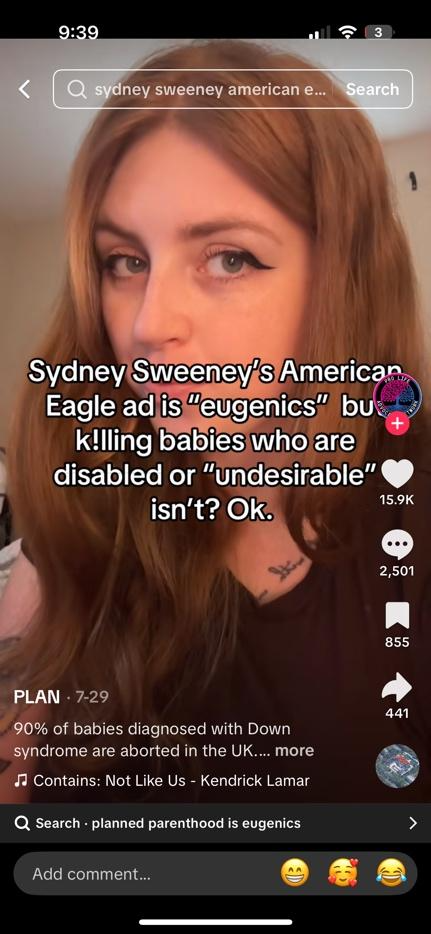
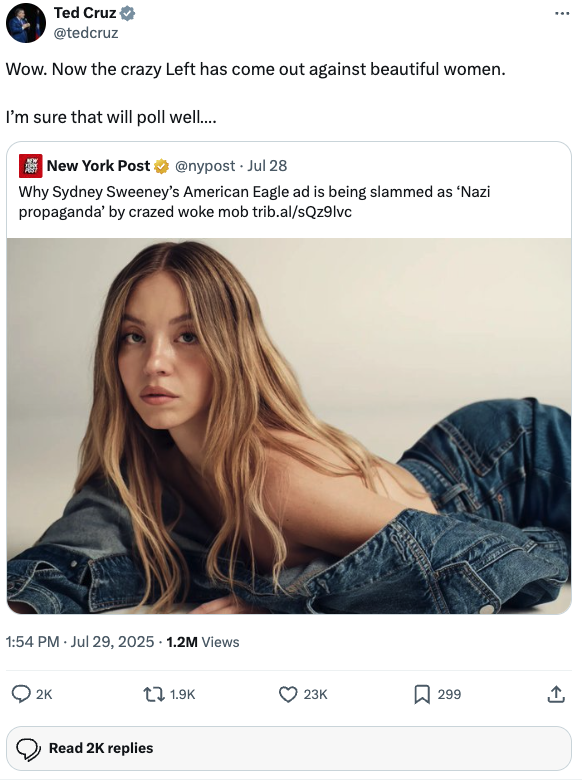
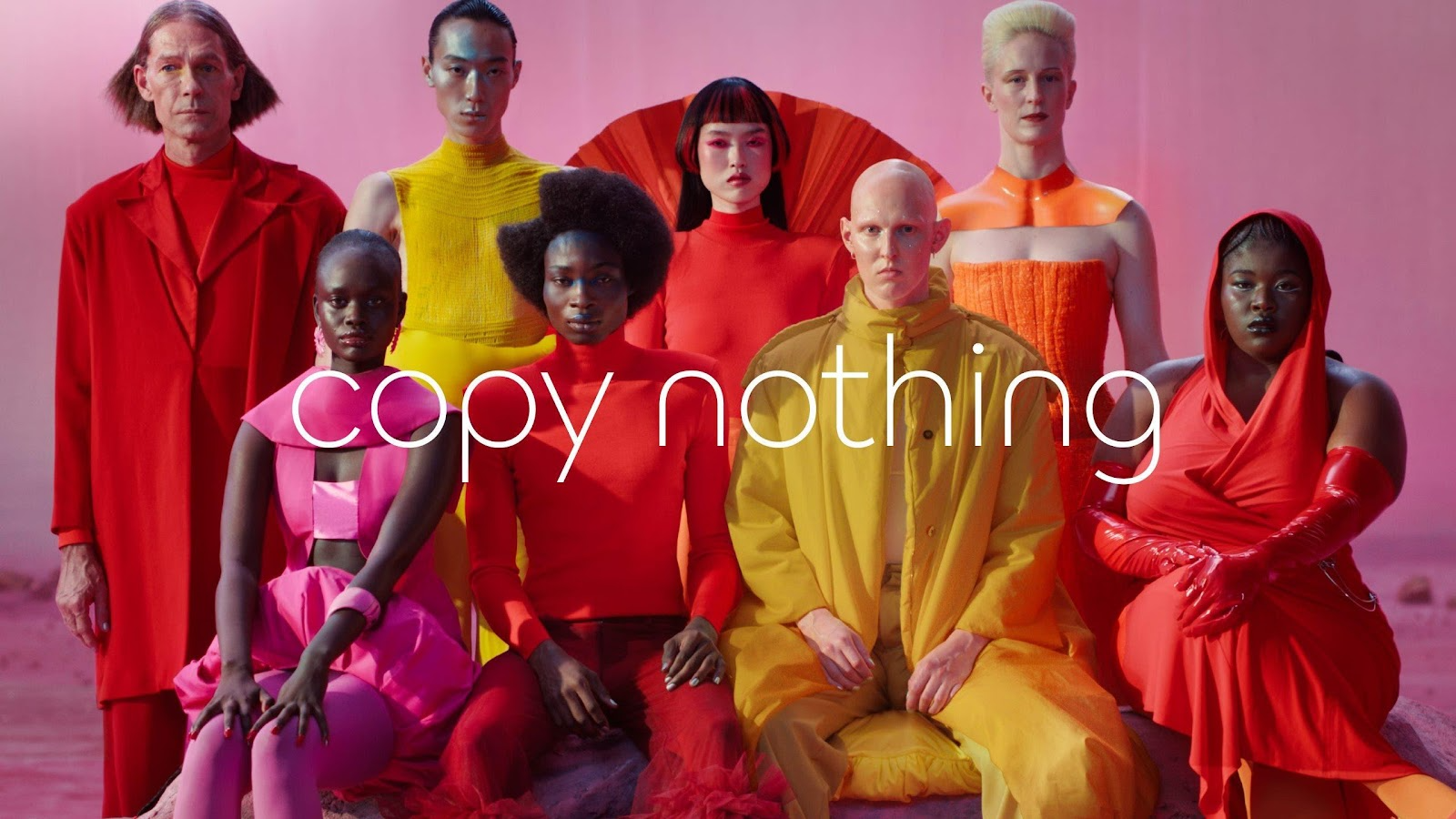
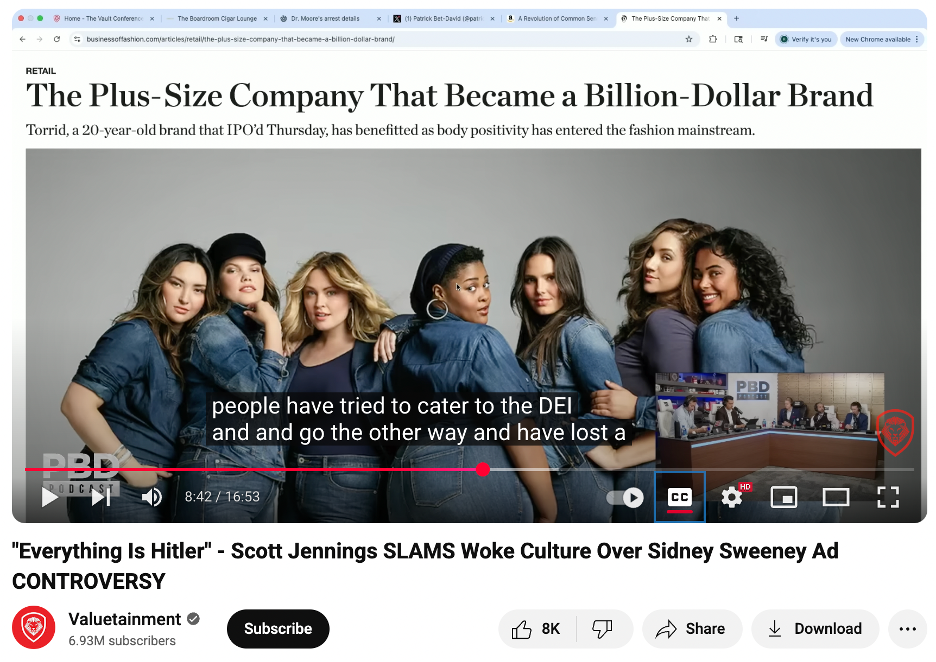
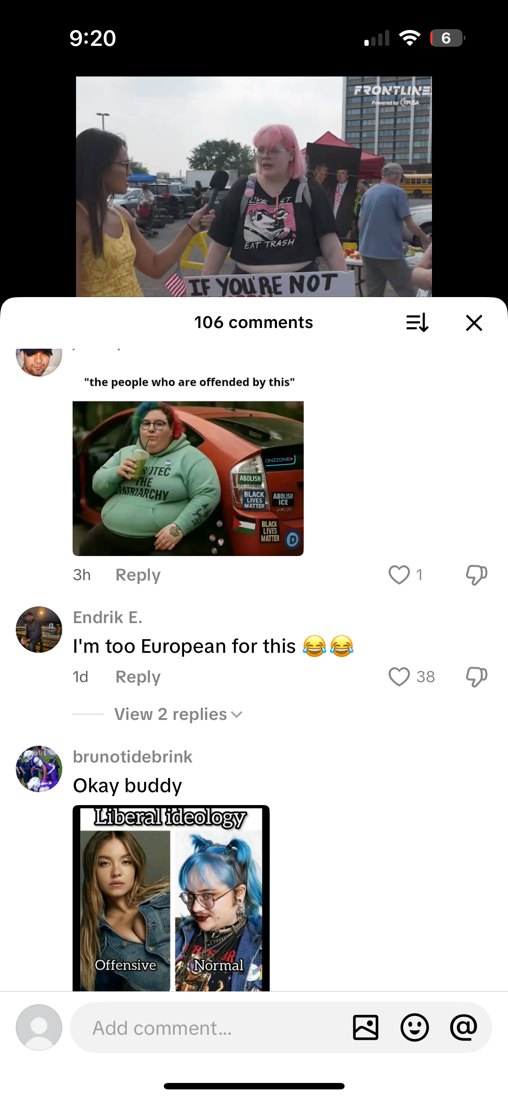

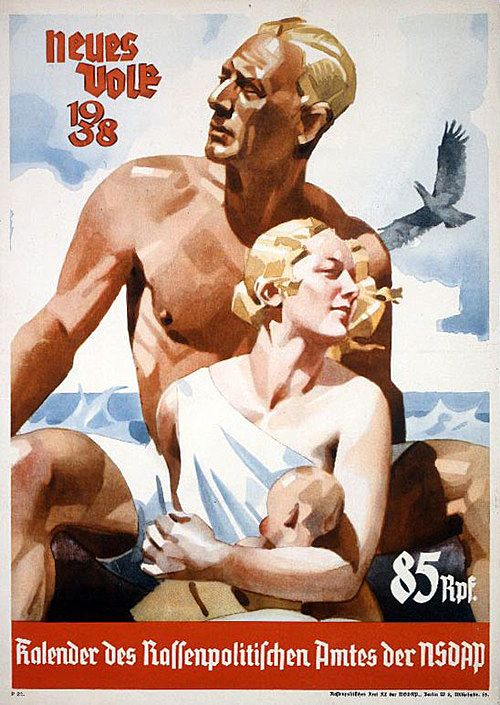
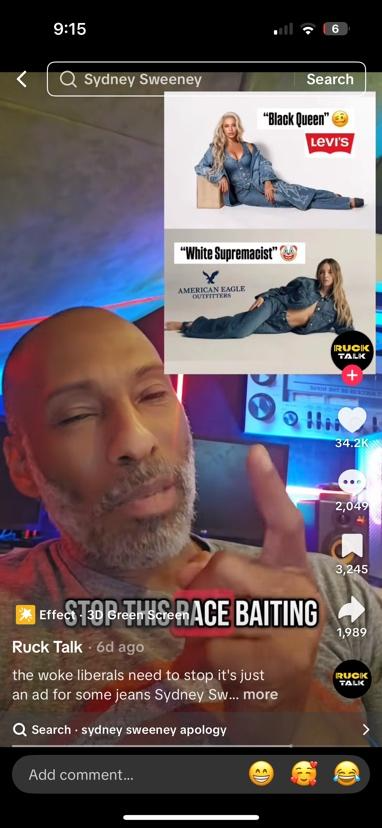
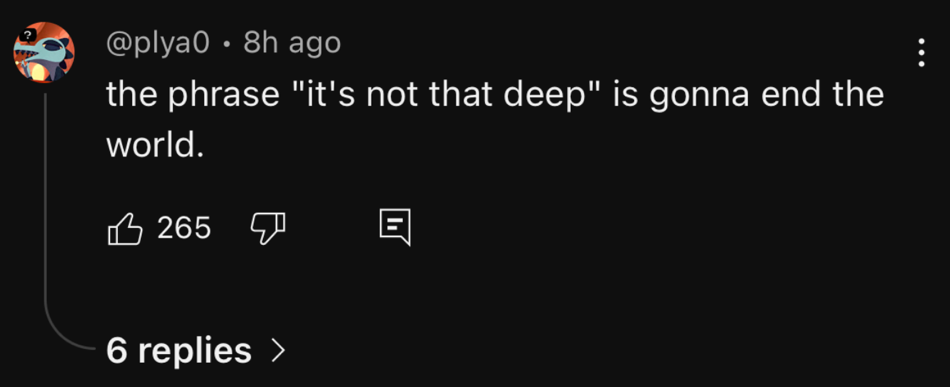
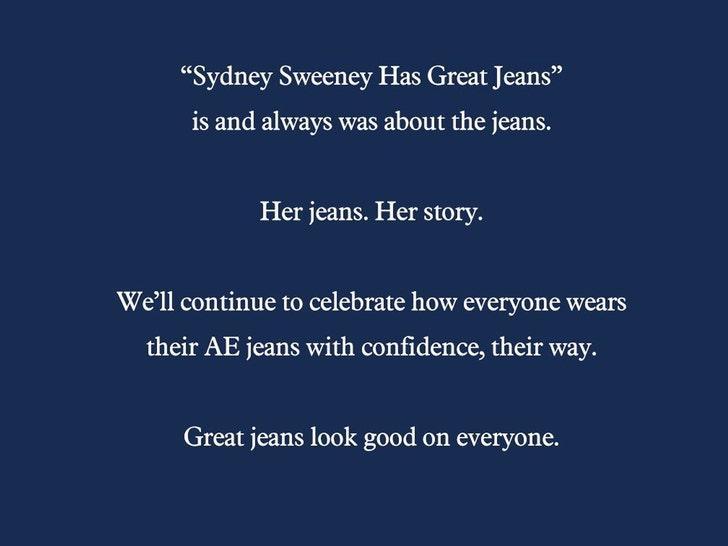
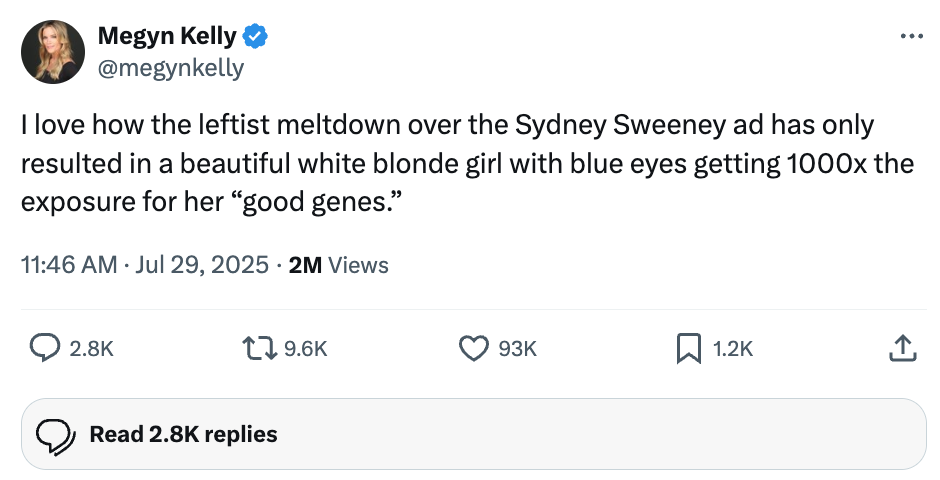
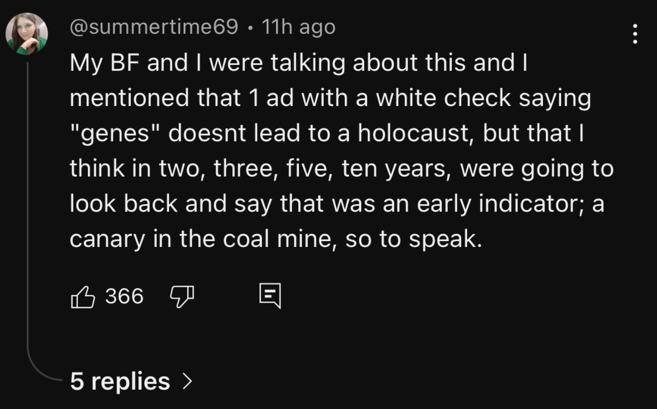


 CaMP Anthropology