Page 99 falls in chapter two of my dissertation. This chapter, “Moments of Disruption,” describes how members of the radical right group, Alternative for Germany (AfD), message a different view of Germany’s Nazi past to promote patriotism. Messaging refers to the crafted image political actors communicate through broad communicative methods such as video, clothing, gestures, and speech patterns (Lempert and Silverstein 2012).
In chapter two, I describe Germans’ changing perception of history, including German victimhood during World War II alongside narratives of the country’s aggression. AfD members participate in these changing narratives to disrupt how Germans think about Nazism. The two ethnographic examples in this chapter focus on how people across the political spectrum took part in AfD meetings to sonically and linguistically disrupt, silence, and articulate competing narratives about Germany’s past to gain control over its future.
Since page 99 is the last page of the conclusion, the “page 99” test is only slightly accurate. Page 99 is the final page of this chapter’s conclusion where I iterate my discussion of structural nostalgia (Herzfeld 2016). I understand structural nostalgia to be “a competition between hegemonic and counter narratives, images, and interpretations of Germany’s past and future which openly reveal the nation’s imperfections and through which, one can see Germans’ changing self-image” (Reber 2022: 99). Structural nostalgia is one way that AfD members message normalcy and democratic legitimacy. It creates a societal space in which members can draw on and substantiate already-existing normative notions in Germany.
In the broader dissertation, I examine how radical political actors messaged normalcy and democratic legitimacy to reframe their image through social media, in-person campaigning, and repurposed everyday materials and national symbols. These emergent radical politics, framed as “normal,” reveal schisms and skepticism about nation-building, liberal democracy, and national identity. The intellectual intervention I make is to examine ethnographically how radical political actors engage time-sensitive projects of normalcy and democratic legitimacy in structures that already support these actors. I build on contemporary scholarship that investigates how democratization is a process of exclusion (Partridge 2022), leading to already-partitioned democracies built on historically normative notions in each country. The social intervention I point to in this dissertation is that normalcy and democratic legitimacy, being unwieldly terms, can be and are manipulated by political actors to transform the future of communities and countries.
Lempert, Michael and Michael Silverstein. 2012. Creatures of Politics: Media, Message, and the American Presidency. Bloomington:Indiana University Press.
Partridge, Damani. 2022. Blackness as a Universal Claim: Holocaust Heritage, Noncitizen Futures, and Black Power in Berlin. University of California Press.
Reber, April L. 2022. “The ‘Extremist’ Next Door: Normalcy and Democratic Legitimacy in Germany.” University of California, Santa Cruz.
Page 99 of my dissertation, titled “Intimately Allegorical: The Poetics of Self-Mediation in Stand-Up Comedy”, consists of the thesis’ reference literature. More precisely, this page showcases some of the authors consulted in the thesis whose last name starts with the letter B. From Regina Bendix to Charles L. Briggs – illustrating my dissertation’s rootedness in the borderlands between folklore studies, linguistic anthropology, and European ethnology – through Walter Benjamin, Henri Bergson, and Lauren Berlant – reflecting my thesis’ indebtedness to cultural studies more broadly – I relied on writers from a variety of disciplinary traditions in devising my perspective onto the genre of stand-up comedy as poetic form in social context.
Upon retrospective reflection, four years after the defense, my dissertation really revolved around the two main features (or rather ideals) of this poetic form that has recently seemed to experience another resurgence in popularity (this time globally): its metaphysics of presence and its desire for immediacy, to borrow Derrida (1976). As elaborated on page 31 with reference to the constitutive tripartite relationality between the stand-up comic, her routines, and audience:
While the former relationship (between the comic and routines) is perceived in terms of authentic self-presence—the comic’s routines referencing or deriving from her “real” self, in that stand-ups “play themselves”—the latter relationship (between the comic and audience) is perceived through the immediacy of being together in place and time by way of direct interaction.
Undoubtedly, stand-up thrives on the reappropriation of these very ideals, as comedians deftly engage in layers upon layers of self-referential commentary on the intricacies of their own performances. Come to think of it now, it probably had something to do with this mercurial nature – coupled with affective intensity – of stand-up comedy that initially captivated my interest and led me to embark on its study, although it took me several years to explicitly articulate just that.
Oh, and in case you were wondering why the thesis seems to come to its conclusion already on page 99, it’s an article-based dissertation with four peer-reviewed articles besides the introduction.
REFERENCES
Derrida, Jacques (1976) Of Grammatology. Trans. G. Spivak. Baltimore, MD: Johns Hopkins University Press.
Sarah Muir: In the book, you describe the extraordinary history and contemporary status of psychoanalysis in Buenos Aires, Argentina. For those who haven’t yet read the book, how does examining this psychoanalytic culture (in local terms, la cultura psi) help us understand broad questions about Argentine society and politics?
Xochitl Marsilli-Vargas: The book makes two important claims. The first is that psychoanalytic listening, both inside and outside of the clinic, can be understood as a genre of listening. At the most basic level, what I identify as the genre of listening follows a particular structure and differs from other forms of listening, such as denotational listening, for example. Sound reception is not neutral, it always involves an ideological and practice intervention, and it is never automatic. The book explains in detail how this process ensues. This has far-reaching consequences beyond the Buenos Aires context, since the proposition is that just as there are many ways of speaking, there are many possible ways of listening. Therefore, any social situation can potentially be analyzed from the receptive end of communication through the analysis of how social actors position vis-à-vis sound production.
The second claim the book makes is that, in the city of Buenos Aires in Argentina, a form of listening based on psychoanalysis (above all, unconscious practices and resonances) circulates outside of the clinic. The idea is that Porteños (as the inhabitants of Buenos Aires are called) have developed a sort of psychoanalytic ear that they deploy freely in varied settings and that emerges through the responses during dialogic encounters in everyday interactions. After a statement has been made, porteños usually offer different readings or interpretations of the hidden meaning of the words, trying to get beyond the denotation to find the what is understood as the unknown in speech. Consequently, it is not uncommon to hear statements such as “I think you mean something else,” “I don’t hear your voice in what you are saying” or “what you said sounds strange,” during everyday conversations. Thus, in Buenos Aires there is a culture of listeners whose personal identities, conceptions of citizenship, and constructions of the political are rooted less in the performativity associated with speaking than in a particular form of listening based on psychoanalysis. And this has important political consequences, because the understanding of the selves as interconnected poses a direct challenge to the liberal ideal of a bounded and self-sufficient subject. In Buenos Aires, people understand the interconnectedness of personal experiences and don’t react negatively to the idea that people other than themselves can potentially have knowledge about their own lives.
Sarah Muir: Within linguistic anthropology, one significant conversation has explored listening as an embodied, socially variable, and ideologically regimented practice. In developing the concept of “genres of listening,” how do you speak to that conversation? What do you hope this concept can draw our attention to and open up for analysis?
Xochitl Marsilli-Vargas: Most of the discussion of listening in linguistic anthropology has been centered on the concept of uptake, understood, following J.L. Austin, as the hearer’s recognition of the speaker’s communicative intention, which sometimes reduces the hearer’s role as that of a ratifier. For Austin, uptake is a necessary condition on performing illocutionary acts, because if the hearer does not understand/accept the intention of the speaker, then the felicitous conditions for a successful act of communication would not be present and communication would therefore fail. See for example the work of Chuck and Candy Goodwin, and the conversation analysis scholars: they understand listening as an important role for communication, but as a way of giving cues to the speaker for the next turn of speaking, that is, how an interlocutor reacts by adopting a particular stance, body disposition, or verbal approval (sounds like “aha,” “mm,” and the like). From this perspective, the speaker, by expressing a particular communicative intention, predetermines what kind of illocutionary act the interlocutor might perform. Communication appears as a dialectic process of producing/receiving signs with the goal of attaining felicitous acts.
What I am proposing is very different. Running against the current focus on intertextuality, I am proposing to conceptualize listening as generic; that is, as having a sort of bounded (even if ephemeral) quality that helps delineate and create particular contexts, just as much as language do. The idea is that we don’t listen the same in every social situation—for example, we do not listen the same way to a professor as we do to a lover or a family member. The way we listen alters the social situation and, in some cases, helps creating it. That’s why I think it is important to focus on the productive side of listening because, as my book shows, in Buenos Aires people listen in a way that sharply differs from other places by listening to what the words invoke in the listener rather than the denotation. I also discuss how listening is performative, in that it creates social positionalities, like when we anthropologists listen to our informants through what I call an anthropological genre of listening. Hence, in my conceptualization of genres of listening, listening is productive in every step of the way: creating social identities, generating the context of interactions, and sustaining social relations.
Sarah Muir: Your book charts the far-reaching, mass-mediatized dissemination of psychoanalytic listening across a wide variety of contexts. In what ways does this process of recontextualization transform psychoanalytic listening and talking? How does this recontextualization also transform the other genres of listening and talking with which psychoanalytic listening comes to be juxtaposed?
Xochitl Marsilli-Vargas: One of the interesting things about Buenos Aires is how present psychoanalysis is in a variety of forms. You can find comic strips depicting the analytic encounter in the daily news, commercials that show psychoanalysts in their most iconic representations (glasses, beard) to sell potato chips, car insurance, furniture, and so on. Psychoanalysts are also invited to TV shows where they “psychoanalyze” showbiz celebrities and fútbol players and comment on political issues ranging from the recurrent economic crises to the presidential elections. Let me be clear: I do not claim that these iterations of psychoanalytic discourses that circulate in the media are actual psychoanalytic practices. Psychoanalysis is a therapeutic method that requires a clinical setting, should generate a transferential relationship, and other things. What these mediatized forms of psychoanalysis produce is a kind of didactic map for how to listen psychoanalytically. In all of these mediatized examples, listening is always key, and it is always spelled out. The most important feature of these psy-discourses is that they tell the consumer that words have meanings beyond their intended referential meaning. For example, when a TV host asks an analyst to explain to the audience why a star in a reality show said the name of a male actor, Fernando Bal, instead of the word aval, which in Spanish means grantor. Or when in an interview a famous psychoanalyst says that communication is a miracle because words never express the real intentions of the speaker, and thus is developing an interesting metalinguistic theory of language. The idea is that words have meanings beyond their mere denotation. Hence, without trying to establish a causal relationship, I think that being exposed to these ideas in a variety of contexts allows for psychoanalytic ideas to circulate. People in Buenos Aires have more or less accepted that words can have multiple meanings, and that some come from unconscious practices.
Psychoanalysts, generally speaking, don’t like the hyper-dissemination of psychoanalytic discourses. The psy (psico in Spanish) suffix has become so prevalent that in Buenos Aires you can encounter psico-tango, psico-tarot, psico-transmusic, and many other forms of corrupting, in the view of many psychoanalysts, legitimate therapeutic practice, and allowing the proliferation of what some describe as charlatanerías or quackery stuff, or at the very least, practices that certainly are not psychoanalysis. According to many analysts, these iterations are worrisome in that they de-legitimize an important practice that has helped millions of people worldwide. But at the same time, and paradoxically, the circulation of these mediatized discourses expands the audience and, perhaps, the market for psychoanalysis.
Sarah Muir: One important feature of your book is that psychoanalysis is both an object of analysis as well as a source of theoretical insight that helps to frame and animate your analysis. Given the long history of exchange between anthropology and psychoanalysis, could you say a bit about how your work contributes not only to linguistic anthropology but also to psychoanalytic theory and praxis?
Xochitl Marsilli-Vargas: Psychoanalysis and anthropology share some critical features. Contemporarily to and independently from Sigmund Freud, Franz Boas developed an argument against the racialization of mental differences by coining the expression “secondary rationalizations,” or patterns of habitual behavior transmitted inter-generationally that social actors practice unconsciously, to the extent that there is a lack of reflexivity. We can think of Pierre Bourdieu’s habitus as a continuation of Boas’s proposition. From this perspective, the role of the anthropologist is to disentangle the “secondary rationalizations” produced by the communities we study. Psychoanalysis proposes something similar, from a different approach. Rather than focusing on concealed patterns of social behavior, the psychoanalyst tries to enable the analysand to see the individual patterns, guided by unconscious impulses, she or he are reproducing. In both cases language is key. But what I am proposing is that listening plays a role as important as language and, in some cases, an even more important one, to understand social behavior either conscious or unconsciously produced.
In my book I propose four qualities of psychoanalytic listening: first, it is cumulative (a trait shared with anthropological listening). Sound images will find a concept (or not) through a resonance, that echoes inside one’s self, triggered by something that surpasses the conscious dimension. This listening is not linear, and while it develops in time, it possesses its own temporality. Second, listening practices can be cultivated: they require a long process of habituation, which in the case of psychoanalysis are learned by suspending attention to the denotation of the words and focusing on what the words invoke in the listener. Third, the prosodic enunciation of words matters and, in some cases, it trumps the denotation by focusing on what I call “the music in the words”—what matters is how words sound (and resound) inside one’s self, rather than their specifically referential meaning. Finally, in psychoanalytic listening one focuses in lo vivencial, a sort of experiential listening that includes a polyphony of social voices. The producer of an utterance embodies different social personae through a single sound. These categorizations can extend to other fields, so my hope is that anthropologist find these categorizations as helpful guidelines in their exploration of listening practices.
Psychoanalysts have of course developed their own categories of listening within the psychoanalytic encounter. For example, Salman Akhtar developed the concepts of objective and subjective listening, emphatic listening, and intersubjective listening. I’m not sure how my book will be received by analysts, but my hope is that they engage critically with it, and hopefully we can establish a productive dialogue.
Lynda Chubak: Scott, thank you for writing this wonderful book! Central to The Copy Generic is your contention that the generic is a potent conceptual space. On the one hand, with an appearance of neutrality, generic is considered the universal, the unmarked, the non-specific, or the general. Alternatively, generic may be negatively valenced as the discarded, the copied, the mimetic, or the inauthentic. How has exploring the intersection of these two loosely congregated parts as a conceptual space been productive for you, and where do you see future applications?
Scott MacLochlainn: It was this intersection that drew me to the generic in the first place. I was fascinated by how much ground the concept of the generic covers without really ever drawing attention to itself, and how most of us live with the generic in one way or another. We all live with ideas around generality and types, and universals to allow us to understand and make sense of the world. But we also use the generic as a means of evaluation, often seeing the generic as the unauthentic and overused. And so I became interested in this intersection between the generic as the ubiquitous and as the culturally diminished.
In the book, I describe how this isn’t a coincidence, or just an overlap of the term “generic,” but that these different spaces mingle and co-constitute each other. This book is trying to make sense of that mingling, and explores how people depend upon and cultivate social action through specificity and nonspecificity. I describe how the generic is a strange thing, in ways a weakening of something, a dissipation, a loss of specificity and of uniqueness, of authenticity and originality. But on the flip side, the power of the non-specific is a force to be reckoned with. And so, in order to explore the complexities I move through multiple different conceptual, ethnographic, and archival spaces in the book. These range from different genealogies in anthropology, NFTs and movie prop designers in LA, to 19th century colonial world’s fairs and architectural design, and especially Christian communities in the Philippines, with whom I conducted the majority of my fieldwork for the book.
It was in one of these spaces during my fieldwork, a Bible translation workshop in the Philippines, that I first thought about the generic as something that needed to be ethnographically accounted for. For these Bible translators, who were trying to translate the Bible into six different indigenous Mangyan languages on the island of Mindoro, the problem of the specificity of metaphors in the Bible, and their ability, even when translated, to resonate with people was an ongoing concern. For a number of the translators, the goal was to strip away these metaphors, and arrive at a language that was more generic, and so could then be better understood by people across very different linguistic and social worlds.
In terms of application, I hope that the concept of the generic allows us to perhaps better attend to those ethnographic spaces in which people are not necessarily engaging with the forms of specificity that we are accustomed to seeking out. Moreover, I do want the book to speak at least in part to anthropology’s own relationship to what is ethnographically compelling, to its own engagement with generality and specificity, and to what is deemed new.
Lynda Chubak: As you argue, if formal categories are socially powerful forces, covert ones are often even more so. Thinking in terms of naming and unnaming, how does returning to the semiotics of markedness or unmarkedness speak to the generic in a way that can help us better understand contemporary media and identity politics?
Scott MacLochlainn: Well, firstly, it’s very true that the theory of the marked and unmarked are perhaps surprisingly present throughout the book. The cover of the book, while appearing to just be two pleasant looking geometric circles, is actually a replication of the diagram used by Linda Waugh in the 1980s (“Marked and Unmarked: A Choice between Unequals in Semiotic Structure.” Semiotica 38 (3–4)), where she discusses Roman Jakobson and the uses of un/markedness in semiotics and linguistic theory.
As to why the marked/unmarked speaks to the generic, it is because markedness theory always emphasized the vast power and potential of the ubiquitous and taken for granted. When something is so ubiquitous, it has a force all to itself that no longer needs to be articulated. While markedness theory has a particular history in anthropology, semiotics, and linguistics, as I describe in the book, the dichotomy has become an increasingly useful and popular way to understand everything from political echo-chambers and media bubbles, to our relationship with technology and identity writ large. One really important aspect of markedness theory is grappling with collective, unspecified backdrops.
Roman Jakobson himself saw the use of marked/unmarked outside the remit of linguistics. It’s an immensely attractive way of framing things. And for all the difficulty it gets one into in terms of thinking about linguistic features, I think in its more popular guise, it actually does allow us to think in useful ways about generic types, and the assumptions we make, from everything about positionality and ideology in speaking, to how we frame our social worlds.
For example, in thinking about naming, and the push to remove the gendered forms of certain words such as Latinx or Filipinx, or the unmarked forms of whiteness in the US. These spaces have catapulted thinking about the un/marked in very different ways than it was in linguistic theory, foregrounding the asymmetries and practices of exclusion. I would argue the generic is very much key to understanding how majoritarian forms of sociality circulate.
In my own research, and in thinking about the generic, such markedness, even on a lexical level was hugely important. In Chapter 4, for example, I describe a remarkable Philippine Supreme Court case in 1919 about the forced imprisonment and relocation of indigenous Mangyan groups in Mindoro, and how the case revolved around the proper usage of the term “non-Christian” to describe indigenous groups. Configured in terms of inferiority to an ostensibly civilized and Christianized other (or self), and enabling the withholding of basic rights, one can see how the unmarked forms of Christianity helped constitute generic forms of Christianity. And continues to do so!
Lynda Chubak: I particularly enjoyed your eclectic range of ethnographic evidence. For example, Chapter 2 describes the work of movie and television prop designers who create fake and generic alternatives to branded products, a practice that entails “indexical leapfrogging”. Can you describe what that expression means in relation to the role and importance of the generic in the world of shorthand and proxies within and beyond branding?
Scott MacLochlainn: I am really interested in the uses we make of shorthands and substitutes. We don’t take people through the steps of our thinking, but often used shared generic forms to help us fast-forward through the chains of semiosis and our logics. And “indexical leapfrogging” is part of that. What forms of indexicality can one skip through, with the knowledge that others can still understand? But that has always been part of Charles Peirce’s framing of semiosis. That is, meaning aggregates and connects, the lines of legibility extend, so of course people can use forms of indexicality to leapfrog explication, and employ shorthands, proxies, and substitutes as a means of communicating. Of course, equally important is how indexical meaning also diminishes and fades, and indeed ossifies, which is where we might also start to think about the generic in semiosis. But at the heart of thinking about the generic here, for me at least, is the reliance on shared repertoires of knowing that enable us to enact these shorthands. And how we use social categories to sort through things quickly and easily.
In the context of television and film, we might think here of the classic “establishing shot.” With just a two-second shot of a skyline or street, or whatever it might be, so much is conveyed to the viewer, seamlessly and immediately situating them within a particular context. So it needs to be very precise, but also remarkably legible and conventional in order to work. The establishing shot only really works if the viewer already understands the shorthands that are being used. Not only the genre, but specifics of nonspecificity that are at play. It’s also about sorting and categorizing, trying to find the quickest and cleanest referents to particular genres. I think one can quite quickly see how such a reliance on generic forms then takes us into the worlds of algorithms and AI, where sorting and categorizing of information have assumed an increasing presence in our lives, but in very different ways.
Lynda Chubak: Lastly, there are often stories attached with book title selection. Is there one behind yours?
Scott MacLochlainn: I have a tortured relationship with titles! I had originally just wanted it to be The Copy Generic as to have some connection to the wonderful literatures on mimesis and copies in anthropology and social thought, but also center on the generic. Initially, I didn’t want a subtitle. But then my editor helped me come to my senses. Interestingly, in those conversations with my editor, and the process of the coming up with a title actually brought to bear many of the things I am fundamentally concerned with in the book. It’s interesting how book titles come to be. They are indeed a play between specificity and nonspecificity. How legible will the title be to people, while at the same time having some originality to it? And so, a really interesting question here is what do we mean by legibility? What shared and collective repertoires is a title and subtitle predicated on? For the marketing of the book, it needs to be readily apparent to a reader what the book is about. More than that, it needs to locate itself within particular genres and disciplinary subfields. So how can we slot the book into a legible space for the reader, but at the same time, be compelling? There is so much going on with titles, even in terms of current fashions. For example, and my book is an example, the popularity of having the subtitle begin with “How…” is really common. Similarly, I could be mistaken, but there definitely seemed to be a previous fashion ten or twenty years ago for using word reversal (or chiasmus) in academic subtitles (“the rhyme of reason and the reason of rhyme,” and so on). And of course, in terms of the visuality of any book cover, there is equally a remarkable set of factors that are playing with genre and the generic. I personally think there is something slightly 1970s pop-science about mine, like Alvin Toffler’s Future Shock. Or indeed, to keep it within anthropology’s wheelhouse, the paperback cover for Gregory Bateson’s Steps to an Ecology of Mind. One of the great covers!
Karina Beras: What motivated you to pursue this ethnographic participatory research with Afro-Brazilian media makers in Brazil? What was this experience like for you?
Reighan Gillam: I developed an interest in the study of race and blackness in Brazil from my undergraduate classes at the University of Virginia. I had taken classes on the African Diaspora, race and ethnicity in Latin America, and Brazilian history and culture with professors like Mieka Brand Polanco, Brian Owensby, David Haberly, Wende Marshall, and Hanan Sabea. I went to graduate school intending to study Black social movements in Brazil, but I lacked a lens through which to focus. TV da Gente (Our TV) was founded during my early years of graduate study. It was the first television network in Brazil with the mission to racially diversify its programming. I decided to pursue the topic of Black activism in Brazil through media production.
Once I settled on a topic I was able to make connections with those involved with the network. During my second summer in São Paulo doing preliminary research, friends and acquaintances put me in contact with media producers who worked at Our TV. I was able to continue to meet with people and interview them about their experiences and aims with this network. I then expanded outward to other media projects by Black Brazilians. Finding people and Black media projects beyond Our TV was not easy. Since these producers and this media received little attention and recognition, I had to rely on word of mouth and chance encounters to find them. But once I found the projects and reached out to the producers, many people were open to sharing their experiences and I had very positive encounters at film screenings and during interviews.
Karina Beras: You note that Afro-Brazilian media productions are a medium for antiracist visual politics. While reading the book, I wondered what guided your description of this work as antiracist and in turn, how are you defining racism?
Reighan Gillam: It was certainly a challenge to channel the dynamic nature of this media through an argument that seems to narrow things down to the concept of antiracist visual politics. I came to see this media as articulating a form of antiracism from the producers’ intentions to challenge the visual field of media and television that largely excluded Afro-Brazilians in front of and behind the camera. They insisted on rendering their narratives in visual ways. I defined antiracist visual politics as how “media producers and the visual media they create identify, challenge, or break with racist practices, ideologies, and structures” (2). Drawing from several scholars, including Stuart Hall, and Joel Zito Araújo, I found that mainstream media perpetuates racism through the stereotypical representations of Afro-Brazilians, the low numbers of Afro-Brazilian workers in the media industries, their inability to contribute their vision to mainstream media production, and the mainstream media’s limited depictions of racism. Afro-Brazilian media producers represented racism in complex and varied ways, insisted on controlling the means of media production, and ascribed meanings to their own identities through their image creation.
Karina Beras: You make note of the diasporic connections that were made in order to help TV da Gente come alive. Can you speak a bit more about what you make of this connection and what prompted you to mention this transnational relationship in the book?
Reighan Gillam: TV da Gente was the first television network in Brazil with the mission to include Afro-Brazilians in key positions as producers and on screen. They hired Black directors, writers, and producers as well as Black program hosts and guests. They began in 2005 and went off the air a few years later. The network came about through economic support from Angola, inspiration from the United States, as well as agency and imagination from Afro-Brazilians. I explain these connections in the book to give a full accounting of the genesis of the network. The network exemplified a web of exchanges across borders between Black people that many understand as the African Diaspora. These exchanges between Black people can create the conditions that make possible certain sites for social change in other places, such as television networks.
Karina Beras: I think the matter of representation always finds centrality in conversations about racism, inclusion, and so on. However, representation can only take us so far in changing systems. This brings me to the question of, who in the Afro-Brazilian community gets to make decisions about representing Black Brazilian life? Which Afro-Brazilian groups are left out? Where and how do you think Afro-Brazilian media can continue to grow? What would you say are the limitations of this alternative media in terms of representation?
Reighan Gillam: I think there can be a struggle between the idea that representation can only take us so far and that it is important because we know the harm of erasing Black (and other) people from mainstream depictions. I view representation and media as another front in the struggle for Black expression, asserting a Black presence, and self-determination. Many of the media producers were college educated professionals who had achieved a middle-class status. Yet, people were not on the same page about how Afro-Brazilians should be represented in the media. Individuals had their own ideas and some visions came to fruition and not others. The media I included is produced by small groups and the person who put forward their vision were the people in the positions of director, executive producer, and sometimes show host. In the book I talk about producers privileging middle class, professional images of Afro-Brazilians at TV da Gente. Short films tended to focus on the lives and experiences of Black children and chapter 3 examined how racism was represented through the lens of irony. Alternative media may not reach large audiences, but it does offer a space for Black expression, creation, and experimentation. There is plenty of opportunity to hear more stories from LGBTQ Afro-Brazilians, working class Afro-Brazilians, women centered stories, comedies, and documentaries about individuals, historical events, and specific issues. Brazil is a country where at least half of the population is of African descent. Film and television have only scratched the surface of their experiences leaving plenty of opportunity for interesting and innovative Black stories to emerge.
Karina Beras: In describing the film Cores e Botas, you write that “Joana receives messages from television and those around her that do not affirm her appearance and communicate her inability to belong” (90). I was drawn by the word belong and curious if in any of your conversations people used that term to describe their efforts. And if so, how did they define belonging? What does it mean to belong in Brazil?
Reighan Gillam: This is a great question. I use the word belonging to describe how Joana, a young Black girl, desperately desired affirmation through participating as a backup dancer for Xuxa. Xuxa was a white, blonde entertainer of German descent in Brazil who had backup dancers that resembled her. This wall of white, blonde women defined an aesthetic, affirmed whiteness as a dominant measure of beauty, and implicitly communicated to Joana that she did not belong on television. I don’t recall my interlocutors using this term. Many of them expressed that they constantly had to assert their presence in different spaces by insisting on entering rooms where they were excluded and speaking up for themselves and their ideas. In the film, Joana finally embraces her own vision by acquiring a polaroid camera and developing her own pictures. The film Colors and Boots or Cores e Botas describes belonging for Afro-Brazilians as finding one’s own voice and using it. Many of the media makers were producing belonging for themselves by making a pathway as they walked along.
Karina Beras: In any of your interviews, did producers and other media workers explain why they perhaps felt the need to use humor, irony, and parody in order to depict racism and the absurdity of its denial? Are those common forms of communication or expression in Brazil?
Reighan Gillam: In chapter 3, I examine how different projects depicted racism in ways that expressed and challenged the contradictions of Brazilian racial ideologies and attitudes. For example, one program depicted racism as the producers lived and experienced it, which called into question common Brazilian ideas that downplay racism or outright deny it. They were aware that they used irony and many times they wanted to undermine common Brazilian ideas around race and racism. Humor, irony, and parody are common forms of expression and they have been explored by other anthropologists, such as Donna Goldstein. The Afro-Brazilian media producers who engaged with me lived and experienced the contradictions in Brazil’s racial ideologies. They constantly heard others saying that racism didn’t exist in Brazil or that racism was so much worse in the United States. Yet, they experienced and were the targets of racism when they were at work, at home, and generally living their lives. They also saw racism enacted through the increased numbers of Afro-Brazilians in poverty, their lack of access to education, struggles over land, and as victims of police violence. Irony emerges from exposing contradictions in the system, which they did by depicting racism in a society that denied its existence.
Ashley McDermott: Your work looks at how technology provokes anxieties in parents about agency, values, and tradition while simultaneously offering hope for a better future for children. You argue that parents’ approaches to the digital are about more than just the immediate needs of the family, but rather parents’ past memories and “visions of the future” and that the digital is the terrain upon which parents are negotiating their identities as well as their children’s identities. Could you speak more about how family approaches to digital technology became laden in additional meaning? Also, how has the question of technology use in individual families become so contested in the media and a concern of society at large?
Sonia Livingstone: Lively debates about our digital age, the economics of innovation, platform regulation, the digital divide, emerging landscapes of risk and opportunity all have, at their heart, and often unacknowledged, an account of how ordinary people are learning about and engaging with digital technologies. But it would be a mistake to take for granted that one knows how people are living with technology, or to assume that others live like we do. One aim of our book is to shed light on the experiences of families, to recognise their diversity, and to listen to what they have to say. Another aim is to link families’ stories with the societal processes in which they are not only embedded but which they also, collectively, shape.
In ‘Parenting for a Digital Future,’ we foreground the dimension of time, theoretically and methodologically, showing that parents’ imaginaries span a century, more or less – for they readily look back not only to their childhoods but also to those of their grandparents, and they often look forward to their children’s adulthood (asking themselves, who will they become, and what role have I in determining this?) but struggle to look further forward than to their children’s grandchildren. A century encompasses considerable change – in childhood, parenting cultures, education and, of course, technology. So, asking parents to look back and then forward was a great way to get them talking, eliciting their ideas of social transformation, their own power to shape this (or not) and, for sure, their hopes and fears for their child. Often, ‘memories’ of the past are tech-free, while ‘visions’ of the future are more science fiction than grounded predictions. Even in the here-and-now, tech is foregrounded because it seems relatively controllable (buy the latest kit, learn to code, follow the screen time rules) – certainly by comparison with the many challenges parents face (we explore poverty, divorce, migration, disability). And thus, tech seems to hold out the promise of managing, optimising, children’s futures. But at the same time, its very complexity, opacity and constant change threatens that promise, focusing anxieties not only on the tech and children’s engagement with it but threatening children’s very futures.
Ashley McDermott: One of the many things I enjoyed about your work was how it bridged so many disciplines in the social sciences, and the collaborative nature of the research. In anthropology, it seems like much ethnographic research is still done largely by one researcher and is grounded in the literature of primarily one discipline. Could you tell us about how the project came about, and what led you to design your research in this way?
Sonia Livingstone: I like to pick projects that face in multiple directions as a way of enriching the research and engaging diverse audiences. Families’ digital lives might seem rather insular, and an ethnographic lens might seem primarily to engage anthropological questions, but for me, quite the opposite is the case. Not only is the combination of children plus technology an explosive one for the general public, but it speaks to multiple debates across the social sciences too. Digital technologies bring the public into the private realm (for example, extending education – and the pedagogy of school – into the home) and the private into the public (for example, sharing intimate experiences on social media, as we explore through the experiences of parent bloggers). Technologies also blur two senses of private by providing an appealing infrastructure for intimacy and care in family life, but then rendering it commercialised and datafied.
As you can immediately see, to understand how families enable and respond to these transformations, we needed to read widely in sociology, psychology, education, media studies and, yes, anthropology (especially the burgeoning field of digital anthropology), as well as deploy different research methodologies. It helped that Alicia and I were trained in anthropology and sociology/psychology respectively, and that we met in the interdisciplinary formation that is media studies, where it is well understood that one must read and engage with ideas wherever they are useful, bringing them to bear on a shared interest (digital technologies, digital lives, digital futures) rather than to shore up the boundaries of any particular discipline.
Parenting for a Digital Future was conceived as part of the Connected Learning Research Network led by Mizuko Ito and funded by the MacArthur Foundation. The idea of the network was to explore whether and how digital networks are reshaping possibilities for child-led, interest-driven, open and collaborative learning and interaction. A lot of the focus was on the potential of informal or nonformal learning to complement and even compensate for the problems of formal schooling. We wanted to bring parents more clearly into the picture: when children arrive at digital media learning spaces, for instance, we asked: why did their parents bring them, and what did they hope for; and when the children went home, we asked ourselves whether the parents followed up with related activities, and how social class differences might stratify the possibilities available to them. Our research revealed a host of missed opportunities, as educators and parents misunderstood each other, with children burdened as the go-between, and with misplaced hopes in technological mediations also tending to exacerbate rather than ameliorate inequalities, disconnecting as much as they connect.
Ashley McDermott: I really appreciated the intersectional lens of your book, and how the families you described are carefully presented in ways that do not homogenize the families or their experiences. Could you speak more about the way you wrote against stereotypes in the work and the challenges of working both inside and outside of generalizable categories such as socioeconomic class and ethnicity in research?
Sonia Livingstone: I confess that there was a moment during the fieldwork when I despaired of drawing out larger themes, finding each family unique in its own way, and struggling to fit our research participants – selected for diversity, after all – into neat demographic categories. But then we thought more deeply about London as our setting: we were researching family life in a global city, one that precisely attracted non-normative lifestyles (for instance, we interviewed educated families engaged in low-paid creative labour, ‘geeky’ families attracted to London’s tech scene, ethnic minority families who found a foothold in London’s subcultures and migrant neighbourhoods, and more). Not only did this help us critique standard classifications of family life by class (which is not to say that our participants’ experiences were not classed) but also to focus on the notion of family itself. Empirically, we took our lead from our interviews – who did participants refer to, connect with, or feel distance from. Theoretically, we drew on theories of late modernity, especially Giddens’ idea of the democratic family, recognising the transition for many (not all) away from the Victorian authoritarian family towards more horizontal relations of negotiated power and agency. Theorised more pessimistically by Beck, whose focus on the risk society sees families as burdened by ‘institutionalised individualisation’ as they are neither supported by the welfare state nor by the traditions that preceded it.
Our argument is that digital technologies intensify the dilemmas that arise, because they are so risky, highly demanding, and yet they hold out a fascinating promise of control and future success. For the theorists of late modernity, familiar demographic classifications are precisely what is being reworked, demanding fresh thinking from the public as well as academics. As we show, people negotiate these changes through the lens of the digital, for this affords alternative pathways, values and forms of knowledge which, once explored, can shake up traditional ideas of expertise (now, children may know more than their parents) or hierarchy (after all, those who can code may do better in life than those who know Latin, as one of our participants put it).
Ashley McDermott: One intervention you make is on the topic of screen time limitations, which you complicate by discussing the complex ways families negotiate digital activities and the varied activities that children and their parents participate in. Could you discuss how managing screen time became the go-to intervention for many concerned about the risks of digital technology and your own practical steps for parents concerned about the use of digital technology? Also, has the discourse around screen time changed in light of the pandemic?
Sonia Livingstone: Screen time has become the go-to phrase for parents to manage their children’s digital activities. We scholars can argue, with good cause, that what matters is not how long children watch a screen but what content they engage with, in what contexts or for which purposes, and as part of what kinds of social and learning connections or networks. But for parents, in the midst of their busy and often anxious days, screen time is easier to observe, and to talk about. We found this disconnect between what parents knew (for in practice they would make nuanced judgments about the parameters of their children’s digital lives) and what they said and did (sustaining an explicit discourse of screen time with their children, even when it generated conflict, or judging themselves and each other for the screen time they allowed, notwithstanding that its meaning is so contested). Indeed, despite becoming a language of shame and guilt for parents, we show how parents use screen time to create moments of love and comfort within the family (playing video games together, family movie night, laughing together at memes or short videos on the phone). After all, for many busy families in late modernity, finding ways to come together, and share mutual understanding, is as mor more important, and challenging, that finding spaces of separation and individual privacy.
I’ll just add that the pandemic taught all of those who believed that ‘kids nowadays’ are glued to their screens that, first, this is for good reason (it’s how they learn, get information, connect with others, participate in the world) and, second, it’s not enough (they want to go to school, see friends in person, hang out with family, be in the world).
Ashley McDermott: In the end of the work you propose six recommendations to support parents in digital technology use: offering parents realistic visions of children’s technology use instead of scare-mongering, providing support for parents that encompasses the digital environment, recognizing the contribution of parents at school, listening to parents’ voices in policy making, increasing attention to the design and governance of the digital environment, and ensuring that policy and technology design is based on evidence. Reading your work now, during the coronavirus pandemic, the findings seem especially relevant. In the light of large-scale switch to online learning and lockdowns that led many adults to work from home while being full-time caregivers of their children, would you change any of the policy recommendations at the end of your work or add to your recommendations?
Sonia Livingstone: One of the many consequences of the pandemic, highly interesting to me, is the shift in policy focus from a concentration on (and valorisation of) high level macro-economic and political deliberation about digital technologies to recognising, also, even if still too often marginally, that people’s lived realities matter, and that digital policies must encompass parental guidance, ethical digital design, critical attention to education technology, and youth voice. In my current work, I embrace these under the umbrella of children’s rights in relation to the digital environment. And I think there are small signs that families’ hopes and fears are being listened to.
Andrew Bush: The book makes crucial interventions that connect the study of liberal governance in Turkey to the comparative study of oral traditions in places that include Africa and South Asia. But these several interventions are possible, it seems to me, because the work is also quite clearly grounded in a specific locale—the city of Wan. Can you describe how Wan became a field site for you, and how it stayed a field site for you, and how that locale sets up the main arguments of the book?
Marlene Schäfers: I think that Wan became a fieldsite for me partly because I was interested in exploring forms of Kurdish politics and subjectivity and cultural engagement outside of the well-known locales. In Turkey, and in the Kurdish region more broadly, the city of Amed or Diyarbakir is often seen as the Kurdish capital, which is very central to the imagination of Kurdish community and Kurdish politics. Wan is more marginal to that Kurdish political imagination, so I was interested in what was happening there.
It is also in some ways a place that is quite ambiguous when it comes to questions of identity and belonging. We should not forget that it was a site of genocidal destruction. Wan was majority Armenian until the genocide in 1915. Today it is a border town, close to the Iranian and Armenian borders. The Kurdish presence has always been there, but even that has been by mobility and migration. Some of the biggest Kurdish tribes in the Wan region actually moved from the Caucuses in the early twentieth century. So it is a place with an ambiguous and fluid identity more than something settled and fixed.
It seems to me that this fluidity might allow for forms of experimentation in self-expression and new forms of subjectivity-making that I explore in the book. Precisely because identity is not as fixed here as it might be in other places, there is perhaps more of a demand on voices to articulate a more bounded, distinct identity. The book explores how oral repertoires have been answering those demands and burdens, and how voices have become more and more intelligible as an index of the interiority of the people who pronounce them.
Andrew Bush: At least in their predominant expressions, kilam are meant to have a particular emotional, corporeal, and sonic impact on listeners. In the first chapter you argue persuasively that what you call the “social potency” of the singing has a lot to do with form. What drew your attention to the notion of form that you develop there? The book names three factors there—the multiplicity of voices that compose the narrative element, the way poetic imagery is stitched through the work, and the melodic mold that encompasses improvisation on recognizable genres. Reading that section of the book, I couldn’t help but wonder what other ideas you left on the shop floor, as it were, in working through those particular elements. Could describe the process of identifying and naming those formal features?
Marlene Schäfers: I must admit that that was the most difficult chapter to write. One reason it was so difficult is that I lacked the training and vocabulary to properly engage with vocal form. I was not trained in ethnomusicology or linguistic anthropology as such. I felt that I needed to engage the question of form, but I lacked the training, the language, and even the ear to do so. Linguistic anthropology and ethnomusicology opened doors for me. For a long time, I was focused on the narrative of the kilams that I heard – mainly narratives of pain, suffering, and tragedy – so developing a sensibility to approach the more formal aspects was somewhat of a breakthrough for me personally.
At the same time, what didn’t make it easier is that the women I worked with did not have an elaborate vocabulary for the formal aspects of their repertoires either. When I asked them to explain an element of a melody to me, for instance, they often didn’t have a meta-level terminology to explain how they used their voices. And I think that itself says a lot about how Kurdish women have long been marginal to the urban centers of cultural production where those elaborate meta-level vocabularies would have been developed, as is the case for Arab or Turkish repertoires, for instance, or for the southern Kurdish urban culture of poetry you worked on. These women were also marginal to forms of public and political speech historically dominated by men. So women really operate in a minor key within that culture of musical and poetic expression and that made it extra difficult to develop a vocabulary.
But why do I focus on these three elements you mention above – multiple voices, poetic imagery, melodic molds? In some ways it’s because they are the elements that struck me the most, or that were most foreign to me. In the book I show that these are the factors that remove voice from self and therefore make it difficult to decode songs as expressions of personal feelings, interiority, will, or desire. And that’s exactly why these elements made kilams initially quite opaque to me. They upset my expectations about how a narrative should give expression to the person who pronounces it.
At the same time, these were precisely the elements that local listeners would seek out, and take pleasure in. Kurdish audiences often say that a good singer is one who makes you cry. These were the elements that did that, although I don’t think the three factors I identify are necessarily exhaustive. I hope the book will open a conversation to further inquiry about what other aspects of form might make voices powerful social forces.
Andrew Bush: The conventional description of fieldwork and writing that says fieldwork is when you listen and writing is when you analyze. But in your case, the listening was always troubled or confusing in the field, and it was in the process of writing that you found the ear.
Marlene Schäfers: Definitely, the listening that I did in the field often troubled the discourses I heard there. I was told, women raising their voices is “a form of resistance,” or “a form of empowerment.” Well, yes. But then when you listen carefully, things become more complicated. Suddenly voices no longer function so easily as expressions of resisting or empowered selves. So the listening actually interrupted some of the narratives that were transmitted to me during fieldwork, and it was only through writing that I was able to make sense of that interruption.
Andrew Bush: You just mentioned how marginal women were to some genres, and that reminds me of how gender and law appear intertwined in different ways in the book, especially in ideas of theft. There is the idea that voices can be stolen, or the deserved fame of a performer can be stolen, and most interestingly to me, the idea that dengbej is really a women’s form that is subject to men’s ventriloquizing. There seems to be an impasse between the invitation women receive to become part of a new kind of national public (alternately Kurdish, Turkish, or Armenian) and the fact that the kinds of social change those publics call for—especially some idea of gender equity—is almost foreclosed by the technology of participation that women are afforded. So there is some faith that law might restore authorship or ownership, but it is a limited faith. How do you understand that impasse, and how do women themselves describe it?
Marlene Schäfers: This is a crucial point, I think. During fieldwork, what caught my attention was how my interlocutors would be adamant about the violence and oppression they faced for raising their voices as Kurds and as women. And yet despite this recurring legacy of violence, they remained immensely optimistic with a seemingly never-ending hope that things would get better, that they would eventually reach the fame, the income, the recognition that they felt they really deserved. The book tries to understand where that hope or insistence comes from, and what animates or nourishes it. It argues that it is precisely because of the way liberal politics elevates the voice to an object carrying immense promises of emancipation, recognition, agency, which is what makes the hope and perseverance possible.
You asked about the law, and it seems to me that the law is one site where these liberal promises become articulated or even codified. In the book I look particularly at copyright law, which some of the women hoped would allow them access to the value that had become attached to their voice. Law was like a mechanism used to make voices deliver on the promises that they hold. But it would often fail to deliver. So the women found themselves always on the cusp of having that promise delivered, but then they would find it taken away at the last moment. For example, some music producer would sell their voice without their permission, or male performers would once again become famous for repertoires that women said belonged to them.
The women I worked with experienced these disappointments lived in embodied ways: there were tears, sadness, lethargy. But somehow these down periods were always overcome. What I found remarkable was the energy women mustered in the face of continuing disappointment. There is something here akin to what Lauren Berlant called cruel optimism in the sense that people remain attached to structures that might actually harm them. It seems to me that the law, and copyright law in particular, functions as that structure that promises equal access to voices’ value, but nonetheless keeps disappointing.
Andrew Bush: The book is about the voices of Kurdish women who perform as dengbêjs, but it is a book written in a distinctive scholarly voice as well. In the acknowledgements you name the hope that the book will “keep alive the reverberations of [Gazin’s] voice.” Can you describe some of your collaboration with Gazin, and how that work impacted your scholarly voice?
Marlene Schäfers: Gazin was one of my main interlocutors, who, together with some other friends had founded the women’s singers association in Wan where I did a lot of fieldwork. She was the heart and center of the association. She had a modest background, she had never been to school and had had five children, but then she also had this extraordinary taste for experimentation and adventure.
She was one of the first women of her generation who had entered the professional music industry but was essentially scammed by producers and received too little for her work. Nonetheless, she had a very distinct sense of the value of her voice and of the voices of Kurdish women more generally. She would often talk about the voices of Kurdish women as a “treasure,” which someone urgently needed to salvage, because they would disappear as older generations would pass away.
And to do this work of salvaging, she wanted to engage in what she also called research—to go find women’s voices, record, document, and archive them. So we would set off together to different villages and towns and meet women and do interviews and recordings. The collaboration was sustained by the fact that we each had resources and skills that the other didn’t. We complemented each other in that sense. I had access to writing, which she did not. I had access to some modest funding—not much as a graduate student but it was there. I had a computer and a voice recorder. And at the same time, I benefitted immensely from her access, her knowledge, the fact that women knew and trusted her. She was from there, she knew her way around, and obviously her presence opened so many doors. As much as we complemented each other, our projects were also very different. She had this mission of archiving and documenting. But I could not be and cannot be the kind of archivist of Kurdish culture that she was looking for.
For me what became important instead was to understand what was driving her—why it was so important for her to archive, record, and document. That can tell us something about the contemporary politics of voice in Turkey more broadly, I think, and about how liberal politics interpellate people like Gazin to engage in this work of archiving and documenting voices. In that sense, I also don’t see my project as “giving voice” to Gazin or any of the women I encountered. In the acknowledgements I write that I hope her voice will reverberate, by which I mean that I hope the book will let the voice of people like Gazin reach new audiences, and show what kinds of stakes are attached to these voices.
While I don’t see myself as an archivist, I am in fact currently involved in a project that seeks to archive, document, and edit Gazin’s repertoires. Gazin passed away much too early, in 2018, and left behind an entire archive of Kurdish voices on cassette tapes and digital voice recorders. We have now started a project with the Orient Institute in Istanbul that seeks to organize, catalogue, and transcribe these sources, and make them available to the public. So in that sense, I did come back to the archive in the end.
Diego Maria Malara (DMM): You are known as the author of many publications on Afro-Brazilian and Afro-Cuban religion. Focusing on widely researched and recognizable religious traditions, your work has explored classic anthropological concerns with spirits, persons, bodies and materiality — from often decidedly innovative angles. Do you see your new book as a departure from previous research or as its natural continuation? And what did you want to achieve by focusing on this new topic?
Diana Espirito Santo (DES): My suspicion is that for anyone who changes fields there are always continuities, whether they´re explicit or not. In my case the continuities run not simply in ethnographic or heuristic ways – through a focus on materiality, technologies, and spirits and the effects of their existence in a given world – but more importantly conceptually and theoretically. In my work on Afro-American religion I worked on calibrating notions of the person as extended into things, in Cuba, for example. I worked heuristically through several models that spoke to local truths as told to me by my interlocutors. In Brazil I worked theoretically through the idea that there is no unitary notion of the cosmos of spirit entities, but it is experienced in differential gradations of proximity and distance, with implications with how see the “identity” part of the spirit. I focus on ontological plasticity, which is a concept that traverses ethnography and into theory. In this book I ask how history, even temporality, can be thought of plastically, in ways that are non-sequential or unfinished, even a-causal. This may seem radically different, but it´s not. I ask how spirits-cum-micro-histories emerge collaboratively through the work of paranormalists: how we can think that assemblages of people and machines and affects and data can generate “bits” of history – voices, presences – and in so doing, allow for history to emerge as plural, fluid, emergent, rather than based on models of ontological realism, as something “done”. In this sense, my projects have always contained the preoccupation of attending to the multiplicity of voices, as well as forms of knowing that are often discarded, or disqualified, as per Stephan Palmié, by our regimes of knowledge.
DMM: In many ways, with its focus on ghosts and its granular reading of how the specters of painful histories are differently appropriated, refashioned, and contested by the state and other social actors, your book reminded me of Kwon’s ‘Ghost of War in Vietnam’. Your treatment of the unattended wounds of Chilean history, though, seems to head in slightly different directions. It centers trauma analytically, and pays attention to the various registers — more or less public and ‘speakable’ — through which trauma manifests and conceals itself as micro and macro-histories unfold. It’s also clear that you find Freud and Derrida (inter alia) somewhat ill-equipped for making sense of the ethnographic problems you examine. Can you tell us something more about your theoretical choices, their rationales, and how your perspective complements classic theories?
DES: I think my theoretical perspective speaks much more to the anthropology of history and its current academic interlocutors than it does to the hauntology literature. In my opinion, the sociology and anthropology of haunting have not shown the ability to “flatten” the ontological field and to understand how ghosts are produced or worked into being (this independently of whether they exist or not). The assumption is that one must explain why people feel the need to believe in and reproduce their representations in some form. This is extremely essentialist. They are always reflections of something else, something more “real”. Sometimes these explanations are truly sophisticated, traversing domains of psychoanalysis and history, for instance, and producing complex depictions of specters through time, that take on life in the present. But at the core of these is still the tendency to structure them within an epistemological frame. This is, how people “see”, “feel”, “understand” what does not exist. My understanding is that we do not need to be concerned with the existence or non-existence of the paranormal. We do need to trace its effects, and in so doing, pragmatically “bring” this paranormality into being conceptually. This is our job as anthropologists. I have found pivotal inspiration in Don Handelman, for whom social forms are temporal forms.His work has opened multiple conceptual possibilities for understanding not simply how social and ritual events may have a variable relationship with their social environment (not necessarily causal or direct) – and thus exhibit more or less “depth” – but also how these social forms are also temporal ones, ones with different dynamics, and in my ethnography, how we can gloss historical possibles. In this sense I have also relied on certain historians – Kleinberg, Hartog, Koselleck, who speak of multiple temporalities, sediments of time, past possibles. These are controversial for the discipline of history itself. My opinion is that anthropology we need to look outside of the borders of our discipline in order to avoid self-reference and ultimately stasis; we need to look for conceptual inspiration from different languages. Handelman´s models are based on dynamics, a disciplinarily transversal concept that I think should be a fundamental heuristic in anthropology.
DMM: One of the virtues of the book is that it seeks to go beyond dominant understandings of mediation in the anthropology of religion, which are relentlessly preoccupied with immanence and transcendence as well as with the visibility and invisibility of the medium. (To me, at times, these preoccupations seem to echo distinctively protestant concerns). Can you give us a more concrete sense of how mediation operates in the contexts you examined, and how it prompted you to push past established frameworks?
DES: Concepts of mediation, like some others in anthropology, can become really stagnant, and as such inapplicable to specific ethnographies. My view is that we have to rethink it every time we apply it. We cannot presume a single mediational model and then apply it. Mediation theories tend toassume that people are people, and things are things, that people want to establish a connection through things to elsewhere (to a transcendent being, or even to layers of history), or from person to person, and that this connection is laden with messages or semiotic intentions that traverse from point A to point B, to grossly simplify. But this is problematic not simply in the history of spiritualist technologies, which is arguably what current paranormal technologies are based on, where communication was not always about meaning, or transformation, or knowledge, but also in my own ethnography, where the notion of representation, and thus mediation, is irrelevant because the mediational process is highly indeterminate. Paranormal investigators, I argue in the book, are agents of time; they “charge” their environments with the raw materials (say, electromagnetic energy) – interfering with them – in order to obtain differences, and in those differences, results – voices, images, changes in barometric pressures, and so on. A much closer look at the apparatuses in question and their functioning as part of a constellation of actants – and not simply media, or vehicles of mediation – is needed. We can make a couple of observations. First, not all can be categorized as mediation. And second, my opinion here is that mediation theory assumes an unproblematic communicational prerogative, or intent, or imperative, ipso facto, and this is not applicable to paranormal machines, analyzed in my book. Modernism assumes that because machines, or bodies for that matter, breach gaps, and that, as John Peters says, meaning is separate from media, and content from form (1999), that communication can be fraught with difficulties, static, interference. But, as Eugene Thacker argues, what happens in cases where communication becomes an impossibility, and mediation becomes “dark”? Where there is nothing to mediate, or when what is mediated does not communicate? In the book I explore Thacker´s notion of “dark media” (2014) – the media that paradoxically negate mediation itself because there is an absence of communicability or representation. In my ethnography mediation is variably opaque and transparent, but more importantly, it is cosmogonic (creative of worlds) rather than representational. This notion of making, or creating, or sustaining realities has tended to be central in all my work.
DMM: To raise a question that you yourself evoke in the book, albeit in a slightly different fashion, what is it about technology that makes it such an apt vehicle for spectral manifestations?
DES: Technologies have a long history with spectral manifestations, as you might know. In early forms of spiritualism in the mid-nineteenth century, mediums were referred to in technological terms – transistors, even – and machines were designed or even devised to mediate to the other “side”, for instance, the spiritual telegraph. Scholars like Sconce and Stolow show us that there was a sort of logical application of what was known in science in terms of electromagnetic energy and electricity, as well as new forms of reproduction such as photography and phonography, to the field of spirit mediumship, and later, to parapsychology´s notions of telepathy, for instance. The idea was that there a mediating principle – an ether, or universal fluid – that could be marshaled to “connect” disparate worlds. In my ethnography (and book) this does not work in exactly these terms. Instead, what I do is take new materialisms theory, assemblage theory, and other models that propose a look at collections or collectivities of actants who produce more than the sum of their parts. So technologies in this book are parts of assemblages of “things” – which include people, but also affects, archival data, personal biographies, actions – that generate what Handelman would call social forms, which are also temporal. I argue that the “deeper” these social forms are, the more self-organized and emergent their dynamics, and more indeterminate the result. So, if we go back to the notions of history I talked about earlier, we can heuristically see that there is not one history but a multitude of possible historical spaces, or levels, or layers, that can come to the surface, or alternately, be generated in situ. This is of a different order to normative treatments of technologies, I think, especially in relation to invisible or spectral processes. In these treatments, technologies can reify beliefs, but they don´t do anything that exceeds their functions. Perhaps we could think about this new mode as a techno-human ecology (Coeckelberg 2013) whereby the various actants of this ecology are vitalized, augmented, transformed by a specific goal, by their co-functioning. This does not reduce either to human end, on the one hand, or the technological end, on the other.
DMM: Your chapter on aliens is really captivating. I was particularly intrigued by the claim that your argument is less about theories of ancient extra-terrestrial life and activity “than about the nature of the theorizing itself, and its will for an expansion of space-time consideration, a loosening of the grip of historical science” (p. 114). Could you elaborate on how this chapter fits with, and extends, your overarching argument on historicity, temporality and technology?
DES: I think the Aliens chapter brings together my thesis in a nice way, because it is, at the same time, such an extreme version of what I ultimately argue in the book. We have someone in the desert in the north of Chile seeing geoglyphs on the ground that do not fit with the historiography of Andean peoples, and developing different lines of historical hypotheses which involve extraterrestrial interventions (the “route of Orion”); we also have a contactee whose alien contacts are us in the future, from a galaxy that we will colonize in the future but that they consider their past. This contactee emphasizes parallel universes, or historical “tracks”, through which one event happened multiple times. This is a complete overhaul of historical models of sequential time, needless to say. But the difficulty is how to conceptualize this anthropologically without falling into certain sociologizing traps; by keeping the kind of conceptual and theoretical openness that I advocate. For this, as in other chapters, I relied on sources both from anthropology and from without.
Ziya Kaya: In your book, Becoming Organic, you take us to various sites of pre- and post-agricultural production activities in the Indian Himalaya where organic as a quality is getting formed. Your book meticulously makes the familiar strange by approaching organic farming as more than an observable property or commodity, a global trend, and a response to industrial farming. Could you please tell us more about the focus and the main arguments of the book? How does such an attempt to make the familiar strange in organic production bring together different bodies of literature?
Shaila Seshia Galvin: I appreciate you bringing up the idea of making the familiar strange in relation to organic. This was one of the important points of departure for me, as I embarked on this study as a doctoral student. At the time, in the US in the early 2000s, I could observe directly how organic food was becoming more prominent in certain US foodscapes – there were a growing number of farmers markets selling organic or local food, as well as dedicated sections and trademarked organic brands. I was interested too in the way that people like Michael Pollan were writing about organic farming, and drew inspiration from Julie Guthman’s study of organic agriculture in California. What stood out for me was the way that organic agriculture was often posited as a response to or antidote for industrialized modes of agricultural production, and the way that food and land under organic production were seen to be more natural. In many ways, it appeared as though organic was understood as a material property of food and land.
When you talk about making the familiar strange, I suppose what my book is doing is pushing against the way that organic is often taken to be a property of land and its produce, a property that is often marked by the absence of prohibited chemicals and fertilizers. For example, when one talks about an organic carrot, for example, or an organic seed, or in Uttarakhand, organic rice, there is often a sense that accompanies the term “organic” that it is either something that inheres in it, or that is marked by the absence of prohibited chemical inputs like fertilizers, herbicides, pesitcides, and GMOs. Instead, I am trying to show how organic is something that is actively produced and assembled, and in the book I trace how this happens by examining ethnographically the range of practices that help bring into being as a quality of land and produce; a quality that is not fixed or inherent, but that must be cajoled, negotiated, and maintained.
Ziya Kaya: You follow power discrepancies and struggles in the Indian Himalaya through the opposition between the concepts of ‘organic by default’ and ‘organic by design’. Some farmers go with the former and others with the latter due to their different historical, ecological, economic, and political conditions. However, it seems that state representatives mostly abide by the latter with the motivation to marketize farmers’ produce even when they sometimes bring the two together. I am wondering if you encountered any state employees, NGOs or so-called ‘experts’ who question, if not challenge, the standards of organic by design that also require farmers to do farming with certificates and contracts?
Shaila Seshia Galvin: That is a great question, and really insightful because it speaks exactly to the kinds of frictions and tensions around the idea of organic that I encountered during my fieldwork and that I have tried to capture in the book. For state officials and for many farmers who participated in the program, the distinction between being organic by default and organic by design was a crucial one, arguably just as crucial as the distinction between organic and conventional agricultural production. And while, on the whole, these distinctions were upheld, I did encounter some who questioned it. For example, a local NGO worker remarked to me one day that it seemed necessary to have a concrete compost pit to be considered organic; that having a compost pit was a criteria for being organic. This attuned me to the ways that physical structures such as these embodied material semiotic significance, and worked to produce particular ideas about what organic farming is and about who in a community practices it. Often, though, it was farmers themselves who were most attuned to these nuances and who, at times, questioned them. Some described to me how one of the markers of being organic for them was keeping their compost in a pit, rather than simply in a pile by the side of the field. While this might seem mundane, it’s important to underscore that a concrete compost pit does require considerable outlays of money and labour, which not all households can avail.
Ziya Kaya: Several disciplines mostly narrate farmers and their ecologies in different parts of the world through the account of clear-cut domination of the local by the global. However, the concepts that haunt me in your book are ‘uncertainty’ (p. 77) and ‘agency’ (p. 49). These concepts are significant for reminding us that farmers and nonhumans are not passive players in agriculture even though it seems that they are dominated in the ecological and economic context. I believe that they reveal how corporation-oriented and global development projects are indeed dependent on the agency or the autonomy of the farmers and their ecologies which are always relational and under construction. Do you think this kind of ethnographic focus on what you call ‘minute work’ (p. 42) of farming, instead of starting and ending up with a story of the dominant and the dominated, can challenge the actors of the large-scale industrial agriculture to revise their programs that ignore various local dynamics (history, ecology, gender, caste, and age)?
Shaila Seshia Galvin: You are right to point out the way that the book foregrounds the kind of uncertainty, ambivalence, and agency farmers in Uttarakand harbored toward the organic enterprise. Indeed, against a narrative that sees smallholder farmers as dominated by global agribusiness and contract farming, one of the most interesting aspects of my fieldwork was coming to learn how farmers navigated within, through, around, and against what can sometimes appear as a hegemonic global system. Organic producers that I met in the Doon Valley, for example, were incredibly thoughtful about their participation in the organic program. At the same time, I find it important to remember the frameworks within which smallhoders operate, frameworks that favour things like standardization, certification and that do powerfully shape situated local ecologies. In Dehradun, for example, almost all basmati rice grown in the Valley is now exported to such an extent that residents of Dehradun have great difficulty purchasing rice grown just a few miles away. Producers, on the other hand, must abide by standards for export quality basmati that have resulted in declining cultivation of local varieties and landraces of aromatic rice. Structural processes, shaped among other things through the work of state actors and wider regulatory environments, are very important. What interests me is the way that these structural dynamics and processes are maintained, enacted, reproduced through everyday practice while also attending to the ways in which they are never totalizing as people continue to work around and against them.
Ziya Kaya: As your book attests, we talk about various actors other than state officials and farmers in today’s agriculture. As I observe in my own research on digital farming in Turkey, these actors always underline the necessity of educating farmers in order to standardize agriculture. What kinds of agricultural education programs did you witness in your research on organic farming? What do you and the farmers think about these programs? Do we need or can we imagine different programs that can be an alternative to education-oriented agricultural projects?
Shaila Seshia Galvin: It’s really interesting to hear about your experience in Turkey, and the prominence of a discourse of educating farmers. This is definitely something that I observed in my research in Uttarakhand in different ways and it is definitely connected to much longer histories of agricutural extension in the region. Agricultural extension has been important for the diffusion of particular technologies; in India, the Green Revolution exemplifies this. But extension is also about the making of agrarian subjects. That is to say, agricultural extension has very much been about a model of farmer education, field schools, demonstration farmers or “show farmers” as Andrew Flachs has also written about. Education programs have often been connected to ideas of progress and improvement, in India they can also mark differences between farmers who are considered by some in scientific and policy communities to be “progressive” and those that are deemed “backward.”
Agricultural education took different forms in Uttarakhand when it came to organic agriculture. The organic commodity board organized trainings for farmers, particularly around things like composting. These trainings had mixed reception, after all the principles of composting are ones very much familiar to farmers in this region – the use of manure from ruminant animals, of their stall bedding, of crop residues. In some cases, farmers expressed how the methods in which they were trained were not appropriate to their practices of farming or their religious and cultural beliefs; in others, they asserted their own expertise over that of composting techniques introduced by the organic board. But, as you say, other actors are also present in many of today’s agrarian settings, and in the Doon Valley I also observed the role that the private rice retailer played in a kind of agricultural education. This education had a specific aim, for it was about both producing and maximizing yield but also about producing rice that would meet the export-quality standards I mentioned earlier. It was through this kind of education that the company worked to ensure that it would obtain rice not only of a certain quantity but a certain quality.
Ziya Kaya: Lastly, let me ask you a couple of questions about your method, sites, and fieldwork. How did you decide to study organic farming in the first place and where did your ethnographic research take you? Did you have any challenges and questions at the beginning of your research regarding the sites and the topic? If so, how did you deal with these kinds of questions? When I read the sentence from your book, ‘Nor was it always clear to me what it was that I was following’, I felt that it is exactly what I am going through right now in my field site and I thought some other anthropologists might have similar experiences. In what ways does the lack of a clear itinerary of a research journey contribute to our understanding of multi-sited fieldwork?
Shaila Seshia Galvin: Thank you for this question! Yes, the prospect of embarking on fieldwork, and multi-sited fieldwork, can be quite daunting. I was fortunate to have been welcomed to the organic commodity board, but it was less clear to me what rural locales I could or should work in. Given the sharp differences in Uttarakhand between agriculture located in the sub-Himalayan region of the Doon Valley, and that up in the hills, I wanted to explore connections and differences in how organic unfolded across these locales. These kinds of ideas gave a framework and sense of direction for my fieldwork, but there was still a lot of navigating to do and not a turn-by-turn itinerary that I simply followed. There were more than a few periods of being unsure about what it was I was focused on and where all of it would lead. It was actually only later that I appreciated more fully that what I was, or had, been following was the idea of organic itself. Strangely, this wasn’t apparent to me in my initial framings of the problem in my doctoral proposal, it wasn’t what I had set out to do, and it wasn’t even a strong focus of my dissertation. So, I suppose, what I have learned from this is that part of the beauty of doctoral work is that it is capacious, it contains multitudes, there is not a single story to be told or line of analysis, inquiry or theoretical framing to take. In that respect, I think that one can lean into that sense of uncertainty, it’s important to retain an openness, to allow yourself to be challenged by and responsive to all that the experience of fieldwork brings.
Ben Ale-Ebrahim: Muslims on the Margins is an ethnography of “nonconformist” Muslims living primarily in the United States and Canada, drawing on years of interviews and participant observation within these communities. Could you describe the origins of this project and the collaborations that made it possible?
Katrina Daly Thompson: I’ve been a member of various nonconformist Muslim groups since I converted to Islam in 2009, beginning with the Los Angeles chapter of Muslims for Progressive Values (MPV), then various online groups, and most recently, a Madison-based chapter of El Tawhid Juma Circle (ETCJ) that I co-founded with a friend. Through my participation in these groups, I became interested in how they (we) were using language to create inclusive community, which differed from what I had encountered in more traditional Muslim spaces. Initially, I was interested in language choice (when we used Arabic vs. English). However, through my ethnographic research in several other groups in the US, Canada, and on Facebook, my interests expanded to include how we tell stories, collaborate to translate texts, correct one another when we screw up, and project Muslim nonconformity into the future through what I call discursive futurism. I collaborated with friends and acquaintances who led nonconformist Muslim groups in Los Angeles, San Francisco, Atlanta, Columbus, Chicago, Washington, DC, and Toronto to get permission to visit their groups and do audio recordings of their meetings. Through them, I got to know Muslims in each city, some of whom also took part in interviews.
Ben Ale-Ebrahim: In your analysis, you use a linguistic anthropological approach to discuss how nonconformist Muslims, including many queer and trans Muslims, rework Islamic discursive traditions to be more inclusive of historically marginalized people (9). Could you describe your methodology and what this approach allows us to see about how activists and changemakers engage with tradition in religious communities, particularly Muslim communities in North America?
Katrina Daly Thompson: My methods included participant observation in prayer spaces, discussion groups, Zoom meetings, and online groups. I also conducted individual interviews with Muslims and others participating in those spaces. During in-person and Zoom meetings, I audio-recorded conversations and prayers. Later I transcribed them and analyzed moments where participants were engaged in self-definition or self-reflection about what it meant to them to be part of these groups. In interviews, I asked folks to talk with me about their identities and any qualifiers they might use to describe their or others’ Muslimness. This led to fascinating conversations about identity labels such as progressive, traditional, conservative, mainstream, inclusive, universalist, and others.
Despite their significant contributions to their communities, most folks I spoke with would not consider themselves activists. My focus on their discourse allows us to see how ordinary religious people—not just scholars and activists—are engaged with tradition in worship spaces and religion-focused conversations and how they imagine and create new traditions through interaction.
Ben Ale-Ebrahim: In chapter 3, you discuss gender inclusive prayer spaces, where people of all genders come together to pray salah (ritual prayers) in one space, side by side. I was struck by the way your interlocutors described the experience of praying in these spaces as a two-part process of unlearning old ways of practicing Islam and learning new ones, similar to the process of unlearning a trans friend’s dead name and learning to use their new pronouns (72). What do you hope other ethnographers can learn about performance and performativity from this chapter?
Katrina Daly Thompson: In that chapter, I was influenced by Saba Mahmood’s work on performativity. But her focus was on individual women, whereas many of my participants talked about how the experience of performing prayer in community led them to develop nonconformist understandings about gender expansive prayer, women’s prayer leadership, the need for hijab, and other related topics. In other words, through practicing Islam in nonconformist ways, Muslims do not merely perform nonconformity and inclusion; they cultivate it. Through my research, I discovered that there is an intercorporeal element to performance and performativity that ethnographers must consider to understand how individuals engage with those who embody differences and how they learn to enact inclusivity. I hope that my approach inspires other ethnographers to adopt a similar perspective and recognize the importance of attending to intercorporeal elements when studying performance and performativity.
Ben Ale-Ebrahim: In chapter 4, analyzing queer Muslim talk, you describe how coming out as Muslim in queer spaces functions to disrupt secular homonormativity, making other queers uncomfortable through overt expressions of a religious identity (105). What are your thoughts on how queer discomfort with expressions of Muslimness within queer spaces relates to histories of racialized Islamophobia in the US and Canada?
Katrina Daly Thompson: Islamophobia was not a significant topic of discussion in most of my research, with the exception of one example I discussed in that chapter. However, I view queer Islamophobia as a continuation of the racialized Islamophobia that is unfortunately prevalent in many parts of the world where Muslims are in the minority, including the US and Canada. In queer spaces, the issue becomes even more complex due to the oppression that many queer and trans individuals have faced within various religious traditions. This has led some to assume that religion and queerness are incompatible, and some queer Muslims have even internalized this Islamophobic belief.
Ben Ale-Ebrahim: When other anthropologists have written about LGBTQ+ Muslim experiences, they have often drawn on an analytical paradigm of “incommensurability” (Boellstorff 2007) or “contradictory identities” (Peumans 2017) — the common perception that it is very difficult, if not impossible, to be both Muslim and LGBTQ+ at the same time. What are your thoughts on how this project expands the conversation about the relationship between LGBTQ+ and Muslim identities?
Katrina Daly Thompson: Undoubtedly, being both Muslim and queer or trans can be a challenging experience, not only due to Muslim homophobia and queer Islamophobia but also because of the perception that these identities cannot coexist. However, the nonconformist Muslim groups I studied provide participants with an opportunity to realize that these identities are not contradictory, but rather—in inclusive spaces—celebrated and embraced. Muslims on the Margins draws upon the concept of “indexical disjuncture” proposed by queer linguist Rusty Barrett to demonstrate how queer Muslims and those in solidarity with them intentionally bring together, discursively or visually, aspects of their Muslimness and their queerness to disrupt others’ understandings of both.



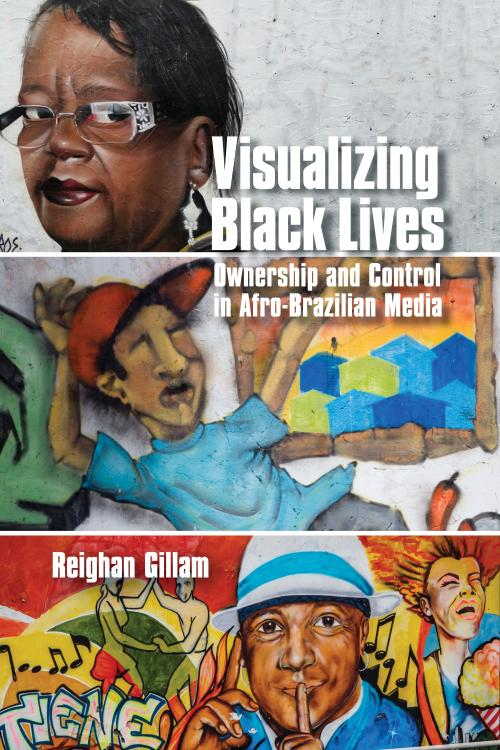

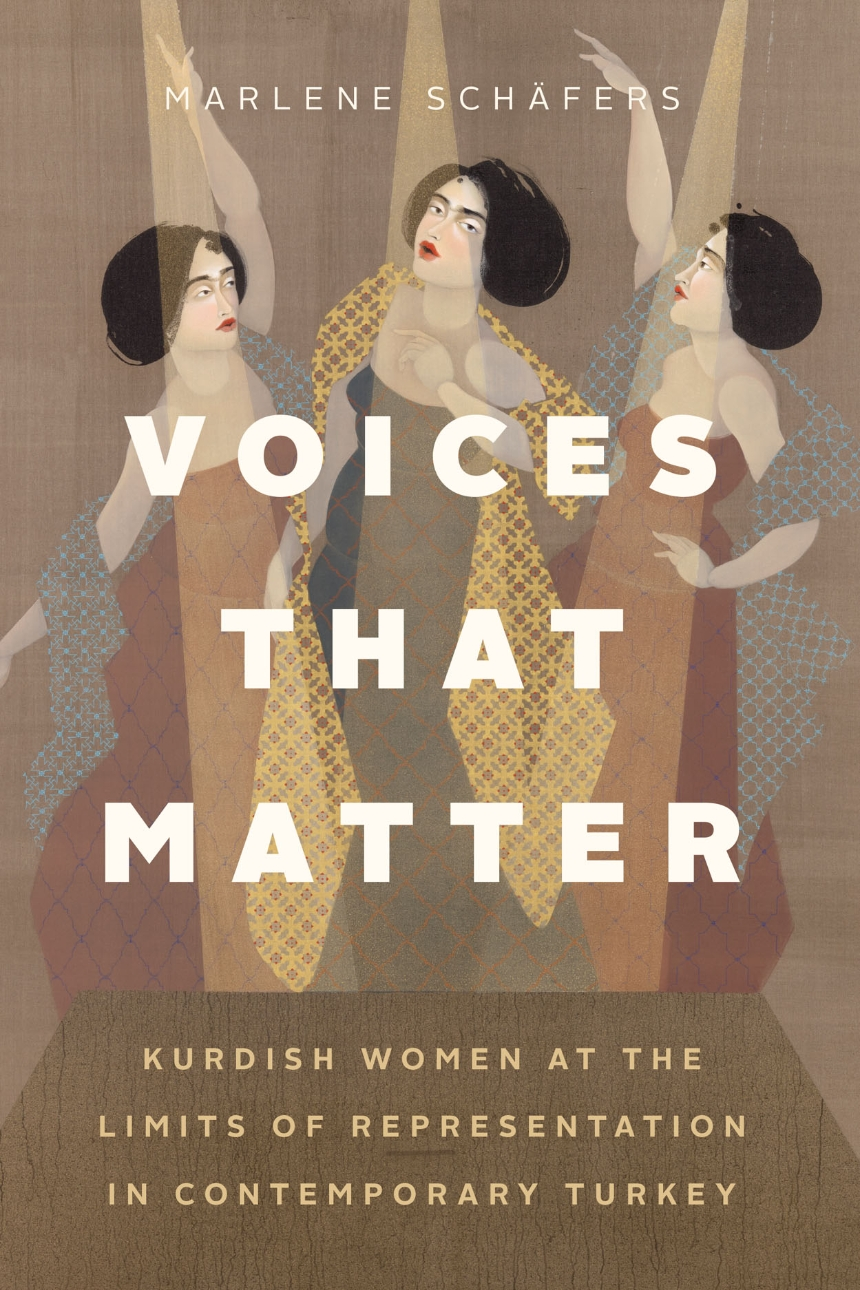

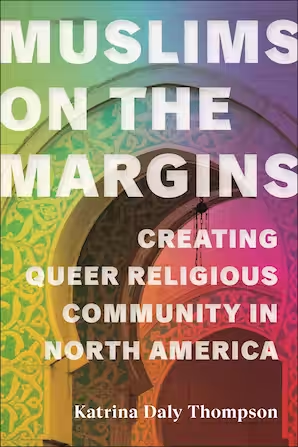
 CaMP Anthropology