Robyn Taylor-Neu: It’s conventional (for this blog series) to ask about the focus and argument of the book–but Dragging seems to willfully resist reduction to a single focus or argument. So I’ll ask instead: what does this work pivot on, for you? What’s its center of gravity, so to speak?
Shaka McGlotten: For me the center of gravity is the messy struggle of making and relating—making art, doing politics, and relating to research objects, intimate others, and disciplinarily itself.
Robyn Taylor-Neu: Could you explain the background of the research and how you came to the project?
Shaka McGlotten: As I say in the book, the project began with binge viewing of RuPaul’s Drag Race. I’d never connected deeply with drag cultures, so that signaled a shift for me. I teach at a very queer school and drag, especially in its particularly quirky, out there, or monstrous iterations, played an increasingly large role in queer students’ lives. My students’ interests are always contagious. Then there was my intimate partnership with an Israeli. We’d both identified Berlin as a desirable place to live out some fantasies as creatives. So New York, where I’m based, Berlin, where we ended up for eighteen months, and Israel/Palestine, where we visited regularly became the default field sites. I think this is important to acknowledge: ethnographic field sites aren’t selected at random. We often choose them because we have some intimate connection to them.
Robyn Taylor-Neu: As you acknowledge in the preface, your book’s form is unconventional for an academic monograph–it takes shape as a non-fiction narrative comprising three kinds of writing. You mention that works by Christopher Isherwood, Leigh Patrick Fermor, and Maggie Nelson influenced the form… Could you say a bit about the affordances and challenges of this more literary approach?
Shaka McGlotten: Wow. Well, all writing is challenging, but this was sometimes excruciating. There is a formula to academic writing, and once you have it more or less down, you can follow that template pretty easily in my view. But I’d never been trained to write creative non-fiction, so it was really a lot of trial and error. In regards to these three writers in particular, I was interested in a kind of flatness I found in both Isherwood and Nelson. There’s nothing unnecessary about their prose. Fermor is a lot more florid—he helped me think more about the intersections of memoir and travel-writing. I’m not sure I’ve fully answered the question about affordances and challenges, though. So let me give it another go. One affordance is that I didn’t feel it necessary to always cover my theoretical ass, so to speak. Not everything had to be neatly tied up in an academic argument because the book is meant to create a series of associations and resonances that collectively affect the reader (as in fiction or creative non-fiction). The challenges—like I said, excruciating! I had to write and rewrite chapters to make sure that various threads (about the drag scenes, my intimate life, or pedagogy) came together.
Robyn Taylor-Neu:You’re reflexive about the process by which the research and book came to be, and you explicitly offer the book as “training for all of us to risky, vulnerable openness”… I’m curious about who you mean by “us” (that is, anthropologists, social scientists, humans?) and how you would differentiate “training” and “disciplining,” since you also mention the need to “become undisciplined” (citing Christina Sharpe, Saidiya Hartman, and Sylvia Wynter). (I should put my cards on the table here. As a PhD candidate, I’m muddling through what it means to be credible as an ethnographer and anthropologist while preserving space for genuine curiosity… when so much of the professional side of things seems like an elaborate performance of disciplinary competence.)
Shaka McGlotten: Your parenthetical hits the nail on the head. I was weaned on critical theory, and I love the possibilities for thinking that reading it provided for me. But what I don’t like is the, as you say, “elaborate performance of disciplinary competence.” I think of this sometimes as “rehearsal” too. Yes, most of us have read X, Y, Z theorists, so increasingly, when reading academic material, I think “just get to it! Get to your point!” Imagine what would happen if people cut out all of the rehearsal—books would be shorter. Now, I say all of this, but then I find books like Ana-Maurine Lara’s Queer Freedom: Black Sovereignty so beautiful—it’s a poetic work of theory in the style of something like Anzalduá’s Borderlands/La Frontera. When I think about training in risky openness/becoming undisciplined, I’m after a loosening of the reigns. I think we can still be credible and disciplined while also being open to other genres that afford us different possibilities as writers and makers, as well as the kinds of people who might engage with our work.
Robyn Taylor-Neu: Your engagements with theory are often oblique and emerge either in fragments or in the interview transcripts that you incorporate. You say that you’re not particularly invested in using theory to make claims and so forth, but could you elaborate on how you see theory and what it does for you in this work?
Shaka McGlotten: Hmmmm, I think that my previous answer gets at this somewhat. I’ve done something similar in a lot of my work. I read theory but I start with the curiosity induced by objects, or the trouble that objects pose for me. I think in terms of events, scenes, and cases as any reader of my work will note. In this way, I was very much inspired by people like Lauren Berlant and my mentor Katie Stewart. I don’t approach my writing with a theoretical apparatus in mind that I then apply to my research. Instead, the process is much more iterative, where I am trying to come to some kind of understanding informed by theory. My friend Neville Hoad calls me “ill-disciplined”! I use what I think is helpful from bodies of critical theory and then sort of move on. At least, that’s been my process in recent years, when I feel I have less to prove.
Robyn Taylor-Neu:My impression is that many of your interlocutors, as artists and activists, are versed in (or at least passingly familiar with) the writings/works that seem to shape your own thinking about the politics of drag… is this the case and, if so, how did that affect your approach in interviews?
Shaka McGlotten: Yes! The folks I worked with were the real experts: The Drag and Liad in particular had sophisticated understandings of queer theory, art, and politics, so these were conversations informed by shared archives. Still, we didn’t always share understandings of who was included under the rubric of drag. For example, Natali Vaxberg didn’t initially understand why I wanted to talk to her, but over the course of our discussions, she increasingly embraced the associations.
Yun Chen: Recovering Histories is an ethnography of the entanglements between individuals’ lived experiences of recovering from heroin addiction and their collective narratives of reimagining laboring lives in a rapidly changing social world in post-Mao Southwestern China. You talked a little bit about how you got involved in conducting research on this topic in Gejiu in the first chapter of the book. What interested me a lot was that you initially entered this field as someone working for international NGOs carrying out HIV/AIDS prevention harm reduction projects within the public health or global health contexts. Nevertheless, instead of writing a book on heroin addiction or recovery with a focus on these institutions or interventions, you chose to really attend to the everyday lived experiences and narratives of the group of individuals with heroin-use histories with a phenomenological orientation. Could you tell us a little bit about how did you come to study heroin recovery from this angle, in what ways did your public health training/working experiences influence your approach to this topic, and what was your main goals to research on heroin/recovery/China as an anthropologist?
Nick Bartlett:. Sure! I first encountered heroin addiction discussed as a problem in China in 2002. I was working on HIV prevention projects as part of the social marketing implementer of the China-UK project at the time. While we were funding programs in Yunnan and Sichuan provinces, that year I spent a lot more time in our Beijing headquarters than I did interacting with the people who were directly impacted by HIV. I think part of why I initially became interested in this population in China was due to the absence of people with drug use history from public health conferences and meetings I was attending. CDC officials generally spoke on behalf of this group. It wasn’t surprising given the stigma that people with drug use history faced in China, but left me with a lot of questions about the lives of the people identified as part of this “high risk population.”
In the mid-2000s I got more directly involved in NIDA-funded studies of heroin use in China, and later started working for the Open Society Foundation’s International Harm Reduction Development program. Working at a foundation where one of our primary mandates was to support people with drug use history to organize and advocate for their own needs was an important opportunity for me. Questionnaire-based public health research had allowed me to meet a number of people with heroin use history in different provinces, but the interviews I was doing started to feel stale and narrow in scope; I wanted to build relationships that were more open-ended and enduring. The role I had at OSF allowed me to work closely with compelling people doing amazing work.
After my third year of grad school, I moved to Gejiu, where a number of grantees were based, leaving my part-time position at the foundation. Many of the people I met in Gejiu had been recently released from compulsory detox centers and were absorbed by the task of attempting to realize a “life after drugs.” I became interested in a new set of questions: Where does the work of recovery happen exactly? How is it experienced, specifically in relation to lived experiences of individual and collective time? These were questions that didn’t seem to be asked in other contexts, but they seemed vital to trying to understand what recovery meant in this time for this group.
Yun Chen: One thing that I really appreciated about your book was that you effectively showed the readers, against a common way of talking about heroin addiction, that your interlocutors’ broader lived experiences of laboring, family life, socioeconomic shifts fundamentally shaped the ways they understood their lives under the influence of heroin as well as what would be a life after heroin. In other words, you decentered the role of the drug itself in defining the experiences of this generational group, and repositioned them within the sociohistorical contexts that they shared with their non-user contemporaries. By doing this, rather than being a prerequisite for making sense of their lives, the use of heroin became a particular condition that in various ways constrained and enabled their experiences of the world. It was a condition among many other conditions which needed to be examined through the shared histories of the collective “we.” I was wondering that when you wrote with this perspective, have you had concerns about downplaying the specific (bodily, sociocultural, political) experiences of heroin addiction and recovery that were potentially distinguished from other forms of marginality? If so, how did you balance between not essentializing people with histories of heroin use/recovery and attending to the unique experiences of this specific group in your analysis and writing?
Nick Bartlett: Great questions! I guess there are a couple points I should make in trying to answer them. First, the move to decenter the role of the drug as you put it wasn’t initially a conscious decision on my part. As I spent time with people who were committed to various projects of recovery, I became aware that even people who I knew were actively using didn’t use in my presence and rarely brought up their heroin use in our conversations. I certainly could have tried to make heroin use a more central part of the research, either by being present when people were using, or through more detailed explorations of the direct effects use of the drug had on this group’s lives. My decision not to do this perhaps says something about my commitments, and theirs, during my fieldwork. At the time, even if the absence of a certain type of attention to heroin use was a form of collusion, I felt I was learning an enormous amount from participating in other aspects of their lives, that the direction my fieldwork was taking in was allowing me to understand recent history of Gejiu—even China—in new ways.
The move to decenter the drug could be understood as pushing against the constant ways that heroin users have been represented in Chinese media. So much of people with heroin use history’s identities in China were defined by their status as “registered drug users” by the public security apparatus, “injecting drug users” by public health workers, or just “addicts” by the public. I can still remember the cookie-cutter news stories that would come out about heroin users every year on 6/26, International Day against Drug Abuse. But the reality was, many of the people I came to know, despite having been connected to heroin for over 20 years, actually hadn’t spent all that much time using heroin. Or they had used heavily early in their adult lives and then spent much of decade before I knew them bouncing in and out of state compulsory labor centers and periods of unemployment living with family members and receiving treatment at methadone clinics, where use of heroin was relatively rare. I was encountering particular sort of paradox: there wasn’t much heroin in Gejiu during my research, but there were a considerable number of so-called “heroin addicts.” In addition, members of this group were often eager to argue that they were in the process of becoming (or, in some cases, returning to) existing as a different type of person, that “drug user” or “addict” were never terms that accurately depicted who they were.
This leads us to the problem of the collective “we” that you brought up. As I was writing the book, I couldn’t escape thinking about the figures I came to know as being linked by a strong generational identity. Virtually all of the users I met were born between 1965 and 1980 and encountered the drug in the late 1980s and 1990s when heroin first began circulating in large quantities.. With time, I came to see that members of this generational cohort shared the challenges feeling they were becoming obsolescent economic actors quickly disappearing from the country’s history, and saw how recovery as intimately linked to navigating an economy that looked quick different from the one that they had entered as teenagers. In Chapter One, I argue that the figures in the group are part of what might be considered a Mannheimian generational cohort, sharing an orienting set of dramas in their youth and enduring common discursive landscape of historical problems and social imaginary and the horizon of the future. Against this common background, each of the book’s final chapters turns to a different way that an individual or small group of people with heroin use history came to answer and live the challenge of “returning to society” as they understood it. Inevitably, these later chapters grapple with evocations of “we” that take different forms; some of my interlocuters emphasized belonging to a broader community of displaced workers, others spoke of their connection to a vanguard group of grassroots civil society actors, still others as part of a cohort of unemployed idlers who had been deprived of previously existing government care. Sometimes these connections give the individuals I write about hope in achieving a “return”; for others, the collective identity they evoke is experienced as immutable and suffocating. I try to show how these fragile and shifting senses of collective life can be understood as communities of time that are linked in complicated ways with narratives and sensations of living within a broader trajectory of Chinese history.
Yun Chen: “Recovery” is another keyword appeared throughout this book. The narratives you laid out in those chapters really demonstrated the complex ways in which “recovery” was imagined, embodied, lived, and/or contested by your interlocutors. From recovering-without-hope to recovering-through-laboring, these narratives challenged existing conceptual accounts of recovery in anthropological and health literatures. In your ethnographic encounters, “recovering” was intricately linked to the idea of “returning (huigui shehui),” which in my view metaphorically presumed a status of normalcy from which one temporally diverged and was expected to get back to. Complications arose, in this case, when the status of “being normal” itself was constantly on-the-move with the flow of the rapidly changing social world. Those in recovery were thus expected (or demanded) to “return” without any clear path or anchor point. Or in other words, their labors of return seemed to have no reachable destinations. Then what might be the actions of “returning” really for when there was no place to return to? Could you elaborate more on your understandings of “returning” in this case, and what insights it might bring to future anthropological studies of addiction and recovery?
Nick Bartlett: I think that the way you formulated your understanding of “returning” in relation to “recovery” nicely articulates a key intervention that I was trying to make. As I was writing the book, I found a distinction between two Chinese terms—jiedu and huigui shehui —helpful in heightening a broader tension around the stakes of recovery. Jiedu was about the accumulation of clean time, a quantitative, empty time that could be easily measured and compared. Here, the prescribed goal of recovery isn’t a type of experience or way of living but simply the absence of the traces of an ingested substance that made you do something else. Huigui shehui, another term that could be translated as a form of “recovery” frequently brought up in China when discussing drug users but also many other vulnerable populations, emphasizes the action of moving to a previously existing state of affairs. But what is the “normal” that is presumed to exist in this collective? Especially in Gejiu, were the fabric of daily life had been changed so dramatically with the disassembling of state work units and rapid expansion of private sector, which understanding of collective life and economic roles were members of this group to attempt to achieve? While some had very clearly defined goals of what huigui meant, others claimed that huigui was impossible, or even that huigui was not a helpful way to think about recovery. I found the slogan a useful starting point to think about lived experiences of time located between the individual and shifting understandings of collective life.
Yun Chen: To account for how people with heroin use history connected their understandings of their own past, present, and future to the collective shared experiences of China’s rapidly changing society, you laid out three approaches to historicity which effectively demonstrated that there was not an overarching framework for experiences of time. Such an attempt to connect the phenomenological lived time with the historical shared time was achieved through your emphasis on narratives and narrative structure. Can you further unpack the conceptual connections between narrative and historicity as demonstrated by your ethnographic encounters, maybe in dialogue with Mattingly’s “narrative emplotment” (1998) or Carr’s “doubly practical narrative structuring” (1998)? I was also wondering, in your view, that to what extent and in what ways may this conceptual emphasis on narrative and historicity be applicable to medical anthropology topics other than addiction/recovery?
Nick Bartlett: Some people tend to be energized by how their fieldwork can facilitate making an intervention into particular conversations. I have been more motivated by trying to figure out how to write the book as a whole, how to interpret recovery as a lived experience and then connect the recovering histories that would take the reader through a particular progression. So instead of trying to articulate “this is my position on narrative or phenomenology,” I found myself returning to authors who could help me make sense of a particular dynamic that I was struggling to understand in from my relationship with the people in the book. Writings by Sara Ahmed, David Carr, Paul Ricoeur, Pierre Bourdieu and others were very helpful in attending to quite specific questions or problems that I was trying to work through based on fieldwork encounters.
I can say a bit more about Cheryl Mattingly’s narrative emplotment, since you brought it up. In her work, narrative tends to be connected to preserving hope in the face of uncertainty and pain, often in response to a grim medical diagnosis. But I was interested in exploring what seemed to be an inverted dynamic occurring in my own fieldwork. For a small number of people I came to know, the narrative that they came to repeat and lived seemed to shut down the possibility of a future different from the present, giving a finality to a story of their stories about the “dying out” associated with a broader cohort of heroin users and, by extension, their own premature obsolescence. I found Mattingly, Carr and others helped me to think about the potential devastating power narrative could have on individuals and groups.
One challenge for me was how to make the particular recovering histories presented in the individual chapters have their own internal coherence while contributing to the broader themes of the book. Given the different ways anthropologists, postcolonial scholars, and philosophers have come to take up the term, historicity had this elasticity to it that seemed to encompass and help organize the interventions I made in the book.
As for the potential relevance for narrative and historicity for medical anthropology, these are areas where others have done incredibly thoughtful work; I would leave it to the reader to say if the book’s approach resonates with their research or experiences. I will say I have a real fear of allowing concepts to become too rigid in my interpretations. It is so easy to lose the complexity of what happens in fieldwork encounters As I finished writing, it was quite important for me to figure out a way to allow some of the neatness of previous chapters to unravel. Examining my relationship with a close friend and collaborator where I really didn’t have a sense that I could comfortable say what his “return” related experiences were gave me the chance to question some of the way the book was structured.
Yun Chen: You talked about your 2018 visit to Gejiu in the Epilogue. I’m curious that, given the rapid changes happened to your fieldsite in these recent years, to what extent or in what ways (if at all) would you shift your focuses and/or the ways in which you approached the topic?
Nick Bartlett: It’s been difficult to not be able to go back these last years; I was hoping to be based in Yunnan this past year but wasn’t able to get visas for my family. I think in some ways I was lucky to be there in the 2000s and early 2010s. Already during that 2018 trip, there was this sense that certain kinds of collaborations that were possible earlier could no longer happen. I have felt a lot of sadness about that.
I could imagine writing more about shifting understandings of labor within the context of ongoing changes to how Gejiu city and nearby mountainside communities relate in what is an increasinglypost-mining moment for the region. I’ve also been doing some online interviews and going through archival sources to learn more about what was happening on the mountains in the Deng era as part of a special issue I am co-editing exploring the specific energies and legacies of 1980s in China. So to answer your question, I think today I would spend more time in mountainside communities trying to make sense of workers’ experiences of the current moment.
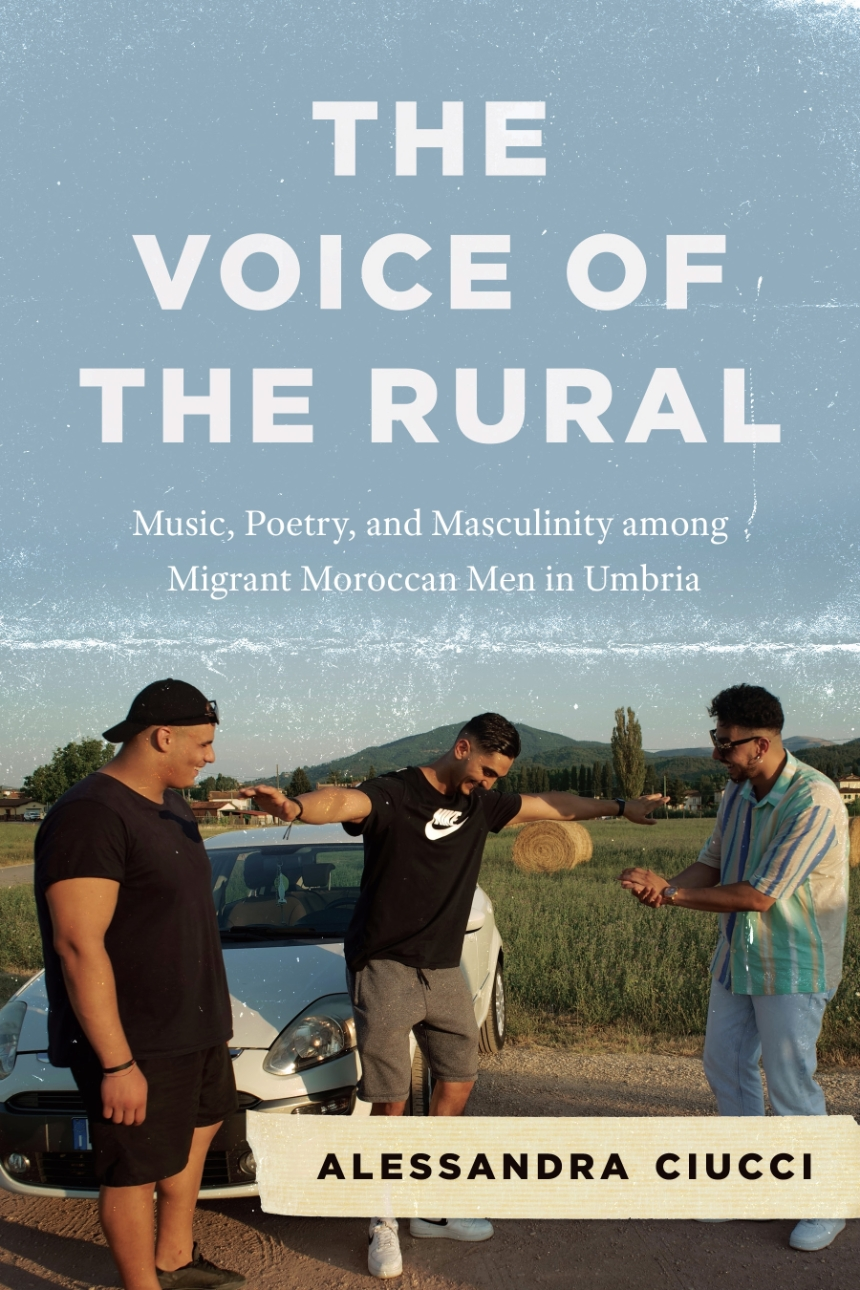
Alana Mazur: One of the main themes running through your book is Indigenous audiovisual media and mediatized politics. You provide an in-depth and nuanced analysis of the role of videography in connecting the Ayuujk hometown community in Tamazulapam and satellite communities in Mexico and in the United States. Could you please situate the focus and the main arguments of your research?
Ingrid Kummels: The protagonists of my book who live in Tamazulapam, Oaxaca, and Los Angeles, California, may be characterized as pioneers of media practices battling remoteness. When I set out to do my research in 2012, my intent was to explore the local media histories shaped by the Ayuujk people of the Mixe Region in Oaxaca, Mexico, and give them greater visibility. I had become aware of their autonomous endeavors concerning photography, radio, TV, and video adapted to their own language and “ways of seeing” (Berger) when in 1993 (together with Manfred Schäfer) I filmed what was perhaps the first local TV station (TV Tamix) set up autonomously in a Mexican Indigenous village, precisely in Tamazulapam del Espíritu Santo. Before that, individual villagers had engaged in sophisticated single-lens photography and radio broadcasting, which they adapted to community needs. This motivated me to revisit Tamazulapam almost 20 years later, in 2012, and update these developments from the perspective of media anthropology. But when I returned to Tama (as the village is nicknamed), I realized how pervasive migration for higher education and job opportunities had become—mainly to the United States because of the possibility of earning up to ten times more than in Mexico. At the same time, this entails immobilization since migrants are forced to cross the border without authorization. b—and above all fiestas, large community celebrations in honor of the patron saint.
When observing and talking about village media practices it became obvious that culturally specific genres had been created such as fiesta, family rite-of-passage, and officeholder videos; these had not received much scholarly attention since they are at the intersection of politics, entertainment, and culture. Means of communications had been harnessed to facilitate community life and communal values even from afar, ranging from interpersonal cell phone calls to a veritable transnational video industry whose offerings included series of ten fiesta DVDs, which were ubiquitous not only at local markets, but also in Oaxaca City and in U.S. cities like Los Angeles. Ayuujk people had set up their own infrastructure and used mass media for practicing community politics. Migrants living in Los Angeles invested in their production in order to participate in the home village’s modernization, receive recognition as village members, and serve as political officials in the hometown. These media activities therefore contribute to political ideas about Indigenous autonomy, which is called Comunalidad in Oaxaca. Here it is important to emphasize how these practices challenge the way that Indigeneity has been constructed “from above” and as an antithesis to the modernity that media (often equated solely with mass media) allegedly embody. On the other hand, the use of media and the innovations devised by Indigenous peoples that combine storytelling, crafts, music and dance with analog and digital mass media often are not recognized as self-determined, cutting-edge developments. Nevertheless, these innovations have been achieved despite extremely adverse media structures in Mexico, where private mega media conglomerates dominate radio and TV, while alternative media are pushed into informality, against a “visual divide.”
Here is where the concept of media spaces comes in. Indigenous media makers open such spaces in multiple inventive ways when overcoming the uneven access to mass media due to racialized inequality, which is inscribed not only in the representations of Indigenous peoples but also in the contexts in which they received media training and engaged as practitioners. These are spaces that actors have been able to extend in terms of geography, practice, and imagination. Setting up their own media infrastructure, appropriating media knowledge and technology according to “one’s own” standards of professionalism, and managing transnational diffusion and marketing all form part of this endeavor.
Alana Mazur: In the introduction you mention that your ethnographic research was multi-sited and the fieldwork was conducted in Tama and Los Angeles between 2012 and 2016. What motivated you to pursue this ethnographic participatory research with Indigenous media makers in Mexico? How was this experience like for you?
Ingrid Kummels: I am a practitioner of media myself and after studying anthropology I started working as a professional filmmaker making documentaries for German TV. So, I know what it’s like to engage in filming, interact with people while doing it, and critically reflect on this work and issues of representation. I like to exchange ideas with people who have had similar experiences. To give an example: When I first met a fiesta filmmaker, I was fascinated to see that he had installed his entire store and production unit with editing equipment in his pickup: along with his son, he not only edited the films on DVD discs overnight, but also printed covers so that the next morning they could start selling DVDs to visitors during the five-day patron saint celebrations. He readily told me about arguments that can arise when “illicit” dance pairs were spotted on village videos; they had to do with transnational marriage and family life. The recording of sacred places and rituals that normally are not allowed to be viewed was considered an audiovisual transgression related to the special value attached to place and being on-site in times of deterritorialization. Women face particular challenges as both mediamakers and comuneras. These self-determined media activities therefore paved the way for negotiating novel visions of community life, gender, and Indigeneity in the twenty-first century. (See my portrayal of their work in “Ayuujk Cameras,” https://vimeo.com/293855233.)
Following these itinerant merchants during the month of May 2013 meant getting to know how they cultivate networks and forge alliances in many villages of the Sierra Mixe and beyond; some have more to do with commercial circuits, others with political solidarity. Mediamakers
are well informed on the different situations and aesthetic tastes of specific village audiences in their respective transnational outreach. As a result of specific migratory pathways taken, community celebrations in the home villages are pervaded by forms of transnational reciprocity. To compensate for their absence and their lack of participation in the village’s governance system called Usos y costumbres, migrants contribute with financial donations to hometown fiestas. Their sponsorships are announced publicly and above all documented in fiesta videos, which a transnational audience witnesses. These viewers participating from a distance are constantly in the mind of videographers and influence their choice of motifs, scenes, and camera settings. I moved along these networks, since mediamakers would orient me and introduce me to their colleagues and advisors. It was often through these contacts that I got to know a village for the first time, so I was immediately immersed in mediamaking there. On the spur of the moment, I would be invited to an event they were covering. While this work was delightful, I also learned about their strict professional discipline and soon was very conscious that there are no simple onlookers at a fiesta: community members have a moral obligation to participate which includes its sacralized dimension. So, in many ways, recording a fiesta is a solemn affair based on these same moral obligations.
Alana Mazur: The book provides a captivating analysis of the sociopolitical dynamics that involve diasporic movements among the Tama inhabitants across the Mexico-US border. Along the chapters, you elucidate, for instance, how remittances sent by migrant villagers to their families and “unpolitical fiesta videos” ostensibly sustain vibrant connections between the local “comunitario” and the growing “transnational village” (p.35). Through mediatization, as you conceptualize it, videographers both capture and create myriad of “media spaces” (p.391).
In this vein, could you provide a brief overview of these concepts and the processes they entail? What implications does the diffusion of Tama mediamakers’ work have on the Ayuujk ja’ay community members’ social life? Following on from that, how does Ayuujk videography constitute itself as “self-determined media,” as you suggest in the introduction (p.400)?
Ingrid Kummels:In short, transnationalism as a single field of social relations between two or more nation states due to the regular flow of people, commodities, money, and ideas across the borders is communalized by Ayuujk people. Migration, even in the many cases in which it is motivated by individual, personal interests, becomes at some stage a communal joint venture—in the more literal sense. Transnationalism scholarship has looked into the communal logics on which migration is based, but has often emphasized material, financial transfers. Nevertheless, transnational community building depends on the desire, the urge to be involved with a community. This is where self-determined media come into the picture.
As I examined the scholarship, I became aware of how transnationalism forgoes a perspective on media. On the other hand, media anthropology tended to view Video Indígena within the national container of Mexico. But in fact, the political Indigenous movement and the use of media to overcome distance in the transnational context, which includes connecting with the cross-border community in an entertaining way, are interrelated. The focus of my research is situating media use both within the contested field of Indigeneity as well as identifying it as an indispensable glue of transnationalism. There is nothing natural or matter-of-fact about maintaining a connection with one’s community of origin. In the case of Tama, reliance on self-developed media practices is key to new social arrangements between the hometown and the satellite communities that allow them to continue their communal way of life despite the restrictive border. These arrangements systematically integrate the migrating population. Many individuals participate in this endeavor due to a communal spirit. So, it is important to explore these communitarian values, Comunalidad or simply “lo communal,” as most people refer to it. It upholds the logic of owing service to a community, which at the same time is a sacralized entity worshiped in the patron saint. All of this is reflected in fiesta films and is understood by people with similar experiences who are socialized in this “way of seeing.”
Self-determined media practices are key for the creation of community connected to similar values. The hometown is one of its main motifs, since the future aspired to is projected onto this special place. Videographers are comuneros and comuneras, that is, they perform duties that influence their media practices and products. Despite being merchants and commercializing DVDs in a transnational outreach, they must also conduct themselves in a way that accommodates the values of community life (for example, not charging too much and paying the community a fee for filming); it is expected that their work portray those communal values. Moreover, they themselves have to invest in the community when needed. On the whole, they are an essential part of the transnational communal tissue.
Tim Loh: Congratulations on this exciting new book! Your first book, Valuing Deaf Worlds in Urban India (2015), examined the productivity and limits of deaf similitude—what you and your interlocutors called DEAF-SAME— and forms of deaf becoming as deaf people turned towards each other. Is it accurate to say that this book looks at how the state, pharmaceutical companies, and medical practitioners also strive to make deaf people the same, albeit in a different way? Can you tell us also how you moved from that earlier project to this one?
Michele Friedner: Thank you so much for your close reading and generous analysis and the making of connections here. I also look forward to seeing what you do in your cochlear implant research! I think you’re absolutely right that Sensory Futures is about sameness although there’s lots of friction and ambivalence around this sameness. There are putatively star cases and professionals constantly compare children and their mothers and the work that mothers do. The star cases and mothers also evaluate themselves in relation to others. And deaf sociality, or implanted sociality, is both encouraged and discouraged as children are supposed to hang out with hearing children instead of other deaf children. As I write, it often seems like there are biosocial refusals. There’s also constantly the spectre of the bad mother and the failed child. For the state, CI corporation, surgeons, and most/many audiologists and speech and language therapists, the goal is to create a hearing child who is close to, near to, or almost “normal” in terms of listening and spoken language. However, and beyond this, the project is also to create people and state citizens who do not need any help and support from the government and who are “independent.” These people ideally don’t have so-called deaf accents and develop “hearing brains.”
I didn’t plan to write a book about cochlear implants or to conduct research on them. However, when I returned to India in 2016, after my first book was published, I learned about state and central government programs providing deaf and hard of hearing children with cochlear implants and I became intrigued. I was also really interested because signing deaf adults want more signing deaf adults in the world and they want Indian Sign Language (ISL) to be seen as “normal.” The deaf adults I met at one particularly institute in the state of Kerala—where they were enrolled in BA programs in ISL—were really upset because at the same institute there were early intervention programs for small deaf children who had been implanted. These college students were excited about their coursework and their friendship networks, and they wanted to teach these little kids ISL but felt that the kids’ parents literally pulled them away and prevented them from seeing sign language. They were worried about the future of deafness in India. And so I decided to do research on cochlear implants in India. I was fascinated by how the state was now funding these super expensive surgeries and devices. I was also fascinated by the new expectations that seemed to be emerging—that kids born deaf could become normal—and that there was a new sensory infrastructure developing. And it’s also interesting to think about things like newborn hearing screening and attempts to develop universal screenings and what these screenings mean for the kinds of choices parents have (or not). Laura Mauldin writes about this too in a US context. I’ve talked with Mara Mills about how hearing is perhaps the most surveilled sense. What does this mean?
Tim Loh: You write a chapter about maintaining and caring for cochlear implants and the work that parents and implantees have to put in to get the devices to work and to continue to work, and the new dependencies on corporate and medical infrastructures that emerge from getting an implant. You examine the inequitable distribution of cochlear implants around the world (as you also do here) in addition to the limits of “tinkering” and “hacking” that have become central to crip technoscience. What new insights into the relationship between disability and technology do you think your book provides?
Michele Friedner: I think my book pushes us to look at how projects of normalization involving technology use can result in new and complex dependencies on device corporations. The children who do really well with cochlear implants, who learn to listen and speak and become auditorily dependent—are the most precarious and vulnerable. If their devices break, they don’t have other ways to communicate. I also think we need to pay attention to ambivalent users, sometimes users, and non-users, and the ways that individuals and families are essentially abandoned by device manufacturers. Because cochlear implants work so well for some people, it’s imperative that there are more safeguards and supports in place for maintenance. It’s an issue of sensory and social justice.
Tim Loh: One of the important concepts that you advance in this book is that of “multiple normals,” which you have also discussed elsewhere. Normality is a desired outcome for some of your interlocutors but it is also a kind of narrowing that contrains different ways of being in the world, and you argue against prescribing teleological paths for deaf people. I found especially thought-provoking your critique not only of sensory normality as advanced by cochlear implant advocates but also of the project of “becoming-disabled or becoming-deaf in terms of identity and community formation” (p. 161) as advanced by some disability and deaf advocates and scholars, which can also be teleological. Can you tell us more about what you think the stakes of this idea are?
Michele Friedner: I think that often within disability and deaf communities, there is a celebratory narrative around coming to a disabled or deaf identity that involves embracing this (new) identity and finding community and sociality. I think this narrative is just as teleological as the narrative around becoming hearing or becoming normal. I think that we need multiple ways of being disabled, deaf, and normal in the world and that we also need more robust analytic language for discussing different experiences—relating to the senses, perception, and pain, as examples. I think the move in disability studies towards crip theory really helps us to destabilize disability identity and I am not quite sure that we’ve seen a similar move in deaf studies/deaf anthropology.
Tim Loh: I was also struck by your emphasis on “total communication” as an approach, both as articulated by anthropologist Margaret Mead as well as a pedagogical method for deaf children that saw its heyday in the 1970s and 1980s but seems to have mostly fallen out of favor in many deaf educational circles. As you write in the conclusion, “Surely there are more than four ways (listening and spoken language, a bilingual-bicultural approach using sign language, cued speech, and total communication) to communicate. I see value in total communication as a philosophy that involves all of the senses and orienting to children and others more generally based on what they need and when they need it” (p. 193). Do you see this work as in some ways a reclaiming of that term?
Michele Friedner: I really love this term and what it meant for Mead—as an orientation towards openness and recognizing all signals, or at least more signals, as communicative. I also recognize that many in deaf and disabled communities have major beef with how total communication is used as a practice. In deaf schools, for example, total communication has come to mean “sim-comming” or simultaneous communication in ASL and English, which does not provide deaf children with access to a full and complete language and basically is just half and half. And in autistic education, total communication approaches have been used as an excuse not to teach autistic children language at all. While I am aware of these grave problems, I also think as a philosophy or way of orienting to other people, especially those who do not communicate the same as you do, total communication is very compelling. There has been so much exciting work lately in deaf studies on translanguaging and semiotic ideologies and on “crip linguistics,” which resonates with how I think about total communication.
Tim Loh: As with your first book, your positionality as a deaf person shaped many of the interactions you had with your interlocutors. I loved hearing about your experiences and seeing how they framed your analysis: your deaf interlocutors’ reactions when you decided to get a second implant, your interactions with your surgeon as well as with AVT (Auditory Verbal Therapy) specialists (those Ss!), and, of course, the interview you conducted with your mother. Can you say a little more about your approach to writing this very academic—yet deeply personal—book?
Michele Friedner: I struggled with how to include myself, my choices, and my family’s choices. I also struggled with writing about them in a way that does not seem banal or sentimental. And I don’t want to be one of those deaf people writing about deafness for a hearing audience; I want what I write to be interesting to deaf folks as well. I felt like I had to include myself in the book because as I noted, I chose to get implanted after doing my dissertation research with Indian Sign Language speakers and then I chose to get a second implant during the midst of this fieldwork because my hearing aid broke and my health insurance would not pay for a replacement, but it would pay for an implant! And during the research, people—surgeons, audiologists, families, children—all had questions for me about my experience with cochlear implants. And, as I discuss in the book, my speech was also adjudicated by speech and language therapists and found to be deficient.
Tim Loh: What are your hopes for Sensory Futures? Who do you hope will read it, and what work do you hope that it will do in the world?
Michele Friedner: I’d love for everyone, including my mother, surgeons, audiologists, and speech and language therapists to read it. I was excited that there were funds to make the book open access and that folks in India have been reading it. I received a very nice email from an audiologist and speech and language therapist in India who told me that while she did not agree with everything I had written, she appreciated the book. She also encouraged other practitioners to read it. I want medical anthropologists, sensory anthropologists, and deaf studies and disability studies scholars to read it—I think it’s super important to think about the ways that sense is produced, and constrained, through political economic conditions. It’s not just that the senses are culturally produced, but with the advent of new technology, senses are actually produced. I also hope the book intervenes in discussions of normalizing, normals, and normality and contributes to how we might think of normalization as narrowing or constraining. And methodologically, I hope more people will start explicitly writing about how they do research with others in inter-sensory ways!
Bonnie Urciuoli: Can you say a bit about how your Marx reading group led to this book.
John O’Regan: The Marx reading group came together as a result of conversations I was having with colleagues at the IOE and at other London universities in 2009-10 as the aftershocks of the global financial crisis were being felt and absorbed. The group included myself, David Block, Catherine Wallace, Siân Preece, John Gray, Melanie Cooke and Tom Morton. I had read a fair bit of Marx in my time and had a reasonable acquaintance with many of the key texts and ideas, but I had never properly sat down and read Capital (Vols. I, II and III) and Grundrisse. So, this is what we set out to do. Of great assistance to us was David Harvey and his companions to Capital and the 1973 Foreword to Grundrisse by Martin Nicolaus. At the start of this process, some of us felt more like novices than others, but it seemed to us that it was necessary to explore materialist political economy and Marx particularly when for so long everything in our fields had seemed to be about discourse and Foucault.
Throughout, we attempted to apply what we were reading not only to our areas of scholarship, but also to how the crisis and the response to it was unfolding and being experienced in the UK and in the wider world. In Capital and Grundrisse the key insight to be grasped is the ceaseless motion of capital. In Marx’s words, “Capital is not a simple relation, but a process, in whose moments it is always capital” (1973: 258). Marx presents this movement as a relation between money and commodity production, M-C-M¢, and as a speculative relationship of money itself, M-M¢, in which the M that comes out at the end of the process, M¢, has been incrementally enhanced in comparison with what went in at the beginning. The process is then endlessly repeated again and again. It was largely thanks to the discussions that we had in our group that the ceaseless motion of capital emerged as the basis for the proposition in my book that the explanation for the global dominance of English as well as its elite forms lay fundamentally with capital and not elsewhere.
Bonnie Urciuoli: A central point in your book is the free riding of English on capital circulation. Can you explain what that is and how that allows you to show how English has become hegemonic in ways that other approaches to the hegemony of English have not gotten at?
John O’Regan: To answer this question in a way that would offer the most clarity, it is necessary to work up to the free riding concept. I took the concept from my knowledge of international relations (IR) and of theories like world-systems analysis and development theory which I studied in some depth in the 1980s. In IR it is used to refer to how one state can gain benefits from another state’s actions at no cost to itself. Although I do not use it in precisely this way, free riding was a concept that came back to me when I set out to write the book knowing all along that I would start with capital circulation and Marx. It was one of those concepts that floated into my head and then took a firmer hold as I looked back at the literature on free riding and its origins in the work of Mancur Olsen. It occurred to me that free riding was an apt concept to use given that the dominant capitalisms of the world-system (as per Wallerstein’s conception) over several hundred years had been the anglophone capitalisms of first Britain and then the United States. Moreover, this was not simply a question of colonialism or formal territorial acquisition alone – that is, having empires (as use values – accumulation of land, power, mineral deposits, and so on within limits); it was far greater than that. This was about the origins of capitalism as an entire world-system involving hegemonic world-economies (as exchange values – endless accumulation of value without limits), one dominated by Britain and British capital up to 1918 and then another dominated by the US and US capital thereafter, with absolute US dominance arriving after 1945.
The details are in the book but suffice to say that colonial occupation and annexation are only partial aspects of a hegemon’s dominance. Of greater significance and global extent is the hegemon’s structural authority over global security, production, finance and knowledge, all of which the hegemon dedicates to the accumulation of capital in its own interests. Essential elements in enacting this authority are that the hegemon’s currency dominate global finance and trade and that its language become a dominant language in global commerce and diplomacy. The pound sterling gave English linguistic seignorage in the era of the British hegemony (1688-1918), the greenback does the same for English in the era of the US hegemony (1918-). By being the dominant currencies in which capital has circulated in the world-system, English has derived immense linguistic seignorage and ideological power from this fact, such that it has become the favoured language of capital and its accumulation. In a capitalist world-system that has been dominated by anglophone hegemons, that English is the dominant default language of capital and capital accumulation does not seem so surprising, yet few have looked at it in this way. Nevertheless, it is because of the reality of capital in motion that English and elite articulations of English have gained a free ride. In my book there seemed no better way to visualize this than to take Marx’s formulae for capital circulation and accumulation and to add an E for English. Hence ME-CE-M¢E and ME-M¢E are the formulae I have used to show this – while also emphasizing their symbiotic entwinement and mutual facilitation. Other approaches have looked to imperialism, colonialism and globalization theory, and some others to plain human irrationalism. But whichever perspective one favours, what best explains the spread and dominance of the forms being observed – especially the standard elite form – is the endless accumulation of capital. This is the underlying generative framework for English spread and also for its insinuation into global distinctions of class, culture and taste.
Bonnie Urciuoli: Can you address the importance of distinguishing between empire in a political sense and empire in a world economy sense?
John O’Regan: I have sought to address this above, but in short empire is too much associated with territorial annexation and colonial rule to be a suitable referent for the exercise of structural hegemony within the capitalist world-system. In the capitalist world-system a world-economy is a multi-state system having a single division of labour (exchange based on private accumulation) in which one state is structurally dominant. A capitalist world-empire if it existed would be a single-state system. The nineteenth-century empires of Britain, France, Germany, Belgium, and so on, were not empires at all, but nation states with colonial appendages within a world-economy dominated by Britain. References to a US empire while commonplace are misleading as a description of the current US world-economy into which the rising hegemon China and all other states in the capitalist inter-state system are also incorporated.
Bonnie Urciuoli: Chapters 2 through 6 segment the history of English into 1688-1850, 1850-1914, 1918-1979, 1979-2008, and since. What dynamics did you want to capture in so doing?
John O’Regan: With this periodization I primarily wanted to capture specific broad phases of capitalism and of global capital circulation during the past 400 years, and with it how English under the hegemonies of first Britain (1688-1918) and then the United States (1918-2008) was implicated in each phase. The period 1688-1850 in Britain is the period of transition from agricultural capitalism to industrial capitalism with the increased presence of City of London capital overseas, and of relevance for global English, the rise of gentlemanly capitalism as a unifying ideology, which I explain in the book. It is also a period in which Britain moves from being a rising hegemon to being an unrivalled hegemon. The period 1850-1914 is the period of unparalleled British dominance in global manufacturing and finance. It is also the era of free trade and the classical period of capitalist imperialism; all of which gave an enormous boost to English. In this period Germany and the United States also begin to challenge the British hegemony, but Germany’s attempt ends in ruinous defeat in the first world war (1914-18). The war leaves Britain financially broken and deeply in debt, but with its capital networks still spread around the world. It is at this juncture that the United States begins the process of transitioning to become the next unrivalled hegemon, in part by building upon the networks that Britain had already established.
This is a process which reaches its apotheosis after the second great defeat of Germany along with its axis ally Japan in 1945 and is consolidated through the post-war era up to 1979. Overseas, in the pursuit of Cold War supremacy and financial domination in its world-economy, the US practised a militarized global Keynesianism through the Federal Reserve, the IMF and the World Bank. This in its own way involved the further global consolidation of English. But the period of sustained global capital expansion faltered in multiple economic shocks and high inflation in the 1970s that led to a questioning of the Keynesian economic orthodoxy which had dominated since 1945. The crises of the 1970s ushered in a new orthodoxy that claimed to be based on classical principles but was in fact nothing of the sort. Sometimes associated with the Chicago School of Milton Friedman but having its intellectual roots in the Mont Pelerin Society of Friedrich Hayek and Ludwig von Mises, this return to supposed classical prescriptions sounded the death knell of social contract capitalism and the birth of what became known as neoliberalism. 1979 is the watershed moment when this transition occurs, while also coinciding with China’s move to the so-called open door. This is why I took this year as a natural cut-off point for this phase of accumulation.
The period from 1979 to 2008 is the era of unbridled neoliberal capitalism and of accumulation by dispossession – that is, of the wholesale transfer of national assets from public into private hands and of wealth from South to North, and as part of that of US insistence on the opening up to the greatest possible extent the economies of the world to inward capital investment and speculation. The 1979-2008 period is distinctive because of the way the global accumulation of capital changed. Due to technological advances this became still more financialized, allowing the generation of greatly increased volumes of accumulation utilizing ever more complex financial instruments. The period was also a geopolitically significant one that included the opening up of China (1978-9) and the collapse of the Soviet Union (1991). These events in combination with the undimmed drive to accumulate contributed to a veritable explosion in the global demand for English (1991-2008).
The forces of financialized accumulation that were unleashed led inexorably to the 2007-8 financial crash, which I argue was largely mediated in English. The period since then I have referred to as one of endism, where no new solutions to the crisis created by unbridled accumulation are forthcoming, only a financial resetting so that the accumulation that wrought the crisis in the first place can start anew. Of course, by the 2000s, the global dominance of English and its imbrication in the structures and institutions of the US world-economy had become such unassailable givens that outside of language scholarship circles and the occasional surfacing of official angst (for example, China, France) this was barely ever questioned.
Bonnie Urciuoli: What aspects of the movement of English through the world over time do you think have been most ignored or misunderstood?
John O’Regan: A main issue was to draw attention to the fact that this was not just about the dominance of English in general, nor was it about the specific dominance of native-speaker English either. The obsessive singling out of native-speaker English by its objectors has been an unfortunate distraction in relation to discussions of global English. At the same time, this is not to deny that native-speakerism as Robert Phillipson refers to it exists. It does indeed exist and what Phillipson has to say on this is valuable and worth listening to. But a distinction needs to be made between deference to native-speaker English norms and the employment of standard English in global capitalism. Those who are globally most responsible for reproducing this form and for pursuing it are not native speakers. At the most elite levels of the capitalist world-economy, in the global financial markets, in transnational corporations and in the world’s global governance institutions, including international alternatives sponsored by the Chinese government, the lingua franca of preference for all linguistic outputs is standard English, primarily in a written or what one might call read out form, regardless of whatever other languages or forms of English are spoken and used as well. One can call it native-speakerism if one wishes to, but I feel this is to miss the point, which is the hegemonic institutionalization of standard English under the specific historical conditions of capitalism and of processes of capital accumulation in a US-dominated world-economy. The US and other nations that view themselves as members of the anglosphere naturally have an interest in this, and gain a free ride in consequence of it, but it is not native-speaker norms which are at issue, or at least not any longer; that is far too simplistic and imprecise. Rather, the capitalist world-system for specific historical reasons has selected standard English as its elite form and today it is multilingual users of this form within the elite circles of global capitalism who are most responsible for its reproduction and dissemination. That this form is also mostly indistinguishable from standard English as used in elite circles in the anglosphere and promoted by its billion-dollar ELT and testing industries is not to be denied or ignored, but to locate responsibility for this form’s continued global dominance in these circles is to miss its ongoing intersection with the functioning of the capitalist world-system as a whole.
Bonnie Urciuoli: What should analysts keep in mind about applying the notion of commodification to language?
John O’Regan: There is not much wrong with referring to language as acting like a commodity or it appearing to have been commodified if one’s interest is only to metaphorize – to say that language seems like a commodity. Having the ability to use another language is also an evident skill and to that extent it can be deemed marketable – as if it were a commodity – and at a diverse price depending on where one is in the world and the specific political and economic conditions that locally pertain between capital and labour. But that is about as far as you can go with that kind of analogy because commodities are very specific things that have peculiar properties. There are two related problems with the language commodification argument. The first is that those who have made this argument have chosen to invoke a particular theorization of capitalism as the basis of their claim. But if one really is going to deal with capitalism and how commodities function in relation to that, simply metaphorizing the commodity as being applicable to anything that is desired, or to any kind of skill, is to do a singular disservice to established theory concerning commodities under the conditions of market capitalism. It therefore appears an oversight not to look at the economic theories that have analyzed this. My own route into this for the reasons of the reading group I belonged to was to look at how Marx defined the commodity, and also at how he determined what were and were not commodities. But I could just as easily have turned to more recent economic theory and done the same. Language economists, such as François Grin, who are working from a distinctly non-Marxist perspective have long been pointing out that language is not a commodity and cannot be economically determined as such. But it seems that in the rush to commodify language this basic due diligence has been overlooked. The second problem, which ensues from the first, is that by making language a commodity the real processes of exploitation which language workers experience – such as in telephone banking, phone sex chats and other kinds of paid-for call services – are obscured because what is being sold in the exchange has been misidentified, so instead of dealing with the material underlying causes of the language worker’s exploitation – the systemic extraction of surplus value – the focus is instead on surface appearances. For, as I argue in the book, it is not language that is being sold in the exchange, but the language worker’s capacity to labour. This is averagely unitized and charged to the customer as labour time: ‘all commodities are merely definite quantities of congealed labour time’ Marx tells us (1976/1867: 130). It is therefore not language that is being sold but the worker’s labour time, and it follows from this that it is the call, not language, that is the commodity.
Anna-Marie Sprenger: First of all, congratulations on your new book! I am curious how you came to focus on place specifically in your research of Black speakers in DC, and if you can elaborate on why place identity is an important change from traditional dialectology studies?
Jessica Grieser: That’s an interesting question because really, this study started out as one about class! I was interested in how middle class African Americans position themselves and use language differently than their neighbors from different socioeconomic backgrounds. Anacostia was a great place to look at that, because in the 2010s, Black residents from other parts of the city were moving in there, so it was starting to experience a class shift but not a racial shift. What I discovered, though, was that the story of the neighborhood really wasn’t about conflict; it was about unity and the way that people talked about the neighborhood. It’s that “way that people talk about” that is different than dialectology, or even place-based variation studies–I’m a lot less interested in exactly what language features use and more in all the practices that allow them to combine a D.C. identity, an Anacostian identity, and a Black identity in ways that turn Anacostia, and D.C., into Black space.
Anna-Marie Sprenger: What do you feel makes the story your participants tell of Anacostia unique from other stories of change and belonging in Black space in the US?
Jessica Grieser: A lot of that is rooted in the history of Anacostia itself. Anacostia was historically a settlement of both white workers from Navy Yard across the river, and also freed slaves who had purchased the area of Hillsdale from the Freedmen’s Bureau. So it has always been a place of racial integration and also racial conflict, and yet, it has always been understood as Black place (the MLK day parade has always been there, the Anacostia Community Museum essentially was the Smithsonian’s Black History museum until 2016). So unlike many Black spaces, which are created by the ghettoization of Black communities through policy and planning, it was largely created by people choosing to be there. Anacostia is a place where you have this black history that goes back generations and generations: some of my interviewees can trace their history back to great-grandparents who were enslaved on the land that they live on now in row houses. So it’s a different kind of place. At the same time, a lot of it is the same as other Black spaces in the U.S., and that’s something I don’t want to be lost either. These ways that people stake claims on the neighborhood are generalizable and they’re the kind of things we should be listening for in all communities.
Anna-Marie Sprenger: Your book focuses on place specifically, but we could say it is also about time – the changes participants see in Anacostia take place over time, and the events that have come to define the area are linked to particular moments in the timeline of the Anacostian imaginary. Could you share your intuitions as to how sense of time is or isn’t a part of Anacostians’ place identities and the sociolinguistic variation that reflects these identities?
Jessica Grieser: I mentioned this above, but a big sense of Anacostia is its history. The fact that the neighborhood unfolded over time, the fact that the neighborhood’s demographics changed over time – for instance, Anacostia high school was a white high school and it was Ballou high school that was the black high school. Now both of them, like most of the DC public schools, are predominantly black. So those sorts of changes are the kinds of things that my participants are noticing and thinking about. When it comes to the variation itself, that isn’t necessarily something that we see changing over time, but we do see are changes in the strategies that different people use to talk about the neighborhood itself. For instance many of my older participants with the benefit of time and with the benefit of having this claim staking process in the neighborhood earlier, felt much more free to criticize the processes of gentrification more overtly. With my younger speakers, mostly in their 30s, who were the same age as the population that was moving in and gentrifying, and also the same social classes that population, the strategies that they needed to use to covertly critique gentrification were different.
Anna-Marie Sprenger:While your project takes a community of practice approach instead of a speech community approach, you extensively discuss the use of enregistered African American Language features for the construction of place identities. What do you make of speakers who maybe didn’t use enregistered AAL features, or were otherwise linguistic outliers in some way – what did you learn from them?
Jessica Grieser: So this is actually what’s really interesting about this work! One of the reasons that I conducted my quantitative analysis the way that I did, was to see if I could find patterns that were similar across speakers, even for speakers who didn’t use very many enregistered features of AAL. And the fascinating finding is that yes, even if you don’t use very many, the ones that you do use are going to be used in the same place where people who use lots and lots of these features are still likely to use lots more of these features. So I suppose what’s interesting is less about the outliers, but more that even those who might be otherwise considered outliers still show the same general pattern. In turn, that pattern tells us something about the stylistic role that these features can play and the kinds of meanings that different speakers can draw upon when they use them which gives us yet more insight into the kinds of identities that get index to buy a particular variety, and where’s that I hope or helpful beyond just studying aal.
Anna-Marie Sprenger: Do you feel that conducting the research for this project and writing this book was itself in a way a place-making process?
Jessica Grieser: Absolutely, if for no other reason than that it reifies the significance of places that people might think of as insignificant. That’s one of the responses I’ve gotten about this book from my participants themselves, is that they didn’t always see the connections between the outer history of the neighborhood and its relationship to the rest of Washington DC, and the role of these places that they think of as everyday places in maintaining a sense of community identity. And more personally it was a place making process for me: doing this project really made DC a second home for me in a way that won’t ever go away. I feel like my own Black cultural identity strengthened significantly in the course of doing this project, and these days if people ask where I’m from, I often describe being a professor in the midwest as “I’m a just Washingtonian who is just away on business for the next thirty years!”
María Eugenia Ulfe: Congratulations, Ingrid, for publishing this wonderful book. It is a beautifully written ethnography about Zapotec and Ayuujk mediamakers’ involvement across borders. I like very much this idea of Comunalidad, a communal way of life, which is contested, claimed, and reinforced even in megacities like Los Angeles. How is Comunalidad created via Indigenous media? How is Indigeneity claimed and strengthened in the urban context? What roles does it play and how does it work?
Ingrid Kummels: That’s what impressed me most, this nexus of living a communitarian lifeway called Comunalidad, being Indigenous—Zapotec or Ayuujk ja’ay originally from Oaxaca, Mexico—across the U.S.-Mexican border despite the illegalization of the majority of Mexican migrants in the United States, and self-determined media work. In the book, I show that ever since large numbers of Zapotec and Ayuujk people migrated without authorization, due to the cessation of the Bracero agreement between the United States and Mexico in the mid-1960s, they have exported Comunalidad to Los Angeles. That is, they have contributed to this megacity’s development through their everyday practices of organizing political meetings, sports tournaments, collective celebrations, and rituals around death—especially through their media activities.
During my ethnographic fieldwork between 2016 and 2021, I experienced the trend toward digital media which Zapotec and Ayuujk creatives and their audience/users implemented on both sides of the border to overcome immobilization and discrimination. Building on their own media histories, they harnessed radio broadcasting, the assemblage of social media content, and smartphone reporting precisely to uphold sociality and autonomy regarding Indigenous knowledges and grassroot politics—while at the same time shaping them and making them visible in a transnational setting.
That’s why I propose that Oaxacalifornia—as this communal, transnational lifeway between Mexico and the United States is also called—was, above all, “digitally made” during the Trump era. I followed self-determined internet radios, multimedia platforms, and community influencers in Mexico and the United States for whom broadcasting via Facebook Live was an important dimension of their media work for a transborder audience. In Los Angeles they focused on a broad spectrum of weekend events ranging from migrant association meetings, rosary prayer ceremonies, wakes, and fundraisers where Oaxacan cuisine and beverages are sold while live music is played and dances are performed.
Indigenous media practices help them assert their languages, cultures, and knowledges and resist denigration in challenging times. I experienced how Zapotec and Ayuujk internet radio stations, multimedia platforms, and social media showcased migrant association meetings at a time when the Trump administration was working to disrupt community life. The many executive orders the president issued to increase deportations inhibited free movement. Nevertheless, even more community fiestas were celebrated in Los Angeles backyards or banquet halls to raise funds for villages back home or for migrants in need in the United States. Self-determined media work defined Indigeneity in their own terms from different localities at a time when the U.S. government’s political discourse was openly racist.
María Eugenia Ulfe: In your book, present and presentness are not contradictory issues. Perhaps we can call them political time interventions through technology that have an impact even on persons who are not in the same place. How do synchronic communicative spaces cross national borders between the United States and Mexico, challenging uneven media structures, economic disparities, and ethno-racial and gender hierarchies? The Indigenous people involved create the sense that time opens for futures. How can we grasp the temporality of future? What becomes immediate?
Ingrid Kummels: Indigenous mediamakers carved out a space and time for transborder communication by setting up infrastructure, broadcasting in Indigenous mother tongues as well as in Spanish and English—the languages with which second-generation descendants in the United States are most comfortable. And here is where synchronicity and time interventions come in: Comunalidad in the capitalist sectors of Los Angeles is about creating and maintaining this feeling of obligation to reciprocate and share with the Mexican village of origin and vice versa—that is, sensing and experiencing this connection in real time. In fact, fundraisers and other get-togethers in Los Angeles backyards became vibrant showcases of communitarian life, equipped with live studios.
In general, the immediacy imposed by capitalist interests in the economization of time via digital instantaneity is blamed for a series of negative developments worldwide: a speeding-up of social life, economics, and politics. These wider developments exert pressure to migrate due to economic necessity. And overall, they lead to the volatility of social relations, as Paul Virilio, Hartmut Rosa, and other scholars have highlighted. In contrast, my book traces how Indigenous self-determined media set their own priorities when intervening in time. By enabling the experience of real time during a live transmission, let’s say of a basketball match in the village of origin, they take up the challenge of an uneven transnational terrain in terms of digital connectivity, infrastructure, and knowhow. At the same time, autonomous media is crucial for documenting and disseminating political ideas on the wider transborder community called Oaxacalifornia.
This digital divide is marked by several inequalities, beginning with the lack of interest on the part of major internet service providers in developing the necessary infrastructure in sparsely populated agrarian areas where they expect less profit. On the other hand, social media corporations like Facebook and Google encourage sociality to harvest and sell user data for financial profit, while they have no interest in supporting the content that media users wish to communicate and access, such as those of Indigenous knowledge systems. The state governments on both sides of the border failed to adequately regulate the media business, they failed to ensure the needs of those who are disadvantaged in the digital realm.
This was countered by self-determined media outlets run by Zapotec and Ayuujk teams. They creatively bridged the analog and digital media practices that existed in the various localities due to uneven infrastructure. Interactive user participation also enabled cross-border sociality and regular exchange of experiences. It allowed people to enjoy spending time together and engage in fervent debates over issues concerning the transnational community and beyond. The uneven transnational terrain was levelled by practitioners who combined hands-on, older and newer media formats, for example, circulating family archival material such as fiesta DVDs, both on the ground and when remediatizing them on social media.
What precisely does the future become, when it’s shaped as something you can quickly reach, only a few mouse clicks away? Examples of short-term futures concern text, sound, and images on social media pages of construction work for church compounds and modern graveyards in the Mexican hometown based on a combination of migrant money and communal labor on site. Or livestreams of family festivities like a quinceañera, a coming-of-age party, which convey not only transnational family ties, but other close bonds like those to employers in Los Angeles. Visions of a bright future are often not only projected on the Mexican hometown, but are also carried out there, not without controversy within the transnational community.
María Eugenia Ulfe: What are the possibilities that Indigenous digital media creates for gender empowerment in the case of women migrants? Maybe I should ask how digital media affects Indigenous communities in general. How does it transform social and political relations?
Ingrid Kummels: Indeed, femininities and masculinities are reshuffled in the course of migration. The labor regime to which people are subject increases gender inequality, since women are driven into care work—which even pressures them to limit the time they can spend caring for their own children; men are restricted in other ways, especially when they work in the food industry, often assuming two jobs. One of the paths to empowerment that I trace concerns how women increasingly engage as mediamakers. Internet radio reporters and social media influencers transform what used to be seen as matters restricted to the family into issues concerning the wider transnational community. Reporters and influencers brought a new angle to Indigenous cultural expressions and knowledges by visibilizing and transmitting them.
I discovered that women are particularly active as what I term community influencers. They don’t seek to influence consumer behavior regarding lifestyle. Instead, their intention is to impact cross-border community life when they post about it on social media. The book delves into how both dance moms as well as young people celebrating their quinceañera craft media events designed to promote greater gender equality; these entail regendering Indigeneity. That was the case with a Los Angeles female dance group that performed and livestreamed a sacred dance, Los Negritos, formerly considered an exclusively male affair in their hometown. Moms who accompanied their children to Zapotec dance training would act as community influencers and devise sophisticated ways of reporting on, archiving, and publishing dance and music. Users then commented on these media events in ways that reflect on both Zapotec Indigeneity and gender issues. Indigeneity is thereby regendered, in the sense that they destabilized the notion of Zapotec authenticity as primarily linked to masculinity and sacredness.
Women’s experiments with visual aesthetic styles when live broadcasting are a case in point. The photo on the book cover shows a community influencer wearing something dear to her community, the huipil, an Indigenous women’s garment of precolonial origin. At the same time, she is transmitting a group selfie, together with two participants of the dance group called Negritos colmilludos. Wearing a mask and relocating it to a Los Angeles food fair are significant in redefining Indigeneity in an increasingly re-territorialized world. The mask is an age-old medium which this current mediamaker puts at the forefront of contemporary life. Within the frame of the smartphone photo, gender issues and Indigeneity move closer together—and are visually redefined.
María Eugenia Ulfe: Last, but not least, how do you see Zapotec, Ayuujk, and other Indigenous mediamakers, in the era of artificial intelligence? Can AI open new possibilities when applied and used by many different people, including Zapotec and Ayuujk communities?
Ingrid Kummels: This is a very important question. On the one hand, artificial intelligence machines and software threaten to intensify existing imbalances that large media corporations produce in the realm of knowledges stored and published on internet. The marginalization of Indigenous knowledges is increased by search machines and chatbots, which rely on and reproduce this one knowledge category, while ignoring many others. On the other hand, Indigenous mediamakers are already reorienting this development. The book highlights examples of internet archiving and its importance to Indigenous knowledge systems, which are quite diverse. They often tend to organize wisdom in a way that transcends Cartesian dualism as well as the human-nature-supernatural divides. Self-determined mediamaking relies on people becoming chroniclers, archivists, and publishers, which is extremely important with regard to a diversity of content becoming part of IA software such as the chatbot ChatGPT—that is, it should not be mainly programmed by white males residing in the Global North. Indigenous mediamakers are also planning on creating other chatbots, Voice AIs, and the like, which rely on their mother tongues. Therefore, such AIs promise to be more useful for communities, while also enriching the multiverse of digital knowledge systems of our planet.
Sarah Ihmoud: Crossing a Line offers a refreshing and indeed critical ethnographic approach to understanding Palestinian political expression across the fragmented social landscapes imposed by Israeli settler colonialism. How does bringing more than one distinct Palestinian geography into the analytical frame—in this context, Palestinians who carry Israeli citizenship and those subject to Israeli military occupation in the West Bank—reorient our understanding of the Palestinian present? What does this methodological approach enable us to grasp, both in terms of the performance of settler colonial violence and the performance of indigenous identities and sovereignties?
Amahl Bishara: First, Sarah, I want to say thank you for this chance to be in conversation! You’ve been a crucial interlocutor for so long. The long-dominant frame of “the Israeli-Palestinian conflict” located the Palestinian national struggle primarily in the occupied territories and saw discrimination against Palestinians in Israel as a minor issue. This view serves both Israel and the Palestinian Authority. Israel portrays the issue as being about security, confronting an external enemy. The Palestinian Authority, nominally in charge of the occupied territories, uses this frame to claim power and legitimacy there.
Reframing the boundaries of political discussion demonstrates how Israel’s settler colonial project is and has been unified across all historic Palestine. Looking at these two Palestinian geographies together exposes how Israel’s systems of separation multiply repression for all Palestinians. More generally, the approach moves us beyond state-centered definitions of politics, challenging methodological nationalism.
Given that Israel has controlled the West Bank since 1967, its crucial to ask: what sustains the conception, even among Palestinians, that the West Bank and Israel’s 1948 territories are separate from each other? We know that a vast system of checkpoints, walls, and other forms of closure suffocates Palestinian economies, but I show also that this system limits Palestinian politics—preventing joint protests, for example. Separation is also maintained through media, including in Palestinian news. I look at what constitutes “local” or “Palestinian” news for Palestinians in different locations. Meanwhile, in ways both mundane and spectacular, the Palestinian Authority represses dissent and ossifies the fragmentation Israel instigated. An anthropology for liberation must be ready to both confront settler colonial violence and also take on cooptation of older paths toward liberation.
Sarah Ihmoud:Another important contribution of your book is the invitation to think with what you call Palestinians’ “political habitus”, or the embodied sense of how Palestinians perform political practice, as well as their “structures of feelings, affective orientations to the political world that are in the process of taking shape” (5) in distinct yet interrelated environments. Why is it imperative that we examine the conditions of political communication among Palestinians not only through the content of their expression, but also through the affective and intimate aspects of that expression?
Amahl Bishara: Activist Palestinians on two sides of the Green Line will agree on many foundational principles of Palestinian liberation, even as they are aware that living under Israeli sovereignty in each location presents them with different challenges. Yet, without ethnography it can be difficult to appreciate the ways in which those everyday dynamics shape political action. An Arabic-English language t-shirt that called for “one vote for each Palestinian everywhere” felt ordinary to wear in Bethlehem in the West Bank but made people uncomfortable in Jaffa near Tel Aviv during Israel’s 2014 war on Gaza. People had different reactions to stun grenades and the threat of tear gas. Also that summer I was amazed by the bravery of Palestinian protesters on two sides of the Green Line as they refused the violence of Israel’s war—but the forms the bravery took were quite different: protesters performed chants that speak to generations of Palestinian resistance inside Israel’s 1948 territories, whereas those in the occupied territories engaged in direct confrontation, throwing stones at the Israeli army in Palestinian cities and neighborhoods.
I start the book reflecting on a post-protest riff by the wonderful singer Walaa’ Sbeit, of the band 47Soul, in which he says, basically, “let’s be kind to those who left”—that is the refugees—”and kind to those who stayed”—the citizens of Israel. This addresses tensions that have existed among Palestinian communities. Israeli citizenship gives Palestinians mobility, and a level of social services. Being in the West Bank entails vulnerability to many forms of violence, but also places Palestinians there at the forefront of the Palestinian story on the world stage. It might be tempting to talk in terms of privileges, but here every privilege is also a restraint of a sort. I hope that bringing together these embodied ways of being also helps us to be as generous as possible toward people in all of these positions, as Walaa Sbeit summons us to do.
Sarah Ihmoud: You describe movement between and across borders as an important epistemic experience. In one section of the book, you note that geopolitical fragmentation and immobility are a means of eliminating Indigenous collectives. Yet, Palestinians diagnose and contest settler colonialism in and through transit. Moving us back and forth across the Green Line, your ethnography itself performs a sort of mobility that defies the geopolitical fragmentation of Israeli settler colonialism. In reading your book, I was struck by the ethnographic “passages” between chapters that give us a sense of the embodied and affective experience of crossing militarized borders and geographies as a Palestinian researcher. Can you talk about your decision to include these passages? How might writing from the embodied space of crossing borders enable a more ethical anthropological engagement in Palestine?
Amahl Bishara: To be on the road is to be in direct contact with the state: a road may be smooth or bumpy, safe or unsafe, direct or indirect. We encounter soldiers and police officers. To be on the road is to be in a social relationship with other passengers and even with those in other cars. To be on the road is also an affectively rich experience. The road tunes the senses, ripe with possibilities of danger, frustration, and pleasure—sometimes all at once.
If I’m interested in the kinds of fleeting collectives that might be seeds for liberation, that challenge today’s political order, what better places to explore than a bus ride for a rare children’s trip to the beach, the first time most of these young refugees have crossed the Green Line into Israel’s 1948 territories and the first time they have passed through the villages from which their families were dispossessed? Or a bus ride during which strangers have to decide how to handle soldiers’ exercise of their petty sovereignty over who will be allowed to stay on the bus?
Writing about my own mobility is a also way of recognizing the advantage with which I approach this project as a person with US and Israeli passports that give me the ability to move across the Green Line. I could go places some of my dearest friends and family members could not. Honestly, this made it very important for me to make my trips worthwhile. Likewise, in one of the passages I write about some travel that broke Israel’s apartheid laws. Maybe this is essential too.
Sarah Ihmoud: In exploring various practices on both sides of the Green Line—among them protest, commemoration, mourning and care work—you bring to the fore the paradoxical ways in which Palestinians subject to the most extreme forms of constraint are able to create space for intimacy, kinship and socialities to emerge. For example, the space of the colonial prison, while a profound site of violence, is simultaneously a space of profound connection among Palestinians across the green line. What possibilities do these emergent intimacies offer in reimagining Palestine and Palestinian liberation beyond the nation state?
Amahl Bishara: Nationalism often legitimizes state violence in the name of horizontal kinship. It can be an abstract kind of “imagined community,” as Benedict Anderson wrote those many years ago. But when people focus on concrete acts of care and nurturing, this can open them up to new dimensions of experience and help us imagine new forms of relationality. Prison confines and violates thousands today and threatens many thousands more. Yet, Palestinians have also shown that caring acts in prison and caring for prisoners can draw people together. For example, it can train attention to intrepid activists, like those on hunger strikes against administrative detention, which is Israel’s policy of imprisonment without charge, and it can create relations that challenge settler colonial policies of fragmentation.
When Palestinians make an effort to nurture creative and curious connections with each other that challenge settler colonial lines of division—not only across the walls of prison, and not only between Palestinian citizens of Israel and those in the West Bank, but also among Palestinians in Gaza, Lebanon, Syria, Jordan, Detroit, and Chile—new visions of liberation can emerge. These visions will recognize the toll of the ongoing Nakba; they will stand against violence against women, like the Tal’at movement; they will treasure the village home as well as urban spaces. At a time when the official Palestinian nationalist movement is so hollow and repressive, this is urgently needed.
Sarah Ihmoud: While Crossing a Line is deeply situated in the Palestinian experience, your analysis names the interconnection between state violence against Black and Indigenous communities in Palestine, North America, Kashmir and beyond through the connective tissue of global racism and militarism that have taken shape through distinct settler colonial formations. Beyond the Palestinian context, what is the broader invitation of your ethnography? What does the space of Palestine offer us in thinking between and across colonial and racial projects that give rise to state violence across the globe? What does it offer us in thinking generatively about solidarities and possibilities for decolonial futures?
Amahl Bishara: Throughout the process of writing this book, I have been living and working in the Boston area. Of course there are important connections between the US and Israel as two militarized settler colonies. I’ve commemorated the ongoing Nakba of Indigenous dispossession here through the National Day of Mourning. I’ve thought about how the Black Lives Matter movement faces different threats in Baltimore, Maryland than it does in Cambridge, Massachusetts, because in the former, many more protesters are Black. We can’t be responsible participants in these movements without recognizing differences in privilege afforded by social location and geography.
Settler colonialisms and militarisms create certain subject positions, but they do not define people or movements. Whether one is studying Kashmir, Sioux territory, the Uyghur homeland, or Palestine, I hope this book is an invitation to think comparatively and connectively in a way that also rigorously attends to local practices, to embodied experiences and unfolding histories of protest. I hope it is an invitation to think in ways that challenge statist definitions of place and liberation and to bring places into relation in generative and even generous ways.
Ahona Palchoudhuri: I’d like to begin with a particularly moving ethnographic instance from your book in which Demian – who I sometimes like to think of as the protagonist of Sonorous Worlds – shares with you the news of his grandfather’s passing and of how listening to Mozart’s Requiem allowed him to come to terms with his loss, and first shed a tear. During the course of your book, you explore through Demian what you call the “Life Behind the Music.” This isn’t life only in the sense of personal history – but instead, a musical vitality that comes alive in the experiences of wonder and enchantment that the embodied reception of music enables. What is the relation between music and life that Sonorous Worlds poses?
Yana Stainova: What a wonderful question, Ahona, thank you. The way you pose it makes me think about the work of Veena Das and Stanley Cavell and I wish I could go back and expand on the concept in the book! The way that I summon the term life in the book is multifaceted. On the one hand, it describes how the specific life experiences and flights of the imagination of each of the musicians imbues a piece of music with unique meaning. This allows me to disentangle the practice of classical music in Venezuela from a narrow definition of a colonial imposition that turns players into automatons. But, as you point out, the way I think about the life behind the music goes beyond a person’s biography. I was inspired by the post-humanist philosophical tradition to which enchantment belongs that made me pay attention to the vitality of matter beyond the human which makes sound possible. As a purely physical phenomenon, a musical instrument sounds because it vibrates. The material it is made of — wood, brass, silver — begins to vibrate in response to the breath or touch of the player, setting the air around it to vibrate as well. These philosophical intuitions were elaborated on by my interlocutors, who frequently referred to their instruments as being alive, jokingly calling them a girlfriend, a best friend. They also referred to music itself as being alive, as having a life of its own. These reflections led me to think about music and life as born out of a complex and dynamic relationship between the player, the instrument, and the musical piece itself. Life, then, is about socialites and forms of communication that extend beyond the human and beyond language itself.
Ahona Palchoudhuri: Enchantment emerges in the book as the modality in which you experience your fieldsite most intensely. But you also ask us what it might mean to deploy enchantment as a feature of one’s research design. What form of ethnographic method did enchantment offer you?
Yana Stainova: As I observed my interlocutors experience enchantment, defined as a state of being fascinated by an activity one loves, I allowed myself to experience enchantment together with them: through playing music, being touched by their music, and believing in their dreams. It was very important for me to distinguish experiences of enchantment from a momentary fascination that can subsequently be tamed, rationalized, and neatly explained. I wanted to carry this experience in the field with me as a method, theory, and modality of writing. With this, I also aimed to blur the boundaries between these activities, to acknowledge them as essentially part of one another. I have observed that much scholarship studying people in precarious situations tends to portray their lives almost entirely in the vocabulary of these larger forces they are battered by, be it as symptoms of or resistance to structural violence. What I observed through a focus on musical practices were realms of aesthetic experience and the imagination that were in excess of the structural forces that gripped the lives of residents on the urban margins. Being enchanted, for them, was a conscious choice, a desire to find respite from the violence of everyday life. Enchantment for me emerged as a philosophical orientation, one that privileges the more fragile forces of dreams, hopes, and leaps of the imagination nascent at the backdrop of structural violence.
Ahona Palchoudhuri: There’s a set of liberties that one can take or assumptions one can make about the people one has practiced music with over the years– in the sense that you have shared habits of thought, a joint grasp over mood, and know how to fill in for one another and act on each other’s behalf. One might think of this as a musical kinship of sorts. How do social and musical relationships intersect? Are there social relationships that are essentially musical?
Yana Stainova: What distinguishes music practice within El Sistema from other classical music traditions in the West is that it is almost entirely collective. From an early age, the students take classes together with their peers, and the more experienced students teach those who are just starting. I think about the bonds and communities established in teaching through the concept of the gift. Demian, the book’s protagonist as you call him, described teaching music as “a gift of the soul, a gift that stays with this person.” Rather than a reciprocity that returns the gift to the original receiver, the teacher, I describe teaching as an impulse that propagates the sonorous gift outwards, to other students. A similar phenomenon takes place at the level of orchestral practice. El Sistema orchestras, especially the most advanced ones, rehearsed and performed as a collective almost every day over many years. The collaboration, listening, and interdependence between members of an orchestra is essential for bringing a piece of orchestral music into being. This was most clearly illustrated to me during a concert where one of the instruments did not sound due to a technical problem. This disturbed the delicate balance in an orchestra and elicited other instruments to make up for the silence. In moments when the interdependence was at its best, it led to very moving performances that left the performers in tears and evoked standing ovations from the audiences. Both the highs and lows of musical collaboration led to deep bonding and camaraderie between the musicians but also, predictably, to tensions and irritation. The latter were frequently symptoms of the hierarchical setup of an orchestra. What I found striking about these musical communities is that they encompassed musicians from different socio-economic classes and even political convictions in a deeply polarized country. Musical collaboration allowed for a community to emerge where previously there was none, where one was not possible. The artistic and aesthetic collaboration at least for a moment made differences between musicians less important.
Ahona Palchoudhuri: One might understand Sonorous Worlds as a study of where it is that one might locate the political potential of music, if not necessarily within its demonstrative engagement with dominant political forces. You show us how the aesthetic labor underlying the practice of music elicits, on its own terms, a capacity to aspire and a fight to thrive. In doing so, I think you ask a really difficult question of how it is that music affords, and even nurtures, a spectrum of political positions –some of which might even seem apolitical. How would you describe the relation between this political energy of music and the Venezuelan state, as you experienced it during your fieldwork. In what ways did these energies also remain outside the reach of the state?
Yana Stainova: Many of the musicians I spoke to at El Sistema stayed away from discussions of formal politics. They tried to convince me that music is apolitical. Of course, as an anthropologist, I found this to be impossible to get on board with. However, these conversations led me to locate the political potential of music elsewhere, spilling beyond the realm of formal politics. For example, I was able to appreciate that, as mentioned above, collective musical practices allowed people to forget, for a moment, the deeply fragmenting impact of political divisions in Venezuela and build communities beyond political divisions. I also came to see more clearly that nestled in the daily labor of classical music practices were dreams for the future that went beyond what was dictated as possible by the socioeconomic constraints these young people grew up in — poverty, everyday violence, and state repression. The labor of learning to play a musical instrument was the labor of conjuring dreams deemed impossible and slowly working towards them. The labor required of me as an anthropologist was to witness, document, and learn to believe in those dreams. Each of the musicians’ unique dreams and imaginative horizons all coexisted within a piece of music, making it impossible for the state and the institution to impose a single unified meaning on it. These “dancing energies” generated in collective music practice were unruly and spilled beyond – in excess of – imposed meanings and political categories.
Ahona Palchoudhuri: Demian asks at some point: “I wonder what you are like when you are not an anthropologist?” What particular insights, genealogies and genealogies does anthropology lend to the study of music?
Yana Stainova: The way you phrase that question casts it in a light I hadn’t thought of before! Previously, I had considered it in terms of whether it’s possible to switch off being an anthropologist. You are asking me to think about what the substance of being an anthropologist is for me. What anthropology has given me is a set of sensibilities that would be impossible to list now. Foremost amongst them is intellectual curiosity, a desire to remain open to different points of view and, importantly, to having my mind changed by people and ideas I encounter in the field. For example, I was born in Bulgaria on the eve of the revolutions that brought about the fall of communism. I was raised with stories about how communism violated people’s freedoms. I arrived in Venezuela with skepticism about socialist ideas. What I have learned from anthropology is to linger with, rather than attempt to resolve, differences of opinion and orientation. When I encountered interlocutors who staunchly believed in the Venezuelan socialist government, even when it was slipping into violence, I tried to remain open as to why they continued to be so committed to this idea and to try to understand how political and historical circumstances shaped people’s opinions. To exist with these differences, I relied on what we had in common: a love of music and prioritizing education. From anthropologists I admire, I have also learned about allowing oneself to be vulnerable and exploring the types of empathy and connection with others that can emerge from that state. Finally, I have been deeply influenced by anthropologists, like João Biehl, Kirin Narayan, Sienna Craig, Carole McGranahan, Katie Stewart, who are also creative writers and poets and whose attention to the beauty of language marks their scholarship. This freedom to bend genre and write in ways that are evocative of aesthetics and emotion has proved essential in thinking and writing about music, an art form that is itself “beyond words.”
Ahona Palchoudhuri: What is your next project about?
Yana Stainova: My next project is about joy. I explore this topic through fieldwork with Latinx women and queer communities of artists in East Los Angeles, some of whom are undocumented. The focus on joy emerged organically from my fieldwork. People I encountered in the field spoke of their capacity to thrive and experience joy despite — and even in response to — the injury and violence to which they are subjected in everyday life. What is particular about the joy they articulate is that it is almost always experienced and generated in community. This differs from the individualistic and neoliberal conceptions of joy that have become entrenched in contemporary culture. I study how these communal conceptions of joy and the spaces that nurture them manage to exist within and in tension with neoliberal forces.
Interview (and translation) by Emily Fjaellen Thompson
English version below
Emily Fjaellen Thompson: Usted ha tenido un par de años muy prolíficos. En 2021, La Siniestra publicó la traducción al castellano (hecha por Alberto Gálvez Olaechea) de su libro Los silencios de la guerra: Memoria y conflicto armado en Ayacucho, Perú. Igualmente, en el mismo año, la Universidad de los Andes (Bogotá) y el Instituto Francés de Estudios Andinos (Lima) publicaron el libro Retorno de cuerpos, recorrido de almas: Exhumaciones y duelo colectivo en América Latina y España, proyecto colectivo que coordinó junto con Anne Marie Losonczy. Pensando tanto en el caso de Perú como de manera más amplia en otros países con experiencias de violencia políticas, ¿podría contarme más sobre las posibilidades de reflexionar o analizar el exceso discursivo de pasados traumáticos que menciona en sus libros?
Valérie Robin Azevedo: Esta investigación se basa en las voces de actoras y actores quechuas de las comunidades campesinas de Ocros y Huancapi (Ayacucho). Con Los silencios de la guerra busqué hurgar en las huellas del conflicto armado que enlutó al Perú a fines del siglo XX, y cuyos fantasmas siguen resurgiendo cada cierto tiempo. En este contexto de supuesto “posconflicto”, busqué entender cómo se construyen hoy las memorias de la guerra y también qué se silencia del pasado. Me interesé en lo que se muestra de la violencia, cómo y qué se escenifica en las conmemoraciones y celebraciones así como en las narraciones. También quise indagar sobre lo que a su vez ocultan estas lecturas forzosamente parciales del pasado. Este trabajo constituye por lo tanto también una etnografía de lo no dicho en la cual los secretos relacionados a la guerra con Sendero Luminoso, se trenzan entre disimulo y revelación, cual filigrana. Las dinámicas analizadas en este libro son a menudo apenas visibles en el espacio público nacional, pese a que esclarecen la pluralidad de los procesos de memoria vigentes en la sociedad peruana. Me interesé entonces en las formas inéditas, podríamos decir incluso inusuales para los sectores urbanos, mediante las cuales se rememora el periodo del conflicto armado, cuando el recuerdo se organiza recurriendo a elementos culturales locales, sea en base a fiestas patronales o carnavales, a la creación musical o los bailes, o incluso recurriendo a los sueños, visiones y apariciones de un santo milagroso y protector. Lo más importante que quizá podamos destacar finalmente de estas modalidades plurales del recordar, tanto en el accionar conmemorativo como en las narraciones y sus arreglos, es que son reveladoras de las encrucijadas en el intento de una convivencia pacífica luego de culminar la guerra. Y ofrecen vías alternativas al modelo de justicia transicional para proyectarse hacia el futuro contribuyendo a la elaboración de una verdadera mitología colectiva, ya no de fundación sino de refundación del grupo social. Esta mitología y estos rituales donde confluye la memoria no pueden reducirse a un tema de “creencias” o de “costumbres”, como algunos los ven, sino que participan más bien de la reconstrucción de lazos sociales dañados por la guerra fratricida que azotó al Perú durante la guerra y cuyas secuelas se siguen rastreando hasta el día de hoy. Por eso los procesos locales de micro-reconciliación posconflicto analizados aquí, como los trabajados a inicios de la década del 2000 por Jefrey Gamarra y Kimberly Theidon, son elementos claves a los que, tanto los actores estatales como los organismos de derechos humanos involucrados en la implementación de las políticas de reparaciones, deberían prestar más atención. Pues la significación de estas memorias, digamos alternativas y no literales, permiten pensar otras vías para la recuperación colectiva de sociedades de posguerra, paralelamente a un modelo uniformizado y globalizado de la justicia transicional que se impone de arriba para abajo (top down) […]
Emily Fjaellen Thompson: Usted identifica la época después del conflicto armado interno como una de “la efervescencia de la memoria” (47). En América Latina en general, esto también se ha denominado un “boom” de la memoria. En las casi dos décadas desde la presentación del informe final de la Comisión de la Verdad y la Reconciliación, ¿cómo ha cambiado esta “efervescencia”? ¿Usted cree que ha pasado el boom de la memoria? Y si es así, ¿qué viene después?
Valérie Robin Azevedo: La otra cara de este boom de la memoria, fenómeno globalizado con auge en los años 2000, ha sido paradójicamente – o quizá no sea tan paradójico –, una “saturación” de la memoria, como lo analizó la filósofa Régine Robin sobre ciertos usos instrumentales de la memoria de la Shoah que pudieron acabar opacando el evento mismo y sus llagas. En el Perú, luego de la dictadura fujimorista que impuso una “memoria salvadora” (Degregori) asociada a la “lucha antiterrorista” militarista, hubo un período de apertura, de mirada crítica y constructiva, hacia el pasado, a raíz del trabajo de la Comisión de la Verdad y Reconciliación (CVR), entre 2001 y 2003. La CVR propició la expresión de historias disímiles con una visión mucho más compleja de lo ocurrido en los Andes donde un conflicto fratricidio se superpuso al conflicto político. Se logró que voces hasta entonces silenciadas pudieran expresar su versión del conflicto armado, con sus zonas grises así como las secuelas pendientes en cuanto a violaciones a los DDHH ; a menudo calladas o sencillamente olvidadas porque atañían a un sector de la población históricamente discriminado, de provincianos, campesinos e indígenas, o sea considerados ciudadanos de segunda categoría.
Pero la apertura hacia una mirada menos maniquea del pasado después del trabajo de la CVR fue cerrándose en los años siguientes y hoy en día, a casi dos décadas de la entrega del Informe final de la CVR, el retroceso es brutal. Podemos hablar de “un pasado que no pasa” (Rousso) en el sentido de que la memoria del conflicto armado interno no solo no está apaciguada sino que resurge de forma episódica y sobre todo está siendo instrumentalizada de manera insoportable y poco respetuosa del sufrimiento de los que padecieron el conflicto en carne propia. Vivimos en cierta medida una era de “postverdad”, alimentada por los medios de comunicación (concentrados a mano de un principal consorcio) y políticos de derecha y extrema derecha, lo que resulta preocupante respecto del proceso de democratización de la sociedad peruana posterior al final de la guerra. La alusión histerizada a este pasado de violencia sirve ante todo para desacreditar al contrincante en el escenario público actual, mediante la acusación infame de “terrorista”, o “terruco, en la jerga local, y que se ha venido calificando de “terruqueo” en el Perú […] El boom de la memoria de inicios de los 2000 se volvió dos décadas después en el auge de la memoria tergiversada que sirve en realidad para fortalecer una legislación antiterrorista cada vez más dura y cada vez menos basada en el accionar violento concreto sino en la represión de ideas, enmarcada en el delito de “afiliación al terrorismo”. Eso es preocupante no solo para la democracia peruana sino porque solo contribuye a legitimar la idea enarbolada por algunos de vivir una persecución política.
Emily Fjaellen Thompson: Me llamaron mucho la atención dos intervenciones que hace usted que empujan contra categorías rígidas. Primero, complica la idea del retrato normativo de una víctima “inocente” o “aceptable”. Este pensamiento es especialmente relevante con la jerga de las ONGs, las políticas de reparación y los discursos transnacionales de derechos humanos.
Valérie Robin Azevedo: El problema de estas categorías es su uso rígido y normativo que encierra a los individuos en un formato preestablecido y borra la complejidad de las experiencias vividas y de las identificaciones reduciendo la historia a binarismos simplistas. Pero recordemos que la CVR, para evitar ser tachada de “pro terrorista”, abogó por la categoría de “víctima inocente”; es decir, una víctima que se encontraba “entre dos fuegos”, lo cual ocurrió en ciertos casos aunque no siempre fue así. Este estereotipo indujo una despolitización de las afiliaciones ideológicas de las personas durante el conflicto armado y un uso estratégico de la figura de “víctima inocente” por los propios actores para no ser estigmatizados y poder recibir reparaciones. Es a raíz de la CVR que se fortalece la idea de una víctima que debe ser “pura” e “inocente” . La construcción de este prototipo de víctima emergió en un contexto de negociación política para poder implementar las reparaciones y tuvieron que sacrificarse temas claves de los DDHH; como el artículo 4 de la Ley de reparaciones que excluye a los miembros de las organizaciones subversivas y por lo tanto a sus deudos de poder contar con una reparación estatal. Eso rastrea como resultado que alguien ejecutado extrajudicialmente por agentes del Estado pero miembro de Sendero Luminoso o del MRTA no es legalmente una víctima. La imposición de la controvertida doctrina de “manos limpias” (Guillerot y Magarell) hizo que si una persona no podía demostrar su total inocencia no podía ser considerada víctima; lo que se opone al Derecho Humanitario Internacional, dicho sea de paso. Así la figura opuesta a la “víctima inocente” es precisamente el “terruco”. A más de dos décadas del fin oficial del conflicto, en el 2000, las disputas que rodean el uso y la instrumentalización de las categorías de ‘víctima’, ‘héroe’ o ‘perpetrador’ – el ‘terrorista’ o ‘terruco’ – aún ejercen un poder performativo fundamental sobre el destino de muchos ciudadanos.
En el libro enfatizo el hecho de que los senderistas son un producto de las contradicciones y desigualdades de la sociedad peruana y no personas oriundas de otro planeta, digamos. Sin duda estaban equivocados y su radicalismo es indudable, pero lo cierto es que muchos en Perú fueron inicialmente seducidos por su mensaje revolucionario; esto no significa negar las atrocidades cometidas en nombre de su ideología. Pero la performatividad del discurso sobre el “terrorismo” y el “terruqueo” genera la imposibilidad de pensar de manera distanciada y racional sobre la violencia propia y sobre la violencia de estado, como recalcó para otro contexto Talal Asad en su libro On suicide Bombing (2007). Llama también la atención que los miembros de la cúpula senderista estén en la cárcel, y que se los siga enjuiciando, pero que la mayoría de los militares responsables de atrocidades contra civiles sigan libres. Esto se extiende también a otros ámbitos como en la legislación “antiterrorista” cada vez más rígida y que se quiere aplicar a casos cada vez más numerosos; que puede llevar al encarcelamiento sin pruebas materiales y con penas de reclusión de hasta 25 años. Hay una doble moral porque solo se persigue un sector mientras el otro beneficia de la impunidad. […] Entiendo que el silencio de los organismos de defensa de los DDHH se justifica por querer seguir actuando y no ser terruqueados, no recibir amenazas o incluso ser enjuiciados. Pero al mismo tiempo es una derrota y un retroceso difícil de revertir. Piensan que evitando asumir la defensa de casos controvertidos los dejarán actuar, pero creo que es un error porque igual los van a seguir terruqueando. Me temo que esta autocensura haga que la lucha contra la impunidad se restrinja cada vez más en un contexto en el que las ideas antidemocráticas y la extrema derecha van ganando presencia y legitimidad en el espacio público peruano – ¡Bueno, como vemos que también está ocurriendo en Europa y EEUU! Con el terruqueo, no solamente se acaba deshumanizando al otro, al vencido, ex combatiente de Sendero Luminoso o el MRTA, sino a sus familiares, que acaban excluidos de la comunidad nacional, “des-ciudadanizados”, “desperuanizados” […] Hay que sacarse los anteojos limeños además. En Ayacucho hay una conciencia fuerte de cómo se está manipulando el cuco del terrorismo y el dolor de esa gente. Allí nadie olvida tampoco las tremendas masacres perpetradas no solo por Sendero Luminoso sino por las Fuerzas armadas.
Emily Fjaellen Thompson: En segundo lugar, identifica una dicotomía aún presente entre “el Perú profundo” (encarnado por los Andes) y el “Perú oficial” (encarnado por la capital costeña, Lima) (91).” Usted propone que gran parte de la antropología del siglo XX cae en esta categorización de “lo andino” como un monolito. También advierte contra el impulso opuesto, “desestimando cualquier cultura específica y descuidando las representaciones, los saberes y las prácticas sociales y religiosas características de esta región” (121). ¿Cómo podría el lente de la antropología complicar estos binarios? ¿Cómo ve su propio trabajo interviniendo en estas conversaciones?
Valérie Robin Azevedo: El conflicto armado interno fue, en efecto, un importante punto de inflexión epistemológica en cuanto a la manera de pensar y hacer la antropología en el Perú en el siglo XX; y eso tanto para la investigación universitaria nacional como internacional. Frente a este nuevo objeto de pesquisa –la guerra– que se impone en los años 1980, los paradigmas estructuralistas y culturalistas aplicados al estudio del “mundo andino” –centrados en lo religioso y más específicamente en la búsqueda de un milenarismo–, resultaron incapaces de analizar los acelerados y masivos cambios sociales que estaba viviendo el conjunto de la sociedad nacional y especialmente el campesinado desde los años 1960. Incapaces de analizar el conflicto armado interno, estos modelos teóricos fueron criticados hasta que, a inicios de los 90, surgió la crítica del “andinismo” en el marco del “deconstruccionismo” posmoderno estadunidense entonces en boga. Estallaron acalorados debates dentro de la comunidad académica de los antropólogos peruanistas. Recién a fines de los 90 y en los 2000, el retorno a los métodos eficaces de etnografía se hizo otra vez posible gracias al regreso al campo; implicó nuevos acercamientos y ofreció ricas perspectivas para renovar los temas y enfoques reflexivos de la antropología en los Andes. En el Perú, el “problema indígena” – preocupación de las reflexiones sobre la construcción de la identidad nacional desde el siglo XIX – resurgió en el contexto de la guerra, incluso cuando cierta mirada antropológica que oponía el “Occidente” y “los Andes” se hacía insostenible. El papel asignado a la antropología como disciplina que estudia las dimensiones “tradicionales” de la “cultura andina” finalmente cambió, luego de un largo proceso de conversión (Sandoval). Con la difusión de trabajos de campo de larga duración, la antropología andina en el nuevo milenio se renovó respecto de las ilusiones de un mundo andino” fantaseado, libre del esencialismo y también del posmodernismo […].
[…] Entonces, la idea es no caer en los extremos, ni la visión culturalista, utópica y que fantasea más que lee el mundo andino, ni la postura postmodernista deconstruccionista, aleccionadora desde su palestra, pero que no hace trabajo de campo o presta poca atención a lo que hacen y dicen los actores y resulta a fin de cuentas ciego a los procesos socioculturales internos que estructuran la vida social en concreto. En el ámbito del trabajo de la CVR, ciertas memorias de la guerra, demasiado alejadas del uso judicial y político que podía hacerse de ellas, fueron a menudo descuidadas por el personal enviado entonces a recoger testimonios. Las narraciones que reinterpretan el pasado en términos culturales, no pudieron acceder a la visibilidad ni obtener el mismo reconocimiento que los testimonios considerados más “verídicos” de los eventos pasados […] A partir de la segunda mitad de los años 2000 algunas de las memorias del conflicto, descabelladas desde la perspectiva judicial o de los defensores de los derechos humanos, empezaron a ser vistas como producciones valiosas que permitían comprender, de manera diferente, la forma en que las poblaciones andinas miran su pasado y logran reintegrarlo en una experiencia que tiene sentido para ellos. Y allí la antropología juega un papel clave. Por ejemplo, el bellísimo estudio de Arianna Cecconi sobre el papel de los sueños en el recordar el conflicto armado puso de relieve el uso de la experiencia onírica como modalidad cultural para la gestión del duelo, en el contexto andino donde los sueños y sus interpretaciones constituyen una actividad social importante y valorizada. Si algunos pobladores siguen sufriendo las secuelas de la guerra, el sueño donde “reciben la visita” de las almas de sus difuntos también constituye un soporte que permite apaciguarlos. Por mi parte, indagué sobre el sentido de los recuerdos de la guerra en base a relatos sobre las apariciones milagrosas y el papel heroico del santo patrón de Huancapi, presentado por sus devotos como el protector de los pueblerinos durante la guerra.
Entonces, hago mía la crítica sobre la interpretación culturalista del mundo andino y las posturas ultra-relativistas […] Sin embargo, la “deconstrucción” posmoderna plantea otros problemas. Si bien tuvo el mérito de seguir un enfoque reflexivo de la práctica de la antropología, corría el riesgo de tener efectos paralizantes para futuras investigaciones, ofreciendo pocas alternativas concretas. Aun teniendo en cuenta las críticas postmodernas respecto de la “autoridad etnográfica”, ahora que las investigaciones etnográficas son de nuevo posibles, es clave volver a los estudios de campo. Por lo tanto, si bien es importante no adoptar un enfoque que otorgue un valor sobredimensionado a la “cultura andina” también debemos evitar caer en el extremo opuesto, desestimando cualquier especificidad cultural y descuidando las representaciones, los saberes y las prácticas sociales y religiosas características de esta región. Es precisamente lo que intenté hacer en mi trabajo sobre las memorias campesinas en Ayacucho.
English versión
Emily Fjaellen Thompson: You have had a very prolific couple of years. In 2021, La Siniestra published the Spanish translation (by Alberto Gálvez Olaechea) of your book Los silencios de la guerra: Memoria y conflicto armado en Ayacucho, Perú. In the same year, the Universidad de los Andes (Bogotá) and the French Institute of Andean Studies (Lima) published Retorno de cuerpos, recorrido de almas: Exhumaciones y duelo colectivo en América Latina y España, a collective project co-edited with Anne Marie Losonczy. Thinking about Peru and in terms of experiences of political violence more broadly, can you reflect a bit more on the discursive excess of traumatic pasts that you mention in your books?
Valérie Robin Azevedo: This research is based on the voices of Quechua actors from the peasant communities of Ocros and Huancapi in Ayacucho, Perú. With Los silencios de la guerra I explored the traces of the armed conflict that plunged Peru into mourning at the end of the 20th century, and whose ghosts continue to resurface. In this supposedly “post-conflict” context, I sought to understand both how memories of the war are constructed today and what gets silenced by the past. I was interested in the ways violence is shown through commemorations and celebrations as well as narratives. I also wanted to investigate what these necessarily partial readings of the past hide. This work therefore also constitutes an ethnography of the unsaid, where secrets related to the war are interwoven; both disguised and revealed. Despite the fact that they illuminate the plurality of valid memory processes in Peruvian society, the dynamics analyzed in this book are often barely visible in the national public sphere. I became interested in the unedited ways the armed conflict is recalled; when memory is arranged according to local cultural elements like patron saint festivities or carnivals, music, and dances. Here, this includes considering dreams, visions, and apparitions of a miraculous and protective saint. Perhaps the most important thing that we can ultimately highlight about these plural modalities of remembering, both in commemorative actions and in narratives, is that they reveal an impasse of a peaceful coexistence after the end of the war. And they offer alternatives other than the model of transitional justice by contributing to the elaboration of a truly collective mythology; not only the founding but also the “refounding” of social groups. This mythology and these rituals where memory converges cannot be reduced to a theme of “beliefs” or “customs”, as some see them. Rather, they participate in the reconstruction of social ties that were damaged by Peru’s fratricidal war and whose aftermath continues to this day. That is why local post-conflict micro-reconciliation processes (such as those from the early 2000s by Jefrey Gamarra and Kimberly Theidon) are key. Both state actors and human rights organizations who are involved in the implementation of reparations policies should pay more attention to them. The meanings of these memories, let’s say alternative and not literal, allow us to think of other methods of collective recovery in post-war societies, parallel to the standardized and globalized top-down model of transitional justice.
Emily Fjaellen Thompson: You identify the time after the internal armed conflict as an epoch of “la efervescencia de la memoria” (the effervescence of memory) (47). In Latin America in general, this has also been referred to as a memory “boom.” How has this “effervescence” changed in the nearly two decades since the Truth and Reconciliation Commission’s final report? Do you think the memory boom has passed? And if so, what comes next?
Valérie Robin Azevedo: The other side of this memory boom, a globalized phenomenon that peaked in the 2000s, has been paradoxically – or perhaps not so paradoxically – a “saturation” of memory. This has been analyzed by the philosopher Régine Robin in terms of certain instrumental uses of the memory of the Shoah that potentially overshadow the actual event and its resulting wounds. In Peru, after the Fujimori dictatorship imposed a “saving/salvage memory” (Degregori) associated with the militaristic “anti-terrorist fight”, there was a period of openness towards the past, both critical and constructive, as a result of the work of the Truth and Reconciliation Commission (CVR) between 2001 and 2003. The CVR encouraged the expression of disparate stories with a much more complex vision of what happened in the Andes, where a fratricidal conflict was superimposed on a political conflict. Voices that had been silenced until then were able to express their version of the armed conflict, with gray zones and the pending consequences of human rights violations. These were often silenced or simply forgotten because they concerned a historically discriminated sector of the population, peasants and Indigenous people, that is, those considered second-class citizens.
But the opening of a less Manichean view of the past after the work of the CVR was already closing in the following years and today the setback is brutal. We can speak of “a past that does not pass” (Rousso) in the sense that the memory of the internal armed conflict is not pacified but resurfaces episodically. Above all, the suffering of those who endured the conflict in their own flesh is being exploited in an unbearable and disrespectful way. To a certain extent we live in a “post-truth” era fed by the media and right-wing and extreme right-wing politicians, which is worrying in terms of Peru’s democratization process after the war. The hysterical allusion to this violent past serves above all to discredit political opponents through the infamous accusation of “terrorist”, or “terruco”, in local jargon […] Two decades later, the memory boom of the early 2000s has turned into a rise of distorted memory that serves to strengthen increasingly harsh anti-terrorist legislation. It is less and less based on concrete violent actions but rather on the repression of ideas, framed as the crime of “affiliation to terrorism”. […]
Emily Fjaellen Thompson: I was especially struck by two interventions you make that push against rigid boundaries. First, you complicate the idea of the normative portrait of an supposedly innocent or acceptable victim. This is especially relevant thinking with non-profit jargon, politics of reparations, and transnational human rights discourses.
Valérie Robin Azevedo: The problem with these categories is their rigid and normative use that encloses individuals in a pre-established format and erases the complexity of lived experiences and identifications, reducing history to simplistic binaries. But let us remember that to avoid being branded as “pro-terrorist”, the CVR advocated for the category of “innocent victim”; that is, a victim who was “between two fires”, which did occur in certain cases, but not always. This stereotype induced a depoliticization of people’s ideological affiliations during the armed conflict and actors themselves employed a strategic use of the “innocent victim” figure in order to not be stigmatized and be able to receive reparations. The idea of a victim who must be “pure” and “innocent” is therefore strengthened as a result of the CVR. The construction of this victim prototype emerged in the context of political negotiations to implement reparations. Key human rights issues were sacrificed, such as article 4 of the Reparations Law, which excludes members of subversive organizations and therefore their relatives from being able to claim state reparations. As a result, someone extrajudicially executed by State agents but a member of Sendero Luminoso or the MRTA is not legally a victim. The imposition of the controversial “clean hands” doctrine (Guillerot and Magarell) meant that if a person could not prove their total innocence, they could not be considered a victim (which is in opposition to International Humanitarian Law, by the way). Thus, the opposite of the “innocent victim” is the “terruco”. More than two decades after the official end of the conflict in 2000, the disputes surrounding the use and instrumentalization of the categories of ‘victim’, ‘hero’ or ‘perpetrator’ – the ‘terrorist’ or ‘terruco’ – still exercise a fundamental performative power over the destiny of many citizens.
In the book I emphasize the fact that Senderistas are a product of the contradictions and inequalities of Peruvian society, not people from another planet, so to speak. No doubt they were wrong and their radicalism was unquestionable, but the truth is that many people in Peru were initially seduced by their revolutionary message. This doesn’t mean to deny the atrocities committed in the name of their ideology. But the performativity of discourse on “terrorism” and “terruqueo” generates the impossibility of thinking in a distanced and rational way about one’s own violence and about state violence, as Talal Asad emphasized in another context in his book On Suicide Bombing ( 2007). It is also noteworthy that the leaders of the Shining Path are in jail and continue to be prosecuted while most of the soldiers responsible for atrocities against civilians remain free. This also extends to other areas such as increasingly rigid “anti-terrorist” legislation, which is applied to more and more cases and can lead to imprisonment without material evidence for up to 25 years. There is a double standard because only one sector is being persecuted while the other benefits from impunity.
I understand that the silence of human rights organizations is justified by their desire to act without being terrorized, prosecuted, or threatened. But at the same time their silence is a defeat and a setback that is difficult to reverse. These organizations think that by not defending controversial cases they will be allowed to continue their work in peace, which I think is a mistake. They will be “terrorized” regardless, and I worry that this self-censorship will further restrict the fight against impunity in a context where anti-democratic ideas and the extreme right are only gaining presence and legitimacy in the Peruvian public sphere. We can see that this is also happening in Europe and the US! With terruqueo, not only do you end up dehumanizing the other, the defeated ex-combatant of Shining Path or MRTA, but also their relatives who end up excluded from the national community, “de-citizenized” or “de-Peruvianized.”
One must also take off their Lima glasses. In Ayacucho there is a strong awareness of how people’s pain is being manipulated by the boogeyman of terrorism. Nobody there forgets the tremendous massacres perpetrated both by Sendero Luminoso and the Armed Forces.
Emily Fjaellen Thompson: Second, you identify a still-present dichotomy between “deep Peru”, embodied by the Andes and “official Peru”, embodied by the coastal capital of Lima (91). You argue that much of 20th century anthropology falls into categorizing “lo andino” as a monolith but also caution against the opposite impulse to dismiss any cultural specificity and neglect the representations, knowledge, and social and religious practices that are characteristic of the region (121). How might the lens of anthropology complicate these binaries? How do you see your own work intervening in these conversations?
Valérie Robin Azevedo: The internal armed conflict was, in effect, an important epistemological turning point in ways of thinking and doing anthropology in Peru in the 20th century. Faced with this new research object –war– the structuralist and culturalist paradigms applied to the study of the “Andean world,” which had focused on religion and specifically the search for a millenarianism, were unable to analyze the accelerated massive social changes that the national society (especially the peasantry since the 1960s) was experiencing. Incapable of analyzing the internal armed conflict, these theoretical models were criticized until the early 1990s, when “Andeanism” emerged within the framework of postmodern American “deconstructionism” then in vogue, and heated debates erupted within the academic community of Peruvian anthropologists. In the late 1990s and 2000s effective ethnographic methods become possible again thanks to a return to the field. This involved new approaches and rich perspectives that renewed the themes and reflexive approaches of anthropology in the Andes. In Peru, the “Indigenous problem,” concerned with the construction of national identity since the nineteenth century, resurfaced in the context of the war even when a certain anthropological view that opposed the “West” and “the Andes” rendered it unsustainable. After a long process of conversion, the role assigned to anthropology as a discipline that studies the “traditional” dimensions of “Andean culture” finally changed (Sandoval). With the spread of long-term fieldwork, Andean anthropology in the new millennium was renewed in terms of illusions of a fantasized Andean world, free from essentialism and also from postmodernism.
The idea then is to not fall into extremes; neither the culturalist, utopian vision that fantasizes more than it reads the Andean world, nor the deconstructionist postmodernist position, whose point of view is instructive but does not carry out fieldwork, provides little attention to what actors do and say, and is ultimately blind to the internal socio-cultural processes that structure social life in concrete terms. In the context of the CVR’s work, certain memories of the war that were too far removed from any judicial and political use were often neglected by the personnel sent to collect testimonies. Narratives that reinterpreted the past in cultural terms could not obtain the same recognition as “truer” testimonies
As of the second half of the 2000s, some of the memories of the conflict – preposterous from the judicial perspective or from human rights defenders – began to be valued and enabled us to understand, in a different way, how Andean populations look at their past and manage to reintegrate it into an experience that makes sense to them. And this is where anthropology plays a key role. For example, the beautiful study by Arianna Cecconi on the role of dreams in remembering the armed conflict highlighted the use of the dreams as a cultural modality for the management of grief in the Andean context where dreams and their interpretations constitute an important and valued social activity. Some residents continue to suffer after the war and “receive a visit” from the souls of their deceased in dreams as a kind of soothing support. For my part, I inquired about the meaning of memories of the war based on stories about miraculous apparitions and the heroic role of the patron saint of Huancapi, considered by his devotees as their protector during the war.
I make my own criticism of this culturalist interpretation of the Andean world and ultra-relativist positions. However, postmodern “deconstruction” poses other problems. While it has the merit of following a thoughtful approach to anthropological practice, it risks having chilling effects on future research, offering few concrete alternatives. Even given the postmodern critique of “ethnographic authority,” a return to field studies is key now that fieldwork is possible again. Therefore, although it is important not to adopt an approach that gives excessive value to the “Andean culture”, we must also avoid falling to the opposite extreme, dismissing any cultural specificity and neglecting the characteristic social and religious representations, knowledge, and practices of the region. And this is precisely what I tried to do in my work on peasant memories in Ayacucho.