Interview by Karina Beras
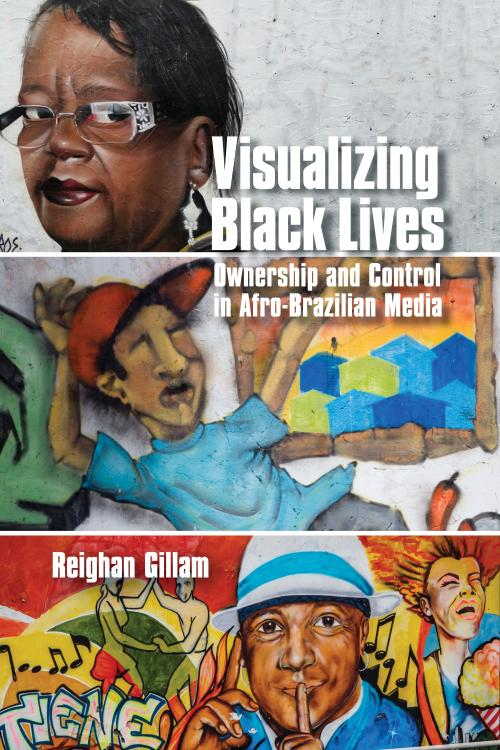
https://www.press.uillinois.edu/books/?id=36yhr7ew9780252044410
Karina Beras: What motivated you to pursue this ethnographic participatory research with Afro-Brazilian media makers in Brazil? What was this experience like for you?
Reighan Gillam: I developed an interest in the study of race and blackness in Brazil from my undergraduate classes at the University of Virginia. I had taken classes on the African Diaspora, race and ethnicity in Latin America, and Brazilian history and culture with professors like Mieka Brand Polanco, Brian Owensby, David Haberly, Wende Marshall, and Hanan Sabea. I went to graduate school intending to study Black social movements in Brazil, but I lacked a lens through which to focus. TV da Gente (Our TV) was founded during my early years of graduate study. It was the first television network in Brazil with the mission to racially diversify its programming. I decided to pursue the topic of Black activism in Brazil through media production.
Once I settled on a topic I was able to make connections with those involved with the network. During my second summer in São Paulo doing preliminary research, friends and acquaintances put me in contact with media producers who worked at Our TV. I was able to continue to meet with people and interview them about their experiences and aims with this network. I then expanded outward to other media projects by Black Brazilians. Finding people and Black media projects beyond Our TV was not easy. Since these producers and this media received little attention and recognition, I had to rely on word of mouth and chance encounters to find them. But once I found the projects and reached out to the producers, many people were open to sharing their experiences and I had very positive encounters at film screenings and during interviews.
Karina Beras: You note that Afro-Brazilian media productions are a medium for antiracist visual politics. While reading the book, I wondered what guided your description of this work as antiracist and in turn, how are you defining racism?
Reighan Gillam: It was certainly a challenge to channel the dynamic nature of this media through an argument that seems to narrow things down to the concept of antiracist visual politics. I came to see this media as articulating a form of antiracism from the producers’ intentions to challenge the visual field of media and television that largely excluded Afro-Brazilians in front of and behind the camera. They insisted on rendering their narratives in visual ways. I defined antiracist visual politics as how “media producers and the visual media they create identify, challenge, or break with racist practices, ideologies, and structures” (2). Drawing from several scholars, including Stuart Hall, and Joel Zito Araújo, I found that mainstream media perpetuates racism through the stereotypical representations of Afro-Brazilians, the low numbers of Afro-Brazilian workers in the media industries, their inability to contribute their vision to mainstream media production, and the mainstream media’s limited depictions of racism. Afro-Brazilian media producers represented racism in complex and varied ways, insisted on controlling the means of media production, and ascribed meanings to their own identities through their image creation.
Karina Beras: You make note of the diasporic connections that were made in order to help TV da Gente come alive. Can you speak a bit more about what you make of this connection and what prompted you to mention this transnational relationship in the book?
Reighan Gillam: TV da Gente was the first television network in Brazil with the mission to include Afro-Brazilians in key positions as producers and on screen. They hired Black directors, writers, and producers as well as Black program hosts and guests. They began in 2005 and went off the air a few years later. The network came about through economic support from Angola, inspiration from the United States, as well as agency and imagination from Afro-Brazilians. I explain these connections in the book to give a full accounting of the genesis of the network. The network exemplified a web of exchanges across borders between Black people that many understand as the African Diaspora. These exchanges between Black people can create the conditions that make possible certain sites for social change in other places, such as television networks.
Karina Beras: I think the matter of representation always finds centrality in conversations about racism, inclusion, and so on. However, representation can only take us so far in changing systems. This brings me to the question of, who in the Afro-Brazilian community gets to make decisions about representing Black Brazilian life? Which Afro-Brazilian groups are left out? Where and how do you think Afro-Brazilian media can continue to grow? What would you say are the limitations of this alternative media in terms of representation?
Reighan Gillam: I think there can be a struggle between the idea that representation can only take us so far and that it is important because we know the harm of erasing Black (and other) people from mainstream depictions. I view representation and media as another front in the struggle for Black expression, asserting a Black presence, and self-determination. Many of the media producers were college educated professionals who had achieved a middle-class status. Yet, people were not on the same page about how Afro-Brazilians should be represented in the media. Individuals had their own ideas and some visions came to fruition and not others. The media I included is produced by small groups and the person who put forward their vision were the people in the positions of director, executive producer, and sometimes show host. In the book I talk about producers privileging middle class, professional images of Afro-Brazilians at TV da Gente. Short films tended to focus on the lives and experiences of Black children and chapter 3 examined how racism was represented through the lens of irony. Alternative media may not reach large audiences, but it does offer a space for Black expression, creation, and experimentation. There is plenty of opportunity to hear more stories from LGBTQ Afro-Brazilians, working class Afro-Brazilians, women centered stories, comedies, and documentaries about individuals, historical events, and specific issues. Brazil is a country where at least half of the population is of African descent. Film and television have only scratched the surface of their experiences leaving plenty of opportunity for interesting and innovative Black stories to emerge.
Karina Beras: In describing the film Cores e Botas, you write that “Joana receives messages from television and those around her that do not affirm her appearance and communicate her inability to belong” (90). I was drawn by the word belong and curious if in any of your conversations people used that term to describe their efforts. And if so, how did they define belonging? What does it mean to belong in Brazil?
Reighan Gillam: This is a great question. I use the word belonging to describe how Joana, a young Black girl, desperately desired affirmation through participating as a backup dancer for Xuxa. Xuxa was a white, blonde entertainer of German descent in Brazil who had backup dancers that resembled her. This wall of white, blonde women defined an aesthetic, affirmed whiteness as a dominant measure of beauty, and implicitly communicated to Joana that she did not belong on television. I don’t recall my interlocutors using this term. Many of them expressed that they constantly had to assert their presence in different spaces by insisting on entering rooms where they were excluded and speaking up for themselves and their ideas. In the film, Joana finally embraces her own vision by acquiring a polaroid camera and developing her own pictures. The film Colors and Boots or Cores e Botas describes belonging for Afro-Brazilians as finding one’s own voice and using it. Many of the media makers were producing belonging for themselves by making a pathway as they walked along.
Karina Beras: In any of your interviews, did producers and other media workers explain why they perhaps felt the need to use humor, irony, and parody in order to depict racism and the absurdity of its denial? Are those common forms of communication or expression in Brazil?
Reighan Gillam: In chapter 3, I examine how different projects depicted racism in ways that expressed and challenged the contradictions of Brazilian racial ideologies and attitudes. For example, one program depicted racism as the producers lived and experienced it, which called into question common Brazilian ideas that downplay racism or outright deny it. They were aware that they used irony and many times they wanted to undermine common Brazilian ideas around race and racism. Humor, irony, and parody are common forms of expression and they have been explored by other anthropologists, such as Donna Goldstein. The Afro-Brazilian media producers who engaged with me lived and experienced the contradictions in Brazil’s racial ideologies. They constantly heard others saying that racism didn’t exist in Brazil or that racism was so much worse in the United States. Yet, they experienced and were the targets of racism when they were at work, at home, and generally living their lives. They also saw racism enacted through the increased numbers of Afro-Brazilians in poverty, their lack of access to education, struggles over land, and as victims of police violence. Irony emerges from exposing contradictions in the system, which they did by depicting racism in a society that denied its existence.
 CaMP Anthropology