
https://www.stevenfeld.net/acoustemology-four-lectures
Marina Peterson: It was a real pleasure to read the four chapters of Acoustemology: Four Lectures, which span your career. I was struck by the ways in which your work has been an active presence in my life since I was an adolescent. I bring this up not so much for the autobiographical, but for what it suggests about the significance of your work over the years, the ways it has circulated, and how it is situated in particular moments of thought. I had a copy of the Bosavi rainforest cassette you made with Mickey Hart as a preteen, which I listened to on my boombox, along with local Austin bands and mainstream popular music of the day. I probably received it as a gift from a parent, but listening drew me in to the Kaluli soundworld of human and nonhuman sounds and gave me a sense of what anthropology could be. You also had a public presence in Austin at that time as part of a vocal protest of Freeport McMoRan’s human rights abuses in Irian Jaya and its ties with UT and hill country development; the recordings drew these interconnected worlds into my bedroom. The Bosavi box set traveled with me through college, a kind of soundtrack to becoming an anthropologist of music and sound. The string band music paired with more traditional songs and rainforest soundscapes served as an argument for approaching indigenous peoples as modern, at a time when National Geographic described Papuans as a window to the past. This was also the moment when globalization was becoming a subject of study, with discussion of “multiple modernities,” or as Appadurai put it “modernity at large.” Your Public Culture article on world music was read eagerly by those of us looking for ways of bringing sound into these discussions, and for having it taken seriously. What I learn from this (personal) history is the presence and significance of your work at various moments, and the ways in which it has long addressed crucial conceptual concerns through sound. This continues with your recent project on heat, a powerful and incisive contribution to an analysis of climate change, in conversation with Latour, Descola, Chakrabarty, and others. What I especially love about the cicada lecture is the way it focuses on heat as a condition felt across species, cicada sound an automatic response to rising temperatures as a common acoustic experience around the world, which I read as a trenchant theorization of the Anthropocene. Can you speak to the ways in which this work has been in conversation with wider discussions in anthropology at various moments, and what it has meant to bring music and sound into these conceptual fields?
Steven Feld: Thanks so much for your generosity, Marina. It is lovely to be around long enough to enjoy how thoughtfully you and your generation of researchers have absorbed and continue to creatively expand the scope of that earlier anthropology of sound work, finding takeaways of use from my rainforest recordings, environmental political activism, writings on musical/sonic modernities and world music industrialization, and listening to/in Anthropocene realities.
To your specific question I would say that the ongoing conversations most close to me over 50+ years are ones in anthropologies of senses, perception, memory, emotions, bodies, affects, personhood, place, environment, media and intermedia, communications, images (especially photographic and film), materiality, property, poetics, dialogism and voice, aesthetics and art, globalization, modernities, indigenous representation, political ecology.
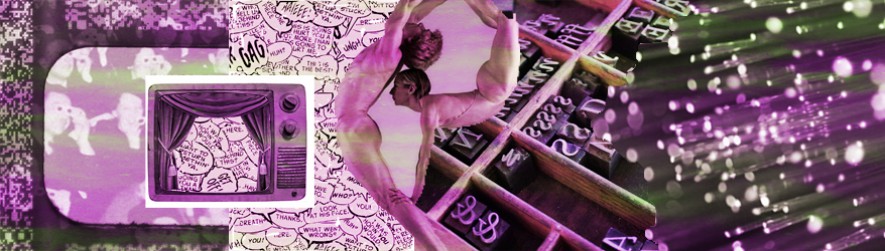
In one way or another all of these conversations are fused into this new intermedial and open access “book” Acoustemology: Four Lectures. The four lectures summarize my life of listening to histories of listening, from Papua New Guinea rainforests to European towns to West African cities, from birds to bells to toads to car horns to cicadas, from voices to tools to musical instruments, from material to spiritual presences. With multiple montage techniques of juxtaposed images, clips, sounds, and texts I explore sounding and listening as critical to understanding multiple relationalities, within, across, and among species, materials, and spirit presences. The backgrounds and historical footnotes to these conversations are further revealed in the book’s two dialogic appendixes, one addressing the “Hearing Heat” lecture and the possibility to recompose listening in/to Anthro/po/-scenes, the other concerning the way these many conversations led to fifty years of coining new terms, like anthropology of sound in 1972, and, twenty years later, acoustemology.
Marina Peterson: Acoustemology is a profoundly important term. There is really no other term like it, to get at how people listen as an ethnographic question, or “sound as a way of knowing.” Though it requires some work to expand knowing into bodily, sensory practice (which you do in the Keywords in Sound entry). I relied on it in Atmospheric Noise and teach a class on Sonic Ethnography that asks students to move from their own listening to focus on how others listen, relying on acoustemology as the anchor for what it means to listen ethnographically. I can’t find another word to use that helps do this work. Are there other terms or phrases that for you come close, or that do some of the same work?
Steven Feld: I don’t know. Certainly sound studies is now a major academic industry, including (at least) seven thick readers/handbooks/companions, and there are numerous textbooks and treatises with many heuristic proposals about the sound lexicon. I’m sure there are many new and interesting terms that I don’t know but that people are using to aid their explorations of sound in various contexts, and in various disciplinary discourses.
Regarding the term acoustemology: the book’s second appendix is a Feldicon conversation reviewing twenty-five of my coinages from the last fifty years. It includes a partial genealogy of acoustemology (acoustic epistemology, sound as a way of knowing). Among things I like to acknowledge about the background to the term acoustemology are: many conversations with Keith Basso that led to our Senses of Place conference and book; many conversations and debates with Murray Schafer about the limitations of soundscape and the deeper ethnographic and conceptual significance of Edmund Carpenter’s idea of acoustic space; years of conversations with Don Ihde about his Listening and Voice: A Phenomenology of Sound; many conversations with philosopher Edward Casey about an anthro-philosophy of place and body memory beyond Maurice Merleau-Ponty’s Phenomenology of Perception; conversations with anthropologist Nancy Munn (and earlier with Don Tuzin, Roy Wagner, and Annette Weiner) about relational ontology in Papua New Guinea, particularly what people hear and know about the world through listening to the environmental presence of ambiences, species, materials, and spiritual entities.
Marina Peterson: Toward the beginning of the first lecture you quote your own field notes, in which you write “…I have a Nagra.” Hi-fidelity recording equipment is an important part of your work, allowing you to capture sounds without interference or extraneous noise and to edit multiple tracks in a way that distributes sound spatially in ways similar to the rainforest. We don’t hear you, or the microphone, or the mixing board. What kind of compositional strategy is it to treat recording technology as transparent, a way of capturing sounds of a place but not revealing the practice of recording? It seems that you use recorded sound to support (rather than disturb or critique) an ethnographic real (as opposed to something like musique concrète on the one hand or the OS Collective’s remix work on the other), and I wonder if you would describe an anthropology in sound as what George Marcus (1982) described as “ethnographic realism” – a “mode of writing that seeks to represent the reality of a whole world or form of life”?
Steven Feld: Regarding the use of professional field recording technologies and studio techniques through my career, I’d say this. Technologically unprofessional recordings and technologically unskilled recordists are part and parcel of the insulting colonial legacy of ethnomusicology. I have always tried to resist and stand as far away from that lazy coloniality as possible. When we launched Voices of the Rainforest, the CD presenting in one hour the myriad multi-species sound interactions of twenty-four hours of a day in the life of Bosavi, at Skywalker Sound on Earth Day in 1991, Mickey Hart stood up in front of an audience of media and music industry heavies and said this: “So why did we do this, and why I am I part of it? It’s because I heard these amazing rainforest recordings Steven made in the 1970s, and when I finally met him and offered my compliments on his technical skills, he looked me in the face and said ‘why should rainforest music be recorded and presented any less well than Grateful Dead music?’ That put me in my place and made perfectly clear what this is all about: respect.” What else is there to say?
A second question you pose is about the visibility or audibility of my presence, my microphone, and whether or not certain forms of transparency yield to ethnographic realism and decline the possibility to disturb, disrupt or critique. With regard to this, I think that Marcus’ “ethnographic realism” is a profoundly un/der-theorized sledgehammer. Any literary theorist can explain very quickly that there are multiple kinds of realism in any genre; and any serious sound engineer or sound artist can immediately do the same. Is realism in any anthropological genre any different? Bakhtin 101. Forms of critique and disruption, no less realisms, exhibit no kind of unity and never have in any known discourse genre. All genres exhibit internal contradictions; they change and morph across the unfolding terrain of narrativity. “Realism” is always as potentially emergent and disruptive as it is latent and taken-for granted.
So: I make many kinds of recordings. There are at least seven genres audible in the examples for Acoustemology: Four Lectures. In some of these recordings my breath and footsteps (not to mention editing fingerprints) are all over the place, because one genre of recording (closer to the radio documentary aesthetic) involves making a self, a recordist, audible and present in the sound story. In certain other recordings there are figure and ground shifts and modulations but the space that is created is multi-perspectival rather than relating to the single point source of the microphone and announcement of the presence of the person holding it (this is particularly so in my recordings about bells create time and space consciousness in European towns). Going in a very different direction, some of my recordings are more immersive, composed using strategies from the toolkit of musique concrète and electroacoustic compositional design (for example the recording of the Hiroshima peace bell and cicadas). In other recordings I violate many of the supposed rules of naturalist environmental sound art; for example recordings where I don’t roll off the very lowest rumbling frequencies but rather selectively transform and allow them to help create the ambience and vibratory presence (Rainforest Soundwalks). Is that disruption and critique, or is it realist transparency? Both? Neither?
I think the most important aspect of an anthropology of sound in sound is the possibility to articulate theoretical ideas differently through sound recording and editing. An example I give in the book shows an image of the Bosavi composer Ulahi Gonogo sitting on a rock in a creek. Next to the picture is a ProTools mix chart of how I mixed the song that she sang there. There is a stereo track of her voice. Then there are stereo tracks at two different heights in the forest beyond the creek bank behind her. Then there are tracks of the water to her left, her right, and in front of her. Then there are tracks from just behind where I stood in the creek when I recorded her. All of these additional tracks were recorded just after I recorded her song. So why would I add all of these levels of sonic height and depth to the simple two track stereo recording of her voice? Well, because it allows me to theorize a critical acoustemological question. Namely: why only record and present what a singer like Ulahi sings when it is equally possible to record and present everything that she hears and sings with, to and about while she is singing? Put differently: can an anthropology of sound in sound recording theorize Ulahi’s acoustemological aura? Can it help us hear and imagine that in each gesture of her voice she moves through the creek as a bird flies it, as a human walks or swims it, all the while flashing back and flashing forward through a poetic image stack? And with all of that intervention through recording, through dialogic auditing and editing in the field, and then through studio mixing, is the result a token of ethnographic realism? A token of disruption/critique? Both? Neither? Or do these terms just fail miserably to characterize the complexly mixed genre(s) of the recording: documentary sound art meets cognitive anthropology meets ec(h)o-poetics.
Marina Peterson: You mention Valeria Luiselli’s use of acoustemology in her novel Lost Children Archive. I’m wondering if her discussion of “echoes” also resonates with how you’re using history. In her book, the main characters are making field recordings, with one trying to capture echoes of an indigenous past in a place. At one point the narrator explains what she understands her partner to be doing, “I think his plan is to record the sounds that now, in the present, travel through some of the same spaces where Geronimo and other Apaches, in the past, once moved, walked, spoke, sang. He’s somehow trying to capture their current absence, by sampling any echoes that still reverberate of them.” Her notion of echoes is different than histories (of listening) as learned, but I found it useful for thinking about how field recordings can move out of a realist mode of capture. Luiselli’s discussion of echoes also seems related to your discussion of “sound recording as a technology of memory, of capturing, holding, and slowing, of luxuriating in time, in the immediate and long past.” How do you understand the temporal capacities of sound recording in relation to place, or lived acoustemologies?
Steven Feld: I had the pleasure to discuss some of this with Valeria, whose book I find most remarkable for its acoustemological writings of voice, and its evocations of vocalic affect in the interactions of the parents and children in the car during the road trip. Yes, I like very much the playful incisiveness of her echoes. I found that her idea connected deeply with some of the ways I explored ec(h)o-poetics in Bosavi, that is, place and voice as co-resonant and co-resonators, finding the tension and play between the eco- and its echo. Valeria was able to connect these kinds of things to ways of writing memory and duration, and she also elaborates this kind of echoic exploration in the juxtaposition of the polaroid images and texts in the final part of the book, her scrapbook composition very much like the ec(h)o-poetics of a Bosavi song map. It was an honor to be both a real and a fictional presence in her novel, but I’m most deeply moved by her reflection on acoustemology, as well as her ability to read into the depth of the Bosavi world of poetic sound art.
Marina Peterson: What does listening as a practice mean to you? Is it primarily auditory, or does it necessarily include felt sound or vibration, wind, temperature, and humidity, vision and touch? The visual is also important in your work, but perhaps more in relation to the compositional. (You seem to treat the visual differently than sound, manipulating images to represent Kaluli mythologies and aesthetics for instance, while audio recordings immerse an audience in the sensory experience of a place.) Your most recent work is on heat, with the sounding bodies of cicadas an acoustic register of rising temperatures, which are of course also felt by those listening. You reject sound studies for its reification of sound, but there has been a lot of generative work in the field that argues for modes of listening beyond the ear, relationships between the senses, the potential of listening to images, and so on. Do you find this relevant for your work?
Steven Feld: Of course I do. Perception is the relationality of body to place, as Merleau-Ponty explained. Obviously listening is an embodied machine for emplacement, not simply a more limited matter of the excitation of auditory pathways. And sound is a fully capacious way of knowing because it is spectral, like light and heat, like smell and touch. Sensory modalities are always to some extent intersensory; one sense echoing into another, creating multiple registrations of what we call feeling. So listening as a practice for me is a full way of being a sensing, absorbing, reflecting body in the world, a way of lighting up, heating up, apprehending, witnessing, participating, in short, feeling/being relational. Sound is an excitation, but more a sensory invitation to something larger, something that penetrates the body even more deeply. I’m not a philosopher, but if I was the book that I would have wished to write about sound is the one that was written by Jean-Luc Nancy, titled Listening (the original French title was A l’écoute). I cite it multiply in the book; it fleshes out these little bits of answers to your question.
Marina Peterson: The book is a true multimodal publication, at a moment when there is increasing interest in the extra-textual and in alternative modes of publishing. What advice do you have to anthropologists invested in experimenting with form and publishing venues?
SF: My advice is: Resist the plantation system of university press publishing in any and every way you can. Resist the imperious academic journal corporatization of knowledge and the ownership paywall greed machine of the colonizing broligarchies (Wiley, Routledge, Taylor and Francis, Cambridge UP) in any and every way you can. Join a collective, create collaborations, learn the pleasures of risk, and learn how to use the available technologies to publish and control and share your work. DIY open access. “Give it Up, Turnit a Loose!” (James Brown).



 CaMP Anthropology