
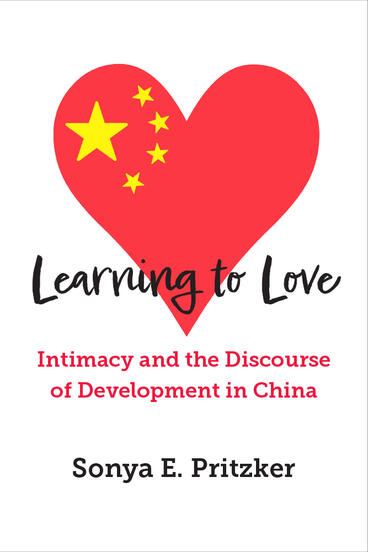
https://press.umich.edu/Books/L/Learning-to-Love2
Jiarui Sun:. Throughout the book you have emphasized that New Life, the psychospiritual self-development program you studied, did not “have any intentions of politicizing or otherwise developing participants’ social or political engagement” but you believe the participants’ experiences nevertheless open up possibilities to show how existing systems of power may potentially be interrogated or reproduced. What led you to such a seemingly apolitical site when you are clearly very much concerned with issues of social justice and unequal power dynamics in China?
Sonya Pritzker: New Life is not an explicitly politicized space, yet my observation is that—for some participants at least—the kinds of group exercises and self-directed interrogations conducted there generate provocative encounters and experiences that afford reconsideration of hegemonic systems and structures. My short answer for why I chose such an apolitical site: I subscribe to the notion that there is absolutely nothing that is not political.
The longer answer relates to the way that directionality works in ethnography. It is often imagined that we formulate our interests as intentions that we write up in proposals to conduct research in sites where we imagine we will find communities and practices corresponding to those interests and commitments. Then we go do research and write it all up in a process that further bolsters our interests and makes us experts in the topic. But in reality, it also often moves in the other direction: our research in certain sites and with certain communities and individuals moves us to discover and/or more deeply refine our interests and value commitments. That is certainly what happened with this research: it was, more than anything, the participants who pushed me to reframe my analysis in terms of the possibility that self-development work, especially in a group context, invites an interrogation of systems of power as they exist within the self. Time was also a factor. A lot happened between 2014, when I began the research, and the publication of the book in 2024, including multiple collaborations with colleagues in anthropology and related fields and the COVID-19 pandemic. The pandemic in particular pushed me to consider the intimacy of the political at a whole new scale. The final book manuscript was also deeply influenced by my current research on the Living Justice Project, which began in 2020 and which focuses on the theories and practices in “embodied social justice”(see, for example, brown 2017, Johnson 2018, Haines 2019, Menakem 2017, Hemphill 2024). All of these directly influenced the final shape that the book took on
Jiarui Sun: In the book, you mention that many of the sentiments and “affect” you discussed are not explicitly articulated–either because they cannot be said (that is, as public secrets) or they are too ambiguous. What, then, were/are your strategies when it comes to ethnographically identifying and analyzing affect and what do you think makes it important for ethnographers to pay attention to such subtle, implicit, yet nevertheless deeply social experiences?
Sonya Pritzker: My strategy for studying affect is firmly based in the perspective, in linguistic anthropology, that affect/emotion is not emergent in interaction. People may or may not use words, but interaction always includes tone of voice, gesture, prosody, rhythm, and embodied engagement with the world of object and non-human others, to name just a few (see for example Nakassis 2016, Goodwin 2018, Pritzker 2020). It is not therefore terribly challenging to study emotion or affect, especially if you are studying interaction. We just need to resist the temptation to identify specific emotions as they are expressed by specific individuals. Rather, we can study affect by looking at how interactants respond to one another over a series of turns. We can also see it in the various stances that speakers adopt (affective, epistemic, and so on), which index their felt/affective experiences in and of the world. In my opinion, it is always deeply important for ethnographers to attend to, because no matter what we are researching, people’s bodies are always affected by others and by conditions in the world.
Jiarui Sun: Throughout the book, you present group therapeutic activities and interviews as scale-making processes, and you introduce two analytical terms, scalar intimacy and scalar inquiry. I understand scalar intimacy as the way in which people scale themselves in relation to the world around them, and scalar inquiry being how they interrogate dominant structures. If this reading is correct, can you talk about how these two concepts constitute a “paired process”?
Sonya Pritzker: Theoretically, scalar intimacy and scalar inquiry could be said to constitute a paired set. Scalar intimacy, however, is more fundamental. It is happening all the time. We don’t all run around talking about how we use chronotopes and other discourse features to scale ourselves in relation to dominant ideologies and structures of power. But it is certainly something we do. By we, I mean that all humans engage in the agentive, interactive, and embodied project of situating (or trying to situate) ourselves in relation to other people, other living beings, and existing ideologies.
I would hesitate to say the same thing about the kind of questioning involved in scalar inquiry, which depends on a lot of different factors like the system you live in/under, your temperament and putatively natural or cultivated ability to tolerate uncertainty, the media you are exposed to, other things happening in the world, and on and on. But scalar inquiry often occurs when one’s world is, for whatever reason, turned upside down. Personal and/or collective challenges here force us to reconsider the way we situate ourselves in the world, which can generate a lot of anxiety and discomfort. Many seek out alternative frameworks to re-situate themselves in the world. Scalar inquiry, however, has more to do with staying with the questions and engaging in a sustained, collaborative, and emergent kind of inquiry that refuses new forms of certainty, at least to some extent, such that we remain open to possibilities that do not yet exist.
Jiarui Sun: I’m curious to hear, how do you make sense of the role your positionality plays in your interlocutors’ scalar work? Since anthropologists are also scale-makers, what do you think is a good way to articulate our own scale-making work in relation to our interlocutors’?
Sonya Pritzker: I certainly did my very best to continually reflect upon my own positionality throughout this research as well as in writing it up. My position as a cultural outsider, for example, often afforded more openness than if a participant was talking to close friends or family. My position as a perceived insider with regards to the realms of psychospiritual knowledge folks were engaging with, on the other hand, may have moved participants to present themselves to me as knowledgeable, open-minded people who understood the material and shared a lot of the same views on the world that I had–or that I was imagined to have.
Both of these are scaling processes, which are always relationally situated. Both scalar intimacy and scalar inquiry are enacted as (re)positionings of self in relation to both co-present and non-co-present interlocutors: in any conversation that is oriented to getting along, we work to establish a kind of common ground as we continuously scale and situate ourselves in a shared world, even when we have different backgrounds and, in some cases, different moral commitments and priorities. A whole different set of moves arises in conversations where we orient to not getting along, of course (certainly sometimes necessary) or in conversations where we come to recognize that the way we situate ourselves is incompatible in some kind of fundamental way. Thankfully, this research consisted mostly of opportunities for mutual scaling that afforded a lot of intimacy and vulnerability. So no matter if I was perceived as an outsider or an insider, this kind of scaling work often made it possible for me, along with my interlocutors, to position ourselves as colleagues or friends who were focusing, together, on a challenging experience or difficult issue that one of us was experiencing or had experienced. It positioned us, in this sense, as equals who, despite having different backgrounds, could connect more vulnerably.
All of this arguably speaks to a broader methodological understanding, in linguistic anthropology, of the ethnographic interview as an interaction rather than a transaction (see, for example, Briggs 1984, Perrino 2022), as opposed to the standard (western) model for interviews where the interviewer is positioned as the collector of the interviewee’s pre-existing and enduring ideas, experiences, and attitudes. That isn’t to suggest that we shouldn’t do our best to focus, in ethnographic interviews, on investigations of the interviewee’s (rather than our own) experience. To that extent, I think it is important to craft interview questions such that they openly invite interviewees to set their own scales as they respond.
Jiarui Sun: What do you think the experience of Chinese participants of New Life can teach us about the shared conditions of living in, say, capitalism that transcends geo-cultural boundaries?
Sonya Pritzker: I would say that the experience of Chinese participants at New Life offers insight into the basic fact that we are all affected by conditions of oppression, especially in relation to capitalism and patriarchy. Although way this translates into experience may differ, I think there are possibilities for the kind of scalar inquiry I discuss in the book to happen anywhere. Especially in group contexts where there is so much opportunity to begin to understand our own suffering as we witness others. At New Life, of course, there was more homogeneity than we might expect in other settings, both in terms of ethnicity and class and cultural background. I talked a lot throughout the book about how New Life is a Hantopia: rural laborers, Uyghur or Kazakh Chinese citizens or Tibetan Chinese citizens were not in the room. So there wasn’t a lot of grappling with difference, or connection across difference. I think that made it particularly possible for folks to begin engaging in the kind of scalar inquiry I describe throughout the book. In terms of understanding our shared conditions, here are more hurdles conversations across difference. Because no matter how much conditions are shared, people’s experience always differs, especially based on their social location.
Jiarui Sun: In the book, you talked a lot about the family constellation therapy, or in Chinese, jiapai. This practice begins with one focal participant selecting people from the group to embody significant people in their personal history. Those who are selected don’t know the people they are embodying, and they probably don’t even know much about the focal person either. This makes me wonder what makes jiapai so powerful for the focal person? To what extent does this practice require participants sharing some specific kinds of cultural knowledge? And what do you think jiapai teaches us about the politics of similarities and differences?
Sonya Pritzker: I think—and as Whitney Duncan and I discussed in our 2019 article– what makes it so powerful is the lack of interpretation and witnessing ourselves from a perspective outside of ourselves, in the company of others. When you are the focal person and you see someone else crying when they see your past experience, or your mother’s past experience, getting enacted in this constellation, then it indexes to a shared history in which patriarchy has created conditions for women that are burdens passed down to us. All of a sudden, it’s not just your issue, it’s everybody’s problem, and it traces back to history: it’s our problem.
The idea that jiapai can only be conducted among people who are from a similar background is really interesting. I would guide you and other readers back to the section where I talk about cultural components in jiapai. I think in the Chinese context, we have a lot of folks from a similar background, which generates this shared experience that I don’t think prevails when you have participants from a different background. I have been to jiapai or family constellation in the US and I didn’t feel this shared vibe. To be clear, I don’t think there necessarily is an absolute cultural difference. I think it’s more about when you have people from different backgrounds, you have to face questions of not being able to mirror each other in the same ways as we do with people with similar backgrounds. And I think that the way forward for scalar intimacy or scalar inquiry does lie in learning to have these connections across difference.
Jiarui Sun: In the book you talked a lot about the hope and horizon opened up by the psychospiritual practices your interlocutors were engaged in. However, towards the end of it you are honest with your “despair” (267) and “lack of optimism” (268) in the future of the heteronormative, patriarchal, Han-centric Chinese society. Can you say a bit more about the tension between “hope” and “despair” that you observe in your work? And what do you hope this book could do for scholars of contemporary China as well as people living in China in 2024?
Sonya Pritzker: COVID and other events in the world inevitably influenced my choice to end what is arguably a very hopeful book with an emphasis on a lack of hope, even a kind of despair. I was quite intentional with that move, however, for a number of reasons. First, as I say throughout the book, even though I absolutely disagree with what the common anthropological critique that therapeutic self-development is inherently apolitical (that is, that turning inwards towards the self ipso facto means turning away from society/the social or what is positioned, by such critiques, as existing outside of the self), the reverse is not necessarily true either. In other words: even though therapeutic self-development—self-care, self-growth, and so on—especially when carried out in a group setting, can move some participants to consider the social at various scales, that is often not what it is explicitly designed to do. Except in fields, like embodied social justice, where leaders intentionally incorporate a “political education” (Haines 2019) and engage practices designed to foster the cultivation of political consciousness (Friere 2000), it might be said to exist only as a kind of whisper, an indexical field that may or may not be taken up by individual participants. Those individuals who do take it up, moreover, do not necessarily connect with likeminded others in order to engage a broader conversation in society or in order to organize in the kind of collective action that might overturn longstanding systems of power that are unjust and exclusionary (patriarchy, global racial capitalism, Han/white supremacy, and so on).
Second, bringing this argument to China–where collective political action is intensely constrained in a whole host of ways that it is not in the U.S. and Europe—adds another layer (perhaps many layers) of complexity. Even in sites where political participation and protest are encouraged to a greater extent than they are tolerated in China, however, it is far from easy to transform society and there is often a lot of despair and grief when one confronts the seemingly never-ending ways in which injustice prevails. This is not to say that there are not important moments—as sometimes occurred at New Life, and which occurred during the 11-hour Clubhouse conversation between Uyghur and Han citizens described in the conclusion, where the conversation leaps out of the individual into the collective and affords consideration of alternative possible futures. If one is concerned with hope for a just future, however, how much faith can one ultimately place in such extraordinary moments?
Third and finally, I think what it often comes down to is the way that we understand the tension—as you say—between hope and despair—or hope and fear. Are they always opposites? Not necessarily. I am currently working on an article focusing on chronotopes in social justice movements, for example, and without getting into details, much of it grapples with the ways in which mainstream ideologies and practices related to social justice often orient within a (spatio)temporal framework of progress (see, for example, Atchinson 2015, Comer 2023). Here, they also often orient, implicitly or explicitly, to what Michele Moody-Adam’s calls “the standard account of hope” in which “hope is ‘expectant desire’: a stance that combines wanting or desiring something to happen or be true with thinking that it could really happen or be true” (2022: 237). In this framing, hope and despair are absolute opposites, with despair emerging from the belief that our desire (for justice or for anything) cannot ever really happen, that it can and will never be true. She contrasts this, however, with Vaclav Havel’s understanding of hope as “an ability to work for something because it is good, not just because it stands a chance to succeed…. It is not the conviction that something will turn out well, but the certainty that something makes sense, regardless of how it turns out” (Havel 1990: 181-82). From this perspective, importantly, hope is an orientation towards the good that is not at all opposite from despair. In alignment with this, practitioners of embodied social justice often remap hope in ways that disturb binary notions that pit hope against despair. Here, they suggest that a genuine willingness to confront what is in the present opens one up to a great deal of despair at the same time as it reorients you towards hope as a liberatory practice in the present (see, for example, brown 2017, Hicks Peterson and Khouri 2024). This is precisely the kind of despair/hope integration that I tried to convey in my conclusion.







 CaMP Anthropology