My dissertation, Being Both: Negotiating Identity, Surveillance, and Belonging within Queer Middle Eastern and Queer Muslim Communities in the United States, explores how queer Muslims and queer Middle Eastern people in the U.S. navigate overlapping systems of Islamophobia, racialization, and homotransphobia. Based on ethnographic fieldwork in New York City and in digital spaces between 2020 and 2022, I analyze how surveillance and social scrutiny shape how people express identity and belonging across different audiences—family, friends, lovers, and online publics.
Page 99 captures the fraught intimacy of recognition online. I describe how a simple greeting—“I’m a Muslim too”—on a gay dating app can evoke both connection and fear. For queer Muslim men, such moments are charged with risk: being identified as Muslim might affirm kinship, but it can also expose them to outing, gossip, or familial shame. As one passage reads,
“Even though the risk may be small that screenshots of their Grindr profile and photos could be seen by family and friends, queer Muslim and Middle Eastern men are highly concerned about proactively managing the consequences if such a data breach were to occur. This anxiety about data insecurity shapes decisions they make about expressing ethnic and religious identity on gay dating apps and often limits their willingness to share personal information with other men who look like them until they know their interlocutor can be trusted.”
This moment distills a central theme of my project: the tension between visibility and safety. I call this dynamic observational discipline—the anticipatory awareness of being seen and the strategic effort to manage that gaze. Page 99 shows how technological infrastructures of dating and surveillance intersect with cultural and moral frameworks, producing a distinct affective terrain of cautious desire and mediated belonging.
Across the dissertation, queer Muslim and Middle Eastern participants navigate which versions of themselves can be legible and to whom. Through these micro-practices of watching and withholding, they create new possibilities for being both—queer and Muslim, Middle Eastern and American—within social worlds that often render such coexistence impossible.
Since completing the dissertation, I have been teaching business communication at Indiana University, where questions of identity, audience, and representation remain central to my work. Returning to page 99 reminds me that every act of communication, however brief, is also a negotiation of risk, recognition, and belonging.
Page 99 of my dissertation offers only a half-page of writing. The top half contains a screenshot from YouTube of the original soundtrack (OST) for the Hum TV drama Aitebaar (trust) seen below. The page is near the conclusion of the (very long) first chapter, “Drama ascendancy: genealogies and dominance of remediated televisuality.”
The page nevertheless sheds light on an important example in the chapter and a jumping off point for considering the wider dissertation. The chapter that traces connections between print culture, television, and online video distribution in Muslim South Asian media economies. It theorizes ‘ascendancy’ in relation to interlocutors’ framing of their media traditions, lineages, and transmission as well as their labour in the context of ascendant.
The dissertation examines how the digitalizing of broadcast media such as networks’ simulcasting of shows on YouTube, the use of platform analytics, and Big Data audience measurement techniques have shifted the industry’s perceptions of its audience. Through a multi-sited and multimodal ethnographic approach based in Karachi, diasporic communities, and online, the dissertation argues that processes of audience appraisal, feedback, and the segmentation of viewership have not only generated new logics of economization, but also that these cannot be appreciated without contending with the industry’s representation of religiosity.
Screenshot of the Aitebaar OST on YouTube, approximately one year after being uploaded (accessed 7 February 2023)
Aitebaar is one of the drama sets where I spent time getting to know crews, production practices, and rhythms of creative spaces. I first encountered the OST at the headquarters of a major production house, just off Karachi’s commercial center along I.I. Chundrigar Rd. that was doubling as a set on that day. After filming, I went with the cast to a small office to view the completed OST before it was uploaded to YouTube. The OST reflects different ways that dramas extend far beyond the TV series alone, how these extensions generate the dramas’ intermedial power, and the mediatization of their religious vernaculars.
On p. 99, I highlight how lines such as the refrain that is superimposed on the video, meri wafa pe tujh ko, aitebaar na raha, (translates to “My faithfulness/devotion is no longer trusted by you”), contains multiple meanings. This devotion indexes both plot-specific romantic elements as well as metaphysical ones. Such heteroglossia is common in the verses of qawwali and other Urdu poetics. These are appeals to genealogies of musical practice and poetics that feature as central elements for the marketing and consumption of these televisual productions.
Montpellier, Elliot. 2023. “Mediatizing Islam: the digital turn and the promotion of piety in a Pakistani culture industry.” Ph.D. diss., Philadelphia, PA: University of Pennsylvania
Eléonore Rimbault: Much of the energy of The Globally Familiar derives from your candid and involved focus on the young b-boys and rappers you worked with in Delhi. Their everyday experience is a point of departure that leads you and the reader to engage with many longstanding lines of anthropological research. It also informs the concept of the globally familiar that is the central analytic of this book. In a few words, could you explain why the globally familiar emerged as a central idea for this book, and how it reflects the practices and experiences of the youths and artists you spent time with?
E. Gabriel Dattatreyan: Thank so much for engaging with the book and for your thoughtful questions! I first started to think about what familiarity and the familiar might mean for my project in early 2013, when I spent time with a couple of branding consultants who were hired by global multinationals interested in cultivating India’s enormous youth market segment. Drawing from 21st century marketing discourse that has increasingly moved away from marketing products towards inculcating lifestyles, these self-styled experts were charged with fostering the nascent and globally wired youth scenes in the country by curating a series of events in major cities across India (Bangalore, Mumbai, and Delhi) that featured local b-boys, skateboarders, BMXers, graff artists and so on. In our conversations, the consultants repeatedly used the term familiar to describe the desires and aspirations of young people across the world in relation to consumption, urban space, and practice, specifically youth cultural practices like b-boying or skateboarding.
For these branding consultants, producing the familiar through the events they curated and the digital traces of them that circulated in social media was a way to signal the kind of always already global connectedness between metropolitan centers across nation-state boundaries that has only intensified through digital connection. They did so by mobilizing youth cultural practices and amplifying their aesthetics in the events they curated as well as introducing new ones, hoping they would stick. Something clicked for me in these conversations. I realized the hip hop practitioners in Delhi I spent time with, albeit in a different register and towards different ends, were also producing the familiar through their online and offline practices in ways that put them, their city, and their neighborhoods on the map, so to speak, as global subjects.
Once I got hooked on the concept, I couldn’t stop thinking with it! It did, however, take me a while to write about it as I couldn’t wrap my head, at the time, around how the different spatial and temporal scales these young people traversed – the local, national, the transnational, the past, and the present – coincided and informed one another. I also felt uncomfortable, early on, with utilizing a synthetic term as an explanatory analytic when it wasn’t a term that my hip hop interlocutors were using or a concept within the broader global hip hop lexicon. I finally came to terms with theorizing the familiar, partially because I couldn’t unthink its explanatory power but also and importantly because I felt that it resonated with my experiences in Delhi in ways that were respectful of my youthful participants self-making projects.
Eléonore Rimbault: I was struck by the way your writing about hip hop in Delhi conjures up a portrait of the city that includes so many of the intimate, idiosyncratic, and perhaps, globally not-so-familiar features of this city. Whether it is the transformation and gentrification processes in the Khirki neighborhood, or the routine ways in which people of different class backgrounds have made Delhi’s malls or the metro their own, or the kin networks of hip hop artists and their anchoring in specific neighborhoods of the city, your work is an invitation to think about urban space through people’s engagement with the city. Do you think that the book’s attunement to Delhi can be explained by the street-focused character of hip-hop, or does it have more to do with your approach and your commitments as an anthropologist?
E. Gabriel Dattatreyan: I knew, early on, that I wasn’t interested in writing a book that focused on hip hop cultural production in Delhi in ways that, for instance, narrowly focused on one of its elements (b-boyin’ or MCing, or DJing) or that thought through the media histories between Indian popular cultural forms and the emergent practices of the young men I was getting to know. More to the point, I didn’t want to write a book that either obscured hip hop or over-invested in the micro-specificities of its practice in Delhi and India. I was more interested in how my participants’ mobilization of hip hop’s artistic practices and their media making endeavors for online circulation offered a lens to carefully think about their lives within the changing contours of the city.
Hip hop, of course, lends itself to an engagement with the urban. As a musical, poetic, visual, and kinesthetic genre and discourse of practice that was born in the tumult of structurally produced economic inequality that engulfed the South Bronx in the 1970s, it has been long engaged with the politics and poetics of street life with depictions—both realistic and fantastic—of classed, racialized, and spatialized struggle and projects of emancipation. My participants’ hip hop experimentations—as rappers, graf writers, and dancers—took me metaphorically and physically into Delhi’s intimate and idiosyncratic topographies. Our meanderings through the city offered me an opportunity to think about and, ultimately, write about their vision of and for the city that at once celebrated its particularities even as it strove to make these very same features familiar.
Eléonore Rimbault: The Globally Familiar pays great attention to the technological mediation that conditions the aesthetic of hip-hop in India. Your portrayal of groups of young people hanging out and gathered around their phone screen, for instance, is striking, but your attention to fieldwork-like interactions occurring through social media long after your fieldwork was over is another reminder of how the anthropological method is evolving. As you point out in the book, these moments and modes of sociality are familiar much beyond ethnographic work. Do you think some of your findings on the mediation of a hip-hop aesthetic in South Asia are applicable to other domains of our lives and to professional cultures, such as our own as anthropology professionals?
E. Gabriel Dattatreyan: Absolutely, although application can be a tricky thing. I hope the familiar, as I have theorized it in the book, invites engagements within other social domains in ways that recognize and attempt to broadly and specifically think through the profound ways that communications technologies are shifting how we interact with each other and how we imagine the world. To specifically engage with processes of inventive mediation, however, requires a careful appraisal of the particular material, social and political stakes of online/offline participation within designated communities of practice.
For the working-class young men that I worked with in Delhi, producing the familiar was and continues to be a way to stake a claim to the city they grew up in and, crucially, a means to create local and transnational relationships through these claims. An integral part of the individual and collective claims they make through hip hop’s practices is that Delhi is part of a global network of capital that locates racialized, classed, and gendered bodies in ways that are at once recognizable, legible, or familiar, even as they are particular. This process of claiming through creative mediation is generative and, as I show in the book, creates economic, political, and social possibilities for these young men. It might be the case that the familiar, as I have developed the term, doesn’t quite offer the conceptual framing that is required in other worlds of practice and exchange. In that case, new conceptual language needs to be developed. Regardless of the conceptual language we use to theorize processes of digital mediation within specific communities, what I think is important is that we—as ethnographers—attend to the material, political, and social underpinnings and consequences of online communicative and creative practices.
Eléonore Rimbault: From a regionalist standpoint, your attention to the digital mediation of hip-hop sociality and your development of the idea of the globally familiar resonates with previous works conducted in India on mediation and on the global as a scale, including the works of some of the scholars that you cite, such as Arjun Appadurai, Arvind Rajagopal, William Mazzarella, and several others. It seems like the conceptual work on the global in India closely tracks the transformation of the media through which ideas, politics, and aesthetics are produced and reproduced. How do you position your book in relation to these other ways of articulating the immanence of a global scale, and do you think there is something about Indian cities as locales that prompts this form of theorization?
E. Gabriel Dattatreyan: I would caution against approaching a particular socio-historic context, in this case India, as more conducive to theorizations of global mediation than other places in the world. This sort of approach reminds me of a bit of apocrypha that I first encountered in graduate school many years ago and again, in the British social anthropology worlds I traversed when I was based in London. In this 20th century anthropological formulation young, enthusiastic anthropologists from across Europe and North America were encouraged to study certain themes or topics in certain parts of the world – hierarchy in South Asia, exchange and gift economies in the Pacific, political systems in Africa, and so on. One’s theoretical interests, in short, determined where one went to do fieldwork.
Perhaps another way of framing this discussion – rather than thinking about how particular places are more amenable to certain theoretical potentials— is to think carefully about the relationship between fieldwork and citation. Undoubtedly, before and during fieldwork I was influenced by reading all the tremendous thinkers you named who, together, have developed a rich media anthropology of global India. In addition, there were many other media/visual anthropologists working in India that also shaped (and continue to influence) my thinking. For instance, Chris Pinney’s work on visual cultures in India, Frank Cody and Sahana Udupa’s work on the news, AmandaWeidman’s work on practices of distinction amongst Carnatic musicians, and Teja Ganti’s careful and sustained work on Hindi cinema worlds have all pushed me to broaden and specify my thinking around my encounters in Delhi. However, I couldn’t solely engage and carefully think with these scholars who have worked in India or the region around questions of mediation and cultural production.
My unique challenge and responsibility, given that I was trying to understand why young racialized men in Delhi were somewhat suddenly picking up digital hip hop to create new self-descriptions, social worlds, and economic opportunities, was to carefully engage with hip hop scholarship, specifically, and Black Atlantic scholarship more broadly, particularly the work that has focused on the African diasporic arts and its spread across the globe. For me what was at stake in my book project centered on bringing these distinct bodies of scholarship into conversation in a carefully calibrated relationship to what I was witnessing and participating in on the ground in ways that animated the otherwise obscured colonial underpinnings of the global in India. So, while all of the scholars you mentioned were incredibly important, particularly in the years before fieldwork where I was voraciously reading everything I could to prepare myself, my fieldwork demanded a different engagement with immanence that put race, gender, and place across colonial geographies at the forefront of my thinking.
Eléonore Rimbault: Finally, I am wondering if you had some thoughts you’d like to share on the way hip hop has developed more recently in Delhi and/or India. Do you see the affirmation of caste, class and ethnic identities in South Indian hip hop (for instance) as re-articulation of the Hip-Hop ideologies you identified circa 2012? More broadly, what are your thoughts on the current circulation of desi hip hop outside of Delhi, for instance, in South India, or on Punjabi hip-hop produced in Canada?
E. Gabriel Dattatreyan: Thanks for this question. There is a lot to say on this but try I’ll keep my response concise. There have been enormous shifts and changes in what can now be described as an Indian hip hop scene since I finished fieldwork in 2014. First and foremost, mainstream hip hop music production has exploded in the last several years as Indian diasporic entrepreneurs, transnational media conglomerates, and more recently, big players in Indian popular cultural worlds, have invested in its potential. As a result, several of the MCs I met in Delhi who were just getting started when I met them and whom I helped produce their first YouTube videos have been catapulted to fame. Their rise to stardom, of course, has had a direct impact on their younger peers who see and want to emulate their success.
With the release of Gully Boy in 2019, a blockbuster production from Zoya Akhtar, the aspiration for hip hop fame across the country has increased ten-fold. Set in Dharavi, Mumbai, commonly referred to as the largest slum in Asia, Gully Boy narrates the coming-of-age story of Murad, a young Muslim man who rapidly transforms from hip hop enthusiast to local hip hop sensation. Gully Boy, with its constant referencing and aestheticization of music and video production for social-media circulation as key aspects of hip-hop potentiality in the contemporary moment, captures, albeit in clichéd ways, some of the affective sensibility of the globally familiar. The film’s success in India and globally also offers an example of the ways in which marginalized masculinities and the spatialities they index in India are currently being imagined and mobilized by mainstream media interests to produce capital and cultivate desire.
With the commercial success and increasing visibility of Indian rap, there has been an explosion of MCs across the country who hone and practice their skills in local ciphas while producing content for social media circulation. What I have been most excited about is how these emergent rappers have embraced the poetics of hip hop as a modality to be explored in their local languages. When I first arrived to Delhi in 2011 to check out the scene, the rappers I met were trying to rap in English and, at best, were switching between Hindi and English in their raps. Since 2013 there has been a decided move towards rappin’ exclusively in Hindi, Punjabi, Bhojpuri, Tamil, Telugu and so on. The move towards rappin’ in regional languages has opened up new and exciting opportunities to bring together localized musical and poetic traditions with hip hop which, of course, opens up new intellectual and ethnographic projects. I’m really excited for the work of Pranathi Diwakar, for instance, who has explored how young people have combined Gaana musical traditions preserved by Dalit communities in Tamil Nadu with hip hop to produce a new sound that elucidates the politics of caste in a contemporary frame. For Dr. Diwakar, that has offered opportunities to theorize caste, race, and the politics of space in Chennai in ways that are productive and grounded. It’s worth mentioning there was a precedent for hip hop’s linguistic localization in the Punjabi hip hop/bhangra scene, which has a longer relationship – through its diaspora – with Atlantic world cultural formations. But that story, like the work by Dr. Diwakar, is for another time and for another scholar!
The point that I suppose I’m trying to make is that even as hip hop has become a commodity form in the subcontinent, it has also continued to be a viable vehicle for political and social expression that is cognizant of and takes up older cultural forms. As such, hip hop continues its fifty plus year career of unashamedly taking up a capitalist hustle while offering opportunities for its practitioners to explore and critique the normative order while voraciously reanimating and remixing locally available sounds and images. Of course, political expression, critiques of power, and inventive cultural bricolage are not always something to be celebrated. Over the last several years I’ve been tracking the shift in tenor and tone of several of my participants, who have turned towards the so-called decolonial promise of Hindutva. I’m currently writing a piece with my long-term collaborator and friend, Jaspal Naveel Singh, about how the elections in 2014 that brought the BJP into power at the national level have impacted in the nascent Indian hip hop scene. Over the years, some of the key figures in the scene have begun to celebrate a Hindu centric right-wing aesthetic and political sensibility in their creative endeavors and public engagements. This has, unsurprisingly, created rifts amongst practitioners. We are grappling with how to tell this story in a way that elucidates something about how ideology inculcates itself in peoples’ world views in real time and the multiple effects of these shifts in perspective and stance. All this to say, what I gestured to in the book as hip hop ideologies – specifically focusing on the ways external and often diasporic actors shaped, in the early days of the scene, the ways in which social difference should be approached and represented through hip hop – has become multiple and localized in ways that are complex and require further attention and study.
Shikhar Goel: Describe for us some intellectual motivations behind writing this book. What were some significant moments that led you to this book project?
Francis Cody: This book came out of a longstanding interest in news media circulation and publics that I had already developed while doing research in rural South India for my dissertation. But after a few articles that I wrote based on fieldwork done during that time, I still had a very vague understanding of where I wanted to go with the materials I was collecting until I realized that I was increasingly dissatisfied with how the literature on publics was so thoroughly grounded in liberal political theory. This was the case even among the most important critics of liberalism. And since I was approaching questions about democracy and the public sphere from postcolonial theory and the literature on populism, I saw an opportunity to intervene. The occasion for this was an article, later published as a book chapter in an edited volume, that I was asked to write on the theme of media and utopia by the wonderful media scholar, Arvind Rajagopal. By examining how crowds of angry supporters of political leaders attacked newspaper offices when their leader had been defamed in the press, and how newspaper editors published articles with the potential for such attacks to occur in mind, I was able to show the co-constitutive relationship that had developed between crowd violence and print capitalism, thereby undermining some of the key binaries underpinning liberal theories of publicity.
My interests had moved past liberalism or its postcolonial critics to hone in on political logics of event-making and spectacle. And from that starting point, I took my lead from the reporters I was becoming close to. I paid special attention to how limits were imposed to control what could be published as news, and how those limits were sometimes used as opportunities to amplify the importance of an event when newsmakers chose to breach them. For example, all the journalists I talked to complained of the government’s overzealous application of criminal defamation laws or the degree to which judges were likely to charge a journalist with contempt of court if they were unhappy with how they were being portrayed. And yet, I noticed that they would continue to publish news items that drew these charges, and some even appeared attract such charges on purpose for the sake of their own publicity. I saw this dynamic unfold across a range of contexts, echoing what I had learned about crowd violence against journalists, and I began to realize that this kind of amplification turning into a positive feedback loop was, in fact, becoming a focal topic of my research. Another significant moment that led to this project was a workshop on law and media technology organized by the Sarai project at the Centre for the Study of Developing Societies in Delhi. It was there that I was able to begin to interpret what I saw happening around me in Chennai with the help of media scholars who had actually studied law and even among lawyers who were arguing before the Supreme Court of India to decriminalize things like defamation or to stop the government from attacking critics with sedition charges. I was motivated by these encounters, where the need for legal reform is quite clear, to try to put these questions in a wider sociological and historical frame.
Shikhar Goel: What would be some key contributions that you think this book makes to the existing literature in the field of media anthropology in South Asia and beyond?
Francis Cody: Beyond having reopened the question of political publicity from a new angle, I hope that the concept of the “news event” I develop over the course of the book will be useful to think through a range of topics. News media become event-makers in their own right, thereby blurring the distinction between events in the world being represented in the news and the event of news representation itself. And this ubiquitous phenomenon is at the center of our concerns about misinformation in the age of digitalization, for very good reasons. The fact of an event’s communicability – its capacity to circulate widely, thereby producing value and the production of circulation itself as an event – has eclipsed news media’s power to communicate something about the world outside of itself for many. But this should also remind us of some much older arguments, like Baudrillard’s claims about the “implosion of meaning in media,” or critical theory’s claims about the “culture industry” and how news is part of a much larger transformation in media circulation. These are long-standing concerns that have taken on new urgency in our times because of the obvious connections between transformations in technologies of circulation and the rise of populist attacks on traditional structures of representation, both in formal politics and in news media.
What I would like to think I have contributed with the concept of the news event is a way to ask empirical questions about these very abstract theoretical claims – assertions that have often been made without much evidence. By taking seriously the politics that continue to unfold under the regime of what Jodi Dean terms “communicative capitalism,” my focus on the news event allows me actually track, through events that are as real as they are virtual, how positive feedback loops emerge, and why news makers pursue the politics of communicability at particular historical conjunctures. The stakes in understanding these phenomena are obviously high in South Asia, with the dominance of highly mediatized anti-democratic regimes in India or Bangladesh, as they are in many other places. The advantage that comes with having studied these problems in a place like Tamil Nadu, India, is that political actors have been remarkably reflexive about the mediatization of politics there, and have purposefully pursued power through the production of news media from the very beginning of the Dravidian movement that has dominated electoral politics for over half a century. But digitalization is playing a large role in the rapid transformations in Tamil politics as it is everywhere. I am developing the concept of the news event in a context everyone is highly conscious of the power and limits of news representation in creating a political climate. I am also aiming to provide a methodological model of how one might do this kind of media anthropology that is grounded in place, but which does not necessarily follow traditional models of ethnographic research and writing.
Shikhar Goel: Our readers might be curious to know more about your choice of working with “event as a method” in this book. How did you zero in on it, were there any competing alternatives you had experimented with during your research?
Francis Cody: My method of tracking events and logics of event-making to raise questions about the media politics of our time took a while to develop. And it draws inspiration from at least two very different traditions of thinking about the event. I really had no idea what I was looking for when beginning to do ethnographic research among news consumer and journalists, in addition to spending time in newspaper archives. But I was driven by a general sense that political sovereignty is mediated by news media and it is for this reason that political parties and other activists trying to change the world were so invested in how they are represented in the news and in trying to mold that image. I was working as a sort of second generation among media anthropologists, as a number of studies were being published at the time about particular news organizations or about particular media technologies. I realized that this study would have to be multi-sited in an institutional sense and multi modal in the sense of tracking news circulation across media such as newspapers, television, and the then emergent world of online publication and social media, especially WhatsApp. Books that immediately inspired me in terms of method were asking big questions beyond the study a particular media house, like Amahl Bishara’s critique of “objectivity” under conditions of war and occupation among Palestinian journalists, and Zeynep Devrim Gürsel’s study of how digitalization was transforming the way news photographs were circulating and representing the world.
Tracing the event started as a methodology to answer questions I had about how political power was mediated by news representation before it eventually became a concept to be theorized more abstractly. I draw on Veena Das’s concept of the “critical event” which she developed to understand how an anthropologist might engage with large questions about community, kinship, and the nation when these very categories were being thrown into question in the context of national crises. While many of the events discussed in the book are for less significant than those that fall under this category, the method of paying attention to the contours of contestation that are drawn when certain thresholds of social norms are crossed by news media or the politicians they report on was very powerful. The other concept that became important, much later when writing the book, was Bernard Stiegler’s idea of “event-ization” which he develops to capture the processes through which the distinction between a storyline and that which it is reporting on collapses as a result of media saturation. It appealed to my own sense that methodology must be ground in a processual approach to how events of representation become events of historical importance, and it captured that blurring of the distinction between the world represented in the news and the world of news representation that I saw happening all around me in the world of journalism in Tamil Nadu.
Shikhar Goel: This book pushes scholars across fields and disciplines to relook at some of their established assumptions and concepts by elegantly emplacing media as a fundamental constitutive building block for critical theory in the contemporary. At the same time, the term media itself has promiscuously and generatively become a placeholder for a galaxy of objects, concepts, and phenomena in the academy. What were some challenges that you faced as an anthropologist while working with a term like media that has come to engender such wide-ranging theoretical possibilities?
Francis Cody: You’ve put your finger on a very important problem, there is a sort of impasse that has arisen between media studies and anthropology. One the one hand, media as an explicit topic of study has receded into the background of much of anthropology compared to ten or fifteen years ago. I suspect that the question of alterity, which still drives so much of anthropological research in North America at least, is not as easy to ground in studies of technologies that are increasingly shared across the globe. This has happened at a time when ethnography is much more highly mediatized than ever before, where a great deal of anthropological research takes place online, for example. Media studies, on the other hand, has moved from seeing media, like television, digital media, and so on, as a kind of ecology within which culture grows to treating clouds, water, and so other elements of organic and inorganic matter as media in their own right. But too often, this kind of ecology-as-media approach grounds itself in a rereading of the European philosophical canon that treats the rest of world as having empirical interest but nothing much to offer in the way of theory. There is, furthermore, a sometimes anti-humanist ethos in some corners of media studies that is hostile to questions about the public sphere, or even to questions of meaning and interpretation, questions I have found to be of such central interest to my research.
So, there’s a fairly large disciplinary divide. At the same time, some of the hang-ups anthropologists have had about human agency and the problem of technological determinism have receded as well, opening the way for a greater appreciation for the scale-making qualities of media infrastructure and the technologically distributed quality of agency. So, in that sense, this is a fortuitous time to develop a media anthropology that is more tune with developments happening elsewhere in the world of critical theory. And doing so from the perspective of concerns arising out of recent transformations in India’s media ecology has the added advantage of avoiding many of the teleological assumptions about techno-social change that continue to undergird a media theory machine that remains incredibly Eurocentric. You see this in some of the literature on machine learning, for example. I’m interested in making general claims about media as a fundamental constitutive building block for critical theory in the contemporary, as you put it so elegantly, from an India-based point of view that doesn’t need to argue its importance by claiming that this the future of the global North, another Occidentalist teleology we continue to find in anthropology. This is precisely about the contemporary!
Shikhar Goel: Law, both inside and outside the courtroom, emerges as your key ethnographic site in this book. The existing literature across disciplines of history, critical legal studies, and media studies among others in South Asia and elsewhere suggests that law and media share a constitutive relationship, where law emerges as an always already mediatized entity. What is then unique to this equation between law and media in the contemporary moment where digital technology with its robust circulation engines has come to dominate our mediascapes? How do you read the mutating relationship between law and media through time?
Francis Cody: As the scholarship from India and elsewhere shows, this co-constitutive relationship between law and media is old. It runs through cinematic representations of law and the legal regulation of cinema to our age of live reporting on legal procedure and legal attempts to shield the judiciary from the glare of instant publicity. Of course, courtroom events form a great deal of news content. But what I was struck by in my research is how often media are discussed in legal judgements and how much the judiciary is concerned with the influence of news media on the course of legal proceedings.
The problem of “trial by media” has become much more acute as the time lag between media reporting and the slow pace of legal procedure appears to stretch further and further. At the same time, police often play an important role in bypassing legal procedure by feeding evidence to television news channels, maybe because of the public pressures for the speedy delivery of some sort of justice (which is often profoundly unjust). One of the genres that I’m writing about at the moment is that of the mass forensic event where CCTV camera footage and postmortem reports are endlessly analyzed by news anchors and the news consuming publics. These kinds of evidence often ground very disturbing media trials where the criminality of certain types of people is decided upon ahead of time, and then seems to be corroborated by these kinds of indexical traces of violence, all before the courts are able to provide a procedural framework for weighing the value of evidence. At a more general level, if the legal system always played a large role in regulating what could appear on news media, it appears that news media are playing much stronger role now in determining the meanings, and even outcomes of trials. If we are already concerned with how political influence has hurt the independence of the judiciary, we should extremely worried about how the compulsions of communicative capitalism, coupled with corporate and political influence on news reporting, are driving the ways that the media environment conditions the life of law.
Volha Verbilovich:Emergency media are cultural and temporal. In Case of Emergency develops these definitions, revealing the history and modern practices of emergency media use. Why did you choose this object of study?
Elizabeth Ellcessor:I wrote my first book [Restricted Access: Media, Disability, and the Politics of Participation, 2016] about digital media accessibility, particularly the legal and bureaucratic context for things like alternate text and accessible forms. I’ve written on closed captioning, the forms of accessibility that are fairly well known at this point, if not always implemented. But one thing I just totally left out of the book was that regulations for disability access are treated differently in emergency contexts than in normal media production. For instance, we don’t have sign language interpreters for pre-recorded hour-long dramas. However, we do have live sign language interpreters for something like a press conference about evacuation in the path of a hurricane. Right? When you have an emergency situation, the legal requirements shift. You have to have access at these moments. In my first book, I just put it in a footnote like “nothing I’m talking about applies to these other situations”. So, I had it in the back of my head anyway. One thing that really propelled it forward was when they started rolling out “text to 9-1-1 services”, initially in Vermont, and Indiana, where I was living at the time. What was interesting about that rollout was the way they promoted “text to 9-1-1” as primarily an accessibility feature. You can imagine lots of people wanting to use it, right? For example, young people who are more comfortable with text than voice calls. The ability to send a picture to 9-1-1 seems useful, the ability to send your location via text seems useful. But instead, we were seeing this real emphasis on treating text messages as if they were an assistive technology to replace phone calls. That raised many questions for me about how these lines between “access for some” versus “access for all” are being drawn. And also, how disability and accessibility were being used as, not exactly excuses, but as displacements, preventing the kinds of critiques of an emergency media system that is, in many cases, pretty far out of step with consumer technology. So, I started there with one specific case study. And I published that in the International Journal of Communicationbefore the book. And then I just started digging into it. What are other sorts of emergency media out there? How are they technologically situated? And how does that reflect certain cultural assumptions about the way the world works?
Volha Verbilovich: Thank you very much for the rich overview of the different types of emergency media: alarms, alerts, maps, 9-1-1 calls, and reports, that was really amazing to read. Speaking about access as a category and an experience, what could ethnographers and other scholars learn from the disability studies’ accounts about access?
Elizabeth Ellcessor: I think disability studies perspectives on access, or what Aimi Hamraie describes as “critical access studies”, are interesting for a range of fields. I assume that treating access as a self-evident, good thing like “oh, we need to increase access to XYZ” which also often means everything will be sort of “solved” is a techno-solutionist perspective at the best of times. But it also fails to account for access as more than just having something. When we talk about access, we often need to be talking about skills and contexts. And that often gets left out if access is talked about at all. We have scholarship that often glosses over this experience of access entirely. Film studies, for instance, have traditions of scholarship in which we talk about spectatorship or reading the film without acknowledging that how we watch the film matters and that not everyone is watching it the same way. I think it opens the door to bigger conversations if we don’t take for granted that everyone is doing this task in one way. Then it becomes easier to ask questions: what does it encompass? what has to be there? what is sort of flexible? I think it opens a lot of interesting possibilities. Access is a moment where we really see just tremendous variation.
Volha Verbilovich: Considering the limitations of access, you speak a lot about the racialized discourses, sexism, and ableism of the emergency media. How do the different types of emergency media create these discourses? Could you mention the examples you address in the book?
Elizabeth Ellcessor: I’ll talk about one I didn’t expect to write about, which was maps. Maps weren’t something that I had in mind at the beginning. It came from doing the work and talking to people about what kinds of safety technologies they were using or were familiar with. And then thinking backward from that: “oh, a lot of people are using “find my phone” to see where their family members are. A lot of college students are using Snapchat to see where their friends are and make sure everyone gets home safe at night.” So, then I started thinking about other ways that we use maps to understand issues of safety and risk, which are tied into ideas of emergency. Talking about weather maps and COVID maps grew out of that. So, there are two other ways in which we use maps to understand whether or not we’re in an emergency situation and how does that kind of graphical representation of the world influence our decision-making?
One thing about what we could think of is the rise of maps in the GPS era, seeing maps used in all kinds of apps and safety features. Uber has something where you can now ask someone to watch your ride on a map, so they know if your Uber gets waylaid. These features are really interesting. They promote a kind of ubiquity that we should always know where something is, and we should always be able to double-check and have that information available. It actually has the effect of making the lack of information interpreted as a sign of danger or emergency. So, if you become accustomed to relying on these features, know where things are, what is happening, where your friends are, and who got home, and you suddenly don’t have that? It creates a really different emotional stake than we would have had 20 years ago, and no one had this information. My mother never knew where I was at college! And it didn’t worry her because that wasn’t a sign of potential danger. But when we interviewed current college students, many of their parents are using maps to see where they are and to ensure they are okay. And when they can’t or are not where they’re supposed to be, they get phone calls because parents worry. It’s a really different mediation of risk and danger that I don’t think was on my radar before this.
Volha Verbilovich: In the book, you address the surveillance of care as a category that describes these developments. And you also reflect on the infrastructural media activism practices. To what extent do you think the infrastructural media activism could mitigate data-driven surveillance of care?
Elizabeth Ellcessor: I think that there’s a way in which we equate surveillance with care. Thinking through intentional ways to care about people in our lives without subjecting them to constant surveillance is something that we can do. And I give the example of college students seeking their friends on Snapchat. Some don’t do that, and they only text each other at a set time. So, they have moments of contact but not constant tracking. It also cuts out, in many cases, the third-party technologies that are doing the mapping and tracking. Rather than hand over your location data to Snapchat, you’re texting your friend: “I will text you at 1 am, letting you know”. So, you have some intentional moments like that. And then you also have people who are, in some cases, using mapping to highlight other kinds of needs and emergencies, taking this representational system that we’ve come to understand, and using it to map things like safe spaces, trans bathrooms, housing markets. I saw one project essentially based on the idea that the emergency was not simply COVID; the emergency was the housing crisis as rents were raised and people were struggling. Therefore, they had mapping of average rents and changes in rents in various locations as a way of signaling that something was happening. So, here’s the map that will produce some of that effect of emergency and maybe draw attention to an issue.
Volha Verbilovich: One of the key findings of your research is that emergency and emergency media are fundamentally racialized. To what extent is this argument specific to the United States cultural context?
Elizabeth Ellcessor: It’s a good question! I’m very much an Americanist. So, I certainly know the US context best. And I do think that some elements are specific to US history and the way that the legacies of slavery impact the legacies of the prison system and impact the way that we think about emergency and policing. These things are all part of the same story. I would be surprised if you don’t see similar historical dynamics playing out in other countries. The various racial or ethnic divides might look different, but I think you do see a similar kind of valuation at play in a discourse of emergency where some people are constructed as the core of the nation and the most valuable, and some people are not, whether that is a matter of ethnic minorities or immigrants or both. People who are intended to be protected by emergency systems are often those who are most privileged and centered within the given context. I use my colleague Jennifer Rubenstein’s definition of emergency in the book pretty heavily. She is a political scientist who studies international development and peacekeeping. She was writing about the emergency in the context of global human rights violations and how, in those moments, receiving aid becomes a matter of being intelligible to the institutions that provide that aid. So if you want to look into that in a more detailed way, I would absolutely recommend her work as a jumping-off point to very different contexts.
Volha Verbilovich: What was the most challenging part of doing emergency media research? How did you find ways to fix those challenges or take a lesson from them?
Elizabeth Ellcessor: I think my biggest challenge in this project was, honestly, the scope. It could have been about many different things. And it is, like you mentioned, full of many different examples. I was trying to pull together something that was broader than a simple case study. And that addressed a lot of common-sense things that people would expect from a book about the emergency. So, I wanted to ensure that some of the things that we all, in a US context, expect to be there were there while still being able to include interviews with users of these systems, with workers. We didn’t get to talk a lot about this. But I find that talking to people who work in emergency media was central to my understanding of how it functions, whether those were 9-1-1 operators, emergency managers, or scholars of disaster. Focusing on how people who are “in the weeds” with this understand it, versus how a broader culture understands it, was very helpful in finding key dynamics and pressure points. I’m obviously situated in media studies, so I’m going to write a book about media. But a crucial part of the book for me was coming to understand that media are literally mediating the circumstances between the emergency and the resources at stake. And in that process, the media systems become a kind of pressure point, they become a place where small changes have big effects and where the agency of workers can actually also have big effects. On the one hand, it should lead us to value their work, and, on the other hand, it should lead us to think more intentionally than we often do about what those jobs are, who is doing them, and how they’re valued or not valued, and how they are being changed. As we see AI technologies brought into these systems, what are we losing when we lose that expertise?
Media is fundamentally about connection. Around the world, life is being lived through mediated artifacts and technologies. Its pervasiveness invites numerous questions for understanding human experience today. For example, how might we disentangle perceptions of our lives’ events from the media through which we experience them? Is it even possible or desirable to hope for such disentanglement? How are the politics of the current moment reified or challenged by currently available media? What should we expect from the emerging technologies of tomorrow, and what should we demand from their design and implementation? As media anthropologists we recognize that understanding contemporary interaction involves analyzing what media is and does for our encounters and societies, and how it impacts what some argue should be a shared reality in an environment under threat.
The new edited volume, The Routledge Companion to Media Anthropology (Routledge, September 29, 2022), collectively tackles provocative questions that revolve around the relationship between media as exchange and issues of inequality, social change, identity, migration, mobility, relationships, and politics. We define media as that which connects people to each other, and to systems and technologies. Early in the volume’s initial conceptualization, we as editors agreed to invoke an intentionally broad definition to invite inclusive reflection on connections between individual interactions and larger socio-cultural systems. Our cover playfully depicts a robot and a television hardly able to process each other, an image which reflects the ongoing confrontation between different forms of media and their changing relationships to each other. We are delighted that the image connotes the wide range of media we set out to explore, including TV, radio, newspapers, gaming, social media, artificial intelligence, and virtual reality.
When initiating the project, we were confronted with a daunting task. How do we organize a staggering amount of research and scholars in a single volume? Part of our inspiration to create the volume was that over the last two decades, numerous significant and dramatic changes deeply impacted the landscape of the field. Although it is possible to organize such a volume in many ways, we elected to divide the terrain into three major parts, “Histories,” “Approaches,” and “Thematic Considerations.” In the “Histories” section, we invited long-term scholars in the field to reflect on the origins of media anthropology as a discipline and how their own work helped establish its terrain. Through these chapters, our volume provides a rich grounding in major themes that helped launch and subsequently coalesce the field. These chapters trace how media anthropology developed as technologies and communication systems changed, and how anthropological studies of indigenous media greatly helped to consolidate the field in the 1990s.
In the “Approaches” section, we invoke the literal definition of the word “approach,” to mean “to come nearer to something.” We intended the material in this section to come nearer to understanding what media actually means and does in specific cultural contexts. We elected to focus on how media may be seen as a type of “Infrastructure,” or may be analyzed in terms of its “Materialities,” its commensurate “Practices,” or in terms of “Interpretations.” Although particular media cannot be contained within single categories, this framework nevertheless proved useful for understanding media’s complex dimensions, as well as the opportunities and complications that ensue from its use in supporting social life. The third part, “Thematic Considerations,” focuses on themes that are pertinent in our current moment in the 21st century, including, “Relationships,” “Social Inequality and Marginalization,” “Identities and Social Change,” “Political Conservatism,” “Surveillance,” and “Emerging Technologies.” Together, these chapters collectively draw attention to how anthropological theories and methods identify inequities and their sources, including old and new forms of marginalization, their causes, and potential inspirations for their resolution.
As we worked through the volume, we realized that a work such as this may be organized in numerous ways. We therefore chose to supplement the volume with an Appendix that identifies crucial themes that cut across sections. Such themes include: “Diversity, Equity and Inclusion,” “Failures,” “Games and Gaming,” “Global South,” “Labor and Entrepreneurship,” “LGBTQ+,” “Methods,” “Media Types,” and the specific “Countries” that are represented in the volume. We wanted the volume to serve as a useful teaching tool, and the Appendix is intended to support courses that engage with particular subjects. The volume ambitiously draws from over 40 contributors researching media in 25 countries, namely: Australia, Bolivia, Brazil, Canada, Chile, China, Colombia, Denmark, Estonia, Germany, India, Italy, Japan, Malaysia, Namibia, Nepal, The Netherlands, Peru, Romania, South Korea, Sweden, Trinidad, Turkey, Uganda, the United Kingdom, and the United States.
Given the breadth of media scholarship, a key goal for our volume was to consider diversity from a number of perspectives. Evocative of media’s connective connotations, the volume itself mediates between different research projects across time and space, and between disciplinary fields, ethnicities of contributors, and research generations. We are deeply grateful to our forebears who carved out a space for dialogue and research in this field, and we wished to continue the conversation. Since the earliest volumes of media anthropology emerged at the turn of the millennium, much has changed in the types of communication technologies available, and the research questions they inspire. Whereas earlier volumes focused on mass media and issues of representation and interpretation, today’s widespread availability of media invites exploration about the materiality, technologies, and emergent practices that are not only widely accessible in terms of media production, but also influence myriad interactions and perceptions about the world.
We as editors did not want to see the volume become a mere repository for prior scholarly work. In addition, given that many fields involve analyzing media, we specifically wished to emphasize the contribution of anthropological theories and ethnographic methods. Therefore, in order to participate in our project, each contributor was asked to explicitly engage with new findings on their media research, thus bringing a new intervention into the field in our volume. Contributors were also asked to directly trace how anthropological theories and methods contributed to their insights. The volume thus contains intriguing ideas and reflections on new anthropological methods and approaches. Given the fine methods handbooks already available, we elected not to focus on methods for our volume. Nevertheless, the invitation to incorporate anthropological approaches produced new insights in method, in areas such as updates on longitudinal research, the idea of money as media, photomedia as anthropology, and content as practice, to cite a few examples.
To offer a plurality of voices and perspectives, the volume connects past scholarship to future research. We invited chapters from up-and-coming scholars with exciting new projects and research questions. We also incorporated chapters covering new technologies on the horizon. A section on “Emerging Technologies” deals with media that have not yet been integrated into daily life, but are quickly gaining traction. These chapters take a critical eye on how technologies such as augmented reality, virtual realities, and algorithms might be reimagined to serve varied populations. The volume engages in new debates in thorny areas such as surveillance, algorithmic justice, and the ongoing battle for mediated truth.
Today’s research questions in media anthropology frequently revolve around the disruptions of media within larger media ecologies. Rather than produce definitive findings that can be generalized across fieldwork projects, scholarly areas, and genres, the volume instead makes connections between perspectives—some of them opposing—thus enlivening debates in the field. Not all contributors—or we suspect, readers—will necessarily agree on interpretations, meanings, or impacts of specific mediated acts. For example, media anthropologists are often reluctant to engage in “effects” claims, given the many factors that inevitably contribute to social change and worldviews. Our volume tackles this debate head-on with chapters that provide not only discussions of effects within particular field sites, but also invite collective reflection on making claims about media’s impact in the current era of widespread media production and availability. While media is one factor in a constellation of cultural and social factors that shape our experiences and perspectives, at the same time, close readings of many studies—past and present—reveal that exploring the effects of media continues to form a central and defining element of many of our research projects.
We as editors envisioned a volume that was balanced and circumspect with regard to media’s efficacy. Thus, the subject of media failure is also discussed in several chapters that sensitively explore the instances in which attempts at inclusiveness and connection through media do not serve the very populations that are meant to benefit. Criticality is central to our volume, including analyzing how media is deployed, and who benefits from it. The volume opens a space for sharing differing perspectives on complex and nuanced phenomena. For example, a topic as provocative as surveillance is tackled from several perspectives, including an analysis of the harm of algorithmic, top-down surveillance and its roots in bureaucracy, a motivator that is not always taken into consideration in analyses of algorithms, especially outside of anthropology. The volume also offers forthright exploration of culturally accepted forms of lateral surveillance in religious communities interacting on social media, as well as research on how certain forms of surveillance may serve as plausible pathways to being seen and counted in marginalized communities such as LGBTQ+ groups.
The volume provides informative and timely analysis of the mediated politics of the current moment, including studies of political conservatism. While the field in the 1990s focused on how media served revolutionary agendas, our volume brings together several scholars who study groups that aim to promote so-called traditional values and ideas. Several contributors in the volume discuss dynamics such as strategic ignorance, or our current crisis of facts, specifically analyzing how ignorance is no accident or result of educational lack, but is rather strategically produced for political ends. Processes of supposed spreadibility and symbolic bricolage assist certain political agendas that ultimately yield racist and exclusionary discourses that demand to be addressed.
We are grateful to all the contributors for providing depth through detailed ethnographic case studies, as well as breath across numerous media, topics, geographical areas, and disciplines. Media is messy and complicated, and the process of analyzing it benefits from the sharing of multiple perspectives, including the many related disciplines—such as media studies, cultural studies, communication, and science and technology studies—that have both informed media anthropology and been influenced by its perspectives and findings.
Our volume mediates connections between the past and the future, between long-term scholarship and new research in this area, between disciplines, and between readers. We recognize that some readers have been researching and teaching media anthropology for quite some time, while others may be just coming to the field. We welcome readers who may be approaching this subject for the first time, as media not only becomes widely available but is increasingly central and frankly unavoidable to address if we as anthropologists wish to understand interaction in contemporary contexts worldwide. We see this volume as an active and ongoing nexus of connection, and we invite commentary and further dialogue on this most fascinating field.
Susan Seizer: Please briefly explain your choice of the term “fixers” and describe the work they do. One of the chapters in your book is titled, “Are Fixers Journalists?” Please explain the need for such a chapter; what are the issues at play here?
Noah Arjomand: Conventions vary from place to place and among print, television, and radio journalism, but in most dialects of journo lingo, a “fixer” is a guide and interpreter whom a foreign reporter hires to broker their relations with local news sources. Fixers find people, arrange and translate interviews, explain political and cultural contexts, and manage logistics and safety for their clients.
Labeling someone a “fixer” not only describes their role in journalism’s division of labor, however, but also symbolically places them in a particular position in journalism’s hierarchy, implying that they are at a level of professionalism higher that “translators” or “drivers” but lower than “producers.” Editors, reporters, and producers hem and haw over whether fixers are really journalists, and accordingly over how much they deserve a say over the selection and framing of news or public credit for the stories they help produce.
Some people interested in decolonizing journalism dislike the term “fixer.” To these critics, the label is a tool of boundary-work that denigrates local knowledge as biased and local news contributors as dispensable non-persons in order to naturalize the supremacy of supposedly more objective and professional (usually Euro-American) outsiders.
I thought it was important to use the term “fixer” in my book precisely because it serves as an emic signifier of contested inequality. Rather than taking a side in the label’s controversy by embracing more politically correct neologisms like “local partner” or “freelance producer” that symbolically reject (or perhaps obfuscate) relations of inequality, I sought to use the “fixer” label as a key to open up international journalism’s internal conflicts to readers.
What are the conditions under which news contributors embrace or reject the label “fixer” for themselves or their colleagues? What do people do to convince their colleagues that they should or should not be labeled as such?
Susan Seizer: I like the ongoing focus on insiderness and outsiderness, and how these positionalities shift. Such contextual shifts are what sociologists call “fields.” Your composite female characters Elif and Nur each enter the fixer position for opposite reasons and from opposite backgrounds. How do they each use insiderness and outsiderness strategically in interaction with reporters?
Noah Arjomand: The characters Elif and Nur came from very different backgrounds. Elif was a member of Istanbul’s cosmopolitan elite, had lived abroad, and became a fixer by way of socializing with foreign journalists. When the Gezi Park protest movement broke out in 2013, Elif helped a friend of a friend with his reporting and found that fixing gave her license to connect with all different kinds of people, to escape her White Turk bubble.
Nur was the upwardly mobile daughter of a Kurdish family in the eastern city of Diyarbakir; she was working as a translator for minority rights organizations when her first client recruited her to help report on the Kurdish Movement in which she herself was an activist. Nur enjoyed fixing in large part because it afforded her the opportunity to get to know exotic international journalists and become more worldly.
Elif was a relative outsider to her sources and insider to her clients; Nur was the opposite. The two accordingly brought different cultural toolkits to their interactions with reporters and sources. Elif’s colloquial English and understanding of American and Western European perspectives allowed her to gain her clients’ trust and help them make sense of local happenings. Nur’s fluent Kurmanji and Kurdish Movement connections helped her to secure access and set sources at ease.
Yet for all their differences, both characters used fixing to chase adventure and escape conformity to the social milieux into which they were born. For Elif, adventure was meeting sources from outside of her corner of respectable society; for Nur, it was getting to know foreigners.
Sociologists who conceptualize the social world as overlapping but semi-autonomous fields with their own values and hierarchies tend to assume that participants in any field are primarily motivated to enhance their status within it. Those field theorists do a wonderful job of explaining how inequalities in cultural and social capital allow some to better conform to a field’s standards. But what I found among fixers was a non-conformist pursuit of adventure that pulled them in the opposite direction. Neither Elif not Nur had much interest in achieving high status within familiar local fields of social life (that is, to become a belle of Istanbul high society or a leader of the Kurdish Movement, respectively); instead, each took advantage of their strategic position at the intersection of local and international fields to strike out into the unknown.
Susan Seizer: Your book is organized in a creatively accessible way. You use short sections throughout the book that follow the characters you introduce, one of whom is yourself. As a reader I found it easier to enter into the historical realities you document when tied to personal lives. What influenced your choice of this format?
Noah Arjomand: I wanted to write a book that was not just for insiders to my own field. I aimed for a style that would spark and hold the interest of anyone with an interest in journalism or the region, one that would offer continued discoveries and surprises from start to finish instead of putting all my cards on the table in introductory exposition. In centering the career narratives of fixers, I sought to give readers fleshed-out characters to love and hate and follow along their journeys. Short narrative chapters are interspersed with passages of social theory that serve to provide readers the tools to understand characters’ motivations, strategies, and fates. My hope is that the book’s narrative approach also makes it easier, as you say, for the reader to enter into the historical reality, to understand how large-scale events and changes like the collapse of the Kurdish-Turkish peace movement or the rise of ISIS in Syria shaped people’s lives and conditioned who was making the news and how.
Creating composite characters allowed me to keep names and backstories down to a memorable number while including the most illuminating vignettes and high-stakes adventures. Composites also provided the benefit of better protecting the anonymity of my interlocutors, whom I describe doing and saying things that could get them in trouble with their colleagues or with violent state or non-state organizations.
I found, not entirely expectedly, that the process of creating composite character narratives offered not just literary benefits to the reader but also analytical benefits to me. To determine which real-life fixers and reporters to combine, I developed a method for systematically thinking through similarities and differences in the sequences of their careers, which I describe in a methodological appendix. Some key insights—including about the aforementioned boundary-work with which journalists differentiate “fixers” from “producers”—came to me not during my fieldwork, but in the laborious process of creating and interrogating composite narratives.
I subjected myself to the same analysis: the “Noah” who appears on the pages of Fixing Stories is a composite, not indexical to me the author. Explicitly comparing myself to my research participants helped me to make sense of and reflect critically on the limits of my access as a researcher, my experience as a participant-observer working as both a reporter and fixer, and ultimately my own motivations and adventure-seeking.
Susan Seizer: As a cultural anthropologist I find it useful to hear your frank discussion of the key role of fixers as locals who provide entrée. Anthros used to call such people their primary informants or key informants, while they more recently use the terms collaborators or interlocutors. Whatever term we use, such people made my being an anthropologist possible, and I feel I owe them everything. We maintain ongoing relationships as ethnographic family. Do you anticipate maintaining relationships with any of those you worked with in the field beyond this project?
Noah Arjomand: You’ve hit the nail on the head in comparing fixers to “key informants,” “collaborators,” or I might add “indigenous research assistants.” All fields of knowledge production across cultural differences rely on analogous processes of mediation, on brokers who can help outsiders gain access to and make sense of local realities.
Anthropologists and journalists have a shared history of erasing these contributors from their accounts. Their mediation complicated claims of objectivity and unfettered access, and authors’ need for their services belied the myth of the intrepid (White) adventurer going native. First in anthropology and more recently in journalism, though, there has been a shift from erasure toward acknowledgement of these local brokers as an ethical imperative and toward considering them as partners in knowledge production. Many reporters now think about their relationships with fixers as something like mutual apprenticeships rather than as series of extractive transactions. Some prominent international correspondents started their careers as fixers.
Complicating this move toward acknowledgement and methodological transparency is the fact that some of these mediators want to remain in the safety of the shadows, to maintain a kind of strategic ambiguity about whose side they are on. Recognized affiliation with an ethnographer or reporter can be a source of both power and harm for a local broker. A fixer might not want their name on a report critical of the Turkish president or a Syrian militia.
As for my relationships with research participants, I certainly feel a debt of gratitude toward people who gave me their time and opened up to me about their triumphs and shames and fears and aspirations, especially because as media producers they were doubtless aware of the potential for me to represent them in an unflattering light or even put them in danger. As compared to ethnographers who study subaltern groups from positions of relative privilege, though, I have been much less able to reciprocally express my gratitude through material aid or service. I offered one Syrian refugee-turned-fixer help applying to graduate school and have done sundry minor favors from childcare to covering beer tabs for other journalists. But by and large, I continue to need them more than they need me, to take more than I can give. Several read my book and gave helpful feedback; one even copy-edited my writing in close detail, saying she couldn’t help herself. Just the other day I wrote to a couple research participants asking for recommendations of journalists in London who might serve as discussants for a talk I have coming up there. One or two of them might even write a review of the book, if I’m lucky. Most of my interlocutors also lead such busy professional lives that I don’t share the experience of many ethnographers of feeling guiltily compelled to continually respond to calls and messages from bored and needy “fieldwork kin” aggrieved that they don’t keep in touch. My collaborators have moved on to their next story.
Narges Bajoghli: What made you write this book and want to focus on the media in Afghanistan, particularly?
Wazhmah Osman: In western discourse, from Rudyard Kipling to Winston Churchill, the prevailing image of Afghans has been a stereotypical, racist, and dehumanizing one. Afghans are portrayed as savages, militant, and barbaric. These colonial tropes took on new currency after the tragic events of 9/11. There was so much misinformation about Afghan people and Afghanistan in the news, documentaries, books, and by political pundits, which resulted in acts of violence and discrimmination against people from the Muslim world including my communities. I knew I wanted to redress and challenge these problematic dominant narratives by directing the global dialogue about Afghanistan to Afghans themselves. During my pre-research trips to Afghanistan, I noticed the rapid expansion of the Afghan media sector, largely thanks to the post 9/11 international donor community’s funding and training. I also noticed how the media is at the heart of the most important national debates about women’s rights, democracy, modernity, and Islam. For countries in the global south and east, like Afghanistan, who are described as stuck in time and incapable of modernizing, showing the dynamism of cultural contestations and social movements that occur in and around media is one of the best ways to dispel the immutability and failure discourses.
Narges Bajoghli: Your research for the book is very ethnographic and embedded and impressive in its scope and access. How did you go about the research of this book, especially given how fraught your fieldsites were/are, with active war, occupation, and violence?
Wazhmah Osman: Thank you. To be honest, initially I did not want to go back to Afghanistan for my dissertation research, which this book is based on. I needed a break from Afghanistan. Post 9/11 I had been going back and forth for journalistic assignments and documentary film work. Pre 9/11 I was also going back and forth to visit my father and other family and to maintain my cultural ties and connections. Afghanistan, just like its people, is a lively and beautiful place but it has been marked by over four decades of death and destruction and lawlessness, which makes everyday life there extremely difficult and dangerous. I partially grew up in Af-Pak during the height of the Cold War. So I’m no stranger to the chaos and violence of war but the extent and extremity of it never ceases to surprise me. Sadly for Afghans in Afghanistan, it has become mundane.
But I also knew that in-depth on the ground research with local Afghans was the best way to challenge elitist and problematic views from the top and disrupt their simplistic and imperialist narratives that drum up hate, violence, and war. Also in dialogue with Faye Ginsburh, our advisor, she encouraged me to work with Afghans in Afghanistan as opposed to the diaspora in Queens NY. Going back there for my book research and fieldwork was my longest and hardest trip back. As you know, long term fieldwork and research is such a privilege but also arduous. It took a big personal toll on me. There’s the emotional challenges of returning as an expatriate to a former home that is a war-torn shell of what it used to be, being apart from loved ones, and the loss of that. More seriously and devastatingly though, I lost research subjects and interlocutors I had befriended to the violence of war. Brave media makers, human rights activists, reformers, and aid workers risk their lives on a daily basis to create a progressive and democratic society. They are regularly targeted by local and international warlords and conservative groups. I survived and have the privilege to leave and tell their stories. Many people don’t.
Narges Bajoghli: In the book, you argue that television is at the center of violence in Afghanistan–“generating it and also being targeted by it.” Yet, you argue, television is also providing a semblance of justice, debate and healing. Can you expand more on this central argument in your book and how television becomes such a site of contention?
Wazhmah Osman: Due to high illiteracy rates and limited access to computers and the internet, the dystopic state of the country, television (and radio to a lesser extent) have become a popular and powerful medium in Afghanistan. A lot of hopes, fears, and funding are funneled into it. I set out to study the impact and cultural contestations that the media is enabling. I mainly used two methodologies, content analysis of the most popular genres on Afghan television and my ethnographic research into their production and reception. While space won’t permit me to get into the details, I can say that Afghan media producers, at great risk to themselves, are providing a platform for local reform, activism, and indigenous modernities to challenge both local conservative groups and the international community that has Afghanistan in its sights. The media has opened up space crucial for private and public discussion around important national and cultural issues. I also discovered that Afghan peoples’ need for justice via more serious programming and entertainment via more fun and distracting programs are not mutually exclusive. We cannot underestimate the value of entertainment in war-torn countries like Afghanistan. The antidote to war and its atrocities is equal parts reflection and distraction. I mean look at how streaming services and media consumption have skyrocketed during the pandemic. This is not just because we were captive audiences at home. It’s because the media provides a semblance of calm and understanding of our chaotic, violent, and confusing world.
Narges Bajoghli: Although I think most American/American-based scholars and anthropologists should have an interest in this book given the decades-long American war and occupation of Afghanistan, we unfortunately know that not to be the case. We’ve talked a lot about this before, but it seems like the two places you and I study, Iran and Afghanistan, respectively, are always in the news, and have been for decades, yet all that ink spilled has not led to deeper knowledge in the Euro-American sphere, including, unfortunately in many corners of academia. How does this book speak to anthropological debates about media in general, and about media and democracy under occupation? What can this book teach us and our students who may not focus on Afghanistan as a main area of study?
Wazhmah Osman: Like you said Afghanistan, like Iran, your site of research, has occupied the public and popular imagination of Americans for decades through the news and Hollywood films. Most of that has been in relation to wars and conflict like the Soviet Invasion and Occupation of Afghanistan, the events of 9/11, War on Terror, and the US Forever War in Afghanistan. The US government and therefore the American people have been entangled in over forty years of wars and military operations in the MENASA (Middle East, North Africa, and South Asia). I think many Americans are confused about what their taxpayer money has been funding for so long. I wrote this book with that in mind, to cross-over into the public sphere. While of course I engage with anthropological debates about media and academic theories of media and democracy under occupation, at the same time, I tried to make it as readable and engaging as possible to general audiences as well. Thanks to whistleblowers and investigative journalists, reports of extrajudicial torture, blacksites, and rendition programs are emerging, which are forcing people to reckon with US militarism abroad. Yet at the same time, many of the proponents of media independence and human rights in Afghanistan who train and support journalists and activists are NGOs funded by the United States. In Television and the Afghan Culture Wars, I tried to provide a complete blueprint and outline for understanding the complex geopolitical situation in Afghanistan.
Narges Bajoghli: Who do you hope will read this book, and what sorts of impact do you hope it will have?
Wazhmah Osman: In addition to academics and the public, I also wrote this book for politicians and policy makers. If the US truly wants an exit strategy out of its Forever War in Afghanistan with its ensuing global refugee crisis, it is time to start supporting and centering the voices and stories for self-determination, peace, and justice. Rehashing the same dangerous stereotypes of despotism and barbarism precludes the fundamental agency, creativity and intellect of people from the Middle East, Africa and Asia. Far beyond the archetypal Hollywood alignment of forces of good (the US military) versus bad (Islamic extremists and terrorists), there is a wide range of people. As I describe in my book, there are many Afghan human rights activists, journalists, and media makers who risk their lives everyday working to lay the foundations for democracy and human rights. They are subjected to threats, physical attacks, and death for challenging local and international warlords. In the book I highlighted their work and organizations in an effort to expose readers to the creativity and agency of Afghan reformers as well as their pain and suffering. These activists and reformers also offer the best solutions and hope for creating a more diverse, equitable, and violence free society.
Kevin Laddapong: In Power Button, you bring readers back to the early days of buttons and encourage readers to think about the button in a new way. You have shown the discursiveness of technological development and the complexity of how buttons are socially embedded, from calling for service to turning on the light. How did you decide which buttons to focus on, given that buttons are so ubiquitous?
Rachel Plotnick: The ubiquity of buttons posed a big challenge for my study, and I was quickly daunted by it. As you suggest, I knew it wouldn’t be possible to write about every button that existed at the turn of the twentieth century. So, I took an approach that is often suggested in science and technology studies (STS) – which recommends that scholars “follow the actors.” In other words, I started looking to see what people called a button (for example, sometimes the ends of telegraph keys were called buttons) and how they talked about using buttons (some were pulled or turned instead of pushed). I tried not to impose my own categories of what counted as a button, but rather to use this grounded approach of seeing what emerged. Because most homes didn’t have electricity at this historical moment, button interfaces were perceived more as a novelty and that made it a bit easier. Most discussion circulated around buttons as mechanisms for control (push a button for light, an elevator, to take a picture, and so on) or as mechanisms for communication (to call a servant, trigger an alarm, honk a horn). As I began to see these categories rise to the surface, it was easier to sort and make sense of which buttons mattered for my story.
Kevin Laddapong: When many media scholars think about technology, they focus upon technologists, electricians, engineers, and other STEM figures. But the protagonists of this book tend to be “advertisers”. We see from your book that they defined the technology, told us who was eligible to push the button, and how should we perceive the buttons. Can you say more about the influences of these surprising non-STEM characters in this very scientific advancement?
Rachel Plotnick: I think you’re right that advertisers played a large role in influencing discourse about buttons. While there were many other actors, too (such as inventors, educators, or electrical companies), the idea of pushing a button really appealed to advertisers because they could sell new technologies of industrialization and electrification as safe, non-threatening, and effortless. It’s no surprise that Kodak’s slogan, “You press the button, we do the rest” took hold so widely at the time. It came to symbolize the seductiveness of automaticity – that consumers didn’t need to be especially skilled or well-versed in picture development (or photography in general) to own and operate a camera. In this regard, buttons acted as a kind of gateway to a whole world of mechanisms and consumer products that demanded limited input from their users. Advertisers often talked about using the button as a way to connote pleasure. Though this sometimes backfired, in that people perceived pushing buttons as too hedonistic and lazy, advertisers continued to rally around the concept. We can see this fixation still at work today – from the Staples “Easy” button to Uber’s “tap for a ride.” Buttons conjure up fantasies of instant gratification that seem almost timeless.
Kevin Laddapong: One of the key themes in your book is the power momentum between button-pushers and pushed. It was convolutedly interlocked with different levels of identities, haves and have-nots, men and women, or children, and adults. How did the technology help produce these button-pushing bodies?
Rachel Plotnick: This theme really emerged – quite noticeably – through the course of my research. It was fascinating to see how many people complained about power imbalances that they felt were exacerbated by button pushing. When I say people, this usually meant people who were already socially disadvantaged or othered in some way – due to race, class, gender or a combination of those factors. Servants were used to being heralded by bell systems, but when bells became electric and were installed at every bedpost, under the dining room table, next to the sofa, and so on, then control of those servants’ bodies and their movement became increasingly discreet and ubiquitous. Their bodies were made to move throughout homes while the button-pusher could remain stationary to herald whatever (or whomever) they desired. A similar dynamic existed between employers and employees. The rise of the so-called push-button manager likely did not have to do only with buttons, as at this historical moment places of business were undergoing industrialization and new bureaucratic procedures were taking hold. Buttons functioned as another bureaucratic measure and mechanism for exerting authority. As disparities between managers and employees became greater (a separation of white-collar workers from blue collar workers or head workers from manual laborers), button pushing drew attention to these stratifications. Employees disliked that their employers could sit behind a desk and command them at a moment’s notice. I call this digital command – an effortless gesture generated with the touch of a finger. I think it is critical to acknowledge that when people pushed buttons, it always involved someone’s labor (and the physical movement of bodies) to make one’s desires appear.
Kevin Laddapong: Gathering from your book, buttons hid the messy wires, simplified the electronic circuits in one touch, most importantly, disguised the underlying labor. But now, we are living in the digital age and many physical buttons become graphics or even voice controls. Do modern-day buttons still serve class inequality and labor exploitation? What is the lesson we can learn from the development of buttons regarding these issues?
Rachel Plotnick: That’s a great question. From a technical perspective, buttons are even further removed from the actions they trigger. Digital buttons that require only a tap or a swipe seem to provide anything one desires, from a ride to a roll of toilet paper. Even emotions are “buttonized,” in a sense: we click buttons to share our feelings in social media as a primary way of interacting with others. Yet, despite these significant differences from the turn of the twentieth century, I would argue that inequality and exploitation still figure significantly into button dynamics. I think the case of Amazon provides a good example. Consumers can “push” a button for nearly any product imaginable (for awhile, Amazon even had physical Dash buttons one could affix throughout their home). While this consumption feels effortless and gratifying, it elides the power dynamics that make such pushing possible. What happens after you click “purchase”? Whose bodies have to carry out and fulfill the orders? How are those bodies treated? Paid? What power dynamics exist in the factory, the warehouse, on the streets where the packages are delivered? What are the environmental implications? And who has the luxury or privilege to order Amazon items at will in the first place? Advertisers and manufacturers have always turned to buttons as a way to sell pleasure and instant gratification, so I see an emphasis on clicking, pushing, tapping and swiping on the Internet and apps as (in many ways) a continuation of the power relationships that began more than 100 years ago. We could take this even farther and think about drone warfare as an even higher stakes example of using buttons to make some bodies expendable while others sit in their command centers; what does it mean for armchair generals to decide who lives and who dies with a push of a button?
Ben Ale-Ebrahim: What led you to first start thinking about storytelling and its relationship to political economy?
Sujatha Fernandes: I was doing research about migrant domestic workers in New York and their labor struggles. What was striking to me was that the workers were being asked to tell their stories over and over in legislative campaigns, but they didn’t feel that it made any difference to their situation. I began to look at other sites too, undocumented students, an Afghan women’s project, and I noticed how storytelling had become a key mode of operation in all of these sites. In fact, in some cases the same storytelling manuals and trainings were being used, many of them originating with the election campaign of Barack Obama. There was something about the neoliberal self-making central to the Obama presidency that was driving these storytelling campaigns. So that was how I connected the storytelling to the neoliberal moment.
Ben Ale-Ebrahim: Throughout Curated Stories, you provide evidence for how the personal narrative has emerged as an important genre for the construction of hegemony in the contemporary neoliberal era. You discuss how the stories of the marginalized, more than those of political elites or dominant classes, are critical to this process (p. 13). Why are the stories of the marginalized so important to “curate”?
Sujatha Fernandes There is much scholarship that focuses on how the dominant narratives of elite intellectual and artistic production have been key in the construction of hegemony – Hollywood films, literature, monuments, museums, political speeches, and so on. I think those are important to study, but the corollary has often been a valorization of the stories of the marginalized as conversely being authentic and getting at the truth of their experience.
That valorization was burst apart by Gayatri Spivak’s essay, “Can The Subaltern Speak?” where she talks about how the voice of the subaltern is itself composed of dominant myths and tropes. Voice is a construction. In the book, I follow her and others to argue that we have to look to the ways in which the stories of the marginalized are shaped and harnessed, through trainings, workshops, and protocols, in order to understand their import. It is precisely the notion that marginalized stories are uniquely authentic that gives them their hegemonic power.
Ben Ale-Ebrahim: In chapters 3, 4, and 5, you describe how neoliberal storytelling projects work to decontextualize and individualize the stories of Afghan women, domestic workers, and undocumented youth, thereby avoiding critiques of broader oppressive political and economic systems that these stories might otherwise imply. Yet, you also describe moments of resistance in each of these cases. What does resistance to neoliberal modes of storytelling look like? As scholars, do we need to look beyond the text to see resistance?
Sujatha Fernandes: In the book, I am looking at the period of the Obama administration, and during this time the resistance to neoliberal storytelling is quite small and momentary. It may involve an Afghan writer going off script to talk about the role of powerful warlords in a post-invasion Afghanistan. It might mean a storytelling trainer who deviates from asking people to tell their stories to re-elect Obama, by contemplating how Obama betrayed the immigrant rights movement by not passing immigration reform. These moments signal a breach in the system but they usually yield to the ordering of the protocol or the training.
We need to learn to read the silences and contradictions in the texts. It is also important to look beyond the text, to employ ethnography to understand how people might be subverting or deviating from the narrative they are being given. The training manuals, protocols, and stories only give us one side of the picture. They don’t show how sometimes those narratives are fiercely contested. For instance, one domestic worker in the Domestic Workers Bill of Rights campaign refused to conform to the limited protocols that required her to only talk about working conditions, hours, and pay. She argued with the advocates leading the campaign, and then in her submitted testimony she went off script to talk about labor exploitation and the global conditions of domestic work. She was not allowed to read out her testimony at the hearing. By looking beyond the text, we can see these moments of resistance.
In a Trump era, this resistance looks quite different. Migrant workers and undocumented students in groups like Movimiento Cosecha have bypassed the path of storytelling advocacy in favor of more direct action and confrontational movements that put forward radical demands. We are also seeing a return to modes of storytelling that link personal experiences to forms of structural oppression. So while the Obama campaign stories linked people’s personal lives to vague values such as hope and family, now we are seeing stories that connect the hardships in people lives directly to problems such as poverty, student debt, and medical debt.
Ben Ale-Ebrahim: In chapter 6, you discuss the Misión Cultura program in Venezuela as an example of a storytelling project that challenges neoliberal ideologies by making connections between the personal narratives of individuals and “political and collective registers” (p. 161). To what extent can this project serve as a model for alternative modes of storytelling, ones that challenge neoliberalism?
Sujatha Fernandes: There are aspects of the Misión Cultura program, as well as others such as the Andean Oral History workshop in Bolivia, that could provide some fruitful ideas. These include non-linear modes for writing personal stories, where one’s life is represented in terms of spheres instead of a chronological or temporal order. In this alternative narrative model, the individual is not centered on a unitary subject as in western-style biographies, but is rather located among spheres of people and communities. These stories re-link the personal, political, and collective registers; they are shaped by participants themselves rather than being edited by others or limited by protocols; and they are located in spaces of the barrio and community-based struggles. I think that these projects might provide some generative lines for rethinking how we tell stories and for developing alternative modes of storytelling.
Ben Ale-Ebrahim: What do you hope scholars and activists interested in storytelling can take away from your book? What is entailed in moving from “curated stories” to “mobilizing stories” (p. 171)?
Sujatha Fernandes: I hope that they might cast a more critical gaze on many of the storytelling platforms that have come to dominate our lives, from Facebook to Ted talks, and the plethora of story coaching agencies, social movement and legislative storytelling models out there. But while many activists themselves have come to reject the dominant storytelling advocacy, I’m hopeful that we might be able to renew a storytelling approach, one that uses art and literary-cultural spaces and methods to convey issues of social injustice. There are strong traditions of this: farm worker movements, Latin American testimonios, and feminist consciousness-raising all used storytelling to great effect as they brought attention to class inequalities, patriarchy, and imperialism. In moving from curated stories to mobilizing stories, it is precisely this attention to the structural conditions of oppression that we must include. And this probably means rethinking the venues where stories are told – away from courtrooms, and the media, and the advocacy organizations where stories can get distorted and compressed for another agenda, toward the small activist circles and the streets where they can change minds and hearts.

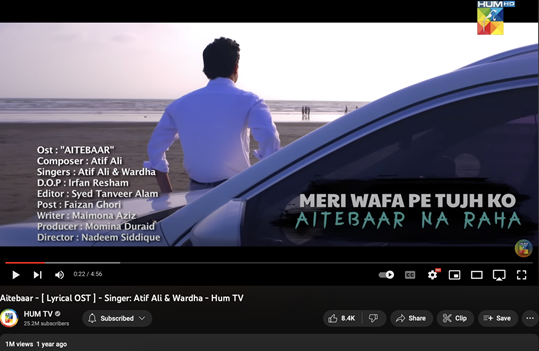
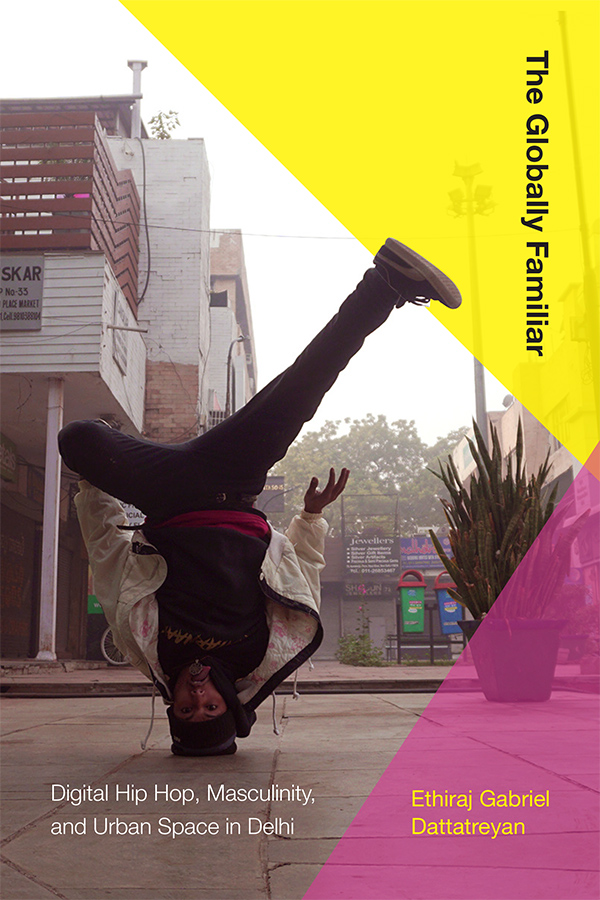

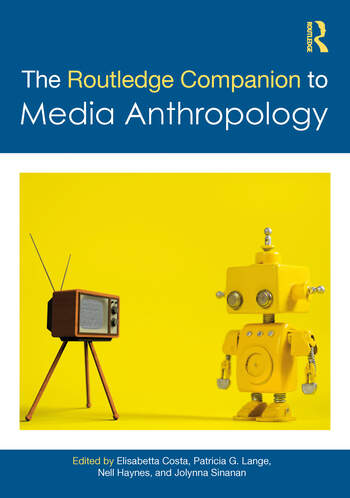
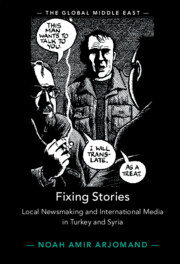
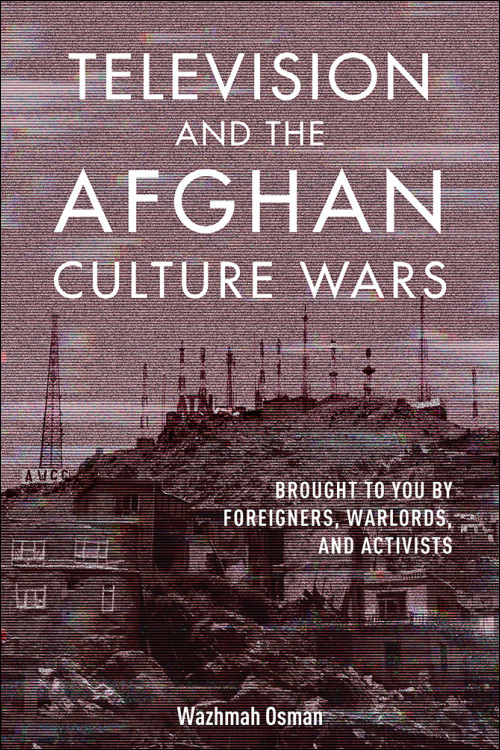

 CaMP Anthropology